December 26, 2016
CR Holiday Interview #2—Steve Newman (With Whit Spurgeon)
*****
I invited the actor and writer
Steve Newman to
Comic-Con International in 2016 to do some work on behalf of
CR. He fit in really well, and it was nice to have an extra person supplementing my efforts in addition to this site's regular photographer, my brother Whit.
As someone working in a media industry that isn't comics but that seems to value Comic-Con International, Newman seemed the perfect person to ask a few questions about what everyone else's Comic-Con experience looks like. Those of us in comics that have been attending that show for a quarter century or more forget how startling and odd things can be that we might take for granted. I'm grateful for Newman's patience in sorting through my questions. If the world progresses without radical, disastrous change, one thing we'll be asked about by young people in the future is this era in pop-culture conventions.
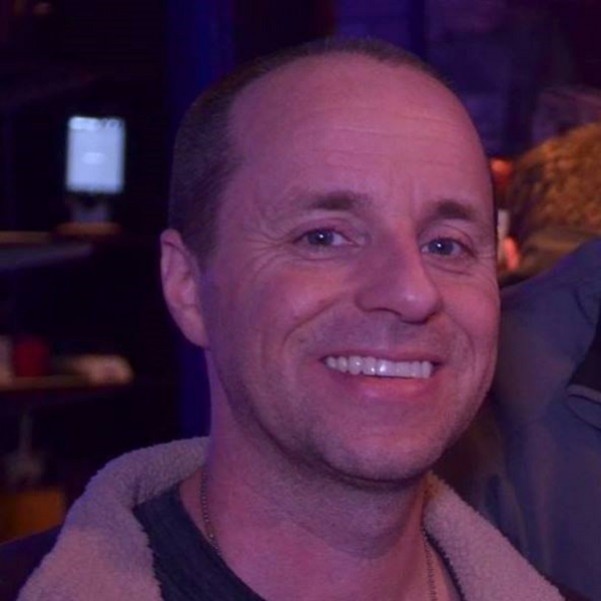
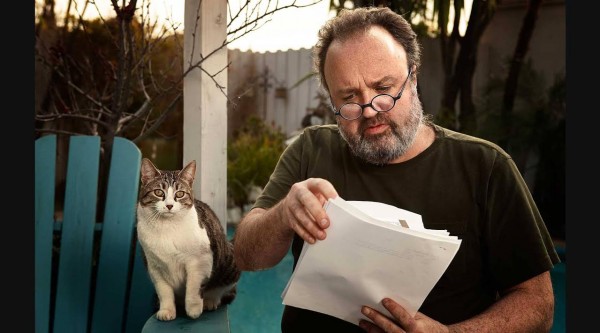
The aforementioned Whit Spurgeon joined in the conversation. That's him in picture #2 above. -- Tom Spurgeon
*****
TOM SPURGEON: You have a general knowledge of comics. You were a little kid reader of comics.
STEVE NEWMAN: Yes.
 TOM SPURGEON: What were you reading? What was your interaction with comics like?
STEVE NEWMAN: I stopped reading fairly young, sometime around 10 or 11. I was always a big reader. I stopped getting comics around 10 or 11. Before that... it was anything and everything. I was a big
Fantastic Four fan, the Jack Kirby
Fantastic Fours from whenever I would see an old one. I'll still see an old cover and remember having read that issue. Little bit of
Spider-Man, little bit of
Captain America.
My brother continued to collect into his twenties, so comics were always around. Every once in a while I'd see one of the creepy comics. Those were disturbing.
WHIT SPURGEON: Like the EC stuff?
STEVE NEWMAN: I couldn't tell you what they were but they were strong stuff. Women being torn apart.
TOM SPURGEON: That could have been anything from EC reprints to suggestive mainstream equivalents to early alt-comics pastiche to late underground stuff. But it was certainly part of the mix.
STEVE NEWMAN: And Green Lantern. I'm a huge Green Lantern fan.
WHIT SPURGEON: That reflects my own experience, for what that's worth. I dropped out of comics around ten or 11 and then Tom pulled me back in at about age 14 or 15.
TOM SPURGEON: Because of your history with comics, you at least knew they were still being done. You maybe couldn't name specific titles, but you had a general grasp that comics were a thing.
STEVE NEWMAN: Sure.
Elfquest was another big one I was into back then. Comics like that were always around, through my brother. In fact a buddy of his once did a version of...
Dragon Magazine?
 TOM SPURGEON:
 Dragon
was a gaming magazine of the era, sure. Table-top gaming.
STEVE NEWMAN: Those two were always the same for me, comics and gaming. They overlap. The people I knew that read comics were big gamers as well.
TOM SPURGEON:: That's another fairly typical construction that doesn't register with the same force the way it did back then. There's certainly overlap in the communities, though.
STEVE NEWMAN: I stopped with comics around junior high. I continued to read fantasy sci-fi stuff. I read [JRR] Tolkien and CS Lewis. I read
the Tripod series. I was a big fan of a series called
The Three Investigators. [pause] They were teenaged investigators. [laughter] And of course if anything had a Star Wars logo on it, I'd stop and look. Same with Star Trek.
TOM SPURGEON: You're right at the age to remember when comic book stores were becoming the primary location to buy comics. Do you remember anything about buying comics when this fundamental shift in retail was happening?
STEVE NEWMAN: It felt like people widely misunderstood -- at least from my experience -- the appeal of comic book stores. In Pittsburgh growing up, if it wasn't at the local drug store, chances are you didn't get it. There was only one comic book store I remember. It was
Eide's. It was in a part of town we never went to. There was nothing in the malls back then to go to. So I have to wonder if their demographic was really small in terms of just being able to reach everybody who wanted them.
TOM SPURGEON: Speaking of reaching people, you've also worked in bookstores, so you have a knowledge of comics as a categorical presence in those stores.
STEVE NEWMAN: I worked in two independent bookstores in Chicago, and then one here in LA. This was 2004, so by then graphic novels were an accepted form to be sold there. I always had my eye on them.
Neil Gaiman was a household name for a lot of people.
So I knew where comics was. If bookstores were a party, I knew where comics was in the room, even if I didn't talk to them. [Tom Spurgeon laughs]
 TOM SPURGEON: I take it you had the high-end graphic novels where you worked?
STEVE NEWMAN: Gaiman, for sure; definitely the best-sellers.
Persepolis, obviously.
Maus, obviously.
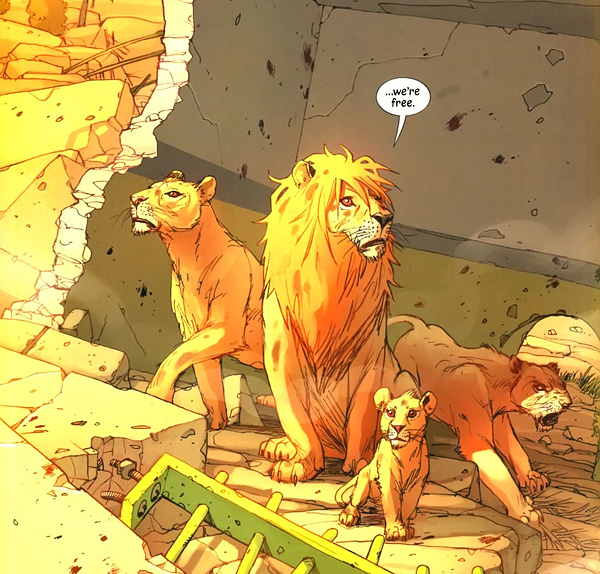
The Pride of Baghdad.
Bone.
This has come up when I've been with you guys.
Bone has been a consistent when I was dealing with parents in stores and they're lamenting their kids don't read. I'd suggest graphic novels and they'd respond they only want their kids to read serious literature. I used to joke that I'd count to five to cool down and then walk them over to the graphic novels section and hand them
Bone. I'd assure them if Harvard can give
Persepolis to their freshman class, their kid would do okay.
I also have a place for books that were given to me over the years. My brother bought me
From Hell one year. I devoured that thing. He game me
the Bone omnibus, which I devoured on contact.
AKA Goldfish. I just finished that about a month ago. I read them, but it's not my primary reading material.
TOM SPURGEON: My goal in asking you to come work Comic-Con was to give Whit a partner in crime, to meander around together and touch base with one another, while I was being dragged off to do whatever. I wanted you to look around and give me some impressions in addition to a few assigned tasks. You were nice enough to accept.
STEVE NEWMAN: I considered myself lucky enough to be invited.
TOM SPURGEON: So what broke from your expectations? Because you have fresh eyes. I certainly don't. Whit doesn't have fresh eyes at this point.
WHIT SPURGEON: Ten or more years in a row with you.
STEVE NEWMAN:: So to provide some context, I've known people that go to Comic-Con and have been for a long while. I have received their field reports. Someone I worked with in Chicago went ten years ago, and even back then it was a huge thing. He would joke that he could remember when it was 12 guys in a basement at the Marriott. [laughter] He and his buddies would go and get interesting stuff. I know the behemoth it has become.
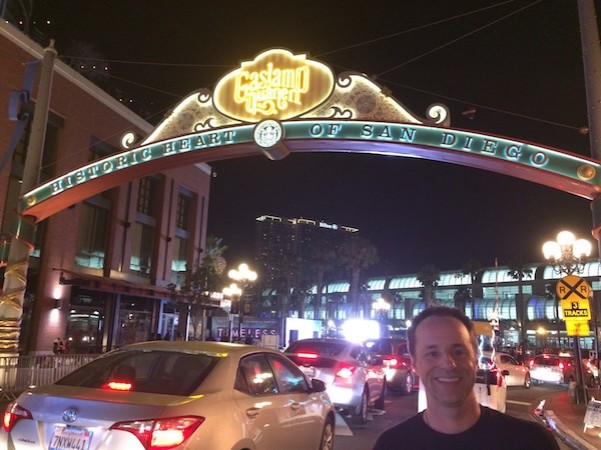
I feel my expectations were set. I knew what I was getting into. And I feel for the most part those expectations were met. There were a few things. It was interesting to me that when you're outside the convention center, when you're walking the streets, it feels very much like
Mardi Gras. People are in a good mood, there's a lot of stopping and talking, there's picture-taking. I forget that main street but everyone is sitting around having beers and talking.
I was surprised that almost in the minute you go in the door, the mood changes [laughter].
I even took a picture of it. There's this hunkered-down, just-get-through-it mentality. People come in from the outside and they're suddenly standing in line. And it's almost morose. [laughter] People can be there for hours on end.
We got there on Thursday...? We walked into the convention hall just after lunch and I noticed there were people standing in line who already looked like they'd been there four days. [Whit Spurgeon and Steve Newman laugh] Five hours into the first day.
I wasn't prepared for that, but I quickly got it. I understood it. By my second day I realized you are on your feet this whole time, and you're racing from the end of one thing to the beginning of another. It's exhausting. I thought I would have this chill, "I'm going to see what I see, and it's not going to be everything but what I see is going to be fun." It was exhausting nonetheless. I was surprised by that.
TOM SPURGEON: The sheer number of bodies between you and where you want to go has changed everything. You don't roam for the sake of roaming, and a lot of the decision making seems to be along the lines of "let's eat something closer to where we have to end up" and "is there any possible way I can get a nap." It's much more a survival mode than an aggressive "let's see it all" point of view.
WHIT SPURGEON: All these years I go in excited but the moment I go in the door it's like four hours before I need a nap. I can see three excellent panels in a row and then I'm like, "Woof, I'm done." That place wipes you out.
TOM SPURGEON: The three of us ended up having a less than great meal because of trying to find a place we could eat close to the Eisner Awards. [laughter] All those restaurants in town, but none of us could bear the thought of a solid twenty-minute walk right afterwards.
STEVE NEWMAN: Yeah, that dinner was okay at best.
TOM SPURGEON: For the two of you, as actors, does Comic-Con have a feel like a film/TV event? My hunch is that it may seem that way to those of us in comics in terms of pushback, in that many of us may feel we don't necessarily want it to be that kind of event. But in a positive way, do you see Comic-Con as that kind of event? Did you feel ownership of it at all?
STEVE NEWMAN: It definitely represents a portion of the industry that I recognize. It's not a segment that I've broken through to.
Whit and I were talking about this that weekend. I feel that the crowd there very broadly breaks down into two categories. Academic Comics Lovers: the people on the panel you led about
Barnaby. And then there's the Hollywood element. The people that want to see the cast of
The Walking Dead or watch the actors from
Guardians of the Galaxy sign autographs. I don't think there's a lot of crossover. There may be a few of us like Whit and myself with a foot in both worlds.
I'm circling back to your question. When I sat in or paid attention to the Hollywood/movie part of it. It didn't seem anything terribly new to me. It was more frenetic, more crazy, but in a lot of ways it was like the advance screenings we go to in LA, where after the screening they bring out the director and maybe one or two stars to answer questions and talk to each other.
WHIT SPURGEON: One big difference is that Comic-Con caters to people that are maybe not film/tv industry sophisticated. So down there you have people that are very excited to see these panels, while in LA people are making the effort to appear as blasé as possible. There's only a small percentage that wants to run up and get autographs.
STEVE NEWMAN: I feel like the audience at those things tend to be more traditionally star-struck than what Whit and I see in a city where one might see movie stars buying milk.
But it was interesting. It was cool. I ended up walking into the back of a
Walking Dead panel in Hall H. And it was cool. I was so far in the back I couldn't really see anything but the crowd was
so excited. How many does that fft? Five or six hundred.
WHIT SPURGEON: Oh, more than that. Has to be a few thousand.
STEVE NEWMAN: Seeing that was cool. As an actor trying to become a more successful actor, you forget how exciting it is to be a part of that kind of thing.
TOM SPURGEON: You two are also filmmakers, together and separately. You've had short films out at... festivals, at conventions. Why do you think Hollywood has such a huge presence at this show and not as much at some of the other shows that are more film and TV oriented as their core mission? Why haven't they done one of their own in LA? What's different about those shows and this one?
WHIT SPURGEON: Comic-Con is much better attended. [laughter]
STEVE NEWMAN: I think it's only different -- and I'm wildly guessing here -- is because they chose to make this one special. I imagine they noticed years ago that people going to their movies went to this show and they sunk their resources into it as a result.
I have no doubt if the industry wanted to join forces and have a giant film convention, and they sunk their money into it, that could be huge. Comic-Con might suffer as a result.
TOM SPURGEON: Maybe. There's frequently talk about that. The Disney show in Anaheim runs roughly the same time now and they say Marvel might move their "reveals" to that show.
There's an element to Comic-Con that rarely gets talked about as much as the panels and trailers that I think has become important, these low-intensity Hollywood meetings sprinkled all over town. From a conversation I had in line at Amtrak two years ago, I know that a group of cinematographers meets down there. Comic-Con has their film festival... is there anything to that that appeals to you as a con-goer? Or is that a curiosity? Are those kinds of meetings an excuse to write off a comic-con trip?
STEVE NEWMAN: I would assume that most of the informal meetings in San Diego are like those taking place all over LA, and I'm not being invited to either anytime soon. [laughter]
WHIT SPURGEON: Pitch meetings.
STEVE NEWMAN: I definitely think there are pitch meetings. And when you have like the cast of
Guardians Of The Galaxy there -- and I got stuck in that scrum, trying to go through the hall one day. They're having a meeting with
Chris Pratt anywhere they can. I imagine that's true of all the big players. If somebody from Marvel is there and somebody from a
Harry Potter adaptation is there, they're going to find a way to meet each other. If it's not at Comic-Con, it'll be next week up here.
WHIT SPURGEON: I feel like a lot of that supplementary material is geared towards the fans of the result rather than working film and television people. One exception might be
Mark Evanier's voice actor panels because there are some real insights during those, and he apparently does one on Sunday about how to break in. I don't see a lot of that on the film end -- how to become a crew member on a Marvel film or whatever.
STEVE NEWMAN: Two of those I wanted to go to. One was
the Russo Brothers. It was a 1:00 PM, 2:00 PM panel on a Saturday, and the line was too deep for me to get in. I went to another screenwriter's panel, he and his agent talked about how to be a successful screenwriter, and that room was about 3/4 full. Can't get into the Captain America one, but I could get into this other guy's, and he was a real player.
TOM SPURGEON: Comic-Con is expensive. For instance, the room the three of us shared on the site's dime was like... I want to say $365 a night?
WHIT SPURGEON: Good lord.
STEVE NEWMAN: It was a nice room, though! [laughter]
TOM SPURGEON: It wasn't that nice. [laughter]
STEVE NEWMAN: It was nice for me.
TOM SPURGEON: I don't hold a grudge about the prices of that show; there are a limited number of rooms. The reality of it, though, is that it is expensive for most people, and getting down there can be a chore and expensive, and, fundamentally, there are only a limited number of tickets to be purchased to the show itself. And people want to go.
This makes me wonder after value-added events, or some form of that eventually. In terms of fan service, it's hard for me to think we haven't reached the peak of that there. It's hard for me to think of any fandom as geeked up as the Twilight fans were as the movies rolled out.
STEVE NEWMAN: I missed all that.
TOM SPURGEON: That seemed to me the apex. We don't have that one thing right now.
WHIT SPURGEON: We don't have that nutty rock star thing you used to get down there.
 TOM SPURGEON: I wonder if the fervent desire people have to enter that industry might replace some of that enjoyment-of-material juice. It's just a hunch, though. Could there be a time when more actors work that show like they might work an LA film event?
STEVE NEWMAN: [pause] Our hotel room faced out directly onto the convention center and I think was on the top floor. It gives you a conceptual context for this. You look out our window on Saturday afternoon and there are thousands of people out there coming from all over the place and we were literally above it all, just across the street. We even had access to a press room that served coffee and snacks all day.
TOM SPURGEON: I did not go.
STEVE NEWMAN: Oh, you should have.
WHIT SPURGEON: It's gotten better over the years; it used to be an empty room where you could charge your phone or sit and type.
STEVE NEWMAN: The point is I'm aware that my experience is probably vastly different than the 19- or 20-year-olds that saved up all year for a ticket, are in the cheapest hotel room they could find, they're blocks and blocks away and have to hike it. My experience was really privileged.
I feel like they have to do something to address the fact that they have to do something that makes people want to come, spend all of that money, wait in lines for hours, eat convention center nachos, get caught in crushes of people. That just doesn't seem sustainable to me.
TOM SPURGEON: There are some inducements segment to segment. Like they do a good job having retailers offer merchandise exclusive to the show, like certain toys. I think that's a bigger deal than those of us in other industries might realize. If that's the only place on planet earth you can get the 400-Piece lego set featuring Poe Dameron or whatever, you eventually want to start being there for that. In comics they have some cover variants, or smaller publishers will offer material weeks ahead of publication date.
I think there's also a shift in the Hollywood presentations where they trying to make the panels pop for those that are there, and not just from seeing first what's going out to media sources 12 hours later -- or immediately. Like that last Spider-Man movie, where he fought Powder? [laughter]
WHIT SPURGEON: That wasn't Powder.
TOM SPURGEON: It looked like Powder. Anyway, at the San Diego before that movie -- or maybe the first one of his -- Andrew Garfield hid in the crowd of question-askers under a mask he pulled off. The oldest-school reveal. Pretty fun. I have to imagine if you were there you're still getting people to buy you drinks off that one. Mountain Dew, probably, but still.
How effective those kinds of things will be over the long term, I'm not sure. So I wonder if anything replaces it.
STEVE NEWMAN: I have a couple of friends who are heavy into Star Trek fandom. They're involved, they have a podcast, I think they're friends with
the Roddenberrys. They're also big-time
Twin Peaks fans. In 2016 they came for the premiere of the
Star Trek film and then left. [Whit Spurgeon laughs]
What they've started doing is going to smaller conventions. They can go to two for the price of Comic-Con. They're easier, and they seem friendlier. They're starting to enjoy those more. They don't care about the event-status as much. So I would wonder about how many people would find that appealing.
WHIT SPURGEON: Tom's right in that the firstness of certain films or trailers or whatever lasts about five minute long now. It's on the Internet an hour later.
STEVE NEWMAN: I actually posted something on Facebook where somebody -- maybe it was
Force Awakens -- got to see footage, and i found two articles of people describing to us what they saw. I thought that was so disappointing and so ridiculous. It's a spoiler but not even a full-tilt spoiler.
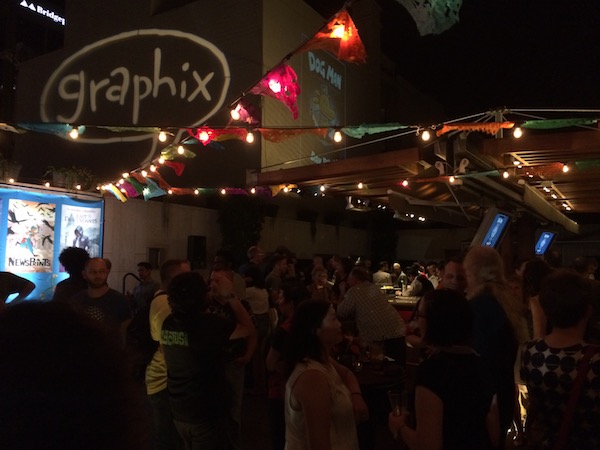 TOM SPURGEON: Steve, you got to hang out with a bunch of comics-makers that weekend. Comic-Con is still a big event for comics. It's not the only event anymore, and there are legitimate enterprises in comics that don't intersect with that show at all, but it's eminently useful for a lot of comics people. I did multiple meetings each morning. The three of us got a lot of face time with comics pros at their events and panels. We went to a rooftop party held by Scholastic. We saw Jim Davis across the room in the restaurant Friday night and walked over to say hi.
STEVE NEWMAN: [laughs] That was easily one of the biggest thrills of the weekend for me. It really was.
TOM SPURGEON: I don't know what the Hollywood parts are like as they're directly experienced, but it seems from my way-over-here vantage point that there is a tremendous amount of gate keeping. Chambers upon chambers upon chambers. Rooms at parties within the party rooms. Private dinners. In comics, it's like, "Let's go bother Jim Davis right when he's about to eat pasta." [laughter]
At the time we went over to talk to Jim, it's worth noting that we were sitting with Jaime Hernandez who is the equivalent of a [Quentin] Tarantino or [Jim] Jarmusch figure, just in the comics world.
Did you notice anything weird about the way comics conducts itself in that kind of setting? We're dancing the same dance in a way, but in an entirely different tempo.
STEVE NEWMAN: Like we talked about, there is that broadly-defined schism between the people that are there for the Hollywood stuff and those that are there for the comics stuff. I know who Jaime Hernandez is, I know what
Love & Rockets is, but it wasn't a big thing for me personally. I have friends where are massive
Love & Rockets fans and when I mentioned that I was looked at with a stony silence that says, "That's cool. Hate you." [laughter] So that was fun.
I went to more of the comics/art related stuff. The one writing panel and the
Walking Dead one were the only non-comics ones I went to. I went to the panel you moderated on
Barnaby.
 TOM SPURGEON: The widely-acknowledged highlight of Comic-Con 2016.
STEVE NEWMAN: It was early in the convention -- and I wouldn't have know what
Barnaby was until I saw the artwork and realized I had seen it. I went to Jeff Smith's panel, his anniversary celebration of
Bone.
TOM SPURGEON: Jeff is very good on his feet. And he was one of the first guys to kind of do a friendly presentation as opposed to just doing questions.
STEVE NEWMAN: I think Jeff clearly realizes... I mean,
Bone?
Bone is a thing. When you think of graphic novels in the first 20 years of their existence, Smith was right there in front with a group that included Gaiman and Spiegelman that convinced people that comics were worthy of a deeper consideration. So to see him present, you could tell he was proud of it, but also humble about it. He talked about the history. And people were interested. He didn't seem braggy about it. He was very interesting to watch.
TOM SPURGEON: Are cartoonists different in front of an audience than actors?
STEVE NEWMAN: Yeah. It may just be a fame thing.
WHIT SPURGEON: Part of it may be how people relate to comics as opposed to how they relate to "stars." I think people may relate similarly to film directors and film writers the same way they react to comics characters.
STEVE NEWMAN: I think that may be fair. Yeah.
WHIT SPURGEON: People might lose their minds if they meet a real Spider-Man.
STEVE NEWMAN: I think people just want to be near celebrities. They don't care what the celebrities are doing, they just want to be within five feet of it.
Whereas directors and writers -- and comic book artists -- I want to hear what they're saying. Here's a good example. Whit took me to a screening of
Pacific Rim. It was a fun movie. It was cool. But then
[director Guillermo] Del Toro came out to talk and I was riveted by everything he had to say. It was a brain at work. It was a creative process at work.
I feel like that's what we get, that's what I go for when I hear comics artists and writers talk in a panel. And I think that may be the difference. As a society we have a very different orientation towards celebrity. "I don't care what they're doing, but I want to be in the same room." That contrasts sharply with the creators that actually know things.
WHIT SPURGEON: I feel bad for the actors that go down there that are legitimate nerds that have to get into a costume to have a semi-normal experience.
STEVE NEWMAN: So that nobody can recognize them?
WHIT SPURGEON: It's the only way they can run around on the floor.
TOM SPURGEON: I remember the last time I saw a bigger-name celebrity just roaming it was Quentin Tarantino, and he had this big band of people following him. They would pause when he would stop and look at something.
STEVE NEWMAN: Wow. [Whit Spurgeon laughs]
TOM SPURGEON: Now they just send their assistants.
STEVE NEWMAN: There were times when I was on the floor and annoyed by the number of people around me. I'd be more annoyed if I were famous enough I couldn't enjoy it. There are some really cool things down there.
WHIT SPURGEON: That far end of the floor isn't bad, but it's just so crowded. I love being in the indy press area, with
Fanta and
D+Q, but then you go to the other end of the hall and it's a different kind of person. People are jostling you. Pushing you.
STEVE NEWMAN: That was my one true bad experience. I didn't know I was heading into it but I was walking right past the Marvel booth when the
Guardians of the Galaxy cast was there.
TOM SPURGEON: That's right, they pull them into the booths now.
STEVE NEWMAN: They have this stage, 30 feet, 20 feet above the crowd. And they have this giant screen filming it. The whole thing says, "Stop and look at this!" And the traffic jam there was so insane. I couldn't go back. People could only move one way. In a way, you can't blame Marvel.
TOM SPURGEON:: I can always blame Marvel. [laughter]
STEVE NEWMAN: What I mean is that's what they're there to do. But the security guards... were kind of jerks. [laughter]
This one guy said, "Keep moving... if someone stops in front of you, just push them." And I'm thinking, "You've just solicited assault." [Whit Spurgeon laughs] And he was serious, he said, "Keep pushing them, don't let the person in front of you stop." And I thought to myself, "That just can't be right." [laughter] This is supposed to be for fans and it's getting turned into Thunderdome to make this person's life a little easier. That was the one truly annoying moment. It was shoulder to shoulder, each step got you three inches further, and the security guard is in your ear.
WHIT SPURGEON: It never seems that those bigger moments lead to any kind of coordination with the floor stuff.
TOM SPURGEON: Comic-Con does a pretty stupendous job on the logistics end of it, but there are always new things for them to figure out. One thing you mentioned earlier is a big logistics win for them, that you were able to get into a prime programming session, a Walking Dead
panel, without sacrificing your entire day to do so. For a while they were jammed up to the point you could not do that.
The lines and all of that mess is something they're good at. But it's a reaction. This booth thing, where stars pop up in the booth itself, the Mardi Gras moment, that strikes me as a new thing. It'll take them a year or two to figure out how to not make that a miserable experience for some people, but they'll figure it out.
In general, Comic-Con won't talk about security. They have a clever, capable guy that works as their public point man, David Glanzer, and he's super-good about mitigating negative reaction until they can find a solution. Like he was able to handle one fan stabbing another fan in the face with a pen like it was someone tripping over a bump in the carpet. [Newman laughs] I suspect without knowing they have a better class of individual working security than ever, and that they'll quickly work out these stop-and-look moments the companies are doing now.
STEVE NEWMAN: I couldn't get mad at Marvel, but I did get mad at the security guard. I wanted to stop and look at Zoe Saldana, too! Yelling in my ear didn't help. He was angry people were looking at the thing that was set up for people to look at.
But that was it, really, as far as complaints. That was the only time I felt something could go wrong.
WHIT SPURGEON: Steve and I were talking at the show how thorough the security was searching, for instance, the people in costumes as they came in the door. They were heavily searched. Which given the world we live in is a necessary thing.
STEVE NEWMAN: They were zip-locking weapons to holsters.
TOM SPURGEON: They do do that now. So do you guys like that part of the show, the costumes?
STEVE NEWMAN: [laughs] I had so many reactions to the costumes.
TOM SPURGEON: They're kind of amazing... although part of me misses the years when many of them weren't great and there were like eight dudes doing it.
 STEVE NEWMAN
: Some PhD student out there has done a paper on who cosplays how and why, and I want to read that paper.
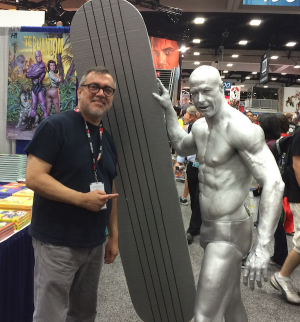
First off, it was fun. It's just fun. That Silver Surfer guy committed. He was covered in silver body paint and stripped right down to his shorts.
WHIT SPURGEON: The only concession to reality was the cellphone in the back of his swimsuit.
STEVE NEWMAN: I saw one kid, probably still in high school, dressed up as one of the henchmen from The Venture Bros. It was so perfect. I couldn't stop laughing.
I saw a couple of people trying to be that character... a little too much. I saw a couple of Wolverines that really wanted to be Wolverine. I saw a John Constantine that really wanted to be John Constantine. He was walking down the middle of the aisle with a snarl and flipping his Zippo [Whit Spurgeon laughs] I was sort of like, "I get it, but yeah... I don't know."
WHIT SPURGEON: I also think most of the costumes are excellent now, but I remember my first year there fondly, when I was obsessed with 87-year-old caucasian Lt. Uhura.
STEVE NEWMAN: I saw some good Iron Man costumes and then you'd see someone with a really good Iron Man costume, but only from the waist up. The rest of it is cargo shorts. It's so disappointing. It's like, "Commit or don't." [laughter]
*****
*
Steve Newman
*
Whit Spurgeon
*****
* photo of Newman provided by Newman
* photo of Whit Spurgeon provided by Whit Spurgeon
* a Jack Kirby
Fantastic Four panel
* a cover for the great
Dragon Magazine
* a panel from
Pride of Baghdad
* Newman in what he felt was the Mardi Gras part of the show
* view from our hotel room
* crowd at the Scholastic Party
* Phil Nel, Eric Reynolds and Jeff Smith at the Barnaby panel
* Gilbert Hernandez appreciating one of the show's Silver Surfers
* Newman and Whit Spurgeon promoting one of their collaborations (below)
*****
*****
*****
posted 5:00 pm PST |
Permalink
Daily Blog Archives
November 2019
October 2019
September 2019
August 2019
July 2019
Full Archives