May 28, 2006
CR Sunday Magazine
author's note: as of 6 PM 052906, this section was copied into a "Collective Memory" entry. That is the entry which will receive further updates. It can be found here.
 ALEX TOTH, 1928-2006
There is only one thing to write about today.
Alex Toth, one of the handful of people who could seriously enter into Greatest Comic Book Artist of All-Time discussions and a a giant of 20th Century cartoon design, has passed away at age 77.
Like many young cartoonists, Alex Toth received his first professional gig from Steve Douglas at
Famous Funnies. He would eventually work for DC, Marvel, Standard, Dell, Whitman, Western, and Warren, an elite publishers list that might double if you counted books about Toth or reprint collections. His best-known comics achievements are probably 1) an accomplished, dynamic run on
Zorro, 2) creating the well-traveled throwback romantic adventure feature "Bravo For Adventure," and 3) a brief but exceedingly lovely stint on the crime comic
Torpedo. He was also a well-regarded animation designer, creating model sheets for characters ranging from Space Ghost to various DC mainstays as they appeared on TV under the title
Super Friends.
Above any artist ever to work in comics, Alex Toth enjoyed a career that cannot be properly summarized via a credits list. Toth is better remembered for an approach to work -- perfectly spotted blacks, supple line work that can create an entire visual world in fewer marks on the page than anyone would ever believe, and a visually sophisticated approach to storytelling that relied as much on shadow and hints and continuity
across panels as it did on any effect borrowed from film. It was a way of making art he developed and refined and pulled apart to put back together for the entirety of his adult life. Toth's art was routinely idiosyncratic and exquisite to the point that he could seize your attention on the silliest of projects: superhero pin-ups, scale models of robots, doodles on a postcard, licensed tie-ins for an audience that would probably accept anything that even pretended towards fealty to the look of the object being sold.
People will say he was a great craftsman, and they'll be right, but what Toth did was a little further along than that. Toth reached that scary point where it felt dangerous to look at some of his best work; you ran the risk of being pierced by a force that practically shimmered on the page, that inhabited every image, like a master chef's dessert so rich it made your eyes water in protest, or a singer's voice so pitch-perfect it made you want to leave the concert hall, if only to catch your breath. His
handwriting exuded an element of purity in cartooning that could outclass other artists' fully-rendered sequential art. Toth's black and white work in particular displayed an almost transcendent understanding of drawn art as a visual story component. When we as readers come to a greater understanding of the effect that great art has on the reading of comics, Toth's reputation is likely to grow even larger than it is today.
Alex Toth was known as something of an irascible guy. I know little about that personally -- when I worked at
The Comics Journal we occasionally listened to a tape of Toth made during a cut-short interview because he was so brutal, straightforward and funny -- but I do know that he was never rewarded by his chosen medium in two of the most basic ways that matter: opportunity and reward. He earned far more of a right than he spent in terms of speaking back to comics, whether it was criticism of art that fell short or a more personal confrontation. The sad thing about Toth as opposed to other square pegs in round holes in comics history is that Toth's work surely indicates he was present to the possibilities in more mainstream genres than perhaps any great comics artist ever. He wasn't "out there" -- his work influenced the mainstream of comics history at the major houses, and inspired artists who generally went on to become workhorses as opposed to arthouse favorites. That he still didn't quite fit into the industry in a way befitting his skill and passion is one of those unknowable things in comics history. Hopefully, Toth will continue to live on in a variety of ways and in a variety of publishing platforms in a way that does justice to his life in art.
*****
News Sites
ActuaBD.com
afNews
Comic Book Resources
Comicon.com Pulse
Newsarama
The Beat
*****
Blog Entries
Across The Counter
Alan J. Porter
Alberto Calvo
An Ear In The Fireplace
Ashley Wood
Atomic Surgery
Bad Librarianship
Bill Cunningham
Black Kitchen Sink
Blake Petit
Bloggity-Blog-Blog-Blog
Booksteve's Library
Burnt Lamb
Champagne Wishes
Charles Hatfield
Chris Arrant
Chrissie Harper
Cliff Biggers
Colleen Doran
Comictronic
Comix Connection
Cooked Art
Craig2k
Dadicus
Dan Curtis Johnson
David Lasky
Dorkland
Drawn!
Elmo's Junction
El Nono Critico
Eric M
Evan Dorkin
Eye of Polyphemus
Ferret Press/PANEL
Four Realities
Gabriele Pennacchioli
Gerrad!
Graven Images
Hector Lima
Jesse Hamm
Joe's Apartment
Joe's Journal
Johnny Bacardi
Jorge Vila
Jose Marzan Jr.
Kleefeld on Comics
Lee Stone
Lifetime Piling Up
Litany of Schist
Lito Sandoval
Louie Del Carmen
Manudog
Mark Evanier
Mark Neeley
Mauricet
Max Riffner
Mercury Studios
Michael Netzer
Mike Sterling
My Fucking Sound
Mystifying Oracle
Nuff Said! News
One Zombie In A Billion
Paul Chadwick
Pop Culture Gadabout
Powet.TV
Rafael Kayanan
Random Being
Ritalin Baby
Robert Solanovic
Robogeek
Ronnie Del Carmen
Scans Daily
Schwa Love
Scott Hart
Skrash
Swanshadow
Talk About Comics
The Bitter Guy
The Bripecave
Thing I Learned Today
Tom Peyer
Tony Collett
Voices In Utter Dark
WarrenEllis.com
Wretched Hive of Scum and Villainy
Yirmumah!
*****
Messageboard Discussions
Bondage.com
Comicon.com
The Comics Journal
The Engine
Toth Fans Forum
*****
Five Random Covers


*****
Biographical Articles and Resources
Answers.com
Auad Publishing
IMDB.com
Lambiek.net
Wikipedia
*****
The One Site You Have To Visit
The Official Alex Toth Website
*****
Directly To Art
Beautiful Page From Black Hood #2
Fox Pin-Up
Model Sheet For Plastic Man
Original Art Gallery at Collecting Fool
Original Art Gallery at Comicartville
Original Art Gallery at Comicartville -- Animation
Page in French
Page of Hot Wheels
Page of Rip Hunter Interior Art
Sample from CARtoons
Sierra Smith Page
Sketches for Atlas' The Scorpion
Sketches for Sale at BPIB
Sketch of Charlie Chan
*****
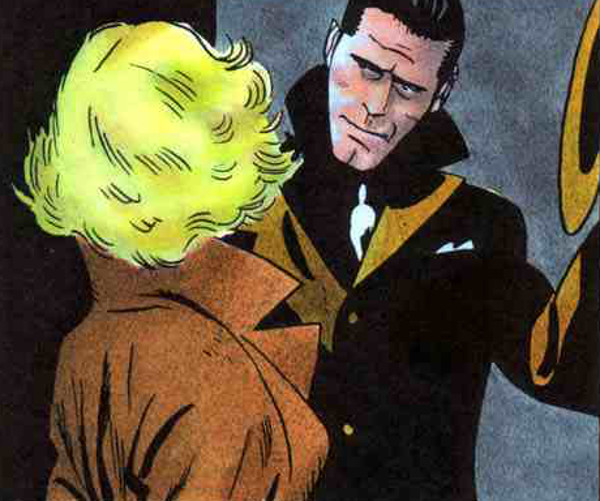
Five Random Non-Cover Images


*****
Miscellaneous
100 Greatest Comic Artist List
2001 Message Board Discussion on His Relevance
Advice on Collecting His Work
Alex Toth on Modern Comics (1991)
Comic Book Heaven Alex Toth Anecdote
Drawn! on Model Sheet by Toth
Essay on "White Devil!... Yellow Devil!"
Forthcoming Doodle Book
Interview From Comic Book Artist
Interview With John Hitchcock
Steve Lieber Analyzes Toth
The Comics Journal #262
*****
Three Quotes About Alex Toth
"Toth had not gone into comic books for fame or fortune. (Indeed, when he started, the field was so unrewarding -- and so scorned -- that artists were too embarrassed to state in public what they did for a living.) But he remained in thrall to the transformative possibilities he had experienced as a child. He could still be moved by the material presented him. He respected the practitioners who had advanced the medium and strove to be worthy of their legacy. he was, he once said, 'in love with telling a story in pictures.' But, he found, most writers and editors lacked his passion. They were 'rejects from the pulp field... [with] no foundation in the grammar of pictorial continuity.' The reaction of one editor at Standard to 50 pages which Toth presented so enraged him that Toth snatched them back and ripped the entire folio in half with his bare hands." -- Bob Levin, "The Mark of Tyrone Power."
The Comics Journal #262.
"A beautifully executed expression of a cartoonist's belief in his art and in the moral function of heroism." -- RC Harvey's review of
Bravo for Adventure that reads like a piece of late-period Alex Toth art, from
Planet Cartoonist.
"So he decided he was coming to San Antonio. So we all -- some other artists and I -- met at the Menger, which is just off the ramp through the San Antonio airport. We figured we'd intercept him as he came down the ramp. We all took chances saying, 'That's Alex! That's Alex! No, that's Alex!' But I have to tell you when Alex finally appeared on the scene, there's no mistaking him. Because Alex Toth is an exact replica of some of the cartoons he draws." -- the late artist Pat Boyette, in an interview with Ken Smith,
The Comics Journal #221.
 .(JavaScript must be enabled to view this email address)
posted 5:40 am PST
.(JavaScript must be enabled to view this email address)
posted 5:40 am PST |
Permalink
Daily Blog Archives
November 2019
October 2019
September 2019
August 2019
July 2019
Full Archives