April 5, 2005
Even a Fanboy Can Cry…
Reading
Keith Giffen,
Beau Smith and
Paul O'Brien weighing in on DC Comics' use of death-driven limited series as a major sales fulcrum for their comic book line made me stop and think, or at least something close to thinking. I find "event" storytelling in mainstream American comics generally pathetic and ugly, and perhaps even slightly tragic as the potential of a diverse direct market for comic book specialty shops has been hamstrung in great part so that sales of manipulative, depressing nonsense can be maximized. However, taking such a position does put me on the same side of the street as those who absurdly argue that some sacred nerdy trust has been violated by recasting oft-sunny characters in
Titus Andronicus-style roles. That's a separate set of arguments, and, really, one that should be expected: when you try to please one group of people who hold an unlikely adult's investment in such characters, you're likely to irritate those with a different sort of investment. But it's not my argument. Really, I don't care. Just promise me I don't have to see Kermit the Frog stab Miss Piggy through the throat after feeding her Gonzo and Sam the Eagle, particularly if you're not playing it for laughs. Life's too short.
The problem if you pay attention to comic books is that you know a lot of people will read these stupid things. You can be certain a lot of energy will be spent on selling them and a lot of advertising energy will be spent putting them at the forefront of the medium. And although someday someone may surprise us, these things are far more effective separating fans from their money than making memories for the ages, even the ages of 8-10. These books generally work more like a
Maxim photo spread than popular literature, a switch in contexts that plays to prurient interests no matter how much the characters insist on talking about the greatness and importance of their comrades, implied virtue in a hierarchy closely related to licensing muscle. Even weirder, as comics goes these are nothing new, a marriage of 1970s approaches to comics -- a bright child's attempt to stamp "logic" on an absurd fantasy to justify the fact he continues to find it emotionally appealing -- and the 1980s
Secret Wars publication strategy of an editorially-mandated event comic that drives off down the street leaving the creative people running after it throwing things in an attempt to affect its momentum. If these kinds of books feel decades old when you hear them discussed, it's because they are.
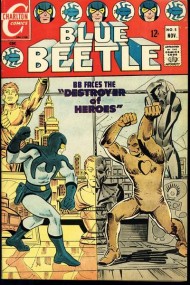
And while what's to come may make for psychologically revealing junk culture, and a lot of money squeezed from people who can't help themselves that may be a boon for shop owners, and some dark humor to be had when Bat Mite or somebody shows up and takes a poop on Lana Lang to "up the stakes," I have to imagine any benefit is being purchased by locking these books and characters that once spoke to a lot of people into a very dark place you have to know -- and love -- the secret knocks in order to get in. Such decisions shape the market, and if you realize that in a sense Blue Beetle has become better known as a plot-point snuff victim than he was for whatever modest thrills the entirety of his comic book adventures might have offered, you have to wonder what shape these companies are going for.
posted 8:56 am PST |
Permalink
Daily Blog Archives
November 2019
October 2019
September 2019
August 2019
July 2019
Full Archives