December 18, 2013
CR Holiday Interview #02—Sean T. Collins and Joe McCulloch
*****
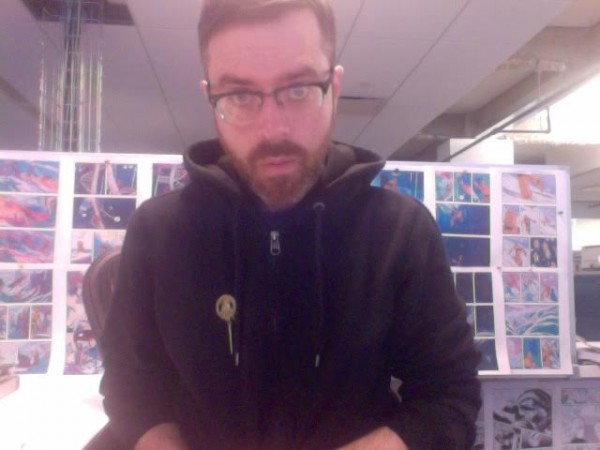
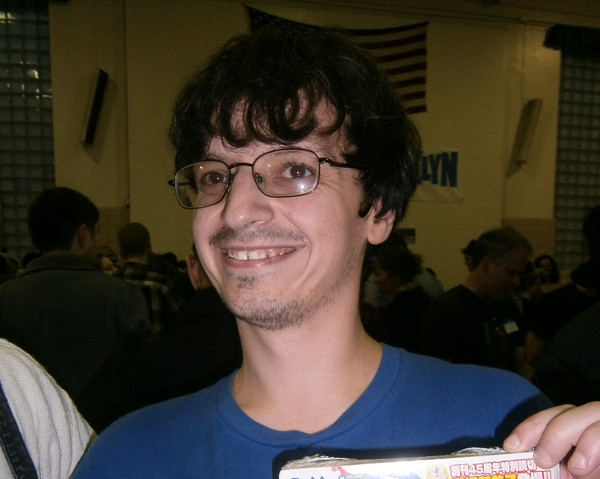
We rarely talk about the alternative and art comics portion of comics as an industry with its own set of concerns. I thought this year might be a good year to do that in the holiday interview series. I chose to have this conversation with
Joe McCulloch and
Sean Collins, both of whom wrote compellingly of the latest important story in that world,
the closing of PictureBox, Inc. I've known both critics -- and Collins is now a writer
of comics -- for years. I respect their observations and insights. I hope that the following has something in here you'll find of interest. I tweaked a bit for flow. -- Tom Spurgeon
*****
TOM SPURGEON: I guess a first question would be how frequently does your conception of alt-/art- comics include an industry component? We seem to maybe blend the business and art in mainstream comics and even in newspaper strips more than we ever conceive of art- and alt- comics that way, and I wonder if you had any thought as to why that is.
JOE McCULLOCH: Well, since you're talking to a pair of critics, my first thought is that there's a big difference between writing about art and writing about industry. Put simply, the former is much easier to do, because in the end it's just you and a book and whatever perspective and experience and theory and wisdom you're gonna bring to the table, and while disagreements are obviously gonna happen -- and I absolutely do think it's possible to write bad criticism -- there's much more in the way of intellectual wiggle room. Writing about industry, though -- you need a very solid grounding in practice, economics, distribution; it's more like math, because you can very easily get a lot of shit obviously, factually wrong, and
nobody likes getting shit wrong, especially when they're not being paid for the pleasure.
 SEAN T. COLLINS:
 Good Lord, imagine if
Frank [Santoro] and I had talked about the dearth of alternative-comics reporters instead of
alternative-comics critics. The list would have been, what, two people long tops? "Follow the money" is a solid rule of thumb for this discussion. There's very little money to be made in alternative comics, still less to be made in alternative comics criticism, and, as best as I can tell, zero to be made in alternative comics business journalism. So those habits of thought don't get cultivated, for practical, financial reasons.
McCULLOCH: And, as a result, I think a lot of writers-on-comics today are reluctant to address industry concerns in areas where "industry concerns" aren't already a broad pool of knowledge from which to draw, like with the big superhero publishers. The legwork on them was done years ago, to the point where any random
Bleeding Cool message board poster might find the guts to hold forth on the hard truths of the biz, and not immediately look like a clown. Plus, I think the nature of reading superhero comics -- or reading newspaper comics -- is affected by the fact that they're pretty far removed from the locus of original creation: it's usually hired hands providing maintenance for valuable properties, and while there's obviously an artistic component to that, the observer is nonetheless placed at a certain distance, encouraging speculation as to business practice. That goes triple when superhero movies are involved, because there's just so much fucking money involved -- unreal money! It's like following sports.
With "alternative" comics -- I mean, Jesus! What fucking toad wants to
drop science on "the industry" of what's been whispered into our cradles as the very marrow of the creative urge? Wasn't the whole struggle for comics-as-art about promulgating a theory of 'alternative' or 'art' or 'underground' or [your favorite oppositional term here] comics as separate from readily monetized company craftwork? Let me answer my own question -- it wasn't, not strictly, but this romantic conceptualization probably turned out to be the most immediately appealing of the various arguments for a genus of comics against a status quo, which, 35 years ago, was legally disinclined in the majority of circumstances to even recognize artists as the creators of their own work, per the fictions of authorship that lie at the basis of work-made-for-hire.
COLLINS: This is also true. Though in my experience a lot of makers of, and thinkers about, alternative comics enjoy pulling apart the business practices of any and all industries with which they come in contact, that's only very rarely true of alternative comics as an industry itself. When it comes right down to it I think a lot of people are just kinda bored by the practicalities of funding these things, until a crisis makes it newsworthy.
McCULLOCH: [laughs] Sure -- nobody likes to shit where they eat! But wasn't it
David Foster Wallace who prophesied that the locus of power would reside within "boring" data? Because in the media rush -- we gravitate towards what's the most fun, the tastiest, the most stimulating. So anything that happens in a boring way; you're wearing the One Ring, my friend.
Plus, criticism itself is a field pregnant with theory and ideals, and I think there's a perception that it's anti-intellectual, in some way, to divert one's focus from the object of art itself. I mean, the movement in popular criticism for the last few years has been very much toward a sort of quasi-academic analysis of artistic works as social actors, which reflect or promulgate or repel or inspire resistance to prejudices and inequities in the daily life. In this way, the industrial component, if acknowledged, is often cast in the role of systemic compulsions resulting from some financial interest in maintaining the status quo; declarations tend to go broad. If you mention business too much, I mean -- you feel like one of those movie bloggers who won't shut up about box office. Don't you even like movies, Tom?! Sean and I liked
Only God Forgives.
COLLINS: I even bumped into Nicholas "The Long and" Winding Refn on the street afterwards and told him so. Sensational cinema!
McCULLOCH: But, you know, eventually, if you stick around in comics for long enough: you see people disappear. And not a few people -- enough so that it really hits you in the face with how difficult it is to make a living at this thing. Like, you see one or two or three people vanish, and you think, "Okay, it's like gallery art, it's like screenwriting, it's like music, or anything; few do it forever." But after a while, even if you lack the responsible and/or messianic impulse to want to improve or perfect this scene from which you derive enjoyment and love, you begin to examine your own assumptions about how the field operates, and that pushes you to develop some of the expertise I've mentioned. And, you know, you're growing older, worrying about money, trying to figure yourself out -- it becomes part of the interrogation of your own life. So, yes, I do think about industry, but I imagine really any practicing artist would have developed these opinions long ago; you know this already, but I can assure your readers that every one of these topics are discussed at length, in private, by almost everyone, incessantly.
COLLINS: Ah, there's the other component of it, a phenomenon encapsulated by the cantankerous music and music-industry critic
Chris Ott on twitter the other day with the phrase "Let's take this to e-mail so I can tell you you're right." With the exception of figures who for better or worse, rightly or wrongly, find themselves becoming lightning rods about whom it's okay to opine in public, what you see in print online in terms of discussion regarding the mechanics of publishing alternative comics, or even run-of-the-mill "I don't actually think that book is very good and here's why" criticism, is the tip of an enormous offline, off-the-record iceberg of speculation and shit-talking. For pete's sake
Ryan Cecil Smith saying "I don't much care for
Adrian Tomine's comics" in a series of tweets was forwarded to me by a breathless friend in full "man bites dog" mode. Imagine starting to hold forth publicly about which micropublishers don't pay their contributors, or spilling the open secret that PictureBox was closing down before
Dan [Nadel, Pictur
posted 4:00 pm PST |
Permalink
Al Goldstein, RIP
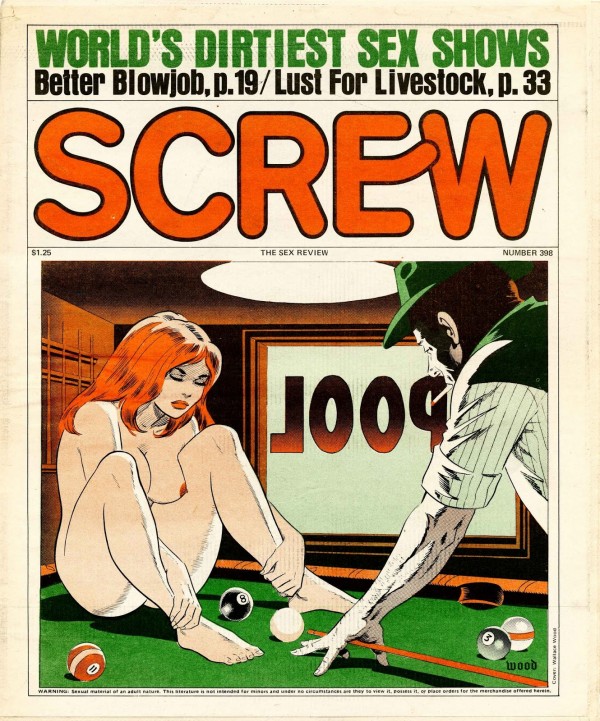 Screw
Screw published Wally Wood, Robert Crumb, Peter Bagge, Bob Fingerman and John Holmstrom in addition to any number of mostly NYC-based cartoonists. Without those gigs, some of those artists might have given up on cartooning altogether. Also, some of those covers are pretty great.
Danny Hellman has a bunch of prominent cartoonists'
Screw covers
up at this blog.
posted 3:57 pm PST |
Permalink
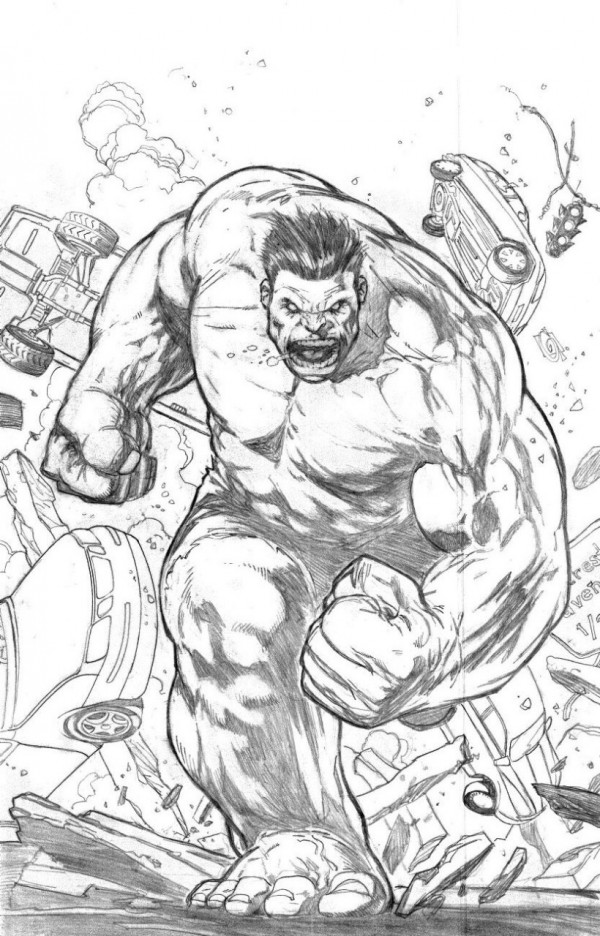
Go, Look: Ron Garney Mini-Gallery
 posted 3:42 pm PST
 |
Permalink
Your 2013 Comics Waiting Room Best Of List

Marc Mason at
Comics Waiting Room -- one of the sturdier survivors of a previous age of the comics Internet -- has piped in with a Best Of list that features his humble
mea culpa as to why it's not grander and more authoritative. He chose five books and then named two comics, one he thought was the best he read and one he thought needed more attention.
The books:
*
Boxers & Saints (First Second)
*
March Vol. 1 (Top Shelf)
*
Red Handed (First Second)
*
The Great War, (WW Norton)
*
The Initiates (NBM)
The comics:
Best Book That Needs A Bigger Audience
*
The Shadow (Dynamite)
Best Single Issue Of 2013
*
Sex Criminals #1 (Image)
posted 3:41 pm PST |
Permalink
OTBP: Show Me The Map To Your Heart And Other Stories…
 posted 3:40 pm PST
 |
Permalink
Columbia Announces Acquisition Of Kitchen Sink Press Archives
According to a release yesterday, the Rare Book and Manuscript Library at Columbia University acquired the papers related to Kitchen Sink Press. I guess this also serves as another reminder that Columbia is going to do its best to make itself a major player in the comics library and museum-type holdings business, under the general guidance of Karen Green. It should be fun to have a New York City presence doing that kind of work in a focused way.
That's a fairly lengthy release, so you should stride over there for details, particularly as it's late December and a proper feature article may be beyond me until the new year.
I always hear Denis Kitchen kept
everything in terms of correspondence and the like, so that should be some interesting stuff to work though at some point.
posted 3:35 pm PST |
Permalink
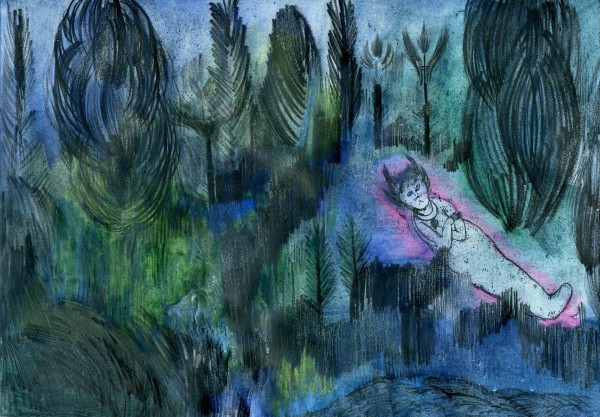
Go, Look: Renata Gasiorowska
 posted 3:30 pm PST
 |
Permalink
Festivals Extra: Comic-Con International Names First 20 Guests For 2014

Comic-Con International
has announced its first 20 guests for its big summer event, planned for July this year in San Diego. They did so via social media and their devoted blog. The guests represent the range of material covered by the convention, and include a number of super-admirable choices on the comics side of things.
Those guests announced are:
* Amanda Conner
* Brian Crane
* Eleanor Davis
* Jane Espenson
* Raymond E. Feist
* Drew Friedman
* Michael T. Gilbert
* Willie Ito
* Caitlin R. Kiernan
* Lucy Knisley
* David Lasky
* Graham Nolan
* Jimmy Palmiotti
* Benoit Peeters
* Don Rosa
* Jim Rugg
* Francois Schuiten
* Scott Snyder
* Fiona Staples
* Gene Luen Yang
Bunch of stuff jumps out at me here. I got about a half-dozen people e-mailing me right away excited about Schuiten and Peeters; that's a great choice, and that con has a long history of inviting over otherwise difficult to see European cartooning guests, particularly those with a foot in the arts-comics album making of the pre-L'Asso era. Eleanor Davis, Gene Yang and Lucy Knisley all strike me as broadly appealing cartoonists of the kind whose material you could very easily introduce people to on the floor as well as providing people that are already fans of their work a chance to meet them. Dave Lasky and Jim Rugg are super-admirable mainstays of alternative comics. Drew Friedman is an excellent cartoonist and a smart and articulate speaker about his work and things related, so I'm glad he's going to do this show. Scott Snyder and Fiona Staples are key mainstream comics talents of right now. I'm always happy to see Don Rosa... Extremely solid comics list.
The convention has provided biographies of each guest
here, and plans to announce a ton more in coming weeks.
posted 3:25 pm PST |
Permalink
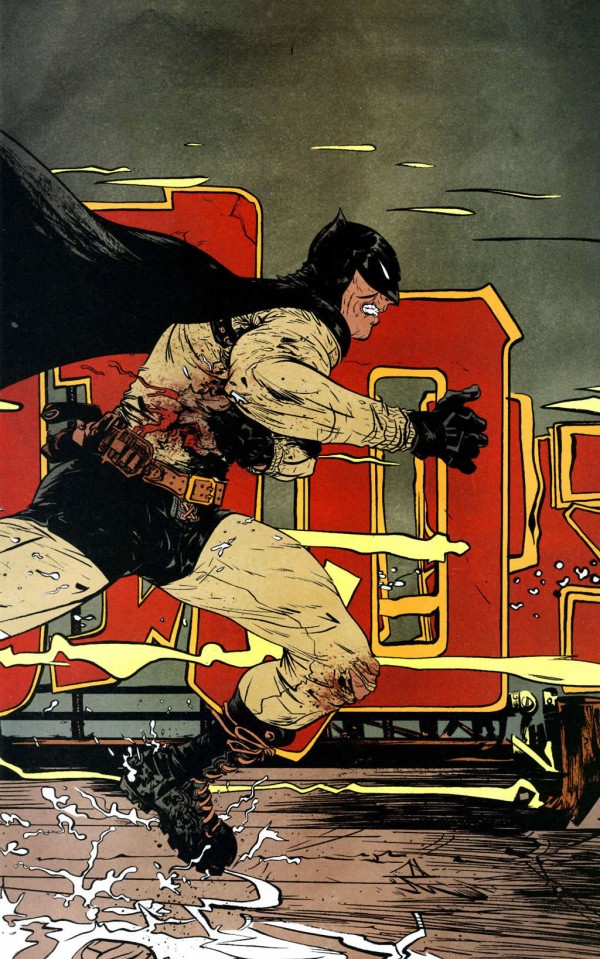
Go, Look: Noticing The Sound Effects In Batman: Year 100
 posted 3:22 pm PST
 |
Permalink
Festivals Extra: TCAF Announces First Round Of Guests For 2014; Names Expanded Pro Programming Slate
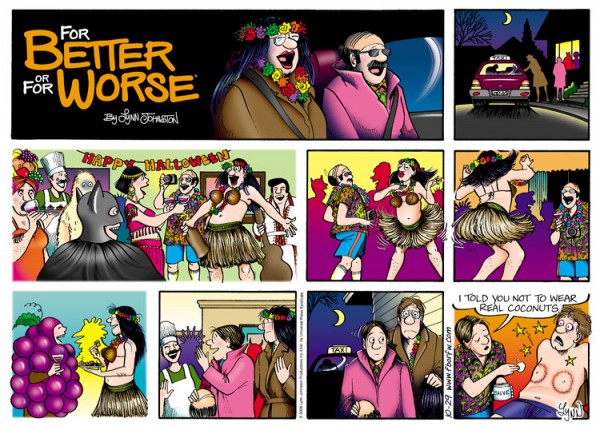
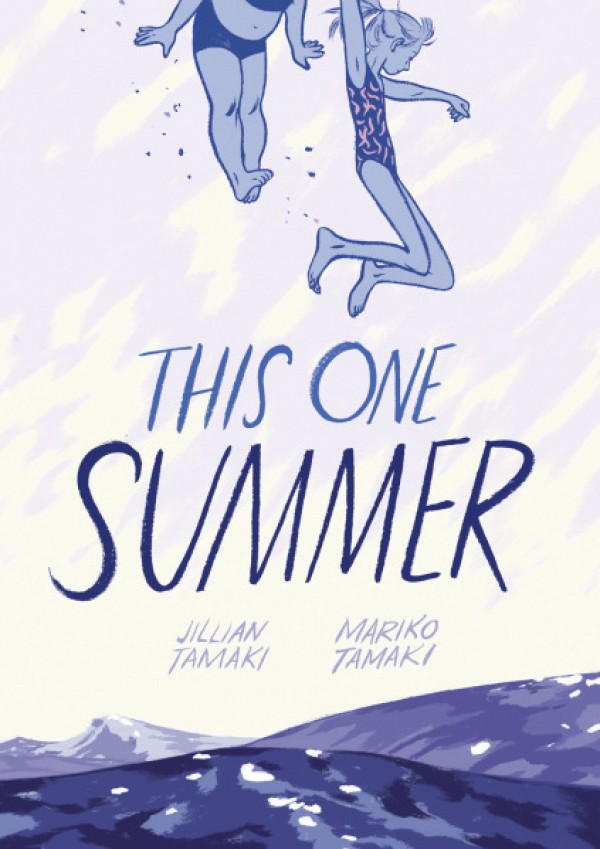
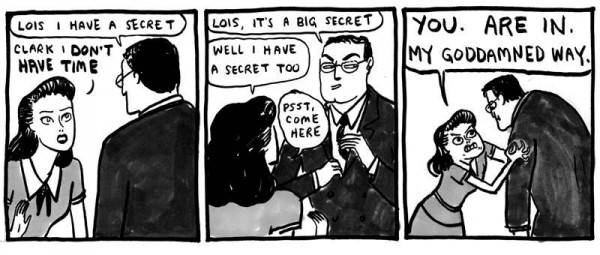

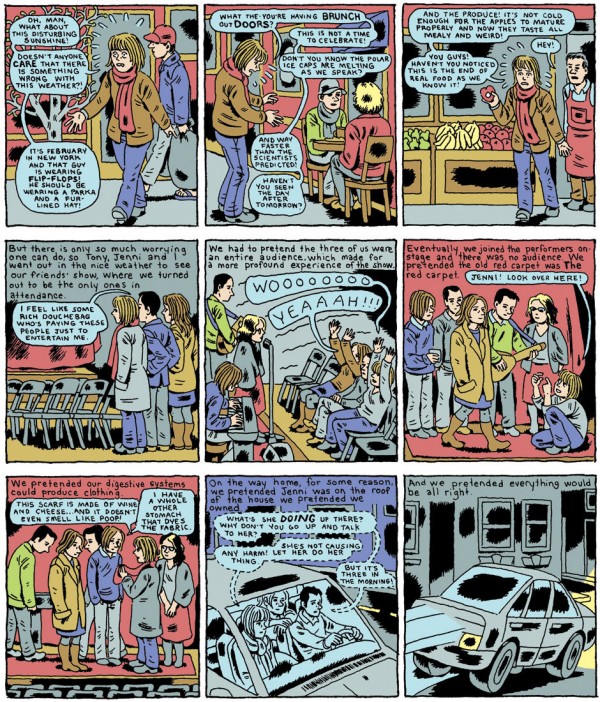
TCAF
has named its first round of guests for the 2014 iteration of its show:
Lynn Johnston,
Mariko Tamaki,
Jillian Tamaki,
Est Em,
Kate Beaton and
Gabrielle Bell. Johnston is a really good get for them as she's Canadian and very much loved by not just the general public but by a huge swathe of the comics-makers in attendance. I'm excited for her to get to experience that weekend. Mariko Tamaki and Jillian Tamaki will have a major book at the show from First Second/Groundwood:
This One Summer. Est Em's appearance continues the festival's admirable approach to significant international guests. Kate Beaton and Gabrielle Bell are two of the best cartoonists under 40.
TCAF also announced that the professionals-focused development programming will be called The Word Balloon Academy. That will take place the day before TCAF proper, along with an academic conference and focused educator/librarian programming.
That show is off to a great start. They promise details and more guest announcements into January. The show itself is Mother's Day weekend in May.
posted 3:21 pm PST |
Permalink
If I Were In Portland, I’d Go To This
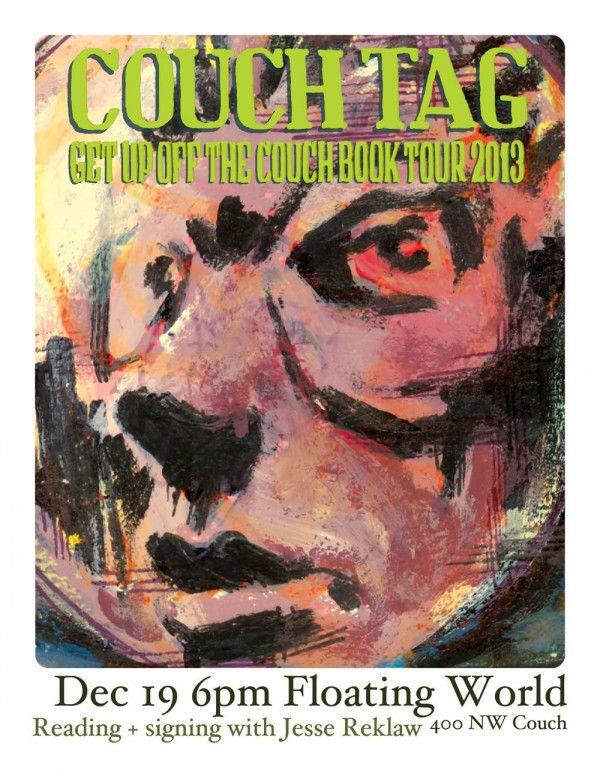 posted 3:20 pm PST
 |
Permalink
Go, Look: Davis Ozols
 posted 3:10 pm PST
 |
Permalink
Go, Read: Deeply Idiotic And Assholular Mash Note From Male Cartoonist To Female Cartoonist
Here. Just read it. It's awful. I'm grateful to the person who allowed it to be published.
Anything a hundred miles in proximity to this kind of thing should end yesterday, the relative awfulness of this act to another one or the comics community to the world at large being entirely beside any point worth making.
posted 3:09 pm PST |
Permalink
Go, Look: Dace Sietina
 posted 3:08 pm PST
 |
Permalink
Random Comics News Story Round-Up
*
here's another feature article on Neil Cohn's study of comics as a unique and important language.
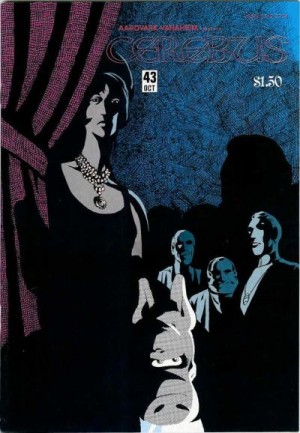
* if you're a big enough comics nerd of certain age and you think about it for a while, you'll probably figure out a single purchase or series of purchases that changed the course of your life. For me it was discovering early indy comics at Comic Carnival in Indianapolis that were published and were purchasable in roughly the same manner as the mainstream comic books that I liked. It's the combination that was crucial: I knew other types of comics existed, but being able to go to a devoted shop and buying them was a big deal in terms of my becoming an active comics reader in a way that random Saul Steinberg books and
Peanuts collections had no chance of being.
Cerebus during this time period was everything I liked about the adult world I wanted to be a part of: politics and humor and violence and melodrama. I loved those days when a new issue appeared on the stands.
*
Benjamin Woo continues to unpack material learned from his cartoonist surveys.
* not comics:
Jason reviews Thor: The Dark World.
*
these presentations at CCS look a lot more fun to put together than my 37-page paper on photojournalism depicting violence in 1960s Latin America.
*
every single superhero is someone's favorite. Except maybe Sentry.
*
Paul Gravett does another one of those giant profiles, this time on Yves Chaland.
* apropos of nothing,
this Matt Bors comic made me laugh.
* I don't know that I've looked at
Cameron Stewart's site in a
really long time. There are a lot of nice-looking prints available there.
* finally, there's a new comic,
Anxiety, at
Letters From Schwarzville.
posted 3:05 pm PST |
Permalink
Happy 62nd Birthday, Dave Scroggy!
 posted 3:00 pm PST
 |
Permalink
Happy 46th Birthday, Dan Taylor!
 posted 3:00 pm PST
 |
Permalink
Happy 61st Birthday, Peter Gillis!
 posted 3:00 pm PST
 |
Permalink
Daily Blog Archives
November 2019
October 2019
September 2019
August 2019
July 2019
Full Archives