September 11, 2014
GroupThink: On Submit—Mini-Comics And Small Press Publications As Discrete Digital Entities
SPX is this weekend. I'm fascinated by the fact that for the second year in the row -- with I assume a potential many more to come -- that
comiXology will serve as a major sponsor for the show with the idea of promoting and driving attention to
its Submit program. This mixes two things I love about comics businesses: the hands-on experience of taking a promotion directly to the people with whom it seeks to find personal benefit, and the idea of shows like SPX as an event greater than the sum of those personal experiences, a platform for saying something to the medium entire.
The program and its promotional effort also trigger a bunch of thoughts I have about digital comics more generally.
I want to run posts a few days in a row, engaging various types of writing, looking at the issues involved. I want to start with a GroupThink. A GroupThink is where I post some thoughts and ask for yours, either on the general subject matter of something that I've written. I'll then put those responses under this one for a permanent record of the
CR readership's cross-section of opinions. I hope you'll consider a response.
.(JavaScript must be enabled to view this email address)
*****
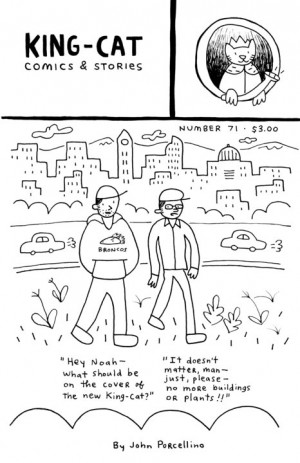
One thing that I think comes into play in terms of who participates in a program like Submit and who doesn't is cultural orientation. I watched comiXology's Chip Mosher speak at the end of the Ignatzes last year. He made a short pitch for his program, and at the end mentioned that he had drink tickets for the party that followed for anyone that wanted to come up and engage with him about it. The first person that came up to him -- the first person I saw, anyway -- was happy to maybe get a drink ticket but when Mosher began to engage with them there was a quick shift to "Oh my God, don't make me do this." That's not judgmental; I get it. I just think this supports a notion that there's a part of comics culture that doesn't want to invest the act of selling and distributing comics -- any kind of comics, any format -- with agency in a way that puts you out there as a seller or someone who would be interested in same. This seems a strange thing to say about a show of people selling things, but I still think that reluctance is a value a lot of cartoonists have.
When I attended the comiXology panel at San Diego this summer, there were a number of small press people there to express their appreciation for what having that platform has done for their comics and their comics-making. Unless I'm completely wrong, though, these were mostly genre comics of the kind that saw a benefit in having their work where publishers and a more traditional comics audience could see them as opposed to art-comics people who were grateful to put work in folks' hands. I think there's a different orientation there, and I'm not sure that a lot of alt-comics people share that desire to get their work in circulation in a way that puts them on a comics publishing related continuity.
Another thing that interests me is that mini-comics serve a wider variety of functions than comics book do, or at least this is traditionally true. I don't know that there are many comic books made that are as frequently employed as business cards, or as part of the social obligation of going to a show. Very few people make more formal comic books as a way to keep people apprised as to what they are up to. This is a great thing about mini-comics: they can be a commercial end result and a non-commercial object depending entirely on the context: they are "Porcellino's Cat," caught between two states of existence with both equally true.
While it's taken a little while for direct market comics fans and readers and makers to rewire themselves into accepting the the reading of digital comics as its own experience -- and even then, we're not all the way there -- I think it might take handcrafted comics a little while longer. This makes me wonder if we might not see more comics in the future that have a digital life as more or less
handcrafted digital comics: think of
the Emily Carroll work, or
the Kate Beaton sketchcomics, or the animated panels
Katie Skelly is using in My Pretty Vampire. At that point, you run up against the idea of programs like these as delivery systems for tablets and phones.
I also have no idea how the perception of the Amazon.com purchase of comiXology may play in terms of any of these factors, particularly the cultural ones. If the orientation is to
not involve yourself, that may mean an even lower push is necessary for you to take an option off of the table.
So I think there are challenges there for finding a commercial market for single objects, because mini-comics, handcrafted comics and small press works exist as the boundaries of commercialism, marketplaces and being objects.
The strengths and opportunities of that market, that particular choice moving forward are interesting as well. Digital markets have almost no threshold for participation, and Submit as a model reduces that threshold even further by leaving much of the physical labor costs to their creator-partners. What that means is there are fewer structural impediments than ever
not to at least explore the option as one among many available to creators and publishers. After that initial investment of a bit of time, the costs are negligible to the creator as well, at least as I'm able to see it. So I think there are opportunities for digital copies available in a variety of ways to be the final publication home for a significant amount of early and obscure work. When Tom Hart releases his next major comics work, I can imagine there being an interest in his wonderful mini-comics. Ditto Scott McCloud and his next year when
The Sculptor drops.
This also could be a place to store work that my flit in and of publishing favor, like those tied into a calendar event or the life of someone in and out of the news. My understanding of the impulses in play with a digital comics purchase are really rudimentary but I know the first time I desired a digital comic for purchase was a comic book that began to go viral as an "event" due to a plot point. I can imagine a future market that is really responsive that way, and I don't think that's an effect you can achieve on a book-to-book, creator-to-creator platform. One can also imagine a playful market, even one tied in fleeting digital exclusives. There's such a profound thing going on right now with digital comics in terms of simply making use of the massive backlog of material that I'm not sure we're doing anything but figuring out how these sales and directed, targeted pricing elements work. At some point that has to die down, and we'll begin to see comics in a different but related light.
I also think there's bound to be a greater push
for using every means at one's disposal to distribute work, whether or not you see the primary value in doing so. "Why not?" is going to do battle with "Why?" and I think has a better chance of winning the day with each passing week. I know that the cartoonists I talk to under 35 are much more open about taking advantage of very specific opportunities, opportunities that might not have been on the radar of the cartoonists I know in their 50s and 60s. Comics works according to extremely tiny margins, and at some point professional expectations are likely to conform to these very specific goals. Making hay where you can is not yet the dominant ethos in mini-comics, at least not as far as I can tell, but it's a growing one. A sales point for digital service might not be future-focused by present focused. "What can you do to help me move 10 copies of this book this weekend to go along with the 30 I'll sell at my table?"
I'm going to have some stuff from the show floor, but right now, I'm more interested in what you think? Is there a market for the sale of mini-comics and small-press works through digital services like Amazon? What are the challenges involved in developing that market? If that market won't develop, is there a market that takes its place?
.(JavaScript must be enabled to view this email address)
*****
*****
posted 12:25 am PST |
Permalink
Daily Blog Archives
November 2019
October 2019
September 2019
August 2019
July 2019
Full Archives