October 14, 2008
I Asked You About Vertigo’s Paper
Last week I asked
CR readers several questions about comics. Here is one of those questions and some of the answers we received.
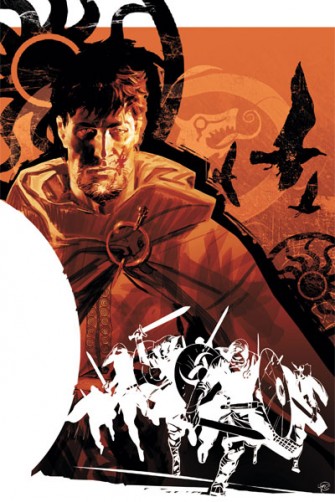
QUESTION: I don't get a lot of new trades and definitely don't get a ton of new trades from Vertigo. I have the new Northlanders
trade, and what struck me was the paper stock. It was more like comic book paper stock instead of glossy paper, if that makes any sense. Does anyone know what kind of paper that is, if it's a line-wide usage, and how long it's been used?
Derik A Badman: If it's the same paper I'm thinking of, that stock (smooth newsprint-like) was used at least as far back as the first
Sandman trades (which according to GCD was at least 1990).
Ty Buttars: I don't buy many Vertigo trades in softcover but all the ones that I do own are printed on comic paper stock. The Vertigo hardcovers have glossy paper stock.
Brian Hibbs: I don’t know the
name of it, but yeah, it’s pretty much line-wide (with a couple of minor exceptions) these days -- I think they started using it on the original printing of
Sandman: The Doll's House, actually. But
Y, The Last Man, and
Fables both use the same paper, that's for sure, and those are their "modern" big hits.
Sam Humphries: The first time I remember seeing the paper they are using in
Northlanders was in the TPB for
The Filth. It seems to me then, and now, as an economic decision. Back then, collecting 12 issues into one TPB (as in
The Filth) would result in a prohibitively high cover price, and splitting it into two books doesn’t make market sense (as it would for
Hush or
All Star Superman). For
Northlanders, the cover price is $9.95 -- much lower than you would expect to see for a TPB that size. I imagine it is a strategic move, to hook people on the first volume and try to create a new perennial selling title. That price point is probably only possible with that paper. That's just my interpretation, however.
Kiel Phegley: DC's trade program is a total mystery in so many ways, but one thing I have figured out is that they do use different paper stock depending on their intended audience. Generally, the glossy paper is used for big ticket superhero stuff and hardcovers while the more newsprinty comic paper is used for general roll-outs like, I don't know, a
Countdown spinoff or most of the Vertigo books. In the case of the latter, I'm assuming that DC is banking on the fact that most people who buy those trades buy them as disposable first reads (well, maybe not "disposable" but the audience isn't a collector-heavy one) as opposed to buying the pamphlets first. I know that's how I've always bought
Fables and every one of those trades has the softer paper stock. When things get bumped up into nicer treatments like Absolute editions the stock goes up, but it has to be more cost effective to print with a lower paper quality when your readership is coming for the story first and not because the format is slightly more sparkly than the one you first bought the story in.
Dave Rose: There are various types of paper used for trades. Which ones used depend on what the book is. Often, the stock used in comics (Mando comes to me, but I'm not sure that is the name) is used to keep the cost down. Baxter paper has been used when a longer lasting paper is desired. As the demand for trades and hardcovers has increased, a variety of paper stocks have been use -- including the glossy stock you referred to. So, factors such as intended audience and the purpose of the book (archival for example), along with many other considerations, all combine to determine the paper stock which will be used for any given book.
Jason Thibault: Judging from my trades of
Loveless,
DMZ and
Scalped, Vertigo prints all of their books on that particular paper stock. It's the same stock that the
Hellblazer singles are printed on. Not sure the grade, but I've been known to call it "toilet paper."
posted 8:00 am PST |
Permalink
Daily Blog Archives
November 2019
October 2019
September 2019
August 2019
July 2019
Full Archives