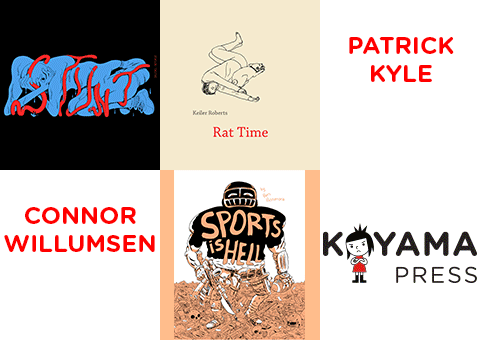
Go, Read: Brian Hibbs On A Colon-Cleansing Of The Direct Market Serving Comics And Hobby Stores Here. The headline suggests it's a plan for the comics industry entire, but mostly it looks to me like the longtime industry advocate in hoping to clean up the worst variant-related offenses and clear up some general ordering impediments to make the DM work the best it can. They all seem worth endorsing on my first read. On a second, I might express some doubts about whether or not getting out of the DM stores' way actually leads to systemic reform. We'll see!
It's interesting, too, that Hibbs looks at current kids' comics numbers as a sign that specialized selling will experience a surge in a few years' time.
Assembled, Zipped, Transferred And Downloaded: News From Digital By Tom Spurgeon
* I wish I knew more about how Comixology works with both information it gets from Amazon and to engage current comics realities. Like I would have thought that Captain Marvel would be dominant on the front page rather than one of a smattering of selections. That's not something I'll figure out doing anything other than paying a lot more attention, though.
* this article points to the writer's shift away from webcomics as a sign of how social media has changed on-line consumption. I figure that's true in the widest. Social media is content about you, your friends and the things you choose to spend your time on. Everything else pales in comparison. At some point there will be a significant, sustained pushback against social media driven consumption, but I don't expect it to have a significant impact on the basics of how media is consumed.
Random Comics News Story Round-Up
* Paul Mavrides points out the various failures at work within the comics community when it's come to varying levels of support for disgraced child molester and Dragon Con co-founder Ed Kramer.
* not comics: here's a broad pop-culture think piece on the imminent release of a Captain Marvel movie adhering closely to the relaunch spearheaded by writer Kelly Sue DeConnick and her collaborators. I'm always uncomfortable with art being treated as a measured consumable, but I am for inclusive subject matter across the spectrum of entertainment and have witnessed how powerful an experience that can be for those that have not enjoyed seeing themselves reflected in these giant efforts the way they should have. I hope kids in particular get to enjoy a special moment or several with this film.
* finally: a controversial story with any number of difficult elements leads, non-surprisingly, to a cartoon backlash. It's hard to figure out why this one had to happen at all.
Dragon Con’s Kramer Arrested Again, This Time For Taking Photos Of Children In A Doctor’s Office Here. Ed Kramer was a co-founder of Dragon Con (then Dragon*Con) in 1987, was first arrested on molestation charges in 2000, pleaded guilty to a set of charges in 2010 and was removed from financial participation in the successful comics show in 2013. He faces several decades in prison on these latest charges, in part due to his legal status carried over from those earlier charges.
If anyone has any smart, viable ideas how we as a latticework of communities might balance the scales in terms of how much comics- and geek culture-related money went to this monstrous figure by perhaps setting up a counter-funding campaign or something similar aimed at victims' charities, .(JavaScript must be enabled to view this email address)
Random Comics News Story Round-Up * Nick Spacek on James Warren: Empire Of Monsters, the new one from Bill Schelly. I know so very little about Warren and am very much looking forward to this.
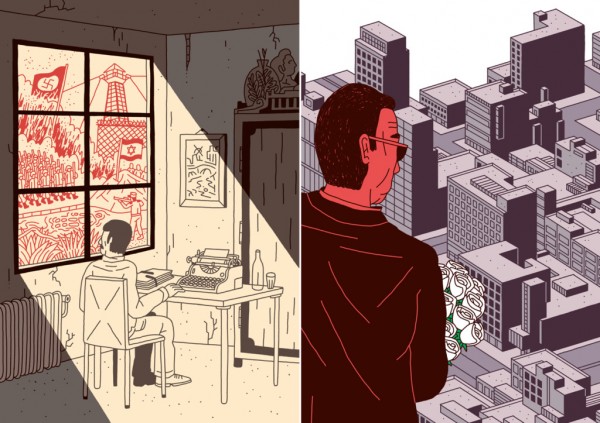
* Michael Weingrad asks after great Jewish graphic novels and great graphic novels, period.
* this is a different way to sell some comics-related material. I'm not certain reading this how different it is and how interested I am in the result, but I always like to see this kind of thing. I would imagine that a primary benefit of writers-room style comics is greater ease of inclusion for a company dominated by decades of career opportunities directed at certain types of people.
This Isn’t A Library: New, Notable Releases Into Comics’ Direct Market
*****
Here are the books that make an impression on me staring at this week's no-doubt largely accurate list of books shipping from Diamond Comic Distributors, Inc. to comic book and hobby shops across North America.
I might not buy all of the works listed here. I might not buy any. You never know. I'd sure look at the following, though.
*****
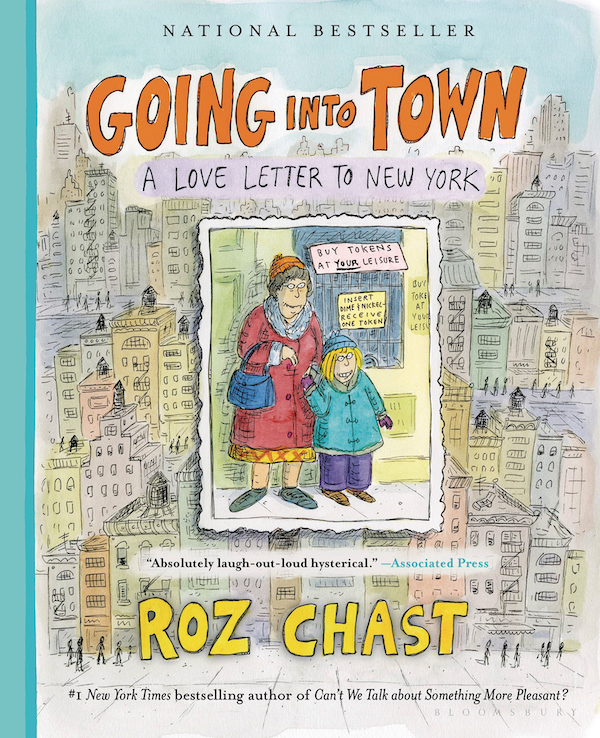
JAN191670 GOING INTO TOWN LOVE LETTER TO NEW YORK TP $18.00
This book has been alive in comics' collective consciousness due to it being discussed during the great Roz Chast's extended period of promotion on behalf of Can't We Talk About Something More Pleasant? A hyper NYC focus would play to different strengths, and in that way makes this book just as welcome as the last.
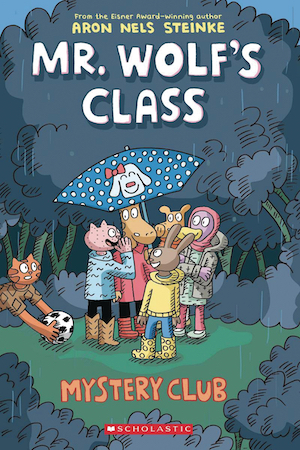
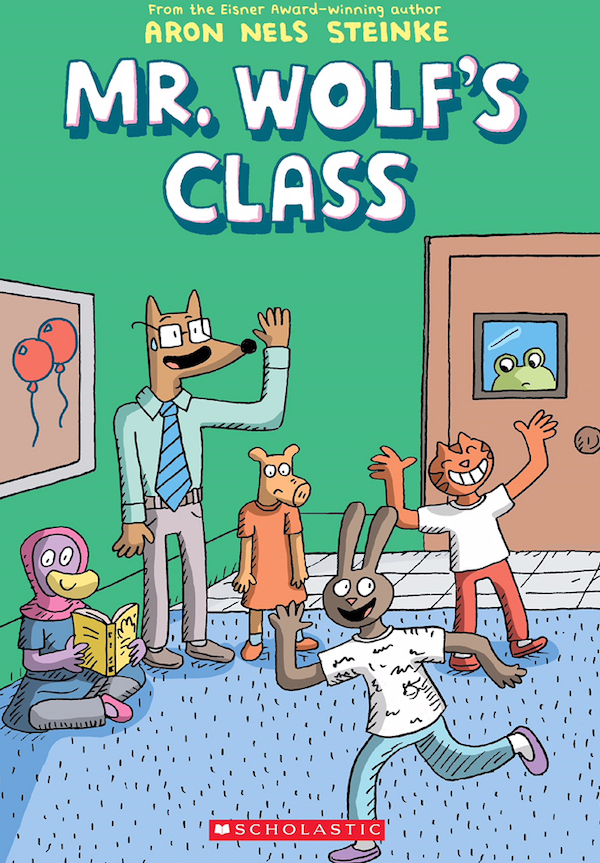
DEC181892 MR WOLFS CLASS GN VOL 02 MYSTERY CLUB $9.99 DEC181893 MR WOLFS CLASS HC GN VOL 02 MYSTERY CLUB $18.99
I've enjoyed both books in this ensemble kids series and look forward to a third this Fall.
DEC180357 HELLBOY AND BPRD 1956 #4 (OF 5) $3.99 DEC180527 ACTION COMICS #1008 $3.99 JUL188526 DIE DIE DIE #8 (MR) $3.99 DEC180296 WICKED & DIVINE #42 CVR A MCKELVIE & WILSON (MR) $3.99 DEC180259 MAGE HERO DENIED #15 (OF 15) CVR A WAGNER $7.99
Hey, comic-book comics. We have our weekly Mignola, always welcome. I think Brian Bendis tweaking Action into a flagship DC Universe title was a really smart move; the resulting comic books have an ease of read to them pretty rare in mainstream comics these days. Die Die Die is a gaming comic gaining marketplace traction; it feels like we're four or five issue's worth of content on Wicked And Divine, so I'm paying closer attention. Finally, congratulations to Matt Wagner for finishing the third cycle of his long-running Mage comic, something that I believe began -- yikes -- 35 years ago when I was the perfect age for its monster designs, t-shirt toting hero and broad call-outs to Arthurian legend. I always think it's nice for creators to get the comic they intended out, whether or not it's a comic for me at its far end.
DEC182038 EMOTIONAL DATA ONE SHOT (MR) $6.00
This is the high-curiosity item of this week's books of note: Silver Sprocket is as good a name as any for this kind of book, and the visuals look interesting. I'll definitely be looking at it.
JAN191654 WHEN IS HIGH MOON GN $30.00
This is one of those animation artist turn to comics projects -- another book not my cup of tea, but I like how aggressive and hyper-contextual the ad copy is.
NOV180715 CORTO MALTESE GN THE SECRET ROSE $19.99
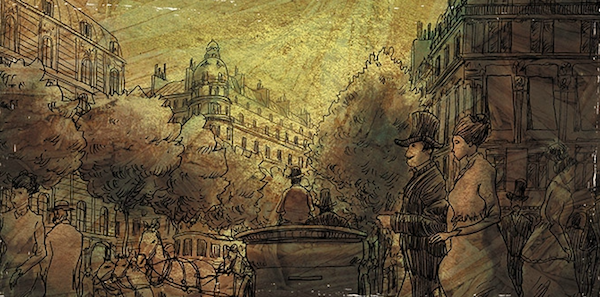
This is a single-page comic that originally ran in the 1980s, and you just know it's super-handsome. I'm not enough of a close reader to capture in my own mind, even, any sort of satire or commentary.
DEC181865 CULT OF THE IBIS HC (MR) $29.99
This is Daria Tessler through FU press. Tessler's stuff is really good-looking, and reflects her background as a single-image printmaker, enough I'd certainly check out a stand-alone volume. Here's the Instagram site.
DEC181863 WRITING WRITTEN HC SHORT STORIES $24.99
Here's the latest offering from Fantagraphics' intermittent prose book program, Stephen Dixon is certainly a formidable writer with the usual cluster of honors and fellowships. He has to be at least in his mid-'70s and I don't know what the later work is like at all but I love any boutique publisher that chooses to work with older talent -- even one I already love for other reasons.
DEC181854 BILLIE THE BEE HC $14.99
Mary Fleener! I can't imagine not wanting to pick this up and look it over in the comics. Her skill on the page should lend itself very well to all-ages work, and will hopeful drive some attention to a reconsideration of her memoir-style comics. A full Mary Fleener re-appreciation, that's what I want.
*****
The full list of this week's releases, including some titles with multiple cover variations and a long, impressive list of toys and other stuff that isn't comics, can be found here. Despite this official list there's no guarantee a comic will show up in the stores as promised, or in all of the stores as opposed to just a few. Also, stores choose what they carry and don't carry so your shop may not carry a specific publication. There are a lot of comics out there.
To find your local comic book store, check this list; and for one I can personally recommend because I've shopped there, albeit a while back, try this.
The above titles are listed with their Diamond order code in the first field, which may assist you in finding comics at your shop or having them order something for you they don't have in-stock. Ordering through a direct market shop can be a frustrating experience, so if you have a direct line to something -- you know another shop has it, you know a bookstore has it -- I'd urge you to consider all of your options.
If I failed to list your comic, that's because I hate you.
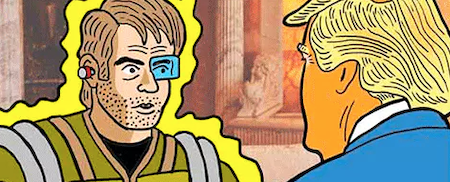
Random Comics News Story Round-Up * Tom Tomorrow has been great for so long, it's easy to take him for granted. No one could do a comic strip quite like this one, and have it be funny every panel.
Comics By Request: People, Places In Need Of Funding
By Tom Spurgeon
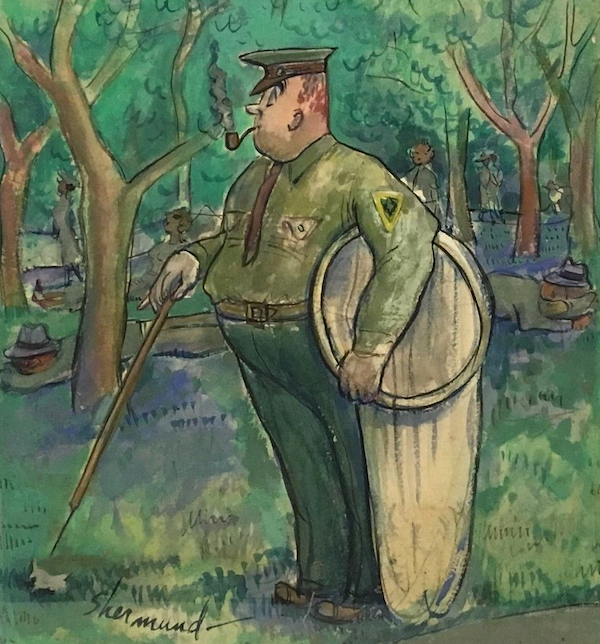
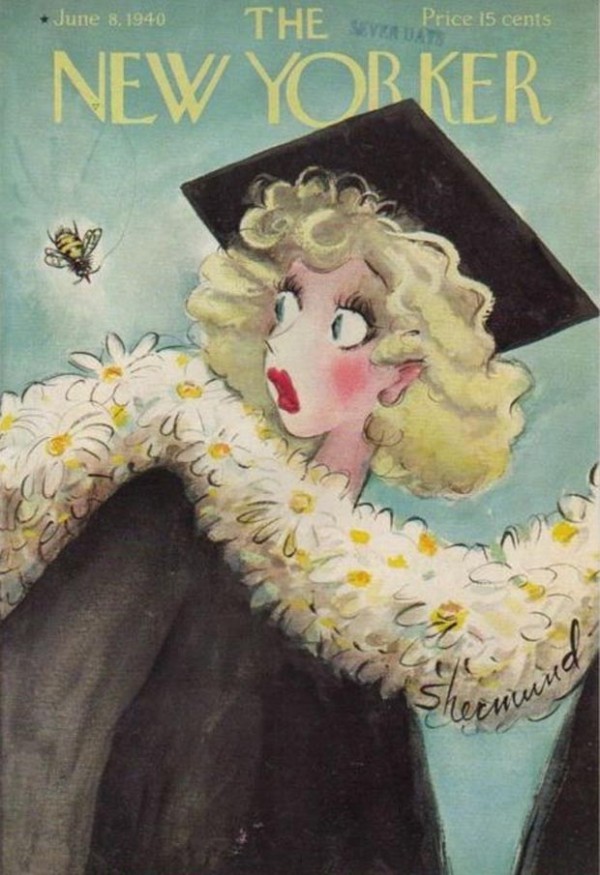
* I am grateful to see the Barabara Shermund burial fund push past $7000 and hope in the next few weeks that fundraising efforts makes it goal. It's a great honor to be able to bury an artist working in an art form for which you have affection.
* here's a classic crowdfunder, by which I mean an artist and a artistic work that have been finding funding this way for several years now.
* here's an article about the latest iteration of the character The Wasp suffering from bipolar disorder in her solo-adventure narratives. That's a good use for characters like that, throwing a spotlight on a health issue.
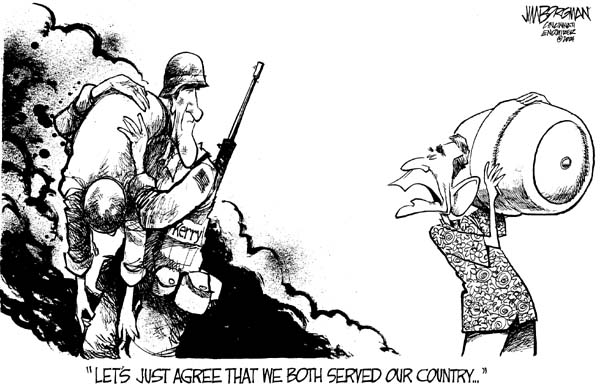
* that dumb Serena Williams cartoon goes up before the Council Of Willful Stupidity or something similar. That just seems an openly, obvious portrayal based on racial stereotypes and sexist assumptions -- what it's based on and from where it comes if not that is beyond me, and a proclamation that things that includes a whine that things are too politically correct seems like an argument a middle school student would rustle up in its defense. I say let the worldwide press die.
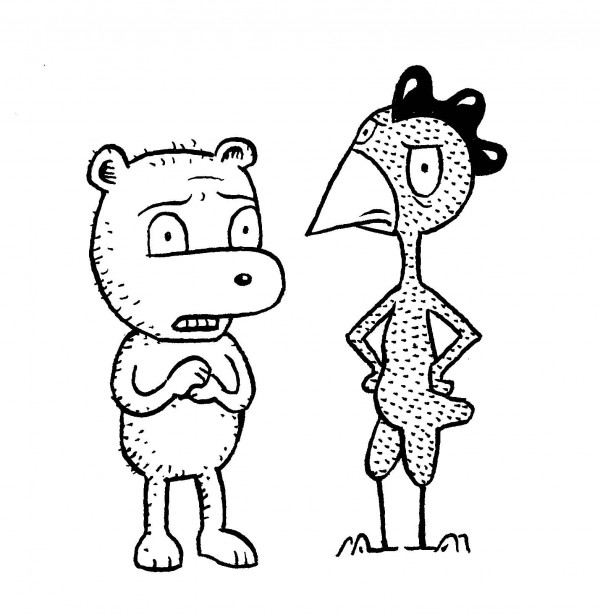
I'm a fan of the new series by Aron Nels Steinke, Mr. Wolf's Class, the second volume of which is out this season and should as of this week be purchasable at all the usual outlets. Mr. Wolf's Class represents the side of kids comics publishing I find most interesting. Rather than fantasies about extraordinary children or avatars of same accomplishing great tasks undertaken or thrust upon them, books like Steinke's focus on the rhythms of everyday life through actors whose lack of life experience make the ordinary strange and unusual.
Steinke's series offers more complexity than most of even that type of work by focusing on a classroom's worth of kids, their delicately expressed interactions, and the occasional grace note from the eager teacher. Steinke no doubt draws upon his own teaching experience to interesting effect. The pages of the comic are filled with remembered activities experienced anew. I could read 50 pages of comics like this every day for the rest of my life.
What follows was edited slightly for flow, clarity and at least one word I made up. My thanks to Aron for his patience. -- Tom Spurgeon
*****
TOM SPURGEON: Aron, I don't know much about you that I haven't read between the lines of your interviews. When did comics enter your life and how? At what point did you realize that you might want to do comics? You've hinted that you weren't particularly into comics at an early age, perhaps to your developmental disadvantage.
ARON NELS STEINKE: I first got the comics bug when I was in the 5th grade. My dad had started a side business selling home soda machines. He called it The Pop Shop. At the time he was a high school math and science teacher but I'm not sure how happy he was at the time. At one point he teamed up with a house-less man he met outside of a Costco who sold hot dogs. My dad bought a bus and parked it on a corner in suburban Vancouver, Washington, where he and this other man would sell ribs and soda machines. It was not exactly a lucrative business for my father. [Spurgeon laughs]
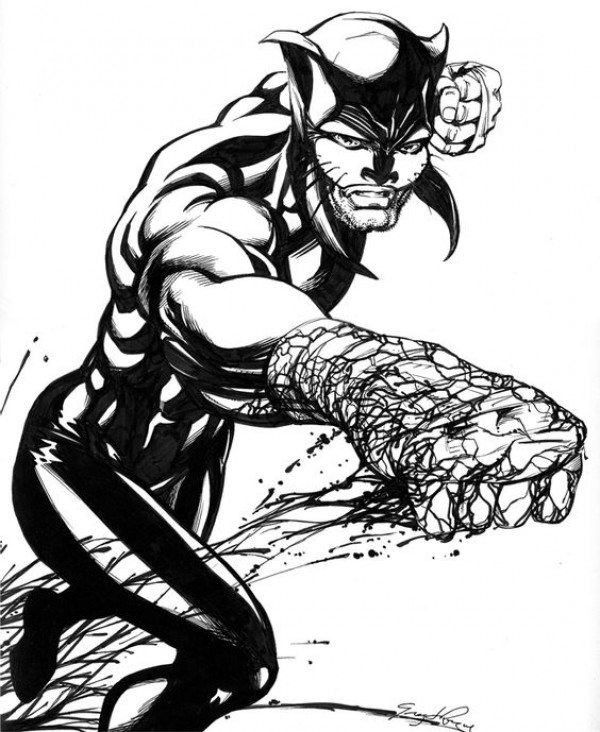
On weekends my dad would drag me around to flea markets to give out soda samples and I'd work for him on commission. I think I only sold two of those machines. The Drink Maker was what they were called. I was apprehensive of flea markets at first but then I soon realized how amazing they could be with all their treasures. One day he gave me some money to buy some comics from a dealer who had several long boxes because my dad had a fondness for the western comics he read as a kid. I bought Wolverine #23. It was my first comics purchase although I do remember my brother had some Krull and Star Wars comics lying around our room.
So with this first purchase an obsession followed. I spent the next several years accumulating comics -- mostly superheroes from Marvel, DC, and Image. But I didn't learn how to make comics from reading them. The complexity in the art I was copying was just too challenging for me at the time to make more than one image -- let alone tell a story that way. I would just draw covers and pin-ups. I couldn't seem to draw sequences of images. I was so confused and curious about how they made those pen marks and the color gradients. I couldn't feel the connection between human hands and that art.
Kids today are growing up reading Raina Telgemeier's books and Dav Pilkey's Dog Man comics and with the wealth of material available they grow up having the language of comics in their blood. There's an accessibility with the work that's being produced for children today that those traditional mainstream superhero comics didn't provide me when I was a youth.
Reading Clumsy really helped me break free from the stiffness of certain creators I was emulating. The less precious comics of David Heatley and James Kochalka showed me that you could make comics that were less precious and more about expression. John Porcellino's King-Cat taught me the poetry of pacing and of line.
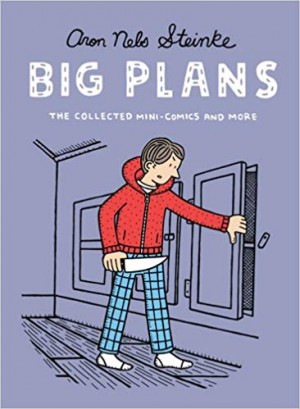
I went from drawing huge 11 x 14 inch pages to six panels per page where each panel was a tightly rendered square inch. I put together an autobiographical mini-comic with these little six-panel-per-page comics called Big Plans. I applied for a Xeric Grant and got it. I was given $1,530 to print 1,000 copies of my mini-comic and it felt like all the money in the world. Miraculously, I got the book into Diamond and sold about 460 copies and then I got the self-publishing bug and kept going -- fueled by narcissism, student loans, and delusions of grandeur.
SPURGEON: Is there an influence in your work that you see that maybe no one else does? How much did other work inform developing your own very distinct style and storytelling solutions? Does that include kids' book illustration as something you've processed separately from comics, or are they all of a type in your own personal creative cosmos?
I remember thinking in my early twenties about how I had no personal style but I desperately wanted one. By the time I'd discovered most of those people above, my own style had started taking shape but I'm not sure how it happened except through hours and hours of drawing and being embarrassed at how derivative it all felt. And then my style appeared by embracing my strengths and knowing my limitations -- when I started drawing small. It freed me up to focus on pacing and storytelling. I couldn't make flashy pages, so why bother? Over time I've gradually begun to draw bigger. Now most of my pages are done at 9 x 12 inches on hot press Fabriano watercolor paper. I'm very lucky that I was successful at developing a personal style. If I wanted to make it more illustrative rather than cartoony I think I could do it but I'd certainly have to push myself and experiment.
SPURGEON: How did you fall into the First Second orbit and how much of your development of Zoo Box involved working your editor? I tried to reverse engineer when you started with that book, and I believe there was enough time from start to finish to put you fairly early on in that company's publishing plans.
STEINKE: I started working on The Zoo Box with my wife, Ariel Cohn, in 2012. She came up with the plot, we co-wrote the details together, and I supplied the art. We approached First Second in 2013 -- their 7th year of publishing?
SPURGEON: [laughs] Maybe not that early, then.
STEINKE: We didn't have an agent but I remember writing to our editor Calista Brill, and basically sending her an almost completed version of the book. It was good timing because they were launching a couple other books that were sort of a cross between picture books and comics and The Zoo Box fit right in.
I had hoped for The Zoo Box to be this exciting comic for reluctant readers; something that was easy to access on reading level but a little darker than most beginner reader books. Calista had some minor suggestions and I think we ended up adding in a page or two without changing much else.
SPURGEON: We talked the night you won your Eisner for that book. Was that a good experience? I know that awards recognition can be tremendously satisfying but comics is such that there's very little to no financial boost the way that programs in other media might provide.
STEINKE: I know it's not healthy to get caught up in awards but that was one of the best days of my life. I don't think there was any direct financial response (sales) but it did give me some notoriety and acclaim that I could use to help me with pitching and launching Mr. Wolf's Class. I also met Cassandra Pelham Fulton at the awards who is now my editor at Graphix and who acquired Mr. Wolf's Class.
I had brought a stack of my early mini-comics that I was never ever going to be able to sell and I was just handing them out to random people. I wasn't thinking of this as any kind of networking trick. I'm sure I came off as obnoxious to some people. I just wanted to save these comics from my recycling bin. I gave them out to anyone who would receive them. I gave Cassandra a comic or two. I may have handed you one. I know I gave some to the custodial staff at the Hilton. A month later Cassandra sent me an email saying how much she liked my mini-comic and if I had any projects to pitch her.
Ariel, unfortunately, was not able to attend the awards. It would have been so much better if she could have been there but just this past year we both went and and got to sit at the table with the Graphix crew. When you go to the awards you get to cheer for your friends. Liniers was at our table, too. He's hilarious, by the way. His speech really added some much-needed levity to the room. And then he bought us all a round of champagne. I didn't do that when I won. That's classy. That's what you're supposed to do when you win. I know better now.
SPURGEON: As fond as I am of Zoo Box, I'm fascinated by what a different work in term of atmosphere and aim the Mr. Wolf books have been thus far. How did you pivot to that project?
STEINKE: Ariel really helped me out of a creative slump with The Zoo Box. I really had no projects in mind when she wrote The Zoo Box. She may have saved my career. With that successful little project I got the confidence to move onto a bigger book.
I was making the Mr. Wolf comic strips during that time as well but I was really just making them for fun. I was putting them up on the internet without any ambitions beyond that. After 200 or so Mr. Wolf comic strips it was clear to me that I was ready to tackle a big project. Those pages and The Zoo Box were warm ups for the Mr. Wolf's Class series.
SPURGEON: I'm a little lost. What role did First Second play in the move to a series?
SPURGEON: [laughs] That explains my confusion. Of course. You just mentioned Cassandra.
STEINKE I have no doubt that First Second would have done a great job if that's where the project had landed.
SPURGEON: No doubt! Sorry, I'm a bit out of practice with these interviews. [laughs]
To broaden things a bit, then. An item of conventional wisdom in your part of the marketplace right now is to value series over individual books; that's what this latest book is, the second in a series. Was that a comfortable creative choice for you to make? Is there something you like about working with some of the same material over multiple works?
STEINKE: I've always wanted to work on a series. I know how ravenous kids can be about their books. Comics, especially. They'll read my book in an hour or less and then ask where the next one is. It's incredibly rewarding to be able to satisfy that need. I love hearing about kids who read my books multiple times while they're waiting for the next in the series. That's the best compliment an author can ever receive.
SPURGEON: What caused you to move from the teacher-centric material to engage first and foremost with the kids?
STEINKE: I wanted this project to be sustainable. Writing for kids is a bigger market and it was also the audience I was directly relating to day after day as an elementary school teacher. When I was making the Mr. Wolf comic strips about things that happened in the classroom I had to share them with my students. I couldn't not share them. I'd print copies of the comic strips without the text for students to fill in the speech balloons, captions, and thought bubbles. It was fun to see if they knew which moment or event I was depicting or what their interpretation was. Kids became the audience.
SPURGEON: You've brought up the late film director Robert Altman's approach to ensemble acting as a north star for this work, and you're also working directly from your own experience as a teacher. How did those fit together? Do you see that kind of collective-scene consciousness in your classes the way that Altman developed them or is this more of an exciting tool for you just in the use of it?
STEINKE: I think you'll get that ensemble feeling more and more as the series progresses. That's what I like about my favorite TV shows: You get to spend time with multiple characters and watch them develop. Multiple perspectives provide more entry points for relating and connecting with characters and you can build empathy for those characters that maybe readers don't immediately identify with. And the best is when characters change and get you to love them when at first there was apprehension. That's what David Simon and Ed Burns do so well.
You want to know something really dark? At first, in the brainstorming phase when you're just throwing out ideas I had the idea to make a children's version of Twin Peaks. [laughter] I thought maybe there was a character -- student or teacher -- who would go missing in my story and the mystery driving the plot is what happened to the missing person. Kind of like what if Laura Palmer had just gone missing rather than "Who killed Laura?" But of course that plot was so dark and scary. I had to throw away my first draft of the book so I could start totally anew.
SPURGEON: As someone without kids and decades removed from being the age of the kids in the class, what is the unique quality that you get from kids in that 4th or 5th grade range that you wouldn't get from 1st graders or sixth graders?
STEINKE: Fourth and fifth graders are capable and earnest. They're usually still in awe of their teachers and want to please them. That's mostly gone by sixth grade. First graders are awesome! They say crazy stuff and are totally fun but I didn't want to have the protagonists so young. It would have been more difficult for a fifth grader to identify with six and seven-year-olds. Kids typically want to read about kids their own age or where they will be in a year or two.
SPURGEON: You know, your pacing is wonderful.
STEINKE: Thank you!
SPURGEON: You make really strong choices within scenes that lets any individual episode develop at its own speed. I feel that's the primary distinguishing factor of both books, at least in a formal sense. How conscious are you in terms of controlling the speed with which your narratives unfold, and how much time to spend on any one moment?
STEINKE: I love planning for how a reader's eye will move across the page and how they'll turn the page. I like planning that forward momentum and when there will be a rest or pause. It's musical. It's about rhythm. I obsessively reread my work to look for that flow and check for the beats. I often try to minimize the text on the page, and what kind of action happens from one panel to the next. I really try to eliminate redundancy unless I'm going for word prediction and planning scaffolds for emergent readers who need that word and picture agreement. That's another aspect I love about writing for kids: planning the readability in the words they're presented and how I can sneak a new word or two in there that I'm specifically trying to teach them.
SPURGEON: Can I ask after the running gag with the rats? Does that come from a particular place. It's very funny on the page and sort of creepy in abstract. Is there a particular effect you want there?
STEINKE: I have worked in schools where we've had mice problems and in my own home I've had rat problems. Rats are super intelligent creatures but of course we don't want them in our walls. So often times we resort to killing them. I'm an animal lover so this is painful. It's easy for me to imagine a little society of rats. I put clothes on them because I wanted to play up our sympathy for them. I also was reading a Jim Henson biography and I think a little bit of the societal separations between the Grogs, Fraggles, and Doozers seeped into my consciousness.
SPURGEON: I'm always happy when Mr. Wolf gets a satisfying moment to himself or otherwise scores a win. Is there anything you're trying to communicate about this massive task of teaching through that character, how we reacts to things and his generally easygoing demeanor?
STEINKE: It all started with my mini-comics with Mr. Wolf as the protagonist and he was essentially a stand-in for me. As such, the whole narrative was through the lens of a teacher. I've had to scale that back, obviously, to write a book for kids. It can't all be about Mr. Wolf but I do try to sneak his thoughts and feelings in whenever I can. I want him to be well-meaning yet fallible. I want readers to feel comfort in imagining that he is their teacher and comfort in knowing that teachers are human, too, and they aren't always perfect.
SPURGEON: I think you're nearly a full volume ahead -- has the creative process changed at all now that the books are coming out? Is there anything about the feedback you've received that's surprised you?
STEINKE: Yes, I'm one volume ahead right now and I'm putting the finishing touches on Lucky Stars, which is the third in the series. I finished Mystery Club, the second book in the series, about a year and a half ago. Working on these books while simultaneously being a full-time classroom teacher is quite difficult. I'm exhausted but I'm also having fun. There's momentum building and I want to take advantage of that. Also, making comics is what I do.
SPURGEON: I really like the scenario where the kids wonder after a previous teacher no longer at their school. I know I had a similar encounter with an ex-teacher, did you? For that matter, do the kids you teach know of this second career?
STEINKE: The idea of someone being here one day and then gone the next is something that happens to us all. Sometimes I'll have students abruptly leave the district in the middle of the year. It's shocking and there's sometimes no closure. It happens, too, when teachers transfer, quit, retire, or get fired. I'm not sure if kids are always given the full story.
In regards to my career in books my students know I'm a cartoonist. I have quite a few fans at my school, I think. I talk to them about the publishing process and I show them all my revisions and edits. I'm sure the work I do has helped me get my teaching job. Similarly, my experience teaching gave me something to write about.
SPURGEON: Is there any secret to maximizing your creativity within the context of another, and I would say primary, even, job? Was that constraint on time and where you got the moments to work something that you deal with differently than even while working on book one?
STEINKE: I'm creative at school but it's in quite a different way than my book work. I definitely have to compartmentalize otherwise I'd never survive. When I'm teaching I really try not to think about book work unless I'm specifically using it to teach a lesson. When I'm done at school I try hard not to bring schoolwork home with me. I know it's different for middle and high school teachers. The ones I know seem to be grading papers all weekend long. But I think because both jobs are so different I find myself left with more energy to make comics when I get home. More so than if my day job was editorial illustration or as a storyboard artist.
SPURGEON: Are there any works out there that you feel are like yours, work that you might recommend to someone to read between volumes?
STEINKE: I'd like to think that Mr. Wolf's Class is bridging the gap between the joke- and humor-driven work and the more serious comics for kids. It's humorous but it also deals with emotions and relationships.
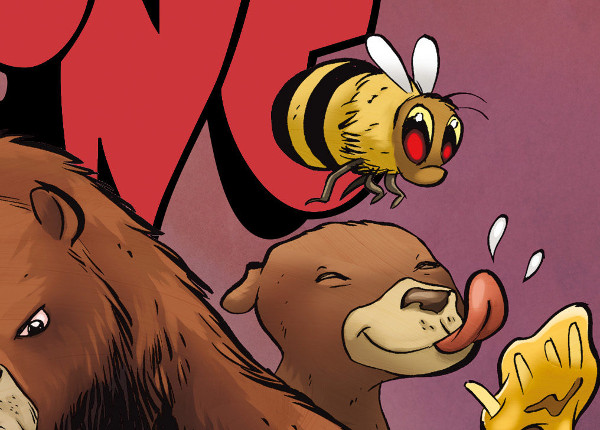
* Dog Man. They printed five million copies of the newest volume! It's hilarious and it's so cute when Dog Man licks the police chief's face.
* Be Prepared by Vera Brosgol. This book has broad appeal from both its target middle-grade audience up to adults. I'm not sure it's like my work but it's what I'd like my work to do.
* The Ariol series by Emmanuel Guibert and Marc Boutavant is similar to my work in that you have a class of anthropomorphs. It's certainly different in the fact that Ariol is the main character. It's a fun series that I think deserves a bigger audience.
* The Sunny series (Sunny Side Up; Swing It, Sunny) by Jennifer and Matthew Holm. I like how it's always got a little bit of darkness with Sunny's brother to contrast with its bright and paired-down illustrations and Lark Pien's soothing color palette.
* I recommend Sara Varon's New Shoes if you like anthropomorphs and Ben Hatke's Little Robot for great pacing. Of course the art is beautiful in both.
* Of course I love Raina Telgemeier's books. She's got a new one coming out this year called Guts and an activity book called Share Your Smile: Raina's Guide to Telling Your Own Story. Kids already know her books but if you're an adult who still hasn't read her work, get on board. All of us working in kids' comics owe Raina a huge favor for blazing us a trail into the kids' market.
* Allen Say's Drawing From Memory and The Inker's Shadow. These two are not too similar to my books but I love them and I'd like more people to read them. They are his comic/picture book memoirs about mentoring with a mangaka in Japan as a youth and then emigrating from Japan to the US and confronting the post-war anti-Japanese racism in California in the 50s. If you like books about cartoonists finding their way like Yoshihiro Tatsumi's A Drifting Life, Jiro Taniguchi's A Zoo in Winter, or Bill Peet: An Autobiography, you'd really dig these books. They're meant for kids but I enjoyed them so much as an adult.
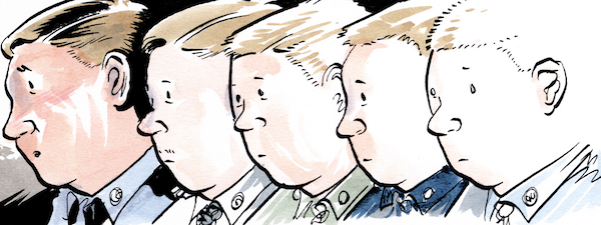
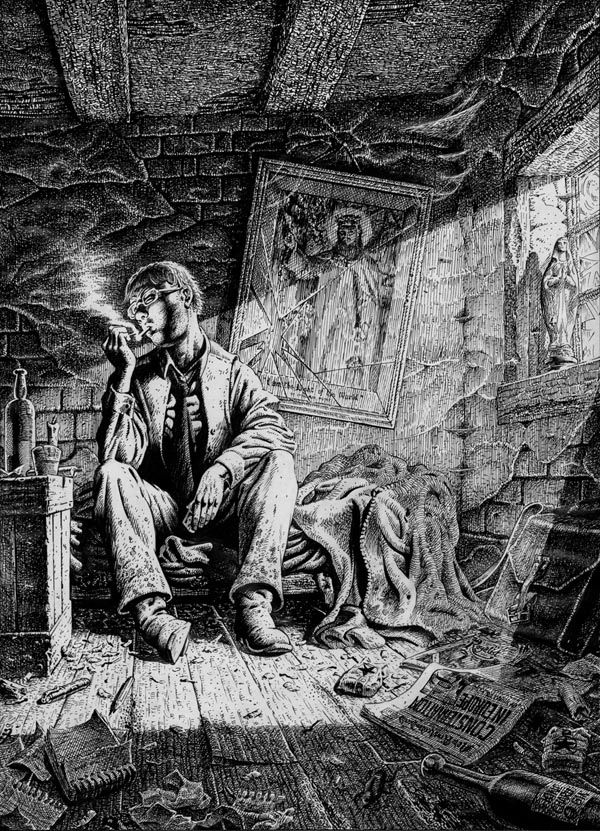
* cover to new work
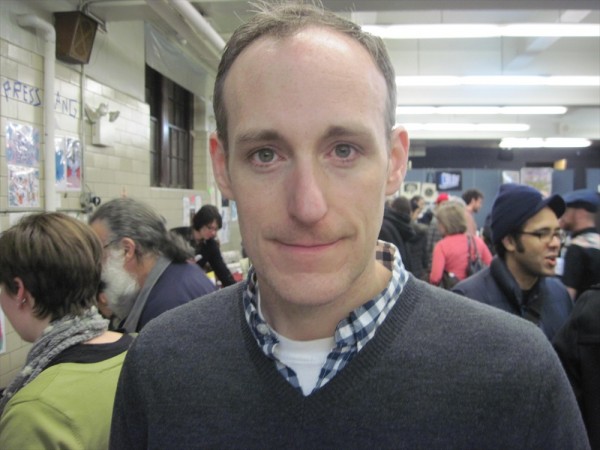
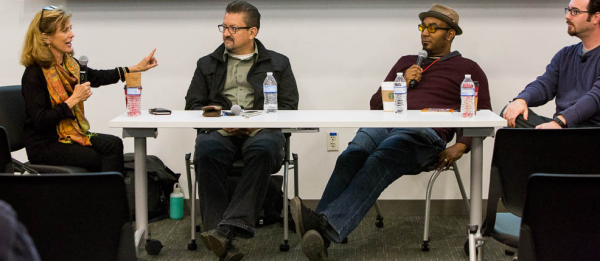
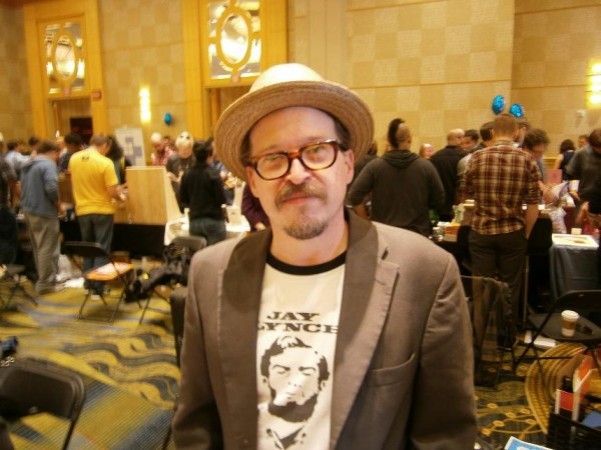
* pr photo supplied by Steinke
* cover to Big Plans collection
* fun panel from the Zoo Box stand-alone
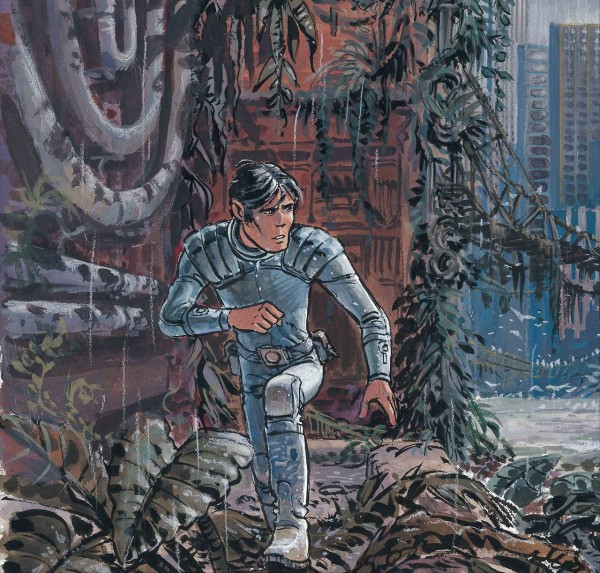
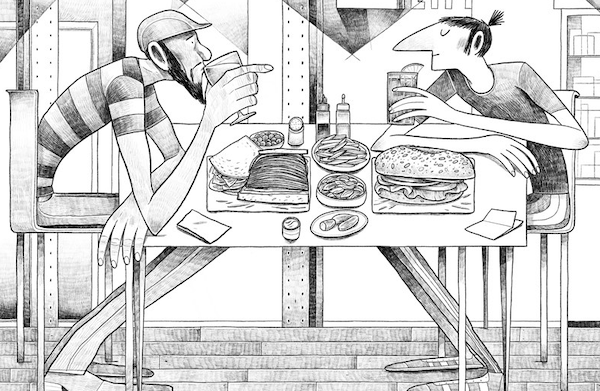
* from the Mr. Wolf series, first volume
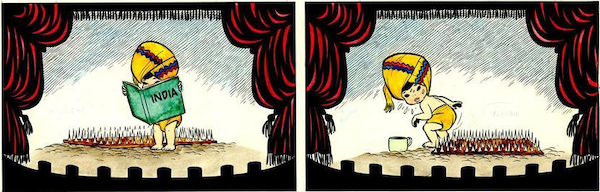
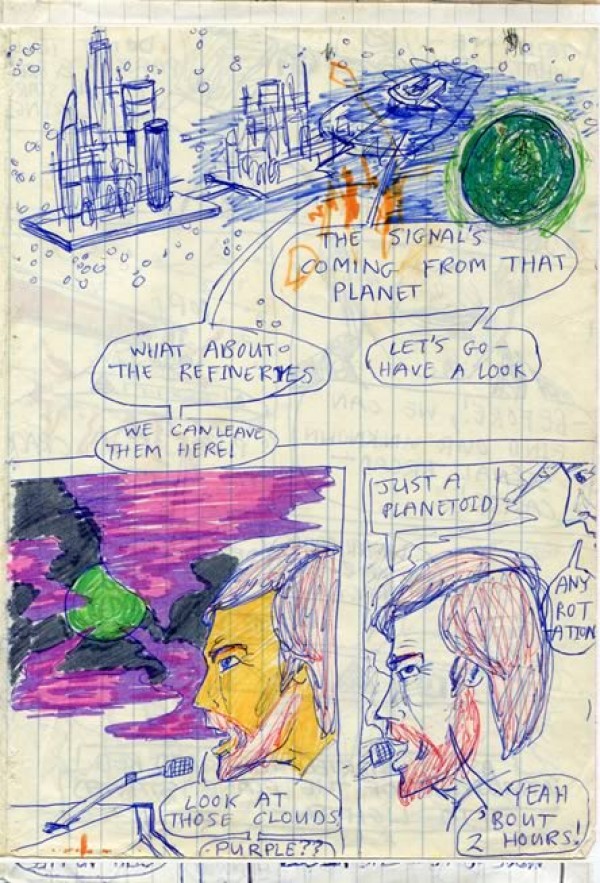
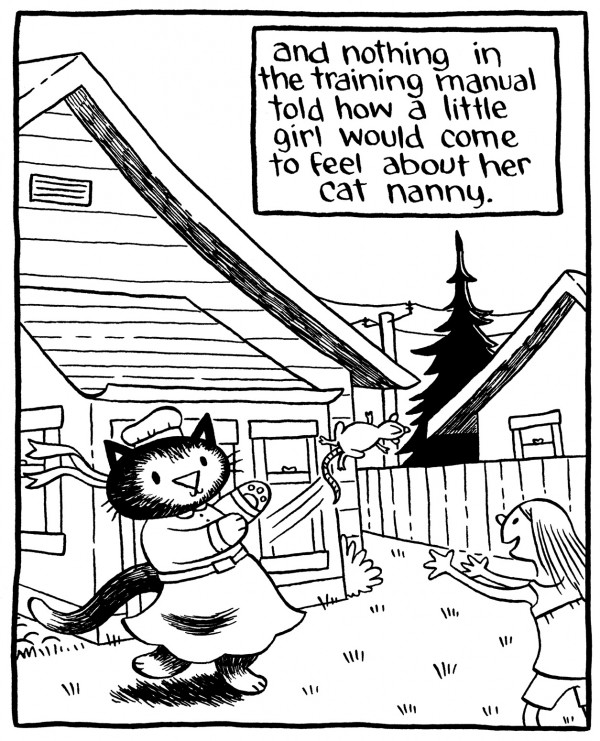
* one of the original teacher-centric Mr. Wolf strips that preceded the series
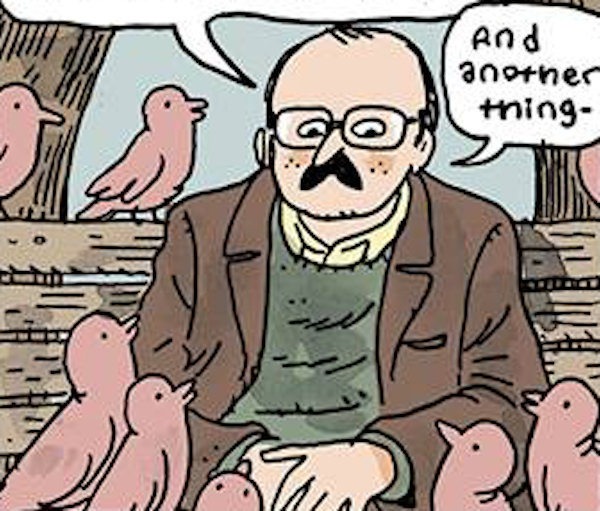
* a moment of satisfaction for the teacher
* the cover to the first volume in the series (below)
Random Comics News Story Round-Up
* Brian Cronin digs into the Mexican Spider-Man comic not killing Gwen Stacy thing and concludes it wasn't a push-away-from-a-storyline issue but the publisher doing new material to extend its reprint options. That's still super-interesting.
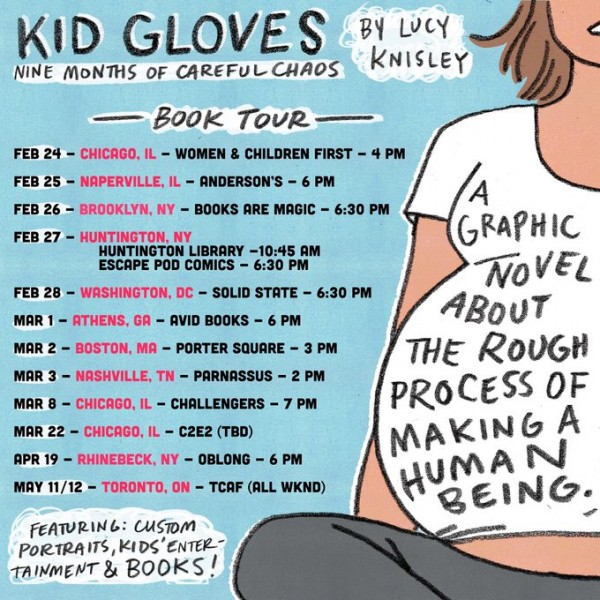
* Gary Tyrrell writes about Lucy Knisley's latest tour, which I put here in part to remind myself to check if I covered it on this site.
* there are several ways to read this cartoon; they are all depressing.
* I'm told Non Sequitur may have lost more papers for the Fuck Trump flourish than any single one-day circumstance driving cancellations. This article suggests a slow-down on papers throwing in the towel. Wiley Miller is more prepared than most to manage a giant bloodletting like this one, but it can't be easy.
The Never-Ending, Four-Color Festival: Shows And Events
By Tom Spurgeon
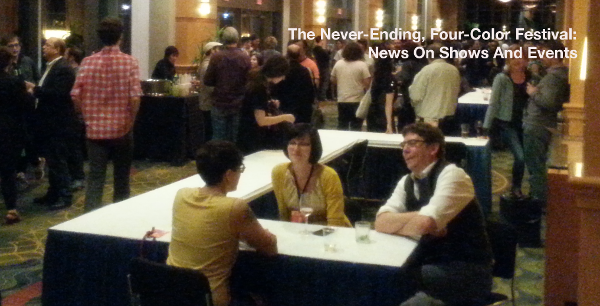
* there's an open letter at the Festival Workers Association site from a number of cartoonists regarding changes they'd like to see with show. I'm in fully agreement with about half of these and sympathetic to the rest. I'm thrilled to see a comics group advocate for a better situation for cartoonists, and hope that we all end up on the better side of things. I'm happy to engage with any of the issues raised via e-mail.
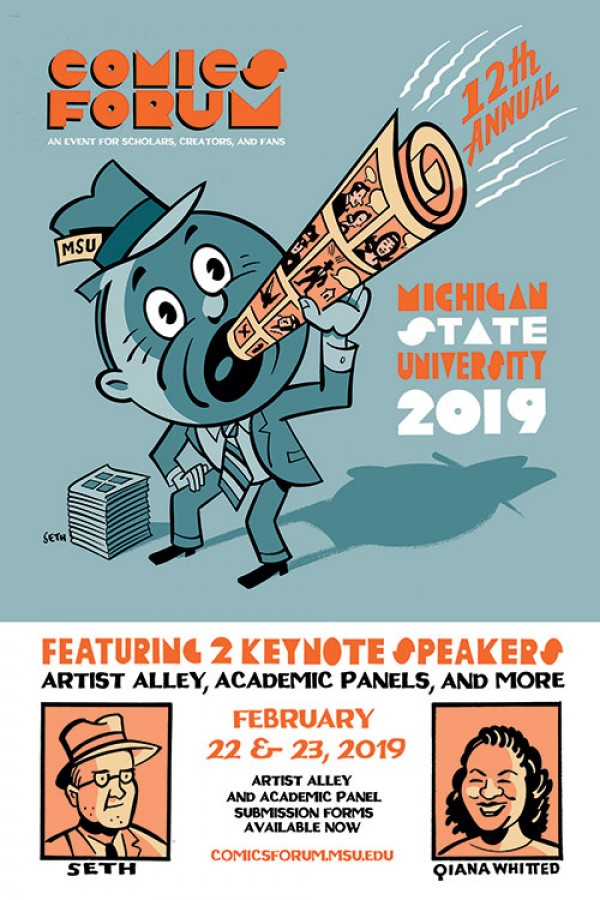
* the heart of the MSU Comics Forum roars to life tomorrow. If Angouleme is the first start to the festival year generally and ECCC the mainstream/indie side of thing, you can argue the Forum is the opening bell for academic conferences and alt-shows. Go if you can: Seth and Qianna Whitted are both excellent speakers.
Explanatory Video About Karl Stevens’ Participation In The Gardner Museum’s Botticelli Exhibit
That's a fun and prestigious project in which Stevens has participated I've completely neglected due to blogging malfeasance. I'm trying to carve out time for a short interview with cartoonist and director, so fingers crossed. In the meantime enjoy the above and Rob Salkowitz's article at Forbes.com.
Dylan Horrocks And Michel Vrana Making Available Pickle #11 Through Pre-Ordering Campaign
Here. I think this is pretty straight-forward and easy to understand. I'll enjoy having the issue. I thought Pickle one of the best series of the 1990s, a decade stuffed with quality series. I would love to see similar campaigns for similarly "lost" comics.
This Isn’t A Library: New, Notable Releases Into Comics’ Direct Market
*****
Here are the books that make an impression on me staring at this week's no-doubt largely accurate list of books shipping from Diamond Comic Distributors, Inc. to comic book and hobby shops across North America.
I might not buy all of the works listed here. I might not buy any. You never know. I'd sure look at the following, though.
*****
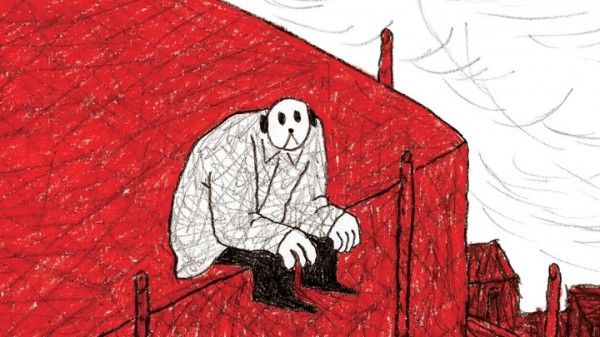
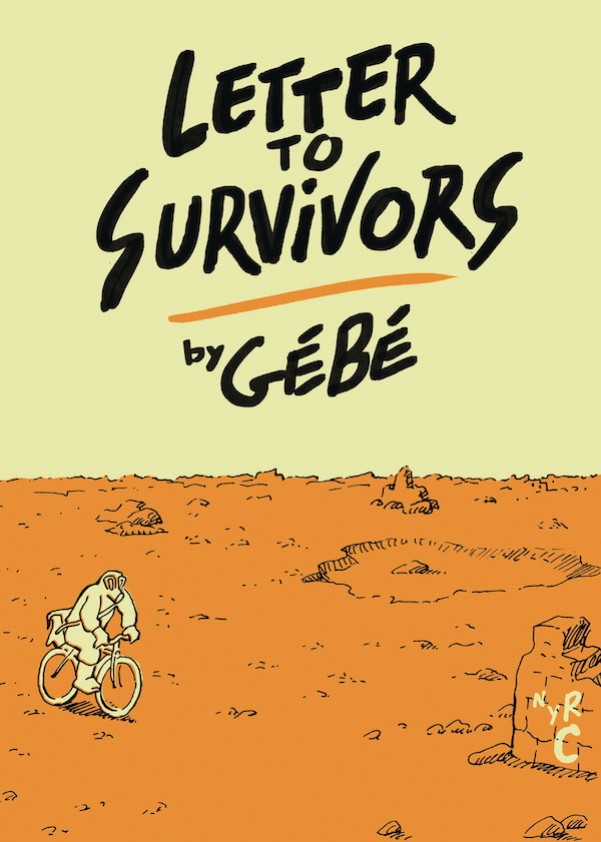
DEC181964 LETTERS TO SURVIVORS GN $15.95
This doesn't feel like a big week at the comics shop for yours truly, and this book of spare, wry, and inventive Cold War-soaked comics from the height of extermination paranoia hits the spot. From the miracle-workers of NYRC.
DEC181917 INCAL OVERSIZED DLX LTD ED $125.00
Another way to own a crucial comics work, and if we've learned anything this decade it's hard to argue against as many entry points on such works as this bizarre, lurching industry can eject from its maw. Whether or not it's the one for you is why we have comics shops, although this may involve them putting it on a counter in front of you off of a safe place on a wall.
DEC180422 HELLBOY COASTER SET $9.99 NOV180280 UMBRELLA ACADEMY COASTER SET $9.99
I don't think comics-related items are the point of comics, and I find baffling the frequency with which bookshelves are festooned with related action figures and toys. I am, however, a significant fan of original comics art and high-end prints, and the occasional three-dimensional item like this one catches my eye. I'm also fond of Christmas ornaments. People should do more of those.
NOV180581 TRANSMETROPOLITAN TP BOOK 01 (MR) $19.99 DEC180604 WILD STORM #20 $3.99 DEC180605 WILD STORM #20 VAR ED $3.99
The most important work related to writer Warren Ellis to own in its best format and the best of the recent comics series related to Warren Ellis in its best format. One thing I like about the Wild Storm adventure comics is that their context is previous comic book written by Ellis or by writers working according to his influence.
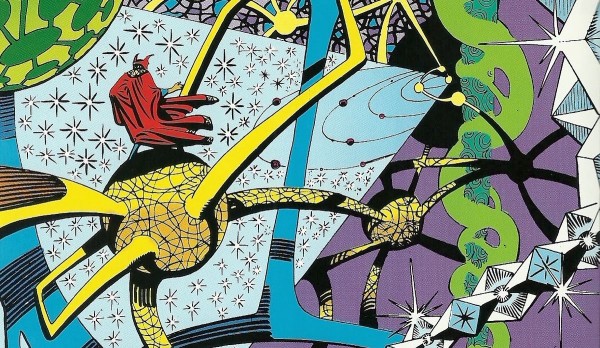
DEC188797 DIE #1 3RD PTG (MR) $3.99 OCT180190 EAST OF WEST #41 $3.99 DEC180967 DOCTOR STRANGE #11 $3.99
Three comic-book format comics, including a key third printing of the role-playing game related Die, the increasingly pay-offs filled East Of West and Marvel's competent, confident Doctor Strange which pops in that current line-up.
JAN192170 TRUTH IS FRAGMENTARY TRAVELOGUES & DIARIES GN (RES) $19.99
This is a necessary comics shop restocking of the Gabrielle Bell book at the front end of her current surge to the top of alt-comics expression, and a required work for any modern comics library. Bell is one of those comics about whom devoted readers constantly fret doesn't get enough attention, and they're right.
*****
The full list of this week's releases, including some titles with multiple cover variations and a long, impressive list of toys and other stuff that isn't comics, can be found here. Despite this official list there's no guarantee a comic will show up in the stores as promised, or in all of the stores as opposed to just a few. Also, stores choose what they carry and don't carry so your shop may not carry a specific publication. There are a lot of comics out there.
To find your local comic book store, check this list; and for one I can personally recommend because I've shopped there, albeit a while back, try this.
The above titles are listed with their Diamond order code in the first field, which may assist you in finding comics at your shop or having them order something for you they don't have in-stock. Ordering through a direct market shop can be a frustrating experience, so if you have a direct line to something -- you know another shop has it, you know a bookstore has it -- I'd urge you to consider all of your options.
If I failed to list your comic, that's because I hate you.
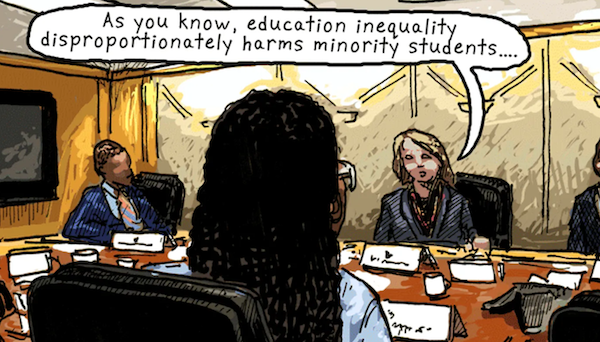
* depending on your perspective an article like this one underlines the difficulties in making a cartoon using the visual metaphors most obviously on-hand in any political situation or the indolence of cartoonists in the execution of same, particularly keeping in mind broader sensitivities. It's like a big bag of nobody is winning here.
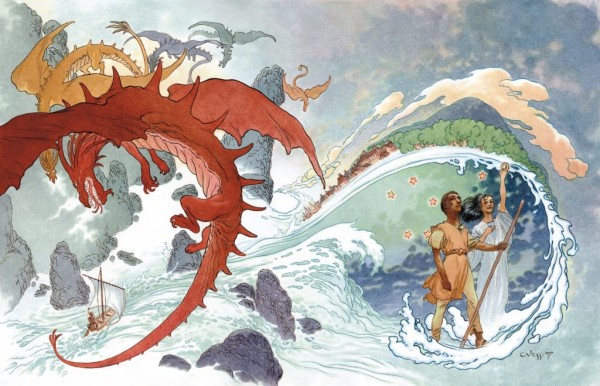
Your Spectrum 26 Award Finalists The assigned jury has released the finalists for the Spectrum 26 Awards, to be given out next month in Kansas City. It's not an awards program I follow closely, but they do have a comics category and in recent years the industry has slowly swung back to a reinvigorated understanding of comics as a form of visual art.
Planet Comicon will host the late March announcement of winners in Gold and Silver categories, and at least grand winner. More information here. Judges listed here.
*****
ADVERTISING CATEGORY
* Justin Gerard -- Lair of the Firebreather
* Donato Giancola -- Reach
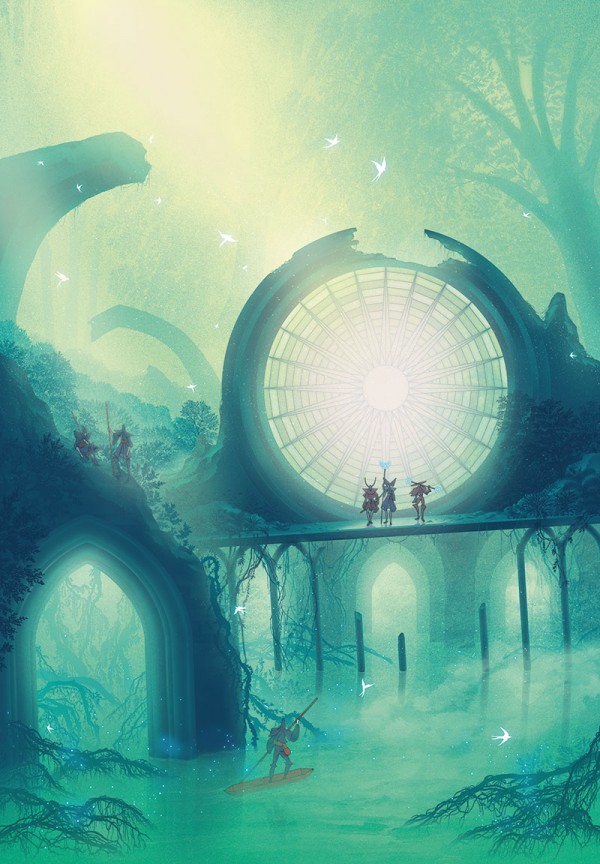
* Valentin Kopetzki -- After the Flood
* Victo Ngai -- Earth Species Project
* Greg Ruth -- Annihilation variant
*****
BOOK CATEGORY
* Jaime Jones -- Winter Road
* Vanessa Lemen -- I am the Light
* Yuko Shimizu -- Japanese Tales 1: The Invisible Man
* Chase Stone -- Dragon Lords: Bad Faith
* Francis Vallejo -- Charlie Florida
*****
COMIC CATEGORY
* Alex Alice -- Castle in the Stars: Book 4, page 1
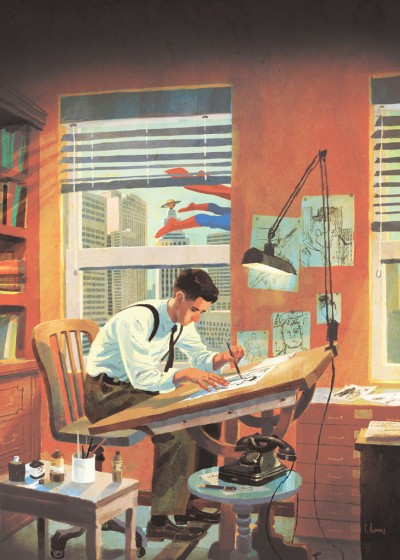
* Thomas Campi -- Joe Shuster: The Artist Behind Superman cover (pictured)
* Paul Davidson -- Blue Vortex 1
* Kang Minjung -- Kang Hearts Out 1
* Jeffrey Alan Love -- The Thousand Demon Tree
*****
CONCEPT ART CATEGORY
* Te Hu -- Golden Temple Through Time we Converge: End
* Carlyn Lim -- Dwarf
* Danny Moll -- The Banner Saga 3: Juno in the Black Sun
* Abe Taraky -- Submerged Statue of Tyr
* Zhengyi Wang -- Big Hunt
*****
DIMENSIONAL CATEGORY
* Matthew Corcoran -- Vivicus
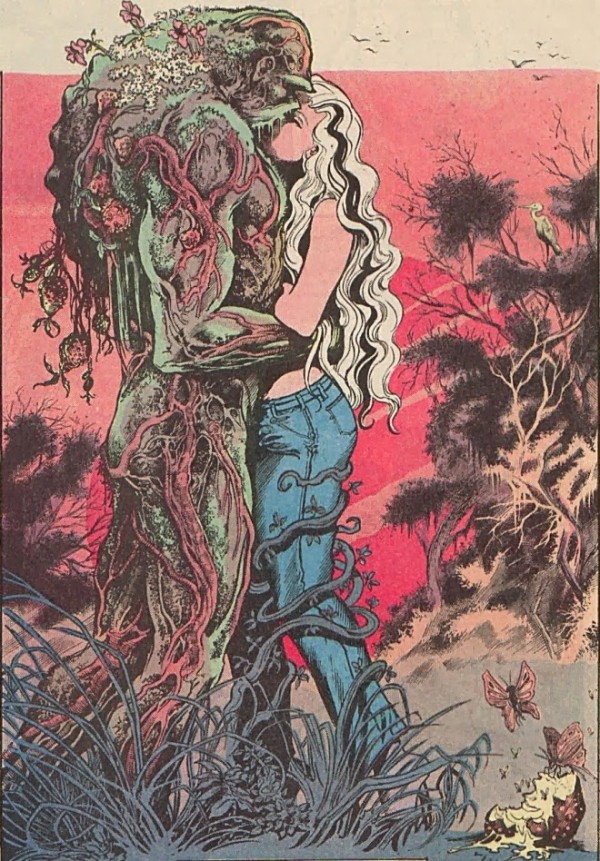
* Paul Komoda -- SwampThing
* Patrick Masson -- Reflection
* Mark Newman -- Gallevarbe
* Dug Stanat -- Justice
*****
EDITORIAL CATEGORY
* Chris Buzelli -- Structure
* Qiuxin Mao -- The Remains
* Victo Ngai -- Human: Opener
* Tim O'Brien -- Stormy
* Leonardo Santamaria -- How to Collect Customer Feedback the Right Way
*****
INSTITUTIONAL CATEGORY
* Ed Binkley -- Mantis
* Bastien Lecouffe Deharme -- Etrata
* Jesper Ejsing -- Slippery Bogle
* Tyler Jacobson -- Opt
* John Jude Palencar -- The Nights Watch
*****
UNPUBLISHED CATEGORY
* Julien Delval -- The Stranger
* Konstantin Marinov Kostadinov -- A Walk in the Woods
* Ronan LE FUR -- Sent by the Gods
* Eric Pfeiffer -- Racing Season in Empire City
* Annie Stegg Gerard -- The Serpent
Bundled, Tossed, Untied And Stacked: Publishing News
By Tom Spurgeon
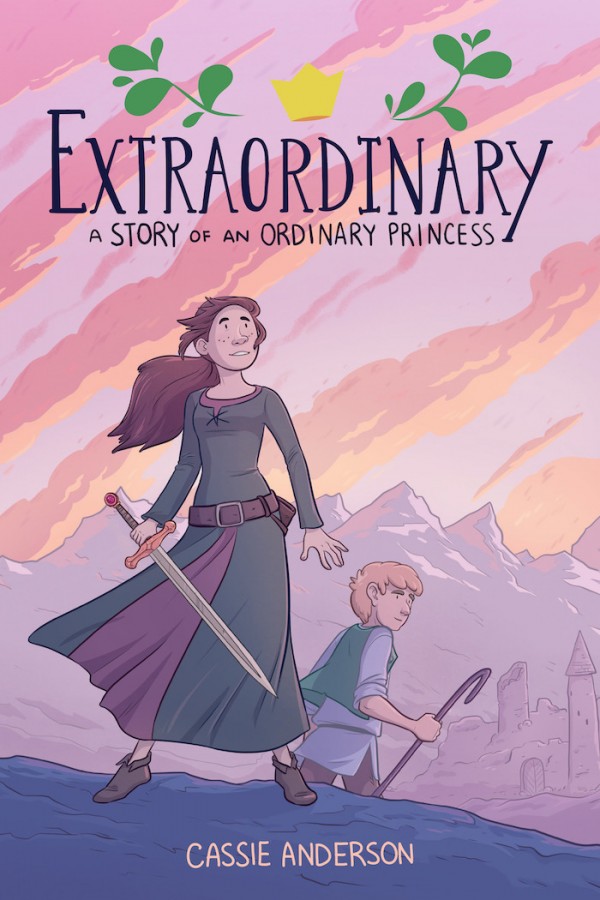
* everyone's favorite Brigid Alverson brings word of not one but two Cassie Anderson books this year.
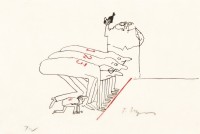
* great news: Fantagraphics will bring back to print many of the classic publications of the just-passed Tomi Ungerer. That's such an admirable publishing effort, and this kind of committed effort is one of the best things about North American comics publishing.
* I'd known for a while that writer Matt Fraction might do a Jimmy Olsen comic with DC, but I hadn't known he'd be partnered with that grandest of his generation's veteran artists, Steve Lieber. That should be fun.
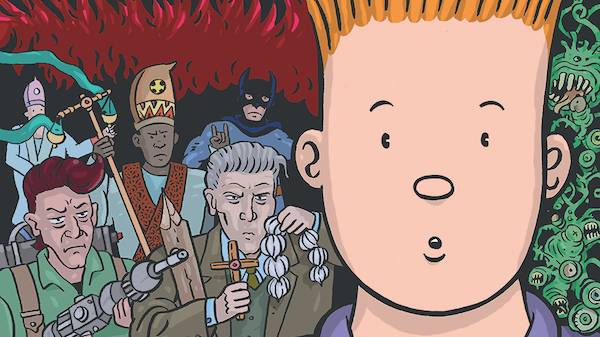
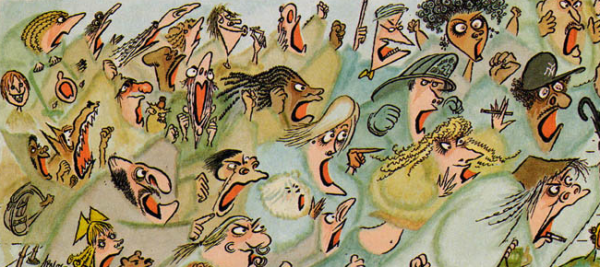
* finally: Monte Beauchamp mentions somewhere in this post's responses that he's building a new BLAB!. Also, I hadn't realized the apocalypses made up a series of articles.
* I always enjoy looking at analyses of hiring patterns at the Big Two and, when they're made available, related companies. I would imagine there are plateaus involved, especially when a segment of an industry doesn't always offer jobs that are an automatic entry into middle class and the culture has elements of resistance to diversity, no matter how stupid or misguided that resistance may be.
* I am heartened by the fact that people continue to give to Barbara Shermund's burial fund, and hope you'll consider it if you haven't yet. It's a great honor to help such a great artist find their final resting place.
* finally: we're getting close to a thousand contributor to the fund serving those who were sued by cartoonist/publisher Cody Pickrodt. That's about $90 a contribution, which strikes me as admirably high for a small-press comics thing. I hope we can push this over the top, and have confidence in its organizers this will be so.
Random Comics News Story Round-Up * Jenee Darden, Bo Walsh and Tarek Fouda talk to Breena Nuñez Peralta.
* not comics: another potential seismic shift for which to try and figure out if comics has an easy entry point. I don't know why they have articles about any kind of developing media or form that doesn't engage how it'll be used for sex. In this case, it looks like an opportunity for finding dates that involve that reality's version of you dating that reality's version of others and then gauging the compatibility by the results rather than projections of same, but maybe I'm crazy. Maybe another shot at virtual cons; overlays of reality at cons seems certain.
* so according to this a Spanish-language publisher made their own Spider-Man comics in the 1970s where Gwen Stacy didn't die because they thought that plot development would kill their sales. I've never heard of this. Wow if something like that escaped everyone's attention until now. No idea if it's true. I think it may be, because that's a weird joke to pull, but I know that the wider superhero community will correct like righteous thunder if it's not and probably by the end of today. But if that's a prank, hell, I think I prefer to believe the prank.
Festivals Extra: CXC Expo Exhibition Registration Remains Live Through February 28!
They're about halfway home at my other job in terms of getting people lined up for exhibitor slots at CXC Expo 2019. Great group so far, room for more, won't you apply?
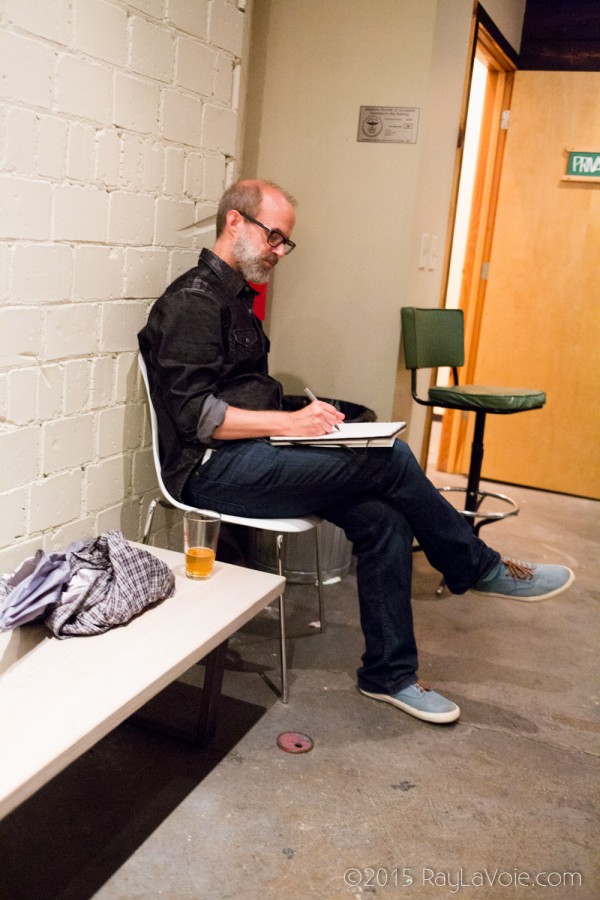
That's Scott Roberts up top from 2015, drawing from the back of the room like cartoonists do.
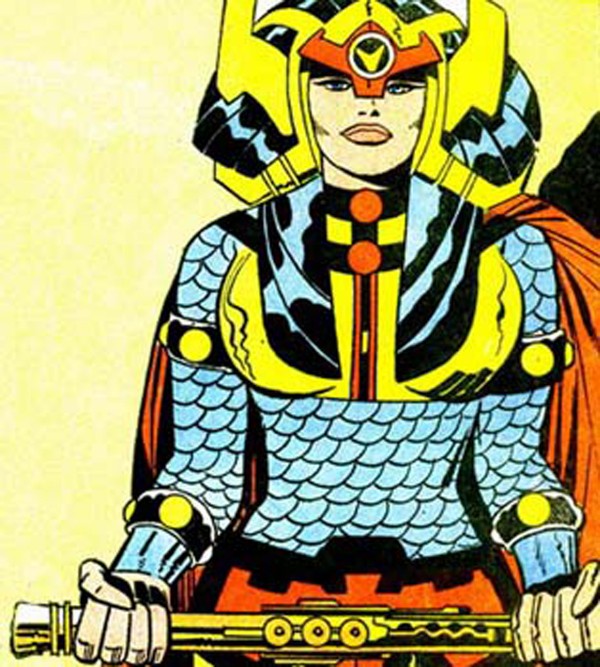
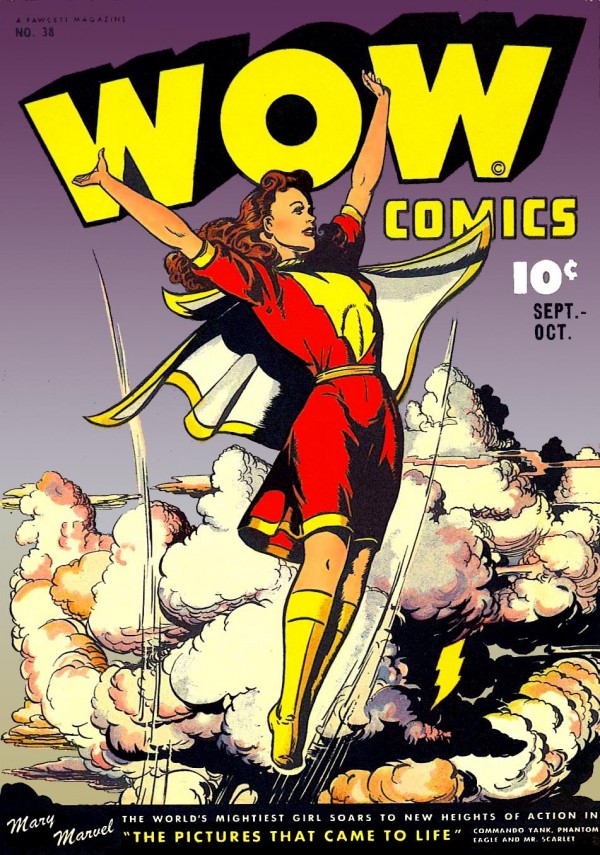
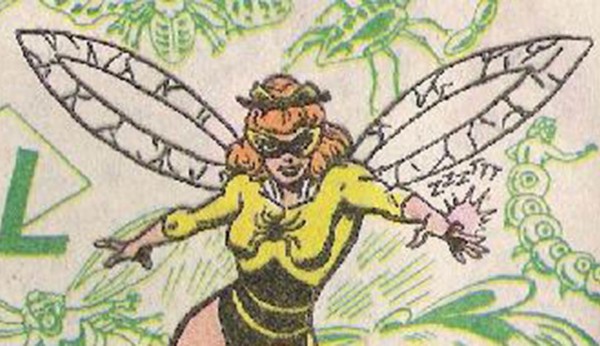
FFF Results Post #518—Classic Lady Superheroes
On Friday, CR readers were asked to "Name Five Superhero Lady Characters Created Before 1980 That You Enjoy In Those Pre-1980 Adventures." This is how they responded.
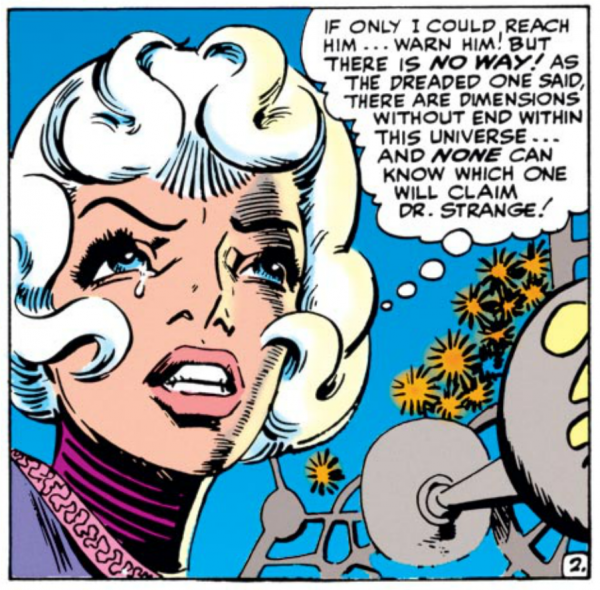
* Invisible Scarlet O'Neil (Russell Stamm)
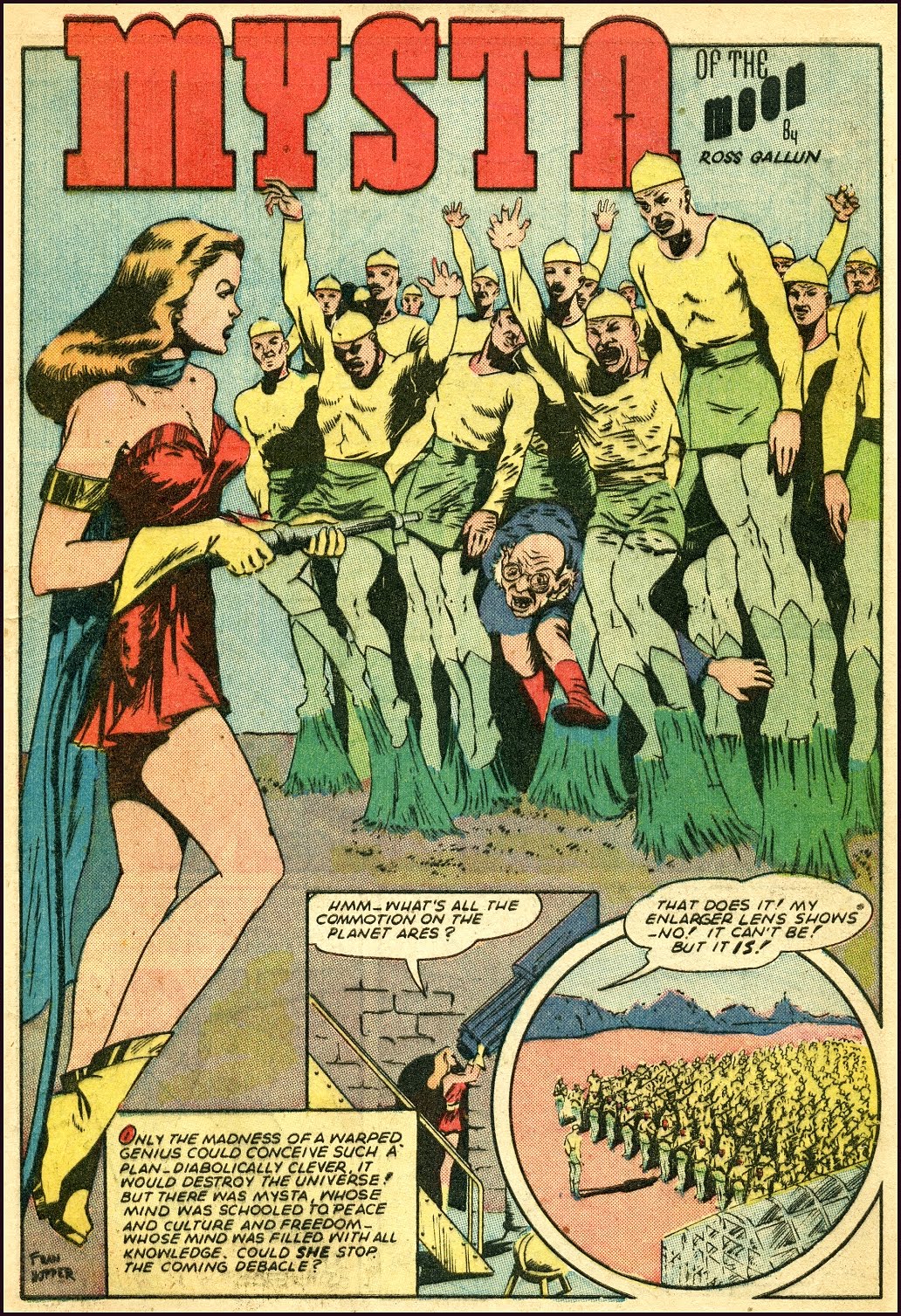
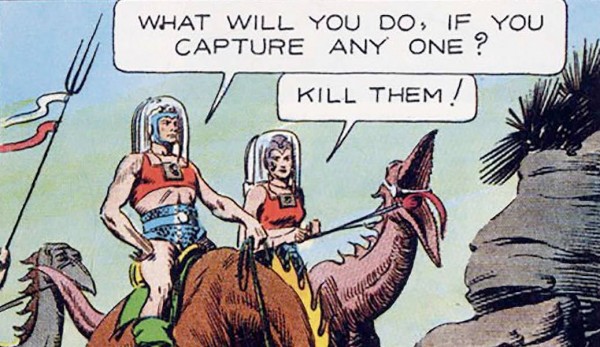
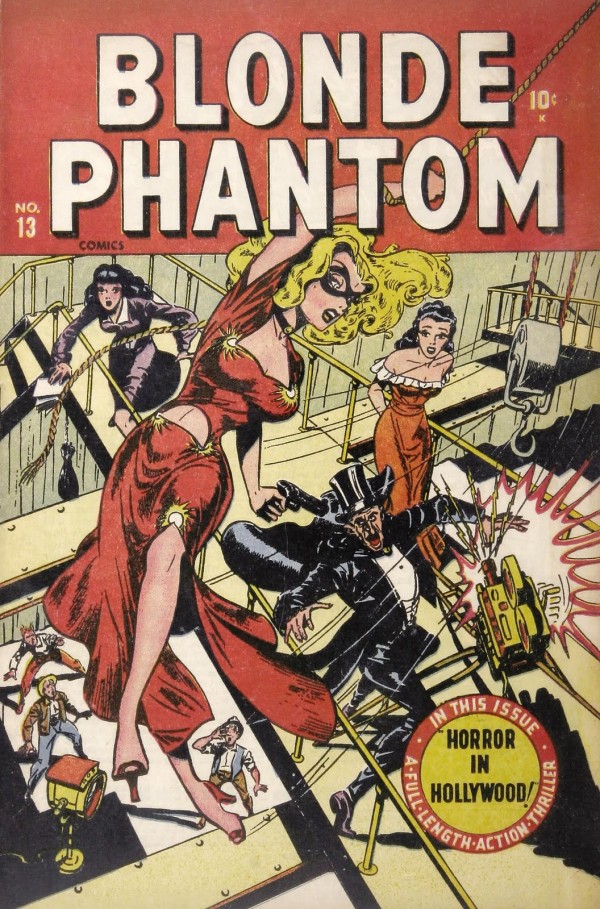
* The Blonde Phantom, Louise Grant (Syd Shores) (pictured)
* Lady Luck, Brenda Banks (Chuck Mazoujian)
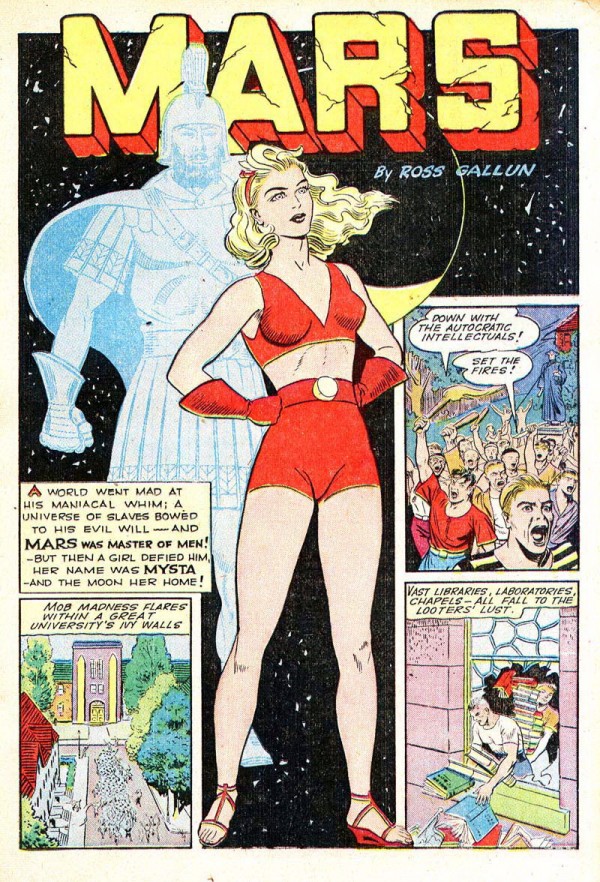
* Venus, the Goddess of Love (George Klein)
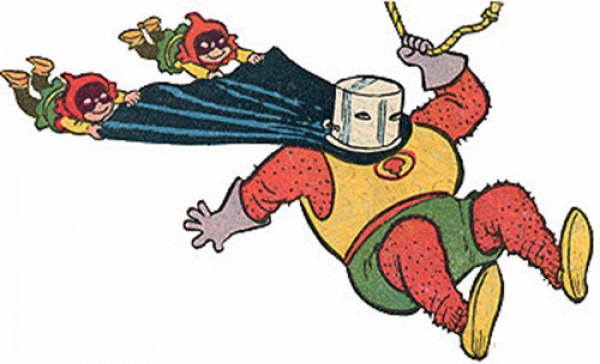
* Miss Masque, Diana Adams (unknown)
Assembled Extra: Geoff Boucher Launches Hero Nation
The announcement from host/publisher Deadline Hollywood can be found here, along with Boucher's resume as a superhero-focused on-line newsman. Looks like this gig will be about film/TV media versions of superhero and related genre stories, which doesn't look like a source that will ever be exhausted. Good look to Mr. Boucher!
Random Comics News Story Round-Up
* not comics: here is an essay on acknowledging the financial support of relatives. I wish this happened in comics, too. I believe there are bad choices made by people based on misjudging where seemingly more successful received their support.
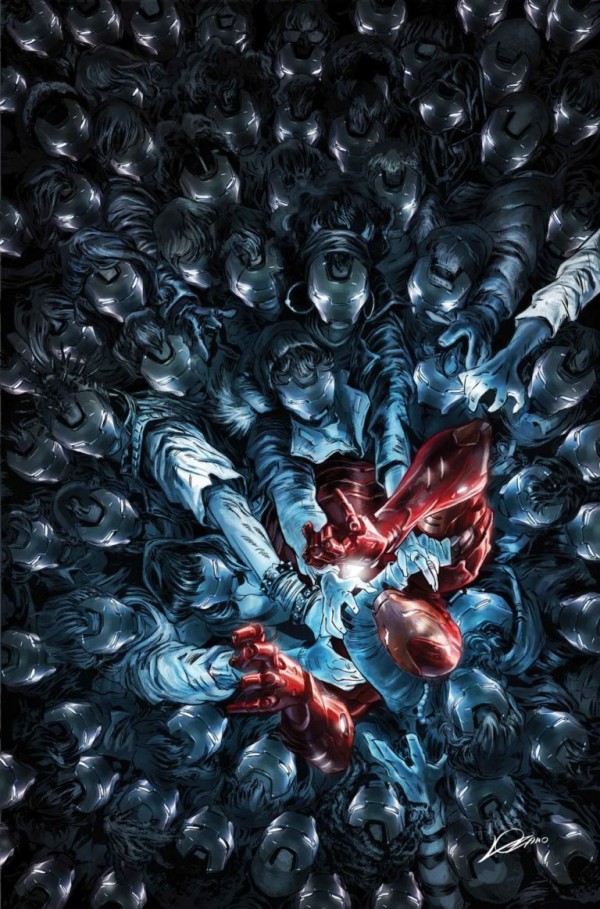
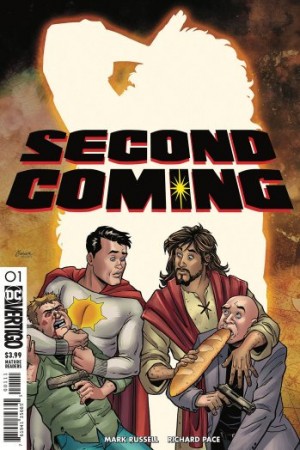
THR: DC Cancels Comic Book, Notes Conservative Political Pressure; Creators Cite Rights Return Here. It involves a narrative starring Jesus. This article at The Beat says that Second Coming was a title announced with a Vertigo relaunch, although at this point there have been so many relaunches and Vertigo is such a obscure footnote in my own comics-reading efforts I couldn't contextualize that for you in terms of dates or publishing history.
I can't tell quite yet, but there may also be some dispute over the nature of the actions involved in exorcising Second Coming from the DC section of Previews, as tweets from the creators pulled together at that Beat link focus on a rights-reversion request over a cancellation. THRseems really comfortable calling it a cancellation, though, and I trust writer Graeme McMillan's judgment on that part of the industry.
I don't quite understand how something like this works anymore given the overall media landscape. Satan has a featured role on a couple of TV shows these days, or did recently -- in fact, I think those shows both come from Vertigo comics. I would assume there are more. There have been TV shows starring Jesus or at least a Jesus analog I can even bring to mind in the dim hours of this morning. I guess a comedic take on the character might be at issue? These protests seem toothless, too, and at best publicity-enablers. One thing that's been added to such controversies in recent years is that conservative Christians will now sometimes equate satirical portrayals of Jesus with satirical portrayals of Muhammad and complain about a kind of general unfair treatment by media, Resentment Politics 101, but outside of what I'm sure are a few comments threads I haven't seen that here as of yet.
Another thing that seems different from the way things used to be is that the publisher gets a lot of praise for handling things at the editorial, rights-return and personal level. Maybe that is an extraordinary experience, I don't know, and I'm sure DC employees do their best when presented with a difficult situation. Still, let me say that no matter how cordial the process might be, or how exactly the process unfolds, allowing barely-engaged outside forces to have any effect on editorial policy or to duplicate standards and processes on your own that lead to such an outcome, either thing is really, really horrible.
I hope for a last-minute shift in the narrative. With Jesus, all things are possible.
Writer Mark Russell and artist Richard Pace plan to release Second Coming with another publisher, and I don't think one will be difficult to find. The popular series Boys enjoyed a similar migration.
* not comics: this is one of those highly passed around articles, and I didn't get a lot of out of it except it suggested to me one question: why do so many of us conducting ourselves as artists and writers have the e-mail habits of a middle-management paper-pusher. I'm not saying all of us doing it wrong, but couldn't it be that most of us are doing it wrong?
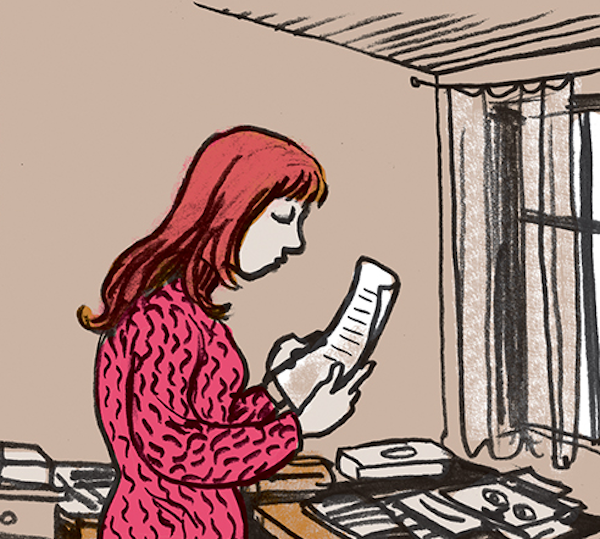
Ryan Sands' one-person/one-issue comics-plus anthology occupies a unique place on the alt-publishing landscape, offering solidly conceived looks at new artists, artists that have moved into different areas and even a few firmly established figures from that world. Also, getting comics in the mail is fun.
This Isn’t A Library: New, Notable Releases Into Comics’ Direct Market
*****
Here are the books that make an impression on me staring at this week's no-doubt largely accurate list of books shipping from Diamond Comic Distributors, Inc. to comic book and hobby shops across North America.
I might not buy all of the works listed here. I might not buy any. You never know. I'd sure look at the following, though.
*****
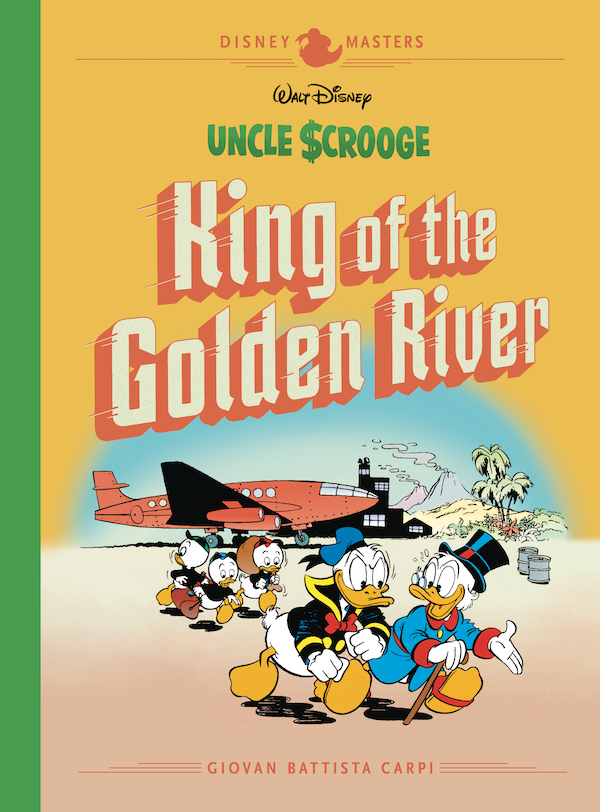
NOV181774 DISNEY MASTERS HC VOL 06 CARPI SCROOGE GOLDEN RIVER $29.99
This is a weird week with a lot of interesting comics being sold about which I'm slightly ambivalent, so I thought maybe I'd take a second to thank the comics gods and Fantagraphics for their driving some of their Barks- and Rosa-driven interest back into some of the other major Disney comics practitioners. I'm happy to have those stories, and I'm happy to have samples of that work translated and in my home.
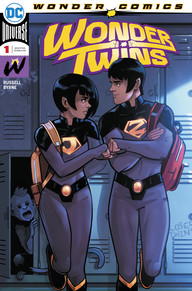
DEC180525 WONDER TWINS #1 (OF 6) $3.99 DEC180526 WONDER TWINS #1 (OF 6) VAR ED $3.99 OCT180708 DICK TRACY DEAD OR ALIVE #4 (OF 4) CVR A ALLRED $3.99 OCT180709 DICK TRACY DEAD OR ALIVE #4 (OF 4) CVR B TOMMASO $3.99 NOV188407 CRIMINAL #1 2ND PTG (MR) $3.99 DEC180234 CRIMINAL #2 (MR) $3.99 DEC188162 DIE #2 2ND PTG (MR) $3.99 DEC180250 GUNNING FOR HITS #2 (MR) $3.99 SEP180188 MAGIC ORDER #6 (OF 6) CVR A COIPEL (MR) $3.99 SEP180189 MAGIC ORDER #6 (OF 6) CVR B B&W COIPEL (MR) $3.99 DEC188055 MAGIC ORDER #6 (OF 6) CVR C KERSCHL (MR) $3.99
There's a lot here. Wonder Twins may indicate the way these big companies do series from now on: as short bursts of issues under a greater umbrella that takes care of the continuity/stick-with-it part of something like this. Most creators at all levels have the ability to do a story of five issues length with just about any character. The first of the Dick Tracy modern cycles has ended. Criminal jumps into the world of funnybooks, which means half the fun will be reading into Ed Brubaker's choices of what comics into his own. Die gets a second printing for a second issue, which is a good sign. Gunning For Hits is Moritat doing Music Business adventure comics, and I am down. Finally, Magic Order may wrap things up really quickly or settle in for another series, I can't tell.
OCT181280 GIANT DAYS TP VOL 09 $14.99 NOV180061 HEY KIDS COMICS TP (MR) $16.99
I always read John Allison and I always check out the designs employed by Howard Chaykin on the page. This new series is only slightly bonkers.
OCT180598 MISTER MIRACLE TP (RES) (MR) $24.99 NOV180580 TORSO TP NEW ED (MR) $24.99
The first is a collected trade from one of DC's high-concept success stories of the last few years. Torso is the latest Bendis book showing up under the DC bookselling umbrella, which I have to imagine is a big boon for Bendis and his collaborators.
NOV180728 JOHNNY BOO HC VOL 09 JOHNNY BOO IS KING $9.99
All hail Johnny Boo and his ninth volume of James Kochalka-led nonsense.
NOV188701 CAPTAIN MARVEL #1 2ND PTG CAMERO VAR $4.99 DEC180911 CAPTAIN MARVEL #2 $3.99 DEC180914 CAPTAIN MARVEL #2 MOVIE VAR $3.99 NOV181018 CAPTAIN MARVEL EARTHS MIGHTIEST HERO TP VOL 05 $24.99 AUG181069 CAPTAIN MARVEL MS MARVEL A HERO IS BORN OMNIBUS HC $100.00 AUG181070 CAPTAIN MARVEL MS MARVEL A HERO IS BORN OMNIBUS HC DM VAR $100.00
That doesn't look like a company ready to exploit a character's high-profile film offering, but Marvel has looked worse this many days out on other projects.
DEC181868 BLOOM GN (MR) $17.99 DEC181869 BLOOM HC GN (MR) $24.99 AUG182271 WRATH OF FANTOMAS HC (MR) $29.99
Two interesting-looking books to pull of the shelves if, like me, you think the comic shop exists to point me in the direction of books with which I'm largely unfamiliar. The first is YA, the second looks like more general fantasy, but perhaps teens, not quite sure there. They both look handsome.
NOV182078 WALLY WOOD DARE DEVIL ACES SC $24.95 OCT180352 EC ARCHIVES HC PIRACY $49.99
Any way you're reading old EC Comics, salute you.
DEC182117 CAPTAIN MARVEL & ART OF NOSTALGIA HC $30.00 DEC182020 COMICS WILL BREAK YOUR HEART HC $18.99
Here's a rare bottom-picture prose book: Faith Erin Hicks with all words and no pictures.
*****
The full list of this week's releases, including some titles with multiple cover variations and a long, impressive list of toys and other stuff that isn't comics, can be found here. Despite this official list there's no guarantee a comic will show up in the stores as promised, or in all of the stores as opposed to just a few. Also, stores choose what they carry and don't carry so your shop may not carry a specific publication. There are a lot of comics out there.
To find your local comic book store, check this list; and for one I can personally recommend because I've shopped there, albeit a while back, try this.
The above titles are listed with their Diamond order code in the first field, which may assist you in finding comics at your shop or having them order something for you they don't have in-stock. Ordering through a direct market shop can be a frustrating experience, so if you have a direct line to something -- you know another shop has it, you know a bookstore has it -- I'd urge you to consider all of your options.
If I failed to list your comic, that's because I hate you.
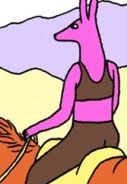
Random Comics News Story Round-Up * Alex Hoffman on Coyote Doggirl.
* not comics: I can never tell what percentage of these articles are that old saw about rearranging deck chairs on the Titanic, but every suggestion outside of teaching local experts to write makes sense to me. I would also caution against giving the audience too much of what it wants, no matter what the research indicates.
* one of the weird things about have 40 year plotlines in comics is that in team comics like X-Men you end up creating waves of characters that get lost when the older one assert their presence. The solution seems to be to kill them. It's kind of weird and sad, and they burn off a lot of pretty good characters that nonetheless can't make an impression outside of their initial narrative cycle.
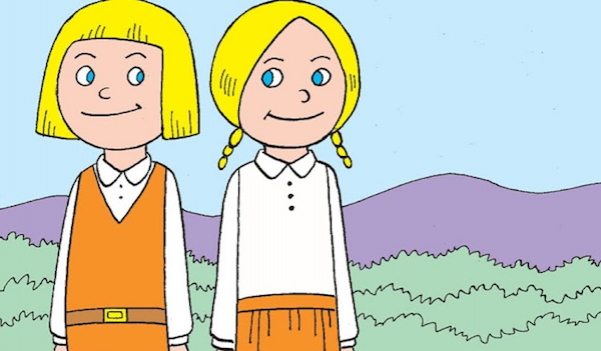
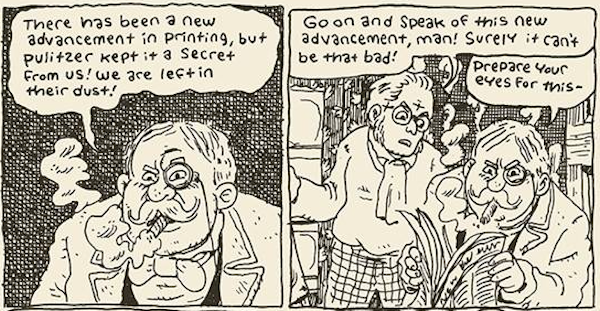
Random Comics News Story Round-Up * Sam Wildman talks to Chris Schweizer. David Mazzucchelli talks to Ted Stearn in 2017.
* not comics: guaranteed minimum income could have a significant effect on the course of comics creation if it's ever established here, although this test pilot report asks more questions than it answer, really. I think the confidence that comes with the guarantee of whatever small amount this is could be key, but it could also be processed as simply not enough.
Comics By Request: People, Places In Need Of Funding By Tom Spurgeon
* I'm sad to see the opening of the Billy Ireland's excellent Barbara Shermund exhibit didn't drive that last two thousand dollars in donations to her burial fund. I'm going to see if I can give some more money in the next month or so. I know it's hard to work up enthusiasm for a project that benefits an abstract principle like seeing this extraordinary woman finally laid to rest over projects that salve the wounds of the living, but I think it's an honorable exercise for peers and fans to this sort of kindness to a great artist.
Random Comics News Story Round-Up * Alex Hoffman profiles Naked Body. Carina Taylor on Dead Parents.
* the artist Collen Doran takes up for the late Jim Aparo. I don't think criticizing shifts in art style is off-limits, but variations of "lazy" are an enormous clumsy and insulting tool with which to do. A lot of artists change when they get older, but it's almost always due to an aesthetic that favors clarity, physical accommodation or a desire to work differently including more quickly. "Lazy" gets into some really entitled fandom expectations, too, in addition to it being a bold declaration of principles at work. It's lazy.
* this profile of Anders Nilsen reminds me how relatively sophisticated an article like that can be these days, as opposed to the "look at this weird person with the weird job" write-up of the 1990s, when I started paying attention to the coverage of cartoonist. I like the way it suggests that a big part of Nilsen's career is in its development of solution to various artistic problems presented.
* not comics: congratulations to the artist Pia Guerra on news the mega-popular comics series she did with writer Brian K. Vaughan, Y, The Last Man, is on its way to becoming a television series. The high-concept Y's mega-potential as a film or TV series was a general part of its presentation during its comics run, so this one pops a bit in a way other television deals don't. I hope it's good TV. The initial wave of announcements also came with another thing that marked the series, the ubiquity of writer Vaughan's credit for the comic book's creation and the relative lack of same for Guerra, the artist -- not total, but always noticeable. A social media and industry-news round of pushback on Guerra's behalf felt widespread for such an effort and in every instance totally deserved.
This Isn’t A Library: New, Notable Releases Into Comics’ Direct Market
*****
Here are the books that make an impression on me staring at this week's no-doubt largely accurate list of books shipping from Diamond Comic Distributors, Inc. to comic book and hobby shops across North America.
I might not buy all of the works listed here. I might not buy any. You never know. I'd sure look at the following, though.
*****
NOV181771 COMICS JOURNAL #303 $14.99
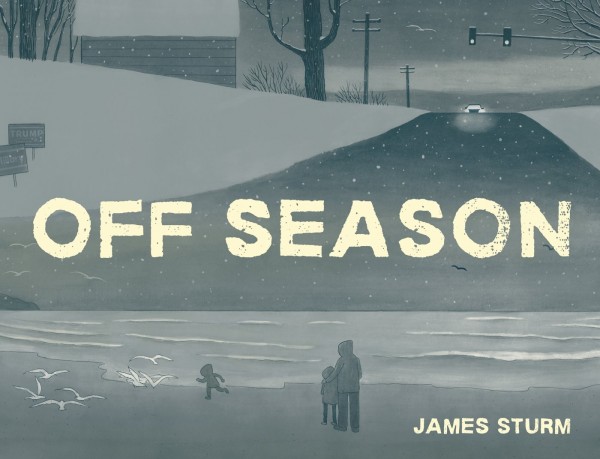
This seems like a solid week of comics, a lot of good work and a lot interesting stuff publishing-wise. I also think that James Sturm's Off Season may fall to this week for some stores. Anyhow, it's not on my weekly list, so I'll start with the latest iteration of my longtime 1990s publishing home, The Comics Journal. I think the challenge for this round of the print TCJ is to support whatever interviews Gary Groth wants to do, and then figure out what is the unique and best companion for those interviews. Once upon a time it was aggressive reviews and even more aggressive news. The latter seems off the table for the most part these days -- you could fill up an issue of the Journal debating why -- and there's enough really good writing that the critical approach has to be immensely rigorous, come from a completely clever and out of left field point of view, or both in some mixture of amounts. There's a high degree of difficulty there, but RJ Casey and Kristy Valenti are hard-working comics lifers and will come up with an answer, I'm certain.
DEC181966 THROUGH A LIFE GN $18.95 OCT181277 FEATHERS ORIGINAL GN $14.99
If the joy of going to the comic book store is finding works about which you know very little, this is my little corner of the Great Weekly Routine this week. I know little about Through A Life beyond the pedigree of its publisher, and little about Feathers beyond the fact that the artist won the Russ Manning a few years and the cover looks very handsome. Perfect for a few minutes between aisles with those books in my hands, checking them out.
DEC181379 GIANT DAYS #47 $3.99 DEC180358 BPRD DEVIL YOU KNOW #13 $3.99 OCT180284 BPRD DEVIL YOU KNOW TP VOL 02 PANDEMONIUM $19.99
Here's more familiar territory. I buy whatever John Allison does and this is one of the projects he does. The BPRD stuff is the great reliable mainstream comics of my adult lifetime, and I eventually acquire all of those comics -- although usually not the first day. That corner of comics is so prolific that I think the trades and books are a better collecting strategy than the comic-book comics, and I view comic-book comics as part of my personal belief system.
AUG181071 VENOMNIBUS HC VOL 02 $125.00
I just like saying this out loud. I also like that despite its rich library and glorious (mostly) Jack Kirby conceived characters that you can argue the series that work the best right now involve parody/not-parody characters Deadpool and Venom. Also, these $100-plus books seem to do pretty well for Marvel, I'd love insight into their numbers. Most of what they do feels scattered, and I'd love to know how that line works, particularly in contrast.
DEC181916 BIGBY BEAR HC $14.95 DEC181871 MAKER COMICS GN BAKE LIKE A PRO $12.99 DEC181873 MAKER COMICS GN FIX A CAR $12.99 DEC181872 MAKER COMICS HC GN BAKE LIKE A PRO $19.99 DEC181874 MAKER COMICS HC GN FIX A CAR $19.99
Hey, new lines for Humanoids and a line of non-fiction (!) comics for First Second. I'm a fiend for Chris Schweizer's inventive, labor-intensive book, so I'd probably go for the car one even though I'm more a baker than a mechanic.
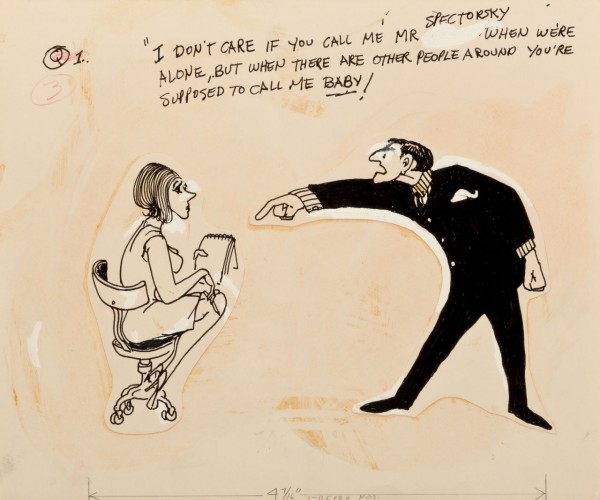
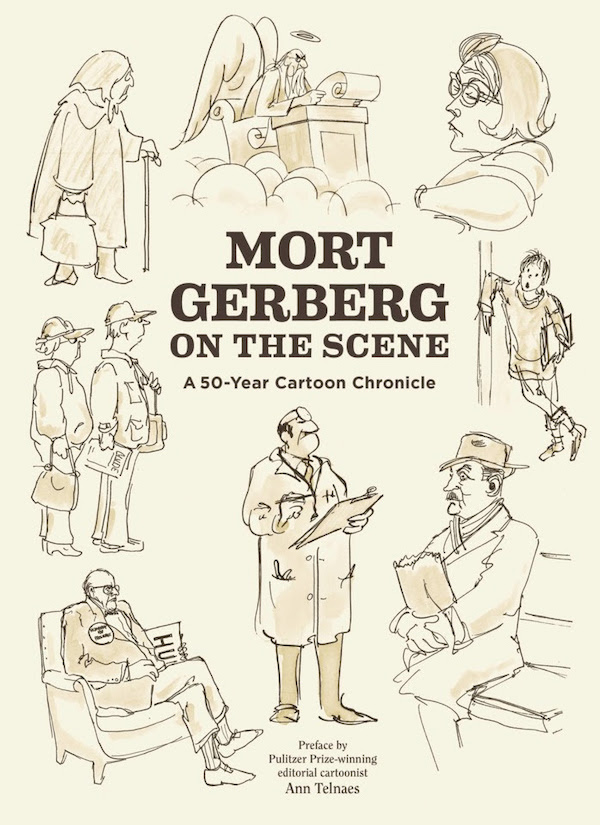
NOV181786 MORT GERBERG ON SCENE SC $25.00
I know that Fantagraphics' focused-distribution underground line hasn't always had an easy time in terms of its reception by close industry observers, but I've become fond of the possibilities of a house of Fantagraphics' size being able to engage with works that have smaller print runs, as there are any number of ways that a work can find itself there. What an odd thing to be able to buy a Mort Gerberg book.
DEC181899 NEW KID GN $12.99 DEC181900 NEW KID HC GN $21.99
This is comics veteran Jerry Craft's stab at a broadly conceived kids' book. Craft is an industry survivor, and I think he'll do a good job getting his book into the hands of folks that will appreciate. All respect.
OCT182009 WALLY WOOD DARE DEVIL ACES DLX SLIPCASE ED $69.95 OCT182008 WALLY WOOD DARE DEVIL ACES HC $39.95
Sorry, I just look at whatever Wally Wood shows up on the stands. I don't know if this is my ultimate strategy to get a hold of this work, but I'm glad there's a lot of it in the world. Wally Wood's comics always feel bruised and melancholy to me.
DEC181855 EDDIE SPAGHETTI HC STORY BOOK $12.99 DEC181856 MR FIBBER HC STORY BOOK $12.99
This might be yet another line of comics, but it's certainly two attractive-looking books from really good artists. Rutu Modan!
JUN181903 KAIJUMAX DELUXE ED HC VOL 01 (MR) $59.99
God bless Zander Cannon and his weird series, the only comics on this entire list equally suited for a 1983 comics rack. They didn't have fancy presentations like this back then, though. Not a lot of the time.
DEC182119 EXPANDING ART OF COMICS 10 MODERN MASTERPIECES SC $30.00
I'm all for reading more translated Thierry Groensteen and I am all in on any and all attempts at canon, even partial ones. Count me in, even if my teeth end up grinding in rage.
*****
The full list of this week's releases, including some titles with multiple cover variations and a long, impressive list of toys and other stuff that isn't comics, can be found here. Despite this official list there's no guarantee a comic will show up in the stores as promised, or in all of the stores as opposed to just a few. Also, stores choose what they carry and don't carry so your shop may not carry a specific publication. There are a lot of comics out there.
To find your local comic book store, check this list; and for one I can personally recommend because I've shopped there, albeit a while back, try this.
The above titles are listed with their Diamond order code in the first field, which may assist you in finding comics at your shop or having them order something for you they don't have in-stock. Ordering through a direct market shop can be a frustrating experience, so if you have a direct line to something -- you know another shop has it, you know a bookstore has it -- I'd urge you to consider all of your options.
If I failed to list your comic, that's because I hate you.
* this sounds so wretchedly stupid and irritating/upsetting for no reason other than to irritate and upset that it's hard to believe it even exists.
* I enjoyed all of Don Simpson's essay here about the decline in staff editorial cartooning. I prefer the structural explanations over the gorging-on-Trump line of reasoning, and think the shift in cartooning when syndication hit was newspaper-wide in terms of the type of information communicated that editors suddenly valued, but we agree in broad strokes for sure. It's also nice to see that level of interest in editorial cartooning from a traditional comic-book cartoonist.
* finally: @comicsreporter, RIP. The account, not me. I'm going to live to the year 2094, for one last shot at disrupting Image's historical narrative. Anyway, thanks for laughing at my dumb jokes. Sorry, everyone. We'll always have Before Watchmen.
There's not a lot of work from that particular time period, that particular shelf along the wall of that era's comic books and early collections, that would have a level of on-its-own, discoverable market pull today but the JM DeMatteis + three titans (Muth, Williams, Pratt) of early painted comics series strikes me as one that could.
The direct market stands a good chance of being weirder if not outright chaotic for the next 24 months, particularly if Marvel continues its desultory performance with its new comics, and foundational backstock could be key for many stores struggling to make it through.
* Trevor Getz writes on the challenges of working with history in comics form. The esteemed force for diversity in comics Frederick "Professor LatinX" Aldama writes about one advantage.
Shaun Tan: One City, One Book, One Exhibit, Lots Of Hope
I totally missed this, but Shaun Tan's The Arrival is apparently the subject of Hong Kong's One Book/One City program participation and the target of an accompanying exhibit, as this article informs us. That's an accomplished work and certainly good enough for engagement on a community-informing level, although a lot of things have to fall in place including a consensus of non-forced opinion about the work itself. Let's hope.
A couple of things suggested here is that we need more immigration narratives like this one given the state of the world, and that comics works that hit broadly like this one did back in 2006 have the potential for viability for years after they are initially published -- something to remember within a publishing context that focuses on a week-to-week presence.
Comics By Request: People, Places In Need Of Funding By Tom Spurgeon
* Hope Nicholson's latest Kickstarter in a series of successful Kickstarters is about to blow past its initial ask. All of those books have been well-positioned and well-conceived, I think.
* finally, the Barbara Shermund Burial Fund took an important step moving from its first half to its final third, but there's still some work there, and I hope some attention coming to it with the astounding exhibit being officially opened at the Billy Ireland is enough to shove it over the top.
* not comics: an art school closes, even as there seem to have been a number of success stories in that corner of education over the last 15 years. I do know that conventional wisdom says there are more successful art schools than successful careers making art.
FFF Results Post #517: Paperback Writer
On Friday, CR readers were asked to "Name Five Books You Remember Fondly Featuring Comics, In The Common Mass Paperback Format." This is how they responded.
*****
Jeffrey A. Goodman
1. The Katzenjammer Kids
2. Swift Comics
3. The Best Of Creepy
4. Thunder Agents: The Terrific Trio
5. Bode's Cartoon Concert
*****
John Vest
1. Very Funny, Charlie Brown, Charles M. Schulz
2. The Fantastic Four Return, Lee and Kirby
3. What's New B.C.? Johnny Hart
4. The King Is A Fink! Hart and Parker
5. What's Next, Andy Capp? Reg Smythe
*****
Matthew Guest
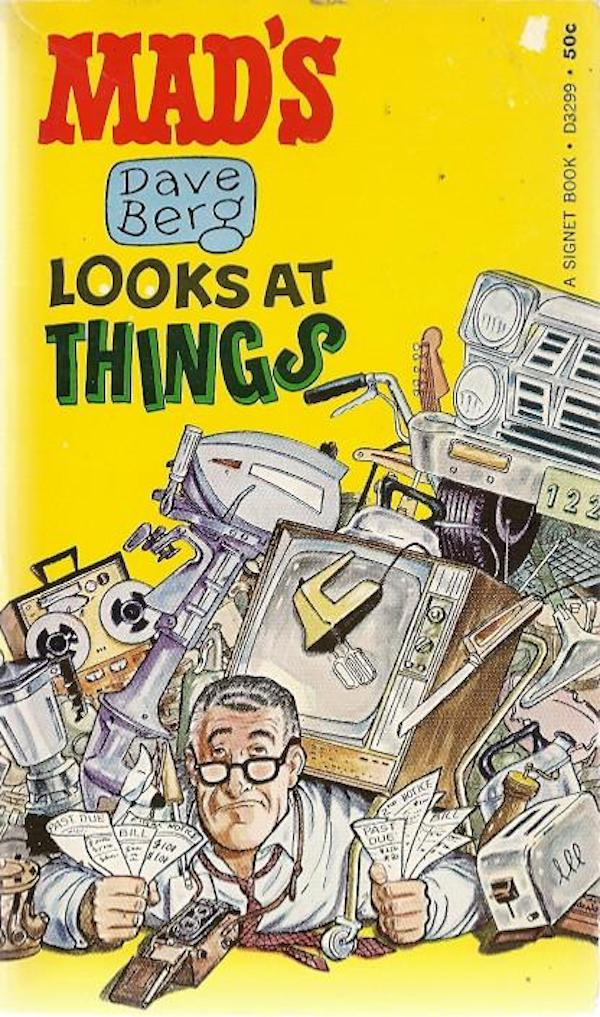
1. Mad's Dave Berg Looks at Things, Dave Berg
2. Tall Tales, Al Jaffee
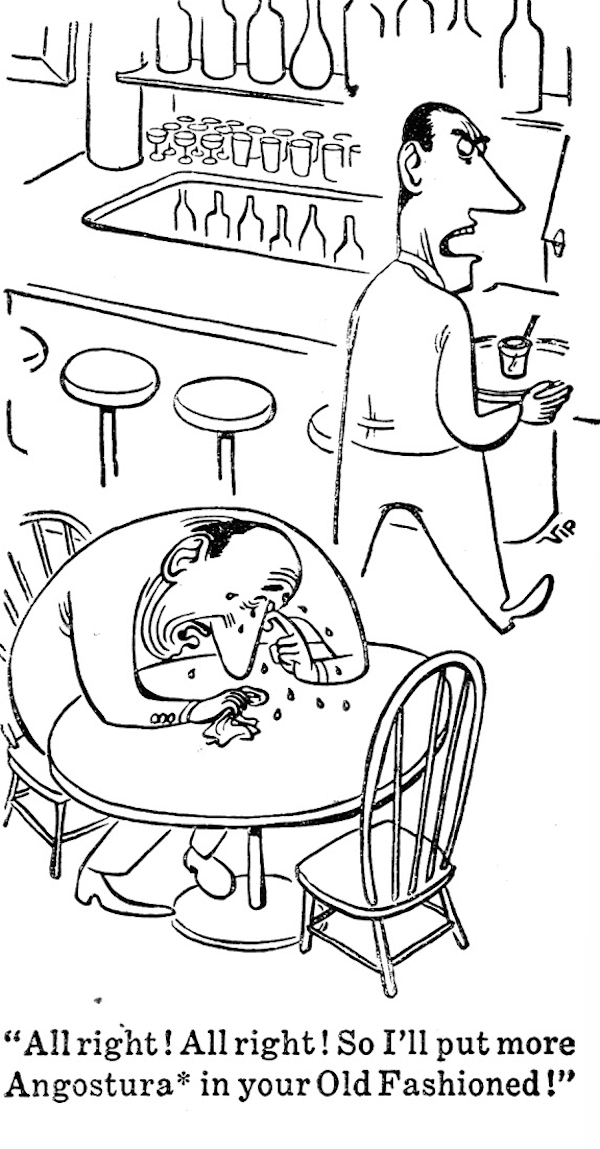
3. Man the Beast and the Wild, Wild Women, ViP
4. Go to Your Room, Bil Keane
5. Dennis the Menace... and His Girls, Hank Ketcham
*****
Des Devlin
1. Take a Bow, B.C., Johnny Hart
2. Al Jaffee’s MAD Book of Magic and Other Dirty Tricks, Al Jaffee
3. The Explainers, Jules Feiffer
4. Dennis the Menace vs. Everybody, Hank Ketcham
5. Herman: And You Wonder Why I Never Want To Go To Italian Restaurants? Jim Unger
1. Hard At Work, Andy Capp? Reg Smythe
2. As The Kid Goes For Broke, Garry Trudeau
3. For The Love Of Peanuts, Charles Schulz
4. Three-Ring Mad, Various
5. The Wizard's Back, Hart And Parker
*****
Andrew Mansell
1. Meet Fred Bassett, Alex Graham
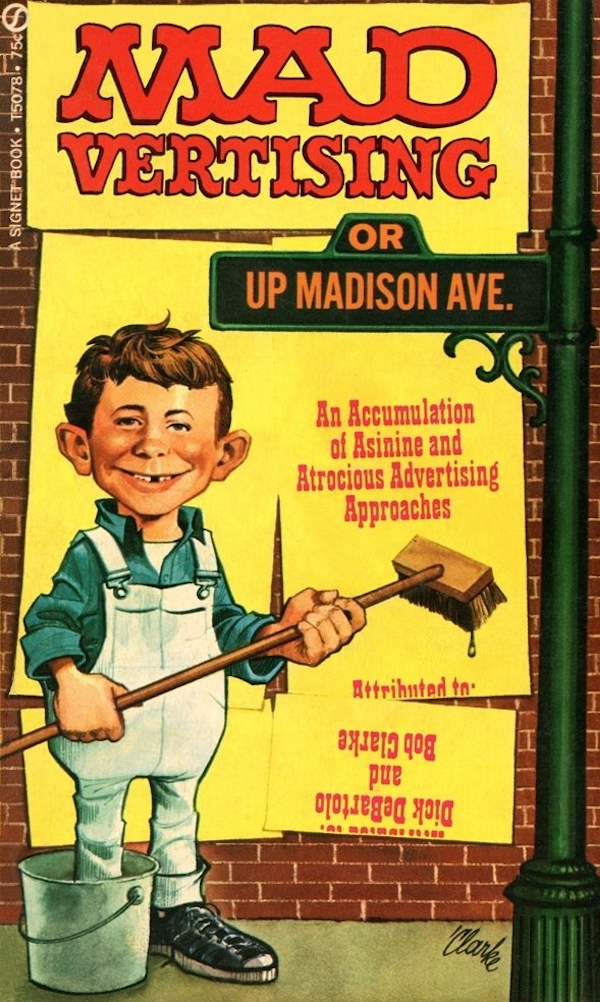
2. Madvertising, Dick DeBartolo and Bob Clarke
3. Slide, Charlie Brown, Slide, Charles Schulz
4. Amazing Spider-Man PB #1, Stan Lee and Steve Ditko
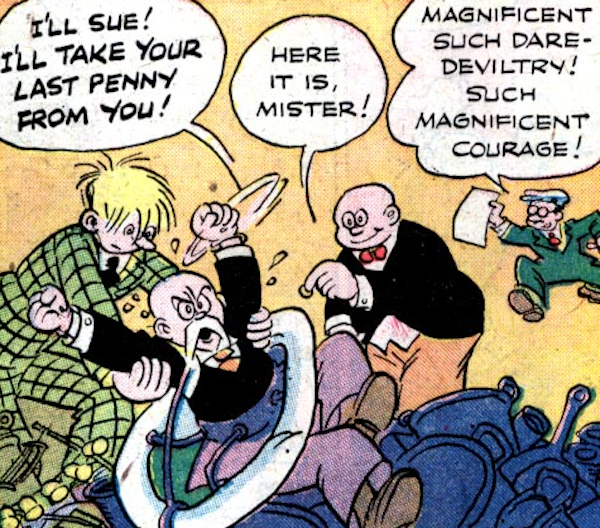
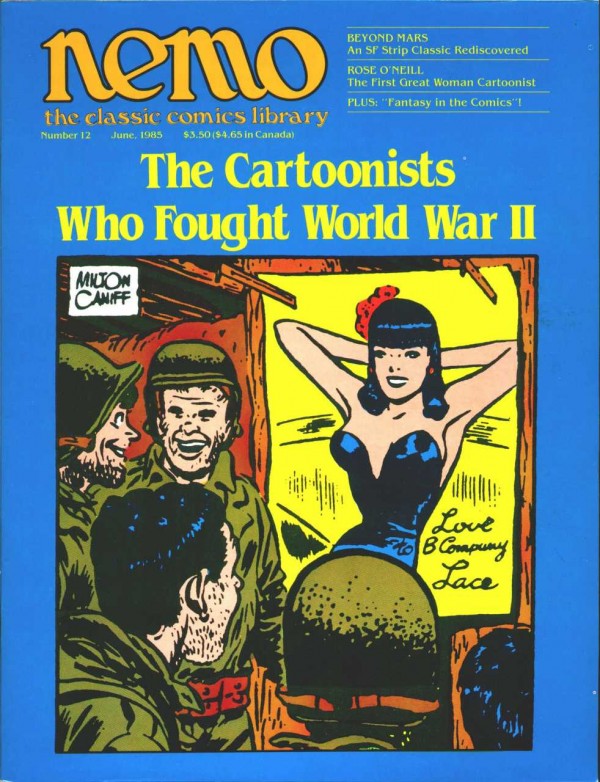
5. Let's See if Anyone Salutes, Milton Caniff
*****
Dave Knott
* The Peasants are Revolting! -- Brant Parker and Johnny Hart
* The Mad Adventures of Captain Klutz -- Don Martin
* Just A French Major From The Bronx -- Garry Trudeau
* The Amazing Spider-Man -- Stan Lee and Steve Ditko
* The Happiest Hookers -- Various Cartoonists from Playboy Magazine
1. The Return of Pogo by Walt Kelly
2. Heathcliff Does It Again by George Gately
3. The Mad Adventures of Captain Klutz by Don Martin
4. The All New Mad Secret File on Spy vs Spy by Prohias
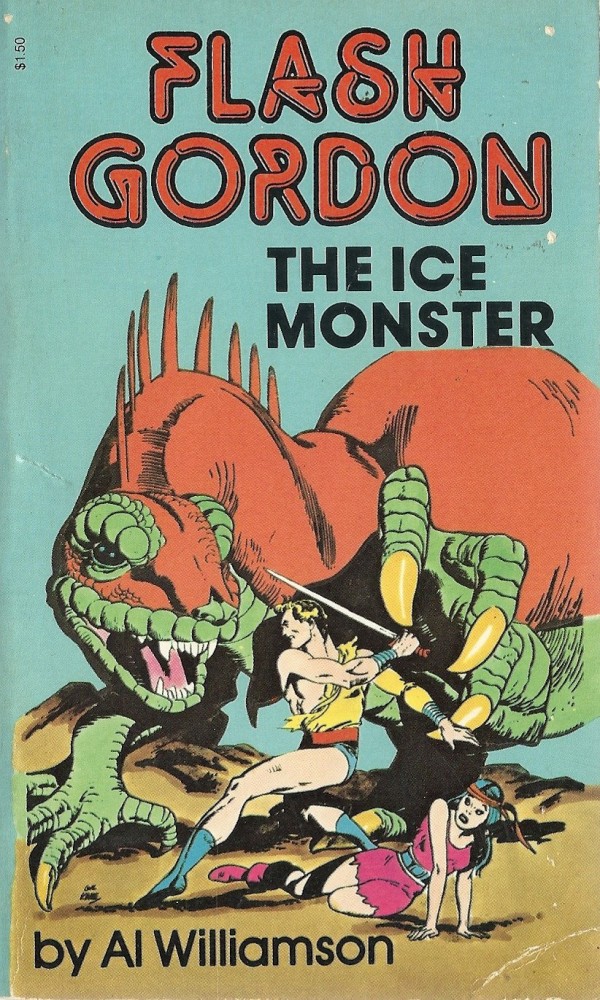
5. Flash Gordon: The Ice Monster by Al Williamson
*****
thanks to all that participated; let me know if I missed yours, this one came together a bit weird









 * Nick Spacek on

 DEC181892 MR WOLFS CLASS GN VOL 02 MYSTERY CLUB $9.99
 * Tom Tomorrow has been great for so long, it's easy to take him for granted. No one could do a comic strip quite






 * Michael Neno on



 I'm a fan of the new series by
  I went from drawing huge 11 x 14 inch pages to six panels per page where each panel was a tightly rendered square inch. I put together an autobiographical mini-comic with these little six-panel-per-page comics called
  SPURGEON: How did you fall into the First Second orbit and how much of your development of Zoo Box involved working your editor? I tried to reverse engineer when you started with that book, and I believe there was enough time from start to finish to put you fairly early on in that company's publishing plans.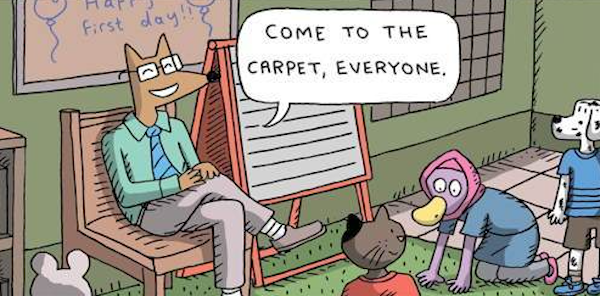
 SPURGEON: What caused you to move from the teacher-centric material to engage first and foremost with the kids?


 * Austin Price on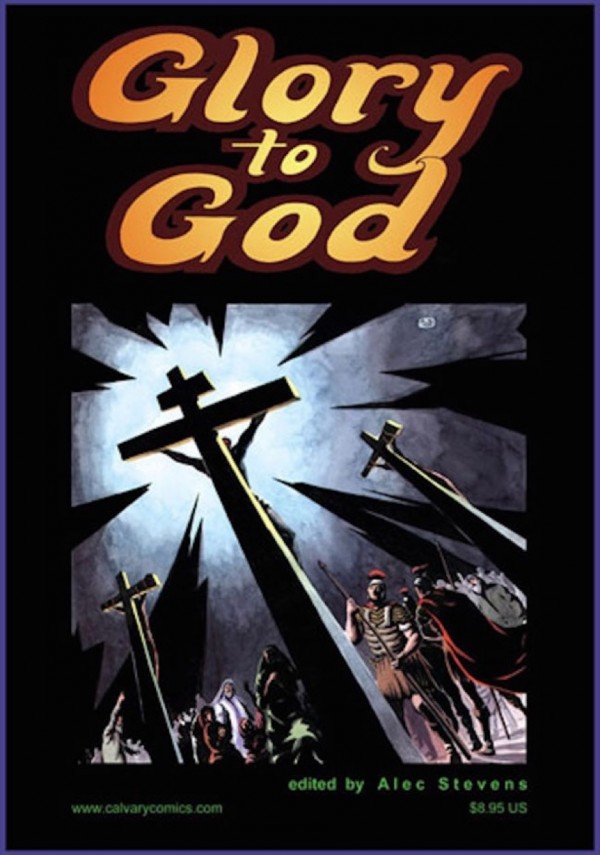
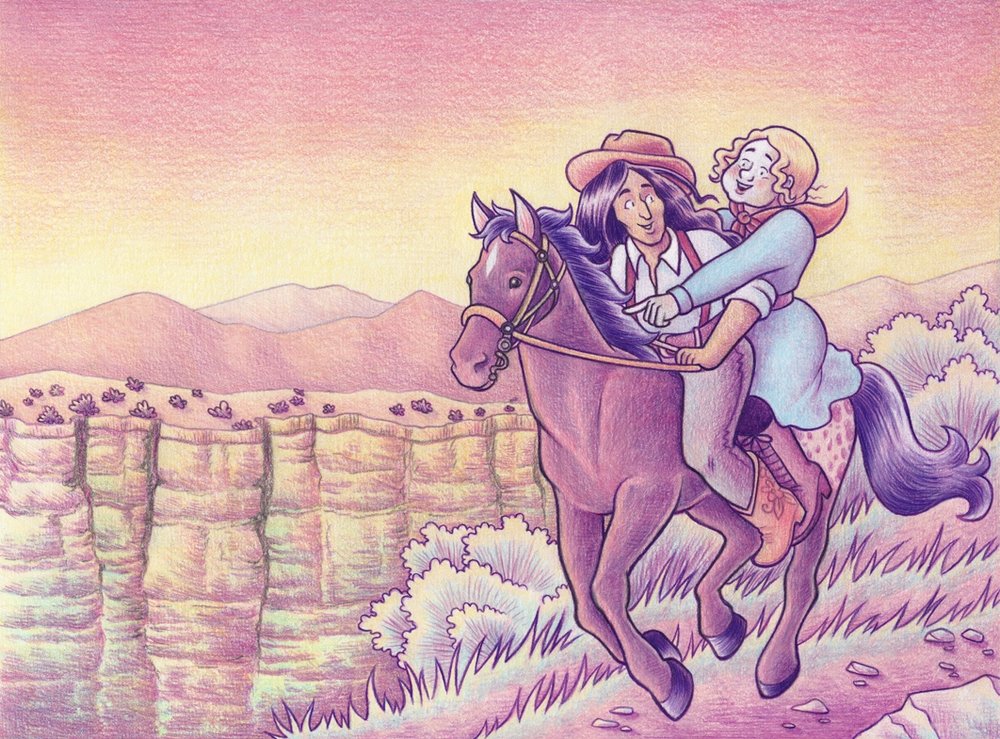



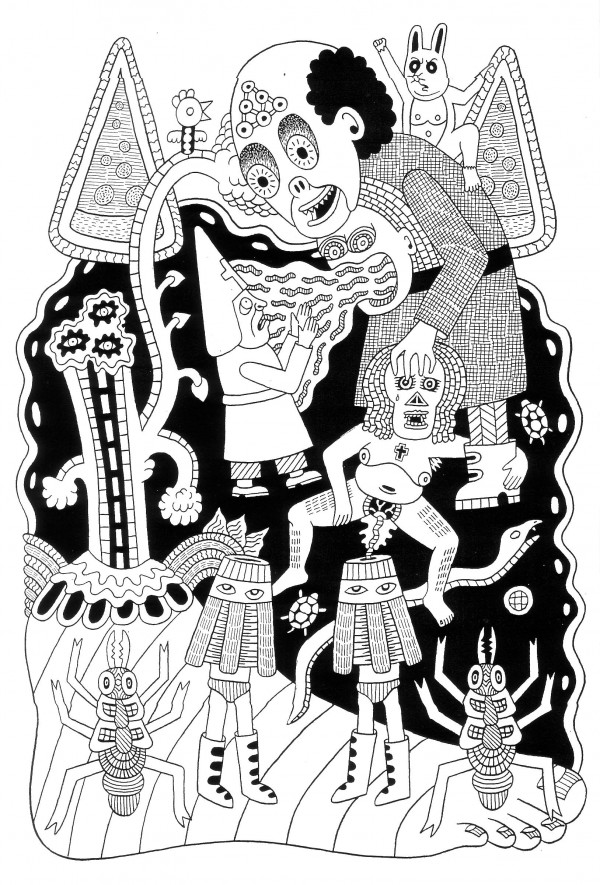


 * Alex Hoffman on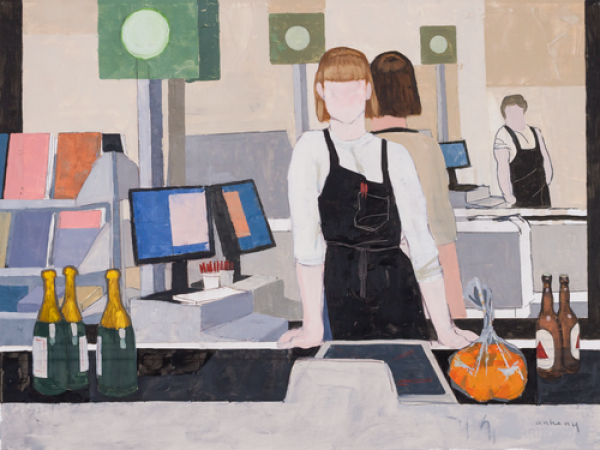





 DEC181917 INCAL OVERSIZED DLX LTD ED $125.00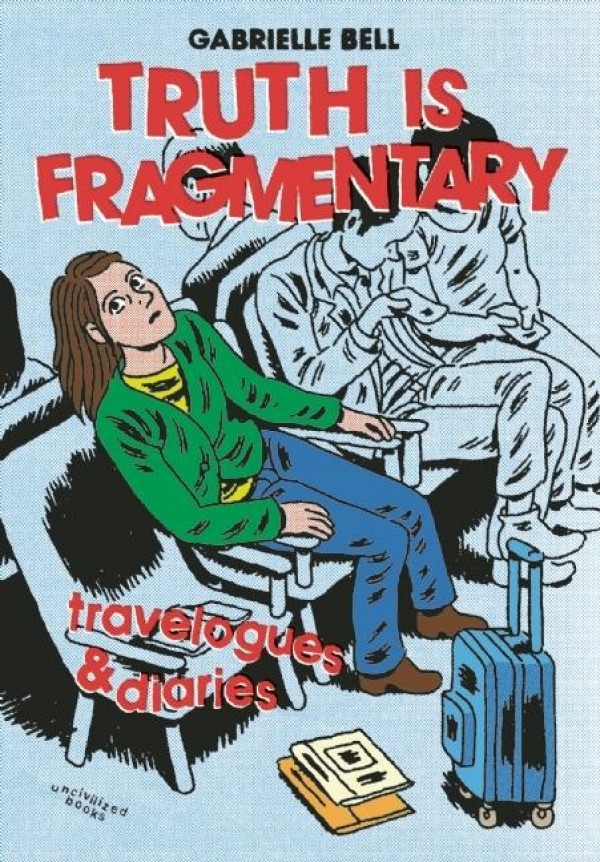
 * Todd Klein on

 The assigned jury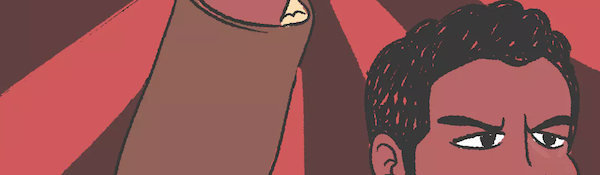
 * otbp: I didn't necessarily expect to see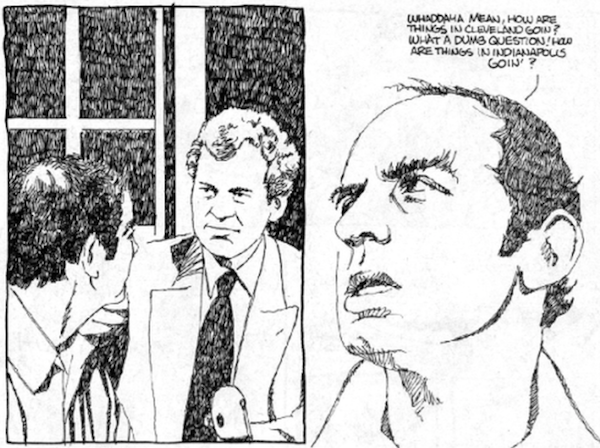

 * Jenee Darden, Bo Walsh and Tarek Fouda talk to










 I can't tell quite yet, but there may also be some dispute over the nature of the actions involved in exorcising Second Coming from the DC section of Previews, as tweets from the creators pulled together at that Beat link focus on a rights-reversion request over a cancellation. THR

 * Kim Jooha on

 DEC180525 WONDER TWINS #1 (OF 6) $3.99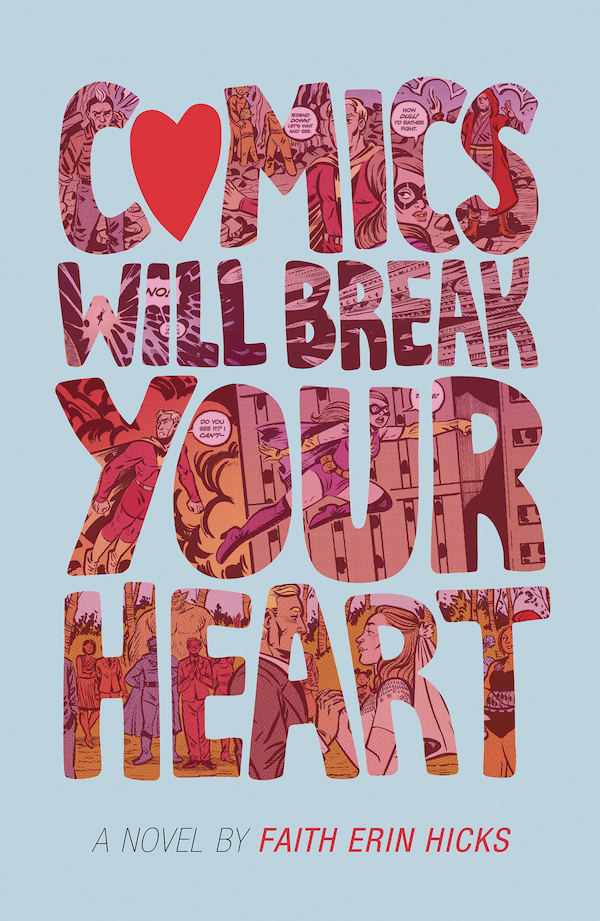
 * Alex Hoffman on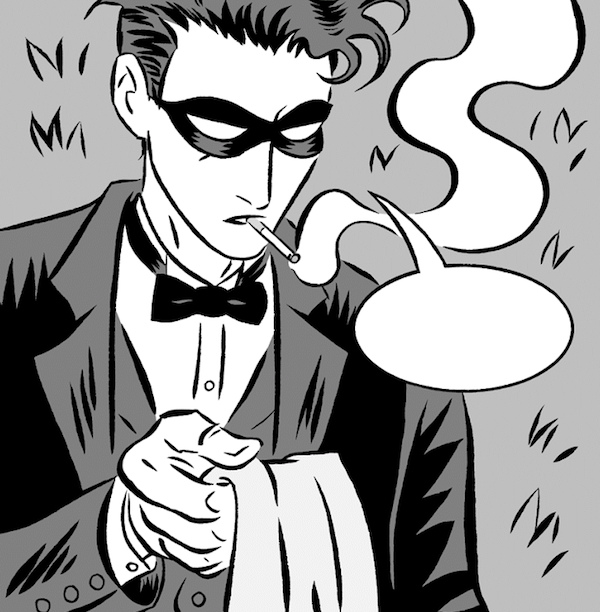


 * Sam Wildman talks to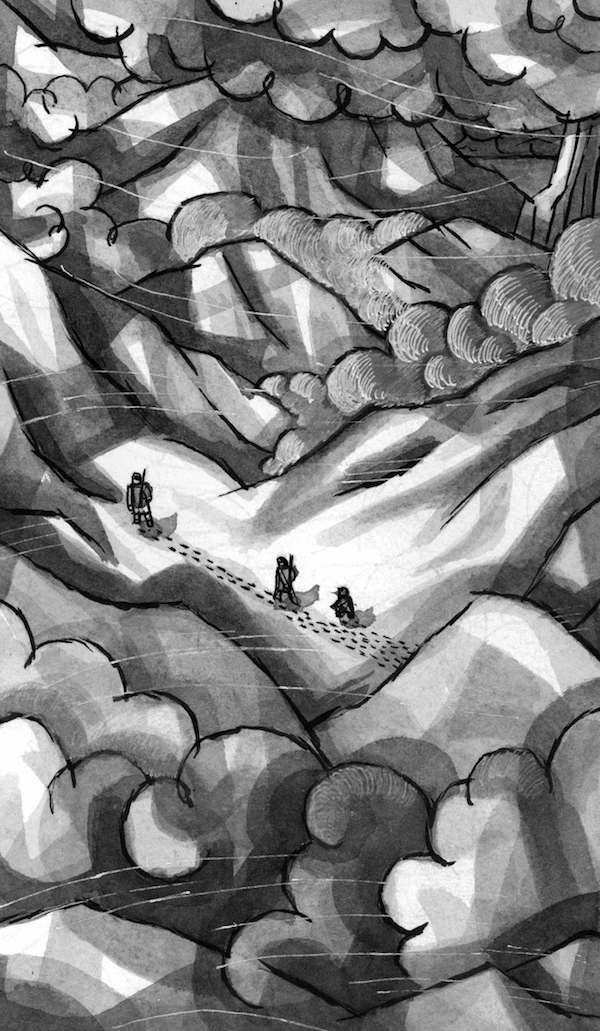


 * I'm sad to see the opening of the Billy Ireland's excellent Barbara Shermund exhibit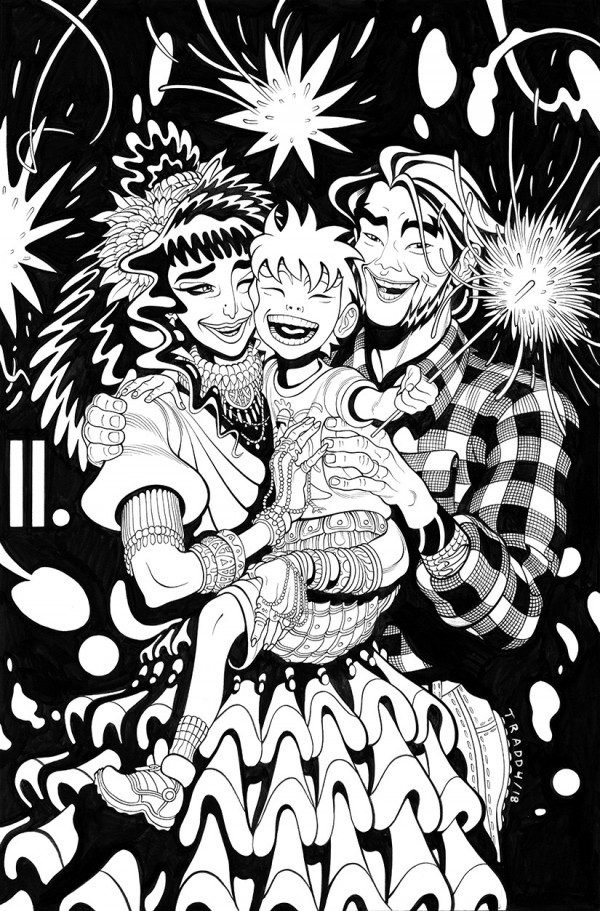
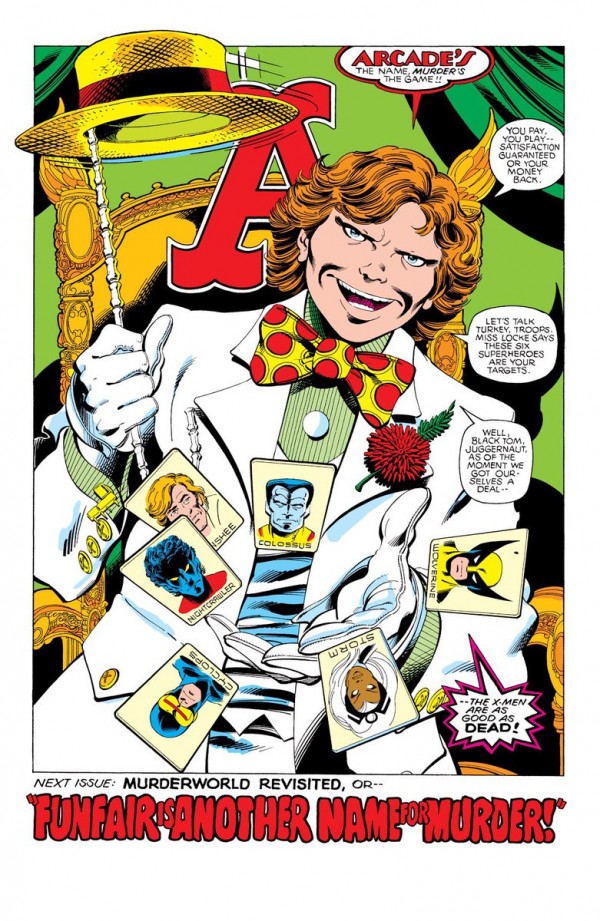
 * Alex Hoffman profiles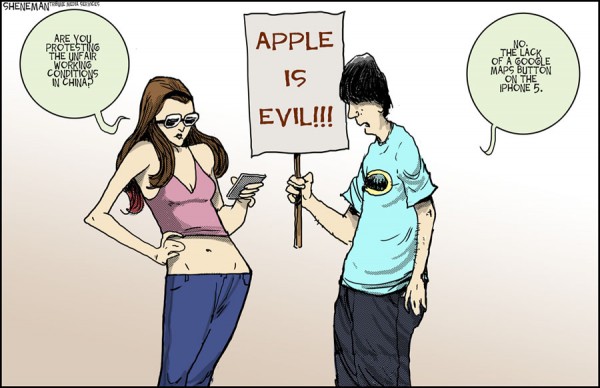

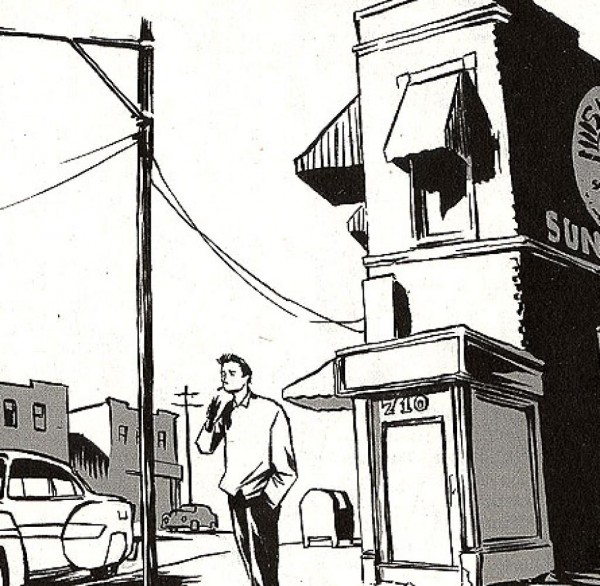




 * Gary Groth talks to


 * Rob Clough on comics by




 DEC181966 THROUGH A LIFE GN $18.95
 * Todd Klein on

 I think ICv2.com is smart
 * Paul O'Brien on

 * Alex Hoffman on