Five For Friday #140 -- Name Five Moments You Found Scary, Eerie, Chilling or Otherwise Unsettling In A Comic
1. That dog running on two legs towards Maggie in Ghost of Hoppers.
2. The horrific murder of Ophelia's friends while Luba hides in the bushes in Poison River.
3. That giant bug crawls down Matthew Cable's throat.
4. Superman's body being stretched out by a black hole while he loses his shit.
5. 9-Jack-9 kills that girl really quietly in (I think) Zot! #23.
*****
This Subject Is Now Closed. Thanks To All That Participated.
*****
Five For Friday is a reader response feature. To play, send a response while it's still Friday. Play fair. No stand-up. Responses up Sunday morning.
Garry Trudeau Submits Doonesbury Cartoons Featuring Senator Obama Win
Garry Trudeau has confirmed to CR the truth of a rumor running through newspaper circles this morning that he has submitted Doonesbury strips for next week that are based on Senator Barack Obama winning the presidential election to be held on Tuesday.
"Yes, the strips next week are predicated on an Obama victory." Trudeau wrote back to an inquiry via e-mail. "Fivethirtyeight.com, the most respected of the polling analysts, is now giving McCain a 3.7% chance of winning (and that's without factoring in the huge lead Obama's taken in early voting), so I guess I like my odds. Still, we supplied our clients with a week of reruns, just in case."
Trudeau admits the risk involved, but doesn't seem to think it a great one. "The way I look at it, if Obama wins, I'm in the flow and commenting on a phenomenon. If he loses, it'll be a massive upset, and the goofy misprediction of a comic strip will be pretty much lost in the uproar. I think I can survive a little egg on my face."
****
please note I have no idea why I have Mr. Trudeau's e-mail, so I guess there's also a 3.7 percent change I just had an exchange with Bob Trudeau from the Ohio state RNC.
Random Comics News Story Round-Up
* not comics: apparently, the newspapers have been doomed for quite some time now.
* there's no way I'm going to be linking to as many of these as they probably plan to do, but this second First Second video snippet starring Emmanuel Guibert caught my attention just as the first one did. Singing cartoonists get me every time.
* finally, Brian Heater interviews Keith Knight about a recent on-campus issue regarding a strip of his that contained a not-very-frequently-used (at least in comic strips) word.
Comics Industries Are Made Of People
You don't see a lot of news like this recognition of the passing of Tania Vandesande coming out of the other world's comics scenes, and you may see too much of this kind of thing in North America, but it's always nice to occasionally take a few moments to reflect on all the people who work in all facets of an arts industry. Apparently, Vandesande opened up Brussels' first comics shop back in the 1970s, and in addition to the vehicle for readers and safe haven fro creators those kinds of spaces can come to represent, she also published several books under the store's imprimatur.
Truth Be Told, I Really Just Like Typing “Ladies Comics Magazines”
It's the novelty of it. Anyway, the Okyama Prefecture has put six manga magazines on its most recent list of nine "harmful" publications. Apparently, local laws compel a district office to make designations regarding publications that should not be sold to children. I have no idea how to place this in context. On the one hand, there's nothing like that kind of report in the US, I don't think. On the other hand, this seems to imply that a bunch of these magazines are being sold on a news stand, while in America a cartoon drawing of Picasso's willie falling in the wrong hands leads to a multi-year legal battle.
* it may be that we were a big New Yorker household when I was a kid -- I had to be the only second grader in Muncie, Indiana who knew who William Shawn was -- but seeing the Drawn & Quarterly ad at left that recently ran in that magazine's pages has to be one of the bigger "wow, comics are different now" moments I've had in a while. I think it's the first one, but I could be completely wrong about that. It's talked about here. Update: I've been informed by a few of you that they ran a similar ad last year for Adrian Tomine's Shortcomings.
* mixed signals from Marvel and no signals at all from DC regarding the future of Canadian pricing on comic books, Don MacPherson says. Other potential effects that a weakening Canadian dollar may have on comics are discussed as well.
* if I'm reading this article correctly, the cartoonist Marjane Satrapi is going to receive an honorary doctorate specifically targeted to those advancing the cause of multi-cultural values.
* this review of recent format changes at a pair of Boston newspapers sounds a bit more like Statler and Waldorf than it does Ebert and Roeper when it comes to the comics section. I think there's a point to be made, though, about how newspaper reformatting is going to have an impact on comics and how they're perceived. For example, I found the Chicago Tribune's new Sunday comics page almost unreadable, and actually bought the Sun-Times the next week.
* this is a cool story about a cool-sounding collection.
* this story about an 18-year-old comic book shop closing its doors is interesting for a couple of reasons: it leaves another town of 35,000-plus without any kind of comics retail whatsoever, and it looks like the shop was actually critically wounded in 2003 rather than in this current, relatively positive period.
* finally, the writer Steven Grant takes a sensible approach to the issue of price in comics. I think my one major quibble would be that a lot of the argument takes place as if some comic books are mainstream entertainment and others are specialty items. I think they're all specialty items. But the thing I like about Steven's take on thing is that it really underlines how difficult it is to track this issue. In some cases, you can take a look at figures on a specific comic book issue; in others, you're talking a buyer class that separated from the final purchasers by a step, so for that and other reasons things get confusing quickly. I remain committed to the idea of comic books not out of nostalgia but because relatively low-entry point comics purchases play a vital role in creating hardcore readers and sustaining an economic model that allows a lot of folks to make a living at comics. I think when not abused it promotes a nice, diverse reading experience, too. If it's suddenly become more difficult to provide this to readers, I think it's worth trying a bit harder in order to keep something so uniquely useful in so many ways.
Your Danish Cartoons Hangover Update
* the appeals court in Yemen on Monday adjourned the session concerning the newspaper al-Ray Alam and its republication of the 2005 Danish Muhammed caricatures. The paper was closed and its editor jailed. The case will be renewed on December 29. Yemen has been one of the more unrelenting countries in terms of how it has dealt with the caricatures.
* the activist Noam Chomsky analyzes the rulings and related actions of Canada's Human Rights Commission, including the decision to pursue some sort of action against the republication of the Muhammed caricatures in the magazine running that analysis.
You can be forgiven not paying attention as times are tough all over, but lots of people are currently being laid off in the newspaper industry in that post-summer, pre-holiday window that seems to attract a lot of major personnel moves. To mention two this week that in previous years might have made for a month's worth of analysis and articles, the LA Times laid off a bunch of its staffers on Monday, and now the non-USA Today Gannett papers will reduce their staffs by 10 percent. And then you have today's jaw-dropper: the Christian Science Monitor will stop being a daily.
The problem is pretty clear: declining circulations paired with hemorrhaging ad sales. The latest figures were even scarier than usual because of the historical nature and expressed desire for content surrounding a very dramatic election year. The reason for all of this is less clear but is likely a combination of the generational shift between newspaper-users and newspaper-ignorers reaching a tipping point, the rise of on-line sources for services that newspapers have traditionally provided (movie listings, sports scores, community announcements), competition for newspaper revenue sources ranging from on-line classified services to local cable service advertising and likely a bunch of stuff nobody has quite figured out yet. Exacerbating the situation is how poorly suited the newspaper industry has shown itself to be weathering this kind of storm through choices like a move to models of profit that put a lot of strain on these companies to hit certain revenue goals every year rather than investing in areas that could be providing benefits now, as well as what I would say is a bit of very real bloat in terms of what was being read, how much local reporting was being done, emerging technologies and what their effect should have been on general productivity within those workplaces.
It's a dire, dire situation, to the point that the nascent credit crisis and potential resulting economic turmoil could snowball into an extinction event for a lot of major players. Since newspapers are a major client for newspaper comics, their plight should be of great concern to the comics world. The newspaper has long been one of the more stable and dependable ways by which at least some practitioners in the field could find fame and fortune, and has yielded more than its fair share of great art. The current crisis calls into question whether or not the comics syndicates are prepared to meet the potential loss of clients that could be on its way, and my guess is that they're not, and underlines the fact that no one really has an Internet strategy that can carry most of comics intact into a next phase or even envision what that next phase may be beyond a crude outline or two. To be fair, asking this of comics syndicates and newspapers is sort of like suggesting folks have a home decorating solution in case someone drives a Buick through their living room. Still, I think people feel its absence.
This is the paragraph where I say something hopeful, but frankly? I've got nothing. Comics in newspapers remain popular. They're an ingrained part of that experience. There is a lot spent on them, enough that I think even reduced the money involved will make it a viable career for many cartoonists. Comics are also of course uniquely transferable to the Internet in a variety of ways were someone to develop a strategy for doing so. While all of this puts comics in a pretty good position to outlast a storm, I'm not sure they get to choose exactly what course they'll chart. We should all spend some time keeping an eye on them.
Geppi Museum Settles Back Rent Issue
The comics business news and analysis site ICv2.com caught another Maryland Daily Record report that indicates the comics-soaked Geppi Entertainment Museum in Baltimore will pay over a half-million in back rents owned. The articles in the Daily Record kind of vacillated between suggesting whether or not the deficit was caused by the Geppi Museum somehow not being able to come up with the funds and their using the non-payment of taxes as a stick by which to cause negotiations by which their rent might be reduced or altered as their landlords did with similar tenants. This latest article seem to endorse the negotiation storyline, and leaves open whether or not future rents may have been changed.
Random Comics News Story Round-Up
* here's some good news that many of you e-mailed me this morning (which likely means someone else had it first): Nathan Fisher is still teaching. Fisher was the teacher who gave a student a copy of Eightball #22 as a catch-up reading assignment. Her parents did not agree with the appropriateness of the choice, and a series of unnecessarily strident consequences ensued that culminated in Fisher leaving that position. I'm also happy to see a local writer speaking to the unfairness of Fisher's previous situation in such strong terms.
* the comics business news and analysis site ICv2.com has a short interview with Yen Press' Kurt Hassler, who assures us that the imprint being placed under the bigger Orbit division by Hachette is really an internal, structural change that shouldn't have a significant impact on readers (which I would think is true) and that everything else like the reaction to the Yen Plus magazine effort is going just fine, thank you (of which I have no way of discerning the truth either way).
* student newspaper sticks it to conventional thinking and backs up their syndicated cartoonist. Or the exact opposite of that. At issue is Keith Knight's use of a "controversial racial slur" which was used in the context of making a point that was related to but not in any reasonable way an endorsement of said slur. You know the kind of thing I'm talking.
* the cartoonist Charles Schulz made $33 million last year. Granted, I think it all counts as overtime now.
* no one makes comics like the great Phoebe Gloeckner, and certainly no one gives interviews about the resulting comics like Phoebe Gloeckner: "I remember receiving a stack of documents from Amnesty Int'l about the murders of girls in Juarez the day I was beginning an illustration to accompany a chapter about 'rectal plugs' -- what they are and ways to use them."
* finally, here's an interesting road-not-traveled from a comics meets pop culture standpoint: the writer Joe Casey pitched Marvel on a series that would draw the current presidential candidates into that company's world of high-stakes superhero decision-making. I think I would like this much better than making Black Panther a woman or alien invasions not drawn by Neal Adams but I probably wouldn't like it as much as that Shang-Chi villain who had giant swords for hands (I always felt sorry for his henchmen) or anything featuring Moses Magnum. Seriously, though, Casey's right in that this would have likely been a PR bonanza.
This Isn’t A Library: New And Notable Releases To The Comics Direct Market
Here are the books that jump out at me from this week's probably mostly accurate list of books shipping from Diamond Comic Distributors, Inc. to comic book and hobby shops across North America.
I might not buy all of the works listed here -- I might not buy any -- but were I in a comic book shop tomorrow I would likely pick up the following and look them over, and as a result, my retailer might be tempted to steal my Halloween costume idea in retaliation. Wait until he hears I'm going as his mom.
*****
JUN080063 BERNIE WRIGHTSONS FRANKENSTEIN HC $29.95
I had no idea a new edition of this was coming out, and I can't imagine too many comics fans who haven't at least thought about adding it to their collections at one point or another.
AUG080135 RANN THANAGAR HOLY WAR #6 (OF 8) $3.50
Somehow I know this is going to be the title that pops into my head when in the next couple of years folks look at DC's problems with its mid-list.
AUG082264 SWORD #12 (MR) $2.99
More batshit insanity from the Luna Brothers.
AUG082431 MMW ATLAS ERA HC VOL 01 JOURNEY INTO MYSTERY $59.99
Even more batshit... oh, you know.
AUG082421 X-MEN FIRST CLASS GIANT SIZE SPECIAL #1 $3.99
Jeff Parker has made this book featuring the Lee/Thomas, Kirby/Roth X-Men a hit the old-fashioned way. Solid work under everyone's radar until someone catches up to it.
AUG084007 ACME NOVELTY LIBRARY HC #19 (MR) $15.95
Chris Ware's latest comes out in plenty of time for Best Of Year consideration. The clear book of the week, I had people e-mailing me with joy that Amazon.com had sent their copies, and that just doesn't happen with Green Lantern: Rage of the Red Lanterns.
AUG084553 BAT MANGA SECRET HISTORY OF BATMAN IN JAPAN SC $29.95
Chip Kidd's much-anticipated presentation of Japan's version of Batman-mania.
APR083836 MAN OF ROCK BIOGRAPHY OF JOE KUBERT SC $19.99
Bill Schelly's full-sized prose biography of the industry veteran whose career spans comic books in America.
SEP083713 MCCAIN THE COMIC BOOK $3.99 SEP083714 OBAMA THE COMIC BOOK $3.99
I liked these, and I'm going to write about them soon. With so much of this historic campaign taking place on-line, I can't think of too many better ways to grab something to hold onto.
AUG080012 HELLBOY IN THE CHAPEL OF MOLOCH ONE SHOT $2.99
Here's the week's biggest and most affordable surprise: a Hellboy comic by series and concept creator Mike Mignola.
JUL080023 SPEAK OF THE DEVIL HC $19.95
The hardcover collection of Gilbert Hernandez's compelling recent series.
SEP083992 CURSES HC (O/A) (MR) $21.95 SEP083989 OR ELSE #5 (MR) $4.95
The best book and the most recent comic by the most interesting cartoonist to emerge this decade.
SEP084047 SARDINE IN OUTER SPACE SC VOL 05 (O/A) $14.95
First Second's under the radar hit, and one of the more influential series of recent years if the market goes the way I think it might.
*****
The full list of this week's releases, including some titles with multiple cover variations and a long, impressive list of toys and other stuff that isn't comics, can be found here. Despite this official list there's no guarantee a comic will show up in the stores as promised, or in all of the stores as opposed to just a few. Also, stores choose what they carry and don't carry.
To find your local comic book store, check this list; and for one I can personally recommend because I've shopped there, albeit a while back and probably a bit high, try this.
The above titles are listed with their Diamond order code in the first field, which may assist you in finding comics at your shop or having them order something for you they don't have in-stock.
If I didn't list your comic, it's because I'm distracted by voting early.
Congratulations To James Kochalka On The 10th Anniversary of American Elf
I missed it on Sunday because I'm an ass. This is an astonishing achievement in a lot of ways, and I hope everyone appreciates it for what it is. Ten years is the length (before option) of a standard daily newspaper comic strip. You can stockpile work when you're working on that kind of endeavor in a way you can't working on a daily diary comic, and people are still driven stark raving mad by the daily deadline pressure. Please take some time today or later this week to dig around the site and follow some of the tribute links.
Newspaper Artist Killed By Crossbow
The advocacy group Reporters Without Borders is reporting that Guatemalan newspaper graphic artist Abel Giron Morales was killed by a young man who shot a crossbow bolt into his chest before leaving in a van. The killer apparently knew Morales' routine. Because police aren't releasing the details and specifics about what Morales did for the paper are non-existent, it's hard to say if this had anything to do with the artist's work. It's still an astonishing murder of someone working at an independent newspaper and not the first death of a journalist in that country thus far in 2008.
I thought this was nice. I'd re-run the photo that accompanied the article, but 1) it's not mine, 2) I want you to go look at it yourself, and 3) Marie Severin's 1960s Marvel covers are cool.
Not Comics: This Basketball Season I’m Sticking To Shohoku High School
"Today's commercials versus those from years ago is its own discussion, but the basic problem is their underlying message. Jordan's commercials said 'I'm unbelievable, surely the best of all time.' LeBron's commercials say, 'I am one weird dude, perhaps sporting a severe personality disorder.'" -- someone asked me to write about watching NBA basketball
Random Comics News Story Round-Up
* the downloadable Bone for the iPhone is the Apple Pick of the Week. This sort of explains whey there wasn't a bigger deal made of the comic being added to their offerings. Good Jeff Smith month. He raised some money for the CBLDF through auctioning off his only 2008 store appearance. In addition, I thought RASL #3 was weird and unsettling and propulsive and showed off a different range of effects than Bone did -- just want you want from a cartoonist's follow-up to the lifetime project.
* don't believe political cartoonists who say they won't be able to find ways to make fun of Barack Obama if he wins next Tuesday's election. They always make this complaint, and they're always wrong. That said, the article does include some really quite dismal cartoons.
* this anti-Al Franken comics mailing ruffled feathers. I am still a proud owner of a copy of "Tip O'Neill's Tip Sheet," which featured one fetus saying to another of then-local congressman Phil Sharp, "Phil Sharp says we're not people." That's still right up there with "Stay Gold Pony Boy" as something the guys with whom I grew up say to each other on those rare occasions we're out late acting goofy.
* this post and its comments thread features the Hulk Vs. Superman of people I wouldn't want to tangle with on-line: Domingo Isabelinho and Matthias Wivel.
* I'd hate to hear what happened to the fans picking the wrong side of that Civil War mini-series.
* finally, this terrible story and opportunity to help is making the rounds through various outposts of the comics Internet. I can't vet it personally, so I'm urging you to read it on your own and come to your own conclusions, but I thought it worth providing that initial link.
Another Veteran Staffer Leaves Wizard?
I'm hearing from a couple of places that Steve Blackwell may have been let go by Wizard Entertainment. His most recent title was creative director, and if forced into it I would hazard a guess that he was at this point one of the publishing company's half-dozen or so longest-tenured employees. I believe that Blackwell rose through the company on the general design end of things, and it looks like that one of his last major contributions to the company was an interior design on the flagship title that went into effect in recent months.
If true, this is yet another employee let go in a massive, long-term recalibration at the company up and down that has knocked fruit to the ground on several branches of the employment tree. Also, since I can't find anyone to say a single thing about Blackwell that indicates he wasn't at all times very well liked, this would seem to emphsize to an even greater degree the potential cost-cutting aspects of such a departure.
Not Comics: CR Film Round-Up
What I've seen recently and sort-of recently, for your not-comics Netflix decision-making and theater-going pleasure:
This is the best thriller I've seen in a long, long time. Granted, I'm not much of a thriller guy. I knew nothing about it when I went in, and still don't know anything about it other than what I saw. I found it very satisfying in a robust, 1970s Hollywood way. As a bonus, there were more attractive women over the age of 35 in this movie than any I've ever seen, but it was good enough I didn't even figure that out until I was thinking about it on the way home.
What a fine career Alec Guinness had.
I've been putting this one off since forever, and now I feel like an idiot. Fun movie.
This was a lot of fun, and just short of crack for people with romantic feelings for journalism, but I can't argue that it's all that good. The problem with the American film version is going to be their conflating the John Simm and James McAvoy roles into one character, who will be so much of a super-reporter that as a result the movie will lose much of its balance.
I wanted to like this in some way a) because I like ambitious creators, and b) so I could let loose with that perverse side we all have that loves defending movies other people dislike. I couldn't do it. Way too precious, way too many lazy performances, a critical lack of narrative momentum. Seann William Scott is totally the Badger, though. Someone should make that movie. It's not like Bob Hoskins is busy.
This one has stuck with me, and I'm not certain why.
I didn't love-love this, but I think it will hold up to repeated viewings. Having John Malkovich's character watch early 1990s Gilad Janklowicz workout videos is as weird and as funny a moment as I've seen in the movies this year. It might be the funniest scene this year, period, if it weren't for...
... this movie, but not this scene. It's the scene where the one woman's fiance joins her in Barcelona and steps off the escalator. For some reason, that killed me both times I saw it. I was inconsolable. Complete character assassination.
Portfolio Article Asserts That The Comics Art Market Is Now Bound To Europe I'm not quite certain what to make of this article implication-wise, and a couple of the specifics raise my fact-checking eyebrows (I'm pretty sure John Romita Sr. wasn't on Amazing Spider-Man in 1964), but the idea that a weak US dollar has made this material more attractive to European collectors makes a certain amount of sense. Time to break out that script about a commando-style raid on the French art collector who has all those original Kirby pages.
The New Comic Foundry: Three Quotes That Grated On Me And One That I Liked
Yesterday was another Sunday morning with no newspaper on my stoop. This never happened when the economy meant paperboys and papergirls delivered it, but it seems to happen every seventh or eighth time now that I rely on a surly guy roaring by in his truck. Without a proper Sunday paper, I grabbed the new issue of Comic Foundry and climbed back into bed, coffee on the bedside table, nearby windows open to the sounds of morning, for a nice non-start to a lazy, do-nothing, Fall weekend day. Here are some quotes I came across that I remembered to the point I wanted to comment.
"The next person who commiserates with me about comics' falling circulation and says, 'What we need to do is get comics back on the newsstands!' is going to get two in the back of the head, quick and painless." -- Mark Waid, "The Newstand Is Old News," page 23
I agree with Mark Waid more often than I disagree with him on industry issues. That said, who the hell is he talking to that is pushing the newsstand as a solution to anything at this point? I can't imagine this being anybody anyone would take even halfway seriously. I mean, my Mom might do this, or some ancient comics pundit whose interactions on-line are limited to a juno account. Certainly no one I know that works in comics or has more than a passing knowledge of it would.
In general, Waid's short essay on the wonders of the Internet and its possibilities reads like something that was written in 1997 rather than 2008: a wishful, enthusiastic nod to a brighter future just around the corner. The problem: the comics Internet is already here. There are well-known, well-respected companies that could not function without their Internet-based revenue, another group of companies that would function much less effectively, traditional cartoonists galore that make a significant portion of their income via on-line methods, and a brand new wave of self-publishers out there making up to six-figure incomes based around comics enterprises that are only just now starting to find their way into other media. It's not lack of imagination that has kept comics from diving in that much more fully on-line. It certainly isn't adherence to nostalgia, at least not anymore. It's a lack of practical skills all around, institutional sloth in the broadest sense, the fear of maintaining the current infrastructure at the companies that are big enough to have such infrastructures, the fear of maintaining already miniscule profit margins at companies too small to worry about infrastructure, and a dearth of focused capital.
In other words, my impression is that the conversation moved away from the primacy of the newsstand a long, long time ago. A more interesting discussion that sometimes gets floated -- and one that comics' long relationship to the newsstand could inform -- is that companies should go all in on the Internet at the expense of everything else, sometimes phrased as "the X/Y/Z way of doing comics is doomed and everyone needs to make way for the future." I don't think that's necessarily the case, either, and moreover, I think it's a bad thing to pursue that philosophy as policy. Comics people set up either/or situations like they get a royalty for doing so, though, so the industry goes through periods where it embraces new markets believing it's the only one they'll need... until the next one emerges. I think we may be there right now with the Internet and its various avenues. I can't be alone in sensing a potential tipping point. I just hope it isn't tipping over.
My view is that comics should exploit all the markets. There are no hard and fast rules that says one works and the other doesn't. If there were, the newsstands would have been shut down entirely as a market for new comics -- and Shonen Jump has worked just fine there. I feel that comics should be on-line and everywhere else anyone will have them: on cell phones, in comic shops, in bookstores, and, as many that are still around, spinner racks, too. There's no need to hurry along any delivery system's demise, no reason to shut any one door.
That may seem like an obvious prescription, but as many people as I've read proclaim certain avenues outmoded or even outright wrong in some vague and pernicious fashion I don't think you can ignore the impulse in comics to embrace the next big thing in a way that can leave both sides gasping for air. I think Waid's essay suggests why this strategy appeals: because the next way of delivery is the only thing that can promise a re-ignition of comics' popular medium status. I'd suggest it's that notion, not any specific delivery system, that's outdated. Comics may do extremely well on-line over time just as they've done fine to great in the short term. They may do better than ever before. I'd be surprised if at least some of them don't find that on-line distribution is the best suited system ever made to the specifics of what they do. Still, I can't imagine any scenario by which the delivery of comics on-line matches the success music and video and prose has enjoyed there. The thing is, that shouldn't matter. Our goal can't be to make comics a mass medium when there's so much to do to make it a great art form fueling an ethical industry. It's not as important that everyone not reading a comic read a comic than it is we ensure that the people out there that want them get them. Delivery systems should serve content, not the other way around. For the immediate future, that's a war best fought on all fronts.
updated to say: I've received a small flurry of e-mail saying that the newsstand argument is still a solid part of superhero-centric message board discussions; I did not know this
"Comics guys do have a shelf life." -- Mark Millar, "Millar Time," page 39
Mark Millar's interview in this issue of CF is fun because 1) it's not like he doesn't have a filter, but his is certainly set up differently than most people's, and 2) he's a guy that's obviously thought through the careerist aspects of comics to such a degree that he's bound to come up with several funny observations and solutions concerning the problems presented. His observations on the callous nature of the comics industry are my favorites here.
As seen in the quote above, one of Millar's more recent shticks is to suggest that the work of everyone in comics older than 45 years old starts to decline. This is typically hilarious of Millar in that it's obviously self-serving. He's not 45, but he's close enough that he can talk of the next round of projects as final, or heading towards some conclusion, even if it's an arbitrary one. Millar's also at the point in his career where he's pitching for assignments or jostling for attention with a lot of writers around this age. That doesn't make it a rule. I think even suggesting it as such can be harmful to comics' long-term health.
First of all, it's not true. It's fair to say that it may be harder to write industry-shaking event comics and high-profile, movie-ready series the older you get and the further you move away from the youth culture that defines the language in which such events traffic. I don't think Joe Simon is going to be tagged to write the next Ultimate Marvel crossover series the same way I can't imagine there are a lot of Saturday Night Live writers over the age of 70 or that Bruce Jay Friedman will soon become head writer at The Daily Show. Comics folks at all levels enjoying launching, discovering and celebrating new talent. I think all of us with some interest in comics see the effects of the book industry's fascination with new talent taking shape in which cartoonists are getting which contracts from book publishers. It doesn't take a pop culture savant to figure out that youth is more and more frequently served.
However, if you allow yourself to define comics as something more than its leading edge in terms of monies received and pop culture currency obtained, it's clear that plenty of its creators do extraordinary work over the age of 45. Jack Kirby was older than that for his best period at Marvel Comics, and then went on to the very fruitful Fourth World period that by itself dwarfs the career output of all but handful of mainstream comics creators. The majority of the most popular MAD cartoonists were older than 45 during its 1970s flush period. Charles Schulz was older than 45 in the late '60s and the early '70s on Peanuts, its most popular and culturally relevant period. One of the best, most prolific cartoonists of the last five years, Gilbert Hernandez, was older than 45 during that astonishing period. I'd rather have all the Joe Kubert Comics made after he was 45 than the ones he made younger than 45.
Even with these examples and dozens upon dozens of others to go by, it's fair to say comics has done a horrible job of supporting widespread publishing opportunities for older cartoonists, especially in the kinds of comics favored by Millar. That absence of older creators combined with the natural tendency for audiences to put more weight behind material when they first encounter a unique point of view make the creative landscape a rocky place for those who have been around a couple of decades. But it's not for lack of skill, at least not always, and instead of recognizing he may need to leave the field Logan's Run-style at a certain point, maybe Millar could put more of his advocacy in service of ways for people to keep creating and finding an audience for what might just be great work even if it isn't top of charts or summer blockbuster fodder. I know I'd read a comic book written by a 60-year-old Mark Millar. Why not leave that possibility open?
"One of the things that makes him so good as a writer is that his work appeals to people." -- Karen Berger, "Man Of Your Dreams," page 54
I have nothing bad to say about Karen Berger. She was nice enough to interview with this site last year, she's a much-respected industry veteran, and she seems like a really nice lady. For some reason, however, the writer of CF's article on the 20-year anniversary of the Sandman series uses three or four quotes from Berger that don't seem to mean much of anything. I don't blame Berger, and to be fair, she does unpack the thought above a bit in the graph that follows the statement. Additionally, I sympathize. I have a hard time articulating why I like certain work, and a more difficult time than that putting into words how I think about projects I worked on or near that are dear to me. What I don't understand is why both Berger and the usually insightful and quick on his feet Gaiman weren't pushed for a little more than a recognition of the surface awesomeness of their industry-altering project. And since they weren't pushed, I wonder why the editors didn't send their writer back to do some more work, or if that was impossible, to bring in some other witnesses (like one of the artists, maybe?) to provide missing details. They certainly had the room, given the two-page, content-free and not particularly attractive introduction spread equal to the size of the finished article.
Nitpicking and second-guessing? Probably. I have a reason, though. Beyond my personal taste, focused observation is important to such articles -- and, I'd suggest, to comics history -- in that when not tethered to specifics it's too easy to see Sandman and books like it in ways we want to see those books rather than for what they are. In this case, I'd argue that Sandman wasn't a project that succeeded for its novelty but one that hit hard with readers over time because of the skill of its execution. If it was the first of this or the first of that wouldn't have mattered if the comic hadn't been very well done. Sometimes a great comic is a great idea, or a break with a past or an innovative effort. A lot of the time it's also just a really good comic.
Comics tends to overwhelmingly favor the idea because the idea is currency that's a) translatable to other media, b) speaks directly to your ability to do something similar for someone else in the future, and c) codifies the contributions of those on the masthead that may get harder to track as a series progresses. The complicity from those who cover comics in favoring idea over execution is what I would term the Stan Lee effect, where Lee's desire to move into other fields after his success at Marvel in the 1960s created a culture of valuation that gives weight to the portable concept over the less portable work itself. I think if you take a longer look at Gaiman's signature comic series, what you see in Sandman wasn't an idea that hit like a lightning bolt but a well-done, consistent comic book that like a powerful rush of water pulled a bigger and bigger readership into its wake as it continued on. There's a fine line between making the case for a great comic book as a great comic book and making a case for it based on all the ways it isn't a comic book. The way to avoid that line is to deal in specific observation that keeps you honest.
"Under no circumstances, in no lifetime, would I ever acknowledge that guy had any sort of authority, real or imagined in my life." -- Matt Fraction, "Comic-Con Confidential," page 44
Finally, I enjoyed this quote from writer Matt Fraction that came in the midst of a piece drawn by Chip Zdarsky about various pros' con experiences. (I liked that whole feature.) Fraction's anecdote was about he and his friends bailing on a heavy-hitter's party and its doorman (portrayed at right) in order to gather somewhere and shut a bar down with good conversation. I'm way too old and boring and very much not invited to cool parties to make a statement like this one out loud, so it was nice to hear someone who is going to have more and more of those opportunities come their way arrive at that conclusion.
I think it's an attitude comics could use more of. The cross-industry interest in comics across the board is great, but I hope no one forgets the good things about the comics industry in a mad rush to become an adjunct to Hollywood and/or book publishing. That set of values may reveal itself in the absence of some of the extraneous bullshit that surrounds other industries that make and spend more money, it may reveal itself in maintaining our own, distinct system of distribution and reaching fans, it may come out when we write a letter to an editor telling them that an artist also worked on the comic profiled, and should be considered a co-author. If the interests and opportunities that comics will enjoy over the next few years are indeed real, I think that they can be embraced douchebag-free.
Random Comics News Story Round-Up
* if you have the time this morning, could you click through to an article I wrote about old strips for Comic Book Bin or otherwise visit it at some point? I'd love you to read it but if you lack the time, pretend reading is appreciated, too. No one ever hires me to write about comics in this way, and I like doing it, so I want to show my appreciation for the opportunity. I'll owe you one.
* a bunch of folks have written in to remind me of significant comics archives at university libraries, including the famed Bowling Green holdings and the university that takes one each of all the Eisner Awards books. So I still don't know why Dark Horse would call their donation to Portland State the first one.
* folks keep e-mailing me links to this funny post of Marvel Comics Ideas by Chip Zdarsky.
* the artist and educator Steve Bissette looks at the timeline of events discussed by comix scholars vis-a-vis Understanding Comics in an attempt to provide some clarification as to any arguments or implications that might end up being floated by virtue of that discussion taking place. If nothing else, for those of that live in an increasingly Twitter-ish world, it's fun to read a dense Internet posting like that.
* missed it: I forgot to post a link to this article about Todd McFarlane's present view of comics, and in waiting so long I forgot why I wanted to post about it in the first place.
* the writer Noah Berlatsky responds to Tucker Stone's recent piece about ratings. As is the case with many pieces on mainstream comics industry operations, it eventually devolves into a lament along the lines of just how weird those comics can be.
* this post by Eddie Campbell on 1980s small-press publishing is interesting in part because of Campbell's stated reticence to talk about 1980s small-press publishing. Plus: Everett True sighting.
* screwed it up: this is a better a link for the Global Hobo blog than the one I provided a week or so ago. The one I provided a week or so ago was a catalog link.
* this article on retailer reactions to Marvel putting some of its characters into on-line comics is about as odd an all over the place as you might think. In the end, I don't think anyone in the world not a specific kind of retailer will fail to generally support the idea of companies exploring as many alternative arenas for distribution as they feel benefits what they do. I honestly think that at this point every single new comic book should be available by download, but that may just be my general gut feeling that I should be able to pick up something like a Kindle and download my New Comics Day to it.
* finally, Marvel's Joe Quesada talks about how his company's comics may survive economic hard times or may not, depending on just how bad things get. The talk about holding the line on serial comics at a certain price would be more heroic if there weren't already signs they're playing around with a higher per-issue cover price. I have to think at some point that at least some of those comics may absolutely shed readers if they take another substantial leap in price. I'm not a comic book consumer, and I kind of have to tilt my head a bit to think that way, but when I do it's tough for me to think of losing another entire comic book for $20 placed on the counter.
CR Sunday Feature: Bart Beaty on the 2008 FIBD Official Selections By Bart Beaty
I've been thinking about the Angouleme nominees for a couple of days. My first reaction was that I wasn't very enamored with the list. Don't get me wrong, there are plenty of great nominees on here, and a couple of truly outstanding books, but it's nothing close to a list that I would put together. Of course, then I got over myself and remembered that they're not my awards, they're the festival's, and expecting a festival to have the same aesthetic priorities as I do would be pretty strange.
My other reaction was probably just as rooted in a lack of self-awareness. I was really surprised by the sheer volume of picks that I had never seen or, in some cases, even heard of. Partly this is a function of the fact that I haven't been in Europe since last January, and so haven't been in the bookstores where I would see this material. But it made me feel really out of touch.
Now that I've had a day or two to think about it, I've realized that's not really the case. I may be out of touch, but these nominations aren't the proof of it. For better or worse, this is a very diverse set of books, and I think that there are probably very few readers who would be interested in all of the books here, or even a majority of them. At the same time, I can't imagine many BD readers who won't find something to be rooting for come the last Saturday in January when the prizes are handed out.
I gave up handicapping the awards the second that Shaun Tan's name was called in the Theatre last year. I would have had him at a 200:1 long shot. The jury changes year to year, and so looking for consistency from the awards is pointless, and, unless you know the members of any particular jury, it's tough to anticipate which way they might head. So your predictions are probably as good as mine.
Nonetheless, I did want to offer a few thoughts on the fifty-six nominees this year. Angouleme got rid of categories a few years ago, and it was a decision for the better. No hiving creative works into ridiculous categories like best inker, just a long list of the best books of the year reduced to a short list of one winner, and five runners-up at the Festival itself. Announcing the nominees now, and partnering with SNCF (the trains) and FNAC (huge entertainment store chain), gives 56 titles an unparalleled spotlight for the next three months (and, crucially, through the Christmas gift-buying season).
Let's sort them by publisher.
Acte Sud l'An 2
La Jeune Fille et le negre, Judith Vanistendael
This is the line of books edited by comics scholar Thierry Groensteen, who always has impeccable taste. Vanistendael's book is one I haven't read, but that I know quite well as I actually spent time at last year's festival having it read to me by her Dutch publisher (my Dutch, frankly, sucks). As the title suggests, it's the story of an interracial romance and the tensions that it creates. Vanistendael is a young cartoonist with what many see as a bright future. I'm looking forward to actually reading this for myself.
*****
L'Association
Lock Groove Comix n°1, Jean-Christophe Menu
Les Amis, Francois Ayroles
La Guerre d'Alan, tome 3, Emmanuel Guibert
Le Petit Christian, tome 2, Blutch
Le Tricheur, Ruppert et Mulot
Five nominees for the venerable French alt-comix publisher indicates that they remain the critical darlings of the Festival. Two of these, Les Amis and Le Petit Christian, I have already talked about this year. I liked them both, but I adored the Blutch and think that it might be his best work. Lock Groove Comix by Jean-Christophe Menu is a short comic about music that's not as good as his Topographie interne du M (nominated last year), although it has its charms. The Guibert book is, of course, something that you should be reading in English from First Second around this time. I've written about the previous two volumes in the past for TCJ and also in my book, Unpopular Culture. I think it's a straight-up masterpiece. Le Tricheur is another great one from Rupert and Mulot, their most substantial book to date. It's fantastic. The only reason I haven't reviewed it here is that I review all of their books here and I always say "it's great," and I don't want to sound like a broken record. But it's great. I would be thrilled if any of these books won, and I will be saddened if Blutch and Guibert don't leave with prizes.
*****
Editions ca et la
Ferme 54, Galit et Gilad Seliktar
Bottomless Belly Button, Dash Shaw
Ca et la, and that looks strange without the accents, means "here and there," and that's what this publisher specializes in. They do French editions of comics published elsewhere instead of original French material. They have good taste, and publish the likes of Ville Rante and Peter Kuper. The Dash Shaw book needs no additional praise from me here. Ferme 54 is an autobio book by an Israeli brother and sister duo and is one of those small books that it's great to see awards like this highlighting.
*****
Cambourakis
Mon Frere nocturne, Joanna Hellgren
I haven't seen a copy of this book. The plot description (a young boy may be the reincarnation of his dead brother) does nothing for me, but the art samples I've seen are exceptional -- starkly minimalist and highly personal. This is a book that I'll read based on its nomination.
*****
Casterman
Esthetique et filatures, Tanxxx et Lisa Mandel
Le Gout du chlore, Bastien Vives
Pluie du paradis, Yu lu
Pauvres zheros, Baru, Pierre Pelot, Rivages / Casterman / Noir
Shutter Island, Christian De Metter, Dennis Lehane, Rivages / Casterman / Noir
The Tanxxx and Mandel book is from Casterman's new KSTR line, which are longer (100+ pages) books. The cover really puts me off and I don't think that this story of patricide is going to be for me. The Vives book is also from KSTR and just came out this month -- I don't really know a thing about it. I've heard good things about the Yu Lu book, but I'm no big fan of hyper-realism in comics art. I'd certainly give it a look based on the nomination. The two books here that I am very interested in are the ones by Baru and the De Metter. Both are from the other new Casterman series this year, a noir line adapting literary works into comics. Pelot is a French genre writer with hundreds of books to his names, and Lehane, of course, may be best known as the author of Gone Baby Gone and Mystic River, dense, dark crime novels. I am dying to read Baru's take on his Shutter Island but Casterman won't send me a review copy. I'll have to buy my own. Good year for Casterman, really. Four nominations in their two new lines had to have them popping some corks on Thursday.
*****
Cornelius
Sequelles, Hugues Micol
A bit of a disappointment to see only one Cornelius book nominated this year. It's a good one though. Micol's book is set in a nightmarishly bizarre Tokyo. The festival blurb compares it to a cross between Kirby and Kurosawa. That doesn't seem entirely correct to me, but I think it's a great image nonetheless so I'm not going to try to improve on it.
*****
Dargaud
The Autobiography Of A Mitroll, Mum Is Dead, tome 1, Bouzard
De Gaulle a la plage, Ferri
Gus, tome 3, Christophe Blain, Dargaud
Long John Silver, Neptune, tome 2, Dorison & Lauffray
Le Marquis d'Anaon, La chambre de Kheops, tome 5, Bonhomme & Vehlmann
Lots of series nominated here. The Bouzard book, which has an October release date and is brand new, interests me quite a bit and I am likely to give it a thorough look. The Gus book I will certainly pick up, since I will buy anything Blain puts his name to. I was under the impression that this book wasn't to be released until next month -- perhaps the jury is composed of time travelers? Ferri's sense of humor isn't mine, and I passed on the De Gaulle book a couple of times. The Long John Silver book is one of those exquisitely drawn French adventure books that bore me to tears, and the Marquis d'Anaon is just the type of genre work that makes my eyes glaze over as I walk through the big French chain bookstores. The nominations for these last two are the type that leave me scratching my head.
*****
Delcourt Filles perdues, Moore et Gebbie
L'Heritage du colonel, Varela et Trillo
La Force des humbles, Hiroshi Hirata
Loin d'etre parfait, Adrian Tomine
Wanted, Millar, Jones et Mounts
I assume that I don't need to say much about Lost Girls or Shortcomings for readers of this site at this point in time. The Hirata book is a samurai manga that didn't look so super hot when I flipped through it recently. I'm sort of interested in seeing the Varela book -- he's a youngish Argentinian cartoonist -- although I definitely run hot and cold on Trillo's writing (more often cold). In all honesty, the fact that Wanted has been nominated for this prize made me throw up in my mouth a little bit.
*****
Denoel Graphic
Tamara Drewe, Posy Simmonds
I shouldn't have to plug this here, but since Simmonds may be the single-most underrated cartoonist on the planet right now, I will just note how very much I hope that she wins one of the prizes. In a perfect comics world, Simmonds would have annual parades in her honor. I mean, she's so good that she made me re-read Thomas Hardy. Please, jury members, vote for this book.
*****
Diantre
Mon gras et moi, Gally
Here's where the policy of nominating 56 books really works. Not only had I not previously heard of Gally, I hadn't even heard of her publisher, Diantre. A few clicks on the internet and I've read a few pages from her blog. That's how these nominations should work. Looks to be a body image book, and quite possibly a good one. I'm interested enough to take a look.
*****
Drugstore
Le Roi des mouches, L'Origine du monde, tome 2, Mezzo et Pirus
No comment, Yvan Brun
Actually, I don't know anything about the publisher Drugstore either. I do know that the first volume in the Mezzo and Pirus series came out some years ago from Albin Michel, but I've never been a big fan of their work. No Comment seems interesting: a wordless book about man's inhumanity to man. Where are all these new publishers coming from?
*****
Dupuis
Marzi (1984-1987): la Pologne vue par les yeux d'une enfant, Savoia et Sowa
Spirou et Fantasio, Le Journal d'un ingenu, Emile Bravo
Dupuis, of course, is not so new. The stalwart publishing house gave us one of the most enjoyable books of the year in Bravo's re-imagining of Spirou and Fantasio. All mainstream comics should be this good. Hell, all comics should be this good, mainstream or not. I just really, really loved this book. Marzi also looks to have its charms. The story of a young girl in Poland before and after the fall of the Berlin Wall, it may have a bit of the Persepolis tone about it, but it also has a genuine visual charm provided by Savoia's art.
*****
Ego Comme X
American Elf, James Kochalka
Le Gout du paradis, Nine Antico
Nice to see James Kochalka up for this award. He'll be featured on the power-packed Saturday of this year's Festival (check out this line-up of talks: Posy Simmonds, Adrian Tomine, Dan Clowes, James Kochalka, Melinda Gebbie, Bernie Wrightson. All speaking one after the other. I hope I don't have to go to the bathroom and risk losing my seat). The Antico book is a first for her. I'm partial to books from Ego Comme X, but the art put me off a bit here and I wasn't in a rush to look at it more closely.
*****
Employe du Moi
3 declinaisons, Pierre Maurel
This one came out in March, but I still haven't seen it. It's described as "social fiction" about people living close to unemployment and in precarious positions. I will certainly keep my eyes opened for it.
*****
Fluide Glacial
Les Bidochon, tome 19, Binet
Lucien, Toujours la banane, tome 9, Frank Margerin
Lucien, of course, is the major character of one of the major humor cartoonists in French comics history. A product of the 1980s, Margerin resurrected Lucien at the end of the 1990s for two books, and now, eight years later, has brought him out of retirement again. This just came out, so I haven't seen it yet, but I expect I will like it. I'm one of those people that believes once you've been named President of the Festival (as Margerin was) you should be ineligible for any further awards from it, but it's not hard to convince me that Margerin likely deserves this. On the other hand, there is no comics work anywhere in the world that I dislike as much as I dislike Les Bidochon.
*****
Futuropolis
Lulu femme nue, premier livre, Etienne Davodeau
BigFoot, Troisieme Balade -- creatures, Nicolas Dumontheuil adapte de Richard Brautigan
Martha Jane Cannary, tome 1, Blanchin et Perrissin
Matteo, Jean-Pierre Gibrat
Davodeau is one of those artists who is consistently nominated for these prizes, and his work is quite good. I'm not sure why no one has ever taken a shot at translating him (too political? too agricultural?). I'm behind on his books, but will pick this one up. The Dumontheuil is from a series I haven't been reading. It is, in fact, about Big Foot just as the name suggests. Not my thing. Matteo is a new one this month that I haven't seen. Seems to be a fairly classically done historical novel about the inter-war period and grand European events like the Spanish Civil War. Martha Jane Cannary will be known to fans of Deadwood as "Calamity Jane." This one I really want to read, not because I'm a fan of Deadwood so much as it is a new western series by Matthieu Blanchin, who has previously done primarily autobio material for L'Association and Ego Comme X and I want to see how his skill set transfers over to this kind of work. Ok, plus I like Deadwood.
*****
Gallimard
Tresor, Lucie Durbiano
Durbiano was nominated (I think) a couple of years ago, and has come a long way in a short period of time. Her work has a bit of a ratty clear line look to it. This is another recent release, this one is about a naïve young woman falling in love in Paris in the 1950s. I'm not a super-fan of her work, but I know a bunch of them. She's another that I think would do very well in translation.
*****
Glenat
Les Gouttes de Dieu, tome 1, Tadashi Agi et Shu Okimoto
Max Fridman, tome 5, Vittorio Giardino
I don't know the manga, but I am oh-so tempted to buy a copy just based on the plot description: to receive his inheritance, a young man must be able to identify 12 bottles of wine! This is just bizarre enough to be entertaining to me. Giardino, of course, is one of those mainstream Eurocomics masters that you've got to be a real cynic not to appreciate on at least some level. Somebody must be translating this series, right?
*****
Kana
Undercurrent, Toyoda
Ushijima, tome 3, Manabe
I don't know either of these series. The only manga I read in French is by Taniguchi. Ushijima is a yakuza story, but for my tastes Undercurrent looks like the one that is worth flipping through.
*****
Editions Lito
Bons mauvais grands et petits joueurs, Anne Rouquette
Another artist and publisher with whom I'm not familiar. I can't say much other than I really like this cover, and if the insides look anything like this I'll be happy to read it.
*****
Lombard
Jonathan, Elle, tome 14, Cosey
Cosey, like Giardino, is a genuine master who initially made his name in the 1970s, but I haven't been reading Jonathan since he brought that series back to life in the late-1990s. These are the sorts of people that I'm happy to see nominated but that I'd probably never bother to renew my interest in.
*****
Paquet
Cite 14, saison 1, Gabus et Reutimann
Last year, my friend Alfred dragged me into the busiest Angou tent on the busiest day because he heard a rumor that the new issue of this series was out and he had to have it. This is a collection of comics that were serialized. Adventure and intrigue and all those things. Based on Alfred's frustrations waiting for the issues, I opted to wait for the collection and am eager to see what the fuss is all about.
*****
Rackham
Oncle Gabby, Tony Millionaire
It's Sock Monkey, but in French!
*****
Requins Marteaux
Pinocchio, Winshluss
Salade de fluits, tome , Mathieu Sapin
The FNAC site is telling me that Pinocchio isn't out yet, so either the jury has advance copies or they have a lot of faith in Winshluss. I sure do. I think that he's pretty much the funniest guy in comics, and I snap up his material at any opportunity. This will be no exception. Sapin is also pretty damn funny himself, though I've been more partial to his Supermurgeman series than this one.
*****
Sarbacane
Nage libre, Sebastien Chrisostome
This is another first book, this time about three fish. I sort of wrote it off as a children's humor book, but I'm willing to look again. The fish are cute, at least.
*****
Soleil
Harding Was Here, tome 1, Midam et Adam
Le Livre des destins, La Metamorphose, tome 2, Le Tendre et Biancarelli
Harding Was Here is from the creator of Kid Paddle, one of the great recent successes of kid-friendly comics. This series (which I believe he only writes, Adam draws) is about a time traveling art collector. I admit, I sort of like the concept. Le Livre des destines is exactly the sort of French genre comics that I don't pay attention to. Sorry.
*****
Tonkam
Le Voleur de visages, Junji Ito
More horror manga for the people who love horror manga. I'm pretty agnostic about the whole genre, despite the best efforts of many to convert me.
*****
Vents d'Ouest
Tout seul, Christophe Chaboute
Chaboute won a prize at Angouleme about a decade ago, though I've never paid great attention to his work. This is a big one, about 400 pages, so it might be time for a reappraisal on my part.
Looking over the list, I'm impressed by the diversity but a little underwhelmed at the state of French comics. If this is the best on offer (a big 'if') there are not too many slam-dunks for all-time classics here. There are a lot of very good books, and a couple that I enjoyed immensely, but not many game changers here that we'll be looking back on 20 years from now and marveling about.
Finally, if Wanted wins a prize, I will never go back to Angouleme.
*****
To learn more about Dr. Beaty, or to contact him, try here.
Those interested in buying comics talked about in Bart Beaty's articles might try here or here.
FFF Results Post #139—Close To Your Heart
On Friday, CR readers were asked to "Name Five Comics Which You Admire For Their Quality, But To Which You Also Have Another Connection -- Don't Explain It!" Here are the results.
*****
Tom Spurgeon
1. Sick, Sick, Sick
2. The Smithsonian Collection of Newspaper Comics
3. The Death of Speedy Ortiz
4. The Early Morning Milk Train
5. Hicksville
*****
Jean-Paul Jennequin
1. Transition (Phase 7 #10+11) by Alec Longstreth
2. L'Enigme de l'Atlantide by Edgar-Pierre Jacobs
3. Safere Zeiten by Ralf Konig
4. Hutch Owen is Working Hard by Tom Hart
5. Stuck Rubber Baby by Howard Cruse
*****
Dan Coyle
1. The Maxx by Sam Kieth and Bill Messner-Loebs
2. Cerebus #112/113: "Square One" by Dave Sim and Gerhard
3. Typhoid by Ann Nocenti and John Van Fleet
4. Weapon X by Frank Tieri and Georges Jeanty
5. A Small Killing by Alan Moore and Oscar Zarate
1. Grendel: God and the Devil
2. Amazing Spider Man #122
3. Batman from the '30s to the '70s
4. "Starchie!" (from MAD #12)
5. The story "Human Remains" in Tapping the Vein
*****
Uriel A. Duran
1) Paper Biscuit #1
2) Powers Vol. 1: Who Killed Retro Girl?
3) The Sandman #74 ("Exiles")
4) Malinky Robot:Stinky Fish Blues
5) Creature Tech
1. Time2: The Epiphany
2. Grendel (Comico series)
3. Up Front
4. The Doonesbury Chronicles (1975 collection)
5. Penguin Dreams and Stranger Things (Bloom County collection)
*****
Alex Cox
1. Buddha, Osamu Tezuka
2. Local, Brian Wood and Ryan Kelly
3. All Star Superman, Grant Morrison and Frank Quitely
4. From Hell, Alan Moore and Eddie Campbell
5. Peanuts, Charles M. Schulz
*****
Tom Bondurant
1. 'Mazing Man
2. Astro City's "The Nearness Of You"
3. American Flagg! #4
4. Justice League #1 (i.e., the Giffen/DeMatteis proto-JLI title)
5. New Teen Titans Annual vol. 1 #1
* Drywall: Unzipped!
* The end of Here There Be Robots #3
* Madman: The Oddity Odyssey
* Steve Skroce's run on Gambit
* "When Lilacs Last in the Doorway Bloomed" short back-up story from Flaming Carrot Comics #31
*****
Roger Green
1. RAW
2. Barefootz by Howard Cruse
3. The Spirit
4. Smilin' Ed by Raoul Vezina
5. Creepshow by Wrightson
First Thought Of The Day
What they say the anti-life equation is in Final Crisis #4 isn't really what the anti-life equation is, right? That seems to me a horrible stunting of the broader argument Kirby was making.
Same Hat! Same Hat!: Top Shelf Launching Version of Ax Anthology
I don't want to step on their exclusive, so you should go read about it there. This is good news for those that like alternative manga, as Ax is apparently the spiritual successor to Garo. This puts Top Shelf in a position to provide a kind of material that has come out either spottily or not at all from other publishers, although I've great enjoyed recent efforts by PictureBox, Inc. to release more material along these lines.
Yen Press Moved Into New Division The Hachette manga and graphic novel imprint Yen Press will join that publisher's science fiction and fantasy imprint Orbit in a new division named after the latter of the two. Tim Homan of Orbit will head the division and Kurt Hassler will take over solo directorship on Yen Press as co-founder Rich Johnson departs. I'm not sure that isn't just a bunch of names being shuffled around on a chalkboard, although I would imagine it likely reflects the conservative nature of the book publishing business as they brace for Alan Greenspan's credit tsunami. I think Yen has a number of books prepared to come out in 2009, mostly mid-single digit volumes of various launched series.
Tom Fagan, 1935/36-2008 The Rutland Herald reports that Tom Fagan, a longtime newspaper reporter and the founder of that city's Halloween parade, has died at age 76. It gets mentioned here because the Rutland Halloween celebration was attended by a number of comics professionals and worked into superhero comics continuity in issues like the Roy Thomas-penned Avengers #83 represented by the accompanying image. A sign of an earlier time when the bleed between adult fan and the American mainstream comics industry was much more pronounced, and one of the odder reading memories for a lot of kids of that era, many of whom quickly picked up on the fact that this was something that existed in the real world. As Cole Odell wrote CR this morning, "As a little kid growing up in small-town Vermont, coming across these stories of Batman or the Avengers running around about 45 minutes from my house blew my 6-year-old mind."
Random Comics News Story Round-Up
* even better news on the Bill Leak front this morning, as the Australian political cartoonist who went through two surgeries after hitting his head during a recent fall will soon leave intensive care.
* Writer Mariko Tamaki is a finalist for a 2008 Governor General's Literary Award, as given out by the Canada Council of the Arts. She was named to the prose children's author list for her graphic novel Skim. Guaranteed $1000 as a finalist, Tamaki could win $25,000 and a specially-bound edition of her graphic novel, while her publisher could win a few thousand dollars for another round of promotional activities. What's odd, of course, is that artist Jillian Tamaki (the writer's cousin) is not a finalist -- odd only in that in graphic novels as opposed to more standard illustration, the artists are in many circles considered co-authors because of the perhaps crucial importance of how the book is visually constructed in terms of how it's eventually read.
* this article about Geppi's Entertainment Museum is odd to me because it seems to suggest that there's some sort of inability to pay while previous coverage emphasized the museum not paying because it wanted a deal similar to another tenant that forgave back rent due to outside factors. These aren't incompatible reasons, of course, you can be broke and not want to pay, but the emphasis seems to be pretty crucial here and so I can't quite figure out what's going on. To be honest, I can't imagine the museum bringing in enough money to offset that kind of rent on a regular basis -- Baltimore is stuffed with museums, both formal and odd, and it's hard for me to imagine a huge local audience for repeat visits to the place even with an aggressive exhibits rotation.
* teasing a storyline death to an iconic character seems to me kind of a gross way to drum up interest in a comic book, but that's the mainstream American comic book industry, I guess.
* finally, a couple of people have sent me links to this Tim O'Neil review of a Spider-Man comic. O'Neil is I think rightfully suspicious of a Spider-Man comic book drawing comparisons between Spider-Man facing down super-villains and the experiences of soldiers in Iraq, or any of the specific observations that are asserted in those issues. I also admire the ending of the piece where he basically admits he his mixed feelings on the matter. What struck me, however, is that it's comic book issues like these that I think feel the most impact from there being like six Spider-Man comics in a month. This just feels like something that's off in a corner somewhere as opposed to a BIG ISSUE in THE SPIDER-MAN COMIC BOOK. That's probably just me, though.
Your Fresh-From-FIBD Selection Officielle 2009 du festival BD List-Makers
The Festival International de la BD Angouleme has released the official selections list from which their main prizes will be drawn from at January's festival. There are a number of books with either American edition or that were North American at their conception on the list, and I'll try to include all of those covers below for your potential shopping or feeling superior uses. I'm a little unsure as to whether or not some of the later editions of certain series are in print here, and I'm sure I missed someone, but that's why I have the Bart Signal on my roof. Congratulations to all the selected authors from Dash Shaw to Adrian Tomine to Hiroshi Hirata to Francois Ayroles.
* 3 declinaisons, Pierre Maurel, L'Employe du Moi
* American Elf, James Kochalka, Ego comme X
* Les Amis, Francois Ayroles, L'Association
* The Autobiography Of A Mitroll: Mum Is Dead Vol. 1, Bouzardm Dargaud
* Les Bidochon, Vol. 9 Binet, Fluide Glacial
* BigFoot, Troisieme Balade -- creatures, Nicolas Dumontheuil, Futuropolis
* Bons mauvais grands et petits joueurs, Anne Rouquette, Editions Lito
* Bottomless Belly Button, Dash Shaw, Editions ca et la
* Cite 14, saison 1, Gabus et Reutimann, Paquet
* De Gaulle a la plage, Ferri, Poisson Pilote/Dargaud
* Esthetique et filatures, Tanxxx et Lisa Mandel, Casterman
* Ferme 54, Galit et Gilad Seliktar, Editions ca et la
* Filles perdues, Alan Moore, Melinda Gebbie, Delcourt
* La Force des humbles, Hiroshi Hirata, Delcourt
* Le Gout du chlore, Bastien Vives, Casterman
* Le Gout du paradis, Nine Antico, Ego comme X
* Les Gouttes de Dieu Vol. 1, Tadashi Agi et Shu Okimoto, Glenat
* La Guerre d'Alan Vol. 3, Emmanuel Guibert, L'Association
* Gus Vol. 3, Christophe Blain, Dargaud
* Harding Was Here Vol. 1, Midam et Adam, Soleil
* L'Heritage du colonel, Varela et Trillo Delcourt
* La Jeune Fille et le negre, Judith Vanistendael, Acte Sud l'An 2
* Jonathan, Elle Vol. 1, Cosey, Le Lombard
* Le Livre des destines, La Metamorphose, Vol. 2, Le Tendre et Biancarelli, Soleil
* Lock Groove Comix #1, Jean-Christophe Menu, L'Association
* Loin d'etre parfait, Adrian Tomine, Delcourt
* Long John Silver: Neptune Vol. 2, Dorison & Lauffray, Dargaud
* Lucien, Toujours la banane, Vol. 9, Frank Margerin, Fluide Glacial
* Lulu femme nue, premier livre, Etienne Davodeau, Futuropolis
* Le Marquis d'Anaon, La chambre de Kheops Vol. 5, Bonhomme & Vehlmann, Dargaud
* Martha Jane Cannary Vol. 1, Blanchin et Perrissin, Futuropolis
* Marzi (1984-1987) : la Pologne vue par les yeux d'une enfant, Savoia et Sowa, Dupuis
* Matteo, Jean-Pierre Gibrat, Futuropolis
* Max Fridman, Vol. 5, Vittorio Giardino, Glenat
* Mon Frere nocturne, Joanna Hellgren, Cambourakis
* Mon gras et moi, Gally, Diantre
* Nage libre, Sebastien Chrisostome, Sarbacane
* No comment, Yvan Brun, Drugstore
* Oncle Gabby, Tony Millionaire, Rackham
* Pauvres zheros, Baru, Pierre Pelot, Rivages / Casterman / Noir
* Le Petit Christian Vol. 2, Blutch, L'Association
* Pinocchio, Winshluss, Les Requins Marteaux
* Pluie du paradis, Yu lu, Casterman
* Le Roi des mouches, L'Origine du monde Vol. 2, Mezzo et Pirus, Drugstore
* Salade de fluits Vol. 2, Mathieu Sapin, Les Requins Marteaux
* Sequelles, Hugues Micol, Cornelius
* Shutter Island, Christian De Metter, Dennis Lehane, Rivages / Casterman / Noir
* Spirou et Fantasio, Le Journal d'un ingenu, Emile Bravo, Dupuis
* Tamara Drewe, Posy Simmonds, Denoel Graphic
* Tout seul, Christophe Chaboute, Vents d'Ouest
* Tresor, Lucie Durbiano, Gallimard
* Le Tricheur, Ruppert et Mulot, L'Association
* Undercurrent, Toyoda, Kana
* Ushijima Vol. 3, Manabe, Kana
* Le Voleur de visages, Junji Ito, Tonkam
* Wanted, Millar, Jones et Mounts, Delcourt
Go, Read: Steven Grant On The Twenty Most Significant Comic Books Published
The writer and columnist Steven Grant names what he thinks are the 20 most significant comics published.
I'd quibble with about four or five of his choices. I love Howard Chaykin, but in my opinion American Flagg! simply isn't as significant as RAW Vol. 1 given how the field developed over the next 25-plus years. It may not be the most important title in that category for the reason he claims. I'd suggest Sin City coming into being at Dark Horse was more significant in terms of a mainstream within the mainstream, and I think that you could argue that would have happened if American Flagg! never existed. I think you have to choose something in manga that represents the format that has come to dominate that category because it's that format that was the real industry-changer. Choosing Maus opens up a can of worms where you have to consider things like Garfield at Large. Don't laugh! I would suggest that Garfield at Large is more important in its field than a half-dozen of the comics Grant chooses are in theirs, by a wide margin. Its success fundamentally altered the strip business. I also don't think American Splendor is as important as even something like Cerebus -- take AS out of comics history and I can't see anything changing beyond the fact that we don't have a lot of really good comics by Harvey Pekar and his collaborators. Take Cerebus out and I think the entire field looks different. Heck, take ACME Novelty Library #1 out, and the entire field certainly looks different.
Please don't let my quibbles alter your perception of the original article's value: it's a solid list, fun to read, and Grant is always worth your time.
I hate to come across as all "when all is said and done will have likely ended up living the majority of my life in the past century" and everything, but comics like Bone and various Image books and the NBM imprints being downloadable through iTunes at 99 cents a pop seems like it should be a big deal. Is it a big deal? Is it not? Is this new? Have you always been able to get these things? Is this any bigger than the things for which I receive tons of e-mail about companies that seem to be teetering on bankruptcy when they say they're doing something like this with companies I've never heard of? What's the difference between Bone and Garfield being offered this way? What the hell is going on here? Where are my pants?
I guess, what I'm saying is, is there anyone out there not involved in the downloading of comics as a business that would mind explaining some things to me OTR? I'll send you stuff.
* the writer Derik A Badman looks at two of Charles Schulz's two better formal flourishes: the pulsating, energetic line he used in an arm-wrestling contest between Snoopy and Lucy, and one of my all-time favorites, the batting average crack of the ball hitting bat when Jose Peterson slugs a baseball. I loved that when I was a kid, and I'm quite fond of it now.
* I'm not sure I understand the impetus of Tucker Stone's essay on the desirability of warning labels. It's true that the comics audience isn't dominated by kids, but over the last year I've seen kids in comic book stores probably twice as frequently as I've seen kids at any of the other retail establishments I've visited, so at least some are still going. I agree with Stone that some of the supposedly safe titles are equally violent and upsetting, but I don't think that means that communicating to retailers or parents or anyone on the level of a content heads-up is useless. I'm not sure on any level what to make of Stone's argument that kids curse a lot; all my friends and I cursed like sailors from the time when we were in the second grade on, so it's hardly new. It just doesn't seem to me a big deal.
* I think this probably needs to be ignored or mocked.
* good on New York City for having ethics standards, hooray for the person who complained and shame on this school librarian for not seeing how promoting your kid's work in your public-supported role is unethical above and beyond what a proud parent you are or how good your kid's work might be. All that aw-shucks stuff and doesn't the board have something better to do song and dance routine and I really, really believe in this work spiel is grade-A horseshit. Just have the class to not promote your loved one's work as if it's not your loved one's work. Sheesh. If you're busted, pay with sheepish grin on your face. If you don't like it or strongly disagree, quit your fucking job or have the stones not to sign the capitulation agreement. Don't whine to the press after you've caved. I'm not as rigidly ethical as I should be, and I disagree on some things that people think are important in that area such as certain qualifiers under certain conditions, but if I ever start promoting the work of someone from whom I could take a kidney as if they were simply a deserving artist without being transparent about that relationship, someone please drive to New Mexico, break into my studio and throw my computer in the fucking river. If I wrap myself in a parent's/boyfriend's/family member's love to justify it, throw me in, too.
* there has to be some balance we can strike where Farel Dalrymple has enough projects to keep him busy and his family clothed and fed but never so busy he stops posting imagery on his blog.
* has a comic book series preceding the release of a movie ever worked in canon-establishing material like this one looks like it will? I also wonder if the change in the movie's release date doesn't have something to do with it.
* things are so down in the newspaper business that I sent this cartoon protest article link to a friend of mine working on a daily and they responded that 30 years ago 10X the number of protesters would have shown up.
* finally, is this really the first university comic book archive? Hasn't Michigan State had an archive for years? Doesn't Ohio State? Doesn't Oregon State? I'm confused by this. Maybe it's a rigid definition of archive? I think it's great that Dark Horse sent all of its material to its founder's alma mater, but why make such a dubious and potentially insulting claim for it instead of treat it like the great story it is on its own terms? It sounds like it may be the first single-publisher archive in open circulation, but if that's the case, why not just say that? I'm confused. I also don't understand how statues and key rings supports the initial claim, although I think it's cool that there's someplace to study that material. If someone would like to explain it to me in a letter I can actually publish instead of just grousing at me, I'll be happy to run it.
Your Danish Cartoons Hangover Update
* a Tunisian man facing deportation because of his alleged role in a murder plot against Muhammed caricature cartoonist Kurt Westergaard and his wife will be allowed to stay in the country according to limited rights. For some reason I can't quite figure out, this also means his release from where he was being held. I don't remember that the plan this man had allegedly made with two other for Westergaard's death involved strangling him, although I guess I could have just missed that.
* the case brought by several Danish muslim groups will not be heard by Denmark's Supreme Court, it was decided yesterday. The case was defeated in an appeals court in June.
You Want To Know How Weird The 1990s Were For Mainstream Comics?
The 1990s were so weird that I remember having a long argument with two of our interns at the Comics Journal whether Warren Ellis' Ruins was supposed to be funny or not. I'm relieved to receive confirmation a decade-plus later that I was on the right side of the issue. I think it would be obvious now that it was a put-on.
David Astor Leaving Editor & Publisher
I've been informed via e-mail that David Astor at Editor & Publisher has been let go in what is apparently a cost-cutting move by the newspaper industry magazine, exactly the sort of story one would expect Astor to cover with authority during his run at the magazine and their vitally important on-line site.
Astor's coverage of comics and syndication news wasn't just important to what we're able to do here with the CR blog, I think it made him clearly the #1 journalist in the U.S. routinely covering comics. I can't even imagine what the resulting hole in coverage is going to be like. We wish him all the best in future endeavors, and are thankful we got to link to his work at E&P for so many years.
Random Comics News Story Round-Up
* good news from Australia: Bill Leak is out of his coma and able to react and, although this is slightly less important given the stakes, use his drawing hand. No one is ever quickly out of the woods on a severe head industry requiring multiple surgeries, but this is great to hear. Here's a wish for a speedy recovery that includes a great story about how he dealt with an angry letter.
* however, no one on planet earth would be expected to deal in sane fashion with this kind of fan letter. Wow.
* I should have known that if any cartoonist had ever drawn the late comedian, blaxploitation movie star and toaster supreme Rudy Ray Moore, it would have been Rick Altergott. Well, Rick Altergott or JR Williams.
* every author should do this at least once in their life.
* not comics: there seems to be a slight degree of astonishment or pinch-me wonderment underlying all of these articles springing out of something called the Scream Awards that comic book movies are really big. Why wouldn't they be? The effects are for the most part able to handle them. Superhero comic book plotlines have been an ingrained part of mainstream Hollywood since Lethal Weapon. Most of the hardcore comics fans from the first generation of hardcore comics fans are in places of creative and business ascendancy. Movies have been trending towards fantasy enterprises for a while now, and suddenly there's this huge repository of potential concepts. Many of them have had test runs as concepts with hardcore audience members whose tastes have been known to drive the mainstream cultural bus for a while now. They're persona-focused, which suits the actor-as-star ethos. It makes perfect sense to me just as science fiction made sense 1977-1982 and westerns made perfect sense 50 years ago.
* man, has this been the perfect feature story for the new comics era or what?
* this story about Marcus Hamilton's career is inspirational, although you may not share his faith. That is certainly one heck of a comeback, and it's sort of scary that someone as talented as Hamilton was once out of comics and art completely.
Go, Look: Still The Man
I very much like this picture of Stan Lee that's in the midst of this slightly terrifying group of photos from something called the Scream Awards. A lot of the more recent public photos of Lee are taken on the red carpet when he's mugging for the camera, so for CBR to have captured this relatively somber shot is a lucky break.
Quick Hits: Links to Review Articles
Patrick Hayes quite likes the second issue of Star Trek: Romulans The Hollow Crown... Deb Aoki re-visits Osamu Tezuka's MW... Leroy Douresseaux reviews The 9 Lives Vol. 1... Kurogane gives a highly-qualified recommendation to Code Geass: Lelouch of the Rebellion Vol. 1... Shaun A. Noordin recommends the first volume of Takehiko Inoue's Real... RJ Carter suggests that the approach on display in a new volume of The Baby-Sitters Club would be perfect for newspaper strip syndication... Burl Burlingame didn't care for some of the one-pagers but liked everything else about Love and Rockets: New Stories #1...
Today’s Quick Hits: Exhibits and Events This exhibit actually sports as part of its name "Zap! Pow! Bam!" which guarantees it the animosity of a certain cross-section comics fans while at the same time demands that I fall totally in love with it... a report from a Berke Breathed signing event involves his face to face explanation for why he's ending Opus... some of the best editorial cartoonists in the world showed up to celebrate Mike Peters and help him raise money for the Dayton Region of Kids Voting USA... David Greenberg of Rutgers University is apparently providing a slide-show supported talk in support of a major exhibit of the history of the political cartoon in the U.S.... for a small fee you can see a library talk tomorrow in Hertfordshire featuring Dave Gibbons and Bryan Talbot.
Go, Read: Superman’s Lawsuit History This is pretty much a straight-up historical round-up of the various lawsuits filed against perceived competitors to/copiers of the successful Superman character and franchise anchor. Hey, you define "American Way" your way and let DC define it theirs. (American Way TM 2008 DC Comics) Left out of the list of suits is my own filing against Greatest American Hero for William Culp's character being way too much like my Dad.
This Isn’t A Library: New And Notable Releases To The Comics Direct Market
Here are the books that jump out at me from this week's probably mostly accurate list of books shipping from Diamond Comic Distributors, Inc. to comic book and hobby shops across North America.
I might not buy all of the works listed here -- I might not buy any -- but were I in a comic book shop tomorrow I would likely pick up the following and look them over, and as a result, my retailer might have what looks to you like a staring contest but is actually an involved, lengthy duel to the death on the psychic plane.
*****
MAY080086 LOBSTER JOHNSON LOGO BLACK T/S XXL $29.99
Does Lobster Johnson himself come to your house and give you this $30 t-shirt? Actually, that's probably what they cost now and I'm just old. I have to imagine Mike Mignola-style t-shirts would be very attractive and were I in my early 20s again I would have a couple in my closet just as I once occasionally sported a couple of the better shirts in the doomed Fantagraphics line (for the record: the New Bondage Fairies and the Jim Woodring Pulque shirts).
AUG080034 USAGI YOJIMBO #115 $2.99
I'm what they call a "mark" for Usagi Yojimbo, and although I don't read every issue I think there would be something seriously wrong with the world if Stan Sakai were ever to stop.
JUL080107 FINAL CRISIS #4 (OF 7) $3.99
AUG080115 FINAL CRISIS SUBMIT #1 $3.99
Another issue of the main comic book in the Grant Morrison-written DC event series, as well as one of the satellite books that is written by Morrison himself. I suspect only faint glimmers of interest about Final Crisis still out there, although I'm likely not exposed to all that many hardcore DC Comics fans.
JUL080221 NORTHLANDERS TP VOL 01 SVEN THE RETURNED (MR) $9.99
My older brother paid this Brian Wood viking book his highest compliment by tossing it back into my lap with a very macho, "Yeah, that did the trick." I really hope he read it.
MAY082204 INVINCIBLE #54 $2.99 AUG082333 CAPTAIN AMERICA #43 $2.99 JUN082406 CRIMINAL 2 #6 (MR) $3.50 AUG082343 DAREDEVIL #112 $2.99
Four quality pulp serial comics: Junior, Bucky, Stealie and Blindy.
JUN082411 ELEKTRA BY FRANK MILLER OMNIBUS HC $74.99 MAY080261 HEAVY LIQUID HC (MR) $39.99
Two welcome collections; I didn't know either one was coming. I'd want to see the Frank Miller because production means a lot in terms of how his work comes across and I'd like to see what they've done with Elektra Lives Again in terms of what I assume is shrinking it down. The Heavy Liquid book sounds like an x.5 effort, in that I can't imagine too many people that already have the material are going to spring for this edition without thinking it through first. If like me you never bought it, I would imagine this is a fine opportunity to do so.
JUN084135 DUNGEON MONSTRES TP VOL 02 $12.95
The very definition of a book I'd like to see, because several titles in the Joann Sfar and Lewis Trondheim maxi-saga are done by different artists now, so how the work look is a make or break deal in terms of picking it up. Although one of the artists is Stefane Blanquet as Jog suggests, I may not have to look at it at all.
AUG084333 FRENCH MILK GN $15.00
Lucy Knisley's tale of a trip to France and very little outside of that trip is a fine first book and you can get it now in comics shops one week after it hit bookstores.
*****
The full list of this week's releases, including some titles with multiple cover variations and a long, impressive list of toys and other stuff that isn't comics, can be found here. Despite this official list there's no guarantee a comic will show up in the stores as promised, or in all of the stores as opposed to just a few. Also, stores choose what they carry and don't carry.
To find your local comic book store, check this list; and for one I can personally recommend because I've shopped there, albeit a while back and probably a bit high, try this.
The above titles are listed with their Diamond order code in the first field, which may assist you in finding comics at your shop or having them order something for you they don't have in-stock.
If I didn't list your comic, it's because I may not list the comics the way you like or the way the moderator likes. Instead, I'll release them straight to the American people.
September 2008 DM Sales Estimates
The comics business news and analysis site ICv2.com offers their usual array of lists, estimates and analysis regarding the performance of comic books and graphic novels in the Direct Market of comic and hobby shops, this time for September 2008.
The headline news here would appear to be two-fold. First, it looks like there was a surge in all categories, which stands in bold relief after several month of measurable declines. Second, Marvel continues to dominate, led by Secret Invasion and its spin-offs even as that summer event enters the jackets-at-night and shopping-for-school-supplies phase of its publishing schedule. John Jackson Miller suggests that Marvel is not only dominating top of charts but unit share overall, with more titles in the top 300 since he started compiling figures in the mid-1990s. DC was certainly not helped by having a skip month for its Final Crisis core title headliner and not having anything from the nicely-selling Batman RIP series of comics. Watchmen continues to crush in terms of trades, and is joined this month by a new iteration of Kingdom Come. Over 3500 of the first issue of the new Love and Rockets book-formatted series sold through comics shops, which makes it the best-selling comics in that sub-division.
An Update On Bill Leak’s Status
The Sydney Morning Heraldreports that Australian editorial cartoonist Bill Leak is in stable condition after being upgrade from critical status Monday Morning. The 52-year-old award-winner fell while trying to feed birds in a friend's home. He's had two brain operations since, which I think means one between yesterday at roughly this time and now. While Leak isn't totally out of danger, the signs of improvement are encouraging in terms of his chances for full recovery.
Go, Look: Jeremy Eaton’s 24-Page Comic He Did In Four Hours In 1996
The cartoonist and illustrator Jeremy Eaton has turned out to be a natural blogger -- who would have guessed? -- and in conjunction with this year's just-past 24 Hour Comic Day has posted a completely crazy-looking comic he made in the last four hours of such an experiment in 1996. I'm pretty sure this was long before a formal day had been established for making 24-Hour Comics, and you'll just have to accept our word for it that at the time in Seattle and other cartoonist-heavy cities young cartoonists would suddenly decide they were going to do 24-Hour Comics and then set about doing them. It seems like a million years ago. It's worth checking out Eaton's long and funny preamble in addition the if only for the part about Al Columbia going to sleep in the middle of it and then waking up and turning out a jaw-dropping comic.
Go, Read: Chris Butcher On A Low Frequency Of Abuse Still Being Abuse
The retailer and prominent comics blogger Chris Butcher has an exhortation up about the tendency of comics professionals to make excuses of one kind or another on behalf of companies that offer largely unfair contracts. Take a look at Brian Wood's comment, too; I think the value of his comment is that it indicates that contracts differ at certain companies from artist to artist and project to project, which is either scarier or more encouraging depending on how you look at it.
Go, Look: Contrasting Strip Styles
It's not exactly the comics page from 1939 and the heyday of Caniff, Crane and Gray, but I thought this entry at the Washington Post's Comic Riffs highlights a few examples of strips that are either outright well-drawn or have a reasonably potent design verve fueling their overall look. In other words, if you put those four strips on top of one another 1-2-3-4, it would have enough visual variety to make for a pleasant overall reading experience. One rarely-discussed casualty of the smaller size of newspaper strips is how so many features that offer up variations on the post-1950s gag-cartoon style gives the comics page a relentless sameness for much of its space that can make the comics page in an average paper look as dull as a page of solid text.
Quick Hits: Articles On Industry Matters
A longer piece on the graphic novel in India gives a snapshot of the field but also identifies a first graphic novel (Orijit Sen's River of Stories) and the first book marketed that way (Sarnath Banerjee's Corridor)... something about today's I Hate Your Cartoon offering and its calm dissection of why someone should or shouldn't be called a moron cracks me up...
Links to stories, eyewitness accounts and resources concerning 24 Hour Comic Day 2008, held over I think a few days with October 18-19th as the anchor dates, in various locations around the world.
I will slide new links into this post or its archived equivalent available in the links to the right for as long as they're .(JavaScript must be enabled to view this email address).
Go, Look: Eric Hanson’s Web Site
Eric Hanson is a well-known, working illustrator whose clients include the New York Times. It was on the Times site where I recently saw his work, prompting me to track down his site. Hanson has a loose, casual style of illustration equally suited to representational work and drawing for effect that I think would make some potentially interesting comics, although I don't know if he's done any. He's also a fiction writer whose work has appeared in McSweeney's.
Quick Hits: A Few Not Comics Links
The LA Timesprofiles David Maisel, the chairman of Marvel Studios and one of Hollywood's major players after the success of Iron Man at the box office and in take-home formats... the PW team gets in what has to be the first Holiday Shopping Guide for comics... an article in the San Gabriel Valley Tribune looks at used bookstores and notes how many are closing while some hang in there; I think it's true that while used bookstores are certainly still out there, they've diminished in frequency and saturation to the point I no longer think in terms of a day or half-day spent visiting used bookstores when I go to anywhere in the U.S. save for maybe New York... here's a local profile of the film The Comic Book Lady, set in Huntington, West Virginia.
Quick Hits: Links To Publishing Articles
Lew Stringer enthuses over the look and feel of The Bumper Book of Roy of the Rovers... Editor & Publishernotes the publication of the new Bo Nanas book... the political discombobulation felt among young people in Japan has made a publishing success of a manga version of Kanikosen -- The Crab-Canning Ship, a left-leaning manga based on the decades-old book by Takji Kobayahsi... a Boston.com blog entry notes the New York Times attention to Jules Feiffer's latest publishing projects and adds some praise of their own... here's another story about local sales success with IDW's recently-released presidential candidates comic books.
Go, Look: Who Blotches The Blotchmen?
The first thing I did when putting together this year's Collective Memory for the 24 Hour Comics Day event is ask out loud, "What did Kevin Cannon end up doing?" Now I have an answer. The author of the only 288-hour comic of which I'm aware and some of the best comics I've seen come out of the yearly event returns in 2008 with Blotchmen 1/2.
Trying To Sell Some Comics, Week Two
I have to rid my library of doubles because I'm rapidly running out of room on my shelves. I have some Little Orphan Annie and Pogo collections up on eBay right now, so if you're interested, please make a bid. They're good books. I'll square anyone who buys more than one with reduced shipping. You'd be doing me a favor, and with my reluctance to pay for a fancy listing they should all go cheaply.
Quick Hits: Interviews And Profiles Pop Culture Zoo talks to Colleen Doran... Deb Aoki's interview with Wendy Pini was pieced together from multiple conversations between the pair... Vanessa Davis declares that people are basically jerks in this 20 Question interview at the appropriately named 20 Questions With Cartoonists... that same web offering also runs an interview with Blaise Larmee... Paul Gravett speaks to Sean Michael Wilson about his adaptation writing work... this piece on David Heatley is as straight-forward a profile on a cartoonist as you're ever likely to see... it occurred to me while reading CBR's profile that Chris Eliopoulos is essentially this generation's Fred Hembeck... Lim Sow Seng is one of a number of Malaysian artists looking to international markets for work... Phil Disley is keeping alive the Liverpool/US connection.
Quick Hits: Links To Review Articles
Eddie Argos reviews DC's Booster Gold #13... Tom Flinn gives four out of five stars to the new Brian Azzarello/Lee Bermejo stand-alone graphic novel Joker... the great Steve Duin examines the graphic novel Token, and wonders how the nature of the closing of its publishing line may have had an effect on content... Greg McElhatton decides that the new Ignatz release Baobab #3 is worth the wait... Rob Clough dives into the new Jesse Reklaw collection The Night Of Your Life and ponders how he achieves specific effects... Richard Pachter takes on The Alcoholic and The Amazing Remarkable Monsieur Leotard for The Miami Herald...
If I Were In NYC, I’d Go To This
Comic Book Club welcomes Tim Leong and Laura Hudson of Comics Foundry at the Peoples Improv Theatre on 29th street at 8 PM. Tickets are $5, which will include a copy of the new issue of CF.
Today’s Quick Hits: Articles On Craft
Domingos Isabelinho takes a look at some of the visual language employed by Chester Brown in Yummy Fur, to poetic effect... Jeff VanderMeer suggests that reading What It Is had a significant, positive impact on his own ongoing act of creation... you can go here for a page from Paul Pope's forthcoming book at First Second, Battling Boy.
Man Convicted In UK For Possession Of Computer-Generated Pornography
Everyone seems to agree that the conviction Friday (or Saturday, I can't tell) of 32-year-old Robul Hoque was a first of its kind, seeing as it involved computer-generated imagery that the courts deemed qualified as illegal. How we're supposed to feel about it seems to be up in the air. I think the thing that is slightly terrifying is that those happy with the decision seem to be using the this-leads-to-that justification, which is such a slippery slope that all slippery slopes should have to pay royalties to that specific construction of logic. What comes through for me isn't even a real belief in that slope, a genuine desire to snuff out the activity at the outer edges as what some folks see as one set of actions, but instead a desire to prosecute the imagery and this is the way that they're able to do so.
Bill Leak Suffers Serious Head Injury; In Intensive Care Following Surgery
Thirteen-time Archibald Prize and two-time Malki winner Bill Leak is said to be improving after brain surgery made necessary by a fall on Friday night during which he suffered serious head injuries. The 52-year-old artist and illustrator is the cartoonist for The Australian, and one of the more popular members of his profession in a nation that seems to deeply value its editorial cartoonists. He was knocked unconscious after falling from a first-floor balcony at a coastal home.
Then There Are Times I Think Editorial Cartooning Dying Isn’t Such A Bad Thing
It's not the potential strength of the possible insult or the fact that such a cartoon only proves Colin Powell's point yesterday about the hideous equivalencies being made throughout the campaign, it's those things and the fact that the cartoonist seems to have just lobbed this out there without being strongly invested in the message it communicates.
Josh Blair Writes In: "I wanted to direct you to a unique comic strip here in Syracuse. It's called "Salt City," and it's been published in the Syracuse New-Times (the alt-weekly) for the past seven weeks. It's written by Doug Brode, a professor at SU, and illustrated by Joe Orsak, who illustrated 'Chronicles of Captain 'Cuse' for 8.5 years. It's interesting in that it's a serial comic strip that includes references to people and places in Syracuse, similar to what Captain 'Cuse did. I think this is some uplifting news in the newspaper comics world considering all of the layoffs/buyout/etc. lately."
Thanks, Josh. I also think it's interesting, but I'll note that this is maybe the worst on-line presentation in the history of comics.
* I enjoyed this post from the writer James Vance about working on a Predator story years ago. It's funny how the strangest jobs can elicit a rush of very specific memories.
* here's a translation of a German-language article about IDW's presidential candidates comics.
* here's a much linked-to post from Andrew Wheeler about why big chains and other sources for book sales might pass on taking on a book -- your book, even.
I knew nothing about Lucy Knisley before we spoke that I hadn't learned from reading her book, French Milk. I knew that she's in her early twenties, she became a student at the Center For Cartoon Studies after completing course work at the School of the Art Institute in Chicago, and she has a book out at an age most of us are still working at jobs instead of launching careers. French Milk is the story of Knisley's early 2007 trip to Paris to live in an apartment with her mother for about six weeks, told in drawn diary form supplemented by the occasional photograph like the one attached to this paragraph.
The charm of French Milk is that it's not about much of anything other than that trip. If there was a cathartic moment or a life-changing event somewhere in there, I missed it. But most travel is like that: a tiny portion of our lives raised just a little bit out of the stream of day-to-day living, something worth pondering even when -- maybe especially when -- there's little in the way of a compelling, conventional narrative through-line. I enjoyed hearing the details. Knisley and her mother ate very, very well, saw great art and experienced more than few moments of gentle reverie. If you've never been on a similar trip, you may at least be able to remember what it's like to be in your early 20s and between things.
We did the interview via e-mail after a lengthy process of getting my request approved by the Simon and Schuster publicity team. Hopefully, I've not irked them in anything that follows. -- Tom Spurgeon
*****
TOM SPURGEON: I know very little about your life in general beyond what I've been able to glean from the book and your site. Is there anything specific you remember happening as a child that cemented your desire to become a cartoonist?
LUCY KNISLEY: My dad is a word man, and my mom is an artist. When they divorced when I was seven, I began reading Archie comics with a furious intensity. My dad disapproved of them, because they weren't works of literary genius, and my mom disliked them because of their sexist content. As a result of their disapproval, I had to think critically of the comics I was reading, and defend them to my parents. Every time I learned and new word or spotted a particularly nice panel, I would take note of it and store it up for ammunition. Now they look back fondly on my Archie adoration, and I see comics as a way that I combined my inherited loves of writing and art.
SPURGEON: How did you end up in Chicago?
KNISLEY: I went to four different high schools in three years, and wound up pretty freaked out by the experience. I finished up my junior and senior year in a little hippie school for artist kids, where they allowed us to spend entire class days in the studio, or in Manhattan on weekly field trips to the gallery district. I had a great teacher, Wayne Toepp, who was a practicing artist, and someone who really encouraged me. I went from being this kind of troubled kid, to someone who had a handle on what they wanted to do.
Thanks to that school, and to Wayne, I ended up at the School of the Art Institute of Chicago, which is a really nice school. I had intended to paint and make comics on the side, but in my freshman year, I found that I was pretty scarred, socially, from all my school switching in high school. I felt really distant and unable to connect with my classmates. I began to publish my comics in the school newspaper, as a means of communicating and identifying with the kids around me. That's how I met my friend and fellow SAIC alum, Hope Larson, who really mentored me in becoming a professional comic artist.
I really love Chicago. It's fascinated me since I've moved here, in various ways. Sometimes it's this really American city, all new and industrial and shiny, and then you look beneath the surface and find all these hidden facets. After the great fire, all the new buildings were made of brick and adobe, because they wouldn't burn. Unfortunately, adobe is not a material that lasts in this kind of inhospitable weather, and it's begun to erode. The architecture here is a mix of fancy new glass skyscrapers, and crumbling, eroding old facades that are only really a few decades old.
SPURGEON: Has your interest in comics grown as you've become more interested in doing them?
KNISLEY: Weirdly, I've actually become less interested in comics as a reader since really getting into it in a professional capacity. I certainly follow my friends' and colleagues work, but I'm not as widely read as others, and I'm a little stodgy when it comes to picking up something new. I'll grab the occasional book at Quimby's (a great Chicago indie comics mecca), but it's pretty rare. Part of this reluctance is that I've lost so many of the series I used to read as a teenager. Strangers in Paradise by Terry Moore ended recently, and I've been a bit of a comics widow ever since. But a larger part of my skittishness has to do with the small world of indie comics. As someone who can and has taken large influences from reading comics, I know how easy it is for me to absorb a style of art or writing. I worry about the insular nature of this field, and how trends and fashions move through the comics world. As a result, I tend to stick to reading prose, and trying to keep my own work as a developing process away from too many influences, lest I fall into a familiar pattern or inadvertently rip someone off.
SPURGEON: Lucy, I thought I remembered, and the back cover copy confirmed, that French Milk had a comics life before this edition from Touchstone. How did the book make the progression from one edition to the other? Who on earth did you get it to that you ended up with your first book from a New York publishing house? Can I ask how you entered into a business partnership with your literary agent? I know that might be a sensitive line of discussion, and certainly a private one, but I think a lot of young cartoonists wonder about having that kind of professional relationship and whether it's for them and how to get one.
KNISLEY: When I set out to journal my trip to Paris, I really didn't know that it would be such a momentous experience for me. I had this very imposing blank journal, that had been sitting on my shelf for quite a while. I thought, "I want to draw and write about my trip to Paris while I'm there," and brought the journal along. I supposed that I'd scan a few of my favorite pages to put up on my website, and maybe I'd eventually make a mini-comic out of the journal, if it turned out nicely. I ended up filling the pages every night, chronically a time in my life when I felt really displaced, and just so happened to be traveling in a foreign country. When I came home with this journal, really crammed full of vivid experiences, I didn't really know what to do with it. It was too enormous to make into a mini-comic -- I would never have gotten the staple through -- and it was too much of a whole to scan individual pages.
My mother, who runs a small publishing company with her husband, struck upon the idea of having it professionally self-published. She's always been behind the book, even when I had my doubts. So she helped me edit it and publish it through her self-publishing division, giving me the pride-and-joy discount. I took the self-published edition around to comic and book stores, and sold it online, where it started to get some buzz. I'm lucky enough to have friends in the industry, like Hope Larson, who liked the book and helped me promote it.
It wasn't until I took the book to MoCCA -- The Museum of Comic and Cartoon Arts Festival, in New York -- when it was picked up by my editor, who was seeking out promising young artists at the convention, to bring into her publishing house. A few weeks later, I had this giant, imposing contract on my lap, and I was pretty intimidated. I was graduating college, going off to grad school, moving across the country-- I needed help. I spoke with my friends, Hope Larson and Bryan O'Malley, who advised that I try to get myself an agent. Then I consulted with Steve Bissette, who is my teacher at CCS and a long-time comic artist, and on the alert for when comic artists are being ripped off. I didn't think I'd know how to spot it when a big company was trying to rip me off, so I began to research the agents of cartoonists I admired. That's how I found Holly [Bemiss], who has worked with Alison Bechdel and others. I emailed her, and she called me the next day and we set up a working relationship, and I had an agent. She was really helpful in getting through the contract process, and now she sort of holds my hand and reassures me about a lot of the business stuff of being a comic artist. It's really nice, because I can focus more on the creative aspect of it.
SPURGEON: Were there any changes made between editions?
KNISLEY: Oh yes, lots of changes. There are a bunch of new pages that were cut from the original, that I spruced up. Some new photos, and many, MANY spelling corrections. I couldn't believe how many spelling mistakes I had made, but like I said, it was a journal, and I never thought of publishing it during the process of making it. The cover is also a little different, and my french grammar, which was usually phonetic and made-up, is much better now.
SPURGEON: Was there any worry that what you were putting together wasn't really hard hitting enough in terms of dramatic impact – that you weren't depicting any life-changing experience or anything like that? For that matter, how much refinement and editing was done? Is the book you made from day to day, or did you work from a script that you made day to day, or did you work backwards?
KNISLEY: Certainly, I've had my miserable times of doubt about the book. I look to meaningful works by beloved artists and I cringe, that my own book seems so shallow and self indulgent by comparison. But I've learned that it's better to judge a thing on it's own merits, rather than holding it up to the standards of other works, and that there is a great deal of value to be had in something that might be considered a little shallow or frivolous. In the book, I visit Oscar Wilde's grave, where a bird craps on my head. Oscar Wilde upheld the belief in art for art's sake, and beauty for beauty's sake, which is a strong motivator for my own work. The bird crap might have just been a coincidence, but then again, it might have been one of those real-life messages not to take everything in my art so seriously. It's a travel journal, which allows for the inclusion of what I ate and saw and bought, but I think that there's a slow and subtle current beneath the surface, which is absorbed along with the sights and descriptions, the way you might come to your own unconscious realizations while traveling.
SPURGEON: What have people that have read the book responded to?
KNISLEY: Quite a few people seem to identify with the gaping chasm of uncertainty that I was experiencing at the time, being 22 and leaving college to enter an adult world. It's felt pretty keenly throughout the book, along with the new adjustments to a mother-daughter relationship as the daughter leaves the nest. I've also talked with readers about the guilt and isolation that can be felt while traveling in a foreign country and worrying that every moment isn't an idyllic postcard. Mostly, though, people seem to like the descriptions of food, and the francophile delights of shops and museums and streetcorners. I'm so glad I can bring that to the readers, and share my total love of that stuff.
SPURGEON: Your ending is very interesting to me in that I wondered for about the last third of the book how you would end it, and you do so in very matter of fact fashion, with a return to your apartment and drawing of your boyfriend. Did you know how you wanted to end it?
KNISLEY: I had absolutely no idea how to end the book, though I knew I would probably have to stop feverishly journalling my every move at some point. I set out to record the trip, and it's various vibrations in my life, and it was right that I stopped when I returned. I think that I wanted to leave it on a note where the reader felt that I was now able to look at the familiar life I'd come home to, and embrace it with a new regard. Paris was so consistently beautiful and ancient and glorious, that coming home can be such a disappointment. I think I wanted the reader to experience that melancholy, but also how my trip had become part of how I looked around, and how I faced and appreciated my life. My trip contained all this turmoil and passion, and when I came home it was much more peaceful and comforting. So the drawing of John asleep is a slower, more steady observation of the quasi-adult life I had stumbled home to.
SPURGEON: Speaking of that ending, I wondered because of the pacing of the last several pages if that material came from a bunch of pages some of which were left out. Did you every drop pages that you might have done because they didn't fit? Did you ever leave any out?
KNISLEY: I left out a few pages, but I also chose not to journal certain days. I spent the few days I arrived back from Paris sleeping and sitting around, so there wasn't much to journal. Also, there was so much less to look at. Returning home was simultaneously a downer and a relief. The obsessive need to document my experiences waned, and I think in the end of the book, there's a noticeable reduction in the feverish quality of my journaling.
SPURGEON: As someone who was just in a BFA program, what's your time at Center For Cartoon Studies been like? Do you work on very specific things; are you refining certain elements of your cartooning craft? What is it like to be there having sold a book?
KNISLEY: I went to CCS expecting something like a cartoonist's lodge, where we gathered around a cookstove in the woods and scribbled over our work in companionable silence. There were certainly elements of that, as it's located in the heavily wooded Vermont, where we did spend many hours drawing around any source of heat, but it's much more of a boot camp (and I say this with a great deal of fondness). It's grueling, and challenging, and you crank out work at a really high rate. I came from SAIC, which is a school focused on painting and conceptual artwork, and where I was forced to really fight for my right to make comics, which were not considered "Fine Art."
I spent four years in Chicago, seeking out teachers who would tolerate me working in this format, but they often could only contribute criticism and advice for my writing or my artwork separately. Much of my comics undergrad was generated by myself, as a combination of writing and drawing classes, combined with the connections I generated with professional comic artists who I met on the internet or at conventions. I was very much independent in my work, and had created a hard-won groove for myself, and become respected at SAIC for making comics for a fine arts degree. When I arrived at CCS, I was suddenly surrounded by teachers who examined both elements of writing and artwork together, and could reference comics and graphic novels to compare to my work. It was a totally new experience, to be working with the teachers and making comics, rather than fighting for my right to do so. I chafed a little, forced to work less independently than I was used to, but eventually I found a way to work that better incorporated the input I got from the teachers and students. It was a little awkward, entering the school with more professional comics experience than some of the students, and a little frustrating in the first few months when we went back to basics to get everyone on an even keel.
It was great to be surrounded by passionate comic artists, though, and people at many different levels. Comic artists are intense, often slightly socially awkward people, though, and while I am very fond of CCS, it was a hard environment in which to work, especially for someone like me who is most productive when given a lot of leeway to work independently. I think my time at CCS is helping me a great deal, to work with other professional comic artists and develop myself among people who know this milieu so well. And the teaching and guest lectures at CCS are unbelievable and unique -- where else will you learn from and meet Lynda Barry one week, and Garry Trudeau the next?
SPURGEON: Did you every worry in the course of making the book in terms of keeping certain narrative threads alive? There are some throughlines, but did you ever worry about things, "Oh, I have to tell them how this worry of mine turned out" or how a certain trip ended?
KNISLEY: In my second edition, I brought in a few pages that wrapped up a couple things, but I tried not to let it bother me too much. It's honestly a journal, and it's going to have some loose ends, and feel a little scattered. I wanted to leave my story open-ended, while still retaining some resemblance to "a story."
SPURGEON: How did you decide when to add photographs and when to exclude them? Was it simply a matter of using what turned out well considering your limited interest in taking photos, or were you going for a certain effect shifting from cartooning to photography?
KNISLEY: One of my absolute favorite things, when I read, is frequently flipping to the author page to look at the picture. I don't know how many other people do this, but when I read, I like to be connected visually to the writer. With comics, it's a little easier, because you can see their drawings and their hand in the work. I still love to see pictures of the creator. Perhaps it's something to do with me being a very visual person, who enjoys having a face to accompany a writer's voice. In non-fiction or autobiographical stories, the desire to see an actual photo, beside their a representation or description, is something I have always felt. When you see something drawn or read something described that you know well (When I read David Sedaris' description of the Anne Frank house, for example), there's this jolt of recognition and pleasurable connection to the writer, through shared experience. My inclusion of the photos from my trip were an attempt to strengthen my bond with the reader. They not only get to experience my observations in the reading, but they get to see my impressions, and then turn the page and see an actual photographic representation. It proves it was real and gives the reader another facet of experience in reading about the trip.
SPURGEON: One of the entries in the book indicates that you have cartooning friends, certain peers that you look to for advice or feedback. Is that true? What have those relationship done for you in terms of your development as a cartoonist?
KNISLEY: There's a great, and sometimes small community among independent comic artists. I'm lucky enough to know some incredibly talented people, from who's advice and example I've learned a great deal. Hope Larson is likely the strongest influence in my development, as she was the first comic artist with whom I struck up a real friendship, during our briefly overlapping time at the School of the Art Institute of Chicago. I continue to depend on her advice and opinions. She and her husband, Bryan Lee O'Malley, are good friends, and really helped me get started as a comic artist, by bringing me to conventions and introducing me to the community. This network of comic artists are a great resource, as I can monitor their work on the internet, and be aware of their excellent progress, while also turning to them for advice or criticism or reassurance. I have a good group here in Chicago that I meet with every week, where we discuss our professional experiences, but mostly we just eat cupcakes and draw together. It's really important to have a number of people in your life who can understand and sympathize with what you do, even if you never discuss it. It's just nice not to feel alone, when you're hunched over your drafting table at three in the morning.
SPURGEON: Was there any specific influence on this work? French comics have a tradition of travelogues, and Craig Thompson is one American cartoonist that's done a work in that style… was there anything in comics or outside of comics that informed French Milk?
KNISLEY: I often keep note of my experiences through journal comics, but Craig Thompson certainly opened my eyes to the possibilities of such a thing with Carnet De Voyage. I think that French Milk was influenced by the written stories of Paris that I have loved, and read or re-read around the time I was preparing for my trip. Edmund White has written quite a bit about his time in Paris, and La Flaneur is a favorite read of mine. I also read Ernest Hemingway's A Movable Feast, which I believe influenced my dedication to description in my writing, and enhanced my experience of Paris. Anais Nin, who gets around to alluding to her surroundings in her sensual writing, is another favorite, who likely flavored my attempts. I also took inspiration from David Sedaris, (who is mentioned in French Milk a few times) in his writing about his experiences as an American living in France, and the hilarity that can ensue from the cultural or language barriers.
I'd love to say that I read Elaine Dundy's The Dud Avocado before my trip, and that French Milk's resemblance is intentional and thought-out, but I was given the book by my father a few months after my return. The Dud Avocado is a novel, though written in the first person, from the perspective of a 22-year old American girl who has come to Paris to become an adult (during the fifties). When I read the book, I was stunned at some of the elements of the book and their resemblance to exactly what I had tried to convey, and with how much more eloquence and flair she had done so. They are very different books, of course, but I have to cite Elaine Dundy as an after-the-fact influence, as my perception of French Milk changed after I read The Dud Avacado.
SPURGEON: I thought it was interesting that you did very little in terms of comparing and contrasting elements of your life in the US and that specific stay in France, and what you did was almost all back in America -- noticing the numbers of heavy people, a really nice panel that draws a comparison between Chicago to Paris. Is there any reason do you think that you didn't do more of this while in Paris, or go back into the book and do it?
KNISLEY: I suppose I assumed that it was pretty obvious from my descriptions of Paris that it was a world away from America. You notice the difference so much more when you return. Paris was such a riot of distracting images and tastes, that comparing it much to America was off my radar. I wanted to immerse myself in the foreignness of Paris, noticing the loveliness without directly drawing a line back to it's difference from American cities.
SPURGEON: I was wondering if you could talk a bit about one of the themes that in your introduction you suggest may be a part of the work. You say one of the meanings for "French Milk" is a reference to your own struggle for adulthood. While I see that throughout the book, I'd like to hear your view on what was significant about that trip in terms of that particular journey.
KNISLEY: Most adults in America don't drink milk past their adolescence. The title refers, beside to the obvious "mother's milk" aspect, to my voracious appetite for something that is traditionally thought of as a children's beverage. There is a literary connection between milk and comfort or immaturity. When I came home and read through the journal, which mentions my admiration for the sweet, fresh milk that I drank in Paris, I began drawing a connection between the underlying emotions I felt during the trip, in struggling with my mom getting older and having to grow up myself, all while I found the taste of the milk, or childhood, so particularly sweet. It's about savoring something ephemeral, like a trip that won't last forever, or the safe and comfortable feeling of being your mother's child.
The trip took place in the winter before I graduated from college, meaning I had one semester left to me before I had to move on, and accept the responsibilities of becoming an adult. My mother, becoming older and used to my absence from home, was becoming a separate entity from my mom figure I'd know as a child, and our relationship was changing on that trip. She was becoming more of a friend and less of a protector, and her life and mine were deviating, though this was pretty subtle. There's something about that trip that forced me into these realizations -- I don't know if it was my feelings of being "un-homed" in such a foreign environment, or the strange familiarity of Paris, and how easy it was to slip away and become immersed in the culture, that began to root my mind in this idea of leaving childhood to arrive in the foreign and confusing culture of young adulthood.
SPURGEON: I know that you probably don't have a ton of ways to make comparison, but how has Touchstone been as a publishing partner on this book? Is there anything that's surprised about the process of getting a book out there? Is there anything you're looking forward to in terms of the publicity support you're providing for the book?
KNISLEY: It's been a long and confusing process, but very rewarding overall. I come away from this experience as someone who has managed to, at least in part, bring graphic work into a traditionally literary publishing world, and I'm happy to have been a part of that bridge. My editor at Touchstone has been really understanding and patient with me, and all my confusion and inexperience. I had no idea that the editing process would be so long or labor-intensive. I'm looking forward to the book talks and signings, even as someone who considers herself to be pretty shy, and I'm happy to be moving on to new projects in the hopes that I'll be able to keep up a steady production clip.
SPURGEON: What's next for you, Lucy? If you don't know exactly, is there a specific kind of comic you'd like to explore?
KNISLEY: Right now I'm working on a couple projects, but mainly focusing on a graphic novel of short stories detailing my experiences with food, and growing up with a chef for a mother. I found that the culinary aspects of French Milk were really interesting to me, and food comics are not something I've seen a lot of, whereas food writing is pretty popular. The addition of drawings to writing about food, I think, can be really lovely, and I'm exploring that at the moment. I'm very fond of a little book by Claes Oldenburg and Coosje van Bruggen, called Images a la Carte, which contain these incredibly beautiful watercolors of architectural restaurant dishes. The pictures of food tell this beautiful story, and I've been trying to do something similar, through comics. Really, it's autobiographical, but I tell my stories through memories of food, and growing up in Manhattan restaurant kitchens. It's much more conceived and careful than French Milk, but just as full of enthusiastic description and edible evocations.
*****
* all images from French Milk
*****
* French Milk, Lucy Knisley, Touchstone/Simon and Schuster, softcover, 9781416575344, 200 or so pages, 2008, $15.
FFF Results Post #138—Beautiful People
On Friday, CR readers were asked to fulfill the following request: "Name Five Beautiful Comics Characters And The Artist That Depicts Them That Way, Including At Least One Of Each Gender, In The Exact Format: Artist's Character." Here are their responses.
*****
Tom Spurgeon
1. Gene Colan's Black Widow
2. Ryoichi Ikegami's Hojo Akira
3. Alex Raymond's Dale Arden
4. Will Eisner's Silk N. Floss
5. Jim Steranko's Contessa Valentina Allegra di Fontaine
*****
Matthew Wave
1) John Romita Sr.'s Mary Jane Watson
2) John Severin's Rawhide Kid
3) Joe Kubert's Ervin Rustemagic
4) Cliff Chiang's Christopher Chance
5) Posey Simmond's Herve de Bressigny
*****
George 2
* will eisner's sand saref
* darwyn cooke's catwoman
* milt caniff's dragon lady
* eduardo risso's echo memoria
* john cassaday's jakita wagner
1. Nicola Scott's Catman
2. Richard Case's Crazy Jane
3. Graham Nolan's June Morgan
4. George Perez's Robin/Nightwing
5. Eduardo Barreto's Abbey Spencer
*****
Mark Coale
* Mark Buckingham's Snow White
* Jill Thompson's Death
* Jim Aparo's Talia Al Ghul
* Michael Lark's Renee Montoya
* Howard Chaykin's Reuben Flagg
*****
William Burns
* Chris Sprouse's Dhalua Strong
* Kyle Baker's Dick Tracy
* Rumiko Takahashi's Nabiki Tendo
* Art Adams's Ann O'Brien
* Michael Lark's Crispus Allen
*****
Vito Delsante
1. Frank Thorne's Red Sonja
2. Joe Staton's Huntress
3. Ramona Fradon's Aquaman
4. Adam Hughes' Wonder Woman
5. Dave Gibbons' Silk Spectre 2
*****
Russell Lissau
1. JG Jones' Wonder Woman (from The Hiketeia)
2. JG Jones' Black Widow
3. Romita Sr.'s Mary Jane Watson
4. James O'Barr's Eric
5. Michael Lark's Renee Montoya
*****
Fred Hembeck
1. Russ Manning's Leeja Clane
2. Kurt Schaffenberger's Lana Lang
3. Lee Elias's Black Cat
4. Carmine Infantino's Alanna
5. Wally Wood's Superduperman
*****
Don MacPherson
1. George Perez's Wonder Woman
2. Jose Luis Garcia Lopez's Azrael
3. John Romita's Mary Jane Watson
4. Chris Bachalo's Death
5. Greg Land's Barbara Gordon
*****
Rick Lowell
* Jose Gonzalez's Vampirella
* John Romita Sr.'s Gwen Stacy
* Frank Brunner's Beverly Switzler
* Frank Frazetta's Johnny Comet
* Adam Hughes' Catwoman
*****
Danny Fingeroth
Jack Kirby's Big Barda
Robert Crumb's Mr. Natural
Fred Hembeck's Wonder Woman
Mark Bagley's Stunner
Charles Schulz's Little Red-Haired Girl
*****
Tucker Stone
1. Naoki Urasawa's Anna Liebert
2. Jim Mahfood's Mary Jane Watson
3. Jack Kirby's Big Barda
4. Dustin Nguyen's Spartan
5. Jim Lee's All Star Joker
*****
Johnny Bacardi
1. Richard Sala's Peculia
2. Igor Kordey's Yelena Belova
3. Howard Chaykin's Ironwolf
4. Doug Mahnke's Wonder Woman
5. And yes, Bill Everett's Venus. You just knew I'd list her.
*****
Paul Sloboda
1. Alex Maleev's Scarlet Witch
2. Charlie Adlard's Michonne
3. Tomas Giorello's Conan
4. Dave Sim's Jaka
5. Jamie McKeever's Astrid
*****
Felix Tannenbaum
(1) Xaime Hernandez' MAGGIE !!!!!!!!!
(2) Ernie Bushmiller's Fritzi Ritz!
(3) Jeff Smith's Grandma Ben
(4) Frank Quitely's Superman
(5) Will Eisner's P'gell
*****
Scott Dunbier
* Jeff Jones' Wonder Woman
* Will Eisner's P'Gell
* Dave Stevens' Rainbow
* Paolo Serpieri's Druuna
* Mac Raboy's Captain Marvel Jr.
1. Charles Addams' Morticia Addams
2. John Romita's Mary Jane Watson
3. Jack Kirby's Big Barda
4. Alex Toth's Jesse Bravo
5. Hank Ketcham's Alice Mitchell
First Thought Of The Day
I can certainly understand why most people hated it, and I don't think I can argue the position, but I sort of liked that Speed Racer movie.
Quote Of The Week
"I stopped reading comic books, mostly because I felt they were killing main characters just for shock value and to gin up publicity -- and then bring them back and gin up more publicity." -- Ta-Nehisi Coates
this week's imagery comes from pioneering comic book house Quality
Five For Friday #138 -- Name Five Beautiful Comics Characters And The Artist That Depicts Them That Way, Including At Least One Of Each Gender, In The Exact Format: Artist's Character
*****
1. Gene Colan's Black Widow
2. Ryoichi Ikegami's Hojo Akira
3. Alex Raymond's Dale Arden
4. Will Eisner's Silk N. Floss
5. Jim Steranko's Contessa Valentina Allegra di Fontaine
This Subject Is Now Closed. Thanks To All That Participated.
*****
Five For Friday is a reader response feature. To play, send a response while it's still Friday. Play fair. Responses up Sunday morning.
Platinum Studios Has A Really Bad Week
Things aren't going well for the "doesn't really want to publish a whole lot of comics if at all but the licensing and movie deals would be nice, thank you," comics publisher Platinum Studios.
* they've filed to pay all of their employees minimum wage and company stock until further notice. Can someone out there .(JavaScript must be enabled to view this email address) who is actually employed by the company? Because if this is just Scott Rosenberg and whomever else is owning and operating the company, this could be just a formal step that's akin to reported past suspensions. In other words, there's a big difference between Marvel busting everyone down to minimum wage and Comics Reporter busting everyone down to minimum wage, and I'm not sure where this fits on the spectrum. Also, I can't figure out what exactly a Platinum employee would do.
That being said, if they do have some sort of support staff that was making more than minimum wage and now isn't, this would be really bad news, to the point of embarrassment.
* they may be paying other people less than minimum wage, as is nothing at all. DJ Coffman writes about an overwhelming wave of anecdotal evidence that suggests many providers of services other than employees are simply not getting paid, either. This is also really bad in terms of the company's survival, and despicable in terms of the number of people owed and length of time they're apparently not being paid.
* their pay model for the Wowio downloadable comics service they bought may not work in a lot of ways, and my not inspire the confidence to work in others. Here's a long article by Todd Allen talking about the development of the Wowio pay model under Platinum's ownership, including both the reasonable and unreasonable expectation that may have formed around that company.
* their time with Wowio hasn't exactly increased the buzz around that company, and if it has, it may be negative buzz. Sean Kleefeld looks at some of the rough measures by which one can get a very rough sense of Wowio's currency within on-line culture.
* they're getting punk-slapped on a daily basis. Heidi MacDonald pulls up that advisory board press release just to make fun of it.
Phantom Of The Attic Moves Into New Space; Celebrates With Sale, Signings
Phantom of the Attic, a two decades-plus retail establishment in Pittsburgh, moved to a new, roomier location I think back in August and is celebrating that fact this weekend with a big back-issues sales and a multiple-artist signing that will include such Iron City favorites as Jim Rugg, Ed Piskor and Thomas Scioli. I'm guessing these are pictures of the new locations.
Your Terrifying Intrusion Of New Technologies On Comics Reading Update
* Marvel announces a new wave of original digital content. I think ICv2.com has it right in that the important thing about this is Marvel casting about for the right kind of material to put on-line and the right ways to see that it gets read. I like the fact that this stuff is completely -- as far as I know -- divorced from paper scans or product, which I think is an important mental hurdle in a lot of ways.
* the BBC profiles a placemat-like paper substitute to which one would ostensibly have newspapers downloaded for reading while commuting or, one supposes, any other way one reads the paper. I think it's likely we'll see a lot of delivery systems for comics and comic-bearing publications settle into place the next 36 months for comics of all kind, including those for newspaper comics like this one. It occurs to me that while I don't commute, I might enjoy having something like this. In fact, anyone who's ever bent over for a paper while trying to not 1) freeze one's bare feet in the snow, 2) expose one's naughty parts to the neighbors because you're wearing a robe might welcome the opportunity to always have a paper waiting inside. Besides, I was sort of obsessed with placemats when I was a little kid, which would help me get over the loss of print on paper. A little bit, anyway. Okay, maybe not at all.
Isotope Award Deadline Is October 24 James Sime wrote a quick note to this site and I assume most of the others out there asking that we remind the magical world of comics that the deadline for his Isotope Award is coming up rather quickly. That link will take you to a post that tells you all you need to know about the awards, how to submit, what's expected of you if you win, who the judges are and who won the award in past years. I think it's one of maybe three or four awards that you can win with your mini-comics work, and Isotope does a nice job with the promotional aspects of it. It is also the comics award I would like least to fall on.
It came out October 8, and it looks exactly like that. A lot of people have already read Tamara Drewe during its serialization or by buying a copy of the English print version, which I think explains why no one's chatting up the release of Posy Simmonds' Thomas Hardy adaptation in modern dress.
I rather like this feature at Michael Cavna's Comic Riffs that first allows Cavna to point out a half-dozen editorial cartoons he likes and then allows him to ask his readership to think about them in terms of their overall effectiveness via a quick Internet vote. I like the double-dipping aspect of getting people to demand more of their editorial cartoons via exposing them to good work and then asking them to make distinctions between those works.
* here's one for the potential Christmas purchases file: AdHouse Books has announced its AdGallery initiative, whereby they'll serve as a selling agent for original art from many of the artists with whom they work.
* the retailer Brian Hibbs talks in near-rhapsodic fashion about his Point of Sale system, which he says has led to huge third quarter gains for his store. According to Hibbs, among the advantages are: keeping track of Special Orders, better information to order smaller-circulating titles, identifying problems with his fill order percentages and indicating potential problems with how publishers deal with their backlists. It also may encourage a system where people buy comics they don't like, but Hibbs admits this with good humor.
* not all about comics: there's a blog for the Mia Kirshner-directed project I Live Here, which includes contributions from cartoonists Joe Sacco and Phoebe Gloeckner. There's a main site, too, although I have to warn you the music emanating from the main interface made me want to stab myself in the ears.
* not comics: the prominent political blogger Andrew Sullivan has written a long essay about why he blogs. I agree with everything he writes except in my case you also have to throw in that no one else would have me. Okay, actually you can throw that reason in and leave all the others out.
Ray Lowry, the cartoonist and illustrator best known for a long-run of rock music cartoons in the music magazine NME and his relationship to The Clash, was found dead in his Rossendale, Lancashire home on Tuesday. He was 64 years old.
Lowry was born in 1944. An early fan of 1950s-style rock and roll as embodied in performers like Eddie Cochran and Gene Vincent, Lowry would eventually find common ground with England's incipient punk movement in the late-'70s. After graduating school, Lowry moved to London where he split his time between painting and cartoons, which appeared in the publications International Times, Private Eye, Mayfair and Punch.
Lowry began contributing to NME in the 1970s under the title Only Rock'n'Roll. In the course of collecting material for his feature, seeing the Sex Pistols on tour, he met the members of the band The Clash. Befriending them, Lowry would eventually be invited by the band on their legendary 1978 tour of the United States in support of Give 'Em Enough Rope. He recorded much of what went on in his sketchbooks. In 1979, Lowry created the London Calling album sleeve, one of the most distinctive designs in rock album history covering one of that music's great creative efforts.
Slowly withdrawing from the London arts scene in the 1980s, Lowry worked for style magazine The Face, and cultivated a number of celebrity clients for his art, which now included oil painted. He painted urban landscapes in addition to his music-related cartoons and art. Many Lowry Clash drawings -- originals rather than the classics from his archives -- were published in Johnny Green's 1999 memoir (written with Garry Barker) of his days as the band's road manager, A Riot Of Our Own. September 12 saw the opening of his first solo art show. An obituary at music magazine MOJO says that Lowry contacted them in 2005 about doing another series of sketches in support of the band The Kills, but that the assignment never came off. According to the cursory information given on his passing by the British press, Lowry had in recent years been suffering from various illnesses.
Chris Breach wrote in to point out that the Lowry cartoons in the Green book were originals, but also wants to warn you against the second edition of the Green book in terms of its image quality.
Here's a feel-good newspaper article with a lovely picture where the great caricaturist and cartoonist Gerald Scarfe seems to be quite pleased receiving a CBE (Commander of the British Empire). I think the CBE is the highest of the British chivalric orders that doesn't involve actually making someone a knight. In other words, it's a big deal and a nice thing. There's nothing equivalent to receiving Orders in the US, although some states have unofficial cultural rolls and honors of this type and there are a few national medals that might sort of fit that role. Give Scarfe any and all of the honors for which he's even remotely eligible, that's what I say.
ICv2.com Talks To DHP’s Mike Richardson: Clamp, Webcomics and Pamphlets The comics business news and analysis site ICv2.com has one of its massive interviews up with a publishing heavy-hitter, this time afour-partinterview with Dark Horse head honcho Mike Richardson. I think the big takeaway for most people is going to be that Richardson kidney punches the classic comic book format:
"As far as pamphlets -- especially with what I see happening with the economy -- as much as we all love them, the traditional comic book is going to be going to harder and harder to sell, and harder and harder to make work."
Richardson is perfectly suited to come right out and say this because unlike the core mainstream publishers the creators with whom Dark Horse works aren't as dependent on the incomes made possible by successful serial comics publication. You have to remember that if the comics industry comes to mirror book publishing in terms of what its creators make, that's a step up for many art-comics people and likely a similarly-lucrative situation for many top-tier mainstream talents but probably means a real gutting of a comics middle class of people making some sort of decent living without being superstars. In other words, I think companies will adjust better than the creators as a whole.
The other reason why I'm always interested in people talking about the fate of the pamphlet is that I think buying an array of comic books is a unique and interesting way to interact with an art form. However, even I know that $4.50 for 22 pages of comics, if that's where we're heading, probably isn't going to reward that experience the same way a $9.95 or even a $19.95 graphic novel will reward that experience.
The rest of the interview is worth reading, too, of course. I like the idea of a Nexus movie, if one happens. I took a lot of pleasure out of reading that comic book when I was a teen, I think the creators would like to see it, and I think its core elements work well enough to drive a movie plot.
I Asked You About Who Pays For Shipping In The Direct Market
Last week I asked CR readers several questions about comics. Here is one of those questions and some of the answers we received.
QUESTION FOUR: Here's a basic question about the Direct Market. Who pays for the shipping on the delivery of comics? Is shipping an explicit or implicit cost?
Ty Buttars: I've seen a couple of my LCS' invoices and the shipping is added to the total.
Jamie Coville: Retailers pay for shipping to their stores. It's a constant quibble between Diamond and retailers as Diamond has a weird way of charging for shipping. Their bill will be for the previous weeks shipping bill or something like that, I don't know any retailer that's fully figured it out. As a result some conspiracy theories pop up now and then. It is believed that Diamond gets bulk discounts and pass on some of it to retailers in regards to cheaper shipping costs. New retailers (or those with bad credit) get their books shipped to them C.O.D. paying for books and the shipping every Wednesday morning prior to being put out on sale. It can take a while to get a line of credit with Diamond. And just for your education if a retailer signs up with Barnes & Noble and their First Look program, they get books shipped to them for free if they order enough books. Diamond gives 45 percent discount, then knocks off a 3 percent reorder fee if it's a reorder (making it approx. 42 percent), then charges for shipping, which can make their discount 40 percent or less. B&N charges 40 percent with free shipping and gives limited returnability. It's one of the reasons some retailers sign up with bookstore distributors, plus they have books in stock that Diamond is often out of. Hibbs used Understanding Comics as one example that's often out of stock as it's no longer published by DC.
Dustin Harbin: We pay shipping, which is one of the biggest strictures in ordering timing. Not just for Diamond -- for instance, I could order a few items I could use extra of from today's invoice, or things people special ordered since yesterday, but I have to hit some kind of critical mass to justify the shipping. Multiply this by several orders of magnitude for direct ordering from non-Diamond distributors, especially on the West Coast. I tried for a couple of years to order from Cold Cut, but the shipping cost and incredible lag time between ordering a book and having it in hand made it a waste. This is why Tony Shenton will never be profitable, as long as he doesn't warehouse books and ship and invoice as a single entity, rather than as a middleman. It's just too much to think about. On the other hand, for individual items, it can be cost effective. I'll get a way better deal by ordering Kramers 7 direct from Alvin, especially as I'll likely order 10 or more, and because of the "special"-ness, no one really cares about if it gets here tomorrow or next week.
Brian Hibbs: To retailers? The retailer. In theory Diamond is passing their volume discounts onto the individual retailer, though "pretty much everyone knows" that shipping costs are a clear profit center for Diamond. It is explicit. To Diamond, the publishers pay, unless they print at one of the printers that Diamond picks up at... in which case I think Diamond is footing that bill.
Matthew Maxwell:Regarding shipping: Retailers pay for shipping from Diamond's warehouses to their stores. I understand some still pick up the books from Diamond themselves, if they're close enough to "enjoy" that luxury. From the publisher side, they're responsible for costs to get the books to Diamond, with a caveat. Quebecor and Lebonfon both have arrangements with Diamond that allow for regular deliveries to the Diamond warehouses for the initial shipment. One would assume that it would count for warehoused copies as well, but in my case, I warehouse the leftover copies at my house in lieu of paying Lebonfon $50 a month to hold onto my stock. I'd also assume that said cost isn't actually "free" but is built into the price that they charge for print jobs.
Robin McConnell: Retailers pay for shipping as far as I know. There have been issues around that, such as when a publisher decides to add a considerably large ad such as a bonus book of ads in a sealed bag, retailers are choked at the increase in shipping costs for something that they have no control over.
Tim O'Neil: Retailers pay all shipping costs for comics. Which is why they get seriously upset when companies put things like CD-ROM inserts or what have you in their comics, because they have to pay for it. Also why returnable books are often more of a hassle then they're worth in the DM.
Dave Rose: Unfortunately, in the Direct Market, the retailers pay for the shipping on the items they order. I say "unfortunately" because this can considerably reduce their profit margin -- depending on their sell-through.
Patrice Roy: I do not have answers to all of your questions, but I did self-publish through Diamond in the 1990s at some point. I live in Canada and I was the one paying for shipping. Since the publisher pays all costs up until it goes through the mail to Diamond here and there around the world, self-publishing in paper format is a very costly endeavor (unless you sell lots), as shipping is the highest cost activity in the publishing cycle after printing. When I go back to self-publishing, I'm going to avoid the paper format and I will do it through the Web.
Jason Thibault: We the publishers pay to ship to Diamond. If we ship to one location, they'll take two percent off the entire order to distribute it to their other three-four warehouses. So instead of 40 percent of cover price, they'll issue a check for thirty-eight percent. I believe the comic shops also pay for shipping for their orders from Diamond. Brian Hibbs has mentioned it enough times in his column so it must be the case.
Chris Rice: Whilst it's not exactly what you asked, I just thought I'd mention that things are a bit different in the UK, when it comes to shipping costs to retailers. Shipping is free from Diamond UK within mainland UK, as long as the order comes to more than £250 (I can't remember if it's cost or retail -- which is a bit bad as I work there!). If it's under £250, or if you want a timed delivery, we charge standard rates for the couriers we use. The same goes for International accounts.
* the prominent newspaper comics blogger Alan Gardner brings up a point I haven't fully considered. If the future of the newspaper is in providing coverage of the local community, will syndicated comics complement that model?
* the New York Vulture blog runs a preview of the Brian Azzarello and Lee Bermejo stand-alone, straight-to-book effort Joker.
* the industry advocate and critic Johanna Draper Carlson wonders after the issue raised a while back of sexual harassment at Comic-Con International and if the convention would adopt an explicit policy against those kinds of actions. She's right in that it's gone away in a sense, and while I think it needs to be on every reporter's list of questions for the next time they do a piece on the company's conventions and a part of everyone's previews and articles leading up to next year's San Diego show, I'm not surprised that the group hasn't made public an official reaction. In other words, I don't think it's been forgotten, just tabled. It needs to come off the table at some point, but I'm not concerned it's where it is right now.
* as expected, Marvel's financing will likely remain unaffected by the international credit crunch. When I say "as expected" I really mean it, as I don't know a single person on planet earth who thought this was in serious danger the way things stand right now.
* a lot of folks out there have linked to this post from Yamila Abraham at Yaoi Press on the economic hurdles facing OEL manga. Sounds reasonable to me. A lot of people, especially young people, that enter arts fields are willfully unrealistic about the business end of publishing and production. There was someone out there, I forget who, whose solutions for the state of publishing included paying them enough money they could assemble a studio that would make great art that would knock everyone's socks off. At the same time, it's worth reminding artists that companies that make these sorts of tabulations are talking about profit in terms of being able to maintain their current infrastructure. In other words, it might be worth considering the possibility that the best model for OEL manga publishing hasn't been found yet.
* not comics: the jazz musician, composer and arranger Neal Hefti died at his home in California on Saturday. This gets mentioned here because Hefti created the television theme song to Batman, one of the more recognizable extensions of comics culture into the wider pop landscape.
* finally, the writer Steven Grant offers up advice about dealing with contracts, including what to do when there are changes in the status of the company with whom you've contracted. Dealing with contracts became a lot easier for me when someone I know pointed out that since slavery was abolished you really don't have to do work if you don't want to and are willing to give up/give back/repay whatever you've received in order to do that work -- if contractually obligated to do so. This isn't really helpful to many folks, as sometimes returning payments isn't an option (for a lot of reasons) and you may have a ton of value wrapped up in the property involved, but it helped me take a second look at those situations.
what's coming out, who's doing it and what it's going to look like; gathered into one place once a week for ease of consumption
I could put "missed it" next to a bunch of these since it's been a couple of weeks, but instead of that visual distraction I hope you'll just assume that there are going to be some stories that haven't been reported here yet and that I'm fully aware of that fact. Thanks!
* the folks at Charlie Hebdoare coming out with a line of books as a supplement to their popular, satirical magazine. Unless they already have a line of books and I'm reading this incorrectly, which is entirely possible.
* the agent Judith Hansen laughs in the face of the collapse of the international economic system and the slow, ongoing implosion of book publishing with placing not one but two high-profile placements: 1) Amelia Rules!to Ginee Seo Books, both to republish existing work and as the home of newer volumes, and 2) Raina Telgemeier's Smile: A Dental Dramato Scholastic as a full-color stand-alone in 2010.
* the longtime editor at Dark Horse Comics Scott Allie will write a Solomon Kane mini-series; this nugget comes in the middle of a longer article about Robert E. Howard projects at the company including Kull that will launch one guesses as a result of their success with Conan. I don't read a bunch of comics like that, but I like the idea of publishers jumping into bed with various authors. I really should be able to buy Professor Challenger comics whenever I stumble into a comics shop.
* the sometimes silent-narrative maker Eric Drooker has a book of postcards out. That's one of the images up top there.
* the much enthused-about manga Moyasimon: Tales of Agriculture, by Masayuki Ishikawa, will start serialization in translated-into-English form in Fall 2009.
* rumors persist that at some point we'll see new, proper, sustained translation of the Corto Maltese series.
* the creative-and-otherwise team of Kathryn and Stuart Immonen are going to go all fancy hardcover-like with the second print iteration of their Never As Bad As You Think on-line project.
* speaking of deluxe edition, Rick Veitch has announced that the recently out-of-print Brat Pack will be supplanted on the market in Spring 2009 by a big ol' deluxe version.
* the web resource Good Comics For Kidsannounced their move to the School Library Journal site. Actually, that's one old enough they could have gone and come back by now.
* the vastly under-appreciated Andi Watson has done a 30-image folio called Chat Noir for Paris' La comete de Carthage store.
* the man who brought the world Married With Children comics, Tony Caputo has a new graphic novel line planned, and apparently his how-to book on graphic novels sold an astonishing 125,000 copies. Fangoria is apparently back in the comics publishing business as well.
* I keep on forgetting that Fantagraphics is doing a Sam's Strip collection in December. I'm quite grateful for these collections of strips like that and last year's Betsy and Me. While the Internet has been a great vehicle for republishing a lot of limited-success newspaper strip work, I love having complete volumes in print.
* finally, you know comics has changed when the late Will Eisner's books at WW Norton receive so little in the way of straight-up press: here's an exception, a nice piece at PW about the status of Eisner's teaching books including the one he was working on when he passed away.
Chris Butcher Confronts The Elephant In The Room: Mouse Guard’s Status at ASP
In a news analysis I wish I'd written myself, Chris Butcher looks at the impending Kunoichi deal to acquire Archaia Studios Press and wonders out loud why no one has discussed it in terms of the obvious jewel in the ASP crown, David Petersen's well-reviewed, crisply-selling, award-winning and soaked-with-sales-and-licensing-potential Mouse Guard.
I Told You People That Marvel’s Licensing Efforts Were First Rate
I can't speak to the wisdom of the people taking the licenses, but the quality of Marvel's partnerships are just as big a difference between Marvel now and Marvel then as the movies are -- and of course, those things go hand in hand.
Update 10:30 AM MT: Brad Mackay wrote in just now to say that the full election results are here, and that Chester's showing was a record for a Libertarian in a federal election in Toronto.
The new ACME Novelty Libraryis apparently coming out before Halloween. The last few issues have been super, super strong, but I think they've been lost a bit by coming out so late in the year. For one thing, 80 percent of all best-of lists seems to be made before I'd even see a copy of the newest ACME. I think we're due for some 1990s alt-comics nostalgia, and we should start by all paying attention to Chris Ware even more than usual this Fall -- not that his work needs the boost of nostalgia, but how many comics artists out there still working at the top of their game can we say changed the way people publish comics?
I Asked You About Different-Colored Lantern Corps In Green Lantern Comics
Last week I asked CR readers several questions about comics. Here is one of those questions and some of the answers we received.
QUESTION:I came too late to a thread discussing this to get a non-stupid answer: if there are other-colored "Lanterns" now in Green Lantern, how do they explain their not being around until now? I mean, I understand on Star Trek how it works when they discover a new race of slightly bumpy-headed people, but this is more like discovering an entire officer class (say diplomat) with its own shirt color (say hot pink) roaming around the ship.
Tom Bondurant: Here's hoping this is a non-stupid answer. Best as I can understand it, the potential for creating other Lantern Corps has been kept under wraps by the Guardians. Nevertheless, some quasi-Lanterns emerged over the years, like Sinestro and Star Sapphire. The difference is that those were individuals, and the cat has just been let out of the bag for creating whole armies.
Sean T. Collins: Basically, just no one (inside the fictional universe) thought up the idea of creating new Corps until now. It's not like they've been flying around for millennia and no one noticed -- or to use a similar development as a counterpoint, it's not like Iron Fist where there have always been a bunch of other immortal weapons in his city and in other cities and he just didn't find out about it until now -- they're actually new. Basically Sinestro started the fear-powered Yellow Lanterns over in the anti-matter universe recently with some help from the Qwardians and the revived Anti-Monitor, who I think is back because the Multiverse is back. The rage-powered Red Lantern origin hasn't been fully fleshed out yet, but it seems like it got started by one of those freaky demon things from that old Green Lantern story by Alan Moore. We also recently found out that Star Sapphire is sort of a proto-attempt at a love-powered Violet Lantern by an all-female Guardian splinter group who didn't really understand what love is, hence Star Sapphire being a bad guy. Another Guardian splinter group thinks the Green Lanterns are too militaristic so they're gonna start the hope-powered Blue Lanterns. Green Lanterns, in the center of the spectrum, run on willpower, which is emotionally neutral. There's also Orange for avarice and Indigo for compassion but we don't know much about them yet.
Brian Hibbs: The other colored corps are just now forming and/or recently formed. Sinestro's Yellow corps was the first, in the "Sinestro Corps War" storyline.
Tim O'Neil: The multi-colored lanterns are a new invention -- they only came about as a result of the end of a recent massive super-storyline. I've never been a big Green Lantern fan -- I like space opera just fine, but GL always struck me as space opera for people who really like the scenes on ST:TNG where the crew sits in their offices writing supplemental logs. But the recent multi-colored Lanterns are actually sort of a fun idea, in that it's being treated like what would happen in the real world if Iran, Libya and Venezuela all got the A-Bomb out of the blue next Tuesday -- a bunch of bad guys suddenly finding a brand new way to terrorize people who would rather not be terrorized. So, since there's a kernel of an interesting (if hardly original) idea at the heart of the storyline, the Wednesday crowd treat it like the second coming of storytelling genius. My favorite are the violet lanterns, little-seen so far, but whose rings are powered by love -- no, seriously, I shit you not. My girlfriend is named Violet and usually she manages to throw stuff at me just fine without the aid of a power ring.
Kiel Phegley: I haven't read any of the Green Lantern stuff since leaving Wizard, but here's how I think it's explained: there has always been an "emotional spectrum" in the universe with different colors of energy corresponding to different emotions. When the little blue Guardians created the Green Lanterns, they only tapped into the green will power-fueled energy (because I guess will power is an emotion) to create their space police because I assume green will power is a better energy for kicking ass. In the "Sinestro Corps" storyline, the mustachioed villain from the '60s returns and has discovered that he can create his own corps by using the emotion of fear to tap into a yellow energy... this all goes back to Geoff Johns' Green Lantern: Rebirth storyline where he made up an explanation for why the Green Lantern rings never worked against yellow... because yellow was the embodiment of fear and Green Lanterns can't be afraid and such and such. Anyway, once Sinestro broke out a new color, all the other colors are up for grabs (I'm sure there's a fake science explanation for that, but I forget), and the stories in the comics since "Sinestro Corps" have been focusing on showing how these lantern colors are emerging for the first time. Like one of the first Red Lantern folks is a Green Lantern whose family was killed and is like, SOOOOOO pissed off about it, and two of the blue guardians from the GL Corps who are opposed to the other guardians' more hard-lined edge post Sinestro Corps gain the blue power of hope. Anyway, I think that's right. God, it's really sad that I can barely come up with half a coherent explanation of one small piece of the credit crisis, but this stuff just tumbles out of my head.
Dave Rose: My feeling is that there have always been other-colored lanterns and we just haven't seen many of them until relatively recently. After all, at one point there were 3,600 lanterns and now there are twice that amount (two per sector). Really, we have only seen a fraction of the total number of lanterns.
Random Comics News Story Round-Up
* first Indiana Jones and now Frank Margerin's Lucien. It's been a heck of a year -- if you like to feel old.
* the release of The Spirit Special #1 was apparently brought about because of retailer suggestions at a Las Vegas Diamond Retailer summit. I hope that a lot of retailers are able to use it in anticipation of Frank Miller's Christmas-released Spirit movie.
* I think entirely too little has been made of the Smurfs' 50th Anniversary. Granted, I don't read the articles about it and just look at the pictures, but they're awesome pictures.
* finally, the special edition of Blutch's Vitesse Moderne being released in conjunction with the 20th anniversary of Aire Libre sure is handsome-looking. I don't know if special editions of books featuring North American titles would go over -- I'm pretty sure they wouldn't, actually, beyond total re-formatting efforts like the new Ghost World book and the Absolute editions at DC.
This Isn’t A Library: New And Notable Releases To The Comics Direct Market
*****
Here are the books that jump out at me from this week's probably mostly accurate list of books shipping from Diamond Comic Distributors, Inc. to comic book and hobby shops across North America.
I might not buy all of the works listed here -- I might not buy any -- but were I in a comic book shop tomorrow I would likely pick up the following and look them over, and as a result, my retailer and I might become dueling halves of Christian Slater's brain.
*****
AUG084266 BENNY AND PENNY JUST PRETEND SC $4.99
Does a softcover edition mean that this one of the first Toon Books was more successful than the others? Or are they all coming out this way?
AUG084239 BREAKDOWNS PORTRAIT OF ARTIST AS YOUNG HC $27.50
The big, bad book of the week, this is a new edition of Art Spiegelman's post-underground, pre-art comics, one-man anthology with newer autobiographical material included. Spiegelman's on an extensive tour right now in support.
JUL084408 COMIC FOUNDRY MAGAZINE FALL 2008 $5.98 JUL083986 COMICS JOURNAL #293 $11.99
Fresh-faced comics magazine with modern comics wildmen Mark Millar and Tony Harris on the cover faces off against grizzled veteran comics magazine sporting Bob Levin's interview with terrifying underground legend of destruction and dismay S. Clay Wilson on the cover. Advantage: Comics Journal, even with a cost increase I hadn't noticed until now.
JUL080110 FINAL CRISIS LEGION OF THREE WORLDS #2 (OF 5) $3.99
If someone doesn't pull off Brainiac 5's arms soon, I'm going to be sorely disappointed.
JUN083902 JAMILTI & OTHER STORIES HC $19.95
Another super-strong book of the week candidate, the follow-up publication to Exit Wounds featuring older works and short stories by author Rutu Modan.
MAY084052 MORESUKINE GN $15.95
This is a print publication of a popular on-line comic that Chris Butcher reviewed here so I don't have to try to explain the concept.
JUL083814 RASL #3 (MR) $3.50
Jeff Smith's latest returns, with an over-sized collection now hot on its heels, I'd think. I expect this to ramp up in the next three or four issues in a way that gives us a new perspective on the series entire.
APR080234 WILL EISNERS SPIRIT ARCHIVES HC VOL 25 $59.99
I wrote the introduction for this. If you ever see me in person, ask me to tell you a story about it.
*****
The full list of this week's releases, including some titles with multiple cover variations and a long, impressive list of toys and other stuff that isn't comics, can be found here. Despite this official list there's no guarantee a comic will show up in the stores as promised, or in all of the stores as opposed to just a few. Also, stores choose what they carry and don't carry.
To find your local comic book store, check this list; and for one I can personally recommend because I've shopped there, albeit a while back and probably a bit high, try this.
The above titles are listed with their Diamond order code in the first field, which may assist you in finding comics at your shop or having them order something for you they don't have in-stock.
If I didn't list your comic, it's because the government refused to buy our corrupted assets.
A Crisis Or A Collapse? Daily Cartoonist Lists 25 Editorial Cartoonist Positions Lost In Three Years Great piece of quick research by Alan Gardner at Daily Cartoonist notes that 25 cartoonists have lost staff editorial cartooning positions at North American newspaper in the last three years, with only one of the newspapers replacing that person. An additional three cartoonists left syndication. I think the 25 figure is more important than a 28 cartoonist figure because of the real losses involved and the relative ease with which you can add self-syndicating cartoonist to a list in opposition. Please note that while all of them weren't positions eliminated for cost concerns, those that left for personal reasons or after accusations of plagiarism weren't replaced either.
Given that figure estimated for staffed positions hovers around 80 people, this indicates an approximately 25 percent loss over three years no matter if that number takes into account these more recent cuts or if it does not. What's worse, I don't know anyone that thinks it can't go lower, even much lower.
Prize winners from last weekend's Festival BD Bruxelles, awards first given out in I think the early '70s, although maybe not every year. Click through the image for details.
* Grand Prix: Raoul Cauvin
* Prix du meilleur album de la BD francophone: Spirou -- Le Journal d'un ingenu, Emile Bravo (Dupuis).
* Prix du meilleur album de la BD neerlandophone: Jump, Charel Cambre (Standaard Uigeverij).
* Prix du meilleur dessin: Mohamed Aouamri, Quete de l'Oiseau du Temps Vol. 6 (Dargaud)
* Prix du meilleur scenario: Fabien Nury, Il etait une fois en France (Glenat)
* Prix de la presse: Jean-Pierre Talbot, J'etais Tintin au cinema (Editions Jourdan)
* Prix jeunesse: Benoit Ers and Dugomier, Les Demons d'Alexia (Dupuis)
* Prix Saint-Michel de L'avenir: Alexis Horellou and Tarek, Lawrence d'Arabie (EP)
Fortune On Marvel’s Publishing Success Richard Siklos' profile of recent publishing successes at Marvel Comics can be forgiven its assertion that distribution through comics shops is some sort of outdated, ancient system -- the functioning DM really isn't that old -- for the wisdom of its general point that older systems don't need to be replaced by newer ones just because they're newer. I might also quibble with the construction of the argument that publishing has received short shrift at the company in favor of licensing when licensing revenues are clearly that much bigger than publishing revenues. Mostly, though, a straight-forward article with a lot more displayed than the vast majority of coverage from such sources, and worth a scan if you're interested in general mainstream comics business affairs.
The Herblock Prize is named after the long-time Washington Post cartoonist, who left a sizable fortune and foundation to run it upon his passing based in part on I believe his investment in the stock of the newspaper for which he worked. I mention it here because I think it's a nice prize, I loved Herblock, I love the fact that Herblock died with a lot of money and the editorial cartoonist profession can use all the good news that can be mustered on its behalf.
Last week I asked CR readers several questions about comics. Here is one of those questions and some of the answers we received.
QUESTION: I don't get a lot of new trades and definitely don't get a ton of new trades from Vertigo. I have the new Northlanders trade, and what struck me was the paper stock. It was more like comic book paper stock instead of glossy paper, if that makes any sense. Does anyone know what kind of paper that is, if it's a line-wide usage, and how long it's been used?
Derik A Badman: If it's the same paper I'm thinking of, that stock (smooth newsprint-like) was used at least as far back as the first Sandman trades (which according to GCD was at least 1990).
Ty Buttars: I don't buy many Vertigo trades in softcover but all the ones that I do own are printed on comic paper stock. The Vertigo hardcovers have glossy paper stock.
Brian Hibbs: I don’t know the name of it, but yeah, it’s pretty much line-wide (with a couple of minor exceptions) these days -- I think they started using it on the original printing of Sandman: The Doll's House, actually. But Y, The Last Man, and Fables both use the same paper, that's for sure, and those are their "modern" big hits.
Sam Humphries: The first time I remember seeing the paper they are using in Northlanders was in the TPB for The Filth. It seems to me then, and now, as an economic decision. Back then, collecting 12 issues into one TPB (as in The Filth) would result in a prohibitively high cover price, and splitting it into two books doesn’t make market sense (as it would for Hush or All Star Superman). For Northlanders, the cover price is $9.95 -- much lower than you would expect to see for a TPB that size. I imagine it is a strategic move, to hook people on the first volume and try to create a new perennial selling title. That price point is probably only possible with that paper. That's just my interpretation, however.
Kiel Phegley: DC's trade program is a total mystery in so many ways, but one thing I have figured out is that they do use different paper stock depending on their intended audience. Generally, the glossy paper is used for big ticket superhero stuff and hardcovers while the more newsprinty comic paper is used for general roll-outs like, I don't know, a Countdown spinoff or most of the Vertigo books. In the case of the latter, I'm assuming that DC is banking on the fact that most people who buy those trades buy them as disposable first reads (well, maybe not "disposable" but the audience isn't a collector-heavy one) as opposed to buying the pamphlets first. I know that's how I've always bought Fables and every one of those trades has the softer paper stock. When things get bumped up into nicer treatments like Absolute editions the stock goes up, but it has to be more cost effective to print with a lower paper quality when your readership is coming for the story first and not because the format is slightly more sparkly than the one you first bought the story in.
Dave Rose: There are various types of paper used for trades. Which ones used depend on what the book is. Often, the stock used in comics (Mando comes to me, but I'm not sure that is the name) is used to keep the cost down. Baxter paper has been used when a longer lasting paper is desired. As the demand for trades and hardcovers has increased, a variety of paper stocks have been use -- including the glossy stock you referred to. So, factors such as intended audience and the purpose of the book (archival for example), along with many other considerations, all combine to determine the paper stock which will be used for any given book.
Jason Thibault: Judging from my trades of Loveless, DMZ and Scalped, Vertigo prints all of their books on that particular paper stock. It's the same stock that the Hellblazer singles are printed on. Not sure the grade, but I've been known to call it "toilet paper."
* the cartoonist and animator John K offers up a lovely tribute to the skill of Owen Fitzgerald by drawing a long comparison between his work and that of Dan DeCarlo.
* the popular newspaper strips cartoonist Patrick McDonnell comes out in favor of California's Proposition 2.
* the writer and critic Richard Gehr has a nice write-up on Lynda Barry and Matt Groening presenting during the New Yorker's recent annual festival and on Barry in general, including the number of papers still carrying her comics (three) and the fact that she burst into tears in front of Jeff Keane.
* the cartoonist and current AAEC president Ted Rall notes the changes made in the print edition of the New York Times, one would assume to keep up with these paper-shrinking, staff-cutting times.
* the cartoonist Dan Piraro has informed people on his e-mail list that their e-mails on his behalf has seen his comic returned to the Dallas Morning News. It has changed formats from panel to strip. I didn't even know Bizarro was offered in both formats.
* I love the picture of cartoonists holding up images from their comics about halfway down this article.
* Newsaramaprofiles an Edmonton store that offers its customer arrangements to go to Comic-Con International in San Diego. This is the kind of thing that makes no sense and perfect sense, all at the same time. But it's nice, either way you look at it.
* if I simply re-published it there'd be no reason for you to click the link: best Alan Moore photo ever.
He was born to a middle-class family (his dad was a lawyer, his mother the head of an all-girls school) in Rasht, a large city on the Caspian sea in Iran's northwest province. After graduating from the University of Tehran in the early '60s with either a law degree or a degree in political science and spending some time employed as a librarian, he moved into cartooning full time, returning to a passion he held since early childhood and which had deepened in college. While he'd sold some drawings as a child to the satirical paper Towfigh, his first adult sales came to the paper Kayhan in 1963. In fact, they weren't sales at all, in that Mohassess did the initial work for free. They were an immediate hit, as well-respected critics and audiences reacted to his depiction of common people, the range of his influences and the modest self-image that came through the work. His first exhibition would come in 1967.
Mohassess' move to New York in the 1970s was a not-uncommon experience for those of his generation, but his move have occurred for atypical reasons. His friend and fellow artist Fereydoun Ave said in a 2008 interview that Mohassess' move was prompted less by interest in his work by the Shah's secret police as had long been rumored and not at all because of the Revolution as many might think but because he liked the idea of moving to America and making books there, in addition to seeking some medical solutions to ongoing healthy problems. Many had believed that Mohassess was inspired to leave Iran of his own accord after a negative reaction to a popular group of 30 drawings he did set in Iran's 19th and early 20th Century Qajar dynasty that contained clear messages as to the severity of rule under the modern, current, decades-long rule of the Shah. While that interest was apparently real, it was not the primary motivation for his move. Mohassess established a home in New York in 1976 ahead of his permanent relocation three years later. He would marry an American.
The last days of the Shah and the growing Revolution had a severe effect on his art as was the case with nearly every living Iranian artist. The late '70s was a prolific period for the artist with those subjects close at hand and US policy as a target as well. He considered cartooning an act of reportage and a venue for personal expression even when they were not overtly intended to do those things. Drawing on Iranian and Western visual traditions, his painting included religious and political allusions that spoke in a powerful and complex manner to his fans. His collections included Cactus, Identity Card and Ardeshir and Stormy Winds. His most fruitful publishing period seems to have been the early 1970s, when a half-dozen titles were released in his native country. In the U.S. his drawings were published in the New York Times, the Nation and Playboy.
The articles on his passing note that Mohassess had suffered from Parkinson's disease in recent years. Mohassess switched to collage-style art in recent years, in addition to further pen and ink drawings. His 70th birthday was recognized in several arts articles this year, and there was an exhibition of his work at New York's Asia Society and Museum last Spring called "Ardeshir Mohassess: Art and Satire In Iran." I believe he may have been part of a show in Dubai at the time of his death.
"Once can never change anything by art," Mohassess said in 1973. "The only thing one can say is that artists in each period of history leave a record, so that people in the future will know about their time."
A Comment On The CBLDF Consulting On The Christopher Handley Case
Late last week the Comic Book Legal Defense Fund signed on as a special consultant for a case in Iowa involving collector Christopher Handley, who is being prosecuted for the content of manga that he owns. This basically means they'll place their own specialized First Amendment expertise and legal resources at the service of Handley's defense team, and that they'll gather and perhaps provide expert testimony if the case comes to that. It's certainly something that falls within the Fund's mission, and reflects the greater cooperation between First Amendment organizations cultivated by current Executive Director Charles Brownstein.
The CBLDF press release doesn't get too deeply into the issue of what manga is at the heart of the case, only that it represents a small portion of Handley's overall collection. The case has no virtual footprint that I can find before the CBLDF's involvement, so it's hard to ascertain this information independently. Although I look forward to more details, in the end it's important we realize that those details don't matter as much as the principles -- not usually, and certainly not here. Handley may be a comics reader like you and me who digs deep into his wallet when the offering plate goes around at church and whose collection contains a few books where the stylization of manga makes some of the actions depicted look like they're taking place between underaged people. Handley may also be a rotten guy with a Hitler mustache who walks around wishing bad things happen to nice old ladies and puppies and who has as a part of his collection books so vile that one look might make one's hair fall out. Again: it doesn't matter. Either way. Bad law is bad law, no matter to whom it's been applied, and anything that targets private art collections is rotten, awful, pernicious law.
Comics people like equilibrium and being reasonable and seeing both sides of a matter and weighing the larger issues in terms of an overall good. Comics people at their best are independent-minded, sweetly dispositioned and big-hearted. The flipside is that they can become small-c conservative and overly judgmental, particularly when walking through the actions of others. One hopes as more details come out about the Handley case that it's the law at the center of the story, because it's the law that's at issue, not the central casting of who's run afoul of it. It's not about some abstract notion of who you'd let drive you to the airport just as the presidential elections really aren't about the person with whom you'd rather drink a beer. The moment we take our eyes off the greater issues of law and the parameters of our civilization and focus instead on building a narrative and trying to decide if we like the characters or not, we run the risk of having those narratives turned against us -- if not this one, the next one, if not that guy's story, then maybe someday yours.
I totally missed this Vanity Fair article on David Levine's situation. It seems that the master caricaturist has suffered from eyesight problems, the onset of which disrupted his relationship with the The New York Review of Books in a way that did not allow him to find a new style more suited to how he sees now. It's a long piece with a lot of fascinating issues raised, and well worth the time even if you don't consider a series of caricatures a comic and/or believe that cartooning and caricature are two distinct languages that should not be blended even for polite conversation's sake. If nothing else, the piece underscores the fragility of freelancing even for a very successful and relatively well-rewarded member of that fraternity.
Giant-Size Super-Villain Team-Up? I'm totally, totally kidding when I use the above headline to note that Scott Rosenberg's Platinum Studios has asked a bunch of entertainment industry veterans including Wizard's Gareb Shamus to serve on an advisory board. I can get worked up about a lot of stuff, but even I have limits. Still, judging from a couple of e-mails I've received I bet that's how some people are going to view the news, especially in light of people looking towards Wizard in the post-Fred Pierce era for some indication of a back-to-basics strategy or other solid game plan intended to restore that company's luster.
As to the story itself, my understanding is that these kinds of things are pretty rote and don't involve any investment on anyone's part so if something happens, fine, and if something doesn't, that's fine, too. Platinum gets a press release, the participants get something to put on the resume, and if there's something that happens from it, great. We have an advisory board at CR, although ours consists of fictional comics reporter characters Scoop Scanlon, Brenda Starr, Carl Kolchak, Spider Jerusalem, Tintin, Sohei Toge, Perry White, Rick Redfern, Ben Urich and Jack McGee, from whose life-sized standees I seek advice while drunk. While it's always a bit distressing to see Platinum add more bells and whistles rather than publishing a few more comics in its seeming bid to become a comics conduit to Hollywood with as little paper product as possible, it's worth noting that the model could totally work for Platinum if a few of their properties hit in some way.
Global Hobo Re-Tools, Re-Launches Here's some good news, for a change. Eli Bishop has taken over the management of the mini-comics clearinghouse, web store and distributor Global Hobo. Bishop says they've acquired some of the catalog that used to be up at USSCatastrophe.com and added a few new artists. They've launched a blog to better track new catalog additions and will continue to update through their site's front page as well. Given the general uncertainty that permeates that end of the comics arts community, I think this is worth noting.
Last week I asked CR readers several questions about comics. Here is one of those questions and some of the answers we received.
QUESTION ONE:Does anyone out there know the origin of New Comics Day? Specifically, I'm interested as to when it became Wednesday and why. My memory is that when I was in high school our New Comics Day was Friday, because I remember going to the comic book shop the day of football games in my jersey. At the same time, I believe my comic shop was buying from an Indianapolis comic shop rather than one of the distributors out there, so that could explain a couple of days' difference. Basically, though, I have no idea.
Tom Bondurant: Can't help you too much on this one, because the only thing I know is that it has something to do with a more efficient shipping schedule. If I remember correctly, the ship weeks were determined according to Tuesdays (so if there were five Tuesdays in a month, you'd have a "fifth-week" complication), the books arrived at the stores on Thursday evenings, and they were put on sale on Friday. I distinctly remember being at a comics shop after hours on a Thursday night in 1988 and buying the next day's books. New Comics Day was on Fridays from at least 1984 to the early '90s. It had changed to Thursdays by the time I started law school (1991), because I would have to plan out doing homework, reading the new comics, and watching Seinfeld. I want to say that NCD changed to Wednesdays not long after that (1994 or so?) because it was no longer affected by Thanksgiving.
Ty Buttars: I too remember New Comic Book Days being Fridays when I first started buying comics in 1982. The store I bought from was a convenience store but would carry DM comics and not newsstand comics. They would also have small box of (mainly X-Men) back issues... no more than 30-40 comics in that box. Too young to care then but looking back now they were probably supplied by an outside source and therefore got their books a day later. I moved in 1985 and started visiting a true DM comic book store. The shipments always came on Thursdays unless there was a US holiday. Sometime around the Image boom New Comics Day was moved back to Wednesdays. I remember the store owner telling me that this was done to offset the delay in shipment if there was a US holiday.
Dustin Harbin: Back in the '90s when I started here, "New Comics Day" was both Tuesday and Wednesday for us, although I'm not sure if there was a prescribed Wednesday "street" date. At that time we got Diamond stock on Tuesday if I remember right, and Cap City and Heroes World on Wednesday. This is all very murky, as I was just a clerk back then and had almost nothing to do with ordering or receiving, besides the dreary business of counting, counting, counting.
Brian Hibbs: I'll let someone with better detail memory than me answer the New Comics Day question -- in fact, I’d specifically ask Jim Hanley because he'd write you a good answer... But, yeah, once New Comics Day was on Friday (as well as Tuesday), so you’re not misremembering.
Sean Kleefeld: I believe New Comics Day Wednesdays came about after the collapse of Heroes World. I want to say it was a concession Diamond made to Marvel, based on Marvel's printing schedules at the time. Capital City was still a pretty reasonable competitor back then and, after Heroes World went under, Marvel had to choose to be distributed by either Diamond or CC. Diamond was willing to sweeten their offer by adjusting their delivery schedule to fit better with Marvel's printing schedule, since Marvel accounted for something like 30-40 percent of the comic market. Once Diamond had an exclusive with Marvel, they effectively had a monopoly and were able to dictate the Wednesday distribution to everybody else. Don't take that as gospel, though. I might be misremembering things a bit.
Robin McConnell: New Comics Day was Thursday when i was working in a comic store 14 or so years ago, and changed to Wednesday during the distributor crisis. When Diamond was centralizing and Marvel was douching.
Dave Rose: My understanding (from when I managed a comic book store) is that New Comics Day was changed to Wednesdays in order to take advantage of the buying patterns of customers. As most customers were coming into shops later in the week, store owners petitioned for an earlier arrival for the new comics. When they were on Fridays, there was very little time for customers to buy their new comics before the "new" wore off -- typically by the end of the weekend. However, with a Wednesday release date (Thursday in some places) retailers had three good shopping days to sell the newest comics before people started looking toward the next week's comics.
* the writer Marc Sobel continues his walk through the greatest comic book series of all time, Love and Rockets Vol. 1, with a look at issue #36.
* the editorial cartoonist Jim Lange is leaving the newspaper business after 58 years on the job, and while it's my understanding from a mention in another article that this was apparently not his choice one hopes that he'll be pleased by tributes in print like thesetwo.
* as tends to be the case with these sorts of things, this two-part interview with Tokyopop Publisher Associate Publisher Marco Pavia is better at providing a glimpse into the publisher's attitudes and a glimpse at the shape of its overall publishing plans (they'll continue with the smaller books-per-month scaling back through 2009) than it is at nailing down any specific story.
* finally, there are a lot of historical articles about comics and cartooning out there, but I enjoyed this one about their role in Turkey more than most. I'm not sure why, but there's something about people claiming a part of a history that stretches back to 1869 that's really satisfying in light of the constant reinvention of the wheel that's come in a number of comics scenes.
I enjoyed Bill Schelly's new book on Joe Kubert, Man of Rock, that will be rolling into bookstores and comic book shops this fall. The comics historian's lengthy disquisition on a living comics legend proves to be a very traditional biography, a fitting choice given that its subject is one of the foundational talents of American mainstream comic books in part for his strong adherence to comics' core values.
Joe Kubert has been successful at nearly every stage of his long career. He entered comics during its early shop stage and developed into a workhorse by the time he finished high school. He was one of the industry's few artist/businessmen. While he never displayed a significant desire to work anywhere other than in the strips and comics that so influenced him as a youth, he's as well known for the art school that bears his name and instills his artistic values as he is for any single comics work. As an editor at DC comics, one of the first in a wave of modern artist/editors, Kubert was forward-thinking enough to hire the man he replaced because he so valued that man's talent. He's made as many pages of American comic books as any living artist I can name, yet has also contributed to European albums. Kubert has even made a strong, late-career transition into graphic novels, producing among several admirable books the award-winning Fax From Sarajevo. Man of Rock gives you a sense of a life in comics very well lived. Bill Schelly's sunny biography, stuffed with family and career and a Thanksgiving parade's worth of important industry figures, captures for posterity Kubert's winning, take-no-guff spirit. I was eager to talk to him.
*****
TOM SPURGEON: Bill, I'm aware your background in fanzines, but I'm not sure a lot of people reading this will be. Can you talk about your personal involvement in that part of comics and how you eventually came to write about comics in other venues and even write about fanzines and that specific part of comics culture?
BILL SCHELLY: When I was 13, way back in 1964, I heard about fandom from a letter column in Justice League of America. The idea that there were people like me who loved comic books, and publications about the comics medium, was incredibly exciting. I began ordering fanzines, and soon was planning my own. That began my early involvement with fandom. As I got older, my self-published fanzines got better. Most people remember me for Sense of Wonder, which was published from 1967 to 1972. The last couple of issues published early attempts to chronicle the entire career of Will Eisner.
Between the fact that I didn't care for much that DC or Marvel were publishing in the mid-1970s, and coping with life as a young man on my own in Seattle, I drifted away from comics entirely for a number of years. It was only in 1991 when I ran into a guy who was involved in fandom that I realized how much I missed comics and fandom. I was able to get in touch with fans I knew in the 1960s, and before long I found myself collecting old fanzines and researching the early years of fandom. Eventually, it led to the publication of my book The Golden Age of Comic Fandom in 1995.
While I was writing about the history of fandom, my interest in the comics field in general was thoroughly reawakened. Suddenly I was enthused about comics all over again, though appreciating them from the perspective of a 40-year-old man as opposed to a teenager. With the wealth of reprints that were available, I was able to educate myself through the 1990s to the point where I began writing about the history of comics themselves, along with my fandom stuff. Eventually I did a bunch of introductions for DC Archives volumes, and a biography of Otto Binder, chief writer of the original Captain Marvel, called Words of Wonder.
SPURGEON: Can you talk a little bit about your dedication, to Jerry Bails? What would you have a reader of your book, comics readers in general, know about Bails and his work?
SCHELLY: Jerry Bails was more responsible than any other individual in bringing fans together in the early 1960s, through his publication of the fanzine Alter Ego in 1961, and getting comics fandom started. Through plugs in professional comics, and letter columns that gave the writers' full addresses, and networking with others, Bails built up a mailing list of something like 1600 comics fans by 1964. His efforts inspired others, and things snowballed from there.
But Jerry's real obsession was with indexing all known comic books, and identifying the writers and artists of each and every comic book story published during the "golden age" of comics from the late 1930s to the 1950s. Most of these creators were completely unknown at that time, but he somehow ferreted out their names, and was able to contact many of them. He wanted to make sure that we, as fans, gave credit to the folks who wrote and drew the comics, and dedicated the rest of his life to that effort. As a result, we have his Who's Who of American Comic Books on-line. His effect on the study of comics' history is incalculable. I only met him once, but I'm sure glad I did. We became email correspondents, right up to the time of his death a couple of years ago. He was an exceptional human being.
SPURGEON: What was the specific trigger, the one thing that moved you to thinking about writing about Joe Kubert to actually writing about Kubert?
SCHELLY: I was trading emails with Bud Plant, and Bud suggested I do a book on Kubert. I instantly realized that Joe was a perfect subject for several reasons. First, I'm a big fan of his work. Second, his career in comics literally spans the history of the modern comic book. He got his first job just weeks after Action Comics #1 hit the stands. Third, he's had such a varied career, including starting his cartooning school in 1976, and creating Holocaust-themed graphic novels in more recent years, among many other things. There was just a lot to him, which made him an interesting subject to write about.
SPURGEON: What was it like working with Fantagraphics and Kristy Valenti on this project? I don't think she comes from a hardcore American mainstream background, and I wondered if that maybe gave her a distinct point of view.
SCHELLY: Kristy was a very good editor who helped in smoothing out the text, making sure that if I made an assertion, that I followed it up with supporting examples, and of course checking my grammar and such. This is what I needed, because I had already shown the manuscript to several comic book experts -- including Jerry Bails. Out and out wrongheaded ideas or factual errors had pretty much been dealt with before the book was sent to Fantagraphics. Also, Kim Thompson went over it, and came up with some very good points which I addressed.
SPURGEON: Can you talk a little bit about your research into contextual issues and how you balanced that with the direct information about Kubert? Like when you talked about Harry Chesler, how did you decide how much to write about him. What are your preferred sources for early industry history?
SCHELLY: A number of the people who worked in Harry Chesler's shop in the late 1930s have been interviewed about it. Some of their firsthand memories are in the book. His foreman Jack Binder spoke about him in a late-in-life interview. Of course, there are Joe's memories. Unfortunately I don't think Chesler himself was ever interviewed, though he lived in the 1980s. So I had to rely on the firsthand accounts of a bunch of people, some who had differing opinions of the man. Some of those differences are mentioned in the book. Obviously, I prefer firsthand accounts, and I did interview something like fifty of Kubert's friends, family and colleagues. Other times, I relied on interviews conducted by others, such as a great one that appeared in The Comics Journal.
One of the main reasons I emphasized Harry Chesler in the book is because he came back into Joe's life when Kubert started his school. And his willingness to help Joe when Kubert was a boy was partly an inspiration for the formation of the school. So I found that relationship very significant.
SPURGEON: I thought it was fascinating that some people reacted poorly to Kubert's art when it went through that first initial shift in 1947. How have people in general reacted to Kubert's art over the years? Is there a period that is considered Kubert's absolute best? Do you have a favorite period or assignment that may be undervalued? What do you like about it?
SCHELLY: It's notable that Kubert's art -- what we would call his style -- evolved a lot during the first twenty years of his career. That's not to say that it's been static since then, but from 1942 to 1962 there's a definite, noticeable development. There's an enormous difference between his work on Hawkman in the 1940s and his work on the same character in the Brave and Bold revival of the Silver Age. I ran into fans who preferred his earlier work on Tor in 1953 over his interpretation of Tarzan in 1973. But then Joe does something like Yossel in 2003 that is drawn in pencil as if in a sketchbook, and it's yet a different look. So he's mixed it up even after reaching his mature style.
What do I consider Kubert's absolute best? I think he does his best work when he has a good story. I think working on Bob Kanigher's high-caliber scripts on Sgt. Rock in the mid-1960s excited Joe and pushed him to do some of his very best work. His 80-page telling of Tarzan of the Apes is the best sequential art version of the ape-man's origin. I think his work on Firehair is sometimes overlooked, and it's gorgeous -- especially his use of grease pencil. None of these, of course, involved superheroes.
SPURGEON: One of the questions I've always had about Kubert was how he operated in what was supposedly a rough office at DC during its heyday. You illustrated that through his relationship to Bob Kanigher, and it seems like you're suggesting, basically, that Kubert didn't receive any crap because he made it clear he wouldn't take any. Is that basically how Kubert thrived in that office?
SCHELLY: Yes. People just don't want to mess with Joe. I think it's a function of his personal confidence. He exudes it.
SPURGEON: Why do you think Kubert hired Kanigher back as a writer when he assumed editorship over many of Kanigher's books? You suggest something I'd never considered before, that it was part of him declaring independence in that editorial role. Can you talk about that a little bit?
SCHELLY: I don't know if it was so much him declaring independence as hiring the best man for the job. Kanigher had reached a point where he wasn't what DC was looking for as an editor, but Bob and Joe never had a falling out. And Joe, more than anyone else, realized what an asset Kanigher was, as a writer. Maybe there was a little loyalty there on Joe's part. He may also have felt that he could channel Kanigher into a direction that would be more appealing to modern readers. They seemed to work together well, despite the switching of roles, and I think the war comics did improve after Kubert became editor.
SPURGEON: Can you talk a little bit about Kubert's editing style, how the people he edited considered him in relation to other editors? How much of his editing style was influenced by his own editors, and if so, in what way?
SCHELLY: On the one hand, I'd say Kubert was one to hire the best people and let them do their job without a lot of second-guessing, asking for re-writes and such. He didn't have time. The one area where he would edit scripts, from what I've learned, is reducing the word-count if a writer had been a little too verbose. He would prune and simplify. I don't think he had to be too concerned about the art, because he did use mainly proven professionals like Russ Heath, Doug Wildey and Sam Glanzman.
Joe had one bad habit, and that was making art corrections himself. So you'd have a story drawn by, say, Murphy Anderson, and then suddenly there's a face that's clearly drawn by Kubert. I guess he didn't want to take the time to have the artist do his own corrections. Or maybe those were instances where there was deadline pressure and there just wasn't time. It didn't happen too often.
SPURGEON: There's an element to Kubert's career that's not prevalent in a lot of cartoonists' careers in that he was at one time a businessman of comics -- maybe not on the scale or with the historical impact of Will Eisner, but there's an element of being a packager and working with certain licenses... what in Kubert's personality do you think has led him to be successful with arranging certain aspects of the business side of his career in various ways?
SCHELLY: Kubert grew up during the Great Depression, and this had the effect of giving him a drive to make a little more money than he would otherwise, just sitting at the board. It was a striving for financial security. And in his first job in comics, with the Chesler shop, he saw how packaging was done, so he had an example to follow. It wasn't a mystery.
But I think what happened is that Joe realized pretty early that how one handled one's finances makes a big difference. Two guys who earned the same amount could end up in very different places, depending on what they did with their money. So he put in the effort to learn about business, and about borrowing money, and banking, and investments, and tax law. He found he had an affinity for these things, and the proper discipline, which is probably why he's done very well, while others haven't.
SPURGEON: How do you think Kubert views his own work? What makes Tor, for example, such a personally important work? Is it the quality of the art? The ability to get as close to conception as he wanted? Does he value the overall narrative impact?
SCHELLY: I think what Kubert values most is the process. He loves the drawing, the writing, the process of creating something. That's where he lives his life. I think that's why he doesn't often say whether this or that assignment meant more to him. Some turn out better than others, but for him it's a life at the drawing board, striving to do something better or more interestingly. He puts a lot of thought into what he's doing.
Tor was the first character that he invented, and has always been very special to him. But more to the point, the theme of Tor -- the exploration of morality, and man's capacity for good and evil -- has proven to be one of his most central concerns. His later Fax from Sarajevo and Yossel explore some of these same themes.
SPURGEON: I think some of the best writing in your book is on his experience with the Green Berets newspaper strip, which is fascinating because it simply didn't work. You don't quite make a firm valuation in Man of Rock, letting Kubert speak for himself, but how much do you think that it was the frustrating work circumstance and how much do you think it was the politics involved?
SCHELLY: The concept of Tales of the Green Beret was flawed, because the situation in Vietnam was just too complicated to work as the background of a comic strip. For one thing, the protagonist wasn't a Green Beret, he was a journalist. Then there was the confusion over what the U.S. was doing over there anyway. It just seemed borderline incoherent at times. Joe did make it clear to me that he didn't quit the strip because he disagreed with our country's policies over there. He was turning against the war, but he left because of his disagreement with the writer, Jerry Capp, who was giving him jingoistic scripts which Joe hated. Plus it was obvious that, with the strip losing papers, it wasn't going to last.
SPURGEON: We spoke earlier of Kubert's enormous self-confidence. How does he view cartoonists and comics creators that maybe have not enjoyed his success? There was something that you wrote in an aside -- although I can't find it now, so maybe I'm not remembering it correctly -- that makes me think that he might hold the view that most people bring dire consequences on themselves.
SCHELLY: I don't recall Joe ever expressing something to the effect that others bring about dire consequences on themselves. But he did say that someone who doesn't work hard enough at his craft is probably going to be the one to get laid off first when the comics industry is going through hard times.
SPURGEON: Kubert's work seems to translate into European albums-style comics, which is an entirely different kind of comics making. In other words, I don't look at things like Abraham Stone or even Fax From Sarajevo and see American mainstream comics bombast. What is it about Kubert's style do you think that allows him a slightly broader range than some of his peers?
SCHELLY: I don't know if I can answer that. It's true that Sgt. Rock isn't noticeably macho. He's a very thoughtful character, much like Kubert. Joe was born in Europe -- in the Ukraine. Maybe that has something to do with it. As a boy he was very aware that half of his family was over there during World War II, so he's an American with a worldview.
SPURGEON:Ralph Bakshi once told me the thing that impressed him about Kubert is that unlike some of his peers Kubert seemed artistically fulfilled by being a major comic book artist and putting out good work in that part of the cartooning industry, as opposed to some of the lateral moves that might have been available to him because of his talent: into commercial illustration, say. Do you think that's a fair assessment? What is it about Joe's character that's kept him interested in comics and with the school rather than a move to California and animation, or heading off to paint at some point?
SCHELLY: Joe Kubert loves the comics. That's what he's wanted to do ever since he first discovered Tarzan in the Sunday funnies. His fascination with them seems endless. Plus in comics, a creator has so much freedom. Even with a script written by someone else, no one tells him how to do the work, or looks over his shoulder. He works almost unfettered. That kind of autonomy isn't something you can find in animation or commercial art. I do wish that Joe would do some painting, but that just doesn't seem to interest him. He's a comic book artist through and through.
SPURGEON: Is there a figure in comics you're interested in pursuing next? How about outside of comics? I believe you just did a biography of Harry Langdon.
SCHELLY: I'm writing a book called Founders of Comic Fandom for McFarland next. After that, I don't know. I'm kind of burned out on writing biographies. I will say that I'm generally drawn to underdogs and under-appreciated people. Kubert is as mainstream as I get. I'm open to suggestions.
SPURGEON: How involved was Joe in this book? I was the Comics Journal managing editor when Gary Groth did his interview and Joe really worked over that text. Did he provide any advice, direction…?
SCHELLY: The book is my project, and it's entirely my own work. Joe didn't want to be involved in the book creatively. I offered Joe the chance to read it when I was done, just for factual accuracy, but he never did. He told me he found it very difficult to read about himself. Instead, his wife Muriel read it. She had a few small factual corrections.
I had total freedom. Joe said he enjoyed my Otto Binder book, and he trusted me. Of course, I interviewed him, and he made himself available when I had follow-up questions. He gave me contact info for his sister Roz and his friend Bob Bean. I visited the Kubert School in the fall of 2004, which is where I first met Adam. But when it came to the text, it's all mine.
SPURGEON: Since you and I last spoke, Muriel Kubert passed away. Is there anything you can point to in terms of her specific contributions to Kubert's life and career that might be different than the enormous impact most long-term, loving spouses make on their partners? Can you talk about her as a figure on her own, particularly as the administrator of the school? What should comics history remember about Muriel Kubert?
SCHELLY: Together Joe and Muriel set up the Kubert School. Muriel didn't have any other help. She shepherded all the applications and paperwork for the school to be accredited -- no easy task -- and handled all the administrative work. I think her efforts to start and sustain the Kubert School are her greatest contribution to the comics field. Sometimes people used to tell her, "You should call it the Joe and Muriel Kubert School," and she'd say, "But who would go to a school named after me?"
Her passing was very sad, and I do wish she could have seen the finished book. But at least she read the manuscript and knew it was going to happen. She did a lot of digging to find some of the cool photos in Man of Rock. She was a very considerate, caring person.
SPURGEON: Joe's in his early 80s now, and while he's an incredibly vigorous man, people in their 80s are people in their 80s... Is there anything specific he still wants to do, do you think? Is the school set up to outlive him? Is there anyone in the family that you think will be responsible for maintaining his legacy? What should that legacy be?
SCHELLY: Joe just turned 82, and you're right, he is a very vigorous man. He will draw comic books until he can't any more, and I think that's a long way off, God willing. He told me his hand control is as good as ever, and his vision isn't deteriorating. He'll continue to be a creative force. I believe after the Tor mini-series, he was planning to do the second part of his Jew Gangster project.
I'm pretty sure Adam and Andy would keep the school going, if Joe couldn't, and will be the ones responsible for maintaining his legacy. Joe's legacy is a lifetime of work of exceptionally high quality, a one-of-a-kind artist who ranks alongside other greats of comics, like Will Eisner, Harvey Kurtzman, Jack Kirby and Charles Schulz. Also, I'm sure there will be former students telling stories about their encounters with Joe for a long, long time to come.
*****
Man of Rock, Bill Schelly, Fantagraphics, softcover, 220 pages, 9781560979289, October 2008, $19.99.
*****
* cover to Schelly's book
* Kubert panel featuring Sgt. Rock
* Schelly's most famous 'zine
* Kubert draw the Robert E. Howard fantasy characters
* 1950s St. John's cover
* 1970s DC cover
* Kanigher and Kubert on Sgt. Rock
* the famous 3-D comics title Kubert helped make happen
* Tor, perhaps Kubert's signature character
* from Tales of the Green Beret
* from Fax From Sarajevo
* from Yossel
* the first book in the Jew Gangster project
* classic Kubert cover featuring Hawkman
FFF Results Post #137—Right to Left
On Friday afternoon, participating CR readers were asked to "Name Five Manga Series You Personally Are In The Midst Of Reading, Whether Or Not The Series Is Ongoing Or Finished." This is how they responded.
*****
Tom Spurgeon
1. Yotsuba&!
2. Dr. Slump
3. Times of Botchan
4. Dragon Head
5. Slam Dunk
*****
Mike Lynch
1. Yotsuba&!
2. Nana
3. Azumanga Daioh
4. The Kurosagi Corpse Delivery Service
5. The Floating Classroom
*****
Tucker Stone
1. Nana
2. Monster
3. Black Jack
4. Golgo 13
5. Parasyte
*****
Frank Santoro
Phoenix Berserk Red Elegy Monster Men Domu
*****
Bill Randall
1. Phoenix
2. DEEP
3. Z-Chan
4. A o Su
5. Moyashimon
*****
Ryan Kirk
1. Black Jack
2. Planetes
3. Lone Wolf and Cub
4. I''s
5. Nana
First Thought Of The Day
Almost every television series and movie would be improved if the actors were playing themselves doing whatever they're doing in the movie.
The top comics-related news stories from October 4 to October 10, 2008:
1. Akron's Chip Bok accepts a buyout from his paper, underlining the massive difficulties even the best editorial cartoonists are having retaining a staff position.
2. Berke Breathed ends Opus and his own 30-year newspaper strip cartooning career.
Five For Friday #137—Right To Left Five For Friday #137 -- Name Five Manga Series You Personally Are In The Midst Of Reading, Whether Or Not The Series Is Ongoing Or Finished (Titles Only)
*****
1. Yotsuba&!
2. Dr. Slump
3. Times of Botchan
4. Dragon Head
5. Slam Dunk
This Subject Is Now Closed. Thanks To All That Participated.
*****
Five For Friday is a reader response feature. To play, send a response while it's still Friday. Play fair. Responses up Sunday morning. Seriously: titles only. If you're not in the midst of reading five series, and I have no idea if anyone is, that doesn't make you a bad person, you just don't get to play this week.
The last day for Chip Bok after 22 years at the Akron Beacon-Journal will be October 13. One of the more prominent editorial cartoonists in the U.S, Bok accepted a buyout, word of which was finally made official on Thursday, October 9. According to a post at The Daily Cartoonist, this was the third buyout offered to Beacon-Journal employees, an increasingly typical event as newspapers nationwide rush to reduce staff in order to better match existing advertising revenues, shifts to some sort of model that includes a more aggressive on-line component and to prepare for the future given well-known projections for declining readership as the current generation of readers gets even older.
Bok will continue doing cartoons for Creators Syndicate and work on other projects, according to Gardner's post.
Editor and Publisher notes a number of high-profile cartoonists taking a buyout or otherwise being shown the door: Stuart Carlson (Milwaukee Journal Sentinel) Jim Borgman (Cincinnati Enquirer), Richard Crowson (Wichita Eagle), and Peter Dunlap-Shohl (Anchorage Daily News). There are now less than 80 full-time staffed cartoonist positions at US newspapers, a precipitous drop from 10 years ago and an even steeper decline from the all-time high.
A widely published cartoonist whose clients have included Time and Newsweek, Bok is featured on-line through the Cagle site and at Comics.com. He is syndicated by Creators. His blog is here.
Having come to Akron from a stint in Florida that included a run at the Clearwater Sun and illustrating Dave Barry's column, Bok joined Akron's staff in 1987. He won two NCS editorial cartoonist divisional awards in 1995 and 1999, a Fischetti award in 1988, the Berryman award in 1993 and several state Associated Press honors. He was on the Pulitzer finalist list in 1997, and has published two collection through the University of Akron Press.
From his drawing board at the Akron Beacon Journal, Chip Bok has won two National Cartoonists Society awards for Best Editorial Cartoonist (1995, 1999). He was a Pulitzer finalist in 1997. Other awards include the Fischetti Award (1988), National Press Foundation Berryman award (1993), H.L. Mencken Award (1993), and four Ohio A.P. Awards (1992, 1996, 1999, 2000).
The husband and father of four returned recently from a cartoonists' USO tour to this most recent buyout offer.
Now, clearly with that kind of resume, we're no longer talking about a few people losing their jobs here and there as a historical consequence and a slide down the charts in value and talent, but a full-on endangerment of staff positions being taken away from all but maybe a dozen cartoonists. Although even then, I would have thought Bok one of those cartoonists -- a well-regarded national figure working at a local paper whose prestige, frankly, was greater than that of his employer. Bok is talented enough that he should find a career in syndication, but that's become an increasingly crowded fields whose rewards are limited because of the number of people competing for that money and those slots, some of which have used their full-time staff positions to allow themselves to accept syndication money at a price less than that that might sustain them at a certain client level.
There's a point at which this is no longer a profession but a quirky job, like driving a Zamboni or being the guy who does a blog about amusement park rides. I'm not certain we've reached the tipping point, but if you can't envision this steamrolling into an extinction event in the next half-decade, you're probably not trying hard enough. I think this would be an immeasurable loss to American journalism and cartooning. If you have a cartoonist in your paper you like to any extent at all, show them support. Maybe think about writing a letter to the publisher thanking them for that hire. Because honestly? I'm not sure I have any other ideas except to suggest everyone hold on, dig in, and hope.
Where, where, are you tonight?
Why did you leave me here all alone?
I searched the world over,
And thought I found true love.
You met another and
Phht! you were gone.
Random Comics News Story Round-Up
* I was totally stumped yesterday during a radio interview as to what the world financial crisis might mean for comics publishing in other countries, but here's an article that may provide a bit of a clue: a line of BD shuts down after looking -- one would guess unsuccessfully -- for a buyer. Moreover, the article suggests it might be an early sign of market unrest.
* the prominent blogger and cartoonist Mike Lynch publishes the explanation proffered by a group against the recent Orphan Work Act as to why they put out word last week that it was working its way through the House under cover of financial distress. Supporters were calling their congressman to try and get it started, although it doesn't look like it was re-introduced onto the floor.
* the Italian Masters of Comic Art show opening at Scott Eder Gallery comes with the usual terrific gallery featuring some of the best cartoonists out there, if you have five minutes or so to burn. The Andrea Bruno pages are worth a click-through all by themselves.
* the writer Steve Duin goes to four Portland comic shops.
* not comics: incredibly deep editorial cuts expected at the LA Times. I'm not sure how much of this is due to the unique culture that has developed at the Times over the last few years and how much of this is specifically indicative of national trends, but either way, it's troubling.
* another piece recognizing the death of comics character Jonathan Kent in current Superman in-comic continuity. I still think this is an odd thing to do, because it reduces what was once a powerful element of Superman's origin -- learning the limits of his superpowers through the passing of his adoptive parents -- to a much-later-in-life question that comes with a goofy superhero/villain combat element, because who can't relate to someone losing their parent through a vicious crime related to one's work?
* finally, here a missed it piece: I'm not sure why Devil's Due self-distributing a comic whose rights situation has been questioned is the focus of this story rather than Diamond declining to distribute it -- there's really only two choices for Devil's Due, and this is one of them. Then again, I totally missed the story, and should probably just shut up. I'd be interested in seeing figures for how much penetration a company like Devil's Due can make into the comic store market by itself, but I doubt that's forthcoming.
Charles Brownstein On The CBLDF Signing On As Special Consultant In Christopher Handley Case
[press releas which I'll run for the next few hours in anticipation of a proper posting Friday morning]
The Comic Book Legal Defense Fund has signed on as a special consultant to the defense of Chistopher Handley, an Iowa collector who faces up to 20 years in prison for possession of manga. The Fund adds its First Amendment expertise to the case, managed by United Defense Group's Eric Chase, and will also be providing monetary support towards obtaining expert witnesses.
Handley, 38, faces penalties under the PROTECT Act (18 U.S.C. Section 1466A) for allegedly possessing manga that the government claims to be obscene. The government alleges that the material includes drawings that they claim appear to be depictions of minors engaging in sexual conduct. No photographic content is at issue in Handley's case.
"Handley's case is deeply troubling, because the government is prosecuting a private collector for possession of art," says CBLDF Executive Director Charles Brownstein. "In the past, CBLDF has had to defend the First Amendment rights of retailers and artists, but never before have we experienced the Federal Government attempting to strip a citizen of his freedom because he owned comic books. We will bring our best resources to bear in aiding Mr. Handley's counsel as they defend his freedom and the First Amendment rights of every art-loving citizen in this country."
Mr. Handley's case began in May 2006 when he received an express mail package from Japan that contained seven Japanese comic books. That package was intercepted by the Postal Inspector, who applied for a search warrant after determining that the package contained cartoon images of objectionable content. Unaware that his materials were searched, Handley drove away from the post office and was followed by various law enforcement officers, who pulled him over and followed him to his home. Once there, agents from the Postal Inspector's office, Immigration and Customs Enforcement Agency, Special Agents from the Iowa Division of Criminal Investigation, and officers from the Glenwood Police Department seized Handley's collection of over 1,200 manga books or publications; and hundreds of DVDs, VHS tapes, laser disks; seven computers, and other documents. Though Handley's collection was comprised of hundreds of comics covering a wide spectrum of manga, the government is prosecuting images appearing in a small handful.
Putting the case into context, Burton Joseph, CBLDF's Legal Counsel says, "In the lengthy time in which I have represented CBLDF and its clients, I have never encountered a situation where criminal prosecution was brought against a private consumer for possession of material for personal use in his own home. This prosecution has profound implications in limiting the First Amendment for art and artists, and comics in particular, that are on the cutting edge of creativity. It misunderstands the nature of avant-garde art in its historical perspective and is a perversion of anti-obscenity laws."
Eric Chase and his team at the United Defense Group have been vigorously defending Handley, and scored a major First Amendment victory earlier this year when the judge found portions of the PROTECT Act unconstitutional in his ruling on a motion to dismiss. District Judge Gritzner of the Southern District of Iowa found that subsections 1466(a)(2) and (b)(2) of 18 U.S.C. 1466A unconstitutional. Those sections make it a crime to knowingly produce, distribute, receive, or possess with intent to distribute, "a visual depiction of any kind, including a drawing, cartoon, sculpture, or painting," that "is, or appears to be" a minor engaged in sexual conduct. Judge Gritzner found that those sections restrict protected speech and are constitutionally infirm.
Handley now faces charges under the surviving sections of 1466A, which will require a jury to determine whether the drawings at issue are legally obscene. The material cannot be deemed obscene unless it meets all three of the criteria of the Miller test for obscenity: "(a) whether the average person, applying contemporary community standards would find that the work, taken as a whole, appeals to the prurient interest; (b) whether the work depicts or describes, in a patently offensive way, sexual conduct specifically defined by the applicable state law; and (c) whether the work, taken as a whole, lacks serious literary, artistic, political, or scientific value." The jury must answer all three questions in the affirmative in order to convict.
Eric Chase recognized the importance of the case, and of the CBLDF's contribution to it, in a statement to the CBLDF: "This case represents the latest in a string of efforts by the Department of Justice to encroach on free speech. The United Defense Group is committed to fighting to maintain the protections guaranteed in the Constitution, and we appreciate the CBLDF's support in this fight."
About the Comic Book Legal Defense Fund
The Comic Book Legal Defense Fund was founded in 1986 as a 501 (c) 3 non-profit organization dedicated to the preservation of First Amendment rights for members of the comics community. They have defended dozens of Free Expression cases in courts across the United States, and led important education initiatives promoting comics literacy and free expression. For additional information, donations, and other inquiries call 800-99-CBLDF or visit http://www.cbldf.org or http://www.myspace.com/cbldf .
Our Remarkable Feet Of Spoileage
Thank you very much for spoiling a major plot point in ACTION COMICS #870. Very considrate of you to publish it bold blue letters in the headline
Other sites have done a remarkable feet by NOT spoiling it in their headlines on the day it was published.
Would you mind,next time, to wait a few days after a story is published to spoile it in a headline? I would appreciate it
Thank you in advance,
[Name Redacted Since I'm Not Correcting Their English]
*****
The answer, of course, is "no." As I explained earlier today, I don't follow superhero comics closely enough to know when and when not to publish links to articles in big-name magazines that obviously got their information directly from the publisher. It doesn't happen a lot -- first time in three years of publication except for reviews -- but it's a risk you run by reading this site.
In general, I never understood that capitulation to certain readers' reading expectations and reject it and I'd run plot developments all day long in big, blue headlines except I almost never see them and 99.9999 percent of the time they're not worthy of being posted. I thought this one was, because it transformed a powerful thematic element of the classic storyline into some sort of gotcha-style modern plot point and DC obviously thought enough of it to get it out there to mainstream media. I ran similar coverage of, to give another example, the Peter Parker Makes a Deal With the Devil story, I just don't think a major magazine had material released to them to run day-of that I could link to. I sure would have, though.
So let me be clear. All of our reviews are designed to cover the material, not protect someone's reading experience. All of the blogging we publish here is designed to run links to and discussion of articles that are put out there in the world that day. Headlines included. Those of us writing here won't seek to point out plot points to get people to come read the site, say, but we won't make a point of screening things for you, either. Our interests are elsewhere. If that's too much of a risk for any of you, I hate to lose you as a reader but I'm going to have to suggest you read something else and/or take us off your RSS feed.
Kunoichi Negotiating to Purchase Or Similarly Enter Partnership With ASP I can't tell from the rhetoric used or the timestamps employed, but basically what I think happened is that at some point yesterday one of the big mainstream comics news sites (maybe this one; maybe that one) looked into rumors flying about that Devil's Due Publishing was planning to buy embattled small publisher Archaia Studios Press and was perhaps putting pressure on talent to sign with the new entity. Instead, they confirmed that it would be Kunoichi, Inc. making that purchase and DDP. DDP and Kunoichi are different companies but have an extremely close relationship based on DDP President Josh Blaylock acting as a co-founder of Kunoichi before leaving it and DDP CEO P.J. Bickett believed to be its current owner. The two companies are still friendly, as one might expect, and DDP is at this time looking into some projects they might be able to do with ASP.
Archaia Studios Press fell into some financial trouble at what seemed to me a pretty typical point of expansion earlier this year when the person running the business end of things left the company. They are best known for fantasy titles such as Mouse Guard and Archaia head honcho Mark Smylie's own Artesia. One item of interest that's come up on this site is ASP's closer-than-typical relationship to the gaming industry -- admittedly, I could be misremembering that part. The nature of the relationship is believe to make ASP an imprint.
Dallas Morning News Drops 14 Comics
Alan Gardner notes that the Dallas Morning News has dropped 14 comics from its aggressively stuffed entertainment section, adding Argyle Sweater and calling for a vote on another feature to be added, which I'm guessing from the list provided could also mean one of the dropped features returning depending how the vote turns out. There seems to be a slight problem in that people don't know where to complain or, if they want, to vote. The Morning News has long been one of the most aggressive backers of comic strips in North America, which lends a chilling air to this announcement. It comes as a number of newspapers are struggling mightily with staffing and fees in an era of lost ad revenue.
Wesley Craig Green has announced in circulated e-mail and in a comment at Heidi MacDonald's The Beat site that he is putting his Ambrosia Publishing line on hiatus while dealing with some issues affecting his family. The most significant outcome is that he is releasing books from their contracts in order for them to find purchase with other publishers while he works through those personal difficulties. Those books are:
Random Comics News Story Round-Up
* here's a big round-up of news related to the recent auction raising money to be spent on Jerry Siegel's boyhood home.
* apparently, a major media publication discussed a plot point in a comic book released yesterday before many people got to read it. I helped them. In my defense, I don't follow American mainstream comics closely to know which plot points are a surprise and which ones aren't. Plus there's the whole not-caring thing. I think that's the cover at right; I bought a shirt at Marshall Fields once that kept doing that.
* the artists Les McClaine and Levon Jihanian have each of their own volition and to their own, individual benefit offered custom drawing services in order to raise money.
* the comics news site CBRhas a nice piece up about Aspen Studios' plans following the passing earlier this year of founder and main cog Michael Turner.
* finally, D&Q has a post up about Lynda Barry's ongoing book tour, both dates past and dates to come. These have been well-attended and very popular, both for the appeal of the work and for the quality of the presentation that Barry gives at each stop. The cartoonist Greg Cook has a report from a recent appearance in Brookline, Massachusetts.
And They Will All Live Like Cartoonists: The US Economy And Comics, Post #3
* the comics business news and analysis site ICv2.com notes that retail employment is sharply down in September. One can imagine a lack of credit and a general economic downturn hurting a lot of small business that keep a payroll, including comics shops.
* tough times for new independent bookstores might be a bad thing for alt-comics companies as they sell a significant percentage of books through such venues.
* could the demise of the imprint Minx have been Time Warner simply getting ready for a severe economic downturn, given stories you hear about projections from their book distribution as to their confidence in the line despite conflicting stories you hear that phase one wasn't all that bad sales-wise? I'm with Jennifer de Guzman in her seventh paragraph here that the Minx line wasn't around long enough for any firm conclusion to be drawn, but that doesn't mean we can't throw any piece of speculation onto the pile. Look for people to pay a lot of attention for sharper-than-usual declines in the product offered during the traditionally leaner January and February months; I hear December was slightly down, but I haven't second-checked yet.
* PWlost some folks but will retrench with a major on-line initiative one has to imagine will include a comics/graphic novels/manga component,
* one aspect to the lat two years of troubles at Wizard. If there's a prolonged credit crunch, as expected, it might be hard for the beleaguered entertainment company to rally. One thing that's odd about comics is that many of the biggest companies are entrenched against having to borrow for the usual reasons businesses borrow, while many of the smaller companies are so small that they tend to pursue private individuals rather than banks if there's a need there.
* finally, I think it's worth noting that the buying habits of some comics consumers will almost certainly change if there's a prolonged financial downturn, and with few comics buyers for a the bulk of what mainstream comics companies sell, losing a few readers here and there can have a significant ripple effect throughout comics, regardless of the overall effect that the economy has on general buying habits.
Jonathan Kent Dies: Superman’s Father, Last Person On Earth Known As Pa This should hit the wires for papers to run in lieu of articles about the ongoing financial crisis or, I guess, news of their own firings. This seems weird to me, although admittedly I haven't read a Superman comic not for work since Neal Adams was doing the covers. I always liked the classic set-up where one presumes one was supposed to think that Clark Kent's parents dying was the sobering introduction of mortality into his young life, and that the limits that inevitable death represents a last step to his becoming the more-than-mortal Superman. While I guess keeping the parents alive made some sense due to the modern comics approach of stately soap opera, and to keep Superman off the sauce, this just seems to me to have no chance at all of being a significant development. It's like a professional wrestling swerve.
I Have Questions; You Have Answers
I hope you do, anyway.
1. Does anyone out there know the origin of New Comics Day? Specifically, I'm interested as to when it became Wednesday and why. My memory is that when I was in high school our New Comics Day was Friday, because I remember going to the comic book shop the day of football games in my jersey. At the same time, I believe my comic shop was buying from an Indianapolis comic shop rather than one of the distributors out there, so that could explain a couple of days' difference. Basically, though, I have no idea.
2. I don't get a lot of new trades and definitely don't get a ton of new trades from Vertigo. I have the new Northlanders trade, and what struck me was the paper stock. It was more like comic book paper stock instead of glossy paper, if that makes any sense. Does anyone know what kind of paper that is, if it's a line-wide usage, and how long it's been used?
3. I came too late to a thread discussing this to get a non-stupid answer: if there are other-colored "Lanterns" now, how do they explain their not being around until now? I mean, I understand on Star Trek how it works when they discover a new race of slighly bumpy-headed people, but this is more like discovering an entire officer class (say diplomat) with its own shirt color (say hot pink) roaming around the ship someplace.
4. Here's a basic question about the Direct Market. Who pays for the shipping on the delivery of comics? Is shipping an explicit or implicit cost?
.(JavaScript must be enabled to view this email address)
Random Comics News Story Round-Up
* here's a letter that purports to have the correct information as to the status of the Orphan Works Act and what exactly happened last week in terms of its whispered-about almost-passage in the House.
* Michael Catron sent out an informal note letting people know they've apparently finished indexing all of Action Comics at the Grand Comic Book Database. I'm not sure how much that's worth noting, but I do enjoy the GCD and I love the Fred Guardineer Action Comics with the race car.
* there's some sort of bizarre debate roaring through the various comics blogs that I think may be about how massive Emmanuel Guibert graphic novels are frequently better than random mainstream American comic books. I'm not going to pretend I understand it.
If I reading this correctly, and I'm probably not, the judge in the case of the Siegel family versus DC Comics over elements of Superman ownership held a hearing yesterday to set a final schedule for that case's dispensation. Of greater interest is Trexler's description of how additional historical evidence drove recent activity in the case.
A Dozen Thoughts about SPX 2008 By Sean T. Collins Special To The Comics Reporter
1) Maybe it's because unlike last year I did SPX in one day -- carpooling down from New York on Friday night, arriving after midnight, sleeping for a few hours, doing the show on Saturday, returning to New York that night -- but Chris Mautner appears to agree: This show felt like a whirlwind. Maybe I got used to the epic length of a day at San Diego and found an 11 AM-7 PM time frame for the SPX floor constricting, I don't know.
2) Or maybe it was because the show was hella crowded. We arrived at the venue maybe ten minutes after 11 and the joint was already jumping -- one of my friends peeked in and literally did a double take. The retailers and creators I spoke with all seemed pretty thrilled with the crowds and the sales (not always directly correlated phenomena). Now that I think of it, people seemed very happy in general. I was warmly greeted by cartoonists and publishers who are really way too cool to warmly greet me, and all the friends and fellow writers-on-comics I bumped into seemed absolutely delighted.
3) So maybe the overload came from the sheer volume of appealing new comics available and the feeling that one really ought to check all of them out. By way of a for instance, there were not one, not two, not three, but four new Kevin Huizenga comics debuting at the show! That is like a year's worth of Kevin Huizenga in one day! It took Dan Nadel so long to show me all the new things at PictureBox it was almost like he was kidding; the new Powr Mastrs and Cold Heat Special were just the tip of the iceberg. Plus this was a lot of people's first chance to pick up previously available books like Boy's Club #2 or Cryptic Wit, which I'm told sold out in a couple hours. It was a little dizzying.
4) Since it was dizzying, I was kind of happy to only be there for one day. My fellow road-trippers actually conked out around 6:30 PM, spending the last half hour of the show in the lobby recuperating, in fact. Of course, the one-day stricture may have contributed to our stress level in the first place -- this was a show that took a long time simply to circumnavigate during your initial walk-through, much less shop, interact, browse, eat, attend panels and so on. But I certainly enjoyed a good night's sleep in my own bed after I made it home, and obviously that's how a lot of people do this show.
5) In an entire convention report consisting solely of anecdotal observations this will be the most anecdotal of the lot, but I gathered that more people were setting and sticking to budgets than usual. Normally my convention shopping sees a few book-format works sprinkled in among the floppies and minis, but this year I was very strict about not buying anything I could order on Amazon once I got home. I felt a little bad not directly shopping from companies like Drawn & Quarterly or PictureBox in that regard, but times are tough all over, I suppose, and I didn't hold back on the aforementioned pamphlet-format comics, so there was that.
6) Well-advertised guests Ben Katchor and Joost Swarte were essentially impossible to find on the show floor Saturday. I don't know if Swarte ever made it there, and Katchor just walked around and browsed; I remember seeing one of them listed on the CBLDF's signing schedule after the fact but I don't remember hearing that that was going to be their primary mode of interaction with the attendees. Swarte even had a table he was supposed to sit at, but I think I spent more time there chatting with Lilli Carre as she relentlessly undersold her sketch in my Bowie sketchbook than Swarte did. It is totally these individuals' prerogative to do the show however they want -- what am I gonna do, begrudge the creator of Julius Knipl and the guy who invented the term "clear line"? -- but it was a little frustrating for people who wanted them for their David Bowie sketchbooks admirers of their work.
7) I went to two panels, Comics Criticism and Kramers Ergot 7. In both cases the size of the panels (four people plus host and seven people plus host respectively) made back-and-forth difficult and ate up a lot of time. Bill Kartalopolous puts hella more thought into his panels than your average mid-level Big Two editor at a Wizard World show does -- he's also the master of using follow-ups to stick with fruitful lines of discussion -- but I could stand for things to be a little more free-wheeling, particularly given that this generation of art-comics creators and aficionados is not exactly known for their outsize personalities.
8) One way to accomplish this might be to give Gary Groth a solo panel and be done with it. Even though he's actually quite circumspect and doesn't eat up any more time or energy in the Comics Criticism panels than anyone else, his outlook and experience are just so far removed from those of, say, Joe McCulloch that including him in group panels like this just gets that "one of these things is not like the others" songs stuck in my head. He says a lot of things that need to be unpacked in ways they can't in a group panel without dominating the discussion: If we shouldn't judge a work "on its own terms" because that leads to relativism, how do we account for differences in genre or form? Can we really generalize what it means for a publisher or a comic to have "corporate values," or is that simply being used interchangeably with "shitty"? Is there any point bemoaning the lack of a big-famous critic writing about comics and culture for a general audience in a publication with the words New and York somewhere in the title when everything in the world is narrowcasted nowadays? Gary himself admitted he hardly does criticism anymore; he's an odd fit now, not to mention a major historical figure, and I'd rather see him solo.
9) That being said, that's two more panels than I've ever been to at MoCCA, and I've gone to MoCCA every year since its inception. These were things I wanted to hear talked about and I left happy to have done so.
10) Speaking of which, holy moses, Kramers Ergot 7. Preorder it now. Go ahead, I'll wait. Back? Okay, it's just really really lovely looking stuff -- the Kevin Huizenga page is a knockout, and even cartoonists I'm not necessarily crazy about appear to have done the best work of their careers for it. And as Chris Mautner pointed out, I'm sure David Heatley and Johnny Ryan ought to have a lot to discuss. That being said I totally understand that the book may be outside the price range of some people, or the line-up may not be a must-buy for them, and those people shouldn't buy it.
11) I said it once before but it bears repeating: SPX has a good-looking crowd. I think the cartoonists are even getting better-looking. As my friend Rickey Purdin put it as we left on Saturday, "There's gonna be a lot of indie-comics sex mistakes being made in that hotel tonight." Remember kids, it's only very rarely a mistake while it's happening! Point is, if you are a single person who is interested in alternative comics, this thing is like eHarmony.com without that creepy Dr. Neil Clark Warren guy.
12) I didn't stay for Sunday so correct me if I'm wrong, but the Saturday kickoff at least appeared to indicate that the move to a two-weekend-day show, instead of the Friday/Saturday split that kept holy the Sabbath so that we could collectively ponder the glory of Dean Haspiel with his shirt off at a pig roast ten years ago, was a big success. Good! SPX is a great show with a strong identity that people really enjoy. I know I do.
*****
Sean T. Collins has written for a variety of comics publications, including this one. He has also written comics, including this one. His on-line headquarters can be found here.
Yes, I Know About Windy City Comicon
I'm a bit behind on my letter-posting, but one thing I wanted to say as to a few letters I've received: not only am I totally aware of Windy City Comicon, I've written about it on this site, and if I still lived in Chicago I'd be first in line if not helping with programming.
What I was talking about when I suggested that as Emperor of Comics I'd put a not-Wizard comics convention into the city wasn't this kind of show, although -- although -- and please read this part, too, I'm really excited about WCC and I hope someday it is the kind of show I'm talking about if that's what it wants to become.
Basically, what I was saying I'd do as make-believe emperor is make someone like Reed Exhibitions put on a giant comics show in McCormick Place, maybe on an October weekend, called The Chicago Comic-Con. Or, if you prefer, that Windy City Comicon does such gobsmacking business the first year every big company thinks about exhibiting there in 2009 and every big creator thinks about going and they have that show. Whatever.
The point is, I think Chicago is best served by and overdue for a giant, jewel-of-industry show of the kind that Wizard World Chicago is clearly not becoming at this point, so when I'm playing make-believe emperor that's what I'm suggesting. I'm equally baffled that Chicago's never had a show like WCC before, just as I'm amazed that LA's never been able to sustain a small press show or that Las Vegas has never been able to support more than a retailers gathering. I'd be thrilled if by 2012 WCC became just such a show, but I didn't feel it necessary to take the time out to root for WCC just as I didn't take the time in my suggestions for trimming the Eisners to point out how already tight the Ignatzes are. Different essays, though; maybe your essay.
Again, that doesn't mean I hate smaller shows in general or this show in particular or don't believe they have the capacity to turn into a bigger show if that's what they want or that I'm not properly supporting people or whatever semantic/pseudo-ideological argument people sometimes bring to bear, so please nobody start. In fact, even though my point was what it was, I'm much more excited about the Windy City Comiccon because it exists in the real world, and I urge all of you Chicagoans to check it out.
Go, Read: Bill Leak Unpacks A Cartoon About Photographer Bill Henson
I like the way Bill Leak explains his motivations for this cartoon about photographer Bill Henson's method for recruiting models, although I freely admit that it touches on like 18 billion molten-lava hot issues with which I might find perfect disagreement. I think I like most of all that it's a considerable artist talking about an arts issue in a way that doesn't necessarily dumb it down for the audience, turn it into a strident point, or use it to drive a joke rather than the other way around. I don't see many cartoons like this one from American cartoonists.
Go, Read: Gary Tyrrell On Ben Gordon’s Critique Of A Webcomics Profit Model
If you're as fascinated as I am by the increasingly common knowledge that some webcomics creators appear to be making very, very comfortable middle-class livings right now from profits generated by a strip or activity fostered by that strip, you'll probably greatly enjoy Gary Tyrrell digging into one critique of a profit model that's been presented. I think in general we don't have enough samples that last for a long enough period of time to be creating models and we're still in the "holy crap, look at that guy's number" stage.
Random Comics News Story Round-Up
* the Washington Post and Editor and Publisher discuss yesterday's announcement that Berke Breathed will be ending his Sundays-only Opus.
* someone needs to buy this strip from Darryl Cunningham so I can read the end of it.
* it's obvious that a lot of the opinions expressed are heartfelt, and my reaction doesn't speak well of my character, but I kept laughing while reading this story.
* the author Brad Meltzer and some of his industry pals have raised over $100,000 to restore Jerry Siegel's boyhood home.
* despite my amazement yesterday that there were Ted Dekker graphic novels coming out from Thomas Nelson, Calvin Reid just wrote me a note that indicates those reading Publishers Weekly more closely than I apparently read it have learned about both the Thomas Nelson program generally and Dekker's deal with the publisher.
* finally, a not-comics issue, or at least a not-all-about-comics issue: Jeet Heer writes about Canada's mini-cultural war over arts funding. I'm always confused a bit by the issue of public arts funding because so much of it goes worthy artists that aren't making a ton of cash I can never figure out why 100 percent of it can't be spent like that. This would at least pushing the discussion into an arguement over the basic nature of arts funding, which would be a vast improvement.
The Washington Post Writer's Group disseminated a press release earlier today that made official widely speculated-on news that Berke Breathed is going to end his Opus strip. The conclusion of the strip falls three weeks short of Opus' five-year anniversary on the comics page, and the end of the cartoonist's career on the newspaper page.
Breathed got his start on the University of Texas' famed newspaper comics page with Academia Waltz, and his Bloom County was picked up by the Washington Post Writers Group syndicate in 1980. That strip went on to become one of the foundational comics of the 1980s and secured for its creator a Pulitzer Prize in 1987.
Opus was the popular kids book creator's third nationally syndicated strip, following the initial run on Bloom County and more diligently surreal and coda-like Sundays-only feature called Outland. Breathed's second feature ran from Bloom County's end in 1989 until he ended it in 1995. It was hoped that Opus, with its focus squarely on print newspapers -- it initially ran at a special size and wouldn't go on-line for a full year after its launch -- and with its protagonist one of Bloom County's most popular characters, could recapture for its clients the magic of the 1980s when editors fell over themselves to run Breathed's combination of loopy social/political commentary and lowbrow humor. It never quite attained runaway hit status, although it was a solid performer in I believe the 200-client range.
Still only in his early 50s, Breathed will return full-time to his successful, ongoing career as an illustrated book author. His latest, Pete and Pickles, is due on October 16.
Judge Issues Gag Order For The Re-Trial Of Retailer Michael George
Macomb County Circuit Judge James Biernat Sr. issued a gag order Friday to keep attorneys from speaking to the press during the weeks leading up to the re-trial of retailer and convention organizer Michael George. This was in response to a request by defense attorneys to have the county's prosecutor's office removed from the case. The gag order is expected to last through the trial. George was convicted earlier this year and sentenced to life in prison from crimes surrounding the 1990 murder of his then-wife Barbara in their comic book store. A new trial was called for when Judge Biernat decided that information in the prosecutor's files might have changed his mind had they been introduced in a bench trial. Bail was subsequently denied George. The new trial is expected to begin late this year.
Random Comics News Story Round-Up
* this is the first I've seen from Gareb Shamus on the departure late last week of longtime Wizard Entertainment fixture Fred Pierce, although I have to admit I haven't been looking very diligently.
* I was totally unaware that the Christian market novelist Ted Dekker was also doing graphic novels and that they apparently sold quite well.
* if you're into superhero comics either to read them or stare at them and the culture that surrounds them, then the fine distinctions made by superhero fans between nostalgic comics that work and ones that don't can make for some fascinating reading. It's an easy topic to explore, because the two recent (well, last decade) X-Men revamps by Grant Morrison (in New X-Men) and Joss Whedon (in Astonishing X-Men) were both fiercely nostalgic and directly recalled the late-'70s and early-'80s X-Men comics, to very different results.
* the comics business news and analysis site ICv2.com notes that the Comic Shop Locator Service has now been updated to include the utilization of Google Maps, although I guess this really just means like you save 1.2 seconds not doing it yourself.
* with Art Spiegelman on a fairly extensive book tour in support of Breakdowns and his forthcoming Toon Books project, you can expect a lot of interviews like this one. Spiegelman is one of comics' all-time great talkers.
* finally, the first half of this article, which lets us know that teenager in Vietnam like to look at sex stuff the same way that teenagers everywhere in the universe have liked to since someone was drawing dirty cave paintings, isn't very interesting. The second half, where the article gets into details about how the publishers skirted the approval process for their work and will be punished, very much is.
The 2008 Ignatz Award winners were announced last night in conjunction with the Small Press Expo in Rockville, Maryland. The Ignatzes are a juried-nomination award celebrating creator-driven work of the type that exhibits at the Expo, and are voted on by Expo attendees.
Winners in bold.
*****
OUTSTANDING ARTIST
* Warren Craghead, How to Be Everywhere (self-published)
* Lat, Town Boy (First Second Books)
* Jillian Tamaki, Skim (Groundwood Books) * Laura Park, Do Not Disturb My Waking Dream (self-published)
* Michel Rabagliati, Paul Goes Fishing (Drawn & Quarterly)
*****
OUTSTANDING ANTHOLOGY OR COLLECTION
* Inkweed, Chris Wright (Sparkplug Comic Books)
* Little Lulu Vol. 18, John Stanley (Dark Horse) * Papercutter #7, edited by Greg Means (Tugboat Press)
* Pond Life, John Broadley (PictureBox)
* Windy Corner #2, edited by Austin English (Sparkplug Comic Books)
*****
OUTSTANDING GRAPHIC NOVEL
* The Hot Breath of War, Trevor Alixopulos (Sparkplug Comic Books)
* Notes for a War Story, Gipi (First Second Books)
* Paul Goes Fishing, Michel Rabagliati (Drawn & Quarterly) * Skim, Mariko Tamaki and Jillian Tamaki (Groundwood Books)
* Spent, Joe Matt (Drawn & Quarterly)
*****
OUTSTANDING STORY
* "Americus", MK Reed and Jonathan Hill, Papercutter #7 (Tugboat Press)
* "The Candy Rod", Onsmith, Hotwire Comics #2 (Fantagraphics Books)
* "The Galactic Funnels", Dash Shaw, Mome #11 (Fantagraphics Books) * The Thing About Madeleine, Lilli Carre (self-published)
* "The Urn", Chris Wright, Inkweed (Sparkplug Comic Books)
*****
PROMISING NEW TALENT
* Oliver East, Trains Are... Mint (Blank Slate)
* Austin English, Windy Corner #2 (Sparkplug Comic Books)
* Chuck Forsman, Snake Oil #1 (self-published) * Sarah Glidden, How To Understand Israel in 60 Days or Less (self-published)
* Lars Martinson, Tonoharu (Pliant Press/Top Shelf Productions)
*****
OUTSTANDING SERIES
* Eye of the Magnetic Creature, Leslie Stein (self-published)
* Injury, Ted May, Jason Robards, and Jeff Wilson (Buenaventura Press)
* Paul series, Michel Rabagliati (Drawn & Quarterly)
* Reich, Elijah Brubaker (Sparkplug Comic Books) * Snake Oil, Chuck Forsman (self-published)
*****
OUTSTANDING COMIC
* Cryptic Wit #2, Gerald Jablonski (self-published)
* Department of Art, Dunya Jankovic (self-published)
* Lucky Vol. 2 #2, Gabrielle Bell (Drawn & Quarterly)
* Palooka-ville #19, Seth (Drawn & Quarterly) * Snake Oil #1, Chuck Forsman (self-published)
*****
OUTSTANDING MINI-COMIC * Bluefuzz, Jesse Reklaw
* Dorado Park, Lilli Carre
* How To Understand Israel in 60 Days or Less, Sarah Glidden
* Ochre Eclipse #2, Jonas Madden-Connor
* Swell, Juliacks
If I Were The Emperor of Comics: Two Dozen Things I’d Decree To Make Comics Better Prescriptive opinion article writing in comics can be a rough game. There's so much that all of us don't know about how comics work and there are so many things that we wish for the medium and its industries. It's difficult not to be passionately unreasonable. What follows is a list of things I would do as Emperor of Comics, by which I mean someone with magic powers to move the various comics industries in certain directions based solely on the ability to say something and have it be done. Despite this significant fantasy element I hope my suggestions aren't totally ridiculous -- at least not all of them. Many of these are things I think could be done were enough folks to agree with me and enough willpower found to make those changes happen. They are also not complete -- I could in an hour or two come up with two dozen more. These are a start.
I'm going to be as succinct and straightforward as possible in how I present the following. I hope no one takes that as blunt and provocative. I don't want to foist criticism on the present. I want to suggest future possibilities. I hope this post will be taken in that spirit, and as good fun.
*****
1. Make Everyone Provide Accurate Numbers
Better numbers would make for a better comics industry. If the film industry can provide reasonably accurate numbers, so can the comics industry. There's far too much hiding of numbers that leads to manipulation of the press, from flat-out lies as to numbers of copies sold, to the goosing of numbers as they're reported in certain publications, to institutionalized practices like boasting about multiple printings for comics without ever explaining how many were sold. The biggest and most obvious culprit here is DC Comics. There was a huge hole in the analysis of what happened to the Minx Imprint, for example, because we simply didn't have any idea how they sold. But a number of companies I think take advantage of this system, or could benefit from not having nefarious number manipulation suspected of them.
I would like to see everyone release their numbers for every market to two accredited sources, Milton Griepp and John Jackson Miller, for further dissemination to the press and public. I would give those sources the right to pursue apparent discrepancies to their satisfaction. Having real numbers not just in the Direct Market but in the bookstore, subscription, direct order and newsstand markets as well would allow press and booksellers and fans and creators to make better, more informed decisions and would end some of the demeaning tomfoolery that fuels comics deals. As a throw-in, I would also require the comic strip syndicates and their creators to stop saying how many "newspapers" that a strip has, and to instead say "clients" and 'fess up at every opportunity that Sunday and weeklies are sold as two different units.
2. Dismantle The Remaining Exclusivity Advantages
There was a time when a lot of the advantages given to companies signing with Diamond made a certain sort of brutal, wild-kingdom sense. At this point, what's left I think does more harm than good. They force Diamond into certain behaviors that do not maximize industry-wide benefit. They may even keep alive the last vestiges of a comics culture that envisions Diamond's services as something to be bartered for rather than employed through partnerships for the greatest good.
Some of the individual quirks of these arrangements need to go as well. I like the current Image Comics, but some of the covers they've scored in the last five years according to agreements made a comics industry epoch ago haven't served the general industry and barely served Image. There's no reason why the launch of RASL, say, wouldn't be worth a cover as much as any of the latest, largely interchangeable superhero events. In general, the incentives reward publishers for little more than being on Diamond's side during a time I think history presents a compelling argument many if not all of them shouldn't have been; keeping those agreements alive simply continues to reward a set of decisions that wounded the American comics industry.
Therefore, for the sake of better policies throughout and in recognition that we live in a brand new era for comics, that the '90s are over forever, I would proclaim all agreements null and void. In return, I would decree that every publisher in the top 15, every publisher with more than 15 years of soliciting material and every publisher with a top 15 book, magazine or trade get 1) the option to design their own pages, 2) all the market information they need to best move their books and make more money for themselves and Diamond paying only a nominal fee for the work involved in culling that material, and 3) greater leeway to re-solicit and offer again as they deem necessary. The order of their appearance in Diamond's catalog would be according to total $ market share, followed by the standard, alphabetical listing of small press, new publishers and self-publishers. There are already significant ways the distributor has become more of a partner for comics industry participants, and the company has done a much better than envisioned job of working with many of its clients. Wiping the slate clean makes sure that the entire industry better moves in the same direction: sustainable growth within its own sphere of control.
3. Tighten Up The Ability To Get Into Diamond's Catalog
It's time for a smaller Diamond catalog, one that focuses on the best that comics has to offer and less on a baffling array of garbage and barely publishable vanity projects. An appeal process that requires the submission of a business plan should remain in place with a sliding pay scale according to number of appeals made, refundable as credit if the book is allowed in. The Bone Factor, by which one asserts a comic as excellent and eventually profitable as Bone might not have not made it into comics shops had there been a restrictive policy in place no longer applies because 1) true commitment to an appeals process backed by years of its implementation and 2) the safety net of alternative distribution not just to the Direct Market but also through the Internet directly to people and through bookstore distributors to comics buyers of all types. Success in any of those arenas could help make the case for future participation through Diamond. In return for this culling, anyone allowed in the catalog stays in for two years before their eligibility to solicit is reviewed in order to give them a clear deadline and the best shot to try a variety of sales strategies and employ them fully.
4. Make An Industry Goal Of Reliable, Accurate, Instant Information On The Availability Of Comics
I can walk into a bookstore and get a reasonably accurate answer as to whether something is in print and whether or not I can order it. About half the time I try to ascertain this kind of information in a comics shop I'm greeted by obfuscation, ignorance and bullshit. I don't know what has to be done so that people can provide accurate information upon demand, but I figure this should be more of a possibility now than at any time in comics history. As emperor I would declare that we come to industry-wide agreement that this is a desirable goal: an expectation that someone can walk into any comic shop or any bookseller and find out about the availability of any comic. Then we work on the problem itself.
5. Convene A Season of Summits On the Forthcoming Creators Healthcare And Retirement Crisis
The comics community has done an admirable job taking care of many of its own in their greatest time of need, as old age approaches and financial catastrophe backs several fine creators and industry veterans into a corner. We need to do more; there's always more to do.
My main worry, however, is that we are seeing the 10 percent of the iceberg above the water line. I'm slightly terrified that after dealing with cartoonists here and there that worked in the industry when it was more of an established, middle-class industry, cartoonists that in many cases to careers went on to other more stable arts fields for some of their professional lives, that we are now due to begin encountering a tidal wave of creators at need that became comics professionals when the industry became more of a small arts, lower-class, bohemian endeavor.
I have no idea what this will entail or if anything can be done, but I want attention paid to it. To that end, I would call on a series of one-hour, closed-door meeting of comics' best and brightest at various comics shows, say: New York Comic-Con to WonderCon to Heroes Con to Wizard World: Chicago to San Diego Con to APE. These would be sponsored meetings and attended by invited press.
My suspicion is that there is more than enough money and innovative thinking out there to provide a safety net for many of these issues if we acknowledge its existence and work in that direction. A generation of comics creators avoids the lower reaches of poverty and despair; the comics industry guarantees to the next generation of talent that comics isn't an overall loser's game and ducks the negative publicity of every single movie and cross-media event being attached to a lost generation of artists in need. Plus it's the right damn thing to do.
6. Institute One-Day Early Shipping
Brian Hibbs is right; it's time. Every Direct Market retailer should receive their books on the same day. Classic street dates don't work because they assume an ability to store and keep books that many retail establishments simply don't have. However, a nationwide policy by which people could get their books a full day early would bring about 80 percent of the benefits for few of the struggles. I call on a full year of such a practice, for possible permanent implementation.
So how do you enforce it? How do you make sure people don't sell their comics early? You don't. You can't. There are reasons to believe you may not have to. Comic shops currently compete with no overriding, enforced policy as to discounting without everyone falling into a single, lock-stepped behavior. In addition, it seems as if a few sub-markets with day-early shipping have kept themselves from exploiting that advantage through early release. And frankly, that's why you have a trial year. If the Direct Market isn't grown up enough in terms of retailer conduct and customer behavior and if the advantages aren't significant enough to shops to encourage the vast bulk of them to comply, they're not worth putting in in the long run.
7. Make An Industry Goal Out Of Being Able To Distribute A Book On A Specific Date While it's impossible to ship to comics shops and expect them to hold books until specific dates, we need to afford the publishers greater control over getting a specific release date if certain delivery deadlines are met. While this is no guarantee that Marvel won't continue to ship 11 of 12 X-Men titles on the second weekend of a month, flooding a readership on one Wednesday and then starving them on subsequent Wednesdays, it puts the mechanism in place by which they can, as the serial market continues to refine itself, pursue controlled and rational title releases as a goal. It also allows those publishers that meet their deadlines to plan better publicity tied into specific release dates. Comics still publishes like it's desperately starved for capital and must rush everything out the door immediately. That's not as true anymore. There are long-term benefits to a more rational release pattern over a month, and the industry should agree on a push in that direction.
8. Add A Festival Award to the Ignatzes The Small Press Expo missed out on their chance to become America's real comics festival back in the early part of this decade when certain decisions were made to stress democratic exhibition and the sales aspect of comics over other approaches. This is fine. I like SPX, its success speaks for itself, and I understand why they emphasize the things they want to emphasize. However, one of the great regrets I have is that they didn't add a festival award to their Ignatzes. They could still do this. As emperor, I would make it so.
By adding an Ignatz for Cartoonist of the Year, SPX could emulate some of the most enjoyable aspects of Angouleme's Grand Prix. A Cartoonist of the Year winner could be a focus for some of the programming, a vehicle for the show's PR, and a way to organize a more memorable festival, as in "that was the Frank Miller year" or "I'm definitely attending the Pekar SPX." The grand prize winner would chair the jury for the Ignatzes, create two different programs for the show and participate in a third spotlight themselves. In return they'd enjoy the honor of receiving one of comics' few big-time honors and the fun of having a whole weekend of getting their butts kissed.
9. Institute A Small-Town Retailers Incentives Program
I feel that saturation of Direct Market retail is still an issue, an issue that's heightened as gas prices continue to go up and the general economy coarsens. Anecdotal evidence suggests that people may no longer be driving 50 minutes once a week to purchase comics the way they had eight years ago. They shouldn't have to. I would call for a small-town retailers program that encouraged the creation of comics shops or a program for existing, related retailers to add comic shops. Towns of less than 100,000 without a comics shop within 20 minutes drive of town center would qualify.
One thing about such a program is that it may suggest new possibilities for selling comics in all sorts of places. There needs to be a way to sell comics successfully that doesn't involve setting up a dedicated shop in a large city with a life-altering, massive investment in time and man hours or taking a prose book superstore and devoting five racks of space to the art form, only three of which move product with regularity. Targeting the smaller towns should lead to the creation of alternatives, while at the same time building a readership that was once a huge part of the overall comics landscape.
10. Institute A Gender/Race Rooney Rule At The Bigger Comics Companies
I know this would be controversial, and maybe not even desirable. Still, I can't help but think of the National Football League's Rooney Rule when I think of the lack of female creators and creators of color and the even bigger absence of such individuals in industry positions.
What this would mean is that for every job and for every freelance gig that opens at a participating company, a woman or a cartoonist of color would get to pitch or interview for that gig. This doesn't mean they're hired, or doesn't mean that you can't have as many folks as you want of whatever gender or racial background pitch or interview if you want. What it does is guarantees that those people that haven't done well in the comics industry are for the length of the program getting in front of more people with power in the comics industry. They have an opportunity for the duration of the program to make an impression and gain experience at making presentations to comics industry editors and publishers. In return, the industry gets a more frequent look at a group of creators and potential industry members that it has -- for whatever reason -- not done a very good job of exploiting to maximum effect. If an industry like professional football can matter-of-factly look at its history of hiring and giving assignments and realize that they're not making the best use of all the talents out there for whatever reason, the comics industry should be able to do the same on a volunteer basis.
11. Find A Downloadables Strategy That Includes Multiple Entry Points
I know that there are structural reasons why every comic out there isn't available in some sort of electronic form, and I know that within six weeks of these impediments being removed you're going to hear about people employing their readers to download comics on new comics day the way that many fans now make a stop in a brick and mortar store. As soon as that happens, it will be like it always existed.
What I as Emperor am going to suggest is that due to the long-term relationship between comics industry publishers and its devoted specialty shops that any program to offer downloadable comics look at ways these can be offered to stores to offer on their sites. In other words, the day that print comics join their existing on-line brethren in official, sanctioned digital formats designed to capture the biggest audience possible with the full desire of their publisher and creators that they do so, I want the option to be able to aim the appropriate device at Amazon.com or the Comic Relief web site or Fantagraphics.com to get my issue of Eightball to take on the plane. That's all. I think this needs an imperial decree because I don't think the publishers or that group of retailers is moving in that direction, favoring publisher-only initiatives or waiting for partnership with one of the big programs.
12. Encourage Non-Profit Niche Publishers
Comics needs small press publishing that acts more like a group of niche publishing houses and less like so many second-rate, wannabe entertainment empires or lesser duplicates of established companies. The same way that theater in Chicago is enriched by a Steppenwolf and Remains, comics in many cities could be enriched by regional publishing concerns that give opportunity and first books to newer, localized talent. Once you remove the need to make enough money to cover rent on Sunset or to become Hollywood power-players, couldn't someone use the non-returnables system of the Direct Market and Internet orders to create a company devoted to serial genre comics, or a company that specializes in westerns, or a company that keeps premier mini-comics in print for perpetuity? There have to be more ways to publish, and ways to encourage worthy small press efforts that add variety to the comics industry instead of noise.
13. Establish A Number Of "Safety Titles" At The Mainstream Comics Publishers
"When I was your age," the middle-aged man told his kid, "We didn't have comic books called 'The Final Solution: Annihilation Agenda' with god knows who's in it or what's going on. Our comic books had names like Thor -- which we knew featured an adventure of a guy named Thor."
I think comics over-complicates the accessibility issue into a transformation of formula and approach when only a few over directives need to be heeded. I like all-ages and done-in-one comics, but I don't think that's the only way to have an accessible medium. Truth be told, the narrative incomprehensibility of some comics is their greatest achievement, and when done well an appealing challenge to a new reader raised on book series, movie trilogies and television shows that need commentary tracks to point out all of their cohesive qualities.
However, you have to know where to start. With a wave of my mighty scepter, I would force Marvel, DC and any other applicable company to guarantee that their most popular characters would always have a monthly or bi-monthly title that had their name on it and nothing else, and that these comics could be enjoyed without buying anything not with that name on it to supplement their enjoyment, no matter how many members of their audience could be fooled into buying those other books.
This really doesn't do much anything for the industry, but it would make me feel better when one of my high school classmates writes in and says, "My kid really likes Batman; what comic book should I buy them?" and I could simply write back, "Buy the comic book called Batman" instead of taking them for a two-paragraph walk through the Encyclopedia Nerdica.
Heck, I don't really understand Hellboy and I work in comics.
14. Blow Up The Back-Issue Market, Start Again
We need to communicate to the world at large what everyone in comics already knows. Some comics are valuable and rare. Most comics? Not rare, not valuable in that way at all. That goes for books that we pretend are valuable by sticking them in a plastic sheath and putting a number on them -- their value only extends as far as our collective ability to believe in the process. It's a the Peter Pan, clap your hands system of value. Back issues can and should play the role of collectible, just as antiquarian books do. They should also play the role for comics readers that used books offer book readers: a massive resource, multiple-entry jumping-on point, and opportunity for massive consumption of an art form in a way that frequently turns like into love -- all for not very much money. People talk about getting kids to read comics. The comics that can do this are sitting right there -- they just have a $6.50 price tag on them for no compelling reason.
15. Convene An Open Dialogue On Media Rights
Stick around comics long enough and you'll hear dire stories about what some publishers are taking from creators in terms of media and licensing rights. I think as soon as possible we need to focus attention on media rights clauses throughout the industry so that creators know what's out there, what to expect, and what might be fair at least in the context of what other people offer. Because right now it's the Wild West -- not the nice Wild West with steam-punk technology and frequent guest appearances by Ulysses S. Grant, but the scary one they film in Australia where everything is covered in dirt and poop. Nobody knows what's going on. This is bad. We need to start talking about media rights and we need to start talking yesterday.
16. An End To Self-Loathing Comics is a perfectly respectable art form and a fine collection of industries, all of which need work to be more ethical and fair, all of which could grow a bit, but all of which already have several positives. We have fostered several multi-millionaires, many great artists, and we're a vital part of pop culture stretching from Lucy pulling the ball away on Charlie Brown to Batman punching the Joker in the face to Naruto, Sakura and Sasuke bickering over their orders to Tintin and Snowy getting to the bottom of things. Our biggest geeks are no more socially maladroit than other passions' biggest geeks, and our cool people are cooler and at least as articulate if not more so than any other medium's.
Under my benevolent rule, we stop with the jokes and the distancing and the eye-rolling and the humongous effort to make distinctions among ourselves and focus that energy somewhere, anywhere else. We dress responsibly and act professionally in public. We stop lying about sales figures in order to make ourselves look and feel better. We attend the awards shows where we're nominated and accept awards graciously. We give to our charities, not just pay lip service to them. We don't dither and redefine the argument when it comes to making ethical choices; we confront them and decide what to support and what not to support. We stop thinking of comics solely in terms of it being a place for our specific artistic and industry contribution. We criticize and receive criticism without reactionary defensiveness and accept others' ability to do the same with respect for their doing so rather than as an opportunity to press our agenda that much further. We recognize a public and the pleasure to serve them. All the self-hating behavior stops.
17. Put The Harveys To Rest
It's time to end the Harvey Awards. I love Harvey Kurtzman, and I have loved the Harveys in past iterations. It's largely irrelevant now. The Harveys used to provide a contrast to the Eisners in that the nominations came from voters rather than a jury. That process, however, has become just as arbitrary and capricious as any system out there. You can go year to year and in every case peer through the nomination list and see some editor or company functionary on the other side browbeating their staff and friends into supporting a nomination or ten. More importantly, the winners are no longer all that different than those in any other awards, few people show up to get them, and they're almost never memorable. Heck, I can't remember this year's winners, and it's only been one week since they were announced. The Harveys had their time; I think that time is over, and new ways should be found to honor the great Mr. Kurtzman. I'll suggest one below, but there can't be too many. An awards program, though, isn't working.
18. Fix The Eisners
Everyone is way too mean to Jackie Estrada and I can't imagine I'm avoiding an e-mail with a headline like that. However, I think most of us that take the time to write about ways we'd change the Eisner Awards do so out of either affection or recognition that they're the 500-pound gorilla in the awards room, at least for North America. They've won. There are other awards that survive by doing something differently, but only the Eisners and the Reubens can suggest they're the Oscars of Comics without inducing massive snickering, and I think the Eisners has a better claim.
That doesn't mean I don't want to change them, because I do. If they're going to be the Big Kahuna of North American awards, I want them to be the best that they can be, and the awards program the finest possible. I want it so that in all those years that Jonathan Ross doesn't come out and kill for 15 minutes a half hour before the end no one wants to leave. I realize I'll never be totally happy with them unless I got to do everyone's voting, but I think there are ways to improve every aspect other than the final vote count.
Here's what I'd do. First, I'd change the categories and keep them the same from now on. No changing them year to year on the judge's desires. For comparison's sake, here are the categories that the French-language market used to celebrate the best in their industry back when they did categorical awards:
* PRIZE FOR BEST COMIC BOOK
* PRIZE AWARDED BY THE AUDIENCE
* PRIZE FOR SCENARIO
* PRIZE FOR ARTWORK
* PRIZE FOR FIRST COMIC BOOK
* PRIZE FOR A SERIES
* PRIZE FOR INHERITANCE
* YOUTH PRIZE, 9-12 YEARS
* YOUTH PRIZE, 7-8 YEARS
* FANZINE PRIZE
* HOPE PRIZE
* BEST PROMOTIONAL COMIC
* RENE GOSCINNY AWARD
Okay, that's from Wikipedia, and I have doubts as to its total accuracy, but you get the idea. It's 13 awards, only seven of which are really official. Here's last year's Eisners:
* BEST SHORT STORY
* BEST SINGLE ISSUE (OR ONE-SHOT)
* BEST CONTINUING SERIES
* BEST LIMITED SERIES
* BEST NEW SERIES
* BEST PUBLICATION FOR KIDS
* BEST PUBLICATION FOR TEENS
* BEST HUMOR PUBLICATION
* BEST ANTHOLOGY
* BEST DIGITAL COMIC
* BEST REALITY-BASED WORK
* BEST GRAPHIC ALBUM -- NEW
* BEST GRAPHIC ALBUM -- REPRINT
* BEST ARCHIVAL COLLECTION/PROJECT -- COMIC STRIPS
* BEST ARCHIVAL COLLECTION/PROJECT -- COMIC BOOKS
* BEST US EDITION OF INTERNATIONAL MATERIAL
* BEST US EDITION OF INTERNATIONAL MATERIAL -- JAPAN
* BEST WRITER
* BEST WRITER/ARTIST
* BEST WRITER/ARTIST -- HUMOR
* BEST PENCILLER/INKER OR PENCILLER/INKER TEAM
* BEST PAINTER OR MULTIMEDIA ARTIST (INTERIOR ART)
* BEST COVER ARTIST
* BEST COLORING
* BEST LETTERING
* SPECIAL RECOGNITION
* BEST COMICS-RELATED PERIODICAL/JOURNALISM
* BEST COMICS-RELATED BOOK
* BEST PUBLICATION DESIGN
* HALL OF FAME
* * JUDGES' CHOICES
* * NOMINEES
That's 31 categories, basically, not counting things like the Bill Finger awards and the Manning award and the Clampett Humanitarian Award, which are the equivalent to the Rene Goscinny prize I cited above. Seven versus 31!
So obviously, the first thing I'd do would be to cut the awards by a third. And you know what? You can quibble, but it's actually fairly easy. Here:
* BEST COVER
* BEST SHORT STORY
* BEST SINGLE ISSUE
* BEST CONTINUING SERIES
* BEST LIMITED SERIES
* BEST NEW SERIES
* BEST PUBLICATION FOR YOUNGER READERS
* BEST ANTHOLOGY
* BEST DIGITAL COMIC
* BEST GRAPHIC ALBUM -- NEW
* BEST GRAPHIC ALBUM -- REPRINT
* BEST ARCHIVAL COLLECTION/PROJECT
* BEST US EDITION OF INTERNATIONAL MATERIAL
* BEST WRITER
* BEST WRITER/ARTIST
* BEST ARTIST OR ART TEAM
* BEST COLORING
* BEST LETTERING
* BEST PUBLICATION DESIGN
* HALL OF FAME
* * JUDGES' CHOICES
* * NOMINEES
That's 21. Although I want to add one later, and I think someday they're going to want to add a strips award, I think the Eisners are better off making its only distinctions about format and process rather than format and process and selected areas of special content. Also, as much as I love sitting up front, the non-comics awards can go. I shouldn't have more Eisners than Bill Watterson -- well, shared in more Eisners. Still. Come on.
The second thing I'd do would be to streamline the awards show by 1) making sure the presenters did nothing more elaborate than tell jokes. Indulging Jane Wiedlin and her crushingly unfunny, late-arriving skit made me embarrassed for comics on a night I should be proud of comics. 2) Reduce Jackie Estrada's on-stage role to either the beginning or the end so we can give her her big, deserved round of applause. Other than that, it's not church. We don't need a welcome and a benediction. We'll find the cocktail party outside. Those kinds of duties should go to the host, who would simply walk out and introduce themselves, because people know what a host is. 3) Have an intern or a volunteer that prepared presenters by simply getting them backstage or next to the stage and ready to walk on from there at the exact moment they're needed. I would also have information about the winner on the card for the presenter to read that would help cover the time as the person accepting got to the stage. By the way, those cards should all have phonetic spellings.
What else? I love the idea of doing something for those that have passed, but having that be the "San Diego Con Family" rather than the "Comics Community" is odd and off-putting and should be changed or moved to another venue. There's no reason on God's earth that the shops that made the Spirit of Retailing semi-finals and finals need to be read each time. In fact, that presentation and the Finger Awards need the most specific attention to pick them up because you don't want people hating the award-winners, you want them celebrating the award-winners. A taped introduction for each one to explain what they are succinctly while the presenters get into place so that they can then launch into the nominees would be ideal.
Finally, I think the show needs a bigger send off than it currently has, so as Emperor of Comics I would make the last award the Harvey Kurtzman Award, as I just killed the Harveys, and give it to that person who personifies the best that comics has to offer -- it would go to super-awesome current cartoonists or perhaps people that just passed away that played a special role in comics. Last year, it could have gone to Rory Root. If the Harvey Kurtzman name is unavailable, I'm sure there's someone else out there deserving of the honor. Maybe take it full circle and name if after Jack Kirby?
I would also ask David Cross or Seth Rogen or Bill Hader to host, although I swear if you got people out of there in 2:05, Jim Shooter could host and no one would care.
19. Develop Specific Models For Editorial Cartooning I'm going to call out Ted Rall here. I'm happy that Ted's the current president of the Association of American Editorial Cartoonists. Ted Rall knows how to draw attention to issues, he's brought in a lot of new blood and he's fun to cover. However, I'm extremely disappointed that his first actions as President were speaking in generalities in an editorial and an interview, just louder and more aggressively. Everyone knows the kind of thing I'm talking about, because you've heard the same thing for years: local cartooning is the future, papers are shooting themselves in the foot by not investing in cartoonists, cartoonists are the most popular feature in the paper, cartoonists are unique to newspapers, blah, blah, blah.
It's one thing to speak in vague terms when you're making a long, dumb post about solving the comics industries' various problems from a giant, diamond throne. But Ted, you had a whole year to prepare to take the reins of this organization. No one needs to hear the same broad assertions again. We need to hear about specific examples of newspapers benefiting by adding cartoonists or featuring them differently. We want to hear detailed ideas about how to use cartoonists on-line and in the paper and why and who's done this well and to what effect. We need exact hit counts for cartoonists that go local, or the actual number of papers bought when papers added a cartoonist or cartoon feature, or at the very least information from customer satisfaction surveys. If there aren't some very focused initiatives and ideas that find purchase soon, people are going to continue to be fired -- not the general idea of people, but real people. Maybe start by giving us examples of a dozen models that work, and why and exactly how well. I'll certainly provide you a platform here if you bring the goods.
20. Tie The Future Of The Newspaper Comic Strip On-Line Into Local Advertising
Traditional newspaper comic strips have yet to figure out their exact role in a world where newspaper publishing is split between print and the Internet and the permeability of the latter reduces the traditional power of the individual strip. The eye-exclusivity of certain comics that used to drive people to certain papers over other papers simply doesn't translate to on-line publication; people can bounce from paper to syndicate site to creator's site and never find themselves drawn into the newspaper in which those comics appear, let alone feeling the desire to purchase it.
My thought on this would be to start over and redefine the role that strips would play in the on-line world. This time, though, tie the potential solution not into the vagueness of finding the most profitable purchase, but link comics directly into the problem of lost local newspaper advertising.
One problem with syndicate solutions for comics on-line is that they're untethered. Strapping them into local advertising would give a shape to comics' presence on-line, a limitation that would define what it can do and what it can't, a restriction that would force the folks in charge to sit down and figure out how they're employed in that arena in a way that they constantly put off now, inadvertently making policy as they go. Comics is a strength without a mission; saving local advertising is mission in need of some strength. We may not be ready to discuss those two elements in terms of marriage, but let's have them date for a while and see if anyone comes up with something. We are too early in the development of on-line media not to look at all the models out there, to devote ourselves to ways of publishing because they provide the path of least resistance. Would newspaper comics have a more significant place on-line if they brought back a sponsorship-shell for strips that newspapers could tie to a local advertiser? I think it's worth thinking about.
21. Allow Comics People To Punch Book People In the Face If They Act Like They Know Better
I mean figuratively, not literally. Still, if I have to hear one more book industry functionary with 11 months of promoting a single cartoonist under their belts lecture me in patronizing fashion about how comics works and what's good in or about comics, I think I may crash a full-sized model of Tintin's rocketship into the big room of the next BEA.
Let me make one thing clear. A lot of the changes in distribution and sales listed here have to do with the Direct Market because that's the avenue I think lends itself to such improvement. That doesn't mean I value that market more than another, or that I'm limited in my thinking as to where the emphasis of comics should be placed. I believe in all the markets. One reason I don't spend more times making imperial decrees for bookstore publishing is that at this moment in time, a great deal of what book publishing has done with comics in this decade, it's sort of been exemplary. There's been a significant place made for a lot of great artists, many existing comics publishers have been invited on board through distribution agreements rather than raided or copied or ignored, an entire expression of comics has been fostered with a whole new group of fans reading it, and a lot of wonderful books have come out, in part because of the ability of large book publishers to make these things happen.
I hope for the same relationship when the honeymoon of being a hot category ends. As emperor I would like to guarantee this by making book people pay a bit more attention to comics people through phase two of this making of a category. Many book publishers are signing a lot of books that simply don't have a significant chance to be very good, are again trying to create from whole cloth instead of building on existing talent, are in some ways favoring the exploitation of brand names that tend to make a splash and then go away when the talent working on them isn't there, and are saddling new comics endeavors with the expectations of an infrastructure and/or cash advance on which very few books of any kind could make good. The same thing happened with a lot more speed in the late '80s and early '90s, and don't fool yourself that it can't happen again.
Book publishing is a sick business in a lot of classic ways. There are some odd values on display, such as the search for authors that are physically attractive in addition to -- or perhaps as a semi-substitute for -- being talented creators. One of the two major bookseller chains could go under. Shelf space isn't a merit contest as much it is a combination of merit and muscle. Prose doesn't have a cohesive digital media strategy either, and like comics the companies in book publishing tend to judge the success or failure of endeavors according to their ability to support an expensive infrastructure rather than how the creators benefit. Eddie Campbell claims with some clear justification that there's an effort to push literary cartoonists towards kids books, and if you were to line up all the significant advances given out across the board I bet you would see a lot of brand-new cartoonists and stunt books on that list along with cartoonists like Marjane Satrapi and Dan Clowes. There are dozens of people that have never done comics before, or who have done one comic, with contracts that suit them while the prolific, highly talented Campbell doesn't have one that suits him. So in addition to my rash ruling to allow comics people to check against the excesses of the book industry's participation through physical violence, I would also use my Imperial soft power to caution comics people to be realistic and engaged when dealing with this wonderful yet still-new market. Things are hardly settled.
22. Make The Xeric About Self-Publishing Again The Xeric Award was created in a time when self-publishing was a bigger deal in the industry than it is right now. The reality of self-publishing varies from individual to individual, but the idea of self-publishing is important because it gives us a real standard by which to judge the effectiveness of publishers and the ethics behind how much money they keep versus how much goes to the creators. It's a very simple idea. Companies should be able to do something better than you could do it yourself for you to give up money to have them do so. It's a powerful idea, I think, and creators versed in all levels of the industry are going to be some of our best, most knowledgeable pros. I would therefore bar any Xeric winners from employing an outside agent to sell, design, promote or distribute their work. I would also ask that the Foundation consider reducing its awards by 1/4 and funnel that money into various mechanisms to sustain the possibility of self-publishing for say, past winners -- additional grants to devoted creators on a need basis, the ability to put together a sales presence in Diamond, money for legal set-ups, and so on.
23. Make A Real Chicago Comics Convention
I think the Wizard conventions are in trouble generally, and I think the specific conception of the Wizard show -- a place where it's still basically 1992 and mainstream comics reign supreme and we're all going to go drink beers and applaud like hell when they make a joke about Peter Parker banging the Black Cat -- is in even greater trouble. There was a brief time when the Chicago iteration of Wizard World seemed ready to assume a strong second place to San Diego for the next two decades and drive Wizard right into Manhattan and the prize of a New York convention. Looking back on that historical moment it seems like it was a bunch of factors coming to bear that couldn't be sustained either individually or as a group: a resurgent mainstream market led this time by a bunch of charismatic writers peaking in popularity just about all at once, the emergence of a certain kind of Internet-savvy fan that wanted to use the show to consummate on-line relationships at an exact time in their lives that raging up and down a hotel bar and its environs seemed like an awesome thing to do, and an economy that afforded for a lot of high-end collectibles buying. All of those things are fading now, and so is Wizard World Chicago.
Chicago is still a great comics town and despite losing a lot of business to place like Las Vegas and San Diego, a great place to have a convention. In fact, during my last visit, how to get more convention business to the city was a huge subject of discussion among my more civic-minded and city-employed friends. What I would recommend is that someone look to having a real convention in Chicago city limits (as opposed to out at the airport), using Chicago's desire for more such business as a starting point. Walking from the Palmer House to McCormick Place for a day of comics talk and buying would be just as enjoyable as hiking from the Westin Horton Plaza to the SDCC, and I think a great, inclusive show for the people between the coasts could be an overall benefit for the industry.
24. Finish Cromartie High School! This is really the only important item on this list.
We need to be able to read the last few volumes of Eiji Nonaka's Cromartie High School. I do, anyway. And for another few paragraphs, I'm the emperor. Cromartie is one of the great, unexpected gifts to comics in this decade and in danger of never finishing its English translation because of ADV's continuing, long periods of vigorous disinterest in manga publishing. I'd like ADV fellow traveler Yotsuba&! to find an assured safe haven, too, but I suspect that book has a second life somewhere from beginning to end if ADV bails out for good. I'm not sure Cromartie does. Plus we're so close.
A friend of mine and I were talking about the series the other day, and he complained that he didn't find the stretch in the later books with the Underground Ape Kingdom sequence to be as funny as the rest of it. When your complaints about a title involve the relative quality of an Underground Ape Kingdom sequence, I think it's safe to say we're talking about a national treasure. An international treasure. Free Cromartie.
FFF Results Post #136—Bump!
On Friday afternoon, participating CR readers were asked "Name Five Of Your Favorite Comics Monsters." This is how they responded.
1. Stupid, stupid rat creatures
2. Giganto, from the cover of Fantastic Four #1
3. Giganto, the anthropomorphic whale from Fantastic Four #4
4. Frankenstein's Monster, from the first dozen issues of Marvel's 1970s comic about him
5. Anything by Bernie Wrightson
1) Devil Dinosaur
2) Gregory from Sandman
3) Wendigo from X-Men
4) Frankenstein from Seven Soldiers: Frankenstein
5) the grey Hulk
*****
John Vest
1. Man-Thing
2. Mangog
3. The giant slug Neal Adams drew in Conan The Barbarian #37
4. Gil Kane's version of the worm from "The Valley Of The Worm" in Supernatural Thrillers #3
5. The mindless ones in Doctor Strange
1. Stanley's Monster (pre-Kevin Smith)
2. M'ngalah (Swamp Thing #8)
3. The Hell-Hound of Ravenlock (S.H.I.E.L.D. #3)
4. The Spurtyn Duyvel (Timespirits #'s 2 & 3)
5. Bruttu! (No reason, I just like the name "Bruttu")
*****
Ryan Kirk
1. El Hombre del Lagarto
2. Manhog
3. Binkley's Anxiety Closet Monster
4. Stupid, Stupid Rat Creatures
5. Emperor Zombie
*****
Vito Delsante
1. Solomon Grundy
2. The Coney Island Kelp (a monster I wrote in Scooby-Doo #109)
3. The silica monster that Sandy, the Golden Boy, turned into
4. Ymir, the Frost Giant
5. Man Bat
*****
Jacob Lynn Goddard
1. Izzy's demon from Flies On The Ceiling
2. the golem from Crickets
3. Mr Hyde from The League of Extraordinary Gentlemen
4. the thing under the bed that drools from Calvin and Hobbes
5. Animal from the Muppets
1. The Midguard Serpent, aka Jormungund from Thor #380
2. Fing Fang Foom
3. Concrete
4. The Yellow Lizard Monster from Big Guy and Rusty the Robot
5. The Lizard
1. Googam
2. Fin Fang Foom
3. Nurikabe (from GeGeGe No Kitaro)
4. Bugaboo (Scary Godmother)
5. The Froat (Love and Rockets/Gilbert H)
*****
Bob Temuka
* Mr Quimper from the Invisibles
* Zzzax
* Blok from the Legion of Super Heroes
* Satanus the flesh-eating dinosaur, from a surprising number of different 2000ad strips
* Concrete
*****
Uriel A. Duran
1) The Creature Commandos
2) Argent from Grendel
3) The Toad God from Leave It To Chance
4) I...Vampire
5) The Stupid,Stupid Rat Creatures
*****
Frank Santoro
1. The girl from that Wrightson story... what was her name?... you know that Creepy story
2. Man Wolf
3. BEM
4. Yeti from Tintin (looks like Homer Simpson!)
5. The Breakfast Crew (Jon Vermilyea)
First Thought Of The Day
Whenever I see a video of someone up on YouTube, I always think of Max Headroom. I don't mean that in way where I want you to bow to my awesome powers of nostalgic recall, because it doesn't much effort to point to a character with that much exposure and I was hardly a fan of the routine or ever saw the TV show past some commercial clips. It's more like the dim memories I have of the gimmick is that they were clearly YouTube videos, but in 1988 or whatever.
Brian Ralph reminds me that what I have listed below as a solo Jesse Reklaw event is actually stuffed full of cartoonists and you should adjust your Excite-o-meter accordingly.
I'm hearing that current COO and I believe still President of Wizard Entertainment Fred Pierce was apparently let go either today or yesterday by that company's founder and CEO Gareb Shamus. Pierce is a longtime Wizard employee, a significant part of the company's DNA, and has been cited in the past as one of the key hires by Gareb Shamus in moving his magazine past comics industry-only dominance into becoming one of the few newsstand success of recent years.
I believe Pierce has held more than one office there, and has been described at times as the company's business manager as as its chief financial officer, although almost everything recently refers to him as both president and COO or just COO. He's also been referred to as friends with and/or close to Wizard head honcho Shamus. I believe he was a figure of some controversy with many employees, current and former. I also think that some of Pierce's relatives have been employed at the company in recent years, although finding out who is still at Wizard can be a difficult task concerning the massive turnover with the company in recent months.
It's been almost two years since major shake-ups at the magazine publisher and convention organizer were initially announced, a time that has seen massive turnover in personnel and other signs -- a potential sale for the building, lackluster convention performances -- that indicate things aren't exactly well with the company. If true, and the company has yet to confirm, and if it holds, this will officially be the highest-profile departure to date.
No Firm Word On Orphan Works Act And The Threat Of Its Resurrection
After last night's panicked e-mailing around the Internet that the House was pushing a version of the newly Senate-passed Orphan Works bill through to a vote, I'm not seeing anything this morning to indicate what happened or what may happen beyond this story e-mailed to me that fears and paranoia are running high. The idea is that the unpopular copyright bill will be passed while the nation is distracted by vice-presidential debates or the ongoing credit market crisis.
if this bill passes, I'll be able to do a reasonable search for the owner of the art above -- whatever that means -- and then run it like it was my own
Deb Aoki: Recent Changes At DMP
The About.com manga writer Deb Aoki has a nice, to-the-point article up about recent structural changes at Digital Manga Publishing. The scorecard: fewer titles published per month, several books pushed back, five employees changing status with the company or leaving the company altogether (two planned; three added to those personnel moves this month), yaoi line 801 Media is still an ongoing concern.
The greatly-admired Guyanese cartoonist Hawley Harris died in his home on Thursday morning from complications due to diabetes. He had just turned 77 years old.
Harris worked for the New Nation, Mirror, Stabroek News, Guyana Chronicle and Kaieteur News during a long and distinguished career that included a 1993 win from his country's press association as best cartoonist. He also won a Golden Arrowhead of Achievement from the national government in addition to several other awards. To supplement an already full load of editorial cartoons, Harris did strip work for features such as Little Sue, Betty and Joe, A Little Soap and Edward Riley. He retired in 2000.
He is survived by five children including current Stabroek News cartoonist Paul Harris. Together they have 13 children of their own. Harris will be buried today after a morning funeral. A small selection of his cartoons may be found here.
The Final Word On Irfan Hussein?
The murder in New Delhi earlier this week of television journalist Soumya Viswanathan has led to at least one side-bar article about the fate of cartoonist Irfan Hussain, who was believed abducted from his home and was definitely murdered in 1999. The article here talks to Hussain's father and a local police official, both of whom seem to believe that an overturned conviction on a group of men in 2006 will hold due to a general lack of evidence and witnesses changing their original stories.
Random Comics News Story Round-Up
* I completely punted on this story, so I'm glad someone was sharp enough to pick it up: one of the Bedrock City stores in Houston was a total loss after Hurricane Ike.
* the retailer/blogger Mike Sterling discusses 1975's Giant-Size Defenders #3, which made me realize how very 1970s that comic book is. It has the forced guest star, the text page, and the pawns in a cosmic chess match; it kills a few characters because the way the contest is set up they'll be instantly brought back to life, and it ends with a bit that wouldn't be out of place on an episode of Sanford and Son.
* this article suggests that Rumiko Takahashi may have been the most important figure in the globalization of manga.
* the retailer and blogger Chris Butcher objects to an insinuation that slipped out at the state of the manga industry panel at the recent New York Anime Fest.
* I agree with the writer Nina Stone about many of her observations concerning conventions, although I might not be as invested in and therefore disappointed by the people wearing costumes as much as baffled and confused by them. I think her best points are on the creepy clubhouse vibe that sometimes comes across at certain mainstream publisher panels and on the general, flat joylessness that can permeate conventions.
* the cartoonist Matt Bors wrote in to say that his gig at Free Inquiry may not be as firm and ongoing as the original press release suggested.
* the critic and occasional comics industry pundit Hervé St-Louis notes cuts to a grant for travel that may or may not have been used by Canadian cartoonists.
* there was a lot of Jacques Brel played in my home when I was a kid; Jacques Brel Is Alive And Well And Living In Paris was right up there with the New Yorker and Ellen Goodman books as totems of middle class, Midwestern culture. So I could probably relate to this better than that recent, massive Tori Amos-inspired anthology.
* finally, some not comics: I'm not certain why anyone would express surprise that there would be some sort of movie sequel to 300; as I recall there were certainly just-as-important land battles fought in that general campaign and a series of probably more important in the greater scheme of things sea battles. I'd love to see an ancient sea battle movie done crazy-ass Frank Miller style.
Orphan Works Act Lurches Back To Life For Clandestine Passage In House?
So says this poorly-formatted forwarded e-mail, following assurances the House version of the bill had been tabled for at least a couple of months, if not essentially killed.
image copyright some person I tried really, really hard to find and ask permission, I swear
Anyway, if you don't remember L'Affaire Sine, this is the French cartoonist who was fired from Charlie Hebdo after making a joke about the son of the French President converting to Judaism. Some people thought this clearly anti-Semitic; others thought it perfectly within the realm of satire; still others focused on the fact that Charlie Hebdo had just gone through its own long case regarding speech related to Muslims as satire so it was surprising they'd fire the cartoonist. He is currently awaiting a hearing on that joke as hate speech, and has launched his own magazine in response to the whole deal. The link takes you to a short interview.
Your Danish Cartoons Hangover Update
* Jyllands-Posten editor Flemming Rose is shopping a book, and seems to feel that the reason he has no US buyers is because American book publishers are fearful of reprisal.
* this article seeks to compare European and American reactions to what the author feels was the more general issue driving the Danish Cartoons controversy.
* the third anniversary of the original publication of the Muhammed caricatures in the Danish newspaper Jyllands-Postentook place on Tuesday.
* I'm not going to pretend I'm able to sort out the various stories about a fire set at a publisher's home in the UK who decided to publish a novel about the Prophet Muhammed's child bride, but this article draws comparisons between this incident and some of the aspects of the Danish Cartoons Controversy.
And They Will All Live Like Cartoonists: The US Economy And Comics, Post #2
* the big news of the day, at least so far: Borders failed to find a buyer in the time it was given to do so, triggering an issuing of warrants allowing a capital management company from which it borrowed money to buy company stock at a set price. The article notes some of the ways the bookstore chain has cut costs, which may explain some of the e-mail I've received that Borders look "shabby and horrible" right now. This goes under this headline because it is believed that looming credit problems may have kept potential buyers from more vigorously pursuing an offer to purchase the company. Granted, it was never expected to be an easy sale in any credit market.
* credit problems have also complicated the potential sale of the Reed Business Information unit at terms Reed Elsevier believed would be attractive to buyers. The RBI unit hold within it a few publications that cover comics, such as Publishers Weekly and Variety.
* the media company Creative Loafing Inc. filed for bankruptcy protection on Monday morning. The company owns a large number of alt-weeklies and as such has a huge and sometimes severely criticized role in the alt-cartooning market. As is the case with many newspaper closures and editorial staff position eliminations, there is both the issue of the effect this move could have on several publications and the effect that the factors contributing to the filing will have on that entire market in the long-term.
* I bookmarked this article a few days ago and then totally forgot about it: a snapshot of how various big-media companies reacted to Monday's precipitous drop in the stock market following the failure of the House of the Representatives to okay a plan to inject liquidity into the financial market by granting wide-ranging purchasing power to the Treasury Department. This article indicates that Marvel did a little bit better than other companies they examined.
Go, Read: Ed Howard’s 10 Ideal Books to Introduce Readers to Comics
Ed Howard adapts the recommendation, follow-up, follow-up approach employed in Paul Gravett's Graphic Novels: Everything You Need To Know to tackle the question of Books to Introduce Readers to Comics.
I was far from alone in thinking that this is one of those bills -- and you can expect to see some version of it again someday, perhaps before the end of the year -- where the use of it in comics ("We don't have to fall over dead trying to find out if anyone owns these old 'Bucky Spangles' strips.") didn't seem to be as likely to find currency as the abuse of it ("If someone complains, we'll deal with it later!"). Also worrisome, and the key to its defeat, was that it seemed to put the burden on the person whose work was used to somehow prove a vaguely-defined-as-reasonable search for the copyright holder wasn't made. It also apparently limited the amount of compensation that the person can receive even if the user of the material in question is found to be at fault. Given the short shrift that same notion of greater good gets when it comes to copyrights held by giant entertainment conglomerates and the possibility of these sometimes ethically-compromised acquisitions returning to the public domain, it's hard not to see this bill in as cynical a fashion as possible and welcome its defeat.
* this article is all over the place, but the quotes make it worth a read if you're a close watcher of the editorial cartoonist profession.
* the prominent blogger Dick Hyacinth notes the dissolution of the creative partnership behind Aqua Leung: Mark Andrew Smith and Paul Maybury. This kind of thing happens in comics more than you'd think, although usually not to this degree as financial rewards of graphic novel creation are rarely enough to keep creators working together if the relationship turns even slightly sour. In other words, someone usually bails long before it gets to this stage.
* not comics: here's an article about liability insurance for bloggers. My personal strategy is to inform you that by clicking on this site you have agreed a) never to sue me, and b) if ever I ask for one at any time in the future, you have to provide me with a cookie. My lawyer insisted on that last item.
* finally, I enjoyed this interview with Kuo-Yu Liang, one of the more important comics industry people as the vice-president of sales and marketing at Diamond Book Distribution.
Famed Soviet and Russian cartoonist Boris Efimovich Efimov, called "Stalin's personal cartoonist," died in Moscow earlier this morning. Efimov gained fame as a propaganda artist that delivered withering portrayals of Adolf Hitler and other Nazi leaders during World War II. He would enjoy a long career as a newspaper artist, primarily with Pravda, but also with the national newspaper Izvestia. Efimov had accepted a position with Izvestia in 2007. Efimov turned 108 on Sunday, and was recognized as Russia's oldest Jew at the time of his passing.
Efimov was born in Kiev as Boris Fridlyand, and changed his name like many cartoonists would in the States: in order to conceal his Jewish origins. His family moved to Bialystok and then back again during the German advancement of World War I. Although he'd cartooned since the age of five, Efimov began to cartoon with greater passion during WWI, mostly out of frustration felt during the country's massive political upheaval. He had an almost immediate skill with caricature.
Efimov would move to Moscow after the war to take on a position offered at Pravda by an older brother. His politically-charged cartoons became popular enough he was widely published and in 1924 released his first book. One anecdote told about Efimov's early career is that an introduction to his first collection contained an editorial by Leon Trotsky, and that this was what eventually led to publisher Yuri Steklov's death. Another is that he was asked during the Nuremberg Trials to switch subjects from Nazi to decadent Westerners.
Between those stories came the long Second World War, and Efimov's scabrous depictions of German political and military leaders. Joseph Stalin was rumored to have personally directed some of Efimov's work. They were published and in the leaflets dropped on German soldiers asking that they surrender.
His brother would later suffer at the hands of one of Stalin's 1950's political purges, and in recent years Efimov did several pictures critical of the longtime Soviet leader. Efimov won several state awards in the 1950s and 1960s, including a gold medal of the Academy of Arts.
Fire Throws Spotlight On Manga Kissa
Fifteen people died early this morning in an Osaka video house. The article conjures a potent image of patrons never once realizing they were in danger, not being helped by store personnel and trying to get out through a maze of boxes. I mention it here because it seems likely to bring some attention to video houses and their manga cousins, which have been widely talked-about as a kind of substitute place to live, if only one night at a time, by several patrons.
Random Comics News Story Round-Up
* the very successful editorial cartoonist Jim Borgman wrote a final column under his just-ended, more frequent, more editorial cartoon-heavy publishing schedule thanking his readership. You can see his final cartoon here.
* whoa! Check out shirtless Craig Thompson. Apparently, Craig will be cuffing you to the floor if you don't buy Habibi.
* in my continuing attempts to turn this into a Legion of Super-Heroes blog, strange in that the DC property would only place at about #133 on superhero comics I liked as a kid and fails to chart on things I like right now, I have to confess that I was rather taken with the old-fashioned nature of this feature. CR reader Kyle Garret explains how many Legion series there have been.
* it's hard to imagine any list of great comic shops in LA not including Secret Headquarters, even though the four I've been to on this list are all fine shops. One of the shops on the list always gets a downgrade from me because they priced a bunch of back issues at a certain point, I spent 90 minutes making a big stack, and when I got to the cash register I was told they were priced incorrectly and the prices were raised -- even though they didn't go to that area of the store to check the prices there, just the ones I was holding.
* the writer Sean Kleefeld looks at the effect that satisfying political beliefs of a target audience has on certain strips.
* not comics: having a clothing line launch is the coolest thing anyone I know has done this year, and will likely remain so unless my old college pal wins her election and becomes a judge. Paul Pope also says he's working hard on his First Second and Dargaud projects.
* not comics: Marvel will have their next run of their comics movies they're making themselves distributed by Paramount. Variety notes that this makes up for the holes in the distribution slot left by DreamWorks departure from the studio, which further makes sense given that remaining partner Brad Grey is apparently more inclined to chase blockbusters of the Forrest Gump school rather than the comic book school.










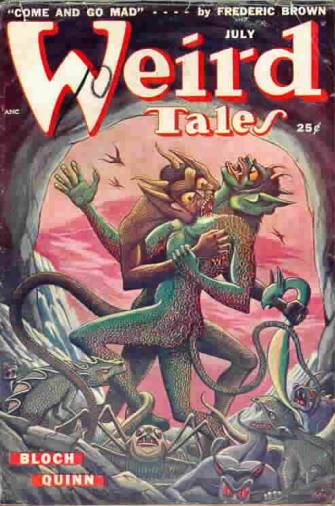
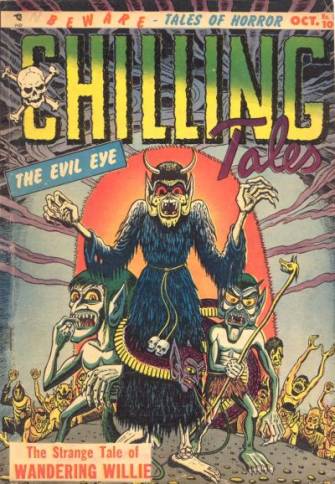












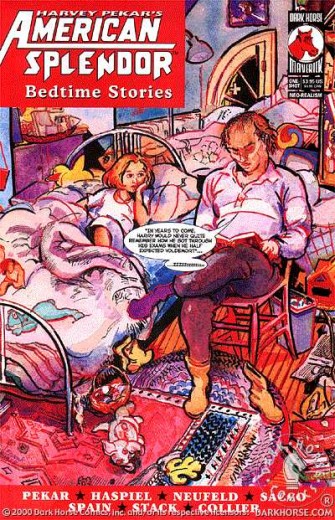



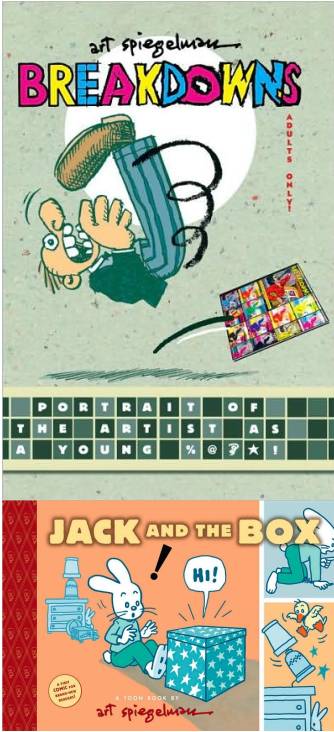

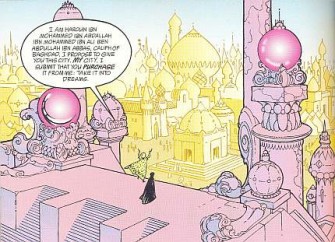

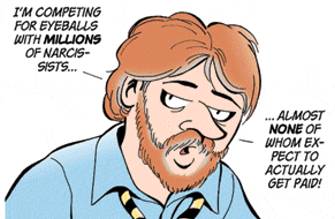
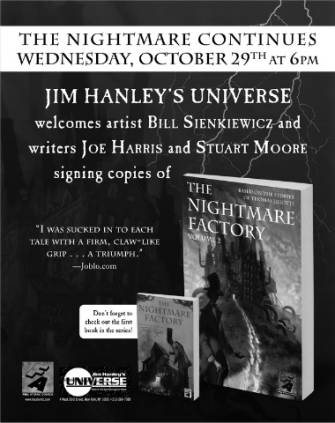


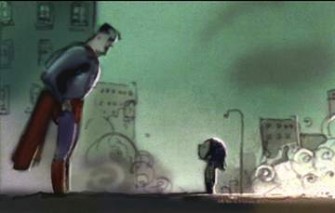
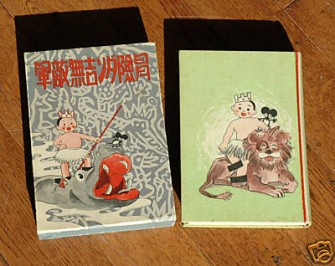




 * the comics business news and analysis site ICv2.com has







 * don't believe political cartoonists who say they won't be able to find ways to make fun of Barack Obama if he wins next Tuesday's election. They always make this complaint, and they're always wrong. That said, the article does include some really quite dismal cartoons.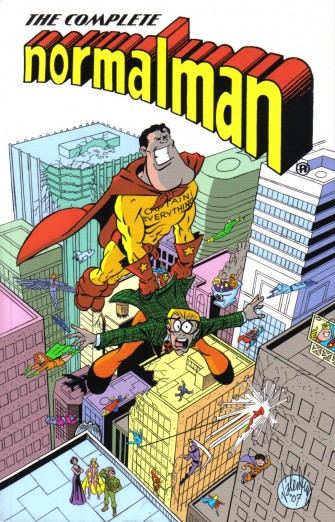






 I'm not quite certain what to make of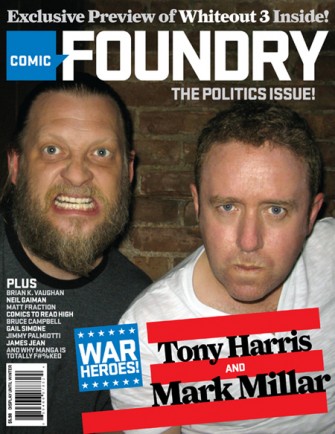
 In general, Waid's short essay on the wonders of the Internet and its possibilities reads like something that was written in 1997 rather than 2008: a wishful, enthusiastic nod to a brighter future just around the corner. The problem: the comics Internet is already here. There are well-known, well-respected companies that could not function without their Internet-based revenue, another group of companies that would function much less effectively, traditional cartoonists galore that make a significant portion of their income via on-line methods, and a brand new wave of self-publishers out there making up to six-figure incomes based around comics enterprises that are only just now starting to find their way into other media. It's not lack of imagination that has kept comics from diving in that much more fully on-line. It certainly isn't adherence to nostalgia, at least not anymore. It's a lack of practical skills all around, institutional sloth in the broadest sense, the fear of maintaining the current infrastructure at the companies that are big enough to have such infrastructures, the fear of maintaining already miniscule profit margins at companies too small to worry about infrastructure, and a dearth of focused capital.
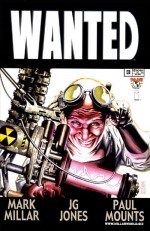 First of all, it's not true. It's fair to say that it may be harder to write industry-shaking event comics and high-profile, movie-ready series the older you get and the further you move away from the youth culture that defines the language in which such events traffic. I don't think Joe Simon is going to be tagged to write the next Ultimate Marvel crossover series the same way I can't imagine there are a lot of Saturday Night Live writers over the age of 70 or that Bruce Jay Friedman will soon become head writer at The Daily Show. Comics folks at all levels enjoying launching, discovering and celebrating new talent. I think all of us with some interest in comics see the effects of the book industry's fascination with new talent taking shape in which cartoonists are getting which contracts from book publishers. It doesn't take a pop culture savant to figure out that youth is more and more frequently served.
 Nitpicking and second-guessing? Probably. I have a reason, though. Beyond my personal taste, focused observation is important to such articles -- and, I'd suggest, to comics history -- in that when not tethered to specifics it's too easy to see Sandman and books like it in ways we want to see those books rather than for what they are. In this case, I'd argue that Sandman wasn't a project that succeeded for its novelty but one that hit hard with readers over time because of the skill of its execution. If it was the first of this or the first of that wouldn't have mattered if the comic hadn't been very well done. Sometimes a great comic is a great idea, or a break with a past or an innovative effort. A lot of the time it's also just a really good comic.
 Finally, I enjoyed this quote from writer Matt Fraction that came in the midst of a piece drawn by Chip Zdarsky about various pros' con experiences. (I liked that whole feature.) Fraction's anecdote was about he and his friends bailing on a heavy-hitter's party and its doorman (portrayed at right) in order to gather somewhere and shut a bar down with good conversation. I'm way too old and boring and very much not invited to cool parties to make a statement like this one out loud, so it was nice to hear someone who is going to have more and more of those opportunities come their way arrive at that conclusion.

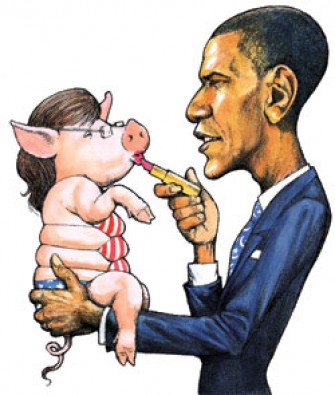
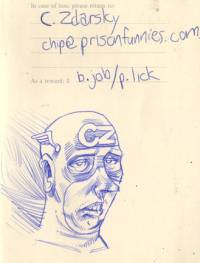 * folks keep e-mailing me links
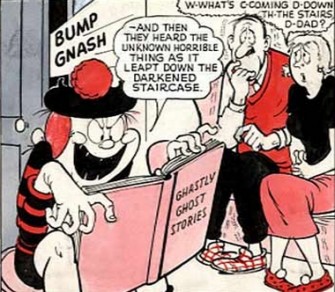
 My other reaction was probably just as rooted in a lack of self-awareness. I was really surprised by the sheer volume of picks that I had never seen or, in some cases, even heard of. Partly this is a function of the fact that I haven't been in Europe since last January, and so haven't been in the bookstores where I would see this material. But it made me feel really out of touch.

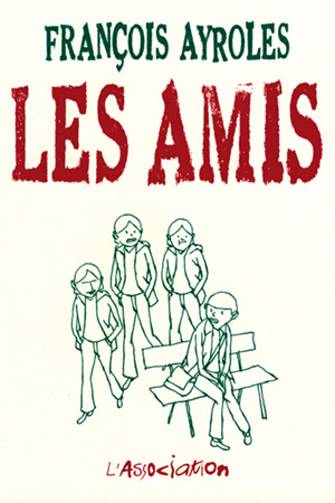



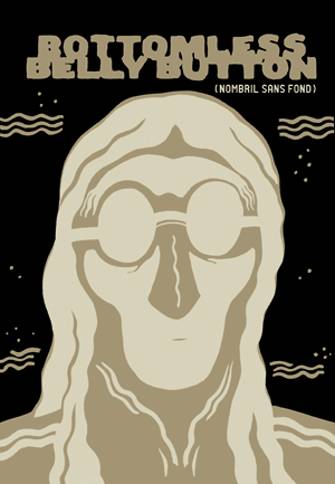
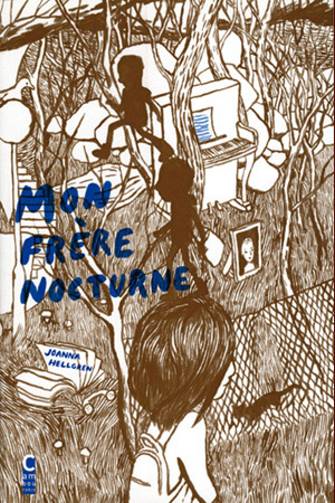



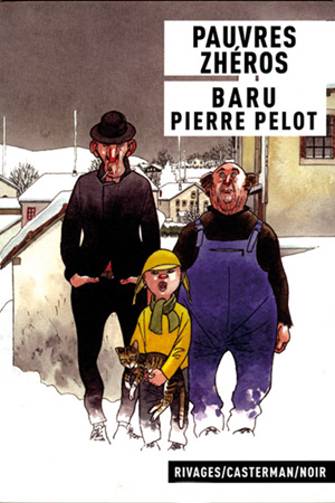


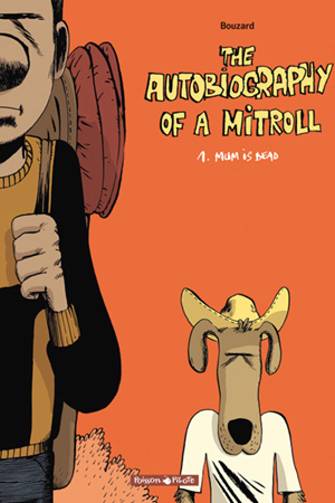


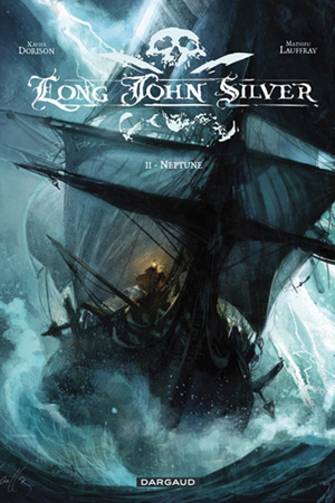
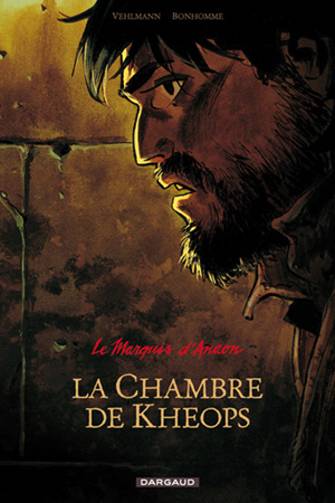
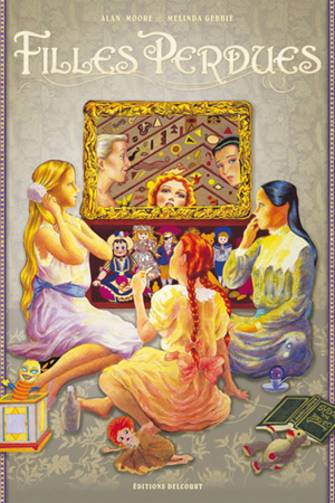
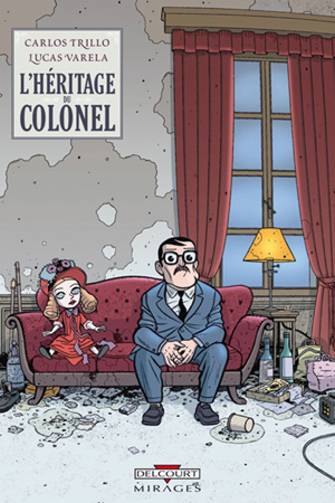
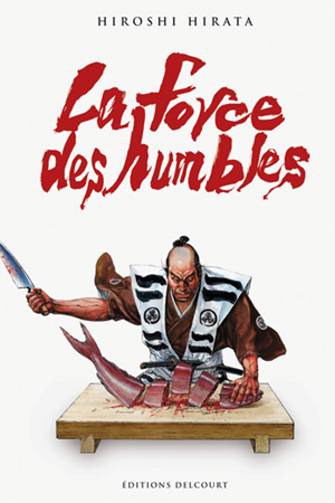







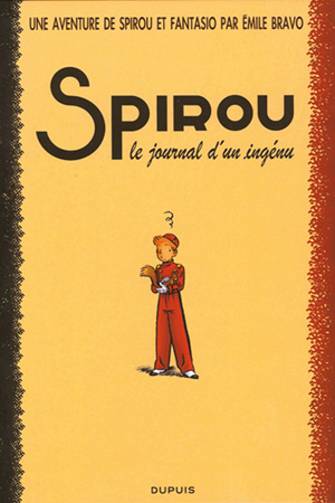
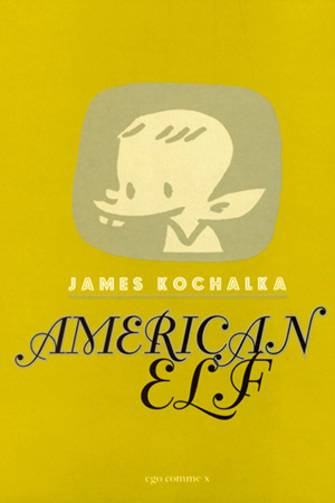


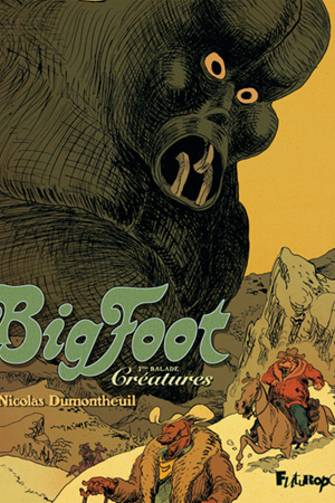



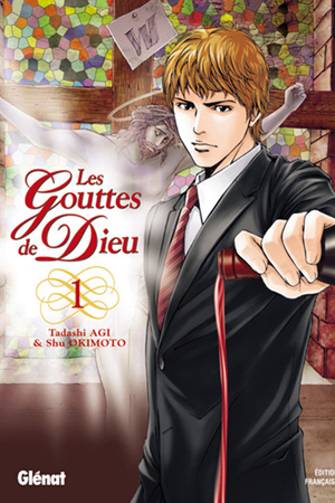



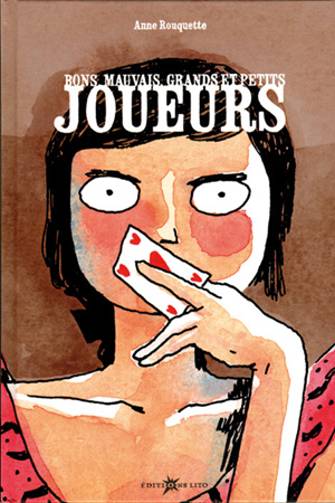


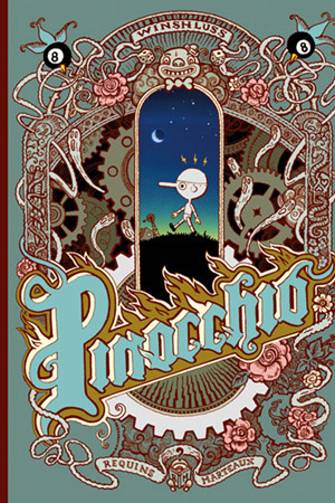

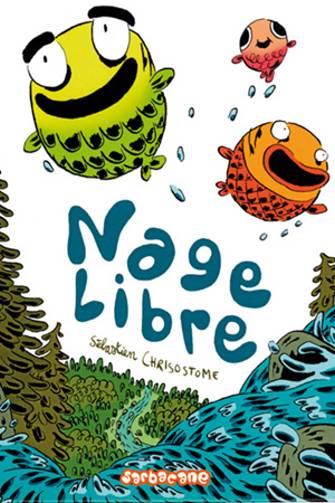

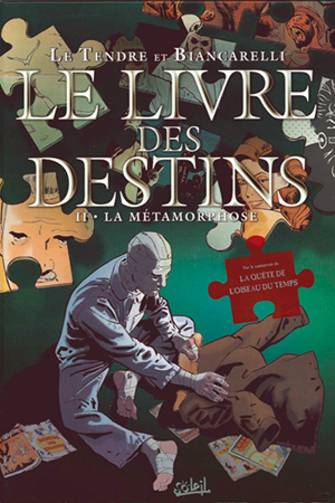


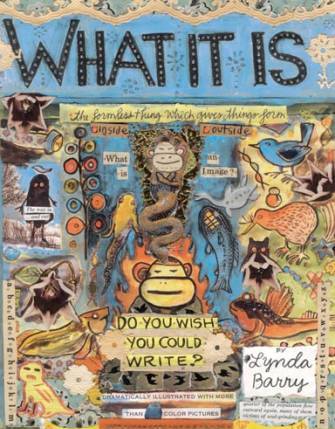
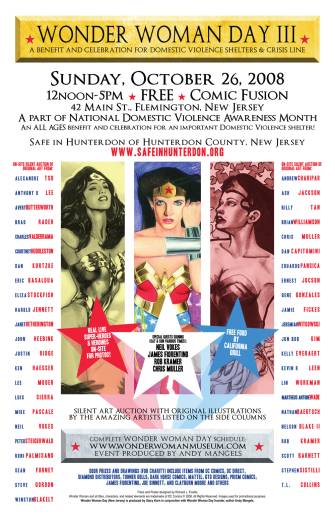




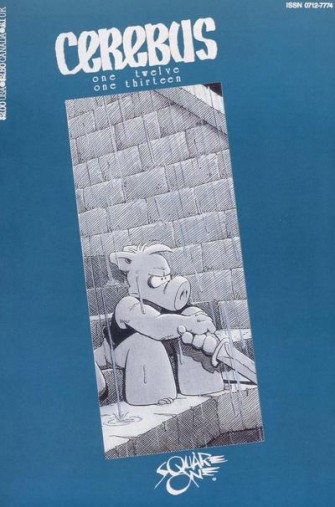
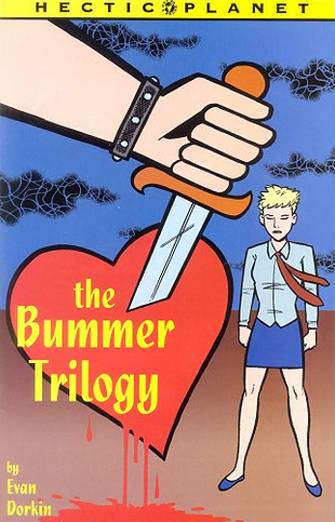

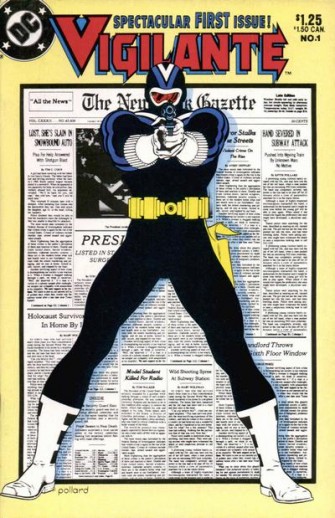
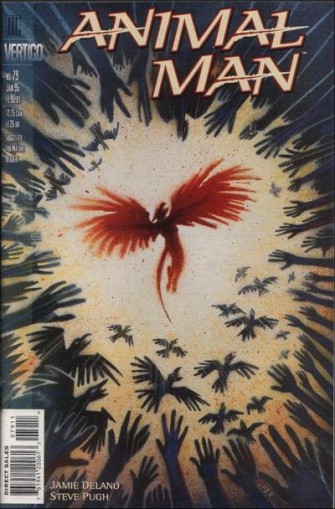
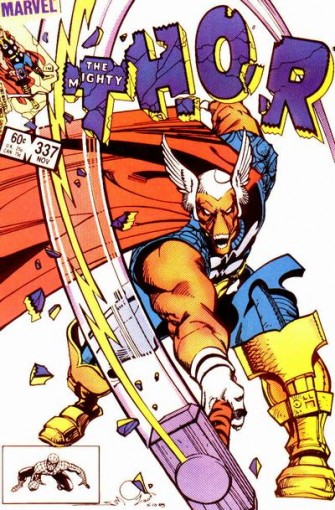


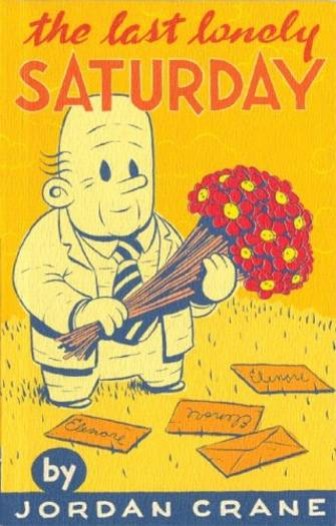
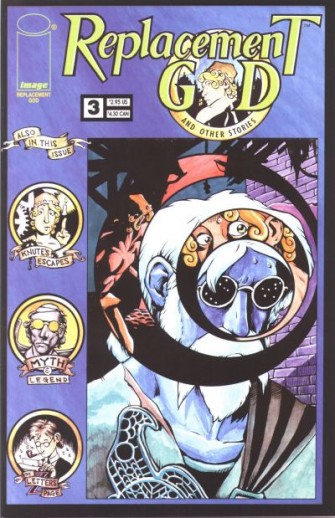
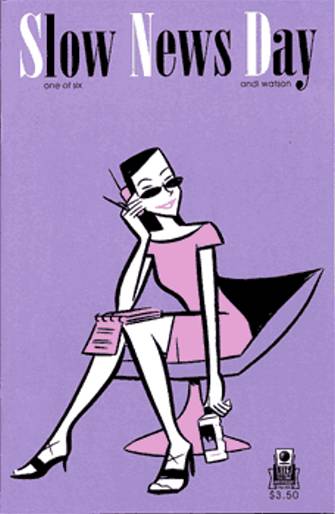


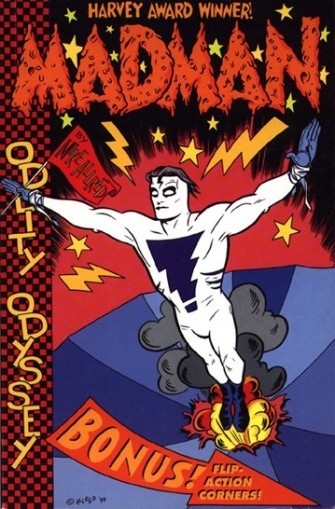
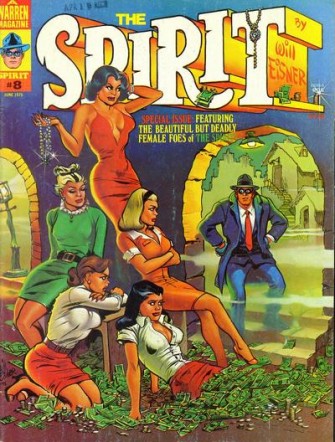








 The Hachette manga and graphic novel imprint Yen Press will join that publisher's science fiction and fantasy imprint Orbit in a new division named after the latter of the two. Tim Homan of Orbit will head the division and Kurt Hassler will take over solo directorship on Yen Press as co-founder Rich Johnson departs. I'm not sure that isn't just a bunch of names being shuffled around on a chalkboard, although I would imagine it likely reflects the conservative nature of the book publishing business as they brace for Alan Greenspan's credit tsunami. I think Yen has a number of books prepared to come out in 2009, mostly mid-single digit volumes of various launched series.
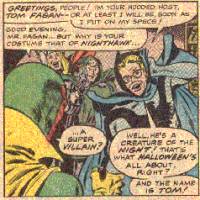 The Rutland Herald reports that Tom Fagan, a longtime newspaper reporter and the founder of that city's Halloween parade,

 * Writer Mariko Tamaki is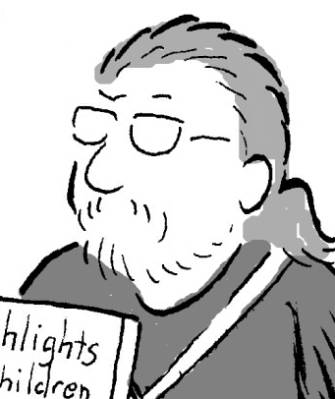


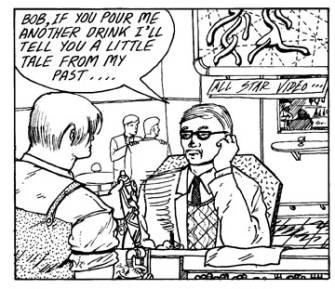
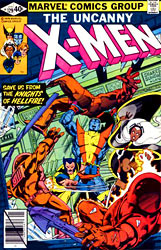 I'd quibble with about four or five of his choices. I love Howard Chaykin, but in my opinion American Flagg! simply isn't as significant as RAW Vol. 1 given how the field developed over the next 25-plus years. It may not be the most important title in that category for the reason he claims. I'd suggest Sin City coming into being at Dark Horse was more significant in terms of a mainstream within the mainstream, and I think that you could argue that would have happened if American Flagg! never existed. I think you have to choose something in manga that represents the format that has come to dominate that category because it's that format that was the real industry-changer. Choosing Maus opens up a can of worms where you have to consider things like Garfield at Large. Don't laugh! I would suggest that Garfield at Large is more important in its field than a half-dozen of the comics Grant chooses are in theirs, by a wide margin. Its success fundamentally altered the strip business. I also don't think American Splendor is as important as even something like Cerebus -- take AS out of comics history and I can't see anything changing beyond the fact that we don't have a lot of really good comics by Harvey Pekar and his collaborators. Take Cerebus out and I think the entire field looks different. Heck, take ACME Novelty Library #1 out, and the entire field certainly looks different.

 * the writer Derik A Badman
  * there has to be some balance we can strike where Farel Dalrymple has enough projects to keep him busy and his family clothed and fed but never so busy he stops
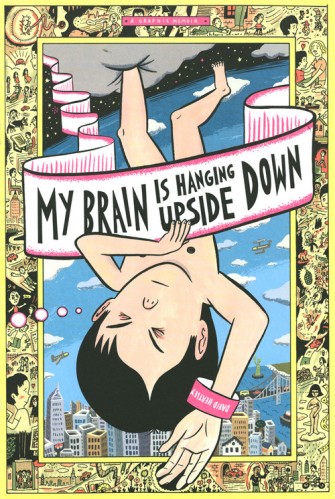


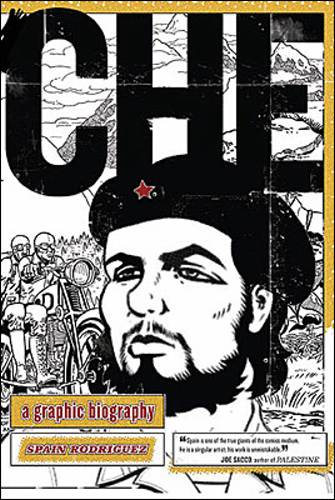



 * I should have known that if any cartoonist had ever drawn the late comedian, blaxploitation movie star and toaster supreme Rudy Ray Moore, it would have been


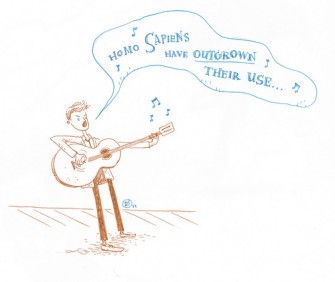

 * I always love reading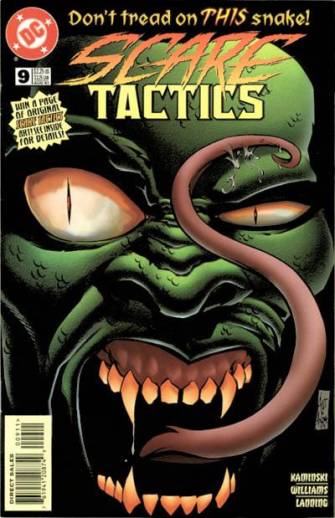
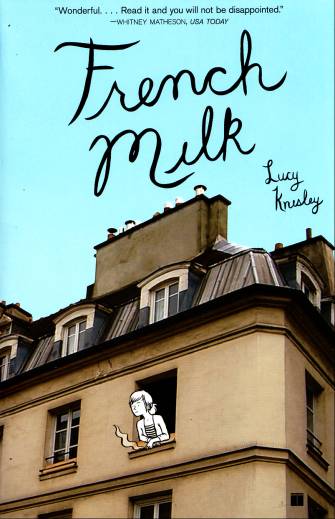
 I knew nothing about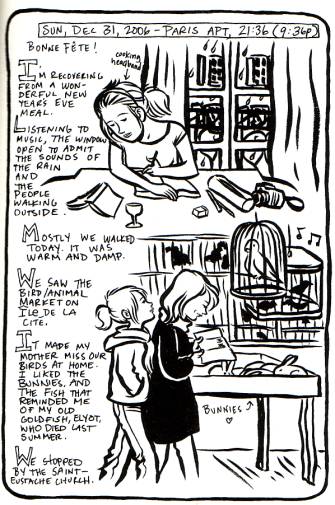
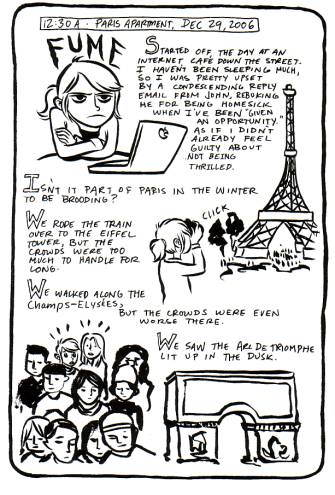
 SPURGEON: As someone who was just in a BFA program, what's your time at Center For Cartoon Studies been like? Do you work on very specific things; are you refining certain elements of your cartooning craft? What is it like to be there having sold a book?
 KNISLEY: It's been a long and confusing process, but very rewarding overall. I come away from this experience as someone who has managed to, at least in part, bring graphic work into a traditionally literary publishing world, and I'm happy to have been a part of that bridge. My editor at Touchstone has been really understanding and patient with me, and all my confusion and inexperience. I had no idea that the editing process would be so long or labor-intensive. I'm looking forward to the book talks and signings, even as someone who considers herself to be pretty shy, and I'm happy to be moving on to new projects in the hopes that I'll be able to keep up a steady production clip.

















 James Sime wrote a quick note to this site and I assume most of the others out there asking that we remind the magical world of comics that the deadline for his Isotope Award
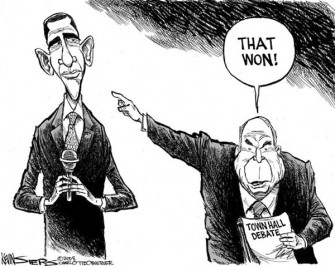

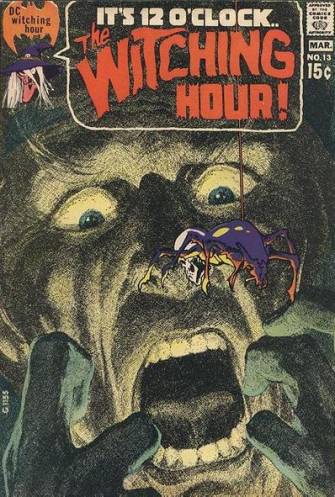
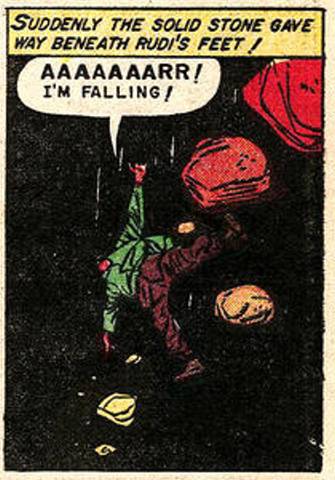
 * here's one for the potential Christmas purchases file: AdHouse Books

 Lowry began contributing to NME in the 1970s under the title Only Rock'n'Roll. In the course of collecting material for his feature, seeing the Sex Pistols on tour, he met the members of the band The Clash. Befriending them, Lowry would eventually be invited by the band on their legendary 1978 tour of the United States in support of Give 'Em Enough Rope. He recorded much of what went on in his sketchbooks. In 1979, Lowry created the London Calling album sleeve, one of the most distinctive designs in rock album history covering one of that music's great creative efforts.
  Slowly withdrawing from the London arts scene in the 1980s, Lowry worked for style magazine The Face, and cultivated a number of celebrity clients for his art, which now included oil painted. He painted urban landscapes in addition to his music-related cartoons and art. Many Lowry Clash drawings -- originals rather than the classics from his archives -- were published in Johnny Green's 1999 memoir (written with Garry Barker) of his days as the band's road manager, A Riot Of Our Own. September 12 saw
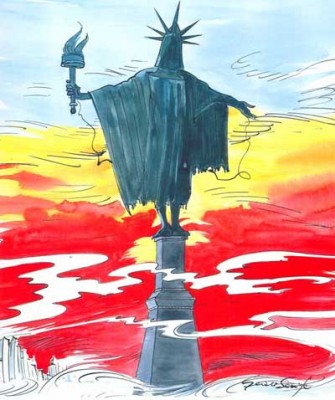

 The comics business news and analysis site ICv2.com has one of its massive interviews up with a publishing heavy-hitter, this time


 * the New York Vulture blog
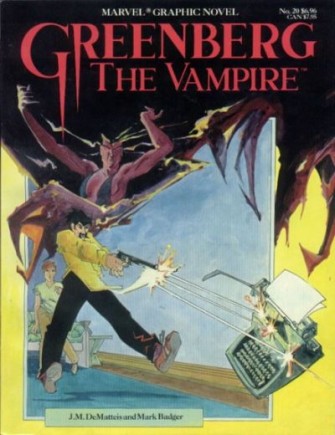

 * the agent Judith Hansen laughs in the face of the collapse of the international economic system and the slow, ongoing implosion of book publishing with placing not one but two high-profile placements: 1) Amelia Rules!
  * the vastly under-appreciated Andi Watson


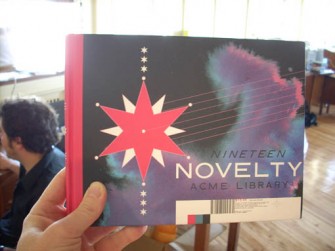



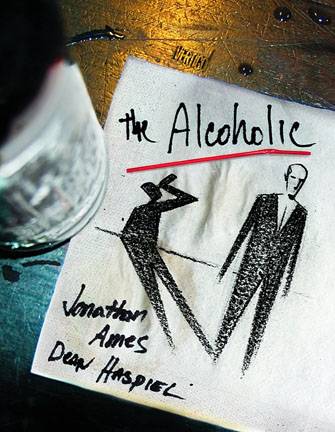

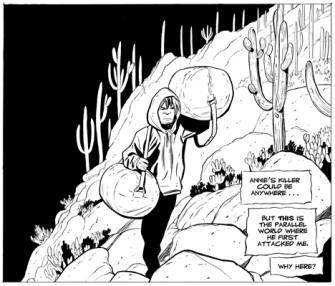
 * the release of The Spirit Special #1

 Richard Siklos'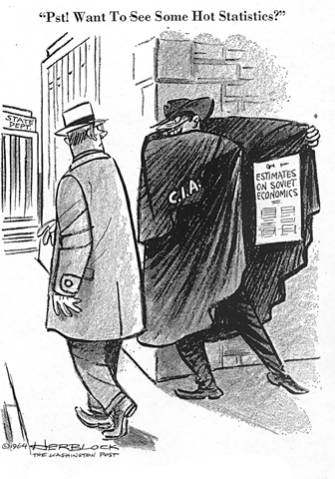
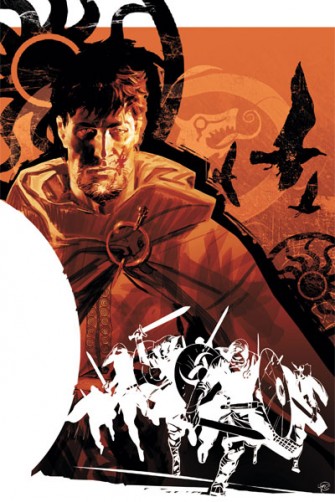
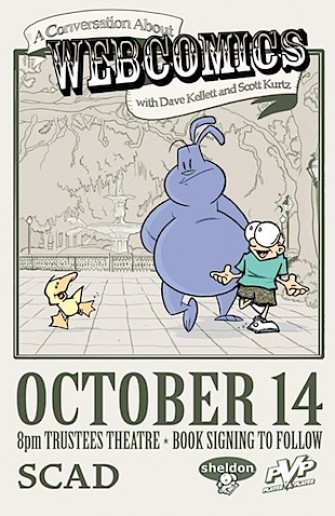


 * the cartoonist and animator John K

 Mohassess' move to New York in the 1970s was a not-uncommon experience for those of his generation, but his move have occurred for atypical reasons. His friend and fellow artist Fereydoun Ave said in a 2008 interview that Mohassess' move was prompted less by interest in his work by the Shah's secret police as had long been rumored and not at all because of the Revolution as many might think but because he liked the idea of moving to America and making books there, in addition to seeking some medical solutions to ongoing healthy problems. Many had believed that Mohassess was inspired to leave Iran of his own accord after a negative reaction to a popular group of 30 drawings he did set in Iran's 19th and early 20th Century Qajar dynasty that contained clear messages as to the severity of rule under the modern, current, decades-long rule of the Shah. While that interest was apparently real, it was not the primary motivation for his move. Mohassess established a home in New York in 1976 ahead of his permanent relocation three years later. He would marry an American.
 The CBLDF

 I'm totally, totally kidding when I use the above headline to note that
  Here's some good news, for a change.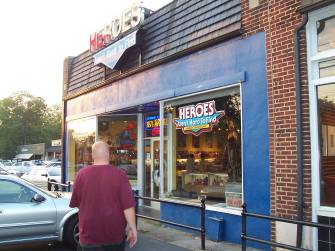


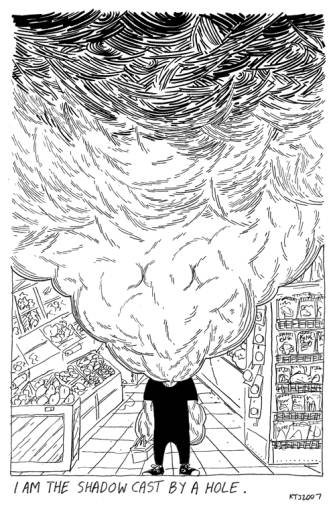

 * the writer Marc Sobel continues his walk through the greatest comic book series of all time, Love and Rockets Vol. 1,
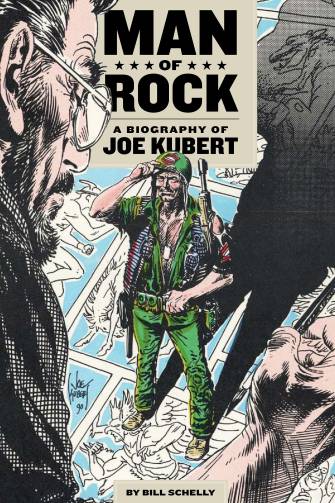
 BILL SCHELLY: When I was 13, way back in 1964, I heard about fandom from a letter column in Justice League of America. The idea that there were people like me who loved comic books, and publications about the comics medium, was incredibly exciting. I began ordering fanzines, and soon was planning my own. That began my early involvement with fandom. As I got older, my self-published fanzines got better. Most people remember me for

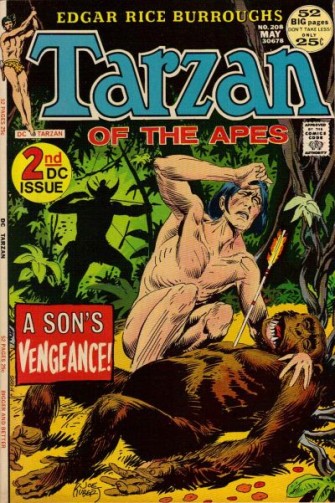

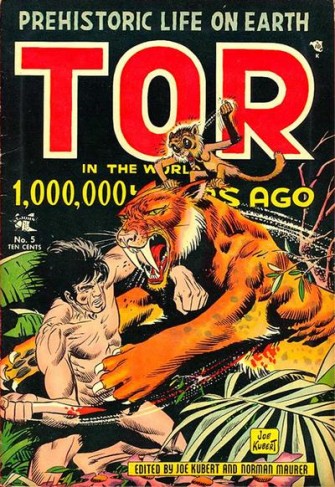

 SPURGEON: Kubert's work seems to translate into European albums-style comics, which is an entirely different kind of comics making. In other words, I don't look at things like Abraham Stone or even Fax From Sarajevo and see American mainstream comics bombast. What is it about Kubert's style do you think that allows him a slightly broader range than some of his peers?
 SCHELLY: Joe just turned 82, and you're right, he is a very vigorous man. He will draw comic books until he can't any more, and I think that's a long way off, God willing. He told me his hand control is as good as ever, and his vision isn't deteriorating. He'll continue to be a creative force. I believe after the Tor mini-series, he was planning to do the second part of his Jew Gangster project.


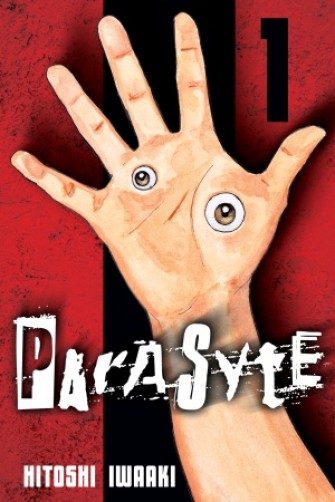
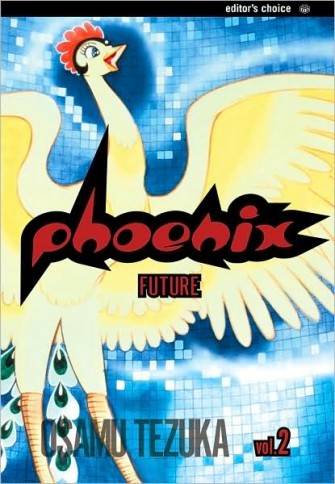











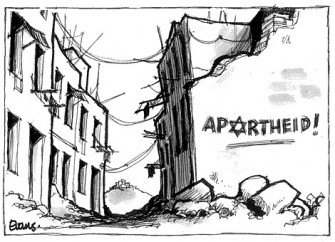






 * the Italian Masters of Comic Art show opening at Scott Eder Gallery comes with


 I can't tell from the rhetoric used or the timestamps employed, but basically what I think happened is that at some point yesterday one of the big mainstream comics news sites (
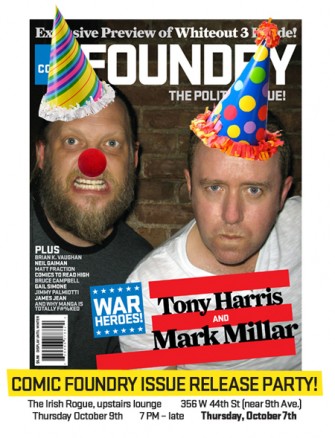
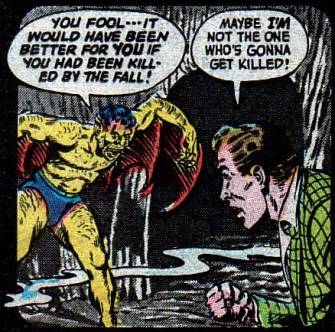


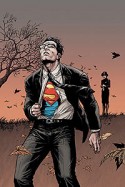 * apparently, a major media publication

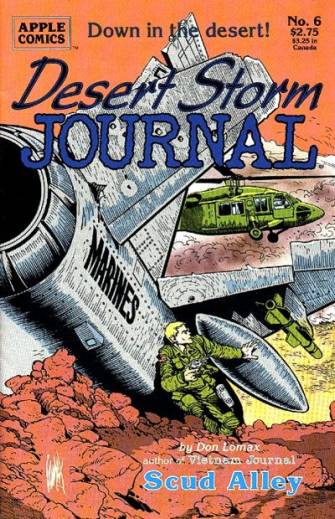
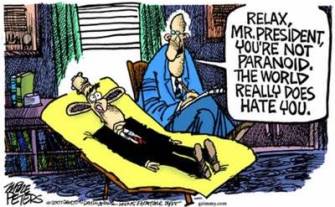

 This should hit the wires for papers to run in lieu of articles about the ongoing financial crisis or, I guess, news of their own firings. This seems weird to me, although admittedly I haven't read a Superman comic not for work since Neal Adams was doing the covers. I always liked the classic set-up where one presumes one was supposed to think that Clark Kent's parents dying was the sobering introduction of mortality into his young life, and that the limits that inevitable death represents a last step to his becoming the more-than-mortal Superman. While I guess keeping the parents alive made some sense due to the modern comics approach of stately soap opera, and to keep Superman
  2. I don't get a lot of new trades and definitely don't get a ton of new trades from Vertigo. I have the new Northlanders trade, and what struck me was the paper stock. It was more like comic book paper stock instead of glossy paper, if that makes any sense. Does anyone know what kind of paper that is, if it's a line-wide usage, and how long it's been used?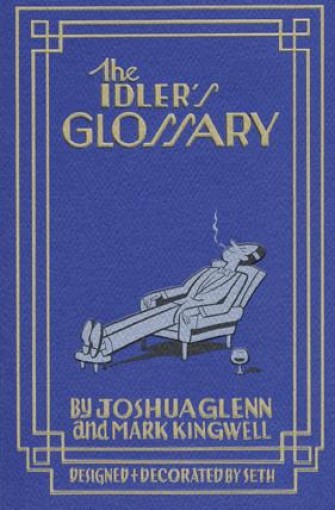
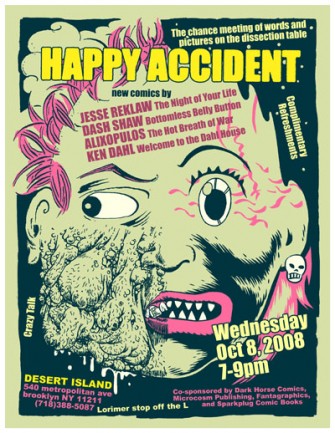
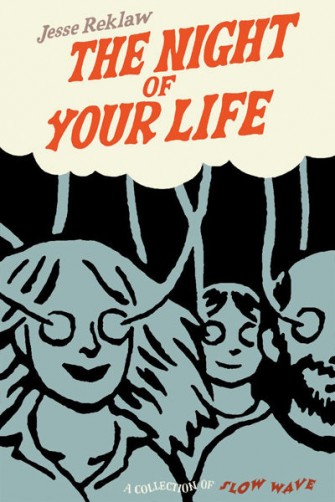
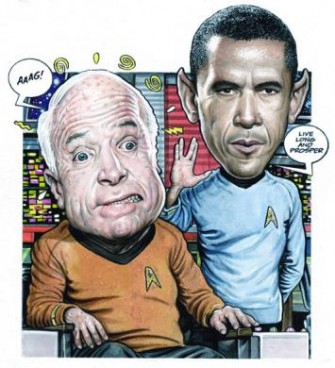
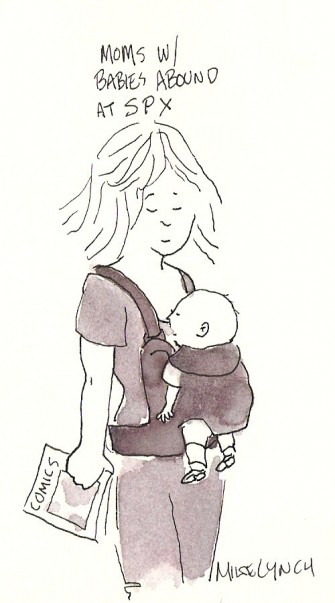

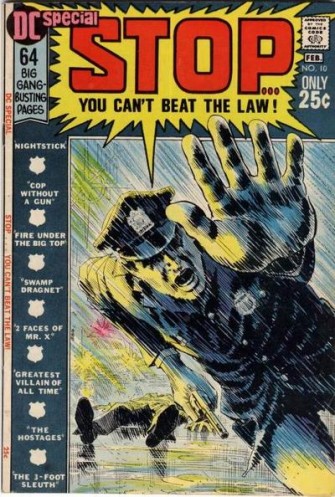
 * Michael Catron sent out an informal note letting people know they've apparently finished indexing all of Action Comics at the
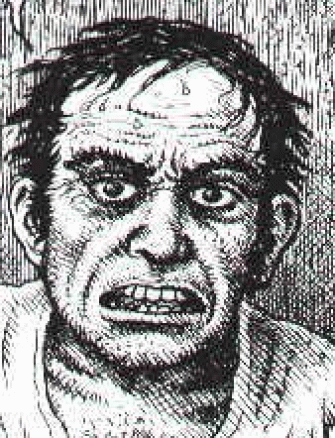


 By Sean T. Collins
 3) So maybe the overload came from the sheer volume of appealing new comics available and the feeling that one really ought to check all of them out. By way of a for instance, there were not one, not two, not three, but four new
  6) Well-advertised guests
  8) One way to accomplish this might be to give

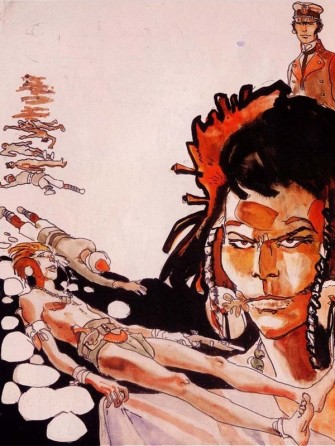


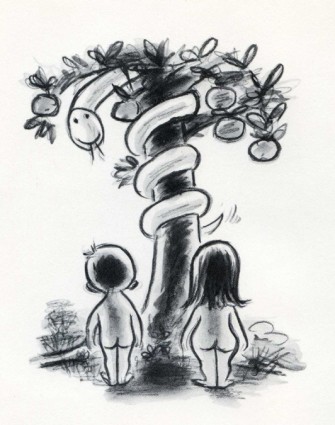
 * someone needs to buy

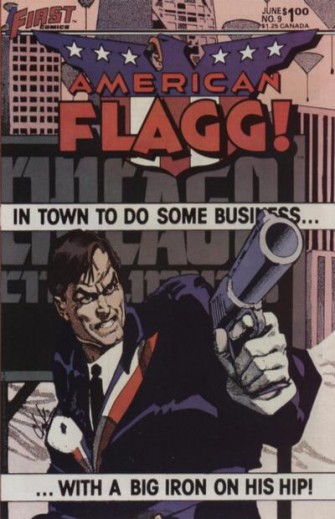
 Opus was the popular kids book creator's third nationally syndicated strip, following the initial run on Bloom County and more diligently surreal and coda-like Sundays-only feature called Outland. Breathed's second feature ran from Bloom County's end in 1989 until he ended it in 1995. It was hoped that Opus, with its focus squarely on print newspapers -- it initially ran at a special size and wouldn't go on-line for a full year after its launch -- and with its protagonist one of Bloom County's most popular characters, could recapture for its clients the magic of the 1980s when editors fell over themselves to run Breathed's combination of loopy social/political commentary and lowbrow humor. It never quite attained runaway hit status, although it was a solid performer in I believe the 200-client range.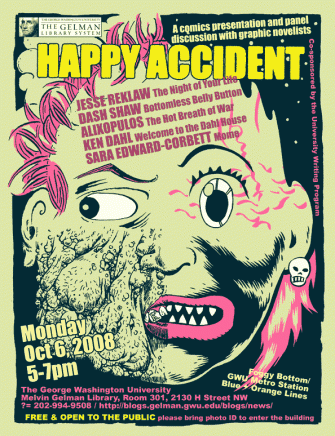


 * I was totally unaware that the Christian market novelist


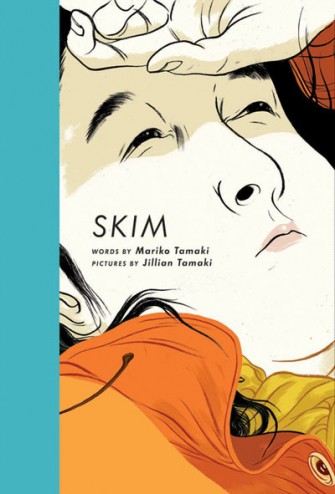




 Prescriptive opinion article writing in comics can be a rough game. There's so much that all of us don't know about how comics work and there are so many things that we wish for the medium and its industries. It's difficult not to be passionately unreasonable. What follows is a list of things I would do as Emperor of Comics, by which I mean someone with magic powers to move the various comics industries in certain directions based solely on the ability to say something and have it be done. Despite this significant fantasy element I hope my suggestions aren't totally ridiculous -- at least not all of them. Many of these are things I think could be done were enough folks to agree with me and enough willpower found to make those changes happen. They are also not complete -- I could in an hour or two come up with two dozen more. These are a start.
 Some of the individual quirks of these arrangements need to go as well. I like the current Image Comics, but some of the covers they've scored in the last five years according to agreements made a comics industry epoch ago haven't served the general industry and barely served Image. There's no reason why the launch of RASL, say, wouldn't be worth a cover as much as any of the latest, largely interchangeable superhero events. In general, the incentives reward publishers for little more than being on Diamond's side during a time I think history presents a compelling argument many if not all of them shouldn't have been; keeping those agreements alive simply continues to reward a set of decisions that wounded the American comics industry.
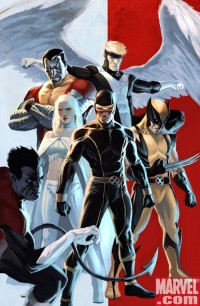 While it's impossible to ship to comics shops and expect them to hold books until specific dates, we need to afford the publishers greater control over getting a specific release date if certain delivery deadlines are met. While this is no guarantee that Marvel won't continue to ship 11 of 12 X-Men titles on the second weekend of a month, flooding a readership on one Wednesday and then starving them on subsequent Wednesdays, it puts the mechanism in place by which they can, as the serial market continues to refine itself, pursue controlled and rational title releases as a goal. It also allows those publishers that meet their deadlines to plan better publicity tied into specific release dates. Comics still publishes like it's desperately starved for capital and must rush everything out the door immediately. That's not as true anymore. There are long-term benefits to a more rational release pattern over a month, and the industry should agree on a push in that direction.
 The Small Press Expo missed out on their chance to become America's real comics festival back in the early part of this decade when certain decisions were made to stress democratic exhibition and the sales aspect of comics over other approaches. This is fine. I like
 I think comics over-complicates the accessibility issue into a transformation of formula and approach when only a few over directives need to be heeded. I like all-ages and done-in-one comics, but I don't think that's the only way to have an accessible medium. Truth be told, the narrative incomprehensibility of some comics is their greatest achievement, and when done well an appealing challenge to a new reader raised on book series, movie trilogies and television shows that need commentary tracks to point out all of their cohesive qualities.
  Comics is a perfectly respectable art form and a fine collection of industries, all of which need work to be more ethical and fair, all of which could grow a bit, but all of which already have several positives. We have fostered several multi-millionaires, many great artists, and we're a vital part of pop culture stretching from Lucy pulling the ball away on Charlie Brown to Batman punching the Joker in the face to Naruto, Sakura and Sasuke bickering over their orders to Tintin and Snowy getting to the bottom of things. Our biggest geeks are no more socially maladroit than other passions' biggest geeks, and our cool people are cooler and at least as articulate if not more so than any other medium's.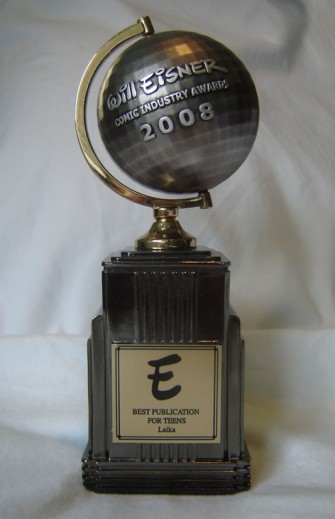
 I'm going to call out Ted Rall here. I'm happy that Ted's the current president of the Association of American Editorial Cartoonists. Ted Rall knows how to draw attention to issues, he's brought in a lot of new blood and he's fun to cover. However, I'm extremely disappointed that his first actions as President were speaking in generalities in
  Let me make one thing clear. A lot of the changes in distribution and sales listed here have to do with the Direct Market because that's the avenue I think lends itself to such improvement. That doesn't mean I value that market more than another, or that I'm limited in my thinking as to where the emphasis of comics should be placed. I believe in all the markets. One reason I don't spend more times making imperial decrees for bookstore publishing is that at this moment in time, a great deal of what book publishing has done with comics in this decade, it's sort of been exemplary. There's been a significant place made for a lot of great artists, many existing comics publishers have been invited on board through distribution agreements rather than raided or copied or ignored, an entire expression of comics has been fostered with a whole new group of fans reading it, and a lot of wonderful books have come out, in part because of the ability of large book publishers to make these things happen.
  The Xeric Award was created in a time when self-publishing was a bigger deal in the industry than it is right now. The reality of self-publishing varies from individual to individual, but the idea of self-publishing is important because it gives us a real standard by which to judge the effectiveness of publishers and the ethics behind how much money they keep versus how much goes to the creators. It's a very simple idea. Companies should be able to do something better than you could do it yourself for you to give up money to have them do so. It's a powerful idea, I think, and creators versed in all levels of the industry are going to be some of our best, most knowledgeable pros. I would therefore bar any Xeric winners from employing an outside agent to sell, design, promote or distribute their work. I would also ask that the Foundation consider reducing its awards by 1/4 and funnel that money into various mechanisms to sustain the possibility of self-publishing for say, past winners -- additional grants to devoted creators on a need basis, the ability to put together a sales presence in Diamond, money for legal set-ups, and so on.
 This is really the only important item on this list.
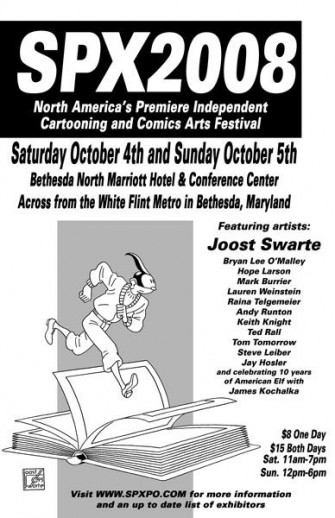




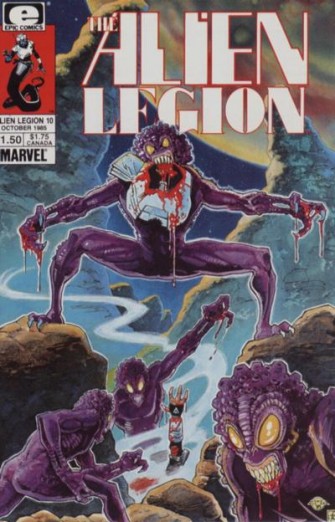
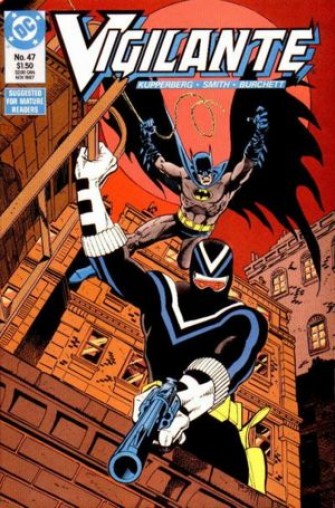
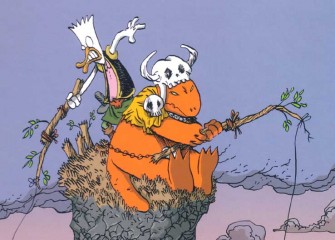
.jpg)
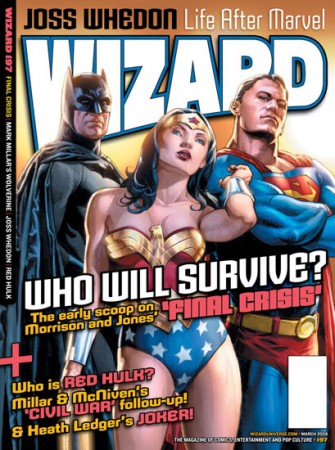

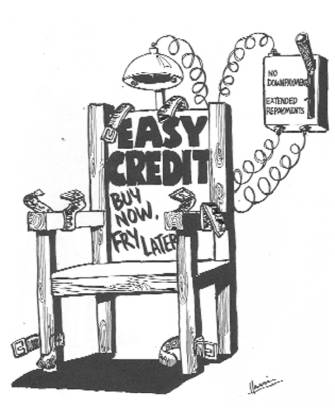
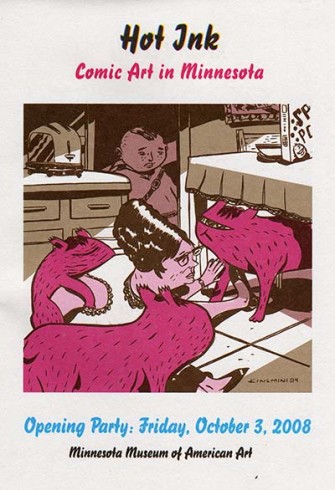


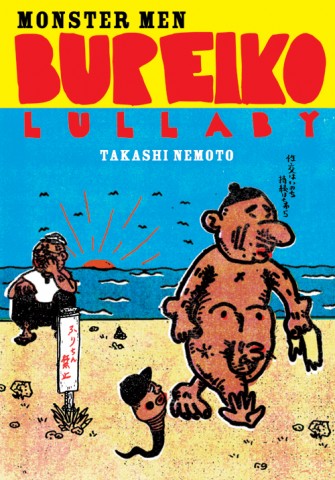
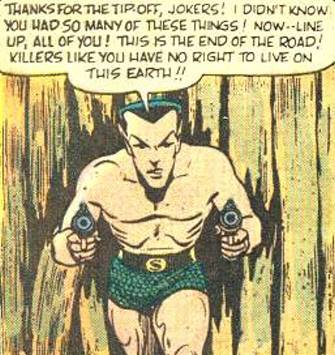

 * the retailer/blogger Mike Sterling
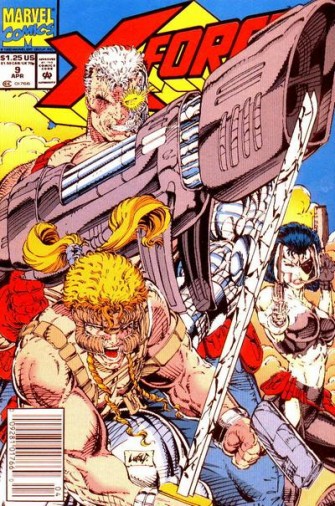



 * credit problems
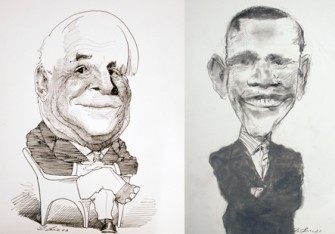




 * the cartoonists Rina Ayuyang and Thien Pham have launched a podcast,








 * in my continuing attempts to turn this into a Legion of Super-Heroes blog, strange in that the DC property would only place at about #133 on superhero comics I liked as a kid and fails to chart on things I like right now, I have to confess that I was rather taken with the old-fashioned nature