I've known Bob Fingerman for about as long as I've been working in or near comics, although never as well as I'd like to. My first memory of him is as the cartoonist behind Minimum Wage, an autobiographically-informed work of fiction that came along just as the entire industry became determined to set itself on fire and jump off a building. It was a bad time to make the first of what would be several career-defining works. That was a long time ago, particularly in funnybook terms, and Fingerman has stayed busy making himself a "known quantity," as he terms it. He also moved into writing prose, which surprised me for the reasons we discuss in what follows.
Fingerman has two major projects out right now. The first is a comic book series from IDW called From The Ashes, a post-apocalyptic satire starring Fingerman and his wife Michele, and a bunch of comics one may assume will eventually be collected by the surging, San Diego-based publisher. The second is an illustrated book called Connective Tissue, from Fantagraphics, and he's not kidding about the "illustrated" part of that phrase -- it's stuffed with visuals. Next year will see the release of Fingerman's Pariah from Tor Books. It was fun to talk to Bob not at a convention at 4 PM on a Sunday, or at a party while heading in separate directions. He sounded happy. -- Tom Spurgeon
*****
TOM SPURGEON: You currently have the comic book series with IDW that I assume will eventually become a book. You have an illustrated prose work with Fantagraphics. You have a book due next year from Tor that's straight-up prose. Is this kind of mix the ideal for you?
BOB FINGERMAN: I think that actually is the ideal, yeah. A mix. I get restless -- I don't know if "restless" is the right word, but maybe it is the right word. I like to mix it up. I think if I did nothing but comics, I would end up hating comics. For a while there I was actually beginning to hate comics. Although I think that mainly had to do with a lot of the feelings I had about the business of comics more than the creation of comics.
SPURGEON: The old joke is, "Comics has a business?"
FINGERMAN: [laughs] Exactly. That was my point exactly. I kept saying, "Is this a business or is this a hobby?" Not from my point of view, but... well, whatever. I don't want to sling too much mud.
Ideally what I'd love is to alternate. If I could put out a prose novel one year and a graphic novel the following and keep doing that, then maybe for good measure do a couple more of those illustrated novellas? I think that would be great. At least until I got tired of doing that and then I'd want to move onto something else.
SPURGEON: What is the appeal, having all of those options open to you? Is it a sense of telling different kinds of stories with different sets of tools?
FINGERMAN: Oh, definitely. I've always been kind of a believer in knowing your strengths and knowing your limitations as a creator. There's certain things that I would not do justice to if I drew them. There are some comic scripts that I have in mind that I would prefer someone else to draw than me, because I just know I wouldn't be the right guy for them. I think there are certain stories that lend themselves to prose. In particular, maybe ones that are a bit more serious. I don't look at my art and say, "I have a style that lends itself to serious storytelling." I have a tendency to draw in a more humorous vein.
I didn't think of my first novel, Bottomfeeder, as anything other than a novel. But the forthcoming novel, Pariah, the one that Tor's putting out next year? That actually, way back when, began as a graphic novel pitch. That would have been one I wasn't going to draw. And actually the best thing that could have happened -- I didn't feel that way at the time -- was that it never became a graphic novel. I think ultimately it would have been much more superficial and much more compromised. Especially since I was gearing up to do that for a more mainstream comics publisher, they wouldn't have let me go nearly as far as I went with it. It was going to be in its initial incarnation probably only a 64- or 72-page story. It would have been really compromised. Prose lends itself better to some things.
Also, frankly, I just enjoy writing. I enjoy playing with words as much as I enjoy drawing pictures. I don't think I'm an overly fussy writer. I don't think I sit there trying to impress myself with, "I'm going to top Noel Coward today." I do try to turn a nice phrase if I can. To me, sometimes at the end of the day, and there's some really good writing, I feel the same way as if I had made a really good drawing. It's a way to satisfy my creative urge in different ways. For me, writing has always been as important as the art.
SPURGEON: I remember when Ed Brubaker started writing full time, that made a certain amount of sense to me just from what I knew about how he approached writing and the writing in his comics. I'm not sure that I ever saw you as one of the cartoonists that would eventually write. Did you always see yourself as a writer as a well as a cartoonist?
FINGERMAN: It was always there. I think if you had access to me on the same basis as perhaps you did to Ed, you would have seen it. I wasn't in Seattle, in your orbit.
I've always wanted to do it. I've always written, I've just written for myself in prose. It was more a matter of what prompted me to finally take the plunge than actually taking the plunge, because I had always intended to write novels as well as do comics. At the time I began writing -- and I have a couple of unpublished novels, too. You have to have a couple of those. It's where I got my feet wet. Maybe someday they'll see print... if I still want them to. It was a growing dissatisfaction with doing comics that finally made me say, "Fuck it. I'm going to write a book."
SPURGEON: Was that solely the industry stuff you mentioned or were there artistic issues as well?
FINGERMAN: I think it was more industry. I've always had I think an odd place in the world of comics. On the one hand, I think I'm a pretty well-known quantity. On the other hand, I think I occupy strange real estate in the world of comics. I think some of that is because I do jump around. Every project I do is different than the last. I've never created a consistent body of work. I've certainly never had an ongoing character long enough. I do things and I burn them through and then I move on. I don't know. Maybe restlessness will be the theme of this interview, but I definitely want to try different things.
SPURGEON: Does it seem odd in 2009 to be doing a serial comic with IDW? I know that's their business model.
FINGERMAN: That is their business model. So I really didn't have any choice there. But in some ways, it's funny. Again, From The Ashes is something I conceived of as a book, not a comic book series. But being forced to do it as a comic book series made me write it differently. And actually I think in some ways it was good. When approaching something big and amorphous like a book, where you're not thinking page count, you're just thinking story. In writing for a comic book where you know you have 24 pages, it's a very regimented way of writing. You know you have to hit your beats at certain points.
And so in a way it made me consistently end each chapter with a cliffhanger, which is kind of nice in a way. I do that in my other writing, but it's not... like I say, it's not as regimented. I wouldn't want to do that all the time, but I think it made From The Ashes -- I don't know if it's stronger, because I can't compare it to the other thing that only exists in theory [laughs]. But I think it's the best comics I've ever done, and I think maybe in some ways that's because I did it issue to issue. That's one of the things I liked about Minimum Wage, that there was sort of an episodic nature to it.
SPURGEON: Am I right in that the genesis of From the Ashes was the relationship rather than the setting?
FINGERMAN: It was both, and thinking about the end of the world. I conceived of it during the final year of the Bush/Cheney horror show. So thinking of the end of the world was not far from my thoughts a lot of the time. Bush and Cheney had that glint in their eye that "We're the ones that can make this happen. Fuck it. Time to meet Jesus." [Spurgeon laughs] I'm not going to say terrorism didn't scare me, because here I am in New York, the city that got hit the hardest. But I was never as scared of the terrorists as I was of Bush and Cheney. You just never know. Especially with someone like Bush. I thought, "As the clock is ticking down on his presidency, what is he going to do?"
I'm not an overly fuzzy-headed doom and gloomer. My feeling is that certain things like the End of the World are so outside of the realm of day to day thinking, that for me they just become a toy to play with. I wasn't losing sleep over the thought that the End Times were upon us. In some ways, it's two passions: I love post-apocalypse stuff and I love my wife. [laughs] How can I mash these together?
Also, and I'm sorry this answer is so long, it really did spring from a conversation I was having with my friend John Hanlon about memoir comics and how I was just getting sick and tired of memoir comics. I know that's not going to make me any friends with people who do memoir comics. I thought if you're going to do a memoir, have a really extraordinary event. And I thought, "The end of the world would be an extraordinary event." And then the phrase "speculative memoir" popped into my head. I think it was those three things. Thinking of the end of the world, thinking of wanting to do something with my wife, and then this "speculative memoir" phrase.
SPURGEON: Is there a point at which you're putting something together where you can begin to see how it will work, or are you just writing and figuring that when it's done it will either work or it doesn't.
FINGERMAN: Well... for me, the process of putting things together is probably a little more amorphous than with some people. I don't say, "I'm going to go home, sit down and write an outline for this thing." I kind of mull on it for a while. Not months and months but for a few good weeks I'll wander around and as things pop into my head I'll jot them down on post-it notes, little scratch pads or whatever. Then I begin to collate those little inspirations and ideas or what have you. The something will either coalesce as a book or won't, in which case I'll just toss the whole thing. I was thinking, "What do I want to hit with this?" All right... it's the end of the world. That's one thing.
The last eight years I became a rabid news junkie. The worse things got the more detail I wanted to know. I was basically trying to figure out a way to erode any lining left in my stomach. [Spurgeon laughs] The Bush years were quite corrosive in that regard.
It's funny that I keep mentioning Bush-Cheney, because I didn't want anything about Bush and Cheney -- or hardly anything -- in this book. I didn't want it to be overly topical, either. There were certain topical figures I wanted to get in there, certain figures in our culture I wanted to get in there. You haven't seen anything other than the first issue, but as we get further into the apocalypse and we start encountering more survivors and so forth, I wanted to touch on things like religion to some degree. I wanted to touch on the news media. The sort of lemming-like, herding response of people. All kinds of things. It definitely gets bigger and broader. The first issue is every intimate. I think I kept the intimacy between Michele and I as it goes on, but the scope begins to broaden and broaden in terms of satirical targets and things like that.
SPURGEON: I talked with Peter Bagge recently about his Reason essays, and he said that a problem he had is that he doesn't know if he's funny -- if the character of Peter Bagge is funny. Are you able to tell with these characters, that are you and your wife, how well they work?
FINGERMAN: It's so subjective. On the one hand, if I say, "Yeah, I hit it out of the park," people are going to think, "Boy, what an egotistical asshole." On the other hand, if I'm falsely modest and say, "Oh, shucks. I don't know. Gawrsh. That's for other people to decide..."
I think I did a good job. I hope I did. I am a very harsh critic when addressing my own work. The other thing is, in a way I think portraying myself -- and this is the first time I've done it without any varnish. It's just Bob Fingerman and his wife Michele. There aren't any stand-ins.
I don't like to make myself look like a fool, because I don't consider myself a fool. At the same time, I think because I'm not so vain I can't constantly use myself as -- what's the word I'm looking for? -- just use myself as a vehicle to make fun of myself. As long as there's a balance. I don't believe in portraying myself as an idiot. I'm not an idiot. At the same time, I don't make myself, "Look! He's King Capable, he can do anything!" [Spurgeon laughs] If anything, I portrayed myself as a lot more sanguine about what's going on than I would be in real life. If I did a strip about the apocalypse that was realistic, provided I allowed the latitude of me actually surviving such a thing, I'm sure I'd crawl under a rock and die [laughs] just from sheer horror and fright. So there's obviously some creative suspension of disbelief.
SPURGEON: Are there any specific instance of apocalyptic literature you're pushing against? In comics, The Walking Dead is very popular. You mentioned The Road in an e-mail to me. That's certainly a culturally significant prose work.
FINGERMAN: I don't know if I push against them. I sort of embrace them. I really love the genre of post apocalypse stuff. Movies, comics, whatever... I make little nods to things here and there.
SPURGEON: What's appealing to you about the genre?
FINGERMAN: It's funny, because I'm not overly introspective about why I like certain things I like. Why do I like zombies so much? The answer "because I do" isn't very satisfying. [laughs] Or very deep. I think in some ways with post-apocalypse stuff, there's the possibility -- it's not necessarily the actuality, but there's the possibility of freedom that doesn't exist when the structures of society are still in place. You know what I mean? Certainly in a lot of the popular entertainment that's I think the appeal. Things like Mad Max or Road Warrior or whatever. You basically have these nomads roving around. It' not a great life. They're struggling for gasoline and every little scrap of food. But on the other hand, if you look at the bands of marauders, they're all kind of joyful in their psychosis. [laughter]
You're getting to play with some modern things -- there's the trappings of the world that was, but they're all relegated to the background. Simply in terms of drawing, there's something very satisfying about drawing ruins. [Spurgeon laughs] A building that's still standing is a rectangle. A building that's been knocked down is jut a chaos of shapes. And a chaos of shapes is fun to look at.
SPURGEON:Connective Tissue is one of those books that makes sense when you describe it -- "he's doing an illustrated book" -- but it's an odd thing to see. [Fingerman laughs] You illustrated the crap out of this, Bob. This isn't six plates in an Edgar Rice Burroughs book.
FINGERMAN: It is an odd book. There's no other way to put it. It's an odd book. I don't think it fits neatly in with anything. Which will either be its charm that will make it become a huge hit. Or it's the thing that will keep people looking at it and scratching their heads. This is one of those cases where I don't know how they'll rack it in the bookstore. I haven't gone to a Barnes & Noble lately to look for it. It's not a graphic novel. It's not a full novel. It's an illustrated novella. And like you say, it's profusely illustrated. There are 50 illustrations, maybe more. Plus there's an epilogue in comics form. To use a crossword puzzle word, it's a real olio of approaches.
SPURGEON: Nice.
FINGERMAN: I guess in some ways, that's kind of the theme of what we're talking about: the fact I like to try different things. That's a very different thing. Even for me, that's a very different thing. It was doing all different kinds of new things. Even my approach to doing that one was completely different than anything I've ever done before. I wrote it after I drew it.
SPURGEON: Really?
FINGERMAN: It was all an experiment. I wanted to try to reverse engineer a book. Most illustrated books -- most might be an understatement, all illustrated books I think -- tend to have story first and the art comes second, hence the term illustration. In this case I started doing a series of drawings with this girl. She just sort of popped into my head. The way the drawings run in the book isn't quite the order that I drew them. There was a sequence to the art I was doing. I took her from this place to this place to this place. But it was very stream of consciousness. I wanted to start her in her workplace. And then just take her on this journey.
I've always liked Wizard of Oz and Alice in Wonderland. Those are two of my favorite kids' things. And actually Wizard of Oz in particular becomes more and more present in From The Ashes when you get further and further into it. I think Alice in Wonderland is more and more of a presence in Connective Tissue. I wanted to drop my character Darla into sort of a drug infused, hallucinogen-infused rabbit hole. I just wanted to draw stuff I wanted to draw. It was a case where I wanted to scratch a lot of itches. I wanted to draw weird creatures, a city where no one was wearing clothes but her, just keep her this fish out of water and keep throwing different things at her. I didn't know where I was going to go with it or what I was going to do with it. Because it was such an odd project, I was thinking maybe Fantagraphics would eventually be its home. But I wasn't sure. I certainly didn't want to assume, because it wasn't like anything that they've done.
I had started this art blog and put up some of the drawings. They were among the first drawings I put up on it just to show I was still busy. Gary [Groth, co-publisher at Fantagraphics] contacted me -- I hadn't even hipped him to the blog so I was surprised that he came across it. In a way I was kind of flattered. "Gee, he must have actually been browsing." [laughs] I don't know, I never asked. "Why did you stumble across my blog?" Sometimes its best not to know.
SPURGEON: That's too weird for me to even ponder.
FINGERMAN: He sent me a really nice and particularly for Gary quite effusive e-mail telling me how much he liked these drawings and how he thought they were great and how he thought they were the best I'd done. So I thought, "Okay, the door is open." I said to him, "Do you want to do it as a book?" He said "Sure" without me even elaborating on what I had in mind. When I hit him with the idea of it being half-prose, half-illustration, then he got really excited. You know Gary. He's a real reader. He loves words. He and I have talked about how he'd love to jut publish more and more prose. I think this combination of drawings he already liked and working with prose really appealed to him.
So I very happily found an enthusiastic and receptive publisher for it. It is a strange project, but it's one I'm happy with and really proud of. I'm thrilled at the good fortune that it not only came out but it's such a handsome little book. I think they really did a great job. I have to give a little shout out to Jacob Covey, their designer. He's really good. You just look at the books they've been doing the last two or three years, it's just such a quantum leap in quality. They always did good stuff, but they're really beautifully designed book now.
SPURGEON: I think it's the biggest difference at that company over the last half-decade.
FINGERMAN: Even the books that they did that I really liked, they were at best workmanlike in their design. But when Jacob and I forget the other guy --
SPURGEON:Adam Grano. Greg Sadowski was there full-time for a while as well.
FINGERMAN: When they came on board, all of the sudden it's like, "These look great." The book that in a way made me hope that Jacob would be the one who'd work on Connective Tissue is Petey & Pussy. That's just a gorgeous little book. So Jacob's the man, and he did me right. I'm very proud of the book. I think it looks beautiful.
SPURGEON: Looking at your visuals in Connective Tissue, you have these figures in the foreground that are solid, but then the background figures and even the background itself are fading. Is that an approach you've used before on a project?
FINGERMAN: I haven't. It interests me when I look at how consistent al lot of other artists' art is. It will evolve and there will be subtle changes, but it's more a matter of refinement than change. Some artists, you look at what they did 25 years ago and now and it looks the same. The style is completely locked in. For me, you look at the body of my work, each project looks different than the last one. I think there is -- for better or for worse -- a Bob Fingerman style. But you look at something like White Like She, you look at Minimum Wage, you keep looking. They all look different. I'm always trying different stuff.
Starting with the book Recess Pieces, I gave up inking altogether. They stopped making the kind of pen I liked drawing with, and I said, "Fuck it. I'm done." I was always someone who when I did the pencil stage, I thought that's where the vitality was. In a way inking leached away a lot of the vitality. I also always wanted to work looser. Over the years my appreciation of Jack Davis has gotten greater and greater. On the one hand, his work was very polished. But it never looked fussed over. There's such raw, spontaneous cartooning going on in his work, and it doesn't matter if it's his water-colored stuff or his pen and ink stuff. It's just fresh. I think that's the ideal I've always been -- not always, but since... the word maturity is such a loose word when you draw comics. [laughter] That to me seemed like the direction I wanted to go in.
There were two directions I could have gone. One would have been to really become super-refined, and very precise. And the other was to get loose. And loose just... looks more fun to me. I love and respect the guys who do almost surgically precise work, but that's not the direction I wanted to go in. So, for Connective Tissue, which was sort of the next stage after Recess Pieces. That's why I started doing drawings without writing, that was part of loosening up. Not thinking, "I have this plot I know I have to adhere to." If I just do drawings, all I'm going to think about is the drawing. That changed the entire approach. In some ways Connective Tissue is a very apt title because it is the tissue that goes between the older, more... the old Inky Bob, and sort of loosy-goosy Pencil Bob. That sounds idiotic. You can cut that out. [laughter]
I try not to over-analyze this stuff. In a way it's like deconstructing a joke; it becomes very unfunny if you do that. The short answer is that once I dropped the ink, since pencil is more tonal, ink is black and white and if you add tone in ink you're crosshatching, which is still black. You're creating an artificial tone. With pencil you can go soft. Once there was that freedom of drawing soft here and a little hard here, and you get that real light and dark. It is that real light and dark. You can add your shading, and it all depends on how hard you're pressing. It made the art have a different quality.
We also printed that work differently. There's a printing process called stochastic printing, which is different than your standard four-color. It's the kind of thing most people wouldn't even notice, but if you take an magnifying glass, and look at the printing in that and then look at a standard comic book, you don't see the print dots the same way. Stochastic is more of a chaotic way of printing. The dots are not in a standard grid printing like they are in a standard four-color process. It looks more like old lithography or old rotogravure. The best way to print, and I don't know why it hasn't caught on more, the best way to print photographs is with stochastic, because you really get every gradation of tone and the contrast is better. Gary and Jacob were saying that when they were looking at the art some of it looked almost 3-D. That's very flattering. I don't know if that's true or not. They saw a far more dimensional quality to the art than anything I'd done before, and that's great. Some of that's the printing, but I like to think some of that is me moving forward with my art.
SPURGEON: A specific question: is the bulk of From The Ashes going to be landscape panels?
FINGERMAN: A lot of it is. There were obviously conscious decisions... there are some full-page splash pages, but over the course of it there are maybe only six or eight more vertical panels. I wanted to think cinematically. I was thinking letterbox, how I would frame it if i shot it as a movie.
SPURGEON: Maybe this is something that didn't occur to me until From The Ashes, but how much do you consider yourself a creator that creates about New York?
FINGERMAN: I think it's deeply entrenched. I can't help it. Everything I do is set in New York. I don't know if you read Bottomfeeder, it's deeply steeped in its location. I was just talking with my dad about the writer Ed McBain. My dad is the most voracious reader I know. He reads everything. I read a fair amount, but he makes me look like a toothless illiterate.
He was talking about how Ed McBain is just a really good writer and good crafter of the kind of tales he tells. One thing he did say he didn't like is the fact that McBain will for two or three pages here and there just wax anthropomorphic about the city. My dad is more, "Tell the story! Propel the story, don't give me 'The city is like a lady' or whatever." [laughter] That's not his kind of thing.
I don't think I do that. I don't anthropomorphize the city. But I definitely use the city in everything I do. It's just what I know. I did it in Bottomfeeder. To a lesser degree I do it in the forthcoming novel Pariah. That one's set on the Upper East Side. I at least like to change locations. You know? It's not that I'm the guy that does this one neighborhood. [laughter] I bounce from area to area, and in the case of Bottomfeeder, time period to time period. But New York is omnipresent. Even though From the Ashes is set in the ruins of New York, it couldn't be ruins anywhere else. Especially because the headquarters of Fox News ended up being pivotal in later chapter. Literally there's just a few girders left and the News Corporation flag flying. I had to satirize the names for legal purposes. It's POX News in the comic.
But it's New York. It just has to be New York. Even though it's never specified what city Darla works in in Connective Tissue, I know it's New York.
SPURGEON: It feels like New York, anyway. Looking at your own work do you get anything back from it on your relationship with where you live?
FINGERMAN: I don't know if I get anything back. Sometimes it can be slightly purgative. I don't know, I think it's just innate. I couldn't see ever doing purely a fantasy novel or something. New York would figure in there somewhere. Maybe that makes me incredibly limited, I don't know. I'm a creature of my habitat.
SPURGEON: A lot of your work is satirical, too, so you're constantly negotiating your surroundings in that way.
FINGERMAN: Oh, yeah. You couldn't say any of these would be good for tourism in New York. [laughter] I'm not going to be a favorite son. I'm a son, but maybe I'm a black sheep son when it comes to the creative thing.
SPURGEON: I saw a promotional video of you, Bob, and you didn't have any clothes on.
FINGERMAN: The sheer horror... At least my naked video was tastefully shot, from the chest up.
SPURGEON: It was. I know that you've been critical of the way the industry works and marketing plays a big role in how the industry works. Do you enjoy this kind of thing on any level?
FINGERMAN: No.
SPURGEON: That was a quick no. [laughs] Would you rather not talk to me, Bob, or do these kinds of things?
FINGERMAN: Doing interviews is... it's vaguely unnatural. But on the one hand I think I'm a naturally chatty person, so I enjoy doing interviews. I always feel slightly dickish talking about myself, because my Mom raised me to be a humble person and what can be less humble than talking about yourself? But I'm also a pragmatist. I know that if you have new wares to sell, they're not going to sell themselves. The one lesson I learned years ago was that I very foolishly and naively thought at the beginning, "Well, the books will sell themselves." They don't. Even the publishers barely do.
SPURGEON: It used to be in comics people had more certainty about what worked, it's just that most folks couldn't afford to do these things. Now it seems we're moving into a time period where people don't even know what works. Every opportunity brings questions. "If I get this appearance on a TV show, will it drive people to buy my book?"
FINGERMAN: TV and radio definitely help. There's a TV pundit that shows up in From The Ashes that's very pivotal who goes by the satirical name Rile O'Biley. [Spurgeon laughs] I wouldn't be unhappy if this got on his radar and pissed him off. Stephen Colbert, whom I didn't satirize because I like Stephen Colbert, it would thrill me beyond belief if Colbert, who I understand is a comic book reader, waved it around on his show. I'm lampooning his "hero," Papa Bear.
I know that if it got featured on his show, even in passing, my sales would spike. It might just be for whatever issue was out at the moment, but my sales would spike.
The promotional machine is such an odd part of the business. I guess it didn't used to be. So much of it falls on the creator now. I don't take quite as dim a view as a fellow comic book artist friend of mine who will remain nameless, but at this point he refers to publishers as the people who pay the printing bill. I think that's too reductive.
SPURGEON: I think it's possible to see what he's getting at, even if you disagree with it. It's not a bizarre claim.
FINGERMAN: It isn't. I don't even 100 percent disagree with it. It's just overly simplistic. A publisher -- I don't want to make excuses for them, either -- they have a lot of product to push and unfortunately there's a lot of prioritizing that goes in. One of my biggest beefs with a publisher I worked with in the past was that they sold the stuff that was pre-sold. They had a couple of titles that were hits, and that's where all the promotion went. So when you were the guy doing something that nobody knew about that absolutely would only survive and succeed if it was promoted, and it got no promotion, obviously that would leave me feeling quite angry and hollow. I thought, "I just worked for almost a year on this thing and there's no ads for it. There's nothing." And yet the hit X and the hit Y, there's ads all over the place, but they're already on people's lips.
It's a strange business: comics in particular, but I think publishing, also. Comics in particular is trying to negotiate its way through the new media. The web has in a way become the great equalizer. I can put up what is for all intents and purposes a commercial. I did a trailer for From The Ashes. The only commodity I need is time and some resourcefulness in putting it together, but it's free. I put it up on Facebook, I put it up on YouTube, I put it on my blog. I sent it to my publisher and said, "Hey, can you put this on your web site?" They haven't. [laughter]
You have to know a few things. I've kind of taught myself video editing, so there's another skill set to add to my resume. It's good stuff to know. On the one hand I can say -- if I want to feel sorry for myself -- "Why aren't there big ads for this thing or the other thing?" But you can take charge now yourself. If you're completely passive as a creator in terms of promotion, if you don't do well, it's at least partly your fault. With From the Ashes I've also been lucky in that a friend of mine who's a publicist very graciously offered to do PR for me. Which was lovely of her. My friend Emma Griffiths. She has her own PR firm and she treated me like a client. And that's great.
SPURGEON: I consider you one of the cartoonists hit hardest by comics' self-inflicted recession of the 1990s. I thought your work suffered for coming out at a time when comics was acting in a deeply dysfunctional, self-defeating way. You have a number of projects coming out now... is there anything you're noticed about being an artist during this wider recession?
FINGERMAN: Wow. Heavy, man.
SPURGEON: Is it different now?
FINGERMAN: In a way it's so strange because I feel like I'm having a really good streak now. As our economy collapses and so forth, I'm having a really good streak. I've got Connective Tissue out, I've got a series out, I've just sold a novel, I'm setting up what I think is going to be a very nice ongoing relationship with Tor. For me things are looking kind of sunny. So it's hard for me to say, in a way.
Although I'm nostalgic for certain reasons for the Clinton years, they weren't necessarily kind to me economically. [Spurgeon laughs] The world was a better place, but my standing in it wasn't. That's a complex question for which I don't have a particularly cogent answer. Right now, [laughs] as I've gotten this apocalypse out of my system, I'm feeling pretty content.
*****
* cover art to first issue of From The Ashes
* Bob Fingerman photo by Whit Spurgeon
* Bottomfeeder cover
* two of Bob and Michele from From The Ashes
* three of those illustrations from Connective Tissues
* a loose-looking breakdown page from the Recess Pieces era, snagged from Fingerman's blog
* another couple of panels of Bob from From The Ashes
* the promotional video discussed
* cover art to Connective Tissue (below)
*****
* From The Ashes, Bob Fingerman, IDW Publishing, comic book series, 2009, $3.99 per issue.
* Connective Tissue, Bob Fingerman, Fantagraphics, hardcover, 9781606991435 (ISBN13), 134 pages, 2009, $22.99.
FFF Results Post #166—Blind Island
On Friday, CR readers were asked, "Try To Assemble For Yourself Five Desert Island Books or Series In An Area, From An Author or Adhering To A Genre Of Comics With Which You Have Little To No Familiarity." This is how they responded.
*****
Tom Spurgeon Science Fiction Comics
1. Adam Strange in Mystery In Space
2. Weird-Science Fantasy
3. Planetes
4. Border Worlds
5. Dell's Star Trek Comics
*****
Dave Knott Funny Animal (Furry) comics from the '80s black-and-white boom
* Dalgoda
* Cutey Bunny
* Time Beavers
* Omaha, the Cat Dancer
* Panda Khan
*****
Michael Dooley French graphic novels about L.A. (with thanks to Leonardo De Sa)
1. "The Girl from Ipanema," Yves H. and Hermann
2. "La Cite des anges," Marc Villard and Romain Slocombe
3. "Le Prive d'Hollywood," Jose-Louis Bocquet, Francois Riviere, and Philippe Berthet
4. "Los Angeles: L'etoile oubliee de Laurie Bloom," Pierre Christin and Enki Bilal
5. "Los Angeles," Michel Vandam and Colin Wilson
*****
Buzz Dixon Did Not Name A Grouping
1 - Classics Illustrated
2 - The Library of Victorian Murder
3 - Sock Monkey
4 - Little Nemo
5 - Prince Valiant
*****
Justin J. Major Did Not Name A Grouping
* Les Aventures de Tintin -- Herge
* Blueberry -- Jean-Michel Charlier and Jean "Moebius" Giraud
* Asterix -- Rene Goscinny and Albert Uderzo
* Johan et Pirlouit -- Pierre Culliford
* Les Maitres du temps (film) -- Rene Laloux and Moebius
*****
Dan Morris Shoujo Comics
1. To Terra
2. Rose of Versailles
3. Hot Gimmick
4. Nana
5. They Were Eleven
*****
Tim Hodler Western Comics
1. Tomahawk/Son of Tomahawk
2. Blueberry
3. Jack Jackson
4. Indians (Fiction House)
5. Jack Davis
*****
Gary Usher Horror Comics
1. Walking Dead Omnibus (Robert Kirkman)
2. Look Out Monsters (Geoff Grogan)
3. Delphine (Richard Sala)
4. Crypt of Horror (AC Comics reprints)
5. Jessica Farm (Josh Simmons)
*****
Chris Duffy Classic Manga
* Ge Ge Ge No Kitaro
* Lupin III
* Cyborg 7
* Phoenix
* Lone Wolf and Cub
*****
Adam Casey Must-Read Works He's Never Read
1. Concrete: "Think Like A Mountain"
2. Pete Bagge's Hate
3. Cerebus after the first third of the first phonebook that I never finished
4. Miracleman
5. Original Love & Rockets
*****
William Burns Manga
* Iron Wok Jan
* Maison Ikkoku
* Buddha
* Revolutionary Girl Utena
* Sergeant Frog
*****
Tom Bondurant Marvel Monster Comics
1. Strange Tales
2. Godzilla
3. Devil Dinosaur
4. Fin Fang Four
5. Essential Man-Thing
*****
John Vest War Comics
1. Sgt. Rock
2. The Unknown Soldier
3. G.I. Combat
4. Our Fighting Forces
5. Weird War Tales
First Thought Of The Day
I think the loneliest I ever got was when I put down a gallon container with a half-gallon of water in it and it danced around as it sloshed back and forth and I instantly wondered if there was any way I could put the container down fast enough for me to dance with it for a few seconds.
Comic-Con International Sells Out
July's Comic-Con International has sold out of all of its one-day tickets according to the measurement tools on its web site. The last to go where the Sunday single-days; four-day passes and the other single-day tickets were sold out weeks ago. This will make 2009 the second year where no tickets were available simply by walking up to the show that weekend. That's an interesting development for a lot of reasons. One is that some were worried around six months ago about a decline in interest brought on by the recession. Another is that this changes the way they promote the show, because they don't want to ignite an appetite for attendance for people who will be frustrated in any attempts they make to get tickets. A third is that it should be interesting to see how many folks might back out after attending. It's a down economy, but it's also a treacherous one, so one can imagine a few folks here and there making the hard decision to back out on a commitment and lose whatever deposit or investment is involved.
Hotels continue to come back on-line as available here.
Random Comics News Story Round-Up
* the comics consumer advocate Johanna Draper Carlson describes a company that's going to do home delivery in DC. I don't think this is as rare as one might initially think. I was told a couple of Chicago's brick-and-mortar retailers basically got their start from this kind of service. It's still worthy of note, plus it's going the other direction.
* folks are gearing up for MoCCA. Here's the programming schedule, which in the new venue can be held in the new venue rather than separate. People used to screech if you dared to suggest this was a hassle, but a lot of folks I know told me they blew stuff off or simply forgot stuff for it being in two venues. It looks like a pretty good group. Roth/Groth/Jaffee, Tomine/Seth and Panter/Santoro seem like highlights. Here's the fanta-schedule. Also, here's First Second's schedule for BEA, which is next weekend.
* I'm a great fan of Virginia Lee Burton, but I don't think James Sturm makes a very convincing case for her as the godmother of the graphic novel. It may be that the slide-show format doesn't flatter Sturm's arguments. Side issue: at one point, Sturm builds his argument by taking a shot at the Masters of American Comics exhibit from a couple of years back, in a way I find super-lame: castigating that show for its lack of female cartoonist representation without being specific as to who should be put on and who should be left off. The reason why this is lame is because it's very easy to do: you just say, "Rose O'Neill should have been included instead of Chester Gould." Or "Lynda Barry should have been in there instead of Art Spiegelman." Or "Grace Drayton is more important than Gary Panter." I mean, just say it! Otherwise, it's just a rhetorical ploy. You're calling out specific historians in terms of a nasty generality, in many cases (I don't know about Sturm, although he's generally fearless) without even the willingness to step and say you're calling those people out. Stay all the way general or get all the way specific.
* finally, the cartoonist and educator Matt Madden is blogging about the two-week intensive comics class he and Jessica Abel are teaching through SVA. (1, 2, 3, 4)
This Isn’t A Library: New And Notable Releases To The Comics Direct Market
*****
Here are the books that make an impression on me staring at this week's largely accurate list of books shipping from Diamond Comic Distributors, Inc. to comic book and hobby shops across North America.
I might not buy all of the works listed here. I might not buy any. But were I in a comic book shop tomorrow I would more than likely pick up the following and peer into them for a sense of the world beyond.
*****
JAN090093 TARZAN THE JESSE MARSH YEARS HC VOL 02 $49.95
This second volume collecting the nice-looking, Jesse Marsh-art featuring Tarzan comics should be even better than the first, and the first was just fine.
FEB090231 BAYOU TP VOL 01 $14.99
This is the first release into the print market from DC's Zuda comics initiative; it won like 21,450 Glyph Awards a couple of weeks back, too.
JAN094526 NAOKI URASAWA 20TH CENTURY BOYS GN VOL 02 $12.99
The best volume in an ongoing manga series out this week.
MAR090069 USAGI YOJIMBO #120 $3.50 MAR090233 NORTHLANDERS #17 (MR) $2.99 MAR092444 ASTOUNDING WOLF-MAN #16 $2.99 DEC082257 BACK TO BROOKLYN #5 (OF 5) (MR) $2.99 NOV082260 GODLAND #28 (RES) $2.99 FEB092433 SWORD #17 (MR) $2.99 JUN083655 MOUSE GUARD WINTER 1152 #6 (OF 6) $3.50 MAR094037 GLAMOURPUSS #7 $3.00
These are your comic books of interest this week -- well, of interest to me or of general interest in terms of reviews and the like that I happened to notice. Brian Wood is really proud of that single-issue Northlanders story, so if you like Vikings or adventure comics even a little bit you might give that one a try. That's its cover art below.
JAN094196 JOHN STANLEY LIBRARY MELVIN MONSTER HC VOL 01 $19.95
Book of the week (that's a panel from it up top) for sure. I'm looking forward to all of these books.
MAR092418 SPECIAL FORCES TP VOL 01 (MR) $16.99
Yet another under-appreciated title from the always-fun Kyle Baker.
FEB094409 MY INNER BIMBO TP (MR) $19.95
Sam Kieth?
NOV082226 THIS IS A SOUVENIR SONGS OF SPEARMINT & SHIRLEY LEE GN $29.99
One of those big books featuring comics based on songs, with an all-star line-up of the current generation of what we would call back in my day indy comics creators.
*****
The full list of this week's releases, including some titles with multiple cover variations and a long, impressive list of toys and other stuff that isn't comics, can be found here. Despite this official list there's no guarantee a comic will show up in the stores as promised, or in all of the stores as opposed to just a few. Also, stores choose what they carry and don't carry so your shop may not carry a specific publication. There are a lot of comics out there.
To find your local comic book store, check this list; and for one I can personally recommend because I've shopped there, albeit a while back, try this.
The above titles are listed with their Diamond order code in the first field, which may assist you in finding comics at your shop or having them order something for you they don't have in-stock. Ordering through a direct market shop can be a frustrating experience, so if you have a direct line to something -- you know another shop has it, you know a bookstore has it -- I'd urge you to consider all of your options.
If I didn't list your comic, maybe I'm trying to tell you something.
* so here's the final skinny on Rich Johnston's move away from his popular column "Lying In The Gutters" on Comic Book Resources to BleedingCool.com. He swears to me this isn't a prank, the site is sponsored by Avatar Press, he promises innovative content, and Warren Ellis will be making contributions. As always, I wish Rich every success that does not involve taking advertising away from me.
* Alan Martin discusses the current Tank Girl collections and more Tank Girl on the horizon.
* Viz media is launching a new on-line magazine venture, IKKI. The idea here is something they can launch titles in a way that entices readers to buy them in print book form later on. This comes on the heel of the cancellation of Shojo Beat, which had a similar mandate (IKKI will apparently target adventure manga, for instance) but was in expensive print form with paper and whatnot.
* I'm not sure I understand the details on the "promises of more" portion of the release, but it's worth noting that Mike Allred is wrapping up his current Madman series, Madman Atomic Comics, with issue #17. I'm going to go out on a limb here and suggest that very few series have ended on a 17th issue.
* the cartoonist Richard Thompson lets slip that he's working on a second collection of his Cul De Sac strip.
* the writer J. Michael Straczynski will apparently spearhead DC's attempt to revive the Red Circle superheroes. Someday I'd like to see one of these revivals about to happen and the art comes from people like Jay Stephens.
* this glimpse of Fantagraphics' forthcoming Gahan Wilson collection makes it seem pretty remarkable, and no doubt it is.
* there are a couple of forthcoming books listed in the latest catalog from Conundrum Press. A June book called The Hipless Boy, from Sherwin "Sully" Tjia's column in the McGill Daily; an October book called Poof!, which is an English-language translation of Line Gamache's La poudre d'escampette.
* the writer Grant Morrison talks about his plans for the Batman comics team of the former Robin Dick Grayson as Batman and Batman's son with what's her face, the funny-named guy's daughter Talia, as Robin. He promises that he's found a way to use the 1960s Batman TV show in a way that won't make all the guys with ponytails still buying Batman to quit the book in disgust. Grant Morrison interviews are almost always fun.
* finally, I'm not sure why they just don't do a Millie the Model comic and let it sell poorly for a while to see if they can get something going, but that's why they don't let me run comics companies. That, and I insist on working pants-less.
Germany Restricts Yaoi Manga Title Brigid Alverson writes that her correspondents concerning manga that live in Germany have told her that a Tokyopop Germany-published yaoi title called Finder, by Ayano Yamane, has been "indexed" by the German government. This means that not only is the title banned from being sold, but there are apparently restrictions on discussing/advertising the work. Alverson describes the whole affair more succinctly than I'm able to, but it seems interesting that some of the common-sense rules for the dissemination of such material seem to kick in only when the work is essentially banned.
Handley Plea Post-Game: They Won
I've done a terrible job this week keeping people up to date on the various interesting threads spiraling from the decision last week by manga collector Christopher Handley to accept a plea bargain regarding a pair of obscenity-related charges he was facing. Heidi MacDonald's post provides a fine contextual summary surrounding statements made by expert Matt Thorn regarding his own peripheral involvement in the case. This Wired article provides an even better summary of events taking another step back and covering the whole thing. Plus it features quotes from at least one of the important principals.
Although there are key issues involved yet to be unpacked, primarily the exact nature if not the exact comics involved here, I think the key is this statement, from the Wired article, from Handley lawyer Eric Chase: "Chase says he recommended the plea agreement to his client because he didn’t think he could convince a jury to acquit him once they’d seen the images in question." I don't know whether to be furious at the lawyer for pressuring his client into a plea based on an estimate of his own skills to try the case given that he had access to consultants who would throw themselves off a building to stress a case like this can be won, curious as to what the hell Handley was facing that was worse than a 15-year potential jail sentence if the charges had been fought, or just generally dismayed that what should be the fundamental right to spend our private team reading whatever the heck we want that doesn't harm people in its creation might be decided through decisions like this one.
Zapiro Documentary Goes On-Line After SABC Declines Broadcast
At least that's what I think is going on here. If I'm reading these articles correctly, the Mail & Guardianis running a version of a documentary about the cartoonist Jonathan "Zapiro" Shapiro after the South African Broadcasting Corporation declined a second time to run it as they had planned. This has led to a flurry of charges: that the documentary was not the newspaper's to upload; that the SABC has been bowing to pressure from ruling party ANC, whose current leader President Jacob Zuma is suing the cartoonist for a pair of unflattering cartoons, in not running the piece; and that is somehow not even the best version of the documentary. It also means that all of the controversy about Zapiro's satirical treatment of the once-disgraced politician whose amazing comeback culminated in his taking the presidency comes back up again, this time in a very heated atmosphere.
Detective Comics Scores First #1? Numbers guru John Jackson Miller has written up his piece on April's comics sales, and one thing he notes that's hugely amusing is that this may be the first time in the history of comics sales that Detective Comicsheld the #1 position. This is remarkable from a few angles. One is that Detective Comics never accidentally ended up #1 at some point over the years, another is that of the two caped-crusader main titles Batman seems to have been the home of most of the obvious contenders for #1 in the character's history, but most of all it's just fascinating to have a comic that dang old hit #1 on the charts. It's sort of like Mickey Rooney punching to the top of the film box office numbers.
Miller also notes that after running a comparison between 2009 and 1994 -- before Marvel split off and therefore a time when there were a metric ton of comics coming out under the full-steam-ahead engine created in the late 1980s and geared up in the early 1990s, the market wasn't any more or less top-heavy than it is now. Not to any reasonable extent. According to Miller, the top 61 books accounted for half of all unit sales within the Top 300 comics list in 1994; the top 58 books accounted for half of all unit sales within the Top 300 comics list now.
Print-Only Comics Story Round-Up
Here are a couple of article brought to my attention that I believe don't have on-line iterations:
* the new financial model being utilized by PictureBox, Inc. was the subject of a write-up in Print. The article notes that the boutique publisher started out as a book-packaging company and/or with investors that saw the books got made. It also cites the publication of the Gary Panter art book and the work put it on a massive Andy Warhol monograph as causes for "investing too much time and money for too little paycheck."
The solution is two-fold, according to the article: 1) "a new website with print on-demand services and online versions of all the books so people can flip through them before buying." And 2) the previously-discussed subscriptions service, which the article describes as based on the company being able to reach about 15,000 loyal followers through social networking sites and an e-mail list.
* the latest issue of Monocle has two comics articles of interest. The first is a short interview with South African cartoonist Jonathan "Zapiro" Shapiro, who finds himself settled into a curious relationship with that country's new president, Jacob Zuma. Zapiro notes that the difference between Zuma and his immediate predecessors is that Nelson Mandela has a fine sense of humor and Thabo Mbeki would never complain about a cartoon because he would feel it beneath him. Zuma, on the other hand, is currently pursuing a huge lawsuit against the cartoonist for his portrayal in two separate cartoons.
Zapiro also puts his worries out there about press freedom in an interesting way, saying that his fear is that a political culture of bullying and favors might become the national culture.
The other article is a profile of Kami no Shizuki creators Shin and Yuko Kibayashi, which is more standard but still highly amusing and makes the pair sound awfully laid-back and cool.
Random Comics News Story Round-Up
* new Reuben Award winner Dave Coverly was nice enough to take time away from signing autographs and fielding/avoiding calls from various high-school girlfriends and state senators to send a note to this site a couple days back. Unfortunately, it was to note that we were wrong in suggesting that Coverly was the first Creators Syndicate winner of the Reuben -- Mike Luckovich is with Creators, and he won in 2005. We regret the error and are mortified by the nature of our first exchange with the reigning King Reuben.
* after recently offering its first comic based on a new, licensed, hopes-to-be-leveraged property, Fantagraphics announced what I'm guessing is its first publishing project with an immediate cross-media tie-in, an animated web series from Dash Shaw to appear on IFC.com. Comics is too all over the place these days to be surprised by anything anymore, but I hope this means next week we see them announce something like a line of graphic novels based on on the novels of Steven Millhauser.
* finally, the writer Didier Pasamonik covers the opening of the new Musee Herge, noting (I think) that there are 300 originals on display. I'm curious about the film version: "boy reporter in adventures all around the world" passes (although doesn't crush) my Iron Man/Green Lantern test of "does it sounds like a film I can present to someone in three sentences or less while we're eating hot wings and watching a basketball game on cable?" But there's so much about what makes Herge's presentation unique that one wonders about it appealing in translated form.
Another Bliss Classic Comics Homage?
* Steve Ditko, Tales Of The Mysterious Traveler #3, Charlton Comics, 1957.
* Harry Bliss, New Yorker, June 1 2009.
(a previous, Kirby-inspired drawing; for the record, I don't think this or the other one was a big deal, and this isn't the same thing, even, but it's worth noting given how people freaked out last time)
Mr. Fish Won’t Back Down After Criticism Of Memorial Day Cartoon There's a really fun thread at Daryl Cagle's highly-visited comics-related blog about a Memorial Day cartoon from someone named Mr. Fish posted on Cagle's site and what you would expect in terms of response from one of the people that cartoon offends. What makes it interesting is that in his response Mr. Fish doesn't back down a single bit or attempt to find a place for compromise and understanding. You rarely see that these days. One of the reasons I'm not sure cartoonists have significant a role to play in revitalizing newspapers is that I'm not sure this level of discourse really does drive eyeballs to something.
Go, Read: Roundtable On Shojo Beat
I greatly enjoyed this roundtable of opinion-makers at School Library Journal on the recent demise of Viz's Shojo Beat. There was a surprisingly wide range of opinions here, from readers in the targeted age group who took it personally to one person who basically says she's fine with it if this means they can get back to providing her more material with which to work on the boy readers she's targeting. I think the tone's important, too, because this just seems like a bad, generally depressing thing that cannot be spun in a positive direction.
Rich Johnston To Either Launch Own Site Or To Declare Himself King Of Rumors As Publicity Vehicle
As rumored yesterday morning, the longtime comics-industry gossip columnist Rich Johnston is apparently leaving his longtime weekly column "Lost In The Gutters" at Comic Book Resources and starting his own blog, to be called BleedingCool.com. The full twitter posting as forwarded to me by someone who probably doesn't sound an old man talking about these things is, "Next Monday. A new blogsite begins. BleedingCool.com. Imagine LITG four times a day, seven days a week. Bookmark the site." Going to the suggested URL fails to yield a placeholder, however, and there is always room with these kinds of announcements for Internet shenanigans. I guess we find out on Monday.
Johnston's I guess still-current column is one of the most popular on the Comic Book Resources site, and may be one of the most popular on-line sources for comics news and rumors, period. It is also one of the oldest, stretching back across a decade and a half, or, in Internet time, 1400 years.
Random Comics News Story Round-Up
* I couldn't find a specific link, but there's an interview with Keith Knight on the top of this site right now.
* the interviewer Tim O'Shea has a piece up with cartoonist and convention organizer Dustin Harbin about the forthcoming Heroes Con. One of the more interesting stories about the events part of the comics calendar is how these well-run regional shows have fairly locked into place as a kind strong second-tier in one's con-going year: Seattle is another show like Charlotte's.
* the artist Sean Phillips' personal projects are more impressive than my professional projects.
* three folks sent me links to this on-line preview of the complete black and white Zot!, which likely means someone big had a it first and I apologize to that person. I like those comics quite a bit.
* here's a profile of Dave Sim's Cerebus, a comic book series that doesn't get profiled a lot anymore seeing as it's been completed for a while. The one amusing thing in there for me was the thought that Sim was immediately vilified in the comics press -- immediately meant six to eight months only 15 years ago. Mostly I remember everyone being worried for Sim the first couple of weeks after Cerebus #186 came out, as if a classmate of your had done some really shocking and perhaps worrisome in Algebra class.
* the writer and artist J. Caleb Mozzocco talks about some of his aborted project back from when he was a teenager. I had at least one of those, too, with an artist friend. I think it was about the place where magic and science meet. Magic and Science Denny's, maybe.
* missed it: I forget where I found a link to this series earlier this morning, but it's the latest a series of remembrances of another 1990s publisher, this time Defiant.
What Is It With The Pushy Demands For Promotion The Last Six Months?
This site isn't big enough to make or break anyone's events, so pretty much anything I have to say doesn't have to be listened to. But I've noticed an increasing tendency for people to send me things and ask that I promote them. Not "this is an event your readers might be interested in" or "this is happening June 6" or even "we have a new book out" but "post my video" or "help us publicize our book" or "do an interview with me." I find this curious. Some of these things aren't even comics, so it's easy to take a pass. But some of them are. I know things are bad out there and that new media has reached that point where there's a bunch of people clamoring for X level of saturation when there are only Y hours in the day for people to process and/or consume it, but people seem to be mistaking being aggressive with being effective.
The old rule for entertainment news is that if it's something you can buy an ad for, it's probably not news. I love hearing about events and about new books and even videos, and I have a place on this site for all three. But I get to pick and choose what I cover and why I think it's important. I don't understand the hurt feelings I'm seeing more and more when this site or others out there fail to celebrate someone's promotional "get" to that person's satisfaction. I put myself through college in part by working for a PR firm -- it's a tricky field and can be honorable work. But it's not something I'm particularly interested in as a thing in and of itself, even if there is a comics component.
I'm also not interested in sitting down and typing out a tutorial on how you can promote your work. I'm happy to answer questions about how you can work with me, but I don't really track what other people do and what little I learned promoting the Stan Lee book is already up on this site somewhere by now.
I love your enthusiasm and I love hearing about what you're up to, and I love hearing from professionals in the field. I can do a lot better with my event coverage and my publishing news coverage and my reviews. I know that. I'm trying to get there and I will likely need your continued help in doing so. But if anything I can say can convince some of you to consider taking a step back and return to an emphasis on events and comics and creators and not the act of promotion itself, not try to force that echo effect, and maybe afford some of us the respect that allows us to set our own parameters without your being angry about it, that would be a great thing.
Jim was nice enough not to object when I slid him into the Memorial Day weekend slot, so I hope if you missed it you'll consider reading his interview now. I enjoyed doing it.
It’s Only Appropriate To Run The Rumor
I heard this morning in a completely unsubstantiated way that longtime comics industry gossip columnist Rich Johnston may leave Comic Book Resources to set up a blog version of his popular column somewhere else. I'm only writing this here for its entertainment value. I give this rumor a reliability rating of a puce light.
The popular comics panelist Dave Coverly of Speed Bumpwon the 2009 Reuben as Outstanding Cartoonist of the Year Saturday during the formal awards ceremony put on by the National Cartoonists Society, this year in Los Angeles. Coverly also provides cartoons to Parade and I believe The New Yorker. The other nominees this year were Stephan Pastis of Pearls Before Swine and Dan Piraro of Bizarro.
Divisional Awards winners in bold:
TELEVISION ANIMATION
* Bryan Arnett, Character Design, "The Mighty B!" (Nickelodeon)
* Ben Balistreri, Character Design, "Foster's Home for Imaginary Friends" (Cartoon Network) * Sandra Equihua and Jorge Gutierrez, Creators, "El Tigre: The Adventures of Manny Rivera" (Nickelodeon)
FEATURE ANIMATION
* James Baxter, 2D Character Animator, Kung Fu Panda
* Clay Katis, Supervising Animator -- Rhino, Bolt * Nicolas Marlet, Character Designer, Kung Fu Panda
NEWSPAPER ILLUSTRATION
* Lars Leetaru * Mark Marturello
* Sean Kelly
GAG CARTOONS
* Pat Byrnes * Mort Gerberg
* Werner Wejp-Olsen
NEWSPAPER COMIC STRIPS
* Stephan Pastis, Pearls Before Swine (United Feature Syndicate) * Mark Tatulli, Lio (Universal Press Syndicate)
* Richard Thompson, Cul de Sac (Universal Press Syndicate)
NEWSPAPER PANEL CARTOONS
* Vic Lee, Pardon My Planet (King Features Syndicate) * Mark Parisi, Off the Mark (United Feature Syndicate)
* Jeff Stahler, Moderately Confused (United Feature Syndicate)
MAGAZINE FEATURES/MAGAZINE ILLUSTRATION
* Daryl Collins
* Bob Staake * Sam Viviano
BOOK ILLUSTRATION
* Jim Benton, Cherise the Niece
* Stacy Curtis, Raymond and Graham Rule the School * Mike Lester, Cool Daddy Rat
EDITORIAL CARTOONS
* Mike Luckovich
* Jeff Parker * Michael Ramirez
ADVERTISING ILLUSTRATION
* Roy Doty * Craig McKay
* Jack Pittman
COMIC BOOKS
* Chris Blain, Gus & His Gang (First Second Books)
* Matthew Forsythe, Ojingogo, (Drawn & Quarterly) * Cyril Pedrosa, Three Shadows (First Second Books)
NCS Hall of Fame "Gold Key" awards were presented to Bil Keane and Mell Lazarus. Silver T-Square honors for service to the NCS were given to the late Australian cartoonist James Kemsley and the cartoonist Jeff Bacon. Mike Luckovich hosted the ceremony. The Reuben Award for Outstanding Cartoonist is, along with the Pulitzer Prize in editorial cartooning, the single most prestigious North American award given out on a regular basis and one of a handful of such awards with that stature in the world. Past winners include Charles Schulz, Herblock, Hal Foster, Frank King, Chester Gould and Ronald Searle -- in one six-year period.
Also, someone correct me if I'm wrong, but I believe this is the first time Creators Syndicate has had the winner, at least in the year they've won.
Random Comics News Story Round-Up
* the second part of writer James Vance's look back at seminal 1990s Spruce Goose comics company Tekno Comix is here.
* the publisher Chris Staros talks about bringing over Alan Moore and Kevin O'Neill's League Of Extraordinary Gentleman franchise, and what looks to be a very successful first issue.
* Sean Kleefeld talks to Joe Field about various things related to the comics business.
* not to get all Larry King with this entry, but if you talk to cartoonists about other cartoonists they admire, the name Dan Zettwoch comes up a lot.
* it looks like the standard price for various Viz manga that used to sell for $7.99 or $8.99 will now be $9.99.
* finally, Marc Mason calls for the Death of New Comics Day. Leaving aside the issue of whether I agree with Marc or not, I think one thing Marc misses that I find interesting about New Comics Day is that it might work much better if the big publishers made a priority of disciplined month to month shipping.
Comic-Con By The Numbers: 100 Tips For Attending San Diego’s CCI 2009!
Comic-Con International -- also known as CCI, Comic-Con and San Diego Con -- is the largest gathering of comics industry professionals and fans in North America. It is also a show of great importance to hundreds of pros in and fans of related publishing, merchandising and film businesses.
Comic-Con International features on its main floor a massive marketplace of vendors, creators and direct suppliers. You can buy old comics, new comics, original art, movies, t-shirts, toys, and licensed items from every walk of geek life at Comic-Con. The upstairs rooms offer aggressive programming tracks in comics, film, television and a variety of related activities. There are opportunities all over the show to see and meet creators from any number of entertainment fields: actors, cartoonists, academics, models, writers. There are opportunities in the convention center and all over San Diego on Comic-Con weekend to meet like-minded fans, celebrate your favorite, geeky things, and even network on a massive scale.
It's Geek Vegas, Nerd Prom, Fan Cannes, Fandom Branson, the Grand Ol' Cosplay Opry, Four-Color Ground Zero... and it's also an extraordinarily complex vacation event. That's where this guide hopefully comes in.
What follows is a list of observations, tips and insights that may help prepare you for your San Diego con-going experience. The list this year has been simplified somewhat to emphasize the tips and advice portion of its mission. This was done mostly because doing so was easier than writing around the same 10 lame jokes that have appeared in past five guides. But let's face it: these are leaner, tougher times. Simplicity and straight-forwardness are at a premium. This document shall remain ridiculously long, but not quite as long as it used to be and hopefully with more solid advice per column inch.
In 2009, the show is scheduled for July 23-26, with a preview night on July 22. Hope to see you there.
*****
*****
THE FOUR THINGS YOU MUST DO IMMEDIATELY
It used to be you could essentially not plan for Comic-Con and just go if the mood struck you. Those days are gone.
Tip #1. Get Off The Fence And Stay Off
If you haven't decided whether or not to go yet, decide right now. Now. It's really late in the process, but you might still be able to go if you want. You can also still back out if you've made plans to go.
It's okay not to go. This was always the case, and it's even more true now. There was a time when I could argue that Comic-Con was a relative necessity. If you wanted to get everything you could out of comics, if you wanted to enter into the industry, if you wanted to be noticed, if you wanted to stay connected to what was going on, CCI was the primary facilitator of these things. I can't say that with the same certainty these days. There's so many opportunities for daily connectivity and interaction out there. These things replace, I think, much of what used to get crammed into a single July weekend.
The great thing is that now if you want to go, you go because you want to, not because you feel you have to. This makes a huge difference.
So pick a side and decide to really, really enjoy the weekend in the convention center and greater San Diego or stay home and really, really enjoy getting some work done and enjoying a more typical summer weekend. If you think you need a year off, take the year off! There's having a miserable time, and then there's having a miserable time surrounded by people in Harry Potter costumes. And even if you end up feeling you've made the wrong choice, there's going to be another one as soon as next year.
But mostly: make that decision right now. Be like Robot Caveman: commit.
Tip #2. Finalize Your Plans ASAP
If you've decided to go, and if you've left anything to chance on your Comic-Con plans, take care of them immediately. Make your travel plans, hotel plans and ticket plans your highest priority. Travel's pretty good this year -- tickets are down in price a bit. Hotels aren't bad -- you can still find a room here and there on the convention's hotel service, particularly single-day options. Tickets... well, you might be screwed there. The show is sold out of four-day passes and sold out of its single-day passes. If you're counting on tickets as a professional person or press person or from a third, sponsoring party -- and that's just about the only way it's going to happen at this point -- now's the time to make sure you're going to get them. Professional self-registration is closed. Press registration closes June 8. It used to be you could show up at the convention center day-of and score a pass from an exhibitor friend who had an extra pass in his pocket made out to "Gyro Gearloose." (I'm not kidding.) Those days are far behind us now. If you don't have all of your plans nailed down as you're reading this, I suggest trying to take care of it in the next 24 hours. All of it. If you can.
Tip #3. Establish Your Network
There are two things that make just about every facet of a trip to Comic-Con easier to do. The first is networking. All I mean by networking in this context is taking a minute or so here and there to reach out to friends and acquaintances in a modest way and let them know what you want to do at the show. Take some time in the next 24 hours to tell folks you know that you're going, and pay attention over the next few weeks to which of your friends and peers are joining you. Once you get closer to the show, reestablish contact with your fellow soon-to-be attendees to ask after things like social events or to see if they can help you with any of your more specific goals for the weekend.
The number of people I've had tell me they had a disappointing aspect of their Comic-Con weekend because of Reason X when I would have been able to provide them with Reason X had they only asked is... well, it's about a dozen people. Still.
Tip #4. Start Your Bookmarks
The other great, recurrent skill in the con-goer's toolbox is bookmarking sites of use and then making use of them. That's right: research. My suggestion is to start a folder and put the following web sites into it.
A. This Guide -- if for no other reason than I'm going to spend time between now and Comic-Con obsessively re-writing a lot of the lamer jokes.
B. Convention Web Site -- the source for tons of official information
C. Your Hotel's Web Site -- familiarize yourself with your surroundings, join the points club
D. Tripadvisor.com -- preview your hotel experience.
E. SDcommute.com -- commuting options.
F. VirtualGuideBooks.com -- see public areas before you visit them.
G. News From ME -- Mark Evanier has attended every single Comic-Con, and writes about it as the date approaches.
H. The Beat -- Heidi MacDonald's purview is comics culture, and there's no entity of greater importance within comics' culture than Comic-Con.
I. Yp.Yahoo.com -- nearby business scouting.
J. SignOnSanDiego.com -- a halfway decent baseline review place, particularly for restaurants.
That may sound like a lot of sites, and you can tailor the folder for your specific intentions, but I still think it's a good idea in general.
Deciding to go, having your travel and hotel plans set in stone, letting your friends and acquaintances know you're going, and putting together a little bookmarks folder -- you're way up on a significant number of people who will be attending this year. You can stop now, if you want. It's all downhill from here.
*****
*****
TEN TIPS FOR SAVING MONEY ON A CCI TRIP
2009 looks to be the kind of year where people are going to want to save some cash, even in the case of something like CCI. Many folks have already committed to going, or feel it's important they do so. While like any good event of size and scope Comic-con is geared to lift money from your wallet, it's also possible to go and not spend much at all, or at least arrive back home only having spent a fraction of your predicted per diem.
Tip #5. Consider Making Your Trip Shorter
I have friends that only go to Comic-Con if they can be there for five nights and four days. While I'm sure it's still a blast to get the whole summer-camp style experience, I haven't been to the entire show since 1996. Ticket availability may force a shorter trip on those of you who started late, but a four-day pass won't explode in your hand if you only use it for two or three days. The main savings that you get by going for only part of the show is on hotels and expenses like meals. If you plan well, you can do 90 percent of what you want from a Comic-Con in 33 percent of the time spent there. Plus it's way better to leave wanting more than to leave fervently praying you never see a comic book again.
Tip #6. Consider Sharing A Room
I'm too old to do this now if I can avoid it. For one thing, part of my personal San Diego routine as it's developed over the years seems to involve sitting in a fiercely air-conditioned room in my underwear for a couple of hours each day drinking Live Wire Mountain Dew, eating barbecue corn chips and watching ESPN's Baseball Tonight. Not this year, though: I'm sharing a room this year, and about 1/3 of the Comic-Cons I've attended I've either found a roommate or found a place to stay, with the obvious savings this entails.
Reach out to your friends -- you'd be surprised who might need a room or have an extra bed. Some message boards will be used to get people together, but that always seemed kind of slasher-movie to me. Share a bathroom at your own risk. But if you have a friend who's going, why not?
Stuffing people into your room like college kids on Spring Break can be easy or difficult depending on the hotel. Stay away from the Westgate when it comes to this practice unless you want to pay for each and every body. The Westin Gaslamp and the Manchester Grand Hyatt both offer roll-away beds for a modest fee. If you're not a jerk about it, usually something can be worked out even if the hotel knows you've exceeded your stated limit. It's not like these hotels have three-bed guestrooms you're declining to use.
Tip #7. Consider Volunteering (No Longer Applicable To 2009)
There's a whole sub-culture of Comic-Con volunteers, who get access to the show in return for their hard work. I know them as the "please end your panel right now so we can have a less boring one on next hour, thank you" people. My understanding is that all slots are filled for 2009 but if that's something that interests you for the future maybe bookmark the appropriate page and check out its next-year equivalent when it shows up.
Tip #8. Consider Temping
Exhibitors from out of town will occasionally hire locals or people that have made their own plans to be there anyway to work at their booths. This way they save on flying in more people from the home office. In many cases, these exhibitors have the capability to secure you a badge, provide you with a discount on their stuff, or even pay you a small fee. This is the comic-con equivalent of standing on a street corner hoping a comics publisher pulls up in his pick-up and ask you to jump in, so I wouldn't make plans based on this, but you might keep your ears open.
Tip #9. Consider Adjusting Your Plans
It's probably not worth mentioning, but someone actually e-mailed me about this. Yes, if you were already planning on being at Comic-Con as a professional and doing a signing or especially setting up somewhere, you may be able to work up some extra art or items to sell at your signing or table space to make some cash.
People love buying original stuff at Comic-Con. It adds to the uniqueness of the con-going experience. I remember one artist who used to come down on a single day, do one or two signings, sell several thousand dollars of original art, and then fly out after dinner. You're probably not able to do this, but it's something to keep in mind. Big key: check with your sponsor -- they may have a policy on this. One publisher might not want you selling another publisher's work or anything but the item they're having you sign. Another publisher may not have any room for a display of your work. If you are your own sponsor, you're in better shape.
Tip #10. Live Like A Cartoonist
The reason so many comics people are able show up at San Diego despite incomes that would alarm 1930s denizens of Appalachia is because they're really, really good at not spending money. You can be good that way, too. Trying your best to get invited to events where they'll feed you, taking public transit to and from the airport, walking everywhere during the show even when it's far away, not buying drinks but waiting to have them bought for you, leaving your wallet in the room safe while you patrol the show... you might be surprised how freeing this is. Memory will eventually toss any immediate hardship right over the rail: two weeks later you won't remember the stuff you didn't do; you'll remember the stuff you did.
Tip #11. Consider Eating In
You may horrify the local tourism bureau if you choose not to utilize one of San Diego's excellent restaurants at every meal. But let's face it: with various food allergies, pros on deadline who have to stay in their hotel room to get some pages done and people spending enough days in the city that they may simply want a non-restaurant meal, there's no stigma about buying something from a grocery store or deli and returning to your hotel room. I've done this with breakfast a lot when I'm solo at the show -- fruit and yogurt consumed in one's room while watching Hancock on HBO is just as good as fruit and yogurt eaten at a cafe watching Mike Richardson read a newspaper.
Tip #12. Consider Moving Your Getaway Hotel
If you're staying one last night and going straight to the airport the next day, you maybe don't need to be in the same hotel you just spent the days of Comic-Con inhabiting. You may be able to find a cheaper hotel out of downtown and by the airport, even.
Tip #13. If You're Young And Able To Do So, Consider Saving A Night In A Hotel Room By Not Getting A Hotel Room
When I was relatively broke in my 20s and early 30s and wanted to squeeze an extra day out of a Comic-Con, I'd store all my stuff with a friend or at the front desk of the hotel I checked out of Saturday morning, made sure I had stuff to do until 2:00 AM or so on Saturday Night/Sunday morning (the Hyatt's last-closing bar, a party at the beach, a midnight movie), retrieved my bag, went to Denny's on Pacific Highway for a couple of hours and then went to the airport where I caught a super-early morning flight.
On second thought, that was really stupid. Don't do this.
Tip #14. Consider A Secondary Stop To Save On Two Vacations
One of the advanced strategies you might consider when planning for Comic-Con is to build in some vacation time to somewhere else -- Las Vegas and Los Angeles are probably the easiest secondary destinations to pair with San Diego -- either right before or right after the show. Heck, you can also stay a few days on either end in San Diego itself and simply enjoy that city. I remember quite a few people in the mid-1990s using a company-bought plane ticket to get a little add-on vacation in after the rest of us scuttled home.
Going somewhere else in addition to San Diego allows you to take advantage of only minor increases in ticket prices that one can find by stringing together one-way tickets on a travel site. One vacation at X amount of money might not sound great, but two vacations at X + $170 after all the expenses get added up might start to sound pretty good. It can also be a way to convince someone not into all the Comic-Con stuff to come with you, although I never suggest this. Leave that person home.
I've done Comic-Con in combination with a couple of days at Las Vegas three times now. I ate a succession of Reuben sandwiches, sat by the pool, bet on WNBA games, pretended to be an ex-astronaut, denied I pretended to be an ex-astronaut when confronted by angry actual ex-astronaut... good times. Comic-Con may be the only event where you can go to Vegas to decompress, but it worked all three times I did it. The reason I began doing this, and another advantage that's sometimes cost-related, is that you can probably find a late-day flight to Las Vegas when one might not be available to San Diego or your home city. Sometimes it's cheaper and more fun to spend two $53 hotel nights in Las Vegas than one more $199 hotel night in San Diego in order to a get a full day Sunday at the convention center.
*****
PACKING AND PREPARATION
Tip #15. Get Your Pre-Convention Stuff Done One Full Week In Advance
If you're preparing anything at all for the show -- resumes, business cards, art to sell, opening lines, books to sell, art to show, scripts to pass around, your camera, a freelance assignment -- get everything done by July 15. This gives you a day or two leeway if something is screwed up, but it also means you won't be a basket case when you arrive on the convention floor because you stayed up for 37 hours stapling your mini-comic biography of Phil Seuling. Forget entirely getting something done while you're there. It's not convenient and you'll find 10,000 excuses to skip it.
Tip #16. Limit Your Physical Preparations To Fine-Tuning
I know that a lot of people drop a few pounds to fit into their Apocalypse Meow costumes or simply to better show off their late-night cocktail wear, and that others get some walking in in the days leading up to the show so as not to risk their feet falling off while they're standing in the checkout line at Ralphs. But know your limits. If you really have to lose a ton of weight just to walk around an air-conditioned building for a few days looking for old issues of Albedo, maybe stay home and use your Comic-Con funds to buy a gym membership. In the long run, you'll attend more conventions. And don't be that person that starves themselves and then has to take a nap on the floor of Rei do Gado after being overcome by meat sweats.
Tip #17. Check Out The Programming
Comic-Con programming goes up on the official site shortly before the show begins. It's always worth a read even if you only attend one or two panels. If you plan on attending a lot of panels, it's like getting a detailed scouting report.
Tip #18. Pack Something With Long Sleeves
San Diego tends to offer ridiculously fantastic weather, but there are two reasons to remember to pack something with long sleeves: a lot of socializing is done outside, in rooftop bars and on beaches, and some years the air conditioning in the convention center is really, really aggressive.
Tip #19. Pack To Mail Stuff Back
Most years I'll buy a few things and then mail them back from a local post office rather than lug them on the plane with me. I do this because I don't want my luggage to incur an additional fee, and I hate carrying books around. You don't need to have a bunch of stuff to do this. I pack a cardboard tube stuffed with a couple of over-sized envelopes, a sharpie, a couple of labels and a thing of packing tape. There are easy to access delivery stations up by the Broadway hotels and in the convention center itself.
Tip #20. Pack As If You'll Shake 1000 Hands
Because, well, you might end up shaking 1000 hands. Hand sanitizer, breath mints, and aspirin are the three keys to happiness in any Comic-Con dop kit. Okay, not really, but the absence of those three things is definitely a bus transfer to Sucktown, USA.
Tip #21. Consider Cycling Through The Week With A Germ-Resistant Booster
You've seen these travel dose drugs at the store even if you haven't used them -- things like Airborne, designed to reduce your chance of picking something up on the plane. The great thing about taking those a couple days before through a couple of days after San Diego is that it not only helps square you away for close encounters while you travel but should assist in buttressing your resistance for all the meeting and greeting at the convention itself. It's like you never leave the plane, I swear.
Malt liquor is not a germ-resistant booster, no matter how many CCS alumni claim otherwise.
(check tip #100d for a CR reader who claims this is a very bad tip)
Tip #22. Be Super Paranoid About Everything You Need Professionally
If this is a working week, be outright paranoid about getting stuff there. You may be cut off from home while you're on the trip so be fiercely mindful of getting the stuff you need professionally -- from business cards to art samples to cameras to laptops -- to your hotel room. Carry rather than check this stuff, for instance.
The key is that this paranoia should also extend to what people will be bringing to the convention for you. So if you're doing a signing for a publisher, call 'em up a couple of weeks out to see if they're bringing the books you'll need to do what it is they want you to do. There's nothing sadder than the guy showing up at his publisher's table for a signing and the publisher has nothing for them to sign. Okay, maybe when ducks get covered with oil from oil spills, then the guy with no funnybooks to sign. But it's right up there.
Tip #23. Join the 21st Century
If like me you live a life that Amish people admire, don't take your frontier standards into San Diego. I buy a cheap watch every year and I make sure my little-used phone is ready to go. You'll need a way to tell time -- there are few if any clocks in the convention center -- and a way to get a hold of people. And yes, I know how silly this sounds to your average, well-connected person.
*****
EIGHT GENERAL TRAVEL TIPS, YOUR FRONT DOOR TO HOTEL LOBBY
Getting there is nowhere near half the fun.
Tip #24. Remember Lots Of Airlines Charge For Luggage Now
Double-check with your airline. This can be a killer for Comic-Con because you may be taking stuff there to do business, or taking stuff home having done some collection-related impulse-buying. It's better to be prepared than to find out you've hit a weight limit that you can't afford -- or at the very least sets you grinding your teeth.
Tip #25. You're Under No Obligation To Be The Ambassador Of Comics
Travel chit-chat Comic-Con weekend can be fun because few of your fellow travelers are ever doing anything as odd and entertaining as spending a weekend digging around in boxes of Car-Toons magazine and giving Ernie Hudson walking directions to Athens Market Taverna. Have fun with it. You don't want to direct anyone to a show where all the tickets are sold out or anything unfair like that, but you're not going to be paid $1000 for every convert, either. One of the three best conversations I ever had on an airplane was with a 62-year-old guy from New Jersey who asked several questions about an anime/manga show that took place in the Boston hotel where he and his wife had a recent getaway weekend. It's also fun to spot fellow Comic-Con goers during early stages of your trip.
Tip #26. Consider Amtrak From LA; Consider Anything Else From Anywhere Else
I like the Amtrak journey from LA to San Diego -- it's short, it allows you to ramp up or ramp down depending which direction you're going, and you can drink booze from station to station, which is a terrible idea when you're driving. I wouldn't take Amtrak from any point further North or from any points East at all unless you're a veteran of rail travel and a big fan of Amtrak's track record and peccadilloes when it comes to long-haul trips. But that short trip has worked for me a half-dozen times.
Tip #27: If You're Taking Amtrak, Embrace Its Peculiarities
If you're doing the San Diego/LA trip, consider four things. First, realize you may get to ride with people going to or leaving from the Del Mar racetrack, which is hilarious when it happens. That's not really a tip, it's just extremely amusing to see sunburned women in hats and pasty guys with light sabers hanging out. Second, you used to be able to have some leeway on when you made use of your Amtrak ticket, which meant you could schedule for a 4 PM departure and leave on the 8 PM train. I have no idea if they still do this, but it may be worth checking out. Third, be prepared for a reasonably involved brisk walk at both stations to get on and off the trains. You're not going to be able to fake your bags onto the train or out to a cab, so make sure you can carry everything. Fourth, there's a line-up fairly early on for the train from San Diego to L.A. and it's very much worth being towards the front of that line. There's also usually no way around that line, although a lot more people try to circumvent it than succeed. It's outside of the main sitting room.
Tip #28. Realize Your Cab Experience May Depend On The Terminal
At the main airport (most flights), it's easy to catch a cab, but you'll have some distance to walk to get to that island. At the shuttle-service airport (small planes from Phoenix and LAX) , the cab stand is very close. However, since not as many cabs go to the secondary terminal it can be a wait. Consider asking people ahead of you in line to share a cab, if you're going to the same general neighborhood. It should cost about $15 from the airport to one of the downtown hotels.
Tip #29. Call Ahead To See About An Airport Shuttle
Not every hotel has them and a few hotels have cut them in today's poor economy. You also may need to reserve the shuttle rather than summon it to attend your presence. I've never taken one, because I'm shy and van
In his latest effort, T-Minus: The Race To The Moon, Ottaviani with Big Time Attic's Zander Cannon and Kevin Cannon created a story about the space race mostly but not entirely from the engineers' point of view. It's a young-adult book from Simon & Schuster's Aladdin imprint. As someone fascinated by how a giant project like this one transforms from papers being moved around on desks by doughy guys in white, collared shirts to several tons of steel being fired through the atmosphere with fighter pilots in pressure suits strapped on top, I fairly lapped it up despite almost no interest in the poetry and ideals of space programs. Ottaviani was nice enough to talk to me about this new work. -- Tom Spurgeon
*****
TOM SPURGEON: Jim, just to catch up, what's the status of GT Labs? This obviously seems more like a book packaging project than the kind of self-published, stand-alone book by which you made your name. Is there any significance to this sort of project in terms of how you might want to move forward? Are things right now where you like them?
JIM OTTAVIANI: I don't know that it has special significance, other than this is a book I was ready to do myself and publish via GT Labs. When the opportunity came along to do it with Simon & Schuster, I thought it would be an interesting experiment to see how it would work in that context. And you're right about it being a packaging situation -- I can't recall the exact sequence of events, but it was something like this: My agent asked me for a story to pitch, I gave him a proposal for what became T-Minus, he liked it and asked who I'd like to work with on it, I said Big Time Attic, and he was able to sell it rather easily by saying something like "Here's Bone Sharps, Cowboys, and Thunder Lizards. Give these three guys a contract and they can deliver a complete book, cover-to-cover, that you can send straight to the printer." It wasn't as easy as that -- it never is, either in the contract stage or the making-the-book stage -- but that's pretty close.
As for GT Labs, I'm working on some stories now that may find homes elsewhere, but if they don't, they have a home right here. The past few years have been consumed by doing work for other publishers, though, so the main activity I've done with my own publishing operation is keeping titles in print and selling -- I'm going back to press with three titles this spring -- and staying on readers' radars.
I wish I had a new book coming out from GT Labs soon, though. It seems like it's taking me longer than usual to get going at full speed on the two projects that I'm working on right now. So in that sense things are not where I'd like them to be. But I've learned I can't force anything to happen faster than it does, so I work at my best speed.
SPURGEON: You're right around the age where it'd hard to know if you have memories of the moon landing. Do you? In a more general sense, did you have an interest in space flight growing up?
OTTAVIANI: My folks imposed a very early bed time on me and my siblings -- I've certainly rebelled against that in adulthood! -- so as a five-year-old it was a shock to be gotten up out of bed and told I should watch TV. But two people were about to walk on the moon and they did just that. So yeah, I saw that first landing live, built the Revell model kits of Eagle and Columbia, and have had space on my brain ever since. The interest has waxed and waned over the years, but it's always been there. Kat and I tried to get out to see the ITS-119 launch this February, in fact. Some pesky valve ruined those plans, but we still spent two days at the Kennedy Space Center.
SPURGEON: What was the specific genesis of this project? At what point did the idea come together in your head in a way that resembles the book it became?
OTTAVIANI: I knew I'd do something about the space race eventually, so the specific genesis was the one I described above: I got asked for a pitch and I dipped into the list of stories I wanted to do someday and moved this one to the head of the queue. Featuring the engineers and scientists and the Russians was always part of my plan, so in that sense the basic spine of the story you read was there from the start.
SPURGEON: Was it always meant to be aimed towards younger readers? Because it seems like you've targeted that kind of audience. Did that make any difference in the writing?
OTTAVIANI: Yes, the young adult audience was our target audience because that's what Simon & Schuster wanted. That said, Zander, Kevin, and I agreed early on that we were going to require them to bring their A-game to the book. No dumbing down, nothing as simplistic as "Rah Rah Go Astronauts YAY," or any of that sort of thing, since we wanted it to appeal to adult readers as well. Zander put it well when he said he always preferred adult-oriented but kid-accessible books when he was in his early teens, and I realized I did, too. So that's the type of book we tried to create.
It did make a difference in the writing, in that there are things you just can't say or show in books targeted at that audience. Nobody can smoke, for instance. In reality, lots of people smoked in Mission Control. Heck, lots of astronauts smoked. But that sort of detail is one you just let go -- it's not that important.
As far as the story itself is concerned, there are more kids in it than a story about the space race might usually have. But having characters for the readers to relate to, and see themselves in -- if only to get the wonder of the age -- was something Liesa Abrams, our editor, emphasized. So I dug deeper for authentic stories that fit into the narrative arc we wanted. And they're out there, so I found them and it worked out well.
SPURGEON: You're working again with the Big Time Attic gang, as you mentioned. What led you to believe their strengths would lend themselves to this project? What did you learn about working with them on Bone Sharps that might have made for a betting working relationship this time around?
OTTAVIANI: Their strengths are many, but the important ones here were that they can draw anything, they don't blow stuff off just because it might be hard to depict, they're willing and able to do the visual research when I didn't give them everything they needed, they're smart and can catch and correct errors I might have made, they always serve the story, and they're realistic about deadlines.
Those are all things I learned via the Bone Sharps experience, since I only had a gut feeling about them being good before going into that earlier project. It was a feeling based on knowing Zander as a friend and professional. I figured that if he was going to set up a studio, he would do it right, with the right people. And that turned out to be true.
SPURGEON: For that matter, how do you work with those guys in terms of the script you provide and the nuts and bolts of it? Are you a full script writer? Do you design the pages as well?
OTTAVIANI: Yes, I write full script, and it's funny you should ask about page design. Usually, I'll draw out the entire book in stick figure form and send those rougher-than-rough roughs to artists in case they want to refer to them. There wasn't time for that with this book, but I did send layouts in terms of how panels should be arranged for some of the trickier scenes so Zander and Kevin would know what I was after. As you saw, some of those would have been complicated to describe, but a quick sketch showing the panel arrangements I had in mind made things clear.
Our travel schedules worked out well during production, so Zander and I met up in Minneapolis, New York, and San Diego and went through sketches, thumbnails, and penciled pages together, in person, and that helped improve things. He was able to talk me out of some strongly held ideas I had about the way a few sequences should look by showing me that what he and Kevin had worked out was better, and why.
SPURGEON: The most dramatic design element in T-Minus is found in these kind of diagrammatic representations of space missions that you place in the left and sometimes also the right hand margins. I'll try to find a page where the readers can see that basic design structure with the columns containing rockets in them outside of the comics narrative. Can you talk about where those came from and how you hope they work?
OTTAVIANI: Necessity. There were a lot of missions, all which which were important steps towards getting to the moon, and we didn't want to ignore any of them. There were also a lot of failures, especially early on.
The way I called these out in the script was as "marginals," as in the Sergio Aragones bits that scramble around the page edges of MAD. What we did was entirely unlike that crazy and funny stuff he does, but with the same notion of them being there as extra bits for readers that contribute to the book but don't often directly contribute to the main narrative. There were a couple of places where we blurred the story/marginal line on purpose, but for the most part they frame the action and provide time signals.
SPURGEON: How about the change in lettering styles for the Russian view of things? Whose idea was that, and what did you hope to accomplish with that flourish? Was it just a signifier to help the reader keep track of changes in location?
OTTAVIANI: That was my idea, but the excellence of the final implementation is of course Kevin's doing. I initially wanted something even stronger -- think [Ken] Bruzenak's work in American Flagg! -- but there were concerns from the editors about readability, so we scaled back. Again, all hail Kevin Cannon for finding the right balance.
And yes, we did it to help show a change in location, and to remind readers that significant things happened and advanced in places that were far away from the U.S. and the English-speaking world.
SPURGEON: In terms of the narrative, your opening is deceptively straight-forward. It seems like we're going to get the scientists' view of the race to the moon starting in 1957 with Sputnik and some other events, but then T-Minus goes all Billy Pilgrim with jumps around in time and location as you introduce certain players. Can you talk a bit on how you structured the first 25 pages? Why do you feel it was important to contextualize those actors and their actions with a look at their past?
OTTAVIANI: The story of the space race itself is all about context. Why try to get to space? Why the moon? Why in the 1960s? What next? And, as an implied question that we leave unanswered, why not now?
Also, were all these people geniuses who made up the technology and dreamed the dreams in 10 years? The answer to this one is no -- they worked hard, but based that work on discoveries and ideas that went a long way back. I wanted to at least hint at that work, and the international nature of the building blocks, so that's why we went all Billy Pilgrim... without Montana Wildhack, but there's that YA audience to consider so... so it goes.
Sorry, couldn't resist. I just reread Slaughterhouse Five late last year.
SPURGEON: You also fold some characters into one another -- how difficult was that process? Were there earlier drafts with more players that you later pared down or did you settle on your version of the cast pretty quickly? What were the steps involved with doing that?
OTTAVIANI: There are only a few characters that got lost or absorbed into others between early drafts and the final. I knew from the outset that we couldn't include everybody we'd want, so the compression started before I wrote the first panel description. Still, a few engineers like Tom Kelly of Grumman and Owen Maynard of NASA went away relatively late in the game, and it was a tearful farewell, since I liked them both.
The steps involved weren't complicated -- if there were good lines someone said or important activities they took part in, Stormy or Max or C.C. got tapped for the delivery. They were up to the task.
SPURGEON: Were there histories of the race to the moon or general histories from which you derived an approach or two? Were there any that you felt you needed to avoid replicating or recalling?
OTTAVIANI: You know, I don't think there were any specific histories from which I took what might appear a novel approach. Most of the books I read are straight-ahead stories about what happened, and outside of Apollo by Murray and Cox, none discuss the teams of scientists and engineers in any depth, if at all. But even in the Murray and Cox book the storytelling is straight ahead, so I only used it for facts.
One thing I consciously avoided looking at while writing the book were dramatizations, like HBO's excellent From the Earth to the Moon. I was afraid of swiping from that, and though I'd seen it many years ago I stayed away until Kevin and Zander had finished the pencils. Having just gone back to watch it again, I didn't see anything that made me cringe and say to myself "Tom Hanks and Andy Chaikin are going to sue me for that bit." So that's good.
SPURGEON: One historical mention I thought was interesting very early on is that you contrast the Eisenhower Administration's lack of preparedness to process Sputnik with the Kennedy Administration's response to the first manned Soviet space flight. Yet you also showed the horrified reaction of scientists when given Kennedy's 1970 moon-landing deadline. Is there anything you generally wished to say about how politics works with scientific progress like this?
OTTAVIANI: An excellent question, and one I didn't think about consciously while writing the book. Partly because the goal was to make it accessible to younger readers, and I'm not smart enough to figure out how to make geopolitics interesting to them. The other reason, probably, is that I think I already dealt with that in Fallout, a book I did about J. Robert Oppenheimer, Leo Szilard, and the Manhattan Project a few years ago.
But... now that you mention it, maybe there is a little bit to it. Here's 20/20 hindsight: Politicians pronounce many things, but often do so with little sense of the difference between what is currently achievable vs. technically possible vs. only dreamed about. Their speeches usually focus on the last two of those things, because that's what gets the public's interest and what gets them elected. Engineers are by nature conservative in what they promise because -- cynicism alert! -- unlike politicians, we expect them to deliver. But the rule of thumb is that engineers overestimate what they can do in one year and underestimate what they can do in ten. So if you fund them for those ten years, you'll often get something between the possible and the dreamed-about. Just keep in mind that they're usually wrong about how much things will cost.
SPURGEON: There are flashes of the personal costs involved -- the fire, the resignation that follows the fire, another man imposing on his family to the point he seems to feel bad they're eating at midnight in order to share a meal with him -- what made you decide to include those elements and how conscious were you in an already crowded and complicated narrative in terms of choosing which ones to explore?
OTTAVIANI: Very conscious. Some were already there -- the space race is a story of sacrifices on both sides of the Iron Curtain, and the astronaut and cosmonaut deaths are an important part of the story. Liesa convinced me that it was just as important to show more of the less dramatic but still real costs to wives, children, friends, and the other people linked to the programs. It took some work to pick which ones, and how to integrate them smoothly into the overall narrative, but she was right and I think those moments strengthen the emotional pull of the story.
SPURGEON: While I got a clear picture on the kind of institutional resiliency and practical decision-making that put Americans on the moon, I'm not sure that I got the same sense of why the Soviet efforts failed. There are suggestions that they lost the lynchpin of the program and that they made some poor design choices, but I wondered if you had an opinion as to why they fell short.
OTTAVIANI: This is mostly opinion, but it's backed by the research I did. First, I think they failed because the whole country wasn't publicly involved in the work. Secrecy and too much compartmentalization hurt them in the end -- in an odd twist to the stereotype, the Soviet program suffered from too much internal competition regarding technology, especially once Korolev was gone. Second, they did rely too heavily on a single person to keep things going. We show Max and C.C. and Stormy and John Houbolt and a whole bunch of other engineers making decisions and debating approaches on the U.S. side. On the Soviet side we show Korolev, and that's about it. Not entirely fair, but not wholly inaccurate. Third, and partly as a result of the previous two factors, the Soviet technology didn't end up being up to snuff. We depict the quality control problems they had, and their lack of computing ability in the book, and those were a big deal.
The book suggests all of these things, but doesn't state them outright. Maybe that was a mistake, but I didn't want to lead readers to believe that it's just one thing that caused the Soviets to fail and the U.S. to succeed. And I just as much wanted to show that their designers were good, their cosmonauts were brave and skilled, and that this really was a race. The U.S. won it, but it wasn't a foregone conclusion, and nobody knew if it was even winnable until very late in the decade.
SPURGEON: How careful were you in trying to find the humorous moments? There's a great scene where American astronauts are about to leave the orbit of earth and Michael Collins laughs at the sheer lack of poetry in what they're calling it. How did you decide what stories of that kind to tell and what not to? What appealed to you about that specific moment?
OTTAVIANI: That specific moment was in the very first draft. Michael Collins' book Carrying The Fire is the best astronaut autobiography or biography I've read. Hands down and nothing even comes close; he's a good and thoughtful writer. I'm going to quote from his remarks to Congress now, just as a sample so everybody will go read his book:
"Many years before there was a space program my father had a favorite quotation: 'He who would bring back the wealth of the Indies must take the wealth of the Indies with him.' This we have done. We have taken to the moon the wealth of this nation, the vision of its political leaders, the intelligence of its scientists, the dedication of its engineers, the careful craftsmanship of its workers and the enthusiastic support of its people. We have brought back rocks and I think it's a fair trade...
"During the flight of Apollo 11, in the constant sunlight between the earth and the moon, it was necessary for us to control the temperature of our space craft by a slow rotation not unlike that of a chicken on a barbeque spit. As we turned, the earth and the moon alternately appeared in our windows. We had our choice. We could look toward the moon, toward Mars, toward our future in space -- toward the new Indies -- or we could look back toward the earth, our home, with its problems spawned over more than a millennium of human occupancy.
"We looked both ways. We saw both, and I think that is what our nation must do."
If you've seen him in movies like In The Shadow Of The Moon, you know he's a great interviewee as well. So anyway, that bit from the Apollo 8 mission is essential to the book. It speaks to the wonder of what we're doing, to the inner life that these outwardly cool test pilot/astronauts lived, and yeah, it's funny. Zander and Kevin nailed it visually, too.
Overall, I wanted the humorous bits not to just be funny for their own sake, but to show how these people broke the tension of what was a prolonged period of hard work and stress. It makes them human, especially the astronauts, who people tend to think of as icons. That the best known pictures of them make them all look alike -- I mean, if you've seen one guy in a spacesuit you've seen 'em all -- contributes to that, so showing that there were people inside, people who made jokes even while they're sitting on top of a tons of burning rocket fuel or dealing with alarms or landing on the moon makes them real.
SPURGEON: I wanted to ask about a couple of specific pages. Whose decision was it to make Page 100 a single image? Why did you want that image to hit with the strength that a full-page might in the context of all those visually complex pages?
OTTAVIANI: That was my decision, and was planned from the start. I'm going to try not to give too much away here -- just as you didn't, so thanks for that! -- so I'll leave it at this: You'll notice the contrast between that and the imagery we chose for the next mission we depict. No single-page images, nothing you'd recognize from a photograph, etc. I'm grateful that Liesa didn't push hard for, much less demand, the obvious choices in that second situation. The reason I wanted it that way was because to me, page 100 is the most important image we'll ever get from space.
SPURGEON: The other page I really liked near the end of the book was page 110, with all the flips and toggles. It was a fun page, but it seemed to me to also signify how complex the process was and how much more efficient the American side of things had become. Is that close to what you might have been trying?
OTTAVIANI: Um...yeah. I can't really add to what you just said. It's what we were aiming for, and I'm glad you agree that Kevin and Zander achieved the goal. Can you tell I have a serious writer-crush on their artwork? If you told me I could only ever work with them for the rest of my career, I wouldn't mind at all. Well, maybe a little, but not nearly as much as you might think.
If you told them that they'd probably slit their wrists, though.
SPURGEON: I liked a panel where we see I think Alexei Leonov watching the Christmas Day lunar orbit mission with a smile on his face. It reminded me of an earlier sequence where two Soviets were laughing at the John Glenn rescue mission and the higher-up kind of suggests that this is a perfectly reasonable thing and not funny at all. Did the astronauts and mission specialists and designers have sympathy towards what the other team was trying?
OTTAVIANI: That's an interesting connection to have made. It wasn't intentional, but is one of those happy accidents that my subconscious guided. Or maybe it's just a happy accident full stop. Either way, at the astronaut/cosmonaut and engineer/engineer level, there was respect and camaraderie. These folks did occasionally meet at professional conferences, or in the case of astronauts on goodwill tours, and they talked more freely about their work than you might imagine. There were still secrets, and rivalry, but they were soldiers in the trenches, so to speak, and they enjoyed talking to their peers and wanted to learn what they could from each other and share what they could as well.
SPURGEON: One scene that I found slightly confusing in retrospect was the lunar mode decision conference. Why did you spend so much time there? What would you have us take away from that particular -- and entertaining -- back and forth that made you want to spend a few pages there?
OTTAVIANI: I'm glad it was entertaining at the time you read it, and sorry that it was slightly confusing in retrospect. The conference is there, in detail, because that was the turning point of the moon landing program, and it was an example of many minds getting together and hammering out a solution to the fundamental problem of how you get to the moon and get back. That was Kennedy's challenge, after all:
"[T]his nation should commit itself to achieving the goal, before this decade is out, of landing a man on the moon and returning him safely to the earth."
It's no good to get 'em there and leave 'em, in other words.
And so the conference brings together a number of big ideas in the book. There's the contrast between dreams and reality, where we see that landing the whole, towering, rocket on the Moon, just like you might have on the cover of a science fiction novel. This Direct Ascent mode -- there and back all in one machine -- has enormous appeal, but as pragmatic people you have to give that one up. Even if you're Wernher von Braun, you have to give it up.
Then there's the notion of what we're capable of doing today vs. what we think we can do tomorrow -- that concern is reflected in the debate that centers around Earth Orbit Rendezvous. It feels safer to do the hard stuff closer to home, and probably allowed the engineers to feel like they could control things better. But again, you have to give up some of the control to the astronauts.
Third, there's the image of one man, John Houbolt, winning over scientists and engineers and managers with a clear conviction and the right idea: Lunar Orbit Rendezvous.
Fourth, there's the sacrifice that Storms and North American Aviation are willing to make. They know their company can't build all these things even though they want to do it, both for pride and money. But they look to the greater good in this case and make an active decision to not work purely for their own self-interest.
And finally, the idea of trade-offs and risk gets pushed through here, and how early those decisions had to get made. Crucial stuff for a moon landing had to be decided before you had any significant experience in space at all.
SPURGEON: Now that it's done, and drawn and you've likely read it with at least the beginnings of distance, what do you think distinguishes your work from others that cover the same period of time?
OTTAVIANI: Pictures! Engineers as well as astronauts! Soviets as well as the US! A suggestion that the most important event wasn't the one everybody remembers best! Pictures!
That's all tongue-in-cheek, but those really are the main distinguishing features, at least to my mind. Maybe that's because you give me too much credit; I'm a long ways away from viewing the book at a distance. I really do like the story too much, have too many things on the cutting-room floor that could make for books on their own, and I haven't yet seen the final printed copy so I'm not sure I believe it's real yet! Ask again in a year, maybe?
SPURGEON: What's next, Jim?
OTTAVIANI: Two books from First Second, and I'm working on two other books right now. One may have only a few pictures, and is fiction, and is something I don't want to talk too much about yet. Terra Incognita. The other is about Alan Turing. I'm not sure if those will be GT Labs books or titles I do with different publishers. I have the inkling of the third book in my "science of the unscientific" series starting to fill up corners of my mind too. That's a ways away, though. And I have a whole bunch of proposals and pitches out there, waiting for nibbles and/or commitments.
*****
* cover from PDF
* photo of Jim Ottaviani by Whit Spurgeon, 2008
* that sharp Big Time Attic look
* what the pages with the columns devoted to launches look like design-wise -- dialogue kept obscured on purpose here
* that Russian lettering
* panel from one of the time-jumps
* Kennedy throws down the gauntlet
* the human cost of the moon project
* Michael Collins cracks himself (and me) up
* panel of question of cosmonaut with family watching US astronaut
* panel from the lunar orbiter sequence
* flip page
* a Cosmonaut landing on his feet (below)
*****
* T-Minus: The Race To The Moon, Jim Ottaviani and Kevin Cannon and Zander Cannon, Aladdin, softcover, 128 pages, May 19 2009, $12.99.
FFF Results Post #165—Benefits
On Friday, CR readers were asked to "Name Five Government Employees From Comics." This was how they responded.
*****
Tom Spurgeon
1. Amanda Waller
2. Henry Peter Gyrich
3. Clay Quartermain
4. Willie Lumpkin
5. Harvey Pekar
*****
Kristy Valenti
1. Luba (mayor of Palomar)
2. Mitchell Hundred (mayor in Ex Machina)
3. Theodore Cobblepot (longest tenure as Gotham mayor)
4. Alex Fury (mayor, Welcome to Tranquility)
5. Mayor Stevenson (Astro City)
*****
Tom Bondurant
1. Sgt. Frank Rock
2. Commissioner James Gordon
3. Agent Diana Prince (Department of Metahuman Affairs)
4. Plexus Ranger Reuben Flagg
5. Nick Fury
1. Police Commissioner James Gordon
2. The Youngblood team
3. Raven Darkholme
4. The Professor (Weapon X)
5. Superman (Dark Knight Returns era)
*****
Randall Kirby
1. Jimmy Bond (The Black Dossier)
2. Plastic Man
3. Patty and Selma (Simpsons Comics)
4. Principal/President Cranston (ps238)
5. Dagwood Bumstead's mailman, Mister Beasley
*****
Buzz Dixon
1 - Dr. Doom
2 - Nick Fury
3 - Sgt. Rock
4 - Barry Allen
5 - Dick Tracy
*****
Stergios Botzakis
1. Mitchell Hundred
2. Black Lightning
3. Sharon Carter
4. Invincible
5. Bill Mauldin
1. Major Diana Prince
2. Col. John Jameson
3. Percival Pinky Pinkerton
4. Ice Cream Soldier
5. President Barack Obama
*****
David White
1. Major Kusanagi
2. Detective Kane
3. Sheriff Chelo
4. Plastic Man
5. Joanie Caucus
*****
Don MacPherson
1. Sad Sack
2. Mr. Weatherbie
3. Cameron Chase
4. Jim Gordon
5. Mitchell Hundred (an elected official, yes, but "employed" by the people)
*****
Justin J. Major
1. Nick Fury
2. Dick Tracy
3. General Thaddeus E. "Thunderbolt" Ross
4. Dubbilex
5. Dr. Vulko
*****
Michael Aushenker
1. Dynamo (the U.S. Government at the United Nations)
2. Noman (the U.S. Government at the United Nations)
3. Menthor (the U.S. Government at the United Nations)
4. Beetle Bailey (U.S. Army)
5. Ranger Smith (employee of Jellystone National Park from "Yogi Bear" comics
*****
Brandon Graham
Antonio Valor (Brotherman)
Nike (appleseed)
Helin Macluth (venus wars)
Keif LLama (keif llame)
Lieutenant Nick Martinez (sinner)
First Thought Of The Day
I think wealth should be measured by the size of the thing that if you're suddenly asked to buy it would make you do the math in your head to see if you have enough money to cover the purchase.
The popular comics panelist Dave Coverly of Speed Bumpwon the 2009 Reuben as Outstanding Cartoonist of the Year last night during the formal awards ceremony hosted by the National Cartoonists Society. Coverly also provides cartoons to Parade and I believe The New Yorker. The other nominees this year were Stephan Pastis of Pearls Before Swine and Dan Piraro of Bizarro.
Divisional Awards winners in bold:
TELEVISION ANIMATION
* Bryan Arnett, Character Design, "The Mighty B!" (Nickelodeon)
* Ben Balistreri, Character Design, "Foster's Home for Imaginary Friends" (Cartoon Network) * Sandra Equihua and Jorge Gutierrez, Creators, "El Tigre: The Adventures of Manny Rivera" (Nickelodeon)
FEATURE ANIMATION
* James Baxter, 2D Character Animator, Kung Fu Panda
* Clay Katis, Supervising Animator -- Rhino, Bolt * Nicolas Marlet, Character Designer, Kung Fu Panda
NEWSPAPER ILLUSTRATION
* Lars Leetaru * Mark Marturello
* Sean Kelly
GAG CARTOONS
* Pat Byrnes * Mort Gerberg
* Werner Wejp-Olsen
NEWSPAPER COMIC STRIPS
* Stephan Pastis, Pearls Before Swine (United Feature Syndicate) * Mark Tatulli, Lio (Universal Press Syndicate)
* Richard Thompson, Cul de Sac (Universal Press Syndicate)
NEWSPAPER PANEL CARTOONS
* Vic Lee, Pardon My Planet (King Features Syndicate) * Mark Parisi, Off the Mark (United Feature Syndicate)
* Jeff Stahler, Moderately Confused (United Feature Syndicate)
MAGAZINE FEATURES/MAGAZINE ILLUSTRATION
* Daryl Collins
* Bob Staake * Sam Viviano
BOOK ILLUSTRATION
* Jim Benton, Cherise the Niece
* Stacy Curtis, Raymond and Graham Rule the School * Mike Lester, Cool Daddy Rat
EDITORIAL CARTOONS
* Mike Luckovich
* Jeff Parker * Michael Ramirez
ADVERTISING ILLUSTRATION
* Roy Doty * Craig McKay
* Jack Pittman
COMIC BOOKS
* Chris Blain, Gus & His Gang (First Second Books)
* Matthew Forsythe, Ojingogo, (Drawn & Quarterly) * Cyril Pedrosa, Three Shadows (First Second Books)
NCS Hall of Fame "Gold Key" awards were presented to Bil Keane and Mell Lazarus. Silver T-Square honors for service to the NCS were given to the late Australian cartoonist James Kemsley and the cartoonist Jeff Bacon. Mike Luckovich hosted the ceremony. The Reuben Award for Outstanding Cartoonist is, along with the Pulitzer Prize in editorial cartooning, the single most prestigious North American award given out on a regular basis and one of a handful of such awards with that stature in the world. Past winners include Charles Schulz, Herblock, Hal Foster, Frank King, Chester Gould and Ronald Searle -- in one six-year period.
Also, someone correct me if I'm wrong, but I believe this is the first time Creators Syndicate has had the winner, at least in the year they've won.
Loser Of The Week
Zapiro, who I'm sure didn't change his visual approach to newly-seated President of South Africa Jacob Zuma to get him to stop his lawsuit, but it would have been nice.
Quote Of The Week
"One year on, the show is just in the Ramada, there are no American guests, we're in a recession and we don't have a new book out." -- Joel Meadows
Albert Uderzo On L’Affaire Asterix
I have a harder than usual time reading some of the news articles at ActuaBD.com I think because of the prose style employed, but this latest piece contains elements of a fun romp through the recent ownership battles/questions/drama over the Asterix character and the graphic novel franchise: who's been offered what for however many shares, and what it all means in a bottom-line way. My guess is that the spur for this article is an Albert Uderzo interview in Point a couple of days ago, where he denies that selling some of the shares is the same thing as ceding control to the character. It also hadn't quite broken through to me that this is all taking place as we approach the 50th anniversary of the first album's publication.
On-Line Reactions To This Week’s Guilty Plea By Christopher Handley
* the writer Jeff Trexler analyzes this outcome. I would disagree with a couple of things there. I don't think that people thought this would be legal, binding precedent but more of a cultural precedence that would encourage other such prosecutions in the future. Also, I'm not sure the CBLDF can be criticized for a strategy it didn't get to employ.
* the writer and retailer Chris Butcher sums things up for the rest of us.
* Gary Tyrrell sums the case up in a few words and suggests that donations to the CBLDF if not outright memberships are called for. I agree.
Our Prayers And Best Thoughts To The Esteemed Creator Yoshihiro Tatsumi
According to this National Post story, the great Yoshihiro Tatsumi, who recently signed for a line of fans out the door at the Toronto Comic Arts Festival, has been diagnosed with cancer and is negotiating this change in health even as he's been out there in support of his A Drifting Life. One of the great joys of the last few years in comics has been seeing Tatsumi's work gain an English-language audience and his classy and seemingly deeply pleased reaction to same.
And They Will All Live Like Cartoonists: The US Economy And Comics, Post #41
* this report about a launch party for the Seattle P-I on-line effort is fascinating. Although there's a killer pull-quote in there about David Horsey's function at the gathering, the final analysis I think is pretty good, too. There's an opportunity for someone to become a place for localized digital content and the resulting ad interest in accompanying that content, but there are some doubts as to what will accomplish that task and if there will be enough money given the structure that results that will filter back to the people generating the content.
* I saw this link at Dirk Deppey's house, and I'm glad I got to see it. It's fun when people get all cut the Gordian Knot on issues like this: it's very entertaining. But I think this one's wrongheaded more than it gets to the heart of what's going on. The rhetoric depends on agreement and uniqueness. As to the first, a newspaper lover could build a list of elements flattering to that form and apply sarcasm and come up with a list disparaging on-line models. In fact, many did. It's not difficult. They weren't right, either, clearly. The progression of history tends to happen far away from snark on either side, and tends not to resemble it. As to the second, this isn't the first time newspapers or institutions like the newspaper have felt the brunt of another medium that other people like more. Saying they should all go away now is the same as saying comics books should blow because movies are preferred.
What fascinates me is that this is exactly the kind of argumentation that has power because of newspapers shifting to customer service-oriented features in the 1960s and 1970s. When newspapers decided to define themselves on their ability to present user-friendly information and features, they ran the risk of becoming outdated when other enterprises began to do that better. I think newspapers can find a level and a role the same way my town of 8500 people has two radio stations. I don't think we're going to see the destruction of the newspaper as much as the destruction of the daily newspaper as a rich, profitable, resource center with things like sports columnists that make low-six figures for writing two columns a week and the ability to hide completely unproductive and outright lazy staffers in their midst. That probably feels like the destruction of the newspapers, but that's because it's those people just described that have been allowed to set the terms for what constitutes survival. If newspapers can't find a new level, I think that's due to any number of factors including the way the model was primed for exploitation and its inability to recover from the set of lofty expectations ingrained over years of massive profitability, all much more than it being a clear referendum on the newspaper model itself.
* finally, Daryl Cagle's essay on the future of editorial cartooning is worth revisiting for the comments thread, including a note from a cartoonist that indicates that although she's local she won't be attending the NCS annual meeting this weekend because it costs too much. There's also a letter that's practically seething with the culture-war aspects of the Internet/Print battle, without quite spilling over: cartoonists given an opportunity on-line they weren't given in print that aren't sad to see print take it in the nuts.
Random Comics News Story Round-Up
* "despair" looks to be the theme of this weekend's meeting of the National Cartoonists Society, a yearly event held this year in southern California. That should be a tight Reuben race, incidentally, unlike past years when there was an obvious winner among the nominees.
* the writer Tucker Stone compares recent Batman comics to Ed Brubaker's run on Captain America which I believe without knowing for sure is close to starting its final act. I read a bunch of Brubaker Captain Americas recently and the weird thing about them is that they basically substitute the presence of the Cold War and its aftermath for the presence of World War II and its aftermath: the latter an undercurrent that percolated under the surface during the better parts of the character's 1960s/1970s run. It's smart of Brubaker to do this. A murky, unresolved background against which Captain America stands in bold relief is a big part of what made those older comics good, and other Captain America eras have felt untethered in comparison. At the same time, I think the guys 40 years ago had an advantage in that a war no one discussed except in the most banal ways may have made for a better undercurrent than a Cold War no one talks about but which no one really feels anymore, either. Despite the general pulpy fun of the comics, I think Brubaker's done a better job showing the connections between World War II and the Cold War that followed than showing how either have a spiritual presence in the modern day -- except for how certain Marvel characters are really, really old. I get the sense this might have been an even better bunch of mainstream comics had they rolled out in the early 1990s.
* as expected, Thursday one-day passes at July's Comic-Con International have sold out. Sunday one-day passes remain. I'd make a push for getting those Sunday passes, but I haven't been there on Sunday in 10 years.
Kevin Huizenga reports that his effort with Dan Zettwoch, Amazing Facts... and Beyond! With Leon Beyond, "is back in the Riverfront Times as of this week." He says the feature should be weekly for the immediate future. Zettwoch and Huizenga apparently approached the Times looking to see if there was a way the feature could find its way back in the paper, as they loved doing it, and an arrangement was worked out. Leon Beyond's departure from the Times was part of a pretty much nationwide purge of comics-related material by alt-weeklies earlier in this recessionary period, a move widely portrayed as a cost-cutting measure.
The pair is still accepting commissions as described at the linked-to site.
Christopher Handley Pleads Guilty
According to this Department of Justice release, Christopher Handley pleaded guilty yesterday to "possessing obscene visual representations of the sexual abuse of children and mailing obscene material." The pleas were the result of an outcome negotiated by his lawyers. Handley had been indicted in 2007 after his mail was opened by US Immigration and Customs Enforcement and subsequently his residence was subject to search and seizure by the US Postal Service.
If I'm understanding the release correctly, he still faces a maximum of 15 years in prison, a potential fine of up to a quarter million dollars, and subsequent term of supervised release. He has already agreed to a small fee and to forfeit to the government the computer with the depictions in question.
The Comic Book Legal Defense Fund had served as a special consultant to Handley since October 2008, and expressed disappointment with the outcome. While no doubt Handley's lawyers believe they're acting in the best interest of their client, the case now become precedent when dealing with comics imagery of a kind much, much, much more widespread and even mainstream than most folks want to believe when confronted with an individual being pursued by legal authorities. Dirk Deppey points out a couple in his opening rant here.
Panini Comics’ MyComics.de Launches: A YouTube For Comics?
I'm not sure if I totally understand what's going on here, but Stefan Dinter wrote in to say that the Panini Comics site www.mycomics.de could be thought of as a "YouTube for comics," in that it's open to uploads from anyone that has rights to a comic in order to upload it, even though the site itself is owned by Panini. Although it seems dominated by previews and "trailers," and of course YouTube is driven to a large extent by people uploading stuff that doesn't necessarily belong to them, it seems like the big company owned, little company accessible model is something maybe to watch.
Go, Read: A Stark Discussion On Realities Of Succeeding As An Artist There's a thread on the flickr page for a Jesse Reklaw diary cartoon that gets into the issue of success as an artist, and the financial realities of pursuing art as a career, that's as stark and brutal as any you're likely to read. One of the reasons why the issue of exploitation grinds with some folks is that there's so little reward in comics to begin with, and that such a relatively high percentage of the money being made goes to board member bonuses at a far remove from the creative process or to support an infrastructure more suited to 1959 than 2009 or to lawyers or to some asshole publisher who's talked a kid into signing over stuff for the good of a career never likely to materialize is something people in comics need to confront with something more than shrugged shoulders and a "that's just the way things are; let's go have cocktails at the convention bar and tell each other how awesome we are" attitude.
I'm projecting, of course. Good thread, though. Thanks to the person that sent it in.
Your Russ Manning Award Nominees
Comic-Con International has announced this year's nominees for the Russ Manning Promising Newcomer Award. That's a traditional award that's been around, the press release tells me, since 1982. It's named for Russ Manning, the talented newspaper strip and comic book artist who was an earlier supporter of the convention. Pas winners include Jeff Smith, R. Kikuo Johnson, Eric Shanower and Steve Rude. This year's nominees as listed by the awards are:
Random Comics News Story Round-Up
* there's a video trailer for a Grant Morrison documentary showing up in various link-to or embed-here forms. I'm going to go link-to and direct you here.
* artist Stefan Dinter writes in to point out German creators are gearing up for Munich's Comicfestival, and that they've thrown their hat in to the ring for coolest comics show venue. "This'll take place at the old Rathaus in the center of the city from june 11 through 14," he writes. "The venue is really cool, a medieval structure with an arched wooden ceiling, painted with the coats of arms of munich's rulers through the ages." Plus they have beer. I think this it, here. Sounds cool, anyway.
* this is only tangentially related to comics in that one of the licensing avenues for the cartoon character Emily The Strange has been comic books, but news of a lawsuit trying to prevent the character's obvious inspiration from claiming that relationship or seeking remuneration at some future date strikes me as gross as it likely strikes most people commenting on it this morning. If there were some kind of Court of Common Sense, the case would be decided against the later character in like 10 seconds, but there isn't, so I imagine this could work. There are examples out there of people complaining they thought up certain generic concepts like "teen vampires" or "magic school" or that some comic strip writer grinding out his 7256th gag has totally ripped off a gag already written by someone else on, say, sandwiches, and now must pay, but this seems to me an entirely different creature. Here's the "hey, look at that" that may have started the whole thing.
* the shop Desert Island is having a fundraiser on Memorial Day for its forthcoming comics publication. All the details here.
* the writer Steven Grant goes on at length on the presumption of the freelancer as a creative agent of control.
* the retailer and occasional pundit Brian Hibbs talks about an interesting aspect of the Direct Market system. Since the retailer catalogs are items of public consumption when it comes to plot points and the manipulation of said plot points can drive publicity, Marvel is keeping secret the content of a title they're asking retailers to order in large amounts. Hibbs is walking away, but almost no one else will.
* finally, you can learn about how to submit work to the Best American Comics series here. If you do work or publish work, I can't imagine it'd hurt to submit.
* looks like there's a new issue of Canicola out -- it's one of the important anthologies of this decade, and in earlier issues the stories were translated with subtitles at the bottom of each page, so I recommend trying to find it if you can.
* the comics business news and analysis site ICv2.com had a brief item on future non-fiction comics at Hill & Wang. The belle of the ball here would be Rick Geary's biography of Leon Trotsky, which is a project that hadn't really registered with me before now. That's due in late September.
* Brandon Graham's in-limbo King Citywill apparently see life as a traditionally-formatted comic from Image.
* the creator and theorist Scott McCloud gives four forthcoming books his stamp of approval: David Mazzucchelli's Asterios Polyp, Vera Brosgol's First Second book, Hope Larson's Mercury and David Small's Stitches: A Memoir and has a few words to say about comics in general. (I'm pretty sure that was supposed to go in one of the Random Round-Ups, but what the hell.)
* Fantagraphics has released their winter catalog, 2009/2010:
September 2009
* All And Sundry: Uncollected Work 2004-2009, Paul Horschemeier
* The Complete Peanuts 1973-1974, Charles Schulz
* Strange Suspense: The Steve Ditko Archives Vol. 1, Edited By Blake Bell
* The Classic Pin-Up Art Of Jack Cole, Edited by Alex Chun
* From Wonderland With Love: Danish Comics In The Third Millennium, Edited by Steffen P. Maarup
* You Are There, Jacques Tardi and Jean-Claude Forest
* West Coast Blues, Jacques Tardi and Jean-Patrick Manchette
October 2009
* Prison Pit Book One, Johnny Ryan
* Gahan Wilson: 50 Years Of Playboy Cartoons, Gahan Wilson
* Conceptual Realism: In The Service Of The Hypothetical, Robert Williams
* The Squirrel Machine, Hans Rickheit
* MOME Vol. 17, Edited By Gary Groth And Eric Reynolds
* Chocolate Cheeks, Steven Weissman
November 2009
* Pim & Francie: "In The Golden Bear Days," Al Columbia
* The Definitive Prince Valiant Companion, Brian M. Kane
* Basil Wolverton's Culture Corner, Basil Wolverton
* The Unclothed Man In The 35th Century AD, Dash Shaw
* Sublife Vol. 2, John Pham
December 2009
* MOME Vol. 18, Edited By Gary Groth And Eric Reynolds
* King: The Special Edition, Ho Che Anderson
* Newave! The Underground Mini Comix of the 1980s, Michael Dowers
* Hank Ketcham's Complete Dennis The Menace 1961-1962, Hank Ketcham
January 2010
* Krazy And Ignatz 1916-1918, George Herriman
* Hotwire Comics #3, Edited By Glenn Head
* Almost Silent, Jason
* Unlovable Vol. 2, Esther Pearl Watson
* Bella Donna: The Pin-Up Girls Of Kremos, Edited By Craig Yoe
February 2010
* Norman Pettingill: Backwoods Humorist, Edited By Johnny Ryan and Gary Groth
* King Of The Flies Volume One: Hallorave, Pirus And Mezzo
* Scream Queen Sand And Fury, Ho Che Anderson
March 2010
* The High Soft Lisp , Gilbert Hernandez
* Temperance, Cathy Malkasian
* The Search For Smilin' Ed! , Kim Deitch
* Our Gang Vol. 4, Walt Kelly
I wasn't aware of the new Malkasian, which is very good news. You can read more about the company's season by accessing PDFs of the catalog in ten parts: 1, 2, 3, 4, 5, 6, 7, 8, 9, 10. (I initially couldn't find a link for Part 8 because someone left the "previews" tag off of that one, but I went to fetch it the old-fashioned way. That is one anachronistic turd of a site in a lot of ways.)
* according to this post from Gary Groth, Fantagraphics still plans a Gil Kane being interviewed book followed by a Gil Kane doing interviews book. Both would be really great books.
* the great Calvin Reid reports that Papercutz will publish graphic novels tied in to Disney's Fairies initiative.
* the offbeat superhero title Captain Britain and MI-13will end with issue #15. It's a little sad these days when even the slightest variation on the various Marvel comics doesn't have enough support to keep going, but at least there are 15 issues of this comic for people to discover in the discount bins. I practically lived on little discoveries when I was a certain age.
* I'm not sure why folks are making a "licensed property" distinction with Fantagraphics working with a series its creators hope to take into animation. I can't imagine that's a very daunting hurdle after working with the Peanuts folks, even if this is new material as opposed to reprints. In fact, some of the earliest Fantagraphics titles were companion volumes focusing on "licensed properties" like X-Men and Elfquest. It seems to me Fantagraphics' stated interest in doing books for kids would be of greater interest.
* finally, I guess DC is trying a new version of Doom Patrol? That sounds... it just sort of sounds sad, as many times as they've relaunched those titles. Can't they just go try and re-launch stuff like Richard Dragon or Arion for a while just to give things like Doom Patrol and Legion of Super-Heroes a break?
When The Butt Of Jokes Gets Elected
It's a bit rambling and I'm not sure its genial, folksy, even-handed tone isn't just a wee bit forced, but this editorial from the Times of Swaziland is worth reading if you've been following Zuma Vs. Zapiro for its attempt to place that tussle into the wider context of Zuma's unlikely political ascension, up to and including the recent decision by the cartoonist to alter -- for now, at least -- his portrayal of the new South African president. As this article points out, it's not an impulse that's shared by all of Zuma's political opponents.
Analysts: April 2009 DM Estimates
The comics business news and analysis site ICv2.com offers their usual array of lists, estimates and analysis regarding the performance of comic books and graphic novels in the Direct Market of comic and hobby shops, this time for April 2009.
I'm certain John Jackson Miller at The Comics Chronicles is in the process of getting up his own set of numbers up for April 2009, and I'll update this post when he does so.
The big news this month is an overall surge in sales of comic books: both over an agreed-upon terrible March and up six percent over similar sales in April 2008. Whether or not this indicates increased, systemic health or simply more product on the stands is unclear and leaning towards more product: numbers didn't change for comics in series. There were also a number of variant covers employed for top-selling titles.
Although the battle for top position wasn't being fought over in the way it is when there are dueling crossover events, this month seems noteworthy for DC placing a pair of comics at the top of the charts and eight in the top 25, which I think is two or three more than they've been placing in that more solid part of the charts. If there were an instant lesson there -- and I generally push against instant lessons, but what the hell -- it's that it may be that DC's strength is in its individual brands rather than in event titles that are marked by five lines of text. DC's success in the top two would also indicate to me that the recent new Wolverine series launch failed to generate that extra dollop of enthusiasm that might have pushed it over the top. It's still weird for me to be seeing a book in the top 25 falling under 60,000 total copies, but that's because I'm old. Heck, I'm not sure I'll ever understand a DM where Thor is a top ten comic book and this isn't treated at all times as if the creators are shooting flat-screen television sets and live puppies from their asses. In graphic novels, ICv2.com suggests a slight slowdown on Watchmen sales after its pre-movie rush of copies sold.
Initial Talk About Shojo Beat’s End
With yesterday's news that Viz will cancel it's high-profile newsstand publication Shojo Beat, there is bound to be additional news notes, obituaries and perhaps even analysis of why that publication did not prove popular enough for Viz to keep it going. Here's what I saw out there this morning, or had e-mailed to me by some of you.
* there's a chance there could eventually be some out-loud rumination from North American industry types and observers in the comments thread at The Beat, although thus far there's a single note of regret from Dave Roman and a couple of posts I don't quite understand.
* Anime News Networkhas the best contextual information, noting an issue #0 I didn't remember, that the final issue will be the 49th, and the initial serial line-up.
* that site's regular readers and message board posters sound off. Some note the role it played in showing them certain titles or appearing in certain, unexpected places; most admit that this can't be a good sign no matter how successful any of the spin-off lines have become.
* in a link that was e-mailed to me, Alex Hoffman suggests that because manga's overall success is based around the notion that this material is sold to female readers, this could be a key and vital loss.
* via another such link, Katherine Dacey says that she'll miss the magazine, mentions the serials it brought to her attention, and ponders its role as a teen magazine generally.
Random Comics News Story Round-Up
* Charles Brownstein and I both ask you to consider becoming a member of the Comic Book Legal Defense Fund, and in this letter the Executive Director details the swag available if you join up for summer 2009.
* there were personnel changes at an outfit called Radical Comics, which I think is one of those companies designed to deliver comics properties into the hands of Hollywood people. Details here.
* not comics: it's hard to feel sad about the rapid decline of print media when so many apparently participate in this kind of idiotic pre-arrangement. I'm not making a moral judgment but a practical one. In the long run, the few folks who will feel sickened as they hear about this I bet outweigh the few people who bought the magazine because of the protected article. That's the appropriate standard, because the article as I read it in one magazine at the doctor's office was awful, self-serving nonsense -- it wasn't important in any way that taking it with a pre-condition makes sense except for the desire to move some copies.
* finally, someone e-mailed me a link to this long article about kids being weaned away from comics that ran in March that I apparently missed. I'm not sure I totally agree with its central premise, but it's worth your time if you like those general state of things articles.
So says New Jersey-based distributor Alini Magazine Services, according to an item picked up in various places including by CR's David Welsh who communicated it via Twitter. As I'm writing this, any number of phone calls and e-mails to the west coast-based publisher Viz are out including my own; by the time you're reading this, it will likely be confirmed or debunked.
The site says that existing subscriptions for the female readership-focused magazine will be switched to male readership-focused magazine Shonen Jump, which sounds kind of weird, and that the last issue will be July 2009's, which doesn't sound like anything at all. The magazine debuted with a June 2005 issue and has enjoyed a modest, subscription-heavy circulation.
If this turns out not to be true, I think we can chalk it up to recession-like-a-depression publishing instability and anxiety surging to the forefront; if it's true, expect an avalanche of analysis about What It All Means.
Update:CR's David Welsh has written in to share the following from Evelyn Dubocq, Senior Director of Public Relations at Viz:
"Yes, the final issue of Shojo Beat magazine will be the July 2009 issue which is on newsstands June 16th.
"We are very proud of the past issues of Shojo Beat magazine and the efforts of the entire team. The magazine developed quite a fan base but unfortunately in today's difficult economic climate we felt the need to place our resources elsewhere at this time.
"Of course all of our great shojo manga titles previously serialized in Shojo Beat magazine will still be published and available as graphic novels under the Shojo Beat imprint from VIZ Media.
"Each Shojo Beat Subscriber will be receiving a free copy of the August issue of Shonen Jump magazine with the pertinent information on what their subscription/refund options will be.
"Subscribers and fans of shojo manga can get the latest information on all new Shojo Beat titles and news by visiting www.shojobeat.com."
Thanks, David. I guess the one thing that's different than the initial rumor is that there will be sub/refund options rather than an automatic shift to Shonen Jump subs, which seem eminently sensible.
This Isn’t A Library: New And Notable Releases To The Comics Direct Market
*****
Here are the books that make an impression on me staring at this week's largely accurate list of books shipping from Diamond Comic Distributors, Inc. to comic book and hobby shops across North America.
I might not buy all of the works listed here. I might not buy any. But were I in a comic book shop tomorrow I would more than likely pick up the following and flip through them, enjoying the soft breeze.
*****
MAR090130 FINAL CRISIS AFTERMATH DANCE #1 (OF 6) $2.99
That's an awful title, a give-yourself-to-Darkseid title, but it's the Super Young Team from the original Final Crisis written by Joe Casey and drawn by ChrisCross, so it could be good.
MAR092449 INVINCIBLE #62 $2.99 MAR092546 AGENTS OF ATLAS #5 DKR $2.99 MAR092559 CAPTAIN AMERICA #50 $3.99 MAR092595 UNCANNY X-MEN #510 $2.99
Other well-regarded superhero comics. I think maybe superhero fans don't care for Uncanny X-Men as much as the Ed Brubaker-penned Captain America, but I liked just fine the issues I read. Walks like a mutant, wears an awkward outcast/community metaphor like a mutant...
MAR094269 FLINCH GN VOL 01 (MR) $11.95
This is this thing. It feels too soon for it to be listed after the controversy about its listing, but there you go.
APR090627 JOHNNY HIRO TP VOL 01 (MR) $14.95
This is a charming series and in a perfect world we'd all be at least a little familiar with it because of its comic book serialization and its resulting widespread presence on the stands. In this world, you may have seen one or two copies of the three of five issues that were serialized.
MAR094261 PHOTOGRAPHER GN INTO WAR TORN AFGHANISTAN $29.95
The clear book of the week, I think, and an admirably produced English-language edition of the award-winning comics-photo hybrid about the work of Doctors Without Borders.
FEB094482 OISHINBO GN VOL 03 RAMEN & GYOZA $12.99 FEB094481 PLUTO URASAWA X TEZUKA GN VOL 03 $12.99
A couple of well-liked manga series have new volumes out: the existence of a massive manga volume devoted to food items is a good thing even if you don't care to read it.
*****
The full list of this week's releases, including some titles with multiple cover variations and a long, impressive list of toys and other stuff that isn't comics, can be found here. Despite this official list there's no guarantee a comic will show up in the stores as promised, or in all of the stores as opposed to just a few. Also, stores choose what they carry and don't carry so your shop may not carry a specific publication. There are a lot of comics out there.
To find your local comic book store, check this list; and for one I can personally recommend because I've shopped there, albeit a while back, try this.
The above titles are listed with their Diamond order code in the first field, which may assist you in finding comics at your shop or having them order something for you they don't have in-stock. Ordering through a direct market shop can be a frustrating experience, so if you have a direct line to something -- you know another shop has it, you know a bookstore has it -- I'd urge you to consider all of your options.
If I didn't list your comic, I didn't list your comic.
Your Danish Cartoons Hangover Update
When I woke up this morning the first thing that popped into my head was "I wonder what Danish triathlete Rasmus Henning thinks about the Danish cartoons." Then I got on-line and there it was.
And They Will All Live Like Cartoonists: The US Economy And Comics, Post #40
* the prominent blogger and cartoonist Daryl Cagle's address on the future of political cartooning is a must-read. Cagle comes at the subject from the unique position of assembling a successful on-line syndication model, being a working cartoonist and working as a blogger that pays attention to general issues and trends. This gives him perspective on both the nature of on-line syndication and on a long process of conglomeration and easy access by which editorial cartoons have come to lose much of their once-inherent market value. His piece is also festooned with a lot of great cartoons, which is a kind of testimony in and of itself. It is one dire portrait, but I think one that he's arrived at with a great deal of honesty and introspection.
* here's a fascinating article on Newsweek gambling that they can embrace the model represented by magazine success story The Economist, even if it means discouraging people from subscribing. We live in interesting times. (thanks, Sean)
* Jack Shafer looks to the early '60s newspaper strike for suggestions as to what might happen as newspapers continue to die. I'm a little suspicious that you can draw direct parallels, but maybe not for the reason most people would be suspicious: I wonder if there's all that much talent that will migrate elsewhere because I wonder about a lot of that talent and their ability to transfer those skills to other areas.
* the recently-closed Tucson Citizen was losing $10,000 a day, says this news story from industry bible Editor & Publisher.
* speaking of E&P, they've posted a long piece on bankruptcies and newspapers, reminding us that Chapter 11 is supposed to be the restructuring kind of bankruptcy as opposed to the pull-the-plug kind. It's a big long, but there's some good stuff in there, such as how a couple of newspaper companies seem to be saddled with way too much debt to allow a restructuring to work, how it's apparently been good for Creative Loafing from the point of view of some company executives, and how restructuring doesn't solve the underlying causes or the basic economic stresses that brought the company to the filing.
Random Comics News Story Round-Up
* the Thursday one-day passes for CCI are about to sell out. That's a good day, Thursday. I would totally go for that one day if I weren't already going on a multiple-day schedule.
* this picture of Tony Millionaire all snazzed up comes from a photo report of his recent signing in Seattle. You know, that retail space has worked out really well for them in terms of having a place to host signings. I have no idea if a single person ever shops there, but it's been valuable the other way for sure.
* this profile of Karl Kerschl because of his webcomic The Abominable Charles Christopher notes that it's also available in French. I did not know that.
* finally, the blogger Alan Gardner could use an inside person to help him cover the Reuben Awards in a timely manner.
L. Draper Hill, the longtime Detroit News cartoonist perhaps best known for his stinging cartoons during Coleman Young's five terms as mayor, died last Wednesday. He was 73 years old.
Although he would become a noted fixture of Midwestern media, Hill was born in the Northeast, in Boston, and raised in nearby Wellesley Hills. He attended and then graduated from Harvard, class of 1957. He studied at the Slade School of Fine Art in London on a Fulbright scholarship. He almost immediately settled into his chosen career, working from two papers in Massachussets, starting with the Patriot Ledger in Quincy. During that period, 1958-1964, he doubled as a reporter and a cartoonist. From there he moved to the Worcester Telegram and then the Memphis Commercial Appeal. He joined the Detroit News in 1976.
Hill employed inventive visuals to make his point, often at the expense of Coleman Young, who began his legendary 20th Century run as a major city mayor two years prior to Hill's arrival on the scene.
Hill was also a well-known writer about comics, writing the history column in the magazine published by the Association of American Editorial cartoonists. He received a Guggenheim Fellowship in 1983 to work on his biography of Thomas Nast, that eventually became Doomed by Cartoon: How Cartoonist Thomas Nast and the New York Times Brought Down Boss Tweed and His Ring of Thieves, republished in 2008. The Detroit News obituary mentions another book, on James Gillray, which he wrote for Phaidon in 1965. Hill also penned a book on Illingsworth that came out in 1970 from the publishing arm of the Boston Public Library.
Hill illustrated books by Sonny Eliot (Sonny Sez!), Edward Morin (The Dust Of Our City) and James Roper (The Decline And Fall Of The Gibbon). Books of Hill's cartoons were published along with special events in 1975 (accompanying a Memphis-area art show) and in 1978 (accompanying the second inauguration of Coleman Young). In 1985, the book Political Asylum was published in conjunction with a show in nearby Windsor, Ontario. He won the Thomas Nast Prize in Landau, Germany in 1990.
The cartoonist retired in 1999. He is survived by a wife, a daughter, two brothers and two grandchildren.
President Jacob Zuma Continuing With Pair Of Defamation Suits Vs. Zapiro
Despite a public call that South African President Jacob Zuma desist pursuit of two defamation cases against the cartoonist Jonathan "Zapiro" Shapiro, including an act of good faith in his presidency move by Zapiro to alter the most damning part of his characterization of the leader, a government spokesman indicated the suits would continue to be pursue in South Africa courts. One suit stems to a cartoon from 2006 during which Zuma was undergoing a trial for rape from which he was later acquitted, and the second is a rape of the justice system cartoon that ran during the recent presidential campaign. The rise of Zuma to power in a series of stunning political advancements has made many fear that the judicial system could be perverted by his pursuing an agenda of some sort through that legal structure.
Dutch Ministry Of Culture Announces Marten Toonder Prize, Cash Award
The Dutch ministry of culture has announced a new prize for cartoonists, a juried award named after Marten Toonder. The Marten Toonder Prize winner will be named by the Netherlands Foundation for Visual Arts, Design and Architecture and will be granted an award of about $33,000 USD based on their contribution to Dutch culture. As always, CR supports any and all prizes that give cartoonists and comics-related people money, and any reason at all to go stare at the work of the late Mr. Toonder.
Random Comics News Story Round-Up
* the project to collect comic books to replace those in the collection lost by the writer Len Wein in a recent fire continues. I guess it shouldn't be surprising that it looks like more may be done for Wein through the kindness of comic book fans than from a major corporation for whom Wein's creation made a quarter-billion dollars the last few weeks. I'd love to hear something happened to the contrary.
* not comics: you know, he does sort of look like Dr. Strange with that mustache. (Also, who let Shannyn Sossamon do her movies with that unflattering haircut?)
* not comics: John Vest and Kumar Sivasubramanian both believe that this may be the article that detailed consumer experiences in comic book shops that a reader remembered reading but couldn't find. I agree with them.
* finally, the retailer and occasional comics pundit Brian Hibbs breaks down a recent decision by Marvel to flip around some issue numbers in order to better facilitate a tie-in to a movie, and discusses movie tie-ins generally. I know that some people are likely to see this as a retailer grousing about minutiae, but it's this kind of basic publishing failure that I think doesn't get enough scrutiny in terms of long-time, unfortunate, systemic behavior that hinders that particular market.
FFF Results Post #164—Art Dept
On Friday, CR asked its readers to "Hire Five Comics People, Living Or Dead, To Your Fictional Print-Only Newspaper; Assign them one of three jobs: a) Editorial Cartoonist, b) Illustrator, c) Comic Strip Creator. You Must Have One of Each, And You Can't Split The Assignments Or Make Up New Ones." This is how they responded.
*****
Tom Spurgeon
1. Bill Mauldin (editorial cartoons)
2. Winsor McCay (illustration)
3. Charles Schulz (strips)
4. EC Segar (strips)
5. Crockett Johnson (strips
*****
Andrew Mansell
1. Steve Rude -- Illustrator
2. Frank Robbins -- Strip
3. Harold Foster -- Illustrator
4. Gary Trudeau -- Editorial
5. Jack Kent -- strips
1. Jim Rugg -- Editorial Cartoonist
2. James Kochalka -- Comic Strip Creator
3. Al Columbia -- Illustrator
4. Jaime Hernandez -- Comic Strip Creator
5. Geoff Grogan -- Illustrator
*****
Tom Mason
Paul Conrad (Editorial Cartoons)
Noel Sickles (Illustration)
Percy Crosby (Strips)
James Childress (Strips)
Bill Watterson (Strips)
*****
J Schwind
S. Clay Wilson (editorial cartoons)
Jack Davis (illustration)
Bill Watterson (strips)
Walt Kelly (strips)
Dan Clowes (strips)
*****
Douglas Wolk
1. Basil Wolverton (editorial cartoons)
2. Chris Ware (illustration)
3. Lewis Trondheim (strips)
4. Bryan Lee O'Malley (strips)
5. Jim Woodring (strips)
1. Joe Sacco (editorial cartoons)
2. Will Elder (illustration)
3. Michael Kupperman (strips)
4. Jim Woodring (strips)
5. Yves Chaland (strips)
The paper's slogan: "Bound to fail"
*****
Ryan Kirk
1. Ivan Brunetti (Editorial Cartoons)
2. Alex Raymond (Illustrator)
3. Brian Chippendale (Comic Strip)
4. Harvey Kurtzman (Comic Strip)
5. Jason (Comic Strip)
*****
Kian Ross
1. R. Crumb (editorial cartoons)
2. Jamie Hernandez (illustration)
3. Michel Zulli (illustration)
4. David Mazzucchelli (illustration)
5. Seth (Strips)
1. Richard Outcault (editorial cartoons)
2. Charles Dana Gibson (illustrator)
3. Alex Ross (illustrator)
4. Milton Caniff (strips)
5. Bill Watterson (strips)
*****
Uriel A. Duran
1) Carl Barks (strips)
2) Jose Guadalupe Posada (editorial cartoons)
3) Alex Raymond (strips)
4) Charles Addams (editorial cartoons)
5) Myself (illustration -- I wouldn't let pass the chance of meeting the former four and because I need the job)
Editorial cartoons: Jack Kirby
Illustration: Charles M. Schulz
Strips: Art Spiegelman
Strips: Alan Moore and Pat Oliphant
Strips: Chester Brown
*****
Tom Bondurant
1. Editorial cartoonist: Jeff MacNelly
2. Illustrator #1: Jack Davis
3. Strip Creator #1: Will Eisner
4. Illustrator #2: Nicola Scott
5. Strip Creator #2: Joe Kubert
*****
Danny Ceballos
1. George Cruikshank (editorial cartoons)
2. Harvey Kurtzman (illustration)
3. Otto Soglow (strips)
4. Jack Cole (strips)
5. John Porcellino (strips)
*****
Johnny Bacardi
1. Pat Oliphant (editorial cartoonist)
2. Nell Brinkley (illustration)
3. Bill Watterston (strips)
4. Al Capp (strips)
5. Milton Caniff (strips)
1. Kevin O'Neill (editorial cartoonist)
2. Jack Ziegler (editorial cartoonist)
3. Simon Davis (illustrator)
4. Michael Zulli (illustrator)
5. Gilbert Shelton (daily strip)
1. David Levine (editorial cartoons)
2. Edward Gorey (illustrations)
3. Chris Ware (strip, preferably whole page color)
4. Ben Katchor (strip, preferably whole or half page b&w)
5. E.C. Segar (strip, variable b&w dailies and whole page color Saturday and Sundays)
Jeremy Love and Bayou dominated the Glyph Comics Awards last night at a ceremony in Philadelphia held in conjunction with the East Coast Black Age of Comics Convention. The strip won five of the ten awards. Other winners include the Black Lightning character as portrayed in Final Crisis: Submit and the cover to Unknown Soldier #1.
Story of the Year:Bayou; Jeremy Love, writer and artist Best Writer: Jeremy Love, Bayou Best Artist: Jeremy Love, Bayou Best Male Character: Black Lightning, Final Crisis: Submit; Grant Morrison, writer, Matthew Clark, Norm Rapmund, Rob Hunter & Don Ho, artists Best Female Character: Lee Wagstaff, Bayou; Jeremy Love, writer and artist Rising Star Award: Damian Duffy & John Jennings, The Hole: Consumer Culture Best Reprint Publication:Me and the Devil Blues Vol. 1; Del Rey, David Ury, translator/adapter Best Cover:Unknown Soldier #1; Igor Kordey, illustrator Best Comic Strip:Bayou, Jeremy Love, writer and artist Fan Award for Best Comic:Vixen: Return of the Lion; G. Willow Wilson, writer, Cafu, artist
The Glyph Comics Awards are designed to "recognize the best in comics made by, for, and about people of color from the preceding calendar year." They were founded in 2005.
John Donegan, 1926-2009
Noted Punch and Sunday Express cartoonist John Donegan has died, according to an obituary in the Independent. Donegan, a noted publication designer and animation director in addition to his comics work, had been retired since 1991.
Donegan was born in the Greater London borough of Lewisham in 1926. He left school to begin work as a teenager during World War II and eventually became an advertising agency art director in 1958. He joined the Sunday Times Magazine and helped launch via its initial design the Sunday Times Magazine edited by cartoonist Mark Boxer. He would return to advertising in the late 1960s and spent a the years 1975 until his retirement as a full-time cartoonist. Although his mostly fondly-remembered run during this period was a significant number of contributions to the still high-profile Punch, a run that included several covers in addition to interior cartoons, Donegan also drew the strip Waldo for the Sunday Express in the early 1980s.
Three books collecting his dog-related cartoons were published from 1986 to 1990, an omnibus edition of those books called For The Love Of Dog!, appeared in 1994. According to this fine obituary penned by Steve Holland, Donegan also provided illustrations to a 1987 book by June Whitfield called Dogs' Tales. He never owned a dog.
John Donegan is survived by a sister. He was 82 years old.
Go, Bookmark: James Vance On Tekno Tekno Comix was a line of funnybooks with other-media aspirations that featured bigger names like Neil Gaiman and Leonard Nimoy providing the genesis of a title, the idea/concept, while other, solid, mostly independent comics talent would execute them. With an eye towards developing properties rather, they were kind of a year 2000s company that arrived and failed several years before such efforts became a bit more common. They published from 1995 to 1997, although some of the Tekno titles had a second life with another publishing company, I believe. It was one of the more splendid disasters in comics during a period where everything shifted from "we can use comic books to build a minor entertainment empire" confidence to one of those flickering TV sets in a disaster movie that shows Marvel distributing itself, Image going with Diamond and stores shuttering across America before going to the emergency broadcast system. Because things were so board and because Tekno never really found the kind of traction in the marketplace that made them much more than a supporting player during the slow roll to comic near-Armageddon, I don't know that its rise and fall has been covered to the extent it deserved.
The writer James Vance was one of many solid comics creators who worked on the line, and he's going to tell his experience, starting here. If nothing else, Vance's essay is worth it for the extended description of the late Mickey Spillane's neck.
And They Will All Live Like Cartoonists: The US Economy And Comics, Post #39
* newspaper industry magazine of record Editor & Publisherlooks at the comics page in recessionary times from the vantage point of the newspaper. It's a pretty good piece, valuable mostly for the sum total of the individual stories it relates.
* it's hard not to be a little heartbroken reading this story of a comic shop in Lewiston, Maine going under. It wasn't the comic store itself, it was monies lost in an unrelated business venture that became the problem. That's been the case for the core DM-related comics industry in this recession so far I think: it's the outside pressures that are weighing on matters more than the internal ones.
* finally, I totally missed the forest for the trees with this one: while I've mentioned problems at Playboy as an example of faltering print publications generally, that's also a magazine that has a significant comics and cartooning presence and any wholesale changes at such a publication is bound to have an impact on some talent comics people.
Random Comics News Story Round-Up
* a minor shake-up on the ComicsPro board. Chris Powell of Lone Star Comics resigned his vice-president position and board position. Calum Johnston of Strange Adventures in Halifax will take the board seat. Gary Dills of the Laughing Ogre, Ohio/Virginia, will take over the vice-presidency.
* the writer J. Caleb Mozzocco takes a look at a dream-driven Tarzan comic book from the early 1970s. If you ever want to invest some reading time into a bunch of fun, goofy comics in a slightly different action-adventure genre than mainstream American superheroes, you could do much worse than those 1970s Tarzan efforts.
* here's a list of titles to supplement the recent Jog/Tucker Stone "Desastre Hurlant" review-a-palooza. I think everyone needs to stop publishing comics for a decade or so, so that I can catch up.
* not comics: the Thursday and Sunday passes for this July's Comic-Con International in San Diego are selling out quickly. There are great hotels available for Thursday and especially Wednesday night, and in some ways I can imagine a one-day trip being better than a four-day one. Go down Wednesday, stay at the Hilton, go to the Padres game when people are at preview night, meet up with your friends, do one solid all day, open to close, at the show Thursday, move to the Holiday Inn on the Bay, hang out Thursday night and go to one or two comic book parties and then the late-night bar drink-ups, wake up Friday morning and go to the airport.
First, Brownstein noted that the Fund is serving as a special consultant to the defense, not managing that defense in the manner with which we're most accustomed to seeing them involved. "That means that our involvement is limited to providing First Amendment and other specialized expertise that the defense uses in building its case," Brownstein told CR. Brownstein is therefore not able to comment on strategy, partly because that's not their purview and partly because they're simply not involved as much in strategic matters. So if the Handley is considering a guilty plea, the Fund may not even be aware of this and certainly isn't involved in a way that not pleading guilty would have been a precursor to their coming aboard.
Asked whether or not he agreed with the argument made in the article that the root of the Handley prosecution comes from a mealy-mouthed decision made by a presiding judge, Brownstein offered that "From the Fund's point of view, the heart of this case is bad law. The content provisions of 1466A of the PROTECT Act are an area we have been following since the law was first passed, and it is law we believe is unconstitutional. It is my hope that we are able to see this law defeated in court." Brownstein did however state that while he personally thought there were a variety of reasons why the case came against Handley came together, he did understand the argument on the point, and thought it a legitimate point of conjecture. Despite that potential difference, Brownstein generally recommends the article to people with "an interest in manga, free speech, and the CBLDF would do well to read it attentively."
Brownstein was unable to put a timeline to future developments in the case.
They’re Really Not Worth That Much
Another burglar enters into the dubious business of stealing and then trying to turn around a few comic books, according to this article in a Mojave Desert-serving publication. As shaky as some of the claims for comics value have been over the years, there is certainly no funnier consequence than small-time criminals that assume an immediate turnaround or even a healthy underground market for such material.
Random Comics News Story Round-Up
* although there would still be a lot of work to do before a deal could be finalized, ICv2.com notes that RR Donnelly has entered into the Quebecor story as a potential buyer.
* the cartoonist Oliver East talks at length (123) about his new book Proper Go Well High
* ICv2.com also has a small item up on Dark Horse moving into provide comics for mobile services. The caution expressed by Mike Richardson may seem odd to some, but I'm not convinced already-successful companies like that have to be in a hurry with this particular expansion.
* I'm not sure I totally understand what's going on here in a structural sense, but this article features very good Asian-American cartoonists talking about identity and cultural issues in their comics, and that's certainly of interest.
* finally, one of the interesting things about the economy doing a number on the newspaper comic strips business is that you don't see as many weird, made-up articles like random accusations of plagiarism. Some people are certain there's a nefarious plot starring themselves when one of 200 comic strips doing 365 jokes a year comes up with a concept similar to one they thought up. This wouldn't really count as such an opportunity for even the most misguided rejected strip artist, but here's Richard Thompson on coming up with the same basic joke as another cartoonist.
Go, Read: Two Longish Articles On The Christopher Handley Case
There's a summary of the Christopher Handley case, its issues and implications here, and a long, academically-footnoted walk through the Christopher Handley and Dwight Whorley cases here. I haven't been able to properly vet either piece, so I hope you'll accept my strong recommendation to read them as stopping just short, for now, of an endorsement of the specifics as argued in either. In general, the Handley case could be dire precedent on the road to giving up to an outside force one's personal decisions over what may be read and consumed in one's own home, so I certainly share in the spirit of both pieces.
Best Children's Manga
* Meitantei Yumemizu Kiyoshiro Jiken Note, Kaoru Hayamine and Kei Enue, Kodansha
Best Shonen Manga
* Q.E.D., Motohiro Katou, Kodansha
* Fairy Tail, Hiro Mashima, Kodansha (Del Rey)
Best Shojo Manga
* Ryo Ikuemi, Kiyoku Yawaku, Shueisha
Best General Manga
* Aa Megami-sama (Oh My Goddess!), Kosuke Fujishima, Kodansha (Dark Horse)
Kodansha's 100th Anniversary Special Award
* Tetsuya Chiba for Ashita no Joe
According to the post, the winners of the juried awards will be honored at a ceremony in Tokyon on June 22, where they will receive a cash prize worth about $10,000.
Random Comics News Story Round-Up
* the comics news site Newsaramatalks to James Turner about Warlord Of IO and the decision by Diamond not to carry it past the issue #0 special. The killer line is "I didn't think it'd be in danger of cancellation until issue 2, so it was a bit of a shock." Oh, comics.
* the writer Scott Edelman shares a pair of 1970s memos regarding reprint payments, and gives comics historians assembled a heads up that he kept all of his memos from those days.
* you should go vote in David Welsh's Eisner/Manga straw poll.
* a couple of you e-mailed me this piece about a comics shop in Roanoke closing. I'm glad to hear there's a comic shop that's remaining open to take their business. I went to school in that area of the country, and at least back then it wasn't exactly stuffed with Direct Market shops.
This Isn’t A Library: New And Notable Releases To The Comics Direct Market
*****
Here are the books that make an impression on me staring at this week's largely accurate list of books shipping from Diamond Comic Distributors, Inc. to comic book and hobby shops across North America.
I might not buy all of the works listed here. I might not buy any. But were I in a comic book shop tomorrow I would more than likely pick up the following and check them out, leading to my being checked out in return.
*****
MAR090018 BPRD BLACK GODDESS #5 (OF 5) $2.99 FEB090059 UMBRELLA ACADEMY DALLAS #6 (OF 6) $2.99 OCT082294 JACK STAFF #20 (RES) $3.50 MAR092467 WALKING DEAD #61 (MR) $2.99 MAR092561 CAPTAIN BRITAIN AND MI 13 #13 $2.99
These are your well-regarded mainstream and independent (in the 1980s sense) comics of the week. It's always nice to see a Paul Grist comic book show up at the shop, although I think one thing I like about Paul Grist's comics is that I never seem to be able to get more than three in a row and I'm always slightly confused while reading them. This is clearly an idiotic way to read comics, so please ignore me.
MAR092586 THOR TALES OF ASGARD BY LEE & KIRBY #1 (OF 6) $3.99
Re-colored classic Marvel comics with adorable skinny Thor wearing a too-large version of his eventual adult costume. These are some great mainstream comics, but the coloring will probably make it or break it for you.
FEB094358 COMPLETE DICK TRACY HC VOL 07 $39.99 MAR094332 COMPLETE LITTLE ORPHAN ANNIE HC VOL 03 (RES) $39.99
Two more excellent IDW books, getting closer to the prime time of each classic feature's most appealing period. I hope as many of you as possible are finding ways to either get these or read them at the library. Although I recognize the excellence of Dick Tracy when it really got going, I both admire and love Little Orphan Annie.
MAR094309 FROM THE ASHES #1 $3.99
Hey, Bob Fingerman!
*****
The full list of this week's releases, including some titles with multiple cover variations and a long, impressive list of toys and other stuff that isn't comics, can be found here. Despite this official list there's no guarantee a comic will show up in the stores as promised, or in all of the stores as opposed to just a few. Also, stores choose what they carry and don't carry so your shop may not carry a specific publication. There are a lot of comics out there.
To find your local comic book store, check this list; and for one I can personally recommend because I've shopped there, albeit a while back, try this.
The above titles are listed with their Diamond order code in the first field, which may assist you in finding comics at your shop or having them order something for you they don't have in-stock. Ordering through a direct market shop can be a frustrating experience, so if you have a direct line to something -- you know another shop has it, you know a bookstore has it -- I'd urge you to consider all of your options.
If I didn't list your comic, that's because I demand the artistic freedom to make odd, unlovely choices.
As hinted at in the Sunday Times cartoon above, the Mail & Guardianreports that cartoonist Jonathan "Zapiro" Shapiro has removed the showerhead from his depiction of new South Africa President Jacob Zuma, a temporary respite in order for the cartoonist to gauge where the presidency is going before he decides on its further use. The showerhead, which references a statement by the politician in which he says he quickly showered after a specific instance of sex in order to reduce his chance to contract AIDS, was one of the funnier, more abstract and brutal characterization aids in recent editorial cartooning history. Zapiro was sued by Zuma for a cartoon in which it appeared, the award-winning Rape of Justice cartoon. It was also in full display in recent, brutal broadsides against the incoming president, whom many feel may end up being an opponent of free speech.
NYT: Administration To Strengthen Anti-Trust Rules, Encourage Complaints
A few of you have e-mailed a link to this article by Stephen Labaton at the New York Times that suggests the Obama administration may be tightening up the anti-trust rules, bracing to pursue cases even in tough economic times and encourage business that feel they're being untreated unfairly to lodge complaints with the Justice Department. This has an obvious albeit as far as I know only inferred relationship to the comics business, and I have no idea who would initiate such a thing even in the hopes of coming to pass, but I thought it worth noting. I'm also not sure what would happens if this kind of thing were to be re-launched, but it sure would be interesting.
I don't really think of comics this way a whole lot of the time, so it's difficult for me to say if this is a good list or not, but it's fun to look at all the different styles of art smashed together. When I was a kid I found Ultron to be kind of scary -- something about trying to punch someone made of metal and the hopelessness of this task discouraged me. I used to have scary Neal Adams-drawn dreams about the Sentinels when I was a young'un: that hand reaching down into your smashed house, the glowing eyes... I wouldn't be a child of the '70s without some fondness for Kang. I like the way 9-Jack-9 operates in those old Zot! comics, too, although it doesn't look like independent comics counted.
Random Comics News Story Round-Up
* this review of A Drifting Life at the Los Angeles Timesreminds that it should perhaps be considered a wider history than it's often given credit for being, given the parameters of author Yoshihiro Tatsumi's life.
* the Kitty Pryde-related fundraiser for Oregon Hemophilia Treatment Center organized by Floating World has reached the eBay phase, which means they're selling on eBay the portraits of the character that haven't been purchased and you get the chance to have a nice piece of art from a creator and help out a deserving institution. The headquarters for all of this is here. The eBay listings can be found here. That's Ross Campbell's work reprinted with this post. Here's a photo array from the show.
* the cartoonist Daryl Cagle offers up a cartoon that didn't seem to hit with as many readers as others he's done might have.
* Mike Baehr takes me back to working at Fantagraphics in the late '90s when one of the peculiar joys of working there was this amazing original art work that would come in. People would sometimes drive in at night on their own time to look at a specific project or two that interested them when the place was quieter and you could have a table all to yourself on which to put the stuff. It was very instructive to see some of the art that way, and nearly always pleasurable.
* the writer Warren Ellis writes a little bit on promoting comics right now.
* comics-ensconced couple Shaenon Garrity and Andrew Farago visit the Akihabara district of Tokyo. If there were a North American equivalent to which I could compare it, it would be in this sentence.
* not comics: someone e-mailed me a link to this blog that I guess is dedicated to the movie version of the great Maurice Sendak's Where The Wild Things Are. That's a mighty book of sort-of, almost comics, so I imagine the blog could be of interest to many of you.
* finally, I really liked this piece in Reason on Little Orphan Annie by Brian Doherty, although I have to say I love reading a ton of Annie all at once (a year is about right) and I've never found the strip more disingenuous taking that much of it in at once.
Your 2009 Aronson Award For Social Justice In Journalism Cartooning Winner
This year's Aronson Award for Social Justice in Journalism has named its recipients. The list includes Ed Stein, cited for "Cartooning with a Conscience" for his work on several issues including the economy and torture. Ed Stein was a staff cartoonist at the now-defunct Rocky Mountain News.
Jeff Smith Tweaks Format On RASL Jeff Smith announced a format change for his ongoing serial RASL last Friday. This piqued my interest because of the ongoing discussion as to whether or not Diamond is doing a good job processing any books out of standard format, and RASL was running slightly longer than a regular-sized comic book. But according to the announcement, the change to 24 pages and bi-monthly publication status were made for the fundamental reasons that 1) people seem to want more installments in their hands more quickly and 2) Smith thinks it might be easier to work in the shorter installments. About the only thing you might be able to take away as a market measure is that if more people were doing serial narratives right now, it might be easier to wait longer for any individual series to put out a new comic, but that's a reach even by my crabby standards. Also, I hadn't realized that the overall projected size of the work was out there, and I'm not sure why I didn't know this: 350 pages.
And They Will All Live Like Cartoonists: The US Economy And Comics, Post #38
Getting rid of various links cluttering up the bookmarks for more than a day now:
* this is the best article I've ever read about someone in a collapsing industry being fired during a baseball game.
* the San Diego Union-Tribunecut 192 positions three days after its acquisition by an equity firm was completed.
* even if bookstore chain Borders survives, don't count on them returning to any recent strong period without a lot of work between now and then.
* cartoonist Ed Stein of the Rocky Mountain News, a newspaper whose shut down has become emblematic of an industry in disarray, has found a new home.
* missed it: the 24 Hour Comics Day people have set their date for the event in 2009: October 3. Registration for sites is to begin June 1. (thanks, Nat Gertler)
* not comics: in a tighter than expected vote this weekend at an emergency meeting of the International Federation of Overweight Men With Beards, Brian Blessed was named world's leading fat, bearded celebrity following the recent death of comic actor Dom Deluise. Deluise had served in the largely ceremonial position for nearly 20 months after the passing of long-time title holder Luciano Pavarotti. Blessed won by three votes over surprise fringe candidate Jorge Garcia, who emerged when John Rhys-Davies was stricken from the field after a qualifications challenge and a last-minute effort to draft chef Mario Batali failed. Blessed's first action in his new position was to order his hawkmen to dive.
* finally, noted on-line comics critics Jog and Tucker Stone are apparently done with their 18-part review series on "each and every book released via the DC Comics/Humanoids Publishing alliance, 2004-05, as well as other relevant topics of purported interest." You can find an index here. I pretty much stayed the hell away from this thing while it was in process, and look forward to reading it at some point in the near future.
CR Sunday Interview: A Talk With Darwyn Cooke And Special Guest Ed Brubaker About The Hunter
*****
Darwyn Cooke's adaptation of Richard Stark's The Hunter appears right this very second for order in the current Diamond Previews. It's published by IDW, and its ordering number for the Direct Market is MAY090880. I'm saying this right up front because I think people will want to have this one and I hope the DM will be a big part of that. The first of up to four possible books in a short series, The Hunter is one of the more interesting comics projects to come along in quite some time: a major visual talent in theprimeofhiscareer tackling a run of near perfectly-realized prose works. Writing as Richard Stark, the late Donald Westlake created in the Parker series a much-copied icon of pulp in its same, single-name protagonist as well as bringing to crime fiction a way of writing and a sensibility in terms of subject matter years ahead of its time. By making his focus presenting the work through a new medium rather than forcing his own authorial voice onto the page, Cooke allows us to see a modern classic with new eyes. I have the first 50 pages of the adaptation, and I've read them seven times in seven days. The Hunter is lovely, literate, accessible comics and I hope Cooke sells a million copies.
I talked with Darwyn Cooke on Monday, May 4. We were joined by his editor on the Parker adaptation series, Scott Dunbier, and another Westlake fan: comics crime writer and former Cooke collaborator Ed Brubaker. Brubaker and Cooke have a nice rapport, and it was fun to hear the one-time Catwoman team banter back and forth. I'm glad the conversation at one point slipped into a discussion of Brubaker's collaboration with Sean Phillips, Criminal. I think Criminal is a great serial comic and I wish it had greater traction in an increasingly precarious marketplace for such book. I look forward to its return from its current hiatus as much as I look forward to having Darwyn Cooke's original graphic novel in my hands this summer. I had a really good time talking to these guys, and I hope that shows in what follows. I also hope that it will lead to some of you remembering this interview and taking a look at the project when it comes out. For that matter, just about every film, book and comic mentioned in the following discussion is worth your consideration. Start with The Hunter. -- Tom Spurgeon
*****
TOM SPURGEON: Darwyn, can you talk about the nature of your collaboration with Mr. Westlake? How did you initiate the back and forth?
DARWYN COOKE: The whole thing got started because I had had this in mind for a few years. Scott [Dunbier] and Ted [Adams] and IDW put it together with the agents on a formal level. I asked if it would be okay to contact Donald through e-mail about the project. And he was really forthcoming through the e-mail. I tried to be polite and not to badger him [Brubaker laughs] and ask a bunch of stupid questions. I tried really hard to think about how I would feel about a fan of mine working with me, how I'd want him to behave himself. [laughter] I just started sending him e-mails when it was important in my developing the project to get some insight from him. He was always affable and forthcoming. He's a lot more like the Westlake that writes the Dortmunder books than he is the Stark that writes the Parker books. He was a funny man.
SPURGEON: Was there a burning issue for you, something you were really curious about getting from him?
COOKE: Westlake's often said the character kind of lacks definition [laughs] because anybody can really play him. One of the things I was intensely curious about was his visual impression of Parker. Because for me, it's Lee Marvin. Lee Marvin is what I saw in my head going into this. I wanted to sort of get that out of my head. That was the one thing he was kind of reluctant to get into. It was really neat. Because he said, "I don't want to color your impression."
SPURGEON: Didn't he at one point say that he saw Jack Palance?
COOKE: That's what he finally gave up to me. [Brubaker laughs] Young Palance, in that...
BRUBAKER: That crime movie where he's the bad guy.
COOKE: You read that first chapter of The Hunter, and there are great lines like, "His hands looked like they were made by a sculptor who worked in wood, and thought big." [laughter] You get this wonderful impression of his physicality, but I couldn't see a face. Once he mentioned Palance, I moved towards that considerably. For me, it was really important going into this adaptation that there was a shot of putting his vision of the character forward. As opposed to say, a Hollywood vision of it. Or an auteur's vision. I really wanted to capture what he thought was there.
It was interesting, Ed, because he said when he writes, he never pictures his characters as real people.
BRUBAKER: Really?
COOKE: He said, "Every character I've ever written is an imaginary character in my head, except for Parker." [Brubaker laughs] "He's the only one I thought of as somebody, as Jack Palance, everybody else is a complete fiction in my head."
BRUBAKER: Wow.
SPURGEON: Was the sheer number of adaptations something that hung over your collaboration? It seems like he'd be used to seeing people work with his characters, but at the same time that might not have always gone smoothly.
COOKE: I asked him about that in one of my e-mails. I thought his response showed a certain amount of wisdom and experience. He said that it was a lot more frustrating when he was younger, but that he's sort of come to appreciate all of the films for one thing or the other. He said his two favorites happened to be The Outfit, with Robert Duvall, and Point Blank, for completely opposite reasons. "Point Blank is this total, way-out fantasy [laughter] based on one of my books. I love it as a film, but it's the least faithful adaptation. I love The Outfit for the opposite reason. It's the most faithful and sort of taciturn of all of them."
BRUBAKER: It really does feel like the book.
COOKE: The word I've been using to describe it is Buffalo. Like Buffalo, New York. [Brubaker laughs] Even though it takes place in New York, it feels like Buffalo. [laughter] It's the city I imagine Criminal takes place in.
BRUBAKER: Yeah, Buffalo fits. Buffalo is like the Tijuana of America.
SPURGEON: Is it a stamp of approval from Westlake that you get to call the character "Parker"? I noticed that the character is always called something different in the movie adaptations.
COOKE: There are a couple of rumors as to why it's that way. The story that's out there, I guess, is that he would never allow them to use the name unless they'd commit to a series of films.
BRUBAKER: I had heard that Warner Brothers had bought the rights to The Man With The Getaway Face and then they never made it.
COOKE: That's another story. They bought the rights to Getaway Face and the name Parker, way back like in '65 or '66. They never made it, but they retained the rights to the name.
BRUBAKER: I had a meeting a few years ago with Joel Silver's office and they were working on Comeback or Backflash, one of the recent ones. They had Scott Smith writing it. They were actually going to use the name "Parker," they claimed, but then they never made it.
COOKE: There was no question that he was happy to have the name on the graphic novel, and what we're doing here.
SPURGEON: Was any of your back and forth on comics terms?
COOKE: Almost zero. We made sure he got a healthy dose of my work. And some of Ed's, too -- the Catwoman stuff is part of what we sent him. So he had a chance to look at all of that. But you have to keep in mind, he was a man in his 70s. I feel like this punk, right? [laughter] And I didn't want to badger him, or take the conversation anywhere he didn't want to go. I always kept it to story and character, those kinds of things.
SPURGEON: Ed, I remember you once saying that you discovered a bunch of crime and pulp writers at once. Was Donald Westlake one of those authors?
BRUBAKER: The Point Blank movie I'd seen when I was young. HBO or Showtime showed it one month. That really blew me away. I had no idea what it was. And I think I read one of the Parker novels when I was a teenager. But it wasn't until Darwyn and I were working on Catwoman, actually. Darwyn had a friend who just stumbled into a bunch of these books; he was reading the Parker books again. We were talking about it. I went out and started picking them up at used bookstores and really getting into them. I had read some of Westlake stuff. I'd read some of the Dortmunders, and The Axe and The Hook.
The Parker books were a huge revelation to me. My desk, I have a bookshelf next to my desk. It has a bunch of writing reference and crime reference books on it, and it has all the Parker novels. [laughs] Westlake's Stark stuff and Ross MacDonald are pretty much the big influences on me as a writer, I think. I'm constantly re-reading those books. They're so much fun to read.
Just this morning I read the first 85 or so pages of Darwyn's book. It was really interesting because I know The Hunter so well to see things that I'd forgotten from it, or things that were emphasized in certain way because of the adaptation, that I hadn't actually thought about that way. To see the poetry of his prose. He was the first guy to really write that way, to write about criminals in this matter-of-fact kind of way. Parker is definitely not a good guy, but at the same time you constantly root for him. [laughs]
COOKE: It wasn't news, but he wrote me the one time that the whole point of the series was an exercise at the beginning to see if he could write a character who's completely internal. Where all the emotional content is internalized to the point where the only indication you get of how they might be feeling is how they act physically. I guess the book 361, which has the Westlake name on it, not the Stark name, is the first book where he first experimented with that approach. And then he rolled right into The Hunter. I'd say by the time you get to The Outfit, the third book in the series, he's caught lightning in a bottle.
SPURGEON: What is it like to portray that style visually? In Point Blank, director John Boorman seemed to see the book's lean prose as a blank slate that allowed him to interpret some of the scenes in wildly evocative ways. What was your decision-making like?
COOKE: Part of what you consider right off the top is that it has been adapted already, and these approaches have been taken, and they're there for you to see. While I think especially the director's cut of Payback has some merit, and I think that Point Blank is a bonafide classic, neither one of them really represent Parker faithfully as a character. In each case they could not help but add a layer of sentiment to his relationships that does not exist in the books. The hardest part of the work was staying true to that Buffalo mentality that just permeates the man's work. It's like Bob Burden. I don't know, man. [laughter] It takes place in this nothing hellscape.
The movies... they made brilliant visual choices, but they all run counter to the nature of the stories. Like in Point Blank, we have Big Al Stegman's car lot, and it's this awesome looking place with corvettes and great graphics. It's wonderful in the film. In the book, it's a shitty little shack in between two houses with a couple of dirty cabs parked in front of it. I had to resist all the story training I got at Warner's, which is to amp it up, to stage it bigger, to make more of everything. In this case, to keep it down where it was. Every time I sort of started to sympathize with Parker, or wanted to edit his behavior to make him more sympathetic, I would just stop working for a day, and then go back and do whatever heartless little scene I had to do. [laughter]
There's a scene in the book, oh my God, where he take his wife's corpse, she'd OD'ed, and he carries her out into the park to dump her body. He takes out a knife and cuts her face up, because he knows if her face is cut up they won't run her picture in the paper and it won't tip the guy that she's been killed.
BRUBAKER: And doesn't he get rid of the body because he doesn't know how long he's going to have to wait and he doesn't want the body around? [laughs]
COOKE: He wants to get rid of her. He sees her corpse, he dresses her and leaves her on the bed and says, "You always were stupid." And then goes out and watches TV until it's night time and then carries her out to the park and then cuts her face. That's... my nature is I believe in the heroic ideal to a great degree. You get to a scene like that and you go, "Shit. This isn't really in me." But it's certainly in Parker, so I just had to bear down and go with it. I wanted to interpret in that regard. I went right back to what Donald had put down there and said, "No, no, let's go with this." Let's see how we can make this real as opposed to find a new reality for it.
SPURGEON: There's a page right before that scene, the "tree wasn't dead" page. You briefly show the shadow of his wife encroaching on him at one point: her memory. It's a very striking scene, but it's also interpretive -- because that text is fairly straightforward.
COOKE: I'm looking for a compact way in four panels to get across the fact that she haunts his sleep or his dreams. And it's funny because the prose on that page... there are maybe eight lines in the entire series of books that would give you any indication of what's going on in this guy's heart. And that's a big one.
SPURGEON: It's not sentimental, though.
COOKE: No, but it's very telling. It's fear. And fear is the last thing you associate with this guy. It's a critical moment in the book, and I wanted to make sure it got noticed, I guess. I pulled that trick.
BRUBAKER: I like that scene a lot, though. It made me pick up the book. "Was there a dream sequence?" [laughs] I love the way you did that, because I forgot that line at the end of the chapter where he was afraid of her. That's the last time he's scared of anything.
COOKE: This book is like a kiss-off to any sort of emotional burden the character has as he plunges ahead in the series. We're seeing the man at this point where he's jettisoning the last things that would make him vulnerable. So there are a few really nice moments where you get some insight into the man he was.
BRUBAKER: Did you ever ask him why he stopped doing the books in the '70s? I know he started again because of Payback; they seem to have started coming out again right around then.
COOKE: It was all through e-mail, and again I don't know how much of these are straight answers because he was a wry and funny guy, but he said "Stark just went away one day." He literally talked about him like he was another guy that showed up and then split after Butcher's Moon. He started another one, but it just never took. He said, "Yeah, the guy just sort of went away for 20 years." It was probably a combination of writing the screenplay for The Grifters and all those things jelling that brought it back.
SPURGEON: Darwyn, I wanted to ask you about the shift in presentational modes, right around page 45, maybe the third or fourth major extended scene in the book. You start with this lovely picture of Parker and his wife at a hotel, and from there you move into several pages of this heavy narrative that's very different than the pantomime that starts the book and the more traditional words-and-pictures comics that come right after the opening. I found it very striking. Why did you change the way you presented the story at that point?
COOKE: When you're looking at this from a storytelling standpoint, you're trying to find subtle ways to shift gears and control pacing in a way that a book or a film can't do. If there's one thing that you can bring to a book like this that's perhaps well known, it's a fresh look at certain things. You can take the time to really blow it out at the beginning and getting to know him visually. You'll notice that most of the scenes that take place in the here and now have very, very sparse narrative. They're almost all dialogue and visually driven. Narrative has been stripped down to what I considered essential character or plot stuff that you needed to have. When you go into flashback, which we happened to do twice in the book, I move into a denser narrative. It evokes that sense of someone telling you the story, it allows me to cover more ground in fewer pages, and it gives us a format that distinguishes the flashback from the real-time story, without doing big scallops around all the panels.
BRUBAKER: I loved it when you got to that. As I was reading it, I'm like, "How is he going to deal with the back-story stuff?" And then I got there and I was like, "Oh, yeah. That's great."
COOKE: A lot of the back-story stuff, too, has to do with double-dealing, and dirty tricks and what's going on in people's mind. There's no way you can replace the narrative, unless you're jamming expository dialogue into people's mouths.
BRUBAKER: I loved the Keeley's Island map page, too, I thought that was great.
COOKE: That's fun, too. I don't know. I haven't followed a formula with how I structured it, it's just as I went along with the structure of the book, whatever felt natural at that point. I really like a pacing shift-up on a longer form project. You can have a brisk action scene, you can have a thoughtful character scene of dialogue and then you can get a dense piece of narrative that gives you a bunch of detail. And then move forward again. It helps create dynamic pacing, I guess.
BRUBAKER: I always loved in the books that most of it was from Parker's point of view, but one part of the book is from everybody's point of view, or someone else's point of view.
COOKE: This is what I love about the guy, man. In a way, from the very first book, he sort of sat down and said, "Okay, I'm going to put myself in the tightest box imaginable. These are all going to be four books long. They're all going to be six or seven chapters. One of the chapters will be from someone else's point of view. And then we'll switch it back." And then he followed that pattern. Forever.
BRUBAKER: Yeah. [laughter]
COOKE: And it never got old, it never got tired, it never stopped being fun to read. He just eliminated all that structural nonsense right off the bat so that every time he sat down he could sit and write the story. He knew how to plug it into these boxes. It reminded me that I like to work on a grid. It eliminates a certain amount of touchy-feely stuff at the beginning and allows you to dive into the story and keep it clear and linear. I thought it lined up nicely.
SPURGEON: Can you talk some about your overall structural choices? Did you make any decisions before you started working, or did you work on specific sections first? Was there anything new about the process to you?
COOKE: You can always see how you'd handle certain scenes or what certain characters might look like. The things you're dying to take a shot at. On a broader level, I guess I looked at it and I wanted it to be completely cartooned by me: down to the lettering, the color tints, even the digital corrections. I'm doing all of the work. The other thing was that I took what he said about how he approached writing the books -- the name "Stark," even -- and strip down what I do and take the polish out of it. I tried to make sure the art had a real live, off-the-floor look, to the point where the blue tint is laid right onto the boards. Nobody does that anymore. It forces you to work quickly and to do it for real. I also thought that it feels right when you're doing something about 1962 to sort of do it that way.
BRUBAKER: You're doing the blue with a brush?
COOKE: A watercolor ink and a brush.
SPURGEON: Whoa.
BRUBAKER: I was looking at it and thinking it looked like a scan and not an overlay. [laughs] Too cool.
COOKE: You get that brush texture to it. It's like the wash that Tim Sale does but with a tint to it.
SPURGEON: Was there anything that represented a significant learning curve for you, something that was harder for you on this project than on past ones?
COOKE: Yeah. The one thing for sure was I was trained at Bruce Timm's studio to look at a story a certain way: What can you bring to it? What can you do to plus it up? How can you make it bigger? I hesitate to say this, but it'd kind of like the Marvel Method, you know? It's like Stan [Lee]: make more out of everything. And that's been my approach all the way down the line.
Then you hit this and you're like, "No, the trick here is to make less of it." When we get to the end scene of the book, when he actually does get his money back, contrary to the film there are probably 15 different antagonists that he has to deal with on a subway platform. He does the whole thing without firing a single shot. It's a completely non-violent climax. It goes so against my instincts. My instincts are that you need a page to see him loading a thousand guns [laughter], putting them in his overcoat, ratcheting several of them and turning the subway platform into a bloodbath. Make it visually exciting enough to feel like the end of the story. I had to get past that.
SPURGEON: Was there a point when you looked at what you were doing and knew that you had made the right choice?
COOKE: One of the e-mails Donald sent me, he referred to Parker. He said, "Think of him like a carpenter. Or an electrician. He's not there to cause a fuss. He's there to do a job. He takes pride in the job he does. He doesn't want any bullshit from anybody. He just goes about his job." Looking at the character that way, that's exactly how he'd handle the thing on the subway platform. The goal is the money. He's not childish enough to have to demonstrate himself violently. I had to work my way through it and figure out why it was that way and why it's hopefully more powerful.
BRUBAKER: You mentioned that e-mail to me when we were in San Diego. You said that he also said that Parker was a contractor where every now and then he might have to kill the customer to get the job done but it's nothing personal. [laughter]
COOKE: It's funny you mention that because I went to his memorial, which was on April Fool's Day up in New York. It was at this place called The Player's Club, which is this cool theatre-club place. They had Peter Straub and Lawrence Block, they spoke at the memorial, but the highlight of the evening was Westlake's contractor [laughter] who was apparently his best friend. He had renno'ed a townhouse for Westlake in the '80s and then Westlake bought the farmhouse outside of New York and he had the guy come out to work on that. The guy ended up moving across the street. They spent their lives out there building shit all of the time. So he knows what he's talking about.
SPURGEON: This particular book is getting close to 50 years old now. Is there anything about the way the character works for people now that may have been different at that time?
COOKE: The last book came out just over a year ago, the last Parker, and he's in a world of cell phones or what have you. In The Hunter he's able to hand forge a driver's license with a ballpoint pen. And at the end of Dirty Money, he has to pay $200,000 for new set of computer-safe IDs. So I don't think the then and the now of it have ever really interfered with the character.
I know for me personally I just love, anarchist that I am, the notion of a cat who's got his own little scorecard and is out there making it on his own. He's got his dough tucked away where he needs his dough, and he quietly goes about his business. Where he's drawing the line is nowhere near where I'd draw it [laughter] but I admire the fact that this guy is out there making his own decision and moving forward in what he considers an incredibly fair fashion. [laughs]
He said in one of the e-mails that when the first half-dozen books came out, all of the fan letters he got came from either guys in prison or young black men. He said he was pretty certain that the black men were identifying with a guy who had to operate outside of society.
BRUBAKER: Every now and then I get fan mail from someone in prison, for Criminal, and I always feel a little swell of pride and a little fear. [laughter]
BRUBAKER: No. [laughs] I want research. I'm always afraid I'm going to ask too many questions and suddenly they're going to be in my life.
COOKE: I tell you, Ed, as long as we're talking about it, Criminal is the best book out there. It's just fantastic.
BRUBAKER: Well thanks, man.
COOKE: It's great to have a comic book I love to read.
BRUBAKER: We were talking about this at San Diego, and you told me Tracy was like your favorite comic book character. I was like, "Oh. I'll have to hit Darwyn up for a variant cover when I do Tracy again." [laughter] My brain clicked into publisher mode.
COOKE: Tracy was my favorite until I met Frank Kafka. I would love to draw the Frank Kafka daily.
BRUBAKER: He's like my Amazing Screw-On Head. Those are absolutely the hardest parts of the book to write. [laughs]
SPURGEON: Darwyn, are you looking forward to this part of it, the getting it out there aspects? How do you feel about The Hunter, now that it's done? How do you hope people will look at it?
COOKE: I couldn't say. I will say there was a certain amount of calculation involved in what we're doing. For me, this is my first major work outside of a major comic direct market publisher. IDW, in my head they're a book publisher. When I look at the breadth of their line, I don't categorize them the same way I do DC and Marvel. So right off the bat, that's been exciting for me.
What's been incredible is that with Scott and everybody there, there's 100 percent support. I want the book to look a certain way, in terms of the design, the outer case, the typography, paper selections... we're taking the time to go through that in a way we can't with Marvel or DC. You get one from column A and one from column B with those guys, pre-formatted stuff. Here we're able to create a product that's going to look a lot more like a book.
BRUBAKER: The book's amazing, I gotta say. I don't know if I'd say easily, but it's definitely your best work.
SPURGEON: Are you aware of how handsome the book is, Darwyn?
COOKE: I only know what I like and I gotta be honest, I'm still... I'm not completely free. [laughter] You spend a certain number of years cutting Superman's pecs so that everybody's fucking happy and it tightens you up a bit.
It's funny because for me it's like stepping back to where I wanted to go in the first place. If you look at the Slam Bradley stuff... the roots of this work are right there. They're in Big Score. Then as I get into more Justice League-oriented work everything starts tightening up and getting cleaner, draftsmanship has to be on top instead of underneath. This is a chance to get back to where I wanted to be in the first place.
BRUBAKER: I'm jealous you got to do it. The first 20 pages are pretty fucking ballsy. We don't see his face for almost 11 pages, and there's no real dialogue.
COOKE: The first chapter of that book is so well written it makes me want to puke, but it was like there's nothing visual left if you put the prose down. It's all there. It's an external description, people's reaction to the guy. So it's like, "You know what? Let's take a good chunk of space here and see if we can achieve the feeling of that chapter purely through the visuals that he's directing. Right down to the holes in his shoe.
BRUBAKER: I was going to mention that hole in the shoe when he steps into the puddle.
COOKE: He steps into the gutter, steps off the curb... I sort of sat down and mapped it all out, and then just thought, "Okay, let's try to make it real clear."
BRUBAKER: I love the scene where he hops the subway terminal right next to the guy and the guy is like, "What the hell?" [laughs]
COOKE: It's one of the benefits of cartooning, I guess. Just being able to sit there and go, "I was going to do it this way but you know what works? Walk-off camera, action and reaction, a little guy looking up, all of those things."
BRUBAKER: That's a place where I think your cartooning and your time in the Bruce Timm mines really paid off. I've worked with guys like you before but it's so hard for me to free up the narration. I have to force myself to use less narration in the Criminal stories just to let Sean [Phillips] have more room to show. But nobody else would have had the guts to adapt this this way. That's really amazing, I thought.
COOKE: If it was a brand new manuscript, I wouldn't have either. The book is readily available. If you've read the book and you enjoyed it, here's a take on that first chapter. Or for people that pick this up first and then the novel. But yeah, if this was something he had just typed there's no way I would have even thought, "Oh, boy..."
BRUBAKER: But if it was something you were writing yourself I could see you easily doing pages and page of silent stuff following the character, as a writer and an artist. I never had that when I was a cartoonist, but I was never that good.
SPURGEON: Darwyn, am I to understand you might do the next Parker book earlier than maybe we first thought?
COOKE: It went really well, all things considered. I've got other projects that I'm moving forward on, but as long as we don't completely crash and burn we're probably going to have book two for next summer.
BRUBAKER: Wow.
SPURGEON: Is there something you're looking forward to getting back to the next book, something new you want to try out or something you want to build upon?
COOKE: There's one really huge thing about it that's incredibly unique. In the next part of the story he has face-altering plastic surgery, so he looks like a completely different person. And that's a wonderful, kind of horrifying thing; because we've spent a book building up a character people can visualize and relate to. And then he disappears so we have to do it all over again. [laughter]
BRUBAKER: Are you doing the whole series?
COOKE: Not the whole series, I'll never live that long. [Brubaker laughs] We're looking at four. Originally we were thinking of doing the first four in a row. But the more I looked at it, there are books that are incredibly strong a little further down the line. We're looking at maybe using bridging material from a couple of the books so that the through-line of the story is clear. For example, right now we're discussing the notion -- and I actually want to throw this out there in case there's any outrage out there I can get it out of the way. Getaway Face is a good book, but it's not a brilliant book. It's an important book to the through-line of Parker's story. But The Outfit, the third book, is brilliant.
BRUBAKER:The Outfit is closer to a sequel to Point Blank in some ways.
COOKE: Exactly. So the plan we're discussing right now is to use the first chapter or two on Getaway Face as a prologue to The Outfit. We'd take all the stuff out of Getaway Face we need to to understand the story and where we are.
Getaway Face is great, but it basically comes down to an armored car thing.
BRUBAKER: It's not my favorite of the books.
COOKE: God bless you, Donald, I'm not trying to say anything negative, but I think he was still finding his feet there with how he was going to move forward. Because we can only do four, the idea of being able to move straight to The Outfit would be great. The other two that I really want to do are The Score, which is I think one of the best ones.
BRUBAKER: I have the pocket book edition of that, which has one of the coolest covers.
COOKE: With the field and the black truck driving towards you.
BRUBAKER: With the black truck driving towards you, yeah.
COOKE: That's a wicked cover. [laughs]
BRUBAKER: There are hundreds of these things on eBay. Butcher's Moon and Plunder Squad were so hard to find.
COOKE: Hey, just do what I did, man. I did a Wizard interview where I said, "I really need those books, but they're too expensive on eBay." I've got three copies of each now. [laughter] The final one I really want to do is Slayground.
BRUBAKER: That one is so good.
COOKE: From a premise standpoint, yeah, it's a masterpiece.
BRUBAKER: I really like the one that no one seems to like: The Sour Lemon Score. I don't know why I like that one, but it's just such a fucked-up story.
BRUBAKER: No, that's Lemons Never Lie, which I really like a lot, too. The Sour Lemon Score is the one [where] he keeps being chased by other thieves. They hole up in a house and rape this woman and then one of the thieves gets thrown down the stairs and crippled. Super fucked-up book. It's so unlike all the other ones. He did a sequel to it where you find out what happened to this woman and these two thieves. One of them is gay and in love with his sadistic friend. His sadistic friend is now in a wheelchair and they live in New York. Parker happens to walk by on the street, and they all want to kill him because he ruined their lives. It's one of the better of the modern ones.
COOKE: He never worked out a plot.
BRUBAKER: Really? He just made it up as he went along every time?
COOKE: Guy sat down and just started typing himself a story. That's the other part that really freaks me out. Once you get into the books' construction, you go, "That's why he decided to take a wild turn." He woke up and today and said, "Where am I going with this. Let's shake it up." [laughter] It's really amazing when you stop to think about it.
SPURGEON: Ed, I wanted to ask about something from earlier. I can see Ross MacDonald in your writing. Where's Westlake in your work, do you think?
BRUBAKER: The willingness to flip the story. In the most recent Criminal book we got to the end of chapter three of a four-part story and chapter four began telling the back-story of one of the other characters.
BRUBAKER: No. That one, too, though. That was almost Jim Thompson. But no, Bad Night, the one about the cartoonist. The guy who draws the Frank Kafka strip. That's the most recent one. Chapter three opened with the story of the bad cop who'd been setting the whole thing up. So you got tot the end of the chapter three and realized the whole story up to that point was kind of a set-up. With something like that I was very consciously riffing on the Westlake stuff and on the Richard Stark stuff.
Also: the sort of inside world of where the criminals are the main characters. I would sit and read these books when we were working on Catwoman, and all I kept thinking about was how we could make Catwoman more like this. [laughs] You know? I want to do it where she's not a good guy, where they're all actually living outside the world. In Westlake's stuff it's all about the criminals hook up, how they plot their scores. The only other people in the stories are either innocent victims or their marks.
COOKE: He was fascinated by process, I think. The notion of how you would go about and do something. To the point where explaining the trouble Parker has to go to get a car, to go to a town, where he buys the guns from the toy dealer. He'll take a chapter to walk you the mundane details of that. But there's something so compelling about it.
BRUBAKER: Then two paragraphs to have him kill 12 guys on an island. [laughter]
It's totally true. Five pages for how he gets a fake ID and a hundred dollars from a bank, and then less than a page for the killing 12 guys. Where everybody else would do it the exact opposite. I love that part of it. It really sparked something in my imagination as a writer to constantly look for heists. Whenever you're anywhere looking at the world as if you're a criminal.
I have a friend, Duane Swierczynski, who's a crime writer. He wrote an encyclopedia about bank robbery called This Here's A Stick-Up. I was in my bank branch not long ago and I realized it was one of the banks in his book. There was that Seattle bank robber in the '90s, the guy who got shot in the weird police standoff, that guy who lived in a tree house. I don't know if you remember that guy. He was a famous bank robber. He was on the FBI's most wanted list. He was robbing mostly around Seattle. I realized my bank branch where I'm at currently was his first bank robbery, where their hotwired getaway car was in the parking lot and it had died. So they ran across the street, ran across the golf course. I'm standing in the bank and I'm like, "Oh..." I wrote to Duane and I'm like, "Do you see heists wherever you go at this point? Are you always looking for a score?" He said that just kind of gets in your head as a crime writer. You just start seeing the world that way.
Westlake was such an influence on so many other writers, it's kind of like looking back at Knut Hamsun or Ernest Hemingway. So many things came from him. You go through the list of characters that are based on Parker. Harvey Keitel in Reservoir Dogs. Robert DeNiro in Heat. The list goes on and on. Any cool thief character, you're like, "Oh, they're doing a Parker."
COOKE: I think the other thing Criminal has that feels Westlakian to me... your what I'll call a protagonist [Brubaker laughs], they all have a moral center or their own personal sense of right and wrong.
BRUBAKER: They have a code.
COOKE: And the people around them are all over the fucking place. And the code isn't manageable when you're mixed up with those people, unless a hell of a lot of effort and sacrifice goes into it.
BRUBAKER: Yeah, that's true. I'm trying not to do Parker in these things. Leo was a conscious effort to invert Parker because I got so sick of everybody misunderstanding Parker and just writing these over the top, really violent crime books.
BRUBAKER: Exactly: a guy who would punch first. That's not who Parker is. Parker does the expedient thing. He also doesn't try to get himself arrested.
COOKE: I sent Westlake something in terms of a cover drawing and he wrote back and he said, "Too violent."
SCOTT DUNBIER: I remember that.
COOKE: That's how we ended up with a cover that's introspective, where he's sitting on the bed beside the body of his wife. What he said took me right there to that moment. Which is sort of like the meat of the matter there. That's his dead wife. There's his life, gone. It's all inside him. We ended up with something completely different because Westlake completely agreed. It was never about violence with him, unless that's what he had to do to get where he was going.
BRUBAKER: There's a scene in I think the first book from when he came back to the series. His pal Nick and his wife are working with him on one of the scores. Nick expects that Parker will leave him if it comes down to getting caught or helping him out of a firefight. He expects that Parker will walk away and that's part of their code. He doesn't expect that Parker would ever give him up. But Parker expects that Nick would give him up. [laughter] And it's understood he wouldn't go kill him because he knew he would give him up if the money were gone, too.
COOKE: There's a couple of books where you can see him spend the whole book making sure the guy he was with gets looked after. The book where McKay gets all fucked up. Is it The Outfit? Then there's the book where Grofield is all shot up, which is Butcher's Moon, I think. The back half of the book Parker puts months into making sure everything's okay. It's weird, because he makes that decision for himself whether you're worth that or not.
BRUBAKER: He's one of those guys if you've never fucked him over he's a good friend to have. But if it's possible you've fucked him over, you don't want to be in the same car as him.
COOKE: The other thing I noticed about this book The Hunter as I was putting it down: other than maybe Rod Serling's Patterns, that teleplay he did about corporate life in America, this is one of the first mainstream indictments of corporate culture, disguised as a book about the mob.
The plot of this book is guy gets a phone bill. There's a mistake on it. He phones the phone company and says, "You took this money off of me. It's a mistake. Give it back to me." And he goes up this chain. [Brubaker laughs] He keeps getting transferred to another department. There was a phase where I was looking at the book as sort of a dark comedy about corporate America.
SPURGEON: I'll never think of "Let me speak to your supervisor" the same way again. [laughter]
BRUBAKER: It's totally true.
COOKE: He asks the guy on the phone, "Are you going to pay me or not? Yes or no." And the guy says, "No." He says, "Hold on a minute." And then he shoots the other guy in the head. [laughter] "Hold on a minute."
BRUBAKER: That's really funny. That's true, though. He was sort of writing about corporate culture in America the same time that Philip K. Dick was doing it as sci-fi.
COOKE: I'm not well read enough to know who was mapping that terrain. But it's a real gem in that regard.
BRUBAKER: I'm not well read in that era, but I can't think of someone who put down the Outfit, this Chicago mob that was instrumental in starting Off-Track Betting. There's a book about them that's fascinating. They were not fucked with. They were the first time the mob decided to get together and run as a business instead of "We're all Italians" or "We're all Jews." It was, "We're going to be the best businessman." Westlake was the first to use that in fiction, I think.
I don't know where he would have gotten that from except being in the world back then. He must have had a few friends that knew that world. That was so realistic for how they actually operated, with a board of directors and meetings. "Hey, we're going to help JFK get elected." They had a major impact on American society and they were a crime syndicate. That was pretty amazing. I love when they bring Mal in and they give him the three options. They give him the one that leaves them the least on the hook, and they're still screwed.
COOKE: Everybody gets theirs.
BRUBAKER: I'm glad you're doing The Outfit if you end up doing it that way, because you'll get right to the meat of the blowback from the first book.
COOKE: Yeah. Any reader who decides to pick up the second one, going "I'll give it one more shot" should be hooked. [laughs]
BRUBAKER: I don't think you're going to have anything to worry on that.
SPURGEON: That's hardly the most optimistic way of looking at it, Darwyn.
COOKE: You try to keep your expectations low. In terms of the calculation, too, part of going forward in such a big way with this is that Donald's name means so much at a bookstore. The book buyers, when they see this product, because guys like Ed and I I'll bet the corresponding marketing VPs at DC and Marvel could calculate what we're going to sell within 5000 copies.
The idea is that a bookstore buyer, no matter what category it's in, they're going to see "Richard Stark" and "Parker." They know this is a brand they see re-released every five years and sell out. There's a hope that will stimulate interest on that side of it.
BRUBAKER: If it fails, we'll only have Scott to blame.
COOKE: That's actually in the foreword to the book. [laughter] "It's Dunbier's fault."
SPURGEON: Why do you think Westlake wanted a series as opposed to a stand-alone book? Was that his way to press for a better deal?
COOKE: This is guesswork, but I would assume that he felt it had merit and that he didn't want to give up the name on a one-shot.
BRUBAKER: Also the first four or five books are basically one long story.
COOKE: That's the other thing. It's really easy to adapt in a sense because there is sort of a comic-book continuity to these books. Just enough sub-plot carries through that they connect.
SPURGEON: Did he see any of it?
COOKE: That's the part that breaks my heart the most. I e-mailed him on the 22nd of December [2008]. I told him I had the first part of the book finished. He used e-mail and the Internet, so I could have sent him a PDF. But I thought, you know what? I'm going to send him a nice hard copy of it all set up properly. I e-mailed him and said, "Look, I just Fed-Exed the first part of the book." One of the paintings I'd done for the development I had framed. I sent it all down to him for Christmas. He e-mails me back and said, "That's great, but I'm not going to see it until January 4th. We're going to Mexico for the holidays. I can't wait to see it. I'll talk to you when I get back." Then he passed away on the trip.
He did see a lot of developmental artwork.
BRUBAKER: Scott says he had to be swayed, but seeing your artwork was immediately like, "Oh, okay."
COOKE: He never let on. [laughter]
DUNBIER: When I sent him that first e-mail, he sent me back a long e-mail on why it wouldn't work. It was very polite. I had sent him some of the preliminary drawings that Darwyn had done. I think he used the word hothead, that this Parker was a hothead. He did say obviously this guy was very talented, they're beautiful drawings, they look great. So I figured, "Okay, let's try again." I can't remember what we sent next, but whatever it was, that one was much, much more positive. He was saying, "This is really on the right track." Then you got involved and sent him your basic proposal. His next e-mail said that he was enormously encouraged. Which was great.
COOKE: I'm sure he was thinking all kinds of things in terms of what was going to be done with his work. I told him. "I don't think I'm going to have to write more than a couple of dozen sentences for each book. Your words are there. Your dialogue for me is perfect. And when I need narrative, it's there for me. So this is not going to be an attempt to interpret your words with my words as much as bringing this whole story into another medium." I think he was happy to know that the words coming out of their mouths would be.
BRUBAKER: I'm bummed that he didn't get to see any of it because I think it's amazing. I think he would have been blown away by it. I was also bummed because I had been talking to Scott early on that I wanted to talk to Darwyn and Westlake. It was going to be my excuse to talk to the guy because I was such a huge fan.
COOKE: I have to admit, the thought of doing a signing with him was something at the end of it for me.
DUNBIER: He had agreed to do a signature in a limited edition, up to a thousand I think. He was excited about the project.
BRUBAKER: I know a lot of guys in the crime-writing field now. They all grew up worshiping him, and got to meet him at a show or at a crime convention. He'd take them all under his wing. He was this nice, forthcoming guy.
SPURGEON: That's a depressing place to end it.
COOKE: That's perfect.
*****
* The Hunter, Donald Westlake writing as Richard Stark, adapted and illustrated by Darwyn Cooke, hardcover, 144 pages, MAY090880 (Diamond Code), 9781600104930 (ISBN13), July 2009, $24.99
*****
* cover to The Hunter
* photo of Cooke provided by IDW
* photo of Brubaker by Whit Spurgeon
* array of visual reminders of the Parker character's film history, provided by IDW
* I think this may be a promotional or developmental image, but was in the material provided by IDW
* Point Blank trailer
* part of the "the tree wasn't dead" sequence
* the image that marks the shift in presentational styles, as discussed
* the Keeley's Island page discussed
* some of the preliminary imagery used to promote the project early on
* the jumping the turnstile sequence
* three of the paperback covers
* an illustrative image of the popular character, provided by IDW
* a lovely panel by Cooke bringing the reader into a scene with Outfit representatives
* photo of Westlake provided by IDW
* another attractive promotional image (below)
FFF Results Post #163—You In Back
On Friday, CR asked its readers to "Name Five Comics Of Any Kind (comic books, graphic novels, webcomics, etc.) That You've Read And Enjoyed In The Past Several Months, But Only If You Haven't Participated In Any Other Five For Fridays This Calendar Year." This is how they responded.
*****
Whit Spurgeon
* recent issues of Usagi Yojimbo
* Ghost of Hoppers
* KE7
* ACME Novelty Library
* An Anthology of Graphic Fiction, Cartoons, and True Stories, Vol. 2
*****
Richard Melendez
1. The Immortal Iron Fist Volumes 1+
2. Ganges #s 1 & 2
3. Northlanders #1+
4. The Alcoholic
5. The Night Fisher
*****
Mike McGhee
1) Multiple Warheads, Brandon Graham -- I come back to this every couple months. Dude's amazing.
2) Motro, Ulises Farinas -- probably my favorite longform webcomic, though PartyBear sometimes beats it out.
3) Bakuman, Obata and Tsugumi
4) Anything drawn by Doug Mahnke, which so far this year has been an old issue of The Mask and Stormwatch PHD #1 (Same goes for John Paul Leon, this year it's Wintermen Special)
5) Mountain Girl, Ross Campbell -- I really hope he redoes this pretty light and crispy so far this year
*****
Francois Peneaud
* Stickleback volume 1, Ian Edginton & D'Israeli (2000AD)
Edginton & D'Israeli are one of the most interesting teams working now, and Stickleback is a great example of that: how can you go wrong with a Victorian horror story drawn in what looks like an homage to Alberto Breccia?
* Creepy Archives Volume 2, lots of great artists (Dark Horse)
The Age of Great Reprints is upon us, and this series of hardcovers is one of the crown jewels.
* Love is the Reason, Tim Fish (Poison Press)
Fish keeps on creating these very good gay slice-of-life graphic novels, and he deserves a larger readership.
* Essex County Vol. 1-3, Jeff Lemire (Top Shelf)
I couldn't see this being published anywhere else but at Top Shelf, and I'm thankful for their interest in these slow burning, atmospheric stories.
* The Sandman: The Dream Hunters #1-4, Neil Gaiman & P. Craig Russell (Vertigo)
Craig Russell is an extraordinary artist, who proves times and again that he can work on any type of (prose) story to create far more than an illustrated story. He's a master storyteller as well as a unique stylist.
* Locke and Key volume 1 by Joe Hill and Gabriel Rodriguez (IDW)
* ACME Novelty Library #19 by Chris Ware (self published)
* Body Bags One Shot by Jason Pearson and Dave Stewart (Image)
* Bear Creek Apartments by Hope Larson and Brian Lee O'Malley
* The Zombies That Ate The World, issue 1 by Guy Davis, Jerry Frissen, and Charlie Kirchoff (Devil’s Due/Humanoids)
*****
Robert MacEachern
* Omega The Unknown (Letham/Dalrymple)
* Kramers Ergot 7
* Bodyworld (waited 'til it was complete to start reading)
* Maakies (the first Chip Kidd designed collection. The newsprint has aged beautifully)
* The Rocky strips that appear on the Fantagraphics website every Friday.
*****
Tim O'Neil
1. Mister Wonderful at the New York Times website
2. Cola Madnes
3. Monster Men Bureiko Lullaby
4. Incredible Hulk 324-360 (the early "gray hulk" issues, most of which aren't that good but are still fun)
5. The Nearly Complete Essential Hembeck Archives Omnibus
*****
Ryan Cecil Smith
* Umezu Kazuo's Drifting Classroom
* The new Cold Heat double issue
* Kevin H's Rumblings 2
* Shirato Sampei's Legend of Kamui
* Michael Kupperman's twitter feed
*****
Nick Kuntz
1. George Sprott -- It was a comic so good that it made me reevaluate everything else I am reading.
2. Pluto: Urasawa x Tezuka
3. Pop Gun War: Chain Letter -- This was only a preview of the next Pop Gun War graphic novel that ran on Arthur's website, but I really liked it a lot. Outside of Lucy Knisley's comics, it was the only webcomic that I maintained the discipline to follow.
4. The latest issues of Godland
5. The Complete Little Orphan Annie 1924-1927 -- Annie's adventures make me feel like a kid again.
Diablotus by Lewis Trondheim Ghost Rider Vol. 6 #34 by Jason Aaron and Tony Moore Tex -- The Four Killers by Claudio Nizzi and Joe Kubert Kitty Rancher by Doug Nagy Laugh Comics Digest #41 by Various Archie Staff
*****
Robin Gallagher
1. Runaways digests
2. Essex County trilogy
3. Muppet Show
4. Wizard of Oz
5. Fell
I love Runaways and am sad that there are only three books in the Essex County series.
Random Saturday Morning Stuff
* congratulations to the Center For Cartoon Studies on wrapping up another year of classes.
* apparently, there's a live-blog link for the Bristol Comics Expo right here.
* does anyone recognize the article this author is talking about? Any suggestions as to what that might be, .(JavaScript must be enabled to view this email address)
The top comics-related news stories from May 2 to May 8, 2009:
1. Zapiro's Rape Of Justice cartoon wins a journalism prize even as fears spread of possible abuses of the press as Jacob Zuma assumes power in South Africa.
2. TCAF gets underway in Toronto with spotlight on Doug Wright, including a new collection of his work and the awards named after him.
3. Marvel releases their 1Q reports in this, probably their last year for a while without a Marvel-produced movie.
Winners Of The Week
Bangladeshis that have seen a slight improvement in press and religious rights.
Losers Of The Week
Art comics fans who can't make it to Toronto this weekend.
Quote Of The Week
"The Direct Market comics shop should be the jewel in the crown of multiple comics markets during a peak time of comics craft and mass-media attention; instead it eats its own arms off." -- Neilalien
TCAF: Spotlight Should Fall On Doug Wright, Tatsumi, D&Q@20 And Overall Strength of Guest List
The every-other-year Toronto Comic Arts Festival is taking place this weekend. I'm unable to attend, but longtime CR columnist Bart Beaty and occasional CR contributor/photographer, full-time CR pal Gil Roth will be on hand, so if you see them, please be nice. It sounds like a terrific show: a clear mission (comics as art, focus on the individual artists), a great city, enthusiastic and knowledgeable organizers, solid programming, an interesting venue and a high-quality guest list go a long way. There's been a great deal of advance publicity, particularly of the type that should alert local patrons of the arts of a big, interesting, free event in their midst. I wish I were there.
You'd miss out, though, because the guest list is generally strong, and most of the people involved seem to have worked up new stuff to have on-hand either just for that show or for that show first. A friend of mine expressed astonishment at a list where though he was unfamiliar with most of those artists Chester Brown, one of the greatest cartoonists in the world, gets a casual mention down the page. I think it will specifically be a very good convention to meet and chat and look at comics from some of the more interesting emerging and young cartoonists: Dash Shaw, Bryan Lee O'Malley, Hope Larson, Lucy Knisley, Derek Kirk Kim, Kate Beaton; folks like that. There are also cartoonists whom I don't think have the industry presence they deserve: the Immonens, Graham Annable. Some of my favorite people in comics are there: Dan Nadel, Scott McCloud, Paul Pope, Seth, Adrian Tomine. Bart Beaty has already told you about the awesomeness of the European comics line-up, and I agree with his enthusiasm. There is even a modest list of social events.
Recent editorial and news story subject James Turner will even be there. Please patronize the talented Mr. Turner and everything else that catches your eye and have a great weekend.
Go, Read: Tucker Stone On Nostalgia
I liked this piece by Tucker Stone on the perniciousness of comics nostalgia enough that it got me thinking what I'm nostalgic for and why. I'm not sure if I fall under his criticism or not. My own fascination with nostalgia is in the fragility of certain systems and the way that arbitrary choices on a minor level can have significant meaning for people to the point where they're treated as preordained. It's more complicated than that, though. When I hear a story about a 1970s comic shop whose patrons would visit the owner any time they pleased and if that happened to be at night they'd shop by camping lantern, I do find that incredibly endearing and hilarious. Yet I also find real value in a system that worked in such a modest fashion. Even as much as I know the horrors of industry history, there's something about people making money by shipping pulp to these bizarre cultural outposts that I find more appealing than working up a comic book so someone will buy your Sherlock Holmes screenplay. Anyway, interesting subject matter, and being around Yoshihiro Tatsumi even for ten minutes as he's been able to appreciate this wave of deserved adulation is one of comics' great experiences.
When I was a kid and Dad brought home the syndicated comics packets to have us help him pick the new funnies, my three biggest recommendations went to Calvin & Hobbes, The Far Side and Rudy. This became a joking reference for the rest of my Dad's life when I was going to make a decision on his behalf: "Find me another Rudy." We both really liked the strip, though.
Chicago-Area Man Gets Seven Years For Buying Comic With Forged Check Scott Meherg's story seems pretty straight-forward: it looks like he was a habitual pursuer of small-time scams like this forging of a check to buy a copy of Amazing Spider-Man #2. I suppose the severity of the sentence makes it a bit more of a story because it brings in that raised-eyebrow crime vs. punishment factor that a lot of news sources love as an initial hook. Although the store manager still sounds kind of pissed.
Random Comics News Story Round-Up
* I heard from several folks including PictureBox's Dan Nadel that the pre-pay model Nadel kind of nudged out there Wednesday night has plenty of antecedents, and may be very common in the future in the way it protects or encourages the maker to back certain projects. It sounds like a good deal.
* the New York Times' book blog takes news about some new comics-related Penguin classics covers to talk briefly about classic prose adaptations. I hadn't seen the Lilli Carre Huck Finn cover before.
* there's not a whole lot left in the Wizard of IO at Diamond thing. There's an essay here that may be worth reading for some of you because it comes from a mainstream American comics-centric point that is pretty far divorced from my own, and yet there's still some agreement on this issue, or at least some of the same questions being asked. I don't think Diamond's evil, I think they've done a lot of things well and they have the capacity to do a lot of other things well. I just think this is bad policy and indicative of an unfortunate general orientation.
* the cartoonist and web-thinker Scott McCloud suggests that devices like the Kindle have the default screen size wrong.
* I'm with Gary Tyrrell (I think I'm agreeing with him) that the thought of newspapers going to paid content is such a longshot that considering comics' role in such a model isn't really a fruitful enterprise.
* finally, there's a fine threepartinterview with Alan Moore over at the FPI blog, albeit one of the more rambling ones you're likely to come across. Moore is generally worth reading and a long one like this tends to be required if you're a fan of the writer.
I Have No Idea What I Think Of This: PictureBox Seeks Pledged Support
On the eve of TCAF -- I think Dan Nadel, Dash Shaw and Frank Santoro are on the road to the Toronto show as this is posted -- PictureBox sent out maybe the most curious press release in recent memory. An announcement for two forthcoming books combined with a plea for advance patronage in order to make the projects happen. Here it is:
We have two amazing graphic novels scheduled for November 2009 and February 2010. They are fantastic, vital works of art.
Powr Mastrs 3 (120 pages, 5.75" x 7.75") continues CF's visionary narrative about the complex relationships between mysterious beings in a place called New China. If 'n Oof is Brian Chippendale's 650 page, 5" x 7" magnum opus, a sprawling, hilarious tale of two pals wandering through a desolate, hostile landscape.
Sure to be among the best graphic novels of our time, they need your support. Like a lot of publishers, I'm looking for new ways to navigate the current terrain. To that end, I'm attempting to raise the money for these books ahead of time.
So I am looking to you, as a community of readers, to help make these books a reality. Everyone that orders advance copies of these books (up until August 1) will receive the book itself and a signed print designed and silk-screened by CF and/or Brian Chippendale. Everyone that orders by June 20, 2009 will have their names hand lettered in the book(s), along with their level of support. We need about 400 of you per book to step up and help make this a reality. Let's come together as a community.
There are four ordering options:
1) Level 1:
Buy one of the books. Everyone that buys one of the following receives a corresponding bonus item and their name will be in the book.
A) Powr Mastrs 3: $18 plus an original, signed silkscreen print by CF.
B) If 'n Oof: $29.95 plus an original, signed silkscreen print
2) Level 2: $45
Buy both books and receive both prints as well as a slight discount off the retail price.
3) Level 3: $80
Buy both books and you will receive both prints PLUS an original 5" x 7" one-color drawing by the artist of your choice (CF or Brian Chippendale).
4) Level 3: $150
At this level you will receive a full color, 5" x 7" drawing by CF or Brian Chippendale. PLUS both books and the two prints.
This confuses me, because on the one hand if I were going to buy Powr Mastrs 3 anyway, I think I might be psyched to pre-buy one and get a print when it comes out. On the other hand, "please send us money before we go to press" probably won't encourage the average comic reader to bet on PictureBox as a long-term comics presence in the years ahead. Although maybe this kind of thing is done in art circles all the time. I remain confused. Although I want some of those extras, too, and I have to admit that appeal-wise they beat the pants off the latest Three Tenors CD.
Marvel Should Hire Dan Zettwoch To Do A Whole Hardcover Of These
as I recall, the above isn't a page in an index but an actual panel in a story, complete with the progress of the tiny superheroes making their way into the mountainside headquarters
Go, Read: J. Caleb Mozzocco On Justice League Of America #78-79
This is another fun reading of an older, goofy comic, but also an exploration of an interesting dilemma that faces these copyright-holding companies as popular tastes change and they have to struggle with an audience's new expectations for such work. It's sort of like if Adam-12 had stayed on the air until the late '80s and at some point was expected to do more Hill Street Blues-style shows.
Go, Read: Daryl Cagle On Embed Codes
There's a fascinating post here by Daryl Cagle on the issue of providing embed codes for the cartoons put on the Cagle site by a number of cartoonists. I respect Cagle for not coming down stridently on one side or the other in a way that's most flattering to his position, but instead chooses to walk the reader through various aspects of the issue. The thing that struck me was an inference that he feels he has to provide this because Comics.com did, and this killer sentence on what that move meant: "What United Media's Comics.com gets out of their embed code is promotion for Comics.com." I agree.
Random Comics News Story Round-Up
* people are falling over themselves to point to Kodansha manga listings. I don't know, it seems like they were going to start appearing sooner or later. Their not appearing seems to me like it would have been more of a story, but maybe that's just me.
* the great Neilalien drew our attention to this cute chart of Batman holding down every position on an old-fashioned RPG alignment chart. I suppose they still have those, although to a lot of nerds that's like seeing an elaborate joke about Batman and CB radios.
* another round of benefit activities on behalf of cancer-stricken cartoonist Josh Medors have been announced.
* I'm not sure if these are the first images of the Musee de la BD d'Angouleme but a) they're the first ones I've seen and b) they look pretty cool.
* the writer Steve Duin wrote in to note that Fantagraphics' Low Moon is more "already here" than "about to arrive," as I claimed for it earlier this week. Here's a preview.
* finally, there are still a few posts on the James Turner matter out there, including this statement by Dan Vado of SLG. One of the things I found interesting about the whole argument is this construction where people ascribe market reality to things that I see as being largely shaped by policy. And those aren't mutually exclusive things, for sure. It's just that there always seems to be a rush in comics to declare one thing dead and dive headfirst into the Next Big Thing. I'm not certain when this started -- probably with the publishing moves that turned American comic books into a synonym for superhero comics. I do think it's unfortunate, though, particularly as I think a clearer picture of publishing realities is of a series of overlapping systems, some fading while some are coming on. I don't think it's unrealistic to advocate for reform and ethical behavior in all of these systems, or to wish they all operate for the best return to the creator that wants to pursue them. I'm consistently baffled when, say, the wonderful news that several cartoonists are making a living on-line is taken as a call to accelerate the decline of traditional newspaper comic strips. As a fan of great actors, I want Jeffrey Wright to act in film and to act in Broadway shows, as it suits his desire to pursue both.
* the writer and editor Mike Rhode mentions that DC won't be picking up a third American Splendor series. That's... unsettling in a way, although not surprising when you put on your logic cap, I guess.
* IDW will be publishing a "re-mastered" -- meaning they'll scan from the original art and then re-color the pages -- version of the fondly remembered science fiction comic Starstruck. I think this is worth noting for having that project back and in a nice presentation of the material, but also because it really underlines how IDW seems to have made curating the 1980s indy-comics movement for its best books better than any other publisher.
* Archaia Studios Press is now Archaia or Archaia Comics, and has a new logo (see below).
* finally, linked-to by everyone else about a week ago, the writer Grant Morrison details some of his forthcoming "Multiversity" project, where he'll be doing a bunch of self-contained or semi self-contained stories about various DC Comics "worlds" made possible by the cosmological set-up settled upon in some recent major crossover. Well, if that's what "cosmological" means, anyway. On the one hand, Morrison is almost always worth reading, and this seems a fine fit in that a lot of superhero stories are working from thin enough gruel that a single dip into their storytelling universes is more than enough -- think of movies where the trailer is better than the actual film. On the other hand, a project like this seems poised to establish new approaches to a lot of properties, and DC almost always ignores new ways of doing a lot of their properties. That would seem good according to the first standard, but it also seems like sort of a waste of time.
Comics Were The First Rock ‘n’ Roll…
... or so claims Art Spiegelman in a concise but cutting interview with Washington Post blogger Michael Cavna. Spiegelman has done a lot of interviews in the last 12 months, and that may be the reason this one almost feels like interview-concentrate. It's more than worth the modest amount of time invested, for sure, and has some semi-juicy stuff: the Maus film interest he just passed on, his take on Richard Thompson, and news of the next project he's working on -- a classic kids' comics treasury that sounds like it may include some of the best licensed comics as well as comics whose rights are easier to secure.
PSA: Chris Reilly Would Really, Really Like For Retailers Not To Go To Jail From Chris Reilly:
I was wondering if you would mind posting this announcement / warning to retailers. In the last Previews, Strange Eggs Jumps The Shark was solicited and they for reasons unknown, stamped it "Kid Friendly." which it is absolutely not. I have been trying to individually email retailers to warn them, but it is getting harder and harder to find their email addresses. Hell, I couldn't even find one for Golden Apple.
It would be terrible if this book ended up on the shelves next to Bart Simpson and Archie and in some states could land the store's owner in handcuffs. This isn't for publicity, but for the sake of the retailer.
This is the notice:
Dear Retailers:
I'm sending you this quick note to let you know that the "Kid Friendly" label that Diamond assigned to the SLG title Strange Eggs Jumps the Shark (MAY090640) in the current issue of Previews is not correct. We don't know how it ended up with that label, but we do know that Strange Eggs Jumps the Shark has material in it that is not what a lot of parents would call "appropriate" for their kids. We hope you'll still order it, though -- it has new stories by a lot of great creators, including Jhonen Vasquez (Johnny the Homicidal Maniac), Eisner-nominated and Eisner judge Ben Towle (Midnight Sun), Roger Langridge (Fred The Clown, The Muppets) and the now-oft-blogged-about James Turner (Rex Libris, Warlord of Io)."
Nice Profile Of D&Q in Globe and Mail
I don't really have anything to say other than that. It's just so nice. You'll fail to be discouraged about comics for a whole ten minutes, I guarantee it.
Marvel Does Their Q1 Report Thing
The comics business news and analysis site ICv2.com has a succinct report posted with highlights from Marvel's performance from the first quarter of 2009. It seems to me this is about what people thought would happen: understandable gains and losses in various areas, and a subtle display of institutional strength in a relatively fallow, non-movie period. There's usually some sort of phone call about these matters where we find out that Tyrese Gibson still wants to play Luke Cage or whatever, so if that happens I'll try and report if anything good comes from it.
* it's good to see Gary Tyrrell blogging after a disruption caused by seeing to the care of injured family members.
* here's a photo of Tom Devlin waiting for Bob Dylan tickets in Greenwich Village in 1962.
* the other day I suggested that someone should have put together a Spicecapades-style comic book featuring nothing but indy-comics cartoonists doing Jar Jar Binks story. Several of you have since pointed out that a) this has already happened, b) I suck for not knowing this. Thank you for both messages.
* finally, there are some follow-ups to the discussion of the potential general meaning of Diamond deciding not to do business with a James Turner comic: Heidi MacDonald, Charles Yoakum, Sean T. Collins, Dirk Deppey. I expressed my thought in a couple of the comments sections. With Dirk Deppey's comment, I obviously disagree that occasionally pushing Diamond and the Direct Market it anchors in a healthier direction is a waste of time. I don't think there is a problem we can root out and solve, but I do think that better policy can be encouraged, and that Diamond and along with them the stores they serve have responded in ways counter to such discouraging conventional wisdom in the past in ways that have been to the benefit of the industry entire. I first met Heidi MacDonald on a mid-'90s industry panel where one of the operating ideas was that Image handing that much power over to Diamond would mean the within-months death of art comics in America.
This Isn’t A Library: New And Notable Releases To The Comics Direct Market
*****
Here are the books that make an impression on me staring at this week's largely accurate list of books shipping from Diamond Comic Distributors, Inc. to comic book and hobby shops across North America.
I might not buy all of the works listed here. I might not buy any. But were I in a comic book shop tomorrow I would more than likely pick up the following and look them over, after which we'd go.
*****
FEB094465 LOEG III CENTURY #1 1910 (MR) $7.95
The Alan Moore and Kevin O'Neill adventure series shifts over to Top Shelf, who celebrates the occasion with the debut of a kind of 'tweener format. I thought this story was a lot of fun, and I hope it does very well for the publisher.
OCT084162 MONOLOGUES FOR CALCULATING THE DENSITY OF BLACK HOLES GN $22.99
The latest Anders Nilsen book of the kind that gets cartoonists a-talkin'. Previewed here.
MAR094260 ETERNAL SMILE GN $16.95
This is the Gene Yang/Derek Kirk Kim collaborative short-story effort, and is as enjoyable as that sounds.
FEB094602 UNDERGROUND CLASSICS TRANSFORMATION COMICS TO COMIX HC (MR) $29.95
A bunch of essays and art in support of the ongoing Chazen Museum exhibit.
JAN090085 BORIS KARLOFF TALES OF MYSTERY ARCHIVES HC VOL 01 $49.95 MAR092419 WALKING DEAD COMPENDIUM TP VOL 01 (MR) $59.99 MAR092663 ALIAS ULTIMATE COLLECTION TP BOOK 01 $34.99 DEC080061 CREEPY ARCHIVES HC VOL 03 $49.95 JAN094394 WALLY WOOD EDGE OF GENIUS SC $25.00
This is the oddest collection of higher-end reprints in a while. It's amazing we've gotten to the point where someone is collecting those old Boris Karloff comics, but I don't remember a lot of top artists in there. The Creepy volume, on the other hand, should be stuffed with them.
MAR090206 ASTRO CITY THE DARK AGE BOOK THREE #1 (OF 4) $3.99 MAR090239 SEAGUY THE SLAVES OF MICKEY EYE #2 (OF 3) (MR) $3.99 MAR092545 AGENTS OF ATLAS #4 DKR $2.99 MAR092556 FIN FANG FOUR RETURN #1 $3.99 FEB094009 CEREBUS ARCHIVE #1 $3.00 FEB094010 CEREBUS ARCHIVE #1 ZOMBIE VAR $15.00
This week's well-regarded, sort-of mainstream but really more independent-style comic-book comics. Roger Langridge, Superstar. Plus I have to admit I'd want to see that Cerebus zombie cover if my store had it around.
FEB094391 ADV OF TINTIN NEW ED HC VOL 02 $18.99 FEB094392 ADV OF TINTIN NEW ED HC VOL 03 $18.99 FEB094393 ADV OF TINTIN NEW ED HC VOL 04 $18.99 FEB094394 ADV OF TINTIN NEW ED HC VOL 05 $18.99 FEB094395 ADV OF TINTIN NEW ED HC VOL 06 $18.99 FEB094396 ADV OF TINTIN NEW ED HC VOL 07 $18.99
So I take it someone is releasing the Tintin books again?
*****
The full list of this week's releases, including some titles with multiple cover variations and a long, impressive list of toys and other stuff that isn't comics, can be found here. Despite this official list there's no guarantee a comic will show up in the stores as promised, or in all of the stores as opposed to just a few. Also, stores choose what they carry and don't carry so your shop may not carry a specific publication. There are a lot of comics out there.
To find your local comic book store, check this list; and for one I can personally recommend because I've shopped there, albeit a while back, try this.
The above titles are listed with their Diamond order code in the first field, which may assist you in finding comics at your shop or having them order something for you they don't have in-stock. Ordering through a direct market shop can be a frustrating experience, so if you have a direct line to something -- you know another shop has it, you know a bookstore has it -- I'd urge you to consider all of your options.
If I didn't list your comic, that's because... well, I think you know why.
Bangladesh Dropped From Watch List
The United States Commission on International Religious Freedom has dropped Bangladesh from a watch list of countries likely to violate the religious rights of its minorities. A core issue of the country's appearance on the list was its treatment of cartoonist Arifur Rahman. Rahman was jailed for six months, ostensibly for his own protection, after publishing a cartoon that some felt was offensive to Islam.
I know, I'm being a baby. I swear it's not the licensing deal itself -- I'm not 15 years old. It's more like this pseudo-news item about someone's product with the great cartoonist at its center hits me wrong.
You Don’t See This Essay Every Day
I may be missing something that's obvious to everyone else, but I think this may be the rare essay where 1) a columnist for one paper is delighting in the market outcome for a competitor, 2) a columnist is backing one of the more neglected arguments in the current print crisis: that the American newspaper business is full of fat and that there's a lot of unjustified staffing at a lot of the places in trouble and cutting some of that fat isn't all that bad an idea. I don't think enough has been made of the second argument, especially considering how complex and passionate some of the other systemic arguments have been. The impact of on-line services over the last 20 years isn't simply the existence of a competitive platform but an array of devices and ways of making print newspapers that just weren't there a couple of decades ago.
Random Comics News Story Round-Up
* a Fletcher Hanks mystery. It's strange how many cartoonists have good detective names. Who wouldn't stay up late for the "Paul Pope Saturday Night Mystery Movie" or hurry home on a Sunday for an episode of "Quesada and Wife" on PBS?
* Jennifer de Guzman at SLG tracks the story about James Turner's new book not making it into Previews. I hope that everyone who read Sunday's essay keeps in mind it's not really a defense of James' book, although one could easily make such an essay-long defense. My goal Sunday was to use Diamond's move on a book of obvious merit to throw a spotlight on an unimaginative and potentially self-defeating general approach to an arts market that makes books like Turner's the victim of reactionary constrictions and systemic malaise, all without a positive formulation to offer up as a counter-value. That's not a down-slightly strategy, and I think comics can do better than that in one of its core markets. There are no solutions for most of these complicated industry problems in the Encyclopedia Brown sense, although people will keep clamoring for them where comics are concerned. I do think, however, that Diamond and through it the entire Direct Market are systems that can function with greater clarity and purpose and that this would likely benefit everyone.
* members of the Comic Book Bin gang discuss older comics available in collectible bins that they feel are better and have reason to believe will be priced at a cheaper price point than many if not most of this week's new comics.
* this is how to tell you are old: dumb songs can make you cry. Dumb songs that aren't even sad. I think there may be a horse with wings in there. I mean, come on.
* here's a nice, concise primer about how to use the US Postal system. It's designed for publishers of the webcomics maker variety, but it's good general advice for anyone who uses the mails to move comics, comics-related and/or convention-related material around. Consider bookmarking it.
* anyone who complains about this is an asshole. This, too. That first link is weird, though: just the idea that this is news worth noting is almost like someone wanted to create an article to make newspapers look years and years behind the times.
Lance Fensterman On BEA and Issues Regarding Reed’s Comic Con Business
So I wrote a small item in a post last week expressing some doubts about a Reed publication's coverage of claims made on behalf of its convention arm regarding the forthcoming Book Expo America. I felt the story was undercooked in a way that it raised more questions than it answered. The irony of claiming someone undercooked a story in a post that's essentially a salad made from someone else's leftovers wasn't lost on me. Luckily, the BEA's Lance Fensterman -- also the driving forced behind their comics show in Chicago and New York -- took my questions.
I asked Fensterman about the discrepancy that bothered me, that Macmillan's appearance at BEA was asserted as an arrangement issue by Fensterman but was a marketing priorities issue for the book giant. Fensterman said both factors were in play. "Macmillan felt that they needed to spend there marketing dollars differently this year and particularly around BEA. We worked with them at length to find a solution that accomplished that and kept a Macmillan presence on the show floor of BEA. Ultimately, we could not make that work, so they are just taking a meeting room this year." He added that Walker & Company, a publisher distributed by Macmillan, will have space on the floor.
I was also confused by Fensterman's assertion that Book Expo had something to learn from comic convention in terms of presenting their authors to the public. At the pair of BEAs that I had attended, it seemed like authors were everywhere, easily meetable and greetable in a variety of places and ways. "My comment was more to how publishers use their booth," Fensterman said, acknowledging that a number of significant authors are on hand. "At [Reed's] New York Comic Con publishers want creators to appear in their booths to drive traffic and create buzz. Often at BEA booths are used for meetings and to hand out catalogs while author signings take place away from the booth. My suggestion to publishers is to take a page form the New York Comic Con book and think about how strategically the booth they build can serve as a center of activity and a place to drive interaction between the attendees and authors -- which ultimately is one of the three major reasons most attendees come to BEA."
In a follow-up, Fensterman spoke to the issue why BEA exhibitor might learn from a comics show, given how dicey a proposition many convention are for comics publishers. "One of the things cons do well in my estimation is create a connection between creators and consumers and build magnificent buzz within the community and the media in general," he said. "I think that traditional trade only events like BEA have a challenge in replicating that same outcome, but some of the decisions we have made for the show and the strategies we are encouraging our customers to take will make tha6t connectivity and buzz more attainable." I'm not sure this spoke to my concern about the limits of publicity and buzz as a driving force for publishers to make a continued investment into an expo or convention, but the message is clear.
As to DC deciding not to attend the show as an exhibitor, Fensterman declined to speculate on their behalf in terms of why they made this decision. He did point that because they're being distributed by Random House, and that this may afford the trade-conscious comics publisher enough of a show presence to fulfill whatever they see as their needs. He repeated his assertion that NYCC may obviate some of the need for to publisher to exhibit at BEA as well.
Finally, I did ask the convention organizer about their recent kick-off event for a planned Chicago comic convention starting in 2010. He declared it "outstanding," and said that event included meeting with a formal, fan-constituted focus group in addition to representatives from local schools, a number of local artists and a bunch of area retailers.
Estrada was born in Havana in 1928, making his first professional sale as an illustrator at the age of 13. A relative's friendship with the writer Ernest Hemingway led to the young artist's move to New York in the late 1940s, where he continued his University of Havana education by attending the New York Art Students League and New York University. He also started to work for the city's bustling comics scene, finding work with Better, St. John, Ziff-Davis and Hillman. It was during this time he produced two assignments for the highly-regarded EC Comics group.
A first marriage in Cuba in 1950 indicates there was movement back and forth between New York City and Cuba during this period.
Estrada would eventually a well-traveled artist in addition to an accomplished one. His stops included Jerusalem and West Berlin, Estrada would marry again in 1966. Estrada became a member of the The Church Of Jesus Christ of Latter-Day Saints in 1969, and married for a third time in 1970.
By the time of his third marriage, Estrada had begun another prolific and well-regarded phase in his comics career. He had gone to work for the Warren publication Eerie in 1967 and 1968, and then moved over to working for DC's various top-line war comics, including Our Army At War, Unknown Soldier and Star-Spangled War Stories. His less-celebrated contributions to a DC romance line that was shifting into a steadier diet of reprints were frequently lovely, bouncing back and forth between wall-of-color assaults on the reader's pleasure centers and sturdy, classic figure drawing. Many times, they achieved both effects.
While he continued to produce comics work in the 1970s and into the 1980s, Estrada found himself something of an odd man out in the increasingly superhero-dominant mainstream comics market. Exceptions would include a brief stint on Wonder Woman and a run on a revival of All-Star with writer Gerry Conway, to which he contributed both art and design work, but he may have been just as well remembered for sturdy runs on books like Welcome Back, Kotter. Among his better, later efforts were runs on slightly offbeat characters from DC's stable such as Richard Dragon and Amethyst. Like many skilled comics practitioners, Estrada would work in animation for several years, contributing to several Hanna-Barbera shows in the 1980s.
One notable side project came in 1980, when Estrada drew a comic style-adaptation of the Book Of Ether for the LDS Church, based on a page filler he had done in the late 1960s that had come to the attention of the Church. It's also believed that Estrada in recent years wrote novels.
Estrada and third wife Loretta lived for several years in Utah. Services will be held this Saturday in Provo.
comics historian Mark Evanier is hosting panel footage of the late artist here
Adrian Kermode, 1963/1964-2009
The artist D'Israeli reported over the weekend that the UK small press scene regular Adrian Kermode passed away Saturday morning.
As a journalist, Kermode was a frequent contributor to comics magazines, including Vicious and Borderline. He shared in the latter magazine's 2002 National Comics Awards win for Best Comics Magazine or Website.
As a writer, Kermode collaborated with artist Terry Wiley on Petra Etcetera (Gratuitous Bunny Comix), an indirect sequel to Tales of Sleaze Castle, and Deadman & Hyde. Collaborating with artist Mike Juniper, Kermode wrote a comic called Dr. Sorrow. He contributed strips to the long-running anthology The Girly Comic, and co-created Deadman & Hyde with Kieran McKeown.
His best-known work, Petra Etcetera, won the Knockabout Award for Best Self-Published/Independent Comic in the 2001 National Comics Awards; it was nominated again in 2002.
And They Will All Live Like Cartoonists: The US Economy And Comics, Post #37
* it's not like I think you can put a ton of stock in the specifics of Mark Cuban's solution for some of the problems facing newspapers -- I'm not sure Amazon.com and your local newspapers is a useful comparison -- but it's a huge sign of just how outdated some of the ways newspapers function can be if you put them on the table and say how they work out loud.
* the alt-weekly cartoonist Jen Sorensen notes that she's lost a number of clients, but that there's also been an upswing in freelance gigs that's made up for the immediate losses.
* apparently circulation is going down faster than ever, and I have to think the ease by which one can simply stop paying for one's paper might assist such numbers. Here's a list of the top daily circulations, and their change from a similar period a year ago. It's interesting in that in a lot of cases, you have to think there's some money to be made where 300,000 people are buying something from you every day, and you can argue that it's the industry that needs to adjust.
Random Comics News Story Round-Up
* I like to take a look at the appropriate Daryl Cagle collection of editorial cartoons whenever a story comes up that includes as an important factor the public's reaction to the story. I think the Swine Flu story qualifies. That Ottawa Citizen cartoon is kind of cute.
* not comics: the writer and too-infrequent comics reviewer Paul Di Filippo notes that things have become so bad for Disney comics in America that Gyro Gearloose's Little Helper is apparently taking on freelance advertising work, like this popular Google ad.
* not comics: apparently, today is Star Wars day. Is it possible to know less about anything in one's general wheelhouse than I know about the various Star Wars comic books? I think maybe not. Although if it wasn't done, someone should have done a Spicecapades-style tribute comic starring Jar Jar Binks.
* here's advice on joining a comics collective. I used to think that if you joined any collective the most important thing was that if it came down to it, you'd want to be able to beat up the other members. Now I think this is only important in comics.
* here's a list of recommendations from writers about manga of series that could have stood a nomination or six from the Eisner Awards, but instead were totally forgotten. It's a nice place to start if you're looking for some straight-forward manga reading, the Japanese comics equivalent of the kind of books that tend to win Eisners, if that makes sense. Also, while I thought it was a fair enough criticism, it's my belief that Chip Kidd's Bat-Manga! doesn't deserve to be remembered as a book with an attribution controversy. Yikes. That should be a footnote given how lovely that book is -- a question asked and then a question answered. It would be ironic if because some objected to Kidd's attribution strategy the book ended up not being remembered for Jiro Kuwata's snappy comics but for those questions.
* finally, someone has to make the joke: the good news is that this device available from iTunes will allow people to find comic shops; the bad news is that this device available from iTunes will allow people to find comic shops.
CR Sunday Feature: James Turner’s DM Troubles And Why They’re Our Own
I note with sadness that James Turner's series Warlord of IOhas run afoul of the changing shape of the North American comics market as embodied in Diamond's minimum standards. Turner is a comic book maker some people like, others don't, and the vast majority of comics readers ignore. His Nil was a well-received, stand-alone graphic novel of the kind that delights people who measure comics in terms of arrivals and events. It reminded me of a mainstream hit from a world where Floyd Farland had the market impact of the Image Comics revolution. Turner's follow-up Rex Libris series was a high-concept sketch-comedy idea played out across several comic book issues and a number of trade paperbacks. Warlord of IO would have been I think his third series.
My own feelings run hot and cold on Turner's work. I think he's genuinely, frequently funny. He is visually inventive to the point I'll always pay attention to him. Turner is the kind of cartoonist who can take a comic from conception to execution, that plies their trade with a degree of sophistication and a great deal of effort for the sake of the project itself: the cartooning equivalent of The Wire's "natural police." Turner's comics aren't obviously derived from an old screenplay or meant to foster interest in a movie development deal, at least not in a way that intrudes upon the pleasures they evoke in words-and-pictures form. Turner's comics don't feel intended to fulfill a niche market need or bring X, Y, Z amount of attention to the cartoonist independent of the project itself. They certainly don't seem to be a stepping-stone to a lifelong dream of writing an Arion mini-series. James Turner is the kind of artist that comics should give every chance to succeed, the way there are certain musicians that should always have a record contract, certain playwrights who should always have their next piece mounted, and certain film actors that should have work somewhere in a character role. A shift from a model where an artist like Turner fails in the marketplace to a model where an artist like Turner is denied the opportunity to try, I think that's worth noting.
Apparently, Turner may attempt on-line distribution, and the rejected issue #1 is already up for sale. I think that's great. I work and publish on-line, and I'm as thrilled for this way for cartoonists and comics folk to find an audience as I am for any other. Turner seems a natural for that avenue of expression. I want all the markets, though. James Turner should be on-line and in comics shops, and the reason he's not going to be is because that's been decided for him. This decision was not solely made by market forces: he's able to make the comics and has someone willing to publish them. It was made in one leg of the capitalist stool by an interpretation of what those market forces should mean, not the forces themselves. Diamond could distribute his work; it's decided not to. The Direct Market may be on a timetable where one day it's replaced by a system on-line distribution, but for now I believe it's a trap to speak in terms of one market naturally replacing another when so many artificial pressures are being brought to bear in driving certain outcomes.
As Turner is escorted from the new comics day premises and thrown blinking back into the harsh light of free agency, I want to reiterate that I think this is a bad thing. We live in a tremendous moment of opportunity for comics. It's a time where comics could benefit from the healthiest possible Direct Market the way it benefits from the perseverance folks have show in getting them on bookstore shelves, the ingenuity certain smart people have displayed finding a model or two that still works on the newsstands (Kita Koga, Shonen Jump), the energy displayed by savvy entrepreneurs putting material on-line and finding a way to make it financially lucrative (Diesel Sweeties, et al). Unfortunately, what should be the jewel in the crown of multiple comics markets is more like a lump of coal shaped by arbitrarily applied market forces and short-term decision-making into something resembling an armless bust of Black Bolt. The end result is that despite an artistic flowering and sustained high level of craft that might shame any previous era of comics-making, it's harder than ever to find many comics in the place where for now they should be really easy to find: the shops devoted to them.
Twenty years ago I was forced to drive 25 minutes to a town of 30,000 people to track down some David Boswell comics; a few months ago I had to drive two hours to a town of 75,000 before I could obtain copies of a certain non-major superhero ongoing from industry juggernaut Marvel. I've spoken to more than two cover-of-Comics-Journal-level cartoonists in the last 18 months who told me independent of one another that they sense a more restrictive ceiling on non-hardcore mainstream books than there were 10 years ago. That was in awful overall market. The comics shops have in the last few years mostly rejected the attempt by Warren Ellis and a few other creators to create a modest market opportunity for low-cost entry comic books with a lighter page count -- basically by suggesting it should be more like the model they're accustomed to selling and then fulfilling that self-prophecy. The Ignatz line has survived but hasn't really thrived. It's not a dramatic jump to suggest that this rigidness may leave sales on the table in the long term. Here's a short post by someone intrigued by the Wednesday Comics effort announced by DC who has already determined that his local comics shop has almost no chance of being able to sell him one. Again, those shops are used to selling a specific experience to a specific customer, and god bless them, and I'm not going to second guess any individual store. The system, on the other hand, should do better.
This isn't the market speaking; these are structural outcomes. Further, they're structural issues driven by explicit decisions to pursue x over y and perhaps, in the doing, deny other people the same choice. It's not about looking at individual instances and deciding whether or not you can formulate an argument against market access by James Turner, or whatever far-from-the-glory-days iteration of Classic Comics is out there right now, or the next person that is not even going to be given the chance to fail. Of course you can. With enough coffee and the snarkier words highlighted in a thesaurus I bet any half-way smart person could make the case that everything below the 35 best-selling comic books and the top-selling ten trade paperbacks doesn't really deserve market access. It's not about what can be argued into not making the cut; it's the cut itself, and the lack of values driving what falls on either side of that arbitrary divide.
Unlike emerging marketplaces dependent on technology and shifting consumer attitudes, where you can argue a more flexible approach designed to engage a number of ideas is at least understandable, the Direct Market is a mature market where decisions can and do matter, where a lot of control is in the major players' hands. I don't see people making choices with the long-term health of the market in mind. When decisions aren't made on its behalf, the future gets shaped out of whatever it has available to it. In this case, that future will be built on the foundation of a price raise on comic books that seems designed to protect market share and a movie-invested bottom line, a rapidly aging fan base with growing economic concerns elsewhere and narrative fatigue in terms of what the industry is primed to cough up as a best-seller, gross inattention to market shortcomings in terms of delivery and information dissemination, different formats and different artists and different approaches strangled in the crib or sent to another market in order to thrive. It's a future I'm not sure has much if any place for comics I value. I was once an astounding customer for comic books.
I know that Warlord of IO is only one comic book, but a long time ago that what's the Direct Market was set up to do: give people a chance to buy the one comic book they wanted to buy. That obviously couldn't hold, but where the line gets drawn seems to me a much more vital issue than should be decided by a single company around which whirls occasional rumors of external financial distress. If the Direct Market will inevitably go away with the rise of an on-line replacement, why not have the best possible Direct Market until that happens? It's one thing for an evolution in the marketplace to replace a high-end delivery system with something better: more efficient, with more choices for the consumer and greater reward to the artists. But whatever gets the chance to replace a system that's this broken won't have to be anything special at all.
FFF Results Post #162—Aht
On Friday, CR asked its readers to "Name Five Artistic Enterprises That Exist In Comics And What Comic They Come From." This is how they responded.
*****
Tom Spurgeon
1. Twitch City, Love and Rockets
2. It Was A Dark And Stormy Night, Peanuts
3. Snoopy's Rembrandt, Peanuts
4. The Pootan Show, Cromartie High School
5. Unfinished Who Watches The Watchmen Graffiti, Watchmen
*****
Chris Keels
* "Something Something Oranges Something" movie/ D.R. and Quinch
* George Cecil Hamilton III's "Zygote"/ Hate
* Epps' racial caricature paintings/ Clowes' Gyneology
* J. Jonah Jameson's Pop-Art-as-interpreted-by-Steve-Ditko collection ("Boy, I wish I could draw feet like that!")/ Amazing Spider-Man
* Our Man statue (Ditko again)/ Blue Beetle
*****
Stergios Botzakis
1. The Painting That Ate Paris, Doom Patrol
2. Billy and the Boingers, Bloom County
3. Hamster Huey and the Gooey Kablooie, Calvin and Hobbes
4. Omniman Comics, Supreme
5. Arkon IV, West Coast Avengers
*****
Buzz Dixon
1 - Phineas Freak's marijuana high fashion line, The Fabulous Furry Freak Brothers
2 - "The Attack On Pearl Harper" historical re-enactment, Li'l Abner
3 - "Sawdust" comic strip, Dick Tracy
4 - "The Invisible Tribe" comic strip, Dick Tracy
5 - "On This Fat Belly I Do Declare / Ming A Punk Beyond Compare" body art, Flash Gordon
*****
Andrew Mansell
1. Sawdust-- Dick Tracy
2. Fearless Fosdick-- Li'l Abner
3. Li'l Adam by Al Slapp-- The Spirit
4. Peter Parker's photo of Tony Stark in Invincible Iron Man #7
5. The Painting that Ate Paris-- Doom Patrol
1. The sculptures of Alicia Masters, Fantastic Four (multiple issues)
2. The Life Story of the Flash by Iris Allen, The Life Story of the Flash
3. Captain America comics by Steve Rogers, Captain America (multiple issues)
4. "#1 House Rule" by Nightcat, Nightcat #1
5. Devil Dinosaur: The Movie a Sanders Production, Thing #31
*****
John Vest
1. The Vampire Conspiracy, Tomb Of Dracula #56
2. Len Carson's Starr the Slayer stories, Chamber Of Darkness #4
3. Mr. Tawny's book, Captain Marvel Adventures #126
4. Paul Same's art show, Howard The Duck #4
5. Clay Washburn's pulps, Wordsmith
*****
Sam Humphries
* The cartoons of Kalo, It's A Good Life If You Don't Weaken
* The Space Ape Eight Show, The Land of Nod Rockabye Book
* Nightwing and Flamebird holofactor show, Superman Annual 11, "For the Man who has Everything"
* Rulers of the Omniverse feature film, Concrete: Fragile Creature
* The Fantastic Four Roast, The Fantastic Four Roast
*****
Mark Coale
1. The Painting that Ate Paris, Doom Patrol
2. Altered Egos, All-Star Squadron
3. Alicia Masters' statue of the Thing, Fantastic Four
4. Janet Van Dyne's Fashion Line, The Avengers
5. Dagwood Sandwich, Blondie
*****
Michael Grabowski
* Captain Tomorrow, Hicksville
* Kalo's New Yorker cartoons, It's a Good Life If You Don't Weaken
* "Tales of the Black Freighter," Watchmen
* "The Seeing Eye Dogs of Mars," The ACME Novelty Library #19
* The Adventures of Ivan, Reid Fleming, World'sToughest Milkman
*****
Rick Lowell
1) Alicia Master's sculptures (Fantastic Four)
2) The Archie's Band (Archie comics)
3) Katchoo's paintings (Strangers in Paradise)
4) Rick Jones' music career (Captain Marvel)
5) Shakespeare Theatre Company performs for the Endless (Sandman)
*****
James C. Langdell
1. BC Comics, 'Mazing Man
2. The Brotherhood of Dada very existence, Doom Patrol
3. The Bulldaggers, Savage Henry
4. The art school Juliet attends, Paris
5. The nameless firms of artisans who create the gigantic anything-you-want for events in Gotham City, Batman
*****
1. Infinity Showcase, Pussey!
2. Nightstalker, Box Office Poison
3. Mayor Hundred's biographical comic, Ex Machina
4. WHIZ broadcasts, Captain Marvel
5. James Kochalka's comics, American Elf
1) Jughead #134 cover by Dan DeCarlo Archie, Betty, Veronica and Jughead visit a pop art gallery--and Jughead has a copy of Zap Comix!
2) That House of Mystery story by Gil Kane and Wally Wood that has Kane, as a comic book Artist, being pulled into a page of comic art. Was it called His name is Kane!?
3) Creepy #1, Baldo Smudge, by Al Williamson. About the hack cartoonist who takes credit for others work, and kills them when they try to collect their due--and the hack cartoonist is real!
4) Jughead's Dipsy Doodle pages.
5) My World, from Weird Science #22. The great Wally Wood describes the wonders of being a comic book artist.
*****
Gary Usher
1. Humberto's Palomar statues from Love and Rockets
2. "Franz Kafka" comic strip in Criminal
3. Schroeder's Beethoven bust from Peanuts
4. The birthday cake trophy made from "The Demon of Destiny Drive" and...
5. The portrait of Dr. Drew hanging above Doc Stearn's fireplace both from Mr. Monster (original series)
1. Writing "I Was a Saturday-Evening Post-Modernist" -- Two-Fisted Painters Action Adventures
2. Painting signs -- Little Signs of Passion
3. Forging Picassos -- Ace Hole, Midget Detective
4. Murdering painters as performance art -- Two-Fisted Painters Action Adventures
5. Struggling with the creation of a memoir that deals with the Holocaust -- Maus
*****
Eric Knisley
1. Radiant City, Mister X.
2. Bianca Castafiore's TV premiere, "The Castafiore Emerald" (Tintin)
3. Auralie's "visions that dance", Forever People
4. Sex Bob-omb, Scott Pilgrim
5. The caveman movie (it's never named) from "Primal Man?" (The Crusaders, a Jack Chick spin-off)
*****
thanks to all that participated
from now on anything not sent to .(JavaScript must be enabled to view this email address) or that doesn't on first read seem to answer the question in the spirit asked is subject to deletion; thanks for your understanding
First Thought Of The Day
People make fun of "classic rock" now, and fans of that kind of music, but what gets lost is that there's a potentially valuable social critique that the veneration of classic rock taught kids in the '70s and early '80s: "They are only giving you a shitty copy of the good stuff."
Today is Free Comic Book Day, a promotion by participating stores in the Direct Market of hobby and comics shops whereby they provide free comic books of various types to their faithful customers and to interested members of the public that may become their customers. Several of the stores turn the event into a wider celebration of comics with sales, creator appearances and the like. This year it's set to tie into the Wolverine movie, I guess to facilitate feature-article interest by local media and maybe even piggyback onto anyone that might see the movie and wish to read a comic book. I'm only guessing about that part because there doesn't seem to be any promotional comic tied directly into that movie, although there is a video by actor Hugh Jackman that nearly made Dave Olbrich's head explode.
Here's the page for the promotion. Start there. Not every store does it, and not every store does it with an equal amount of professionalism and passion, so if I had a comic book shop in my area -- or several shops -- I'd just find them in the yellow pages and then call them and ask if they have anything going on.
That's my way of saying I was sort of super-confused by the FCBD stuff I received this year. It may be my fault; I'm not sure. It seemed like I got very little that painted a bigger picture and a lot of stuff that painted smaller, diverging pictures. I received material from a few comic book stores about their individual goings-on, but none that I can recall from an official representative of the promotion. I got stuff from a few publishers calling attention to their books, one even saying which stores were carrying their books. That's nice to know and everything, but I can't fathom doing much more with a bunch of different lists or individual appearances except running them in my letters page as PR. So I did. As much as I feel compelled to cover the event as an event, my site's not really a publicity platform to make sure everyone's specific FCBD gets as much of a boost as possible.
I'd suggest that next year one of the aims of Free Comic Book Day be a more thorough gathering all of the Free Comic Book Day information into one place because that seems to me what an industry-wide event means. As it is, I can't even imagine those sites that run every single comics-related press release with breathless wonder being able to make sense of what I got this week. I didn't even get close to everything.
And here are covers for every FCBD comic that I would pick up (in addition to the Fantagraphics effort shown above) were I closer to three hours from a comic shop. I will look to pick up at these books at future convention appearances if they're offered. (The Comics Festival one, for instance, should be all over next week's TCAF if you're going.)
Winners Of The Week Supporters of Jacob Zuma, as some scary rhetoric begins to bleed in at the edges of what to do with the critical press in South Africa.
Quote Of The Week
"According to his new biography, Wolverine has been, at various times, a Canadian cowboy, a ninja, a private eye, a secret agent, a bootlegger, a mercenary, a bodyguard, a caveman, a victim of the Holocaust, a Vietnam vet, a World War II vet, a corrupt cop, and a lumberjack. Also, he was raised by wolves; he was raised by native Canadians; he is the reincarnation of a warrior from a race of humanoid dog people; he was at Hiroshima when the bomb fell, and all his girlfriends died (11 to date). Oh, and he's saddled with five children. (One died in utero, one is an evil clone.)" -- Grady Hendrix
I haven't been paying attention to the horses this year, but the Kentucky Derby is more social event than betting occasion, anyway. That's the great thing about horse racing -- there's like two minutes of racing and then 50 minutes of sitting around in the nice weather, chatting with your friends or enjoying your solitude, perhaps having a cocktail. It's like a less insistent baseball or NBA basketball with everything but the last half of the fourth quarter jettisoned, and what's left chopped up and played out over eight and a half hours.
The most popular bet going into the weekend was almost certainly Rachel Alexandra winning the Oaks paired with a few of your favorite Derby favorites, which makes any advice here outright outdated. When I used to go to the Derby I was lucky treating it as a race for value, figuring that someone in the 15-1 to 40-1 range was likely to sneak into the top three with the field being so crowded. Taking a quick peek at the horses, I'd probably end up doing something with Papa Clem or Musket Man. If I sent my Mom and her $2 to the window to bet, I'd suggest Dunkirk. Luckily, I'm far away from a proper betting window and won't be losing any money today.
Grady Hendrix has written a very amusing profile of the popular superhero Wolverine for Slate, as the character has a movie out today. The fact that the character has his own movie now and comics fans aren't flipping out shows how much things have changed for both comics and movies in the last decade or so. The fact that Wolverine has a movie out and its success isn't being portrayed as a potential vote of no-confidence for Marvel and/or the entire superhero movie genre show how things have changed in the last year. If nothing else, you should read Hendrix's description of the character's back story as it came to be filled in by competing 1990s lesser lights. It's hysterical.
I think Hendrix has the parameters of Wolverine's appeal pretty much down. I might place greater emphasis than he does on the fact that the character has knives sticking out of his hands. Marvel upped the violence factor in a lot of their best-remembered 1970s comics in a way that likely titillated some readers and allowed other, older kids of the kind who tend to value "realism" to continue to take comics seriously. I'd include Daredevil's ninjas and the Punisher as other icons of that era's raising of the stakes to reflect other, more violent boys' media. But no one screamed "not Superman" more than Mr. Stabby there.
You Heard Him Right: D&Q’s Chris Oliveros Said “Kurtzman” and “Crumb”
There are a lot of standard, boilerplate articles that you come to recognize if you follow press on comics for a long enough time. One is the "Local Cartoonist Profile," where the hometown newspaper takes notice of some creator in their midst and gives them a write-up. A classic is the "Comics Aren't For Kids Anymore" article, which have in the last decade shattered into a dozen or so different approaches to the subject of comics, all sporting a peculiar variation on the basic "biff, bam, pow" formula.
One of my absolute favorites is when a publisher believes in a project so much they roll up their sleeves and grab the microphone and make the case for one of their projects. This is extremely delightful right now because a lot of publishers are operating at a consistent level they've never enjoyed before. There are a whole lot of pretty good projects coming out every month, that for a publisher to point at one I think is worth noting. I enjoyed talking to Kim Thompson about Jacques Tardi a while back; now you can add to category this piece by Chris Oliveros from D&Q extolling the pleasures of reading their Doug Wright collection. I think that piece is a blast to read, because it's clear Oliveros is speaking out of great enthusiasm and sincerity, and that he might even be slightly fearful that this unique publishing circumstance might come and go without enough people taking notice.
I'm looking forward to seeing and providing additional coverage to D&Q's Doug Wright project, and while I don't know where in the pantheon I might place him when I'm done, you have to admit the samples we've seen so far are super-pretty, just lovely-looking things. The great thing about cartooning is that sometimes the texture and feel of the way cartoonists approach the form can be as important as the content of the narratives. That's why, to use a famous example, you can look at an end table drawn by Charles Schulz and feel his entire world through its line. I suspect that's a quality these cartoons may have divorced from their greatness as comics themselves; I look forward to finding out.
We ran a link yesterday to an article that suggested some heat between the company that functions as Herge's estate and the long-time publisher of the Tintin books. Today we were sent a link to Wim Lockefeer's article on bad relationships between that same organization and various high-profile fan clubs and long-time supporters of the artist. Any article where it's suggested in an aside that a multi-million dollar organization made deals with a fan club behind another guy's back is our kind of article. We'd also suggest that these kinds of battles are going to become really common in the next couple of decades.
* there's a short discussion of the economic impact of Comic-Con International on San Diego in the comments thread of this post by comics culture blogger Heidi MacDonald. I imagine that the economic impact of Comic-Con is underestimated, but that the financial impact of the more proper trade shows still dwarfs the impact on CCI, especially per attendee. I've been to a couple, and there's really no comparison. I also wonder why this matters as even though CCI might come in on the low end of the profits-per-person scale, it's still a beneficial weekend for the city and anyone I talk to down there that has a negative reaction to the show has earned it by a personal encounter, not by the numbers.
* also, I know that this isn't that kind of blog, but I couldn't help but notice a lot of one-day and two-day hotel reservations springing back up this week on the con's hotel reservation service, including five or six downtown hotels. If you were looking to upgrade, you might want to pop over.
John Jackson Miller Discusses DM Sales By Chart Position 2003 Versus 2009
There's a nice little article here that John Jackson Miller has put together at his blog The Comichron that compares March 2003 to March 2009 in terms of what the sales are like per their position on the top 300 list. It shows, basically, that March 2003 actually saw the top comics sell more than the equivalent top comics in March 2009, but comics down the charts in a couple of segments sold better than they did the month the US invaded Iraq again. It's hard to parse this kind of information into a proper explanation, but Miller suggests it may have something to do with books from big publishers appearing in these different segments of the chart. Anyway, it's very much worth a glance, and I hope this isn't the last discussion of the subject.
* the cartoonist and educator Steve Bissette tells a story about pay vouchers and DC Comics and Julie Schwartz and the mid-1980s that's actually nice, although he notes its rarity in the context of his overall relationship with the company in that period.
* finally, it may not be the best thing I ever wrote, but I didn't think last Sunday's feature on "best series" was so bad it falls under the category of "Swine Flu In Comics." Ouch.






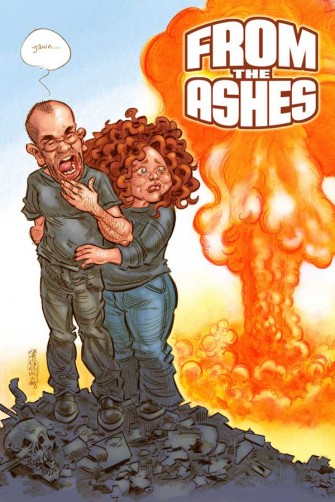
 I've known
 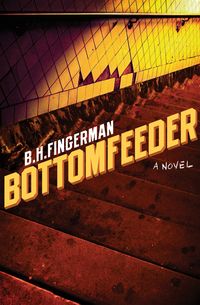 I didn't think of my first novel,
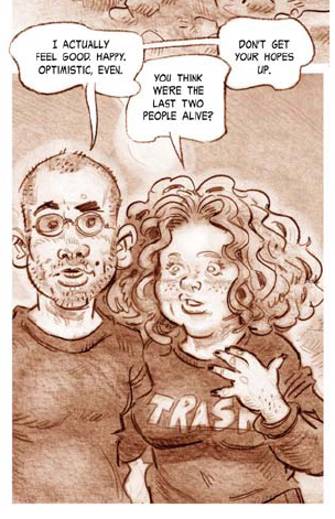


 Starting with the book
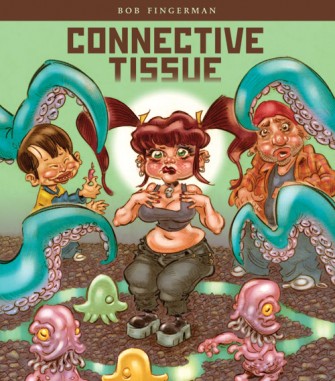
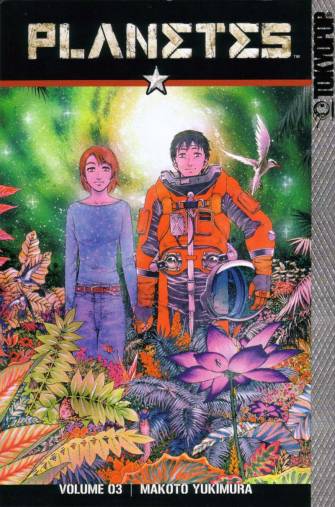
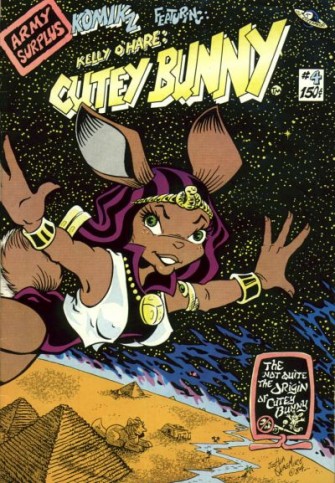
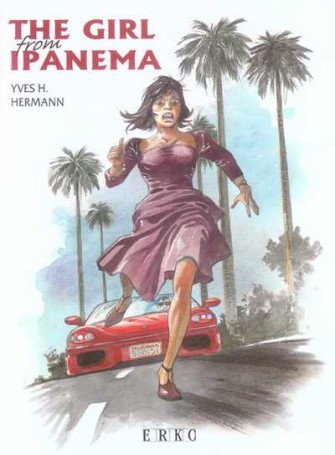
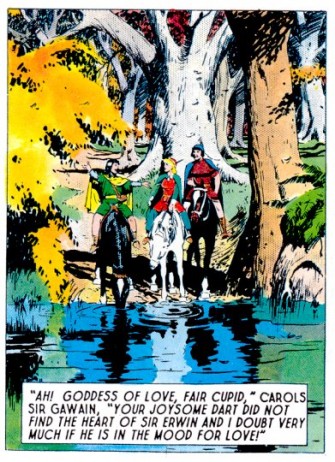
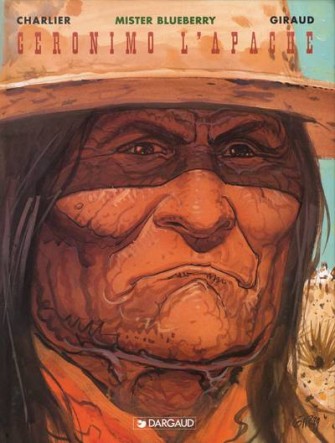

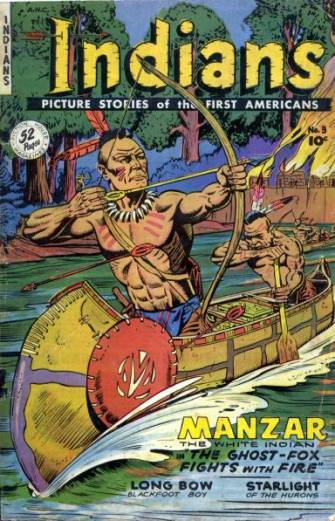
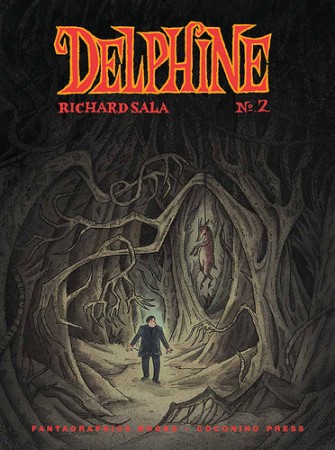



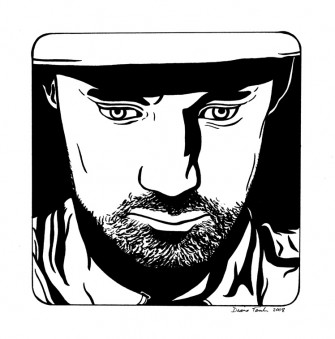
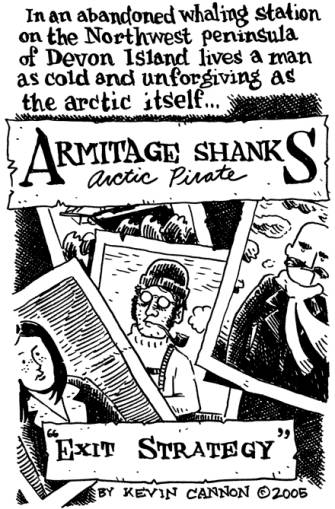

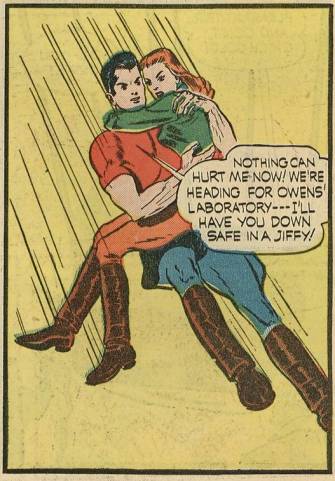

 * there's OTBP (off the beaten path) and there's WOTBP (way off the beaten path) and then there's Greg Stump
  * congratulations to David Reddick on
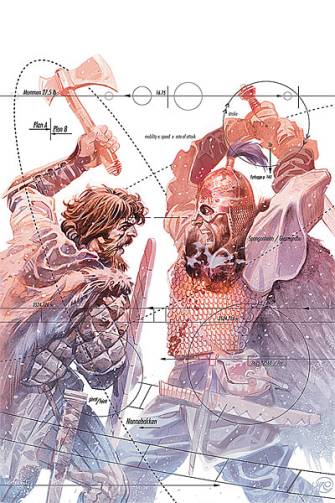
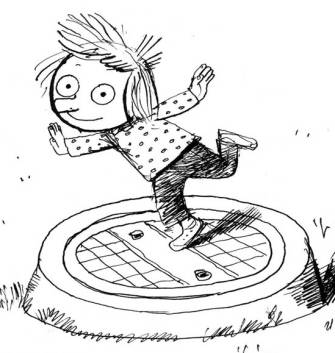
 * Viz media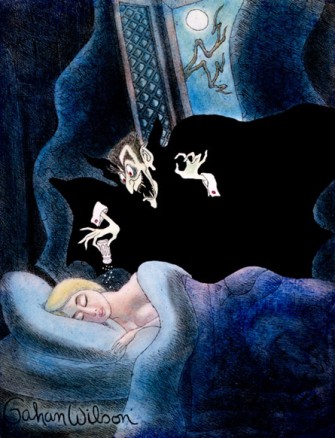
 Brigid Alverson
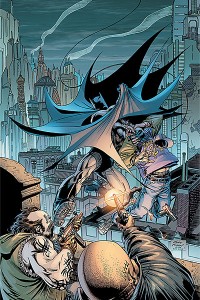 Numbers guru John Jackson Miller has written up his piece on April's comics sales, and one thing he notes that's hugely amusing is that this may be the first time in the history of comics sales that Detective Comics
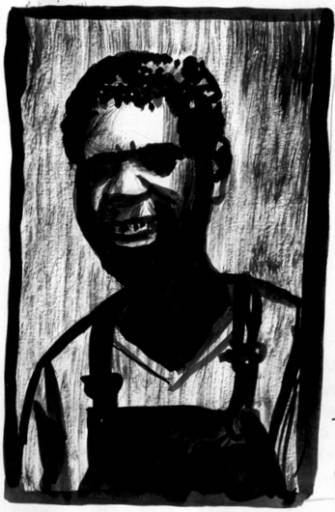
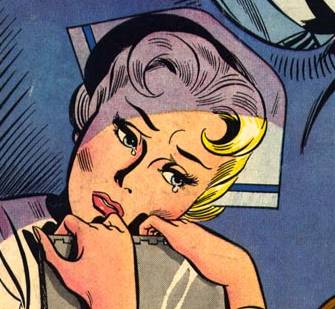
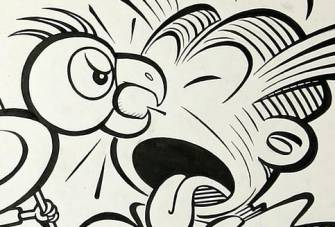
 * young comics industry person Brendan Wright visits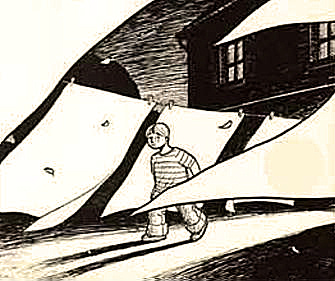
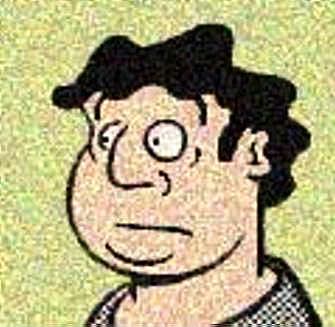

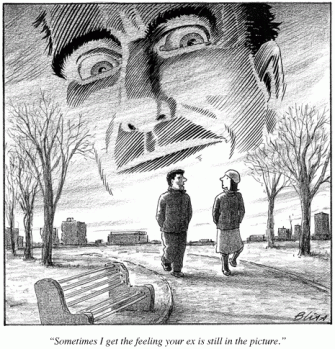
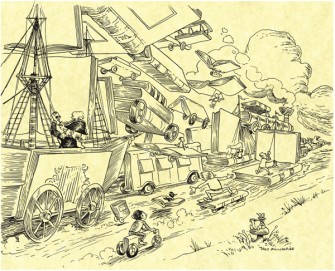
 There's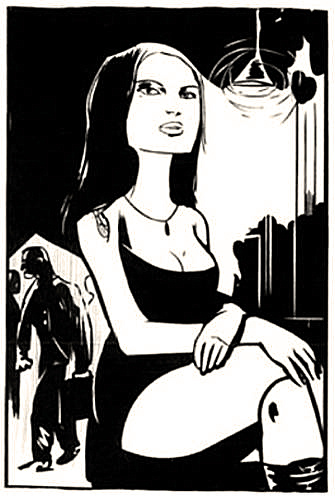
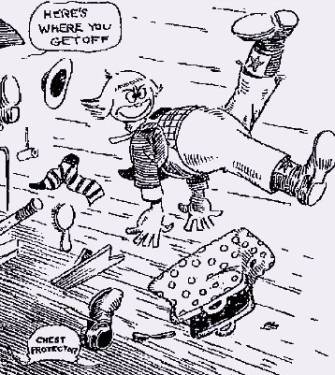
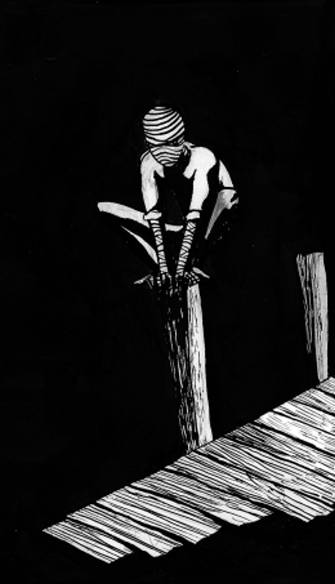
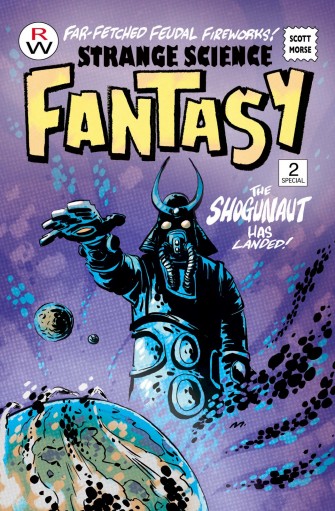
 * the interviewer Tim O'Shea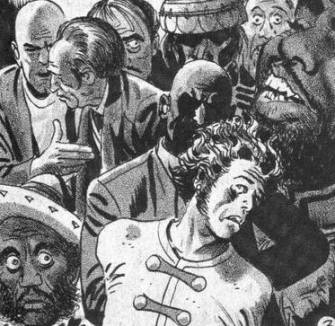
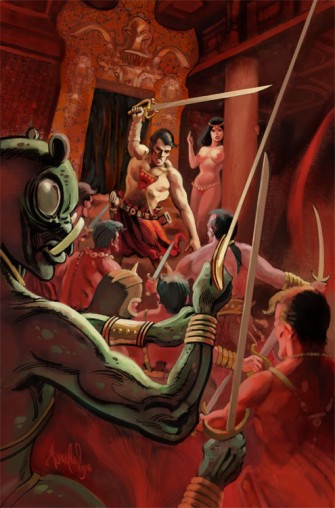
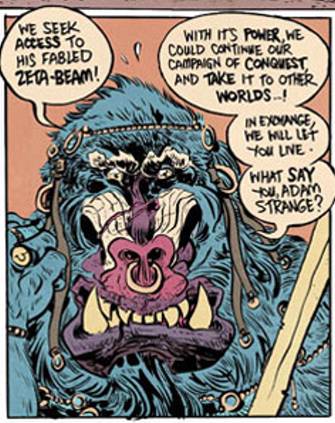
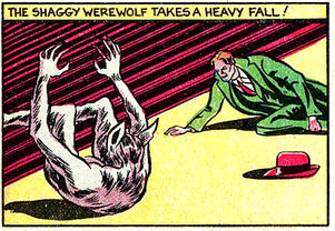
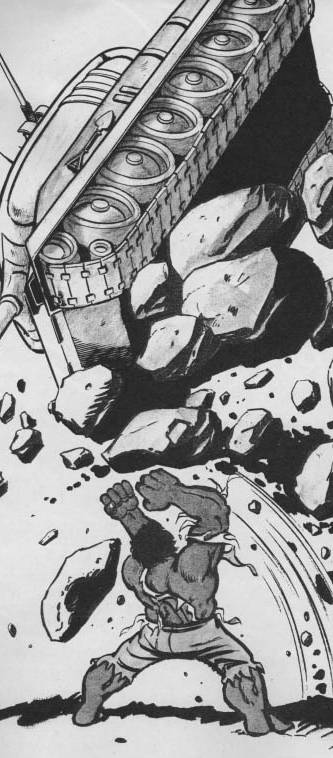
 * the publisher Chris Staros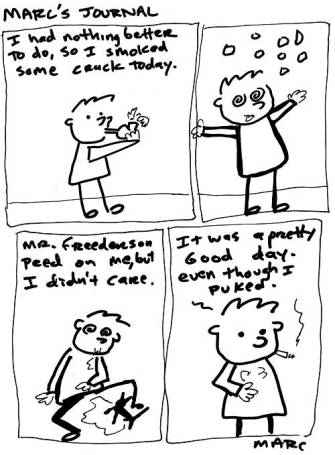

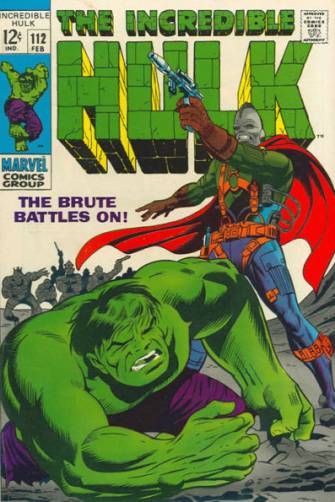



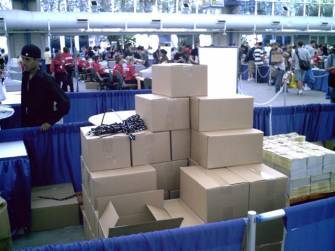

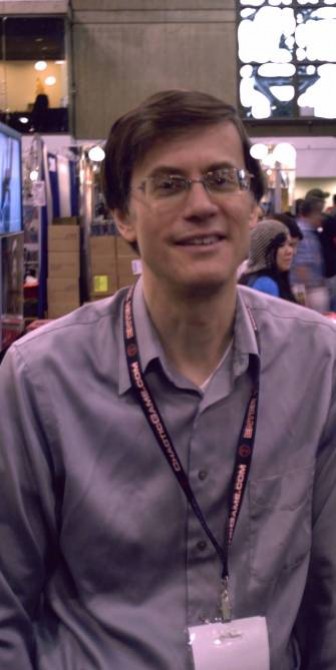

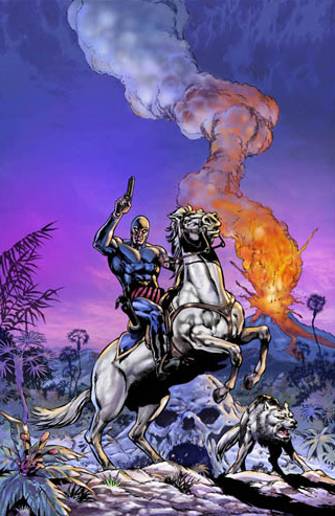
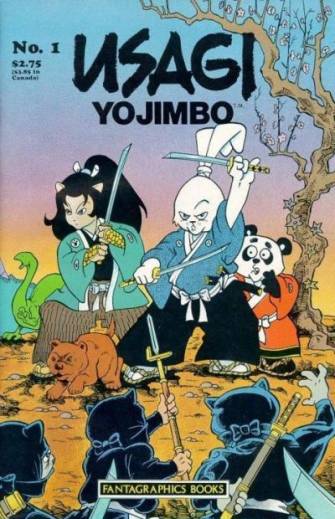
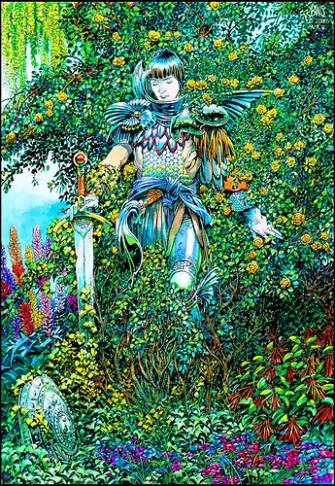

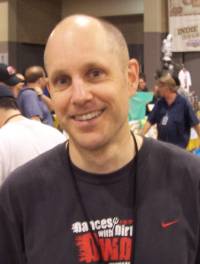 I've known

 SPURGEON: How about the change in lettering styles for the Russian view of things? Whose idea was that, and what did you hope to accomplish with that flourish? Was it just a signifier to help the reader keep track of changes in location?
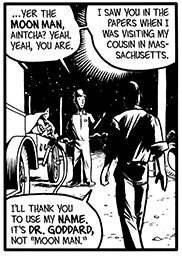 SPURGEON: In terms of the narrative, your opening is deceptively straight-forward. It seems like we're going to get the scientists' view of the race to the moon starting in 1957 with Sputnik and some other events, but then T-Minus goes all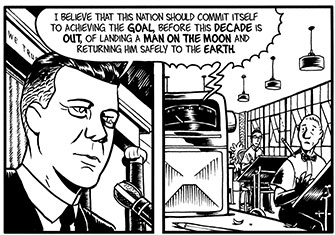
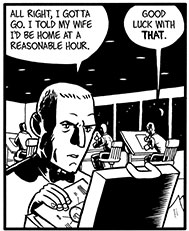 SPURGEON: There are flashes of the personal costs involved -- the fire, the resignation that follows the fire, another man imposing on his family to the point he seems to feel bad they're eating at midnight in order to share a meal with him -- what made you decide to include those elements and how conscious were you in an already crowded and complicated narrative in terms of choosing which ones to explore?
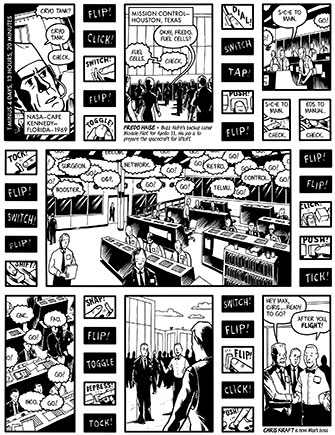


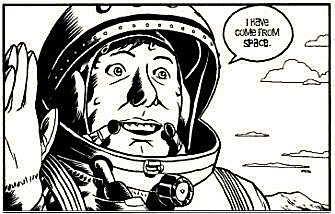


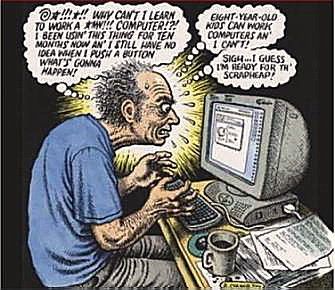
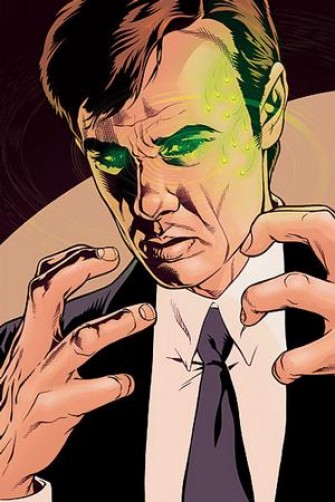


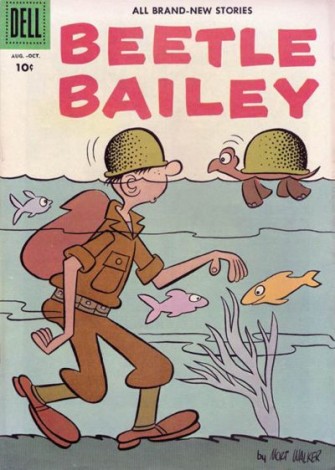
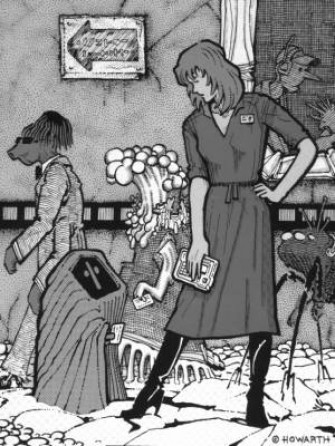

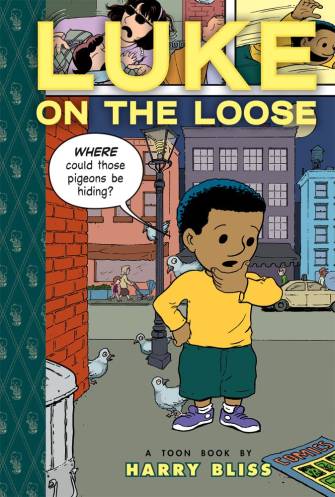
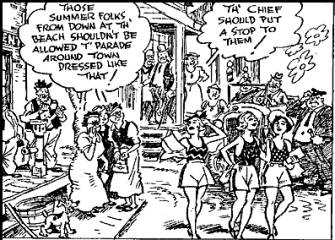
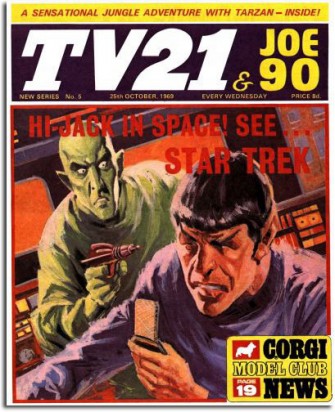
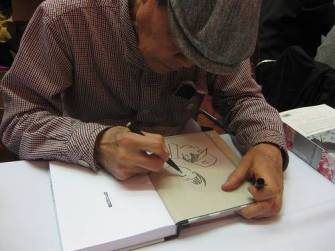
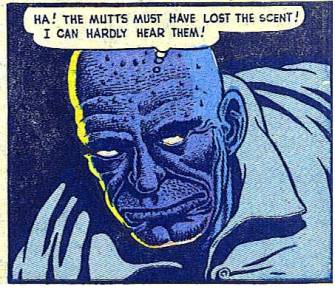
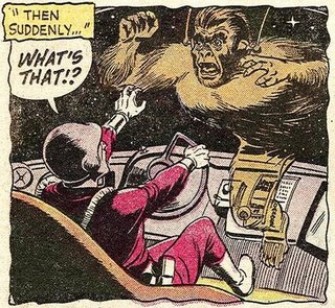
 * the writer Tucker Stone

 There's a thread on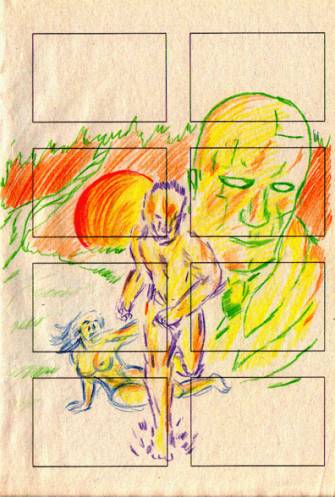
 * artist Stefan Dinter writes in to point out German creators are gearing up for Munich's

 * the comics business news and analysis site ICv2.com
 *
* 
 * the Maine Comics Arts Festival's own blog




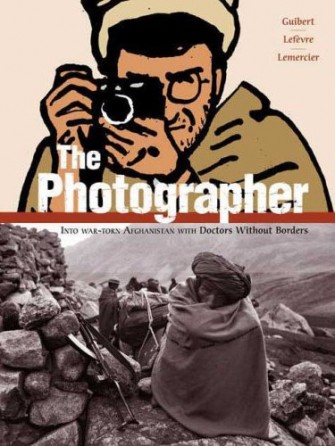
 * this picture of Tony Millionaire all snazzed up comes from
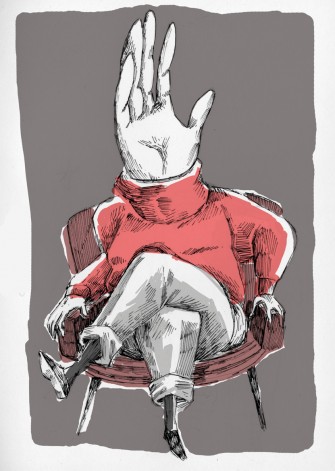
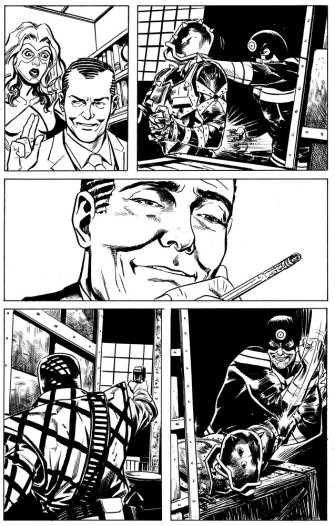
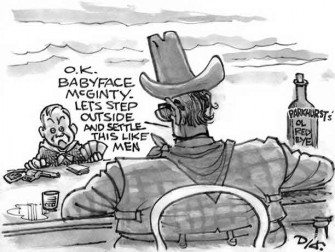
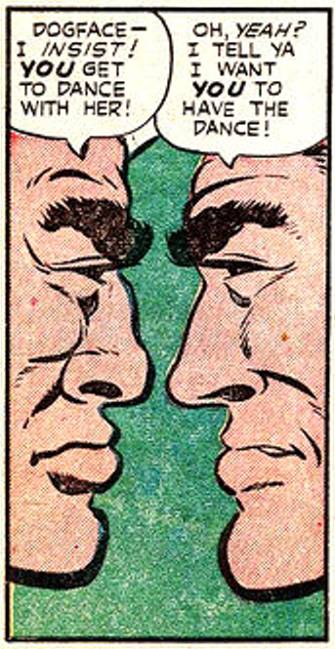
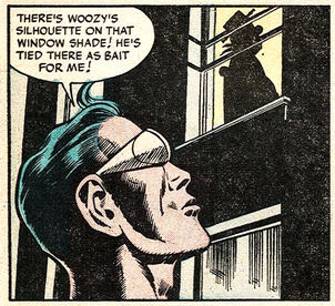
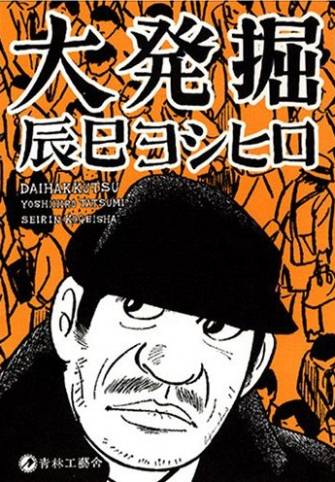
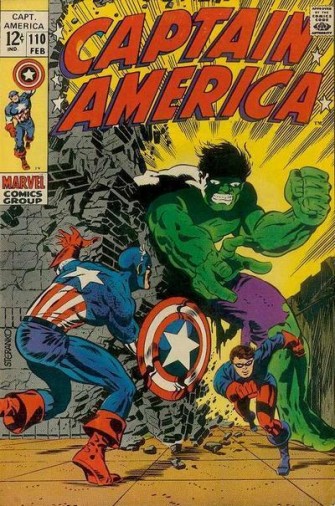
 * not comics: you know, he does sort of look like Dr. Strange with that mustache. (Also, who let Shannyn Sossamon do her movies with that unflattering haircut?)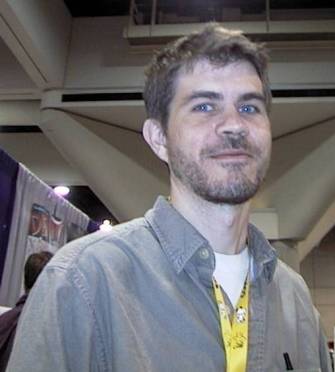

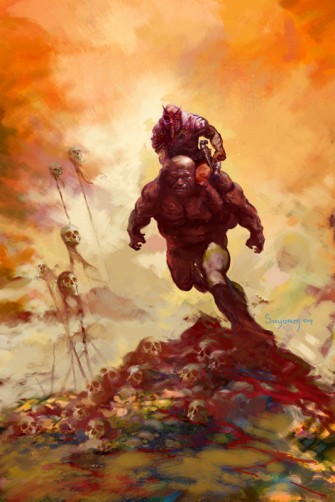
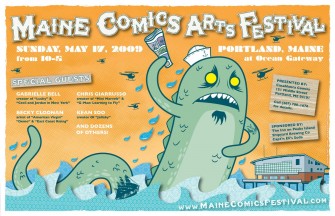

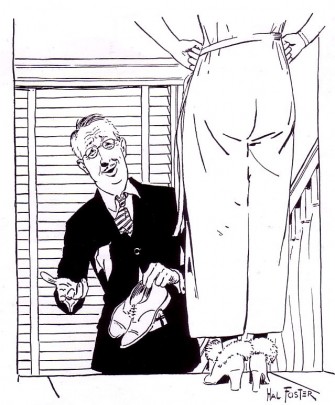
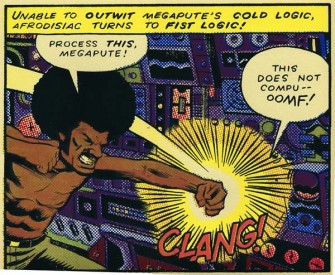
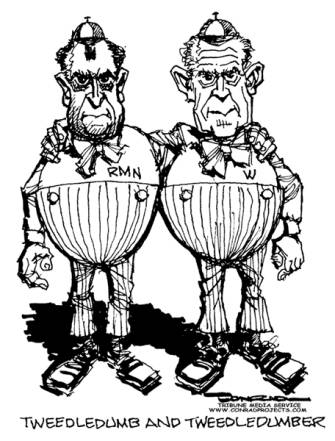
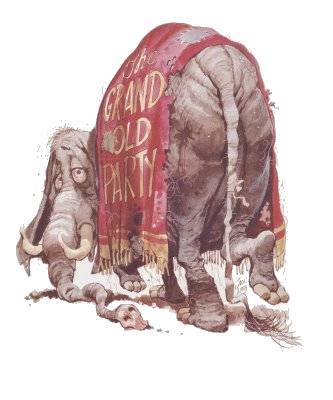

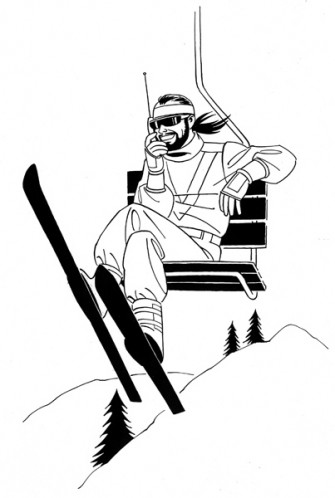

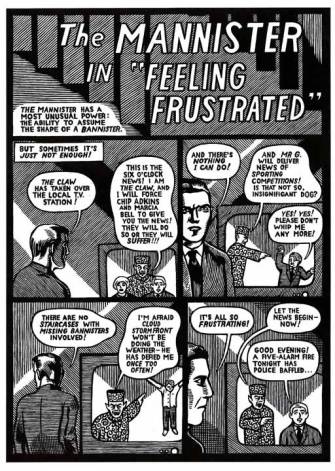

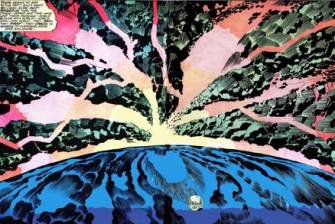
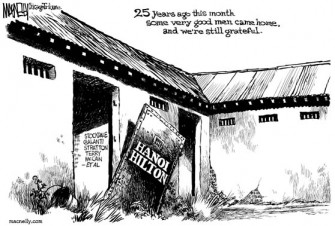
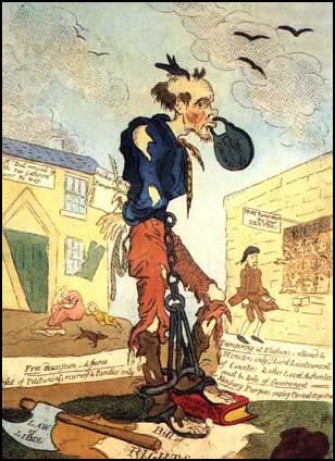
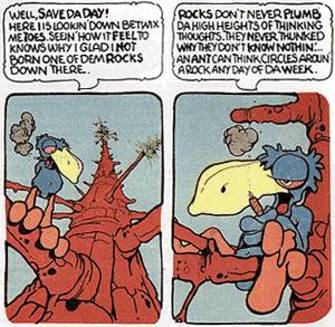
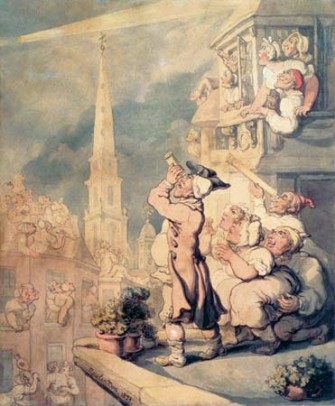
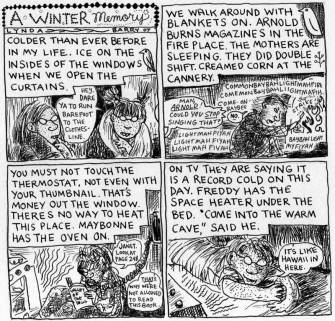
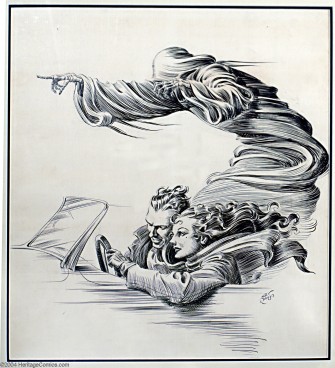
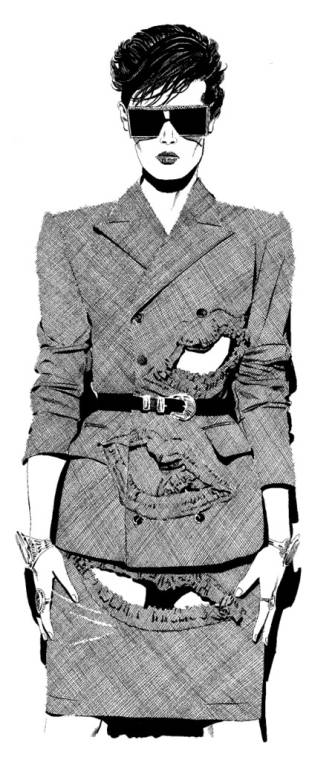
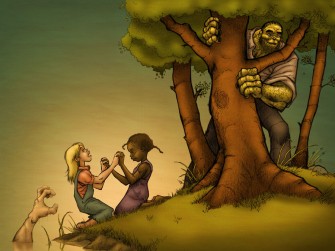
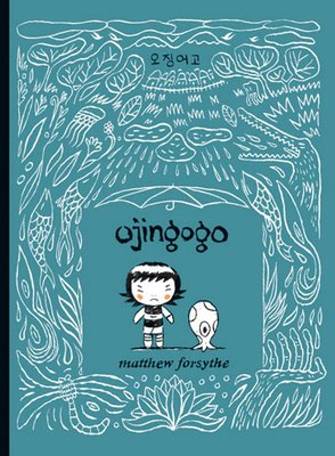
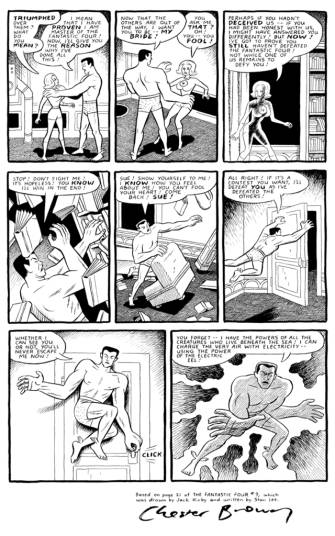
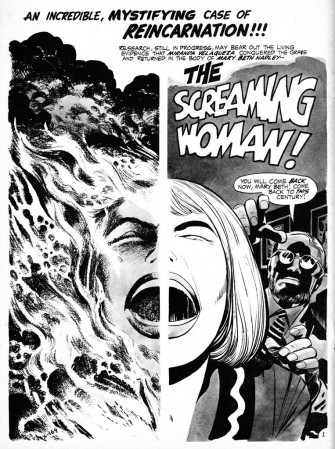
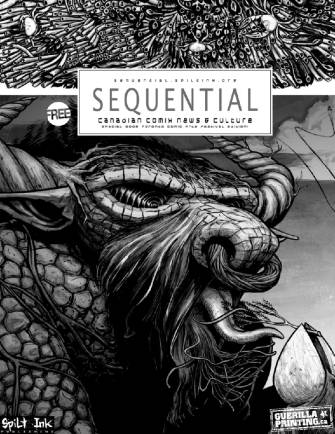

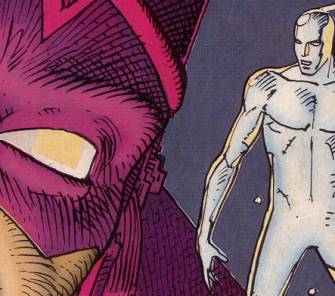


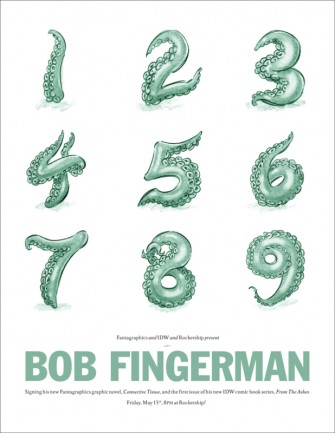
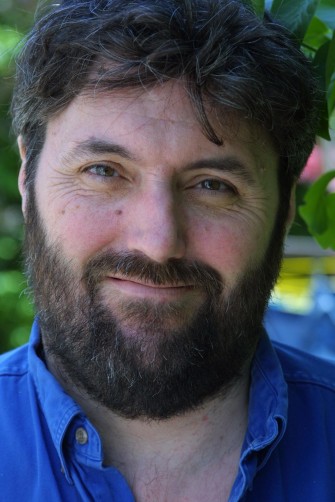


 * the writer J. Caleb Mozzocco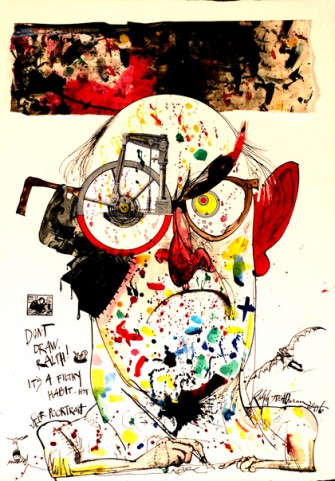
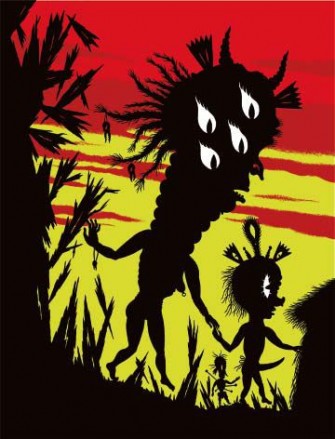
 First, Brownstein noted that the Fund is serving as a special consultant to the defense, not managing that defense in the manner with which we're most accustomed to seeing them involved. "That means that our involvement is limited to providing First Amendment and other specialized expertise that the defense uses in building its case," Brownstein told CR. Brownstein is therefore not able to comment on strategy, partly because that's not their purview and partly because they're simply not involved as much in strategic matters. So if the Handley is considering a guilty plea, the Fund may not even be aware of this and certainly isn't involved in a way that not pleading guilty would have been a precursor to their coming aboard.

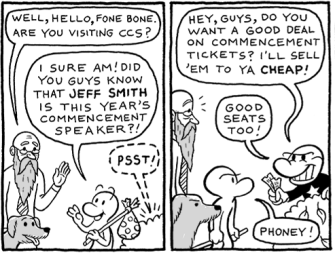
 * the cartoonist Oliver East talks at length (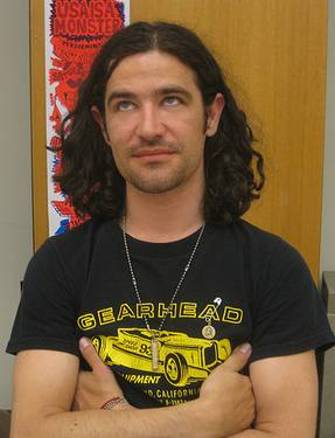
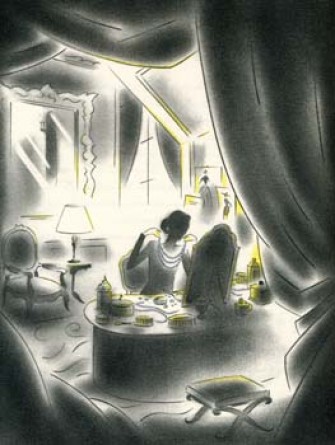
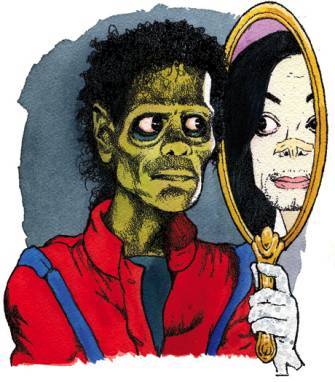
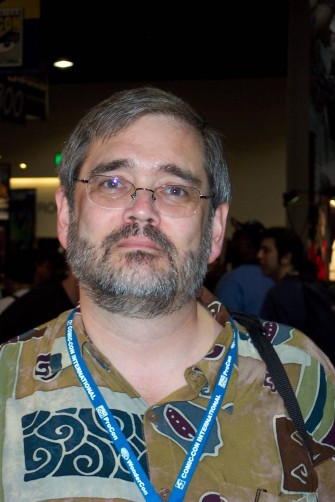
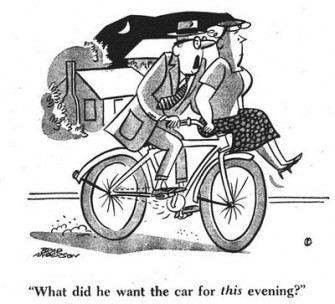

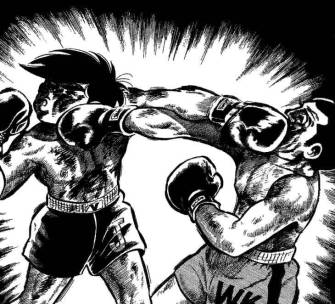

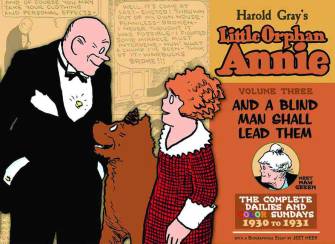
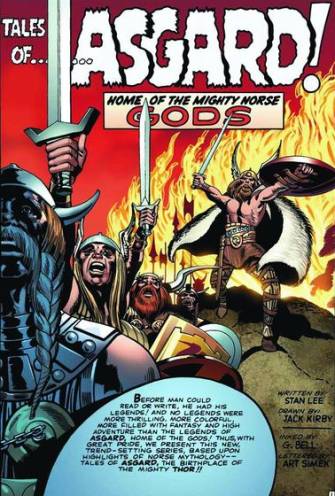
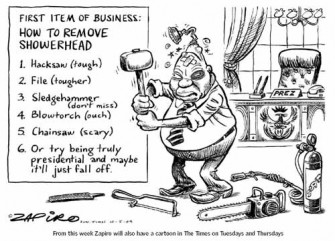

 * the Kitty Pryde-related fundraiser for Oregon Hemophilia Treatment Center organized by Floating World has reached the eBay phase, which means they're selling on eBay the portraits of the character that haven't been purchased and you get the chance to have a nice piece of art from a creator and help out a deserving institution. The headquarters for all of this
 Jeff Smith

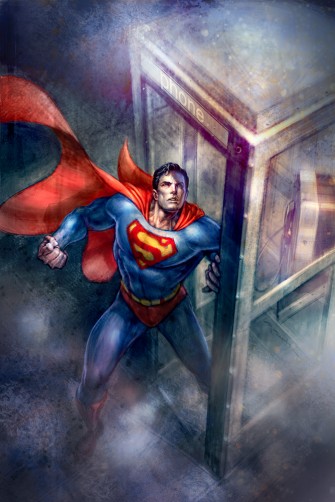

 * missed it:
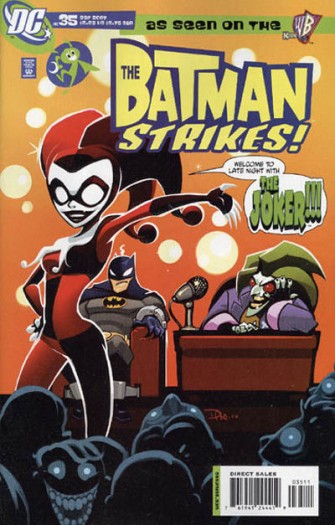
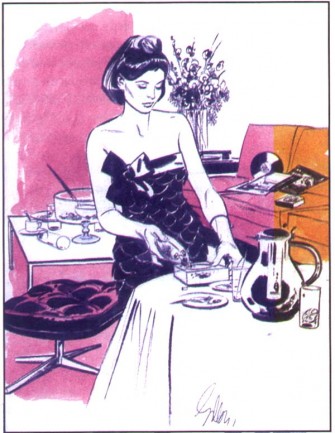


 I talked with Darwyn Cooke on Monday, May 4. We were joined by his editor on the Parker adaptation series, Scott Dunbier, and another Westlake fan: comics crime writer and former Cooke collaborator


 BRUBAKER: I loved the Keeley's Island map page, too, I thought that was great.
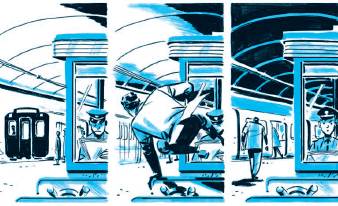
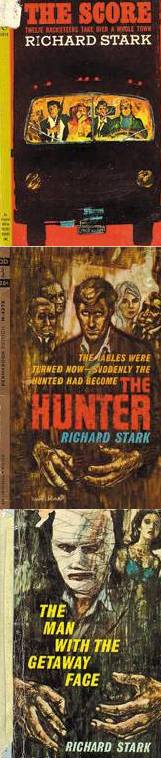 BRUBAKER: Are you doing the whole series?
 BRUBAKER: I'm not well read in that era, but I can't think of someone who put down
  SPURGEON: Did he see any of it?

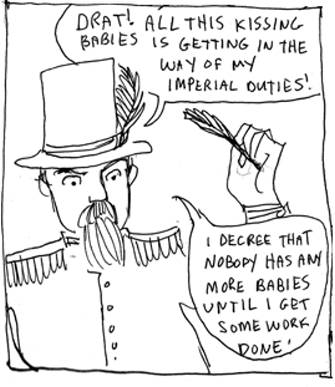
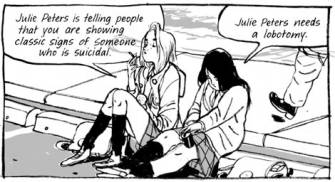
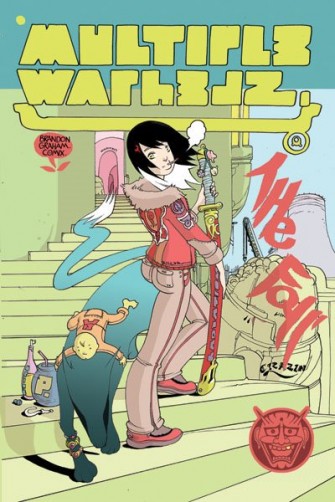
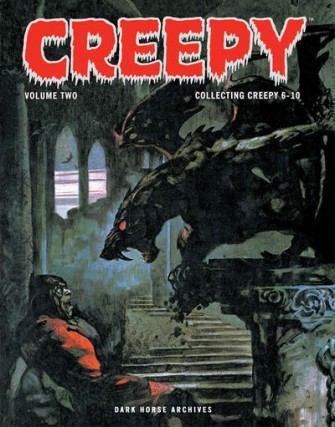
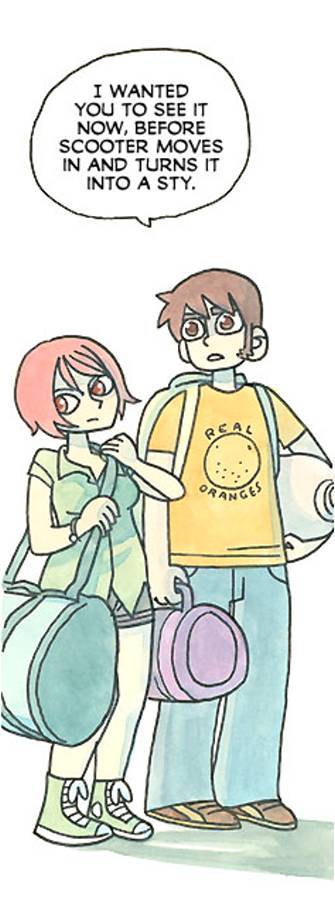
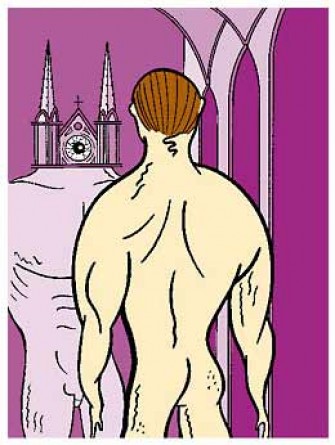

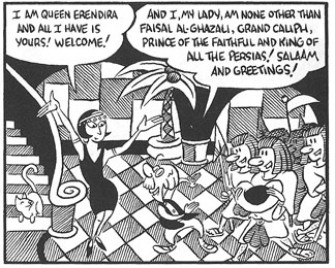
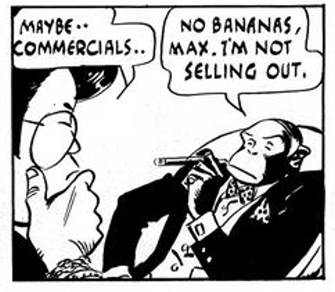
 Scott Meherg's story
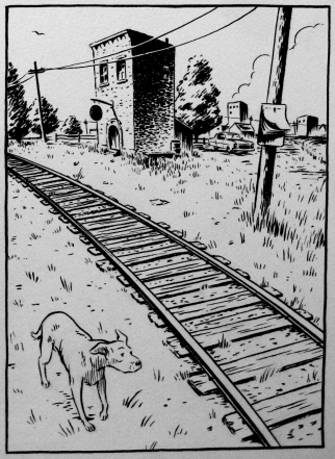
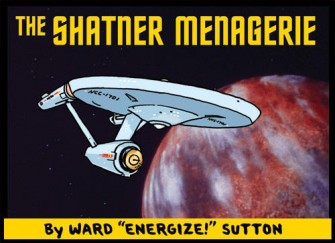

 * the New York Times' book blog takes news about some new comics-related Penguin classics covers
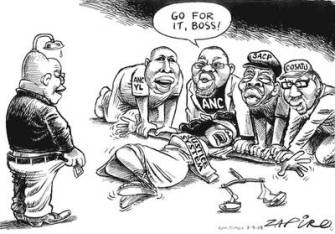
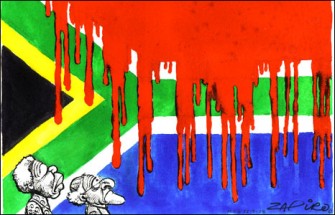

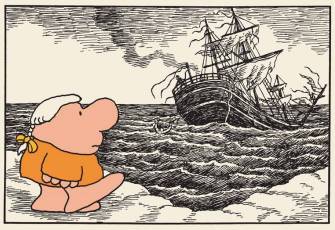

 * the great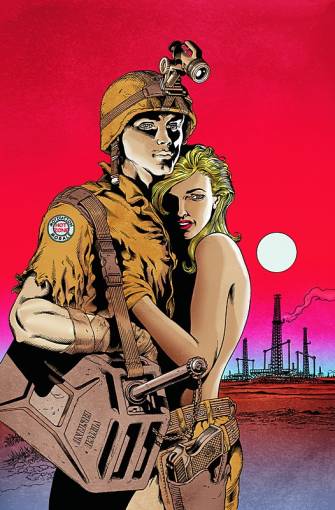
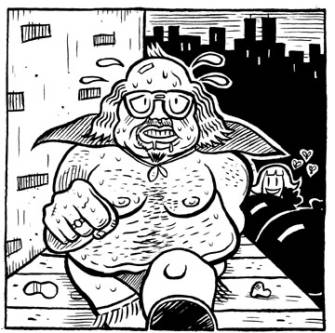
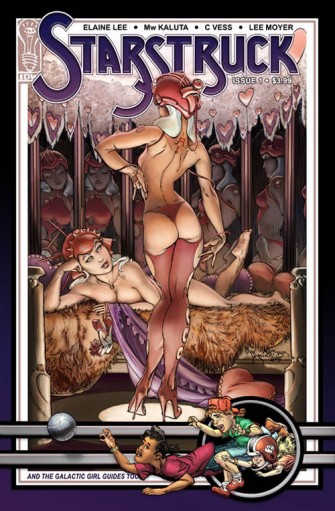
 * Archaia Studios Press is now Archaia or Archaia Comics, and has a new logo (see below).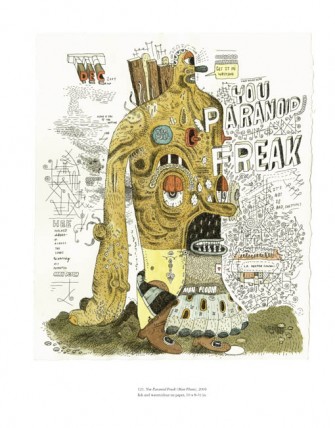
 I was wondering if you would mind posting this announcement / warning to retailers. In the last Previews, Strange Eggs Jumps The Shark was solicited and they for reasons unknown, stamped it "Kid Friendly." which it is absolutely not. I have been trying to individually email retailers to warn them, but it is getting harder and harder to find their email addresses. Hell, I couldn't even find one for Golden Apple.

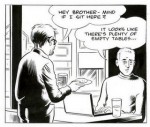 * many bloggers better at this than I am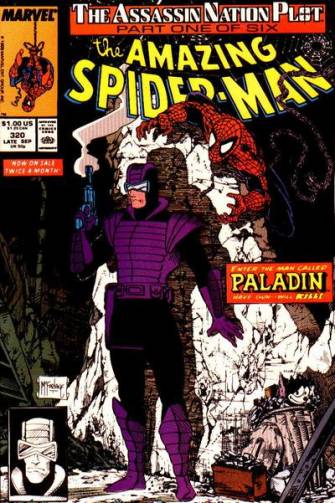
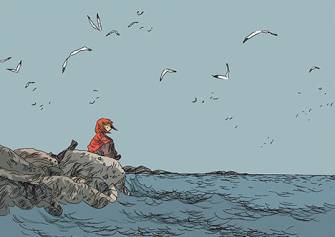
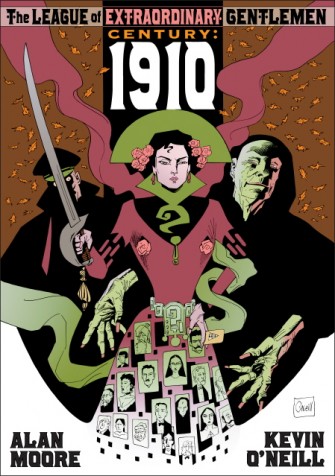
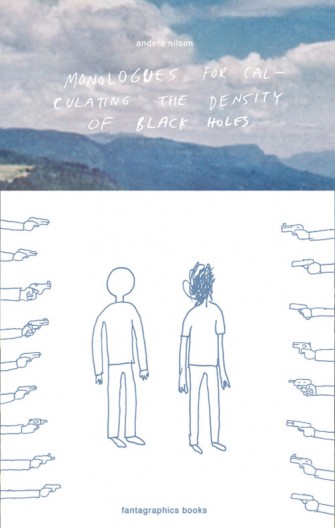
 * Jennifer de Guzman at SLG
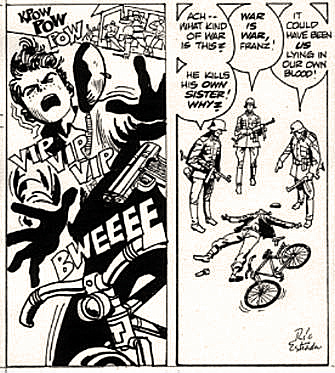
 By the time of his third marriage, Estrada had begun another prolific and well-regarded phase in his comics career. He had gone to work for the Warren publication Eerie in 1967 and 1968, and then moved over to working for DC's various top-line war comics, including Our Army At War, Unknown Soldier and Star-Spangled War Stories. His less-celebrated contributions to a DC romance line that was shifting into a steadier diet of reprints were frequently lovely, bouncing back and forth between wall-of-color assaults on the reader's pleasure centers and sturdy, classic figure drawing. Many times, they achieved both effects.
 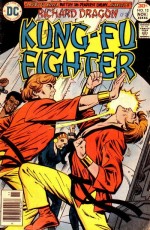 While he continued to produce comics work in the 1970s and into the 1980s, Estrada found himself something of an odd man out in the increasingly superhero-dominant mainstream comics market. Exceptions would include a brief stint on Wonder Woman and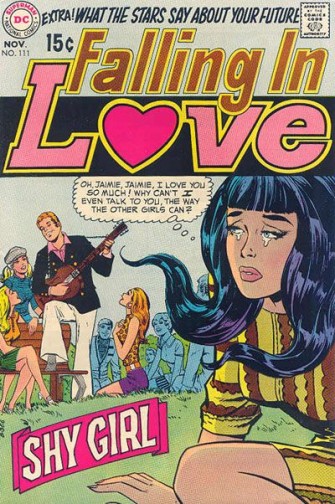
 As a journalist, Kermode was a frequent contributor to comics magazines, including Vicious and Borderline. He shared in the latter magazine's 2002 National Comics Awards win for Best Comics Magazine or Website.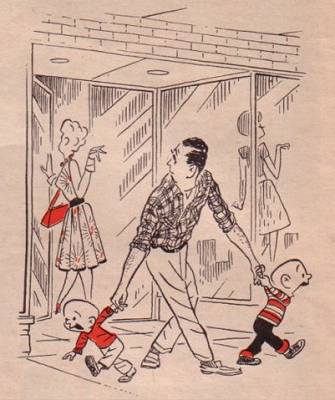
 * not comics: the writer and too-infrequent comics reviewer Paul Di Filippo notes that things have become so bad for Disney comics in America that Gyro Gearloose's Little Helper is apparently taking on freelance advertising work, like this popular Google ad.
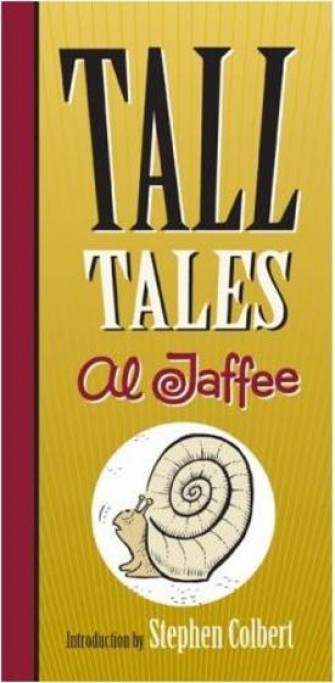

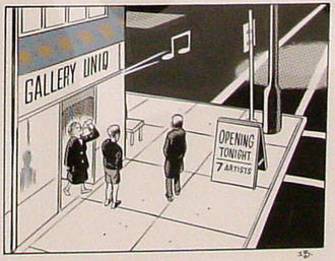
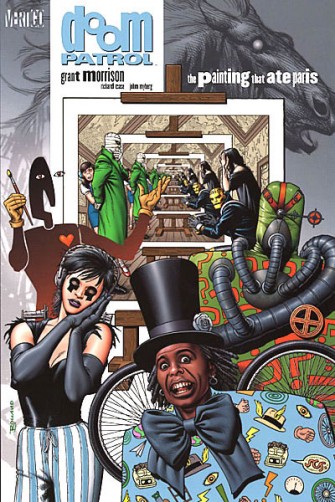
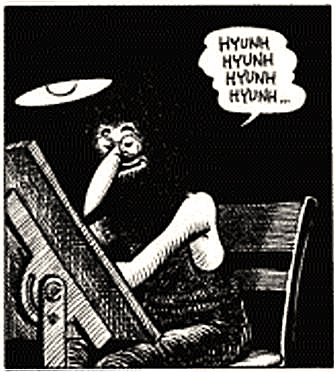
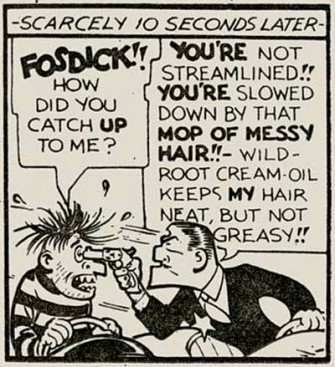
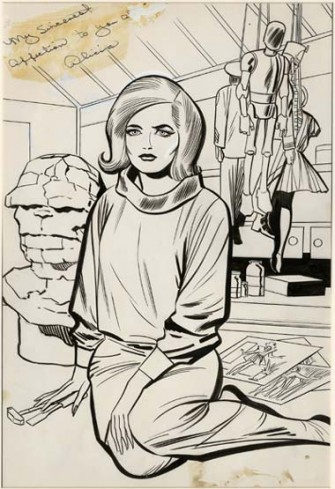
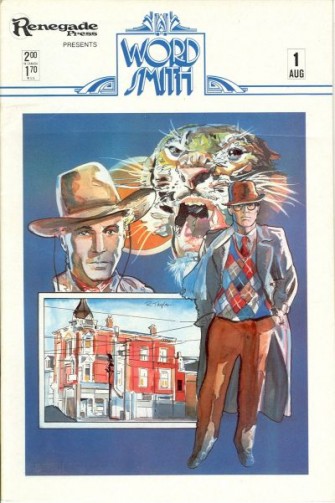
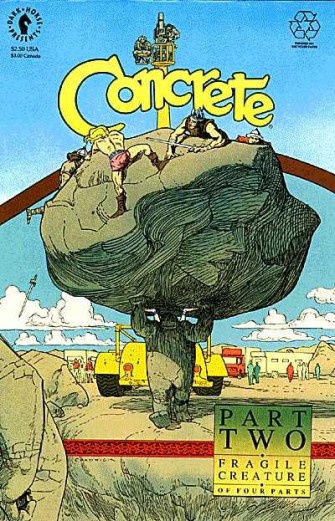
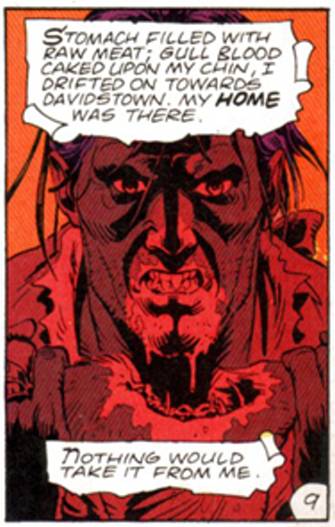
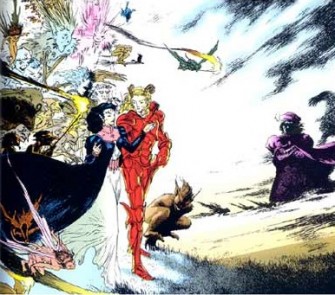
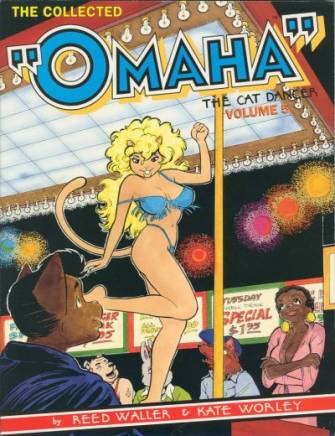

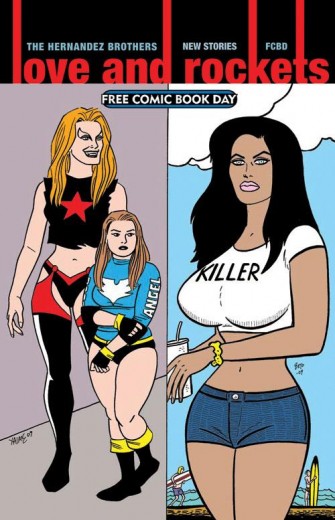
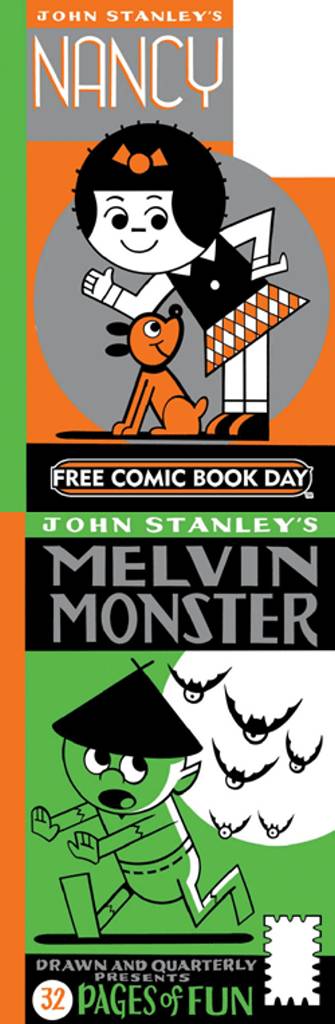
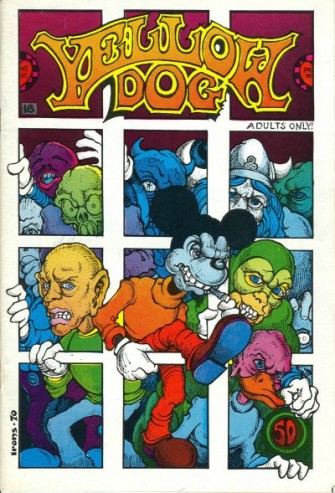

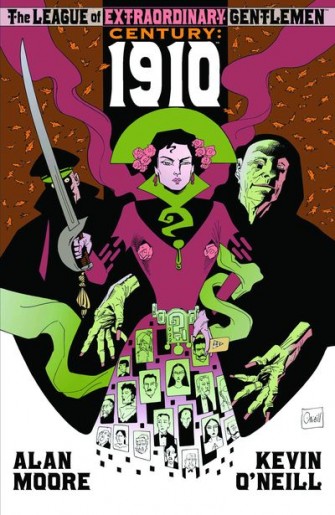
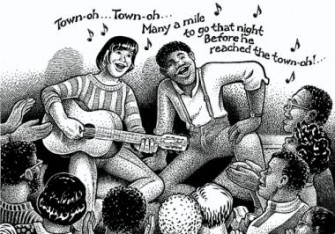

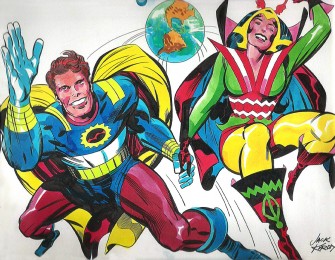
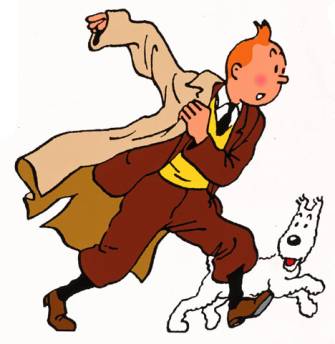
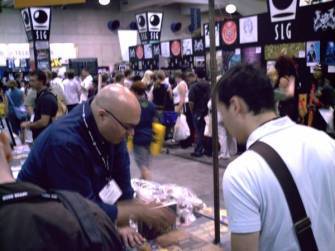

 * the cartoonist and educator Steve Bissette

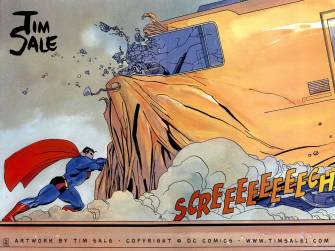




![[Ken] Bruzenak's work in American Flagg!](http://s37.photobucket.com/albums/e56/tbondurant/af_03_p27.jpg)