Missed It: Trump Collection Canceled; Humbug Collection Due Summer 2008 Here's something I hadn't noticed: Fantagraphics was at one point by this time going to have a collection out of the Harvey Kurtzman-edited, Hugh Hefner-published Trump in addition to its much-anticipated Humbug collection. That collection has since be canceled, and word of the one-time announcement is slowly working its way out of the various databases that serve newly-published books (it no longer has an Amazon.com page, for instance).
I asked Eric Reynolds at Fantagraphics about it. "Trump was cancelled because there was some question over who held the rights, and Playboy basically asked us not to do it because they had their own collection in the works. Since we have a relationship with Playboy that we want to continue, we acquiesced. He added, "Humbug is on for summer 2008; it's in production now." It's good to hear that Playboy has a collection in the works, and I hope it's as handsome and complete as what Fantagraphics would have managed.
What The Siegel Case Should Mean The legal decision last week granting partial copyright to the Siegel family on material appearing in Action Comics #1, including Superman, is a fascinating outcome with several real, potential implications for comics. However, the real issue here goes far deeper than one character and one set of creators. Truth be told, none of this should ever have come to an acrimonious lawsuit. And yet, the entire moral and legal foundation of the American comics industry demanded it. This recent court decision not only shines a light on comics' original sin, it exposes its ongoing, shameful failure to deal with the exploitation of creators then and now.
An industry where the caretakers of properties make far more money off of creations than the creators themselves due to legal circumstance and standard practices that greatly favor corporate ownership should be an intolerable one to every single person who has even a half-measure of interest in the comics they read beyond the initial thrill of looking at the ink on paper. That any creator should head into old age suffering financial hardship and perhaps even relying on handouts from good-hearted fans while someone who served on a corporate board lives in great comfort from money made on their creation -- if rumor is to be believed, sometimes from a creator royalty applied to an ancillary product -- should set every single person's teeth on edge. That corporations trafficking in icons of moral instruction can hide behind legal constructions rather than taking the point to seek out, acknowledge and then generously and publicly reward the creators that helped made those empires what they are should be an embarrassment to every person who has ever filed a tax return with income earned from the comics industry.
Shame on every stupid-ass, morally ignorant fan out there who has expressed even the slightest opinion that this course of legal action in any way reflects an agenda of greed on the part of people not directly involved in the act of creation, or worse, has articulated as their primary concern the potential interruption of their monthly four-color fantasy intake. Part of me wishes we lived in the might makes right moral universe that supports such a piggish outlook, because then I could quit my job and drive around on a motorcycle punching people in the face until they penned a formal apology to the Siegel family.
Hooray for Joanne Siegel, for fighting a fight that despite last week's positive outcome may eventually be lost.
And still, I'm not certain any legal outcome can represent a win for the entire industry. Not at this point. The infection goes far too deep for a single operation to make it all better, even using a scalpel as powerfully symbolic and profitable as Superman. Later law that restricts mainstream comics' exposure to this kind of lawsuit doesn't absolve the industry of the moral implications of that exploitation and abuse. Nothing does. There's a long-running rumor that the instigation of this lawsuit in 1999 sent DC into scramble mode that involved shoring up avenues for similar legal actions. In other words, DC tracked down the families and surviving creators and offered them deals for a firmer legal standing on the ownership issues. That's a rumor, mind you. I don't know if it's true. But I hope it is. I like the thought of older creators and their families receiving attention and money for their profitable creations, even though I loathe the privacy of it and wonder if press exposure may have put greater pressure on equitable compensation.
The comics industry needs to rectify its historical abuses as best it can, no matter if a court makes them or not. It needs to do this right now. It needs to do it publicly. It needs to do it in a way that honors the creative process. (Perhaps it could make this a goal by 2011, the 50th anniversary of the Marvel Comics revolution.) And then, when this is done, it needs to make an unrelenting, industry-wide commitment to the notion that these matters have moral force and that exploitation is intolerable no matter what a legal construction allows. Because there are just as many horrible people out there right now who want creators' movie rights or who come to the table offering little more than a small advance in order to put their name on someone else's work, and just as many if not more apologists for same. In a way, it's hard to blame them. After all, for 70 years, Superman said it was okay.
College campuses tend to be seething cauldrons of stupidity and acting out, twin impulses that appear to have teamed up in the latest comics pseudo-controversy whereby a few students at the University of Utah have objected to the use of Fun Home in a college course because of its pictorial depiction of nudity and sexual situations and are now chasing it up the college agitation hierarchy. The book was assigned as part of a course to introduce people to different literary genres and approaches, which one might think is a sure sign you have a chance to see something that doesn't fall directly into your comfort zone. Seeing as the university has a drop-without-penalty policy and an alternate-assignment policy, this should probably only go so far as the stale, hot wind generated by people complaining about the book can muster despite the actual situation's sensible resolution. Let's hope it's not much. The fact that they're so casual in both calling this award-winning book pornography and throwing out the leads-to-children-being-abused idea as if they're givens and not acidic, horrible, super-serious things to say about anyone's work makes this whole matter difficult to blog about except to in every way express my derision and contempt for that point of view and the spectacularly childish way in which it's being expressed.
Bart Beaty Vs. Jeet Heer On The Legacy of Dr. Wertham’s Comics Crusade
Prominent writers about comics Bart Beaty and Jeet Heer go toe to toe in the Globe and Mail on their very different interpretations on the comics crusade of Dr. Frederick Wertham. Very much worth reading, particularly if you haven't been exposed to Beaty's counter-cw position before.
Comics In Context News Round-Up
Three comics stories that aren't exactly comics, but have huge, potentially industry-altering implications for various aspects of the comics business.
* the newspaper industry has experienced its worst drop in ad revenue in 50 years. There should be obvious repercussions, although whether they're directly linked is unlikely. You should at the very least expect some papers to cut back budget-wise, which could affect comics sales. I think this could also drive more papers into aggressive on-line/print hybrids where they only print on the major advertising days (Sunday, whatever pre-weekend day tends to see weekend-related ads in a given market) and goes on-line for the rest of it. This also puts a ton of pressure on web revenue models that might be useful for papers, and how comics content might fit into that. Please pay attention to this story.
* Comicsnob.com offers up potential outcomes for the credit-strapped Borders, a major buyer of comics and manga.
Random Comics News Story Round-Up
* Jeff Smith is going back to print on RASL #1 and argues that the Direct Market is moving more copies of Scholastic's Bone series than they're given credit for moving in a generally snappy write-up on mid-March's ComicsPRO meeting in Las Vegas. I like that Smith is so open and honest now about his sales figures -- he's never been shy about releasing that kind of information, but he seems to making more of a point to be explicit about figures these days. Given the manipulative paranoia that dictates how some big companies approach the public dissemination of those numbers, it's triply refreshing.
* not comics, but industry watchers should make a note of this story about Oakley suing Marvel. My contention is that Marvel's post-bankruptcy success in managing successful and prominent licensing partnerships has been as big a key to their success as the movies and the general perceived vitality of the publishing line -- so anything that show them potentially fumbling the ball in that arena should be remembered.
* I happened to be in a Barnes and Noble in Albuquerque yesterday, and a few things stood about their comics section: 1) DC had a full shelf to themselves with books facing out; 2) there was a lot less manga than the in the Borders up the road; 3) strip collection like Fantagraphics' Popeye were with the other strip books in Humor rather than in the graphic novels section; 4) some books that aren't manga were shelved with manga if they were roughly that size -- like First Second's Three Shadows.
* extended comics discussion update #1: the comics and culture site Metabunker has some damning comparative scans featuring that huge Barks collection that's due to be published here.
* the fact that DC Comics executive Paul Levitz is going to blog at Blog@Newsarama is kind of astonishing news in a sense until you remember 1) Levitz's fanzine-making roots, a historical comics movement from which comics industry trade news including sites like Newsarama and its blogging arm sprang, and 2) Levitz has occasionally written astonishingly long letters to comics-related publications on various issues. One of the more interesting things will be to see how his DC-centric view of the comics universe will sit with readers -- if this repeated kidney-punching over one of Levitz's claims is any indication, sometimes not very well.
As much as this decade's boom in bookstore interest in comics has famously worked to benefit certain cartoonists, we may sometimes forget that there's also been a mini-boom for writers about comics. Patrick Rosenkranz not only saw his Rebel Visions published in coffee table, hardcover form after years of waiting to make such a book; a second, paperback edition that's out as we speak actually expands on his authoritative treatise with increased attention to those comics' visual allure. Rosenkranz has gone on to write a biography of Greg Irons in You Call This Art?! and has just turned in a manuscript for a book about Rand Holmes that should see publication from Fantagraphics sometime in 2009. It may be hard to believe, but the taboo-shattering, personally expressive undergrounds are now further in our past than the beginning of the comic book itself was in those cartoonists' collective rear view mirror. I greatly enjoyed the following exchange and urge you to check out Patrick's work. The new edition of Rebel Visions we talk about here should be available for pre-order at your comics shop or local bookseller even as we speak and should hit shelves well before Memorial Day. -- Tom Spurgeon
*****
TOM SPURGEON: How was the experience of having the book out that first time? I know that it was long time coming.
PATRICK ROSENKRANZ: My first book on comix was Artsy Fartsy Funnies, originally titled Komix Kountermedia, which was supposed to be published by Crown Publishers in 1973, but instead it ended up getting thrown together sloppily by Dutch comic book publisher Paranoia in 1974 under that title. The whole experience was a real disappointment, except for getting to know the underground cartoonists. In 1998 I got a call from an editor at Kitchen Sink Press who said he was holding a copy of Artsy Fartsy Funnies in his hand. He asked me if I could make a bigger and better book about underground comix, and I said I'd been waiting 25 years for someone to ask me that question. I told him yes. I revisited all my research materials and renewed contact with the underground cartoonists who were still alive. Of course, as you probably know, KSP went out of business a year later.
Then I got a call from Gary Groth asking if Fantagraphics could publish it. I said yes again. The summer of 2002, when we were putting Rebel Visions together in Seattle, was a very exciting time for me. I was high on life. It was supposed to come out two months before Christmas, but there was a dock strike on the West Coast and shipments from Asia, including my precious cargo were stuck out at sea for the duration. The boxes of books finally made it to the Fantagraphics warehouse about two weeks before Christmas 2002 and I had my first book signing at CounterMedia in Portland on December 20th. It was a real thrill to see it as a large coffee table hardbound book.
SPURGEON: Why a second volume?
ROSENKRANZ: We planned to release it in paperback after the hardcover sold out, which took a while. When Gary Groth offered to redesign the book for the soft cover edition, I jumped at the chance to correct some errors and improve the presentation.
SPURGEON: How much material was added to the second volume? Were there any changes to the text?
ROSENKRANZ: When they assigned Greg Sadowski to be editor/designer of the second edition I began to understand how effectively good design can enhance and reinforce the content of a book. Sadowski took a very different approach than Carrie Whitney who designed the hardcover. First of all, he knew something about the subject and was a fan of the undergrounds. He asked me to rewrite some sections to clarify points or add additional information. He moved chapters around to give a better flow to the story, and talked me into dropping the endnotes to make it seem less like a textbook. I substituted a Recommended Reading List instead, which retains the links to full interviews. We had many fruitful discussions on the phone during the process. He was very particular that the text and images relate to each other on every page and challenged me to carefully re-examine my theories and interpretations of events during the comix movement. I was willing to spend the necessary time to chase down facts and find appropriate illustrations and write captions because I saw this as a great opportunity. Fantagraphics was very generous to make the offer to redesign my book. They could have just slapped on paper covers and re-issued the same book, but instead they chose to invest time and money on this project to make it better. I think this demonstrates their integrity and professionalism and I love them for it.
SPURGEON: The major difference that I can tell between the two editions is that this one is a lot more visually aggressive in terms of its layouts and the number of graphics included. Are you happy with the way the new edition looks? Was part of the appeal of doing a new edition showing off a lot more art?
ROSENKRANZ: Do you realize that the paperback edition has more illustrations than the hardcover, but fewer pages? There was very little white space left over when Sadowski was finished with it. The pages are packed with visual and written information. It contains 30 percent more calories and cheap thrills. I am very happy with its new look. Some illustrations made the crossover from the first edition, but many were dropped and replaced by others. I also tried to represent additional artists who don't appear in the first edition. The best thing about all the new illustrations is that people who bought the hardcover will now also have to buy the paperback or they'll miss all the rare and interesting drawings. The index is really much better now, too.
SPURGEON: The more I read, the more I was impressed by the range of work on display. Was this material from your personal collection?
ROSENKRANZ: Much of it came from the Rosenkranz Archives, but there are several other comic collectors who were very generous with their assistance and eager to contribute to the historical record. They include Denis Wheary, Eric Sack, Glenn Bray, Pat Brown, Dave Moriaty, and Charles Boucher.
SPURGEON: One section of the book I greatly enjoyed was how you traced the roots of some of underground comix publishing to college humor magazines. Patrick, what eventually happened to those magazines, and is there a reason they didn't to contribute to comics as greatly as they did during that one time? What I mean is, I don't know of any non-underground cartoonists who got their start there, and I don't think most of them are around anymore.
ROSENKRANZ: Monty Python member Terry Gilliam edited Occidental College Fang when he was at UCLA and later became the assistant editor at Help! magazine. Harvey Kurtzman offered his job to Crumb when Gilliam left. Then there are all the guys who worked on the Harvard Lampoon who later formed National Lampoon. So there's some crossover.
I think the big appeal of college humor mags in the 1960s was that they were slightly subversive and that's exciting when you're on your own for the first time. Students were always trying to get around university censors and push the limits of polite journalism. At UT Austin, the entire editorial staff of the Texas Ranger was fired in 1961 when they slipped the F-word into an illustration. Plus, being on the Ranger staff meant having big parties when the money from sales of new issues came in. What could be more attractive than that? When Bill Killeen started Charlatan, the college humor mag with no college, he had the advantage of no faculty advisors. He rapidly rose to the challenge by posing his circulation manager Pam Brewster totally naked in the centerfold of the Renaissance of Croquet issue. Charlatan was sold all across the South. When the underground press began around 1966, college humor magazines became obsolete. They didn't go far enough.
SPURGEON: Is there anyone in the core group of underground artists that you feel has been unfairly neglected by history? I was interested that you wrote a lot about George Metzger, for instance.
ROSENKRANZ: My first reaction to that question is, does any artist inherently deserve recognition? The lessons of the past clearly demonstrate that talent and success do not always go hand in hand. Plenty of hacks have achieved great success in cartooning while geniuses go broke. So if you throw your hat in the ring, you take your chances with fickle fate and concentrate on doing your best work.
A prominent critic recently wrote that Robert Crumb is the only artist from the underground who achieved real success and continues to produce meaningful work. I cannot agree with that point of view, but I do recognize that underground art has a limited audience. Even Crumb's books only sell an average of 10,000 copies. You can still buy first-run comix from the early 1970s on eBay for five bucks or less. Despite a few exceptions, they haven't really gone up in value like Marvel comics from that same period.
I admire many of the underground artists who chose to create highly personal work for their own reasons. If their names are obscure now, that doesn't diminish their work. It just makes it harder to find. That's why I write about them -- so they won't be forgotten by history.
Rebel Visions names over 175 cartoonists, and has detailed information about 60 of them. I sometimes get complaints from people whose participation wasn't mentioned, but I chose to concentrate on those who had the most influence, in my opinion.
SPURGEON: Is there anyone that was more peripherally involved in underground comix that you wish had done more work or that you think had promise that wasn't quite fulfilled?
ROSENKRANZ:James Osborne, now known as the Black Prince of the Underground, was a prime example of an artistic path not followed. He drew some incredible stories before he dropped out of the underground and became a menial laborer, working as a longshoreman, espresso machine repairman and finally as a gas jockey just before his death in 2001. I wish Richard Corben had done more work in underground titles, but the money wasn't there. They offered him better rates in New York and he went that way. Joel Beck and Roger Brand succumbed to the sauce and drank themselves to death. Speed and junk took out a few others. Greg Irons was on the cusp of great success as a tattoo artist when he got struck by a bus in Thailand.
SPURGEON: One thing I liked about your book is that you deal with Art Spiegelman fairly early on instead of how he's usually treated, as figure the underground's late period. Spiegelman was slightly younger than most of the underground cartoonists, but what do you feel his importance was during that period? Was there a difference, do you think, between the underground cartoonists based on age?
ROSENKRANZ: Art Spiegelman went down to the East Village Other while he was still in high school, but they told him his work didn't have enough sex or drugs in it. He said he didn't have any personal experience to draw on at that time, but made up for it a few years later. One of his important early contributions to the underground movement was his connection to Topps bubble gum. He had been designing confectionery novelties for them for years before he met Crumb and [Kim] Deitch and Spain [Rodriguez] and [Trina] Robbins and the other EVO artists. He introduced them to Woody Gelman, who hired them for assignments like Wacky Packages and Funny Little Joke Books, which paid a lot better than EVO.
During the early '70s, Spiegelman illustrated fiction stories under the name Skeeter Grant for Dugent, which published men's magazines Dude, Nugget, and Gent. He acquired additional assignments for some of his friends, including Bill Griffith, Jay Lynch, Justin Green, Trina Robbins, and Jim Osborne. Once more he helped provide paychecks. He did it again with Douglas Comix when he solicited work from his colleagues for this catalog of Douglas Communications records and books, which paid four times the rate Print Mint was offering.
Creating Arcade magazine with Bill Griffith was one of his finest contributions to the underground movement. They saw it as a life raft that would rescue comix from a rising tide of economic and legal difficulties. It was a desperate measure, but done nobly.
SPURGEON: Am I right in my assumption that very little underground work has been printed in archival form, especially when compared to the heavy reprinting of newspaper strips and American mainstream comics? Is there an enormous storehouse of material yet to be published, do you think, or are those comics better left to history? If you had a choice on what to re-publish, to re-introduce to the market, which comics would you choose?
ROSENKRANZ: Some of the underground cartoonists have been more diligent in keeping their work in print than others. The Complete Crumb volumes and the sketchbook series have sealed the deal for Crumb. Robert Williams has several big art books reproducing almost all of his comics and paintings. Everything Gilbert Shelton ever drew is still in print, in numerous forms and multiple languages. Every issue of Zap Comix is still available in comic book form. S. Clay Wilson and Victor Moscoso recently issued retrospective books, and Kim Deitch and Art Spiegelman have produced several fine art books in recent years. These guys are equipped to survive another century in art history, but I was surprised at how quickly some other names were forgotten. You are correct in assuming that there is a lot of unseen underground art out there. I brought Greg Irons back from the dead recently with his retrospective, You Call This Art?! and I’m doing the same for Rand Holmes, but I can't save them all. Dan Nadel put together a book about Rory Hayes that's coming out this year. I'd like to see paperback collections of work by Dave Sheridan, Willy Murphy, Jay Lynch, Jim Osborne, Jack Jackson, George Metzger, and some others, but as my publisher reminds me, "these second tier underground artists never sell."
Some underground-era comix can stand the test of time, but much of it looks crude in hindsight. A strong editorial hand would be required.
SPURGEON: Can you talk about your own experience with underground comix? You were around at least to take photos in 1972.
ROSENKRANZ: I got my first exposure to underground comix in the East Village Other in 1966, while I was a student at Columbia University. The SDS guys used to leave them behind in the cafeteria and I picked them up and read Sunshine Girl and Trashman. Pretty soon I was going down to the Lower East Side every weekend to buy the new issues. I lived in the Haight-Ashbury in February 1968 when Crumb came out with the first Zap Comix. After that I was hooked. The first thing I wrote about them was a pair of articles for an underground paper called The Fountain about two of my favorites, Kim Deitch and Skip Williamson. I heard from Jay Lynch shortly after that and he put me in touch with other cartoonists and publishers. In 1972 I decided to write a book and began doing interviews and shooting portraits. I went to Chicago, Milwaukee, New York, and San Francisco and looked up everybody I could find and talked to them. I still bought and read comix after my 1974 book came out, but started to lose interest in them during the 1980s. After that I kept track of my favorite artists peripherally, and only bought the books that I really liked. I don't draw comics, but I produced several photo funnies for Harpoon and Apple Pie magazines in the late 1970s.
SPURGEON: Some of Denis Kitchen's statements I found really interesting -- was there a regionalism to underground comix? It seems like there was a big difference between undergrounds in San Francisco and New York and undergrounds emerging from everywhere else.
ROSENKRANZ: Comix came of age in New York at the East Village Other. They had the best cartoonists. The Berkeley Barb and the LA Free Press had comix too, but EVO had them beat in the funny business. Kim Deitch and Spain Rodriguez comix appeared most every week from 1967 through 1970. Crumb drew covers and strips whenever he was in town. Same with Gilbert Shelton, Jay Lynch, John Thompson and others. When EVO published the tabloid-sized comic book Gothic Blimp Works in 1969 everyone of note in the underground and even a few renegades from the overground eagerly submitted work. There was never a rivalry between the New York and California contingents of cartoonists, because before long they all moved to San Francisco.
Yes, there was some Krupp bashing in San Francisco. Some sniping came back from the Midwest, too, but eventually everyone made nice and became best friends forever. What really happened was that Kitchen agreed to let Print Mint publish the second edition of Mom's Homemade Comics #1 but then he didn't like their bookkeeping, so he decided to keep his work in Wisconsin. Pretty soon he was putting out more titles, like Smile and Deep 3-D Comics and Mom's #2. Krupp Comic Works, soon to be renamed Kitchen Sink Press, became one of the few and proud underground publishers, joining Rip Off Press, Last Gasp Eco-Funnies, Print Mint, Apex Novelties, and the San Francisco Comic Book Company. When you put them side by side, the Krupp stuff looked kinda tame in comparison to Zap and Snatch. Eventually that changed, but for a while the boys in the Midwest were the occasional subject of scorn. Bizarre Sex, Homegrown Funnies, Dope Comix and other Kitchen Sink titles soon closed the gross-out gap.
When work became scarcer, any port looked good to ride out the storm. Some hard core cartoonists made fun of Comix Book, the underground hybrid comic magazine for Marvel, but they submitted work. Bill Griffith wrote a letter that was printed in issue #3, in which he describes their content as "watered-down, feeble (no -- crippled) underground comix," and yet his Claude Funston strip appears on the back cover in color.
SPURGEON: How do you feel about the shots Bill Griffith took at a lot of later underground artists, concerning their adherence to an EC model of doing stories. Do you feel he had a point? Would the undergrounds have been better off with a more rigid aesthetic range?
ROSENKRANZ The Slow Death/Skull Comix core cadre included Jaxon, Dave Sheridan, and Greg Irons. Spain Rodriguez, George Metzger, and Rand Holmes were also frequent contributors. They staked out these two titles as their turf to reinvigorate the horror and science fiction genres, that were personified by the EC Comics titles of the 1950s, only this time they would go much further in the gore and include a lot more sex. Was this a bad thing? Hell no! They drew some great comic and even pulled Richard Corben into their clammy bosoms. Up From the Deep, another horror title from Rip Off Press, was one of the first underground comic books with color pages.
Bill Griffith wanted to define underground comix in his own terms. Nothing wrong with that either. The problem arose when he tried to impose these standards on his colleagues and take them to task. Griffith was comfortable being judgmental and critical, and willing to escalate a Balkan-style warfare. He pictured a more intellectual future for comix, where some thought was required of readers to interpret the subtext of the work. He didn't think much of the funny hippie dope comics either and superheroes were just thinly disguised homoerotic fantasies. And the idea that the Air Pirates would dare to ape Herriman and Sterrett and Disney just steamed his clams.
SPURGEON: The notion that in the mid-1970s there was too much bad stuff coming interests me because it suggests that there may have been two different values to the overall publishing output of that period: value as a kind of literary movement, and value for the culture represented by those comics, good or bad. Do you agree with that conventional wisdom that there were too many bad comic book coming out? What didn't work about the comics that were the bad ones?
ROSENKRANZ: It was the too many rats in a cage syndrome. By 1973 there were 200 people calling themselves underground cartoonists and competition for pages in popular comix increased dramatically. New titles appeared to meet the demand but they glutted the marketplace. There was disagreement on which ones were good and which were bad, but a lot of them really were stinkers. And yet some of the worst titles sold so poorly at that time that they now fetch high prices from collectors because of their rarity. Baloney Moccasins for instance, or Googiewaumer, or Suds. Someone sitting on a pile of Googiewaumers today might think they're pretty good comics, but if you apply the high standards of innovation, draftsmanship, and audacity that defined the Zap group, too many newcomers were coming up short.
SPURGEON: Do you think underground comics would have lasted a while longer, as argued, if Zap had opened wide the doors to publishing more cartoonists' work? In general, did the underground comix era end before it had to?
ROSENKRANZ:Zap Comix was where everybody wanted to be published, but by issue #4, the collective had closed its rolls. Crumb, Wilson, Griffin, Moscoso, Shelton, Rodriguez, and [Robert] Williams didn't want to slice the pie any thinner. After Zap #5 came out in 1970, production of new issues slowed way down. It was three years before the appearance of Zap #6, and a full year between Zap #7 and Zap #8. Zap #9 didn't came out in until 1978. Some theorists point to this period of time as a missed opportunity to extend the underground by producing Zap, its best-known title, on a more frequent schedule. I think that treating Zap as a gravy train would have quickly lowered the quality. I remember looking forward to each new issue of Zap because I knew it contained only the masters. Crumb got a chance to try out this "more inclusive" theory with Weirdo magazine in the 1980s, and he had a hard time finding ten thousand buyers for each issue.
SPURGEON: It struck me recently that it's 40 years since these comics started coming out, longer than that in some cases. Do you think that the legacy of underground comix has been fully established by now, or do you think that there's still a greater or different appreciation yet to come? In your own legacy section, with whom do you mostly agree?
ROSENKRANZ: Underground comix will have a limited legacy because they're just too dirty for most people. They're often brutal, obscene, seditious, and extreme, which is both their crowning glory and their bane. Their influence on relaxing censorship in other media was more obvious in the 1970s and 1980s, because today people are sheepishly handing over those same hard won freedoms for magic beans in the so-called War on Terror. There will always be someone trying to repress them because they might have a bad influence on the kids.
On the other hand, there is a rising academic interest in the comix movement, so their legacy may live on in art schools and English departments. I think they will also eventually transition from comic history to art history as their long-term effects on other fine artists are noted. I also think that original artwork will jump in value in the near future.
People who read them when they first came out remember the initial impact -- like getting whacked in the head with a two by four. After you recovered from their shock, you looked around for more. When those people die, we'll have to rely on the written record. When I read about all the fuss surrounding those Danish cartoons of Allah, I wonder, haven't these people ever seen S. Clay Wilson?
SPURGEON: Tell me about your Rand Holmes biography. When's it coming out? What don't we know about Rand Holmes?
ROSENKRANZ: I handed in my manuscript recently so I imagine it will be spring 2009 before it appears in print. Rand Holmes was a private and secretive man who was self taught in everything he did, which was more than comics. He also played the banjo, tamed birds, hunted with black powder rifles, and built his own house from logs harvested on his property on a remote island in British Columbia. He produced hundred of covers and illustrations for the Georgia Straight during the 1970s, drew comics for Death Rattle and Twisted Tales in the 1980s and painted in the style of the old masters during the 1990s.
His widow Martha gave me complete access to his artwork, personal papers, journals, and correspondence because she wanted me to understand him. I compiled his career spanning work from many sources to reproduce in this book, and interviewed his family, high school buddies, fellow cartoonists, wives and girlfriends, to assemble a very revealing portrait of a complicated man. I think you'll enjoy it.
*****
* cover to new edition of Rebel Visions
* Frank Stack drawing
* cover to Yellow Dog
* Checkered Demon/Wonder Wart-Hog "crossover"
* Charlatan cover
* George Metzger cover
* Joel Beck
* Art Spiegelman
* Spain Rodriguez
* one of the early Krupp/KSP efforts
* two in the EC/Underground tradition
* Zap
* S. Clay Wilson sequence
* a Rand Holmes gag cartoon
* R Crumb cover
*****
Rebel Visions: The Underground Comix Revolution 1963-1975, Revised & Expanded Edition, Patrick Rosenkranz, Fantagraphics, soft cover, 292 pages, 156097706X (ISBN10), 9781560977063 (ISBN13), May 2008,
It looks like the stunning decision was issued on Wednesday.
"After seventy years, Jerome Siegel's heirs regain what he granted so long ago -- the copyright in the Superman material that was published in Action Comics Vol. 1. What remains is an apportionment of profits, guided in some measure by the rulings contained in this Order, and a trial on whether to include the profits generated by DC Comics' corporate sibling's exploitation of the Superman copyright."
Click through the image for the best early write-up -- probably the best later one, too!
FFF Results Post #115—Variety Pack
On Friday afternoon, participating CR readers were asked to "Name Five Specific Covers You Like, In This Order: One Post-1960 Superhero, One Alt-Comic, One Underground, One Golden Age, One From EC" Here are the results.
1) Wonder Woman #199 by Jeff Jones
One of the best covers of the last 40 years.
2) Heartbreak Comics by David Boswell
3) The Collected Cheech Wizard by Vaughn Bode
4) National Comics #26 by Reed Crandall
A stunning patriotic image.
5) Two-Fisted Tales #25 by Harvey Kurtzman
Doesn't get much more powerful than this one.
*****
John Vest
Here are five comic covers that I like:
1. Captain America # 127 (I love the paranoia in this cover)
2. Love & Rockets Vol. 2 # 17
3. Young Lust # 7
4. Captain Marvel Adventures # 104
5. Shock Suspenstories # 2
1. The Hulk annual where he is holding up a stone shaped like a "Hulk" logo
2. The Love & Rockets cover (wraparound?) featuring all the characters dancing
3. Quack # 1 by Frank Brunner featuring his duck pirate character
4. Any of the Human Torch covers by Alex Schomberg (sp?) where the Torch is throwing fireballs at Sub-Mariner
5. The Two-Fisted Tales cover with the Korean War soldier in a snowstorm, by Kurtzman (or was that an issue of Frontline Combat?)
* Thor #337
* Love and Rockets #1
* R. Crumbs's LP cover for "Cheap Thrills" by Big Brother & the Holding Company
* World's Finest #7
* Shock SuspenStories #6
1. Superman's Pal Jimmy Olsen #141 ("Kirby Says 'Don't Ask, JUST BUY IT!")
2. Love & Rockets #31
3. Air Pirates Funnies #2
4. Donald Duck Four Color #199 ("Sheriff of Bullet Valley")
5. Mad #11 (Basil Wolverton -- LIFE parody)
Loser Of The Week Other comics on the page with Doonesbury, as its hiatus lets newspapers try out potential replacements and it ain't Doonesbury that's going to be replaced.
Quote Of The Week
"You look cheap and greedy if you start asking for review copies before you have a substantial body of reviews to show your ability and dedication." -- Johanna Draper Carlson, totally busting us.
this week's imagery comes from pioneering comic book house Hillman Publications
Five For Friday #115 -- Name Five Specific Covers You Like, In This Order: One Post-1960 Superhero, One Alt-Comic, One Underground, One Golden Age, One From EC
Five For Friday is a reader response feature. To play, send a response while it's still Friday. Play fair. Responses up Sunday morning. Unless I've just pitched my first shutout.
Your Danish Cartoons Hangover Update
* in a kind of King Kong vs. Godzilla face off of troubling-to-Muslims makers of speech, the cartoonist Kurt Westergaard has announced his intention to support a lawsuit filed on his behalf by the Danish Union of Journalists against Geert Wilders for the use of his bomb-in-turban Muhammed caricature in Wilders' new, apparently anti-Koran, short film called Fitna. The Westergaard caricature and the Wilders film have been exhibits 1 and 1a in recent complaints and protests by Muslims in various countries against instances of provocative speech in European countries.
* however, this article simply has Westergaard seeking advice on the matter.
The town of Sausalito will celebrate the life and work of the late cartoonist Phil Frank tomorrow, one of the tribute organizers calling Frank "Mr. Sausalito." There's something poignant to the fact that Frank, one of the last great regional strip cartoonists and an artist whose forays into national syndication never quite stuck, has seen multiple memorials of this sort while many cartoonists with an ostensibly much wider audience haven't.
The cartoonist Jonathan Shapiro, who works as Zapiro, is among five South Africans who will receive honorary doctorates at Grahamstown's Rhodes University today. I think this worth mentioning just because of the enormous reputation Zapiro has built both inside and outside the country where his cartoons are primarily published -- it's not even worth an aside or other written form of the raised eyebrow for him to be counted among this kind of company.
Another Borders Prospect: Category Hit This well-traveled post at Yaoi Press (I'm not sure who had the link first, but enough people e-mailed it to me somebody big had to have had it) notes that if a projected scenario of Barnes and Noble buying a credit-crunched Borders came to pass, and with it what many believe is a more conservative B&N graphic novel buying policy taking precedence over Borders' more aggressive comics strategies, then this might have a greater impact on certain types of books over others. Makes sense to me, although when you start putting together multiple ifs it becomes difficult to afford them the same import as an equally convincing A means B argument.
Jim Ottaviani On Orphaned Works Bill The publisher and writer Jim Ottaviani wrote this site about yesterday's report that a new orphaned works bill is due to be introduced into Congress next week. He's smart, and I thought he had a take on things worth pulling out of the letters section.
"Without seeing the bill's new language, the phrase "reasonably diligent search in good faith" is probably still in there. It's imprecise, but for an important reason: Corporations aren't the only entities that want to use, re-use, or reformat orphaned works. Real people do to.
"So your 10 year old niece, writing an essay for a class, will be held to a different standard for what constitutes such a search than will Disney, adapting something for a movie.
"Further, the term "orphaned work" itself has a specific definition. Particularly for new work, it's not hard to make sure your creations don't and won't fit that definition.
"It is harder to deal with work you did long ago, didn't sign (perhaps because your contract specified you didn't get to), and maybe don't even remember doing. But the fact that it's old, unsigned, and forgotten does say something about whether you thought you got full value out of it then, and what its perceived value is to you now.
"Finally, and again relying on the existing language, even if a reasonably diligent search got done and a work was considered orphaned, if you later step up and claim it you can't sue for damages, but you're still entitled to 'reasonable compensation for the use.'
"If the new bill drops the notions of reasonably diligent search and reasonable compensation, then there is indeed a problem. But I'd bet those concepts are still in there."
Random Comics News Story Round-Up
* the newspaper industry bible Editor & Publishertakes note of a couple of recent comics crossovers.
* congratulations to The Jack Kirby Collector on celebrating its 50th issue in print. No matter how much you revere Kirby, this is a highly unlikely achievement. Buy them all.
* as expected, here's a post about the Comic Foundry print issue #2 launch party the other night complete with multiple photos. It looks like most of these people went home and were immediately grounded for sneaking off to an alcohol party.
* Jacob Covey notes that the city of Seattle is making Ruth Bellthomaz clean up the property she owns next to Fantagraphics Books' office in Seattle. If you've ever been there, you know what I'm talking about.
* the writer Dick Hyacinth has more on superhero comics and their relationship to the idea of plot advancement as a primary inducement.
* here's a single post from which you can access the TOON Books previews for their Fall 2008 line-up.
* finally, as I hope I closed my jaw long enough to at least mention the other day, there's some severe criticism about that giant Carl Barks set coming over here in an English-language edition; no surprise that Metabunkerhas the smartest, most concise article detailing those objections.
Really Unfortunate Legislation Round-Up
* the House and Senate are going to see a new Orphaned Works bill next week, and everyone is shocked to find that the legislation may favor corporate interests -- Alan Gardner explains how.
* luckily, Indiana has almost no decent comic shops in terms of carrying a wide range of potentially affected material, or they might be concerned with having to register under this crappy and what seems to me obviously unconstitutional new law. They might be concerned anyway, seeing as the standards involved are as broad and ill-defined as can be.
I'm not sure why more publishers don't send out more routine lists of forthcoming publishing events in addition to having that information listed on their web site. A few years into the book distribution era it's still harder than it should be to tell what's coming out and what's not and what's been delayed. Speaking of which, here's a list of Top Shelf's summer releases according to their latest e-mail that comes awfully close to ideal -- they pulled their June releases into another section and then didn't repeat the information in the listings, but otherwise I liked this just fine. I'd kill for title/link lists from a half-dozen or of the best publishers, although as in some cases such a list might get bogged down with licensed shit and general weirdness, that may be an idle wish.
Funding To Comics For Cultural Export This article in the international edition of Helsingin Sanomat notes that visual culture will receive more federal ministry money than any other artistic expression, surpassing music for the first time, with comic placing in the top five. This is interesting to note because 1) the ascendancy of comics as a legitimate item of cultural investment, 2) a lot of Finnish comics are awesome and 3) I rarely hear anything about the state support of various comics efforts.
* it's been pointed out to me by several CC Beck fans that the news of DC repackaging the original Monster Society of Evil comics into a volume that I guess will be more affordable than the older collection out there is also holy freakin' crap-level news. Some people claim status for those comics as the first serialized graphic novel by a mainstream comics publisher; but really, they're noteworthy for just being very entertaining. (I think this is a cover from the original run, but mostly I like tiny versions of superheroes and I love the fact he's visiting Indianapolis.)
* David Welsh points something out about the credit crisis at Borders and its potential sale that I missed being three hours from a big box bookstore: if Barnes and Noble were to buy Borders, there's a chance that its graphic novel buying and shelving policies would win out over the current Borders policies, and that might not be a good thing.
* Checker has apparently picked up Mort Walker's Beetle Bailey. Beetle Bailey probably has the greatest success-of-strip/mediocre performance for everything else ratio in the history of American comic strips, even though Walker has been willing to pursue a lot of different directions as far as getting his work out there, so it will be interesting to see how these books do.
Your Danish Cartoons Hangover Update
* I hadn't known there was a link between the arrests for a plot to kill cartoonist Kurt Westergaard and earlier terrorism-related arrests in Denmark, let alone that there was crossover in terms of personnel.
* a Norwegian politician urges folks to buy Danish in order to mitigate any damage caused by recent boycotts of goods from Denmark following the republication of Kurt Westergaard's bomb-in-turban cartoon.
* it's even harder than usual to support American conservative leaders in their objections against certain expressions of art when they insist on boiling down what tend to be complicated political contexts for such events into the insultingly simplistic, self-serving, and absurdly blind to the history of domestic terrorism line of thinking "they'll say stuff about Christians but not about Muslims because Christians won't terrorize them."
* Wafa Sultan, who among other statements has suggested that the behavior of extremists is a far greater stain on Islam than the satire of cartoonists, is the target of a legitimate death threat.
* I don't know if this is the best editorial written by a student on the Danish cartoons, or really where it lands on the scale of such writings, but it's certainly one of the longest.
EW: Brian Bendis Sells Secret Invasion I don't follow American superhero comics all that closely, but I found this interview with Brian Bendis at the Entertainment Weekly web site fairly fascinating anyway. Bendis is talking to the magazine in support of Marvel's Secret Invasion crossover, but other than a semi-effective and one supposes pre-canned line about how airline passengers still scan for potential terrorists post-9/11, there's not a whole lot in the way of a classic American mainstream comics overture to non-hardcore comics fans. This makes me think a couple of things: Marvel sees value in this kind of interview perhaps as a status piece above and beyond the opportunity it presents for pumping up sales, and Marvel is able to score a high-profile interview like this one less on the cultural juice of a well-conceived and potentially pop-relevant superhero series and more as the latest effort from a major entertainment company. Anyhow, a lot of what popped for me is the stuff that sounds weird when you don't have your superhero comics hat on, like Marvel's James Bond teaming up with a bunch of new superheroes like this is something that makes perfect sense, or that the Skrull concept was all wrong with the rayguns and whatnot and obviously needed to be corrected.
Also, I always get the feeling when I read about superhero plot developments that exactly like hearing plotlines from a TV program in its 8th season that I gave up in the second or third on after enjoying the first. "I so used to watch that show!"
More On ComicsPRO Vegas Meeting
There are a few items of additional interest concerning last week's ComicsPRO retailer organization meeting in Las Vegas scattered in an article that on first read seems to be about various people in attendance assuring you it was awesome: there was a side by side presentation of dueling POS systems, which is interesting in and of itself and for the notion that I guess a lot of retailers even on the ball enough to belong to a retailer group and go to their meetings haven't committed to one yet; the group has 12-15 members in its mentoring program that may open stores, which again is interesting in and of itself and also because you think there'd be an exact number; and Bob Chapman brings up an interesting motivation for direct publisher to store relationships in noting severe limitations on what a company like his can run in Diamond's Previews catalog.
* an article about Arabic translation of that old, post-Montgomery Martin Luther King, Jr. educational comic book will probably be the widely-traveled link of the day.
* you know things are weird when you catch yourself maybe rooting for Barnes and Noble to buy Borders and turn into a dominant super-store, potentially crushing even more of the nation's remaining small bookstores like Godzilla with leg cramps.
* strangely, between the Anne Frank comic and the anti-terrorism comic, it's Germany that seems to have turned into an institutional-supportive comics country.
* here's an article from Seattle about a fascinating subject: gentrification, with the comics connection coming in the form of the Fantagraphics store -- the kind of entity that helps drive neighborhood reform but probably doesn't want it to go all the way.
* how awesome would this story be if the deputy had passed out after eating half a tray of lasagna?
* comics chat 01: Steve Bennett kicks off a big day for comics talk on the Internet when he digs into the interesting issue of mainstream comics companies' recent resistance to manga art and story influence, although it's difficult to think of this as the most important thing about manga or even a vitally important one.
* comics chat 02: Dick Hyacinth ruminates on the increasingly plot-driven focus of superhero comics and superhero comics hype, noting a few things I hadn't, like how comics press efforts play into this and how there's even a trend towards using promotional material as aids to discern future plot developments.
* comics chat 03: Ben Towle discusses the indy/alt definitions of comics. What people sometimes forget is that there's an historical factor to those definitions that makes remembering them easier: independent comics were genre-driven companies like First and Dark Horse whose primary distinction is that they weren't DC or Marvel; alt-comics companies were companies like Fantagraphics and Drawn and Quarterly whose primary distinction were that they published material that they and their readers generally felt matched other expressions of early 1990s alt-culture in intent and in opposition to the thrust of their industries' values. In other words, the terms overlap a bit from the start and emphasize different things; any confusion in applying them now is probably caused by the assumption that they shouldn't and don't.
* comics chat 04: Finally, here's a massive and must-read thread (for industry wonks, anyway) on the opportunities and limitations of webcomics revenue.
Wesley Alexander, the creator of the strip Stormfield and the co-editor and publisher of In Toon, died on March 18th according to Editor & Publisher. He was 42 years old. His passing may have been first announced in a public forum at Alan Gardner's Daily Cartoonist almost a week ago, as a comment about the closure of Alexander's syndicate, DBR Media.
According to this interview reprinted on the NCS Great Lakes chapter web site, the Texas-born Alexander began in cartoon illustration in 1988 in southern Florida, about the same time he began developing what would become Stormfield. He moved to Utah and then eventually in Ohio. Stormfield began with DBR in 2000, making it an early offering of that syndicate. In this November 2006 interview with Jen Contino at the Pulse, Alexander claimed 450 clients.
Jamie Coville writes in to add additional credits: Wes also had Stormfield in Comics Library International, Vol. 3 (2000) to Vol. 6 (2001). These were trade paperbacks filled with kids comics. He also had Stormfield collected into a little comic booklet in 2005."
Mid-Ohio Con Sold, Changes Dates
The long-running regional comics show Mid-Ohio Con has found a buyer that will allow it to continue: GCX Holdings. This new arrangement will not only allow the convention to continue, it means the convention will keep long-time organizer Roger Price in an administrative capacity.
Although little information was available about GCX Holdings in an accessible from the Internet fashion, its announced representative James Henry described himself to CR as "a partner of a merchant banking firm that specializes in transactions in the communications, media, exhibition and technology sectors. I have been a lifelong comic book reader and collector and have actively looked for an opportunity to acquire a convention over the past few years." He says that Mid-Ohio Con was acquired for its devoted core fanbase as well as its opportunity for growth. His immediate plans for the show are "upgrading the venue, changing the date in order to allow broader attendance by creators, fans and retailers, and also investing considerably more in terms of advertising and promotion in order to draw more people to the event."
One of the show's first decision was to announce a venue and a date for 2008. The venue will be Exhibit Hall E and adjoining panel rooms at the Greater Columbus [OH] Convention Center. The dates announced were October 4th and 5th, which a few folks have already noted is the same weekend as Small Press Expo in Bethesda. This may not have a drastic effect on a more mainstream-focused show like Mid-Ohio Con, but it may cause some Midwestern cartoonists to make a choice between local and targeted/national and a few fans to do the same.
Garry Trudeau To Receive Yale’s Mental Health Research Advocacy Award Doonesbury's Garry Trudeau will receive the Mental Health Research Advocacy Award from the Yale School of Medicine for his "outstanding portrayal of the readjustment issues faced by soldiers returning from Iraq and Afghanistan," it's been announced. The award will be given to the cartoonist on April 5. Trudeau's sensitive, lengthy and generous depiction of core character BD's readjustment into everyday life after being injured overseas has been lauded by any number of sources. Perhaps most surprisingly, it has given Trudeau a huge audience among military personnel and their families. It's beginning to look like it will one day be remembered as the key plotline of the feature's latter half.
* the wire reports are linking King Abdullah of Saudi Arabia's call for an interfaith conference to pressures caused by the Danish cartoons, and I have no reason to disbelieve them.
* FrontPageprofiles Wafa Sultan and her stand against the response to the Muhammed caricatures.
* Abdelaziz Bouteflika sees the Danish cartoons as one of the last signs of resistance before a European turn to the Koran likely to come by the end of the century.
* Chris Butcher looks at Viz bringing Kazuo Umezo's Cat-Eyed Boy to American audience, including a comparison of how the new North American book will look compared to the original.
* there have been a lot of reviews of David Hajdu's The Ten-Cent Plague, many of which have been linked to via this site's quick hit entries, but for obvious reasons I like this one by Louis Menand for The New Yorker where he compares it to Bart Beaty's excellent Frederic Wertham and the Critique of Mass Culture. I'm not sure why more people haven't done this -- Beaty's book really goes at the prevailing wisdom regarding Wertham and what he was doing.
* speaking of the New Yorker, they also covered the recent More Old Jewish Comedians event at the Friars Club.
* the reign of terror -- on Marvel's plot details as well as the sensibilities of anyone older than 30 who wishes they could routinely punch self-entitled young people in the face -- by Marvel b0y seems to be over.
* Family Treehas lost one of its (I'm guessing initial) clients.
* ActuaBD.com talks to Marjane Satrapi about her next comic and how it felt to be on the road that long in support of her movie.
Raymond Leblanc, 1915-2008
Raymond Leblanc, the Belgian publisher that built Lombard into one of the great successes of worldwide comics publishing, died on March 21, according to wire reports. He was 92 years old.
A civil servant turned member of the French Resistance in World War II, the Longlier native partnered with two friends to create a small publishing company on Rue du Lombard in Brussels. Their big coup came in 1945 when they convinced Herge to bring his Tintin into the fold of a weekly publication devoted to kids to share the feature's name. The cartoonist, already a success with a dozen albums to his credit but battered personally and professionally by the limited publishing opportunities during the war in a way that would drive criticism his way for the remainder of his days, accepted their offer. He recruited three friends -- Paul Cuvelier, Edgard P. Jacobs, Jacques Laudy -- to help him form the core of the magazine. They and their successors would take aim at the successful Spirou and forge a successful legacy for themselves at the same time.
For his part, Leblanc decided to publish 60,000 copies of the magazine when it debuted in September 1946; a moment when some thought 15,000 or 20,000 would have been more reflective of the marketplace. Soon the publication was up to 80,000 in sales. In 1947 the magazine began to bear one of the most famous taglines in all of comics: "for kids ages 7 to 77." A co-publishing deal with Georges Dargaud for a French version was worked out a year after that, and the publication began its run as one of the most influential items of 20th Century kids and comics culture. The magazine Tintin, at one point the round table of the first generation of ligne claire cartooning (making Lombard in general the Camelot), would cease publication in 1988, having launched and sustained scores of prominent careers.
In the 1950s, Lombard moved into album publication (Jacobs' Blake and Mortimer was one of the first series) and helped establish as a commercial force a format that not only remains a popular standard approach in Europe but allowed for international distribution and a longer life than tabloid publication. Leblanc's the company eventually publishing 1500 titles more than half of which are still available in some form today. His foundation gives him credit for the enormously popular "Timbre Tintin" publicity campaign, opening the Tintin store in the ground floor of its new office on Lombard street, creating the cartoon character-driven advertising agency Publiart, and founding the Belvision animation studios. That same source notes that the next decade, he rescued another iconic French comics weekly, Pilote, starting in 1962.
In 1986, Leblanc sold Editions du Lombard to Media-Participations, one of the more significant events in the development of the modern French industry. He was honored in 2003 at Angouleme with the first honorary Alph-Art award given to an editor. Until recently, he still went to the office where he served as an honorary chairman.
The cartoonist Maurice Marechal has passed away at age 85, according to reports on the French comics-focused web sites. Marechal was an artist who taught himself comics and apparently sold his series Prudence Petitpas with some help from Herge. That fetaure stared an old lady bearing the same name and her cat, Stanislas, who aids her in her detective work. The linked-to article claims it was the first recurring serial to star an old protagonist. With the help of comics writers like Rene Goscinny and Greg, Prudence Petitpas appeared in Tintin from 1957 to 1969. The character reappeared in 1985 for a run of stories in Spirou. The remembrances noted that Marechal never gave up his teaching job.
Nigerian Cartoonist Assaulted At Home In one of the most horrifying actions against a cartoonist anyone can imagine, armed intruders on March 19 entered the home of the Lagos suburb-based cartoonist Obe Ess, threatened members of his family in front of him, and then injured him so that he had to go to the hospital for treatment. Ess works for The Guardian, a privately-owned newspaper. Ess is a prominent member of that publication's cartoon-making contributors, and their basic approach is described here, while you can see specific examples of the cartoonist's work here. Perhaps most depressingly, while the incident was immediately reported by Ess to authorities and Reporters Sans Frontieres condemned the action within a day or so of its being documented, no one seems to know exactly why the attack was made.
Robin Moore, 1925-2008 Elite comics blogger Gianfranco Goria brings to our attention this post from Matt Tauber noting that Robert Lowell "Robin" Moore passed away last month at the age of 82. While Moore is best known for penning a number of books including The Green Berets, and co-authoring the lyrics to one of the all-time inexplicable pop hits The Ballad of The Green Berets, Tauber notes Moore's involvement with Joe Kubert's Tales of The Green Berets: a largely honorific authorial credit one would guess designed to drive sales, while the feature was actually scripted by Jerry Capp.
With its popular movie tie-in and Kubert's excellent art resulting in only a short and troubled run, Tales of the Green Berets is often cited as one of the major signs of adventure comic strips' fade.
ComicsPro ‘08 Vegas Meeting Round-Up
Items of interest from the March 19-22 members meeting and trade event held by ComicsPRO at the Texas Station Casino and Hotel, Las Vegas.
* Gary Dills (Phoenix Comics; Sterling, VA), Amanda Fisher (Muse Comics; Missoula, MT) and Phil Boyle (Coliseum of Comics; Orlando, FL) were named to the three open board of director positions for the retailer advocacy organization. Fisher and Dills were re-elected. Boyle replaces Michael Drivas (Big Brain Comics, Minneapolis, MN), who did not seek re-election.
* 24-Hour Comic Book Day, administration of which was assumed by the organization, will stay in the Fall.
* Jeff Smith became a publishing news fount during his presentation: Scholastic will complete their successful run of color Bone books in early 2009; their collective sales have been over 2.4 million; more work in the Bone universe is planned; RASL #1 sold about 24,000; the Bone one-volume edition to be brought back into print sold over 105,000; and Stupid, Stupid Rat Tales and Rose will be brought back into print.
* DC detailed its release plans for various expensive hardcover edition. I think they need to find some way for the Camelot 3000 collection to be delayed in honor of its original serialization.
Paul Karasik reports that Fletcher Hanks, Jr. died on March 16 in Easton, Maryland eight days after an automobile wreck put the 90-year-old in the hospital. The exact cause of death is unknown.
Hanks was the son of Fletcher Hanks, the obscure Golden Age cartoonist whose odd, beautiful and terrifying contributions to the early days of comic book have long been an item of interest to modern comics fans. This interest intensified in 2007 with the publication of Karasik's I Shall Destroy All The Civilized Planets, a stand-alone volume devoted to some of Hanks' work. Karasik dedicated the work to Hanks, Jr., and told some of the family's story and the harshness visited upon them by the largely absent and when-there unpleasant cartoonist in his comic "Whatever Happened to Fletcher Hanks?"
A veteran of World War II and a number of missions flying supplies into China who became active in groups and events commemorating those years, the younger Hanks penned a novel about his experiences, Saga of CNAC 53. He was also an inventor who appeared on What's My Line?
A pair of lovely pictures of an active-looking Hanks with the volume reprinting his father's work can be found here.
Your Danish Cartoons Hangover Update
* a report from a sizable protest in Kabul on Friday. Like most of the weekend's news on this general subject, the issues of the recent republication of a Danish cartoon caricaturing Muhammed and a Dutch film about the Koran are being conflated. In fact, the most-run item mentioning the cartoons this morning is this piece of Internet news, which doesn't relate direction at all. Also, apparently another cultural expression brought into the protests is something called Afghan Star, that country's version of American Idol.
* a tape of maybe the only young British Muslim leader involved in 2006 protests in London not to go to jail is making the rounds. It's not very closely related, but I love the use of the word "scrounger."
* this article analyzes some of the political fallout in Denmark.
Doonesbury Begins New Hiatus Today Garry Trudeau begins a three-month break away from his Doonesbury today, and Alan Gardner has a nice round-up of what some of that feature's client papers are doing in response. The newspaper strip market is so competitive on so many levels right now that the opportunity for a three-month window through which papers might try out new features makes this more significant publishing news than it might otherwise be. Trudeau is also the cartoonist that pioneered these kinds of breaks. His initial time away from the feature, coming years ago, allowed many newspapers to sample Bloom County. Papers also have the option of a specially-selected Doonesbury reruns package, for which they won't be charged.
Trudeau will be back in time for the political conventions. I can't imagine he's as happy about leaving right this moment as he would have been were both presidential party nominations wrapped up as has usually been the case in election years past, although maybe he's pleased to step away from the tar pit-like sink that is modern politics for a time.
Help Shaenon Garrity Raise Charity $$$
The writer and webcartoonist Shaenon Garrity has announced a sale of art from two of her more popular works in order to benefit The Alzheimer's Research Trust. She's doing this to honor the writer Terry Pratchett, whose influence she feels has been a significant one in her own work. Pratchett has recently made news for his diagnosis of early-onset Alzheimer's and the charitable money raised as a result.
There's been a lot of Holy Freakin' Crap publishing news in the last several months, and apparently this complete set will cost as much as a short vacation, and it's not like it's an edition you'd want to plop in front of any kid you didn't make yourself the way that the Barks comics came at our generation in drips and drabs and the generation previous to that in a steady stream, and there may be some unfortunate coloring problems, but holy freakin' crap.
* this post from Leigh Walton talks about webcartoonists offering t-shirts, and notes the lack of such offers from smaller comics publishers. Leigh is probably too young to remember 15 years ago when Fantagraphics was a t-shirt farm, their products even traveling back in time and into the fictional Earth Zemeckis to clothe Forrest Gump. It's my memory that it wasn't a profitable sideline for them. Maybe the economics of t-shirt making are different now when you don't have to make a bunch in advance of demand, or maybe webcartoonists have a different audience, I don't know. Chris Butcher mentions one way that a company might make t-shirts work: limited edition offerings.
* here's an interview, copiously illustrated, with Stan Lee about his new fumetti book, where he talks about his long-standing association with that form of comics. As I recall, Lee also tried to do this kind of thing as a syndicated feature at one point, but it was too difficult to get releases on celebrity photos. I'm going by memory on that one, though. Plus, Lee reveals while there's an exclamation point in POW! Entertainment.
* speaking of Lee, he'll be receiving an award at NYCC. It's good to see Lee travel East, there were some comments he made via a phone call to a panel months ago that indicated he might not be doing that a whole lot these days.
* both Alan David Doane and Valerie D'Orazio talk about bad comic shops, or elements thereof. I'm always a little confused by the whole idea of venting over bad comic book shops, perhaps because I frequently find bad comic shops useful but mostly, I think, because I don't take to heart their lousiness beyond it being a bad retail experience. Bad retail experiences are fairly common and not the end of the world, or at least they haven't been for me. A guy at Wendy's taking my order once threatened to beat me up for mumbling when I was 17 years old, my local music store sells 60 to 70 percent heavy metal because that's what the owner likes, my gourmet grocery doesn't carry harissa (despite its 38 varieties of Pocky) and overcharges for its spices. The guy behind the counter never even heard of harissa! What's he doing behind the counter of a gourmet grocer -- okay, you get the idea.
All that being said, when I dipped into the seething anger in the comments thread of this post over what are at least to me bizarre and ridiculous "issues" like the Susan Storm Skrull, a light went off in my head. The desire to create a community in something as inappropriate in a comic book store (or to judge such a place on the expectations of community) and the desire to create one on-line where the shared values and relevant items of discourse depend on superhero comic book ephemera -- these desires have to be related, and neither one is likely to be healthy for anyone involved, be they outraged, hurt, disappointed or legitimized by the outcome. Okay, I don't get an honorary PhD from Bowling Green's pop-culture department for that one, but I personally never thought of it that way before. It has to be possible to read, buy and talk about comics without investing every human transaction of that type with the drama and import of one's core self-worth. If nothing else, it bleeds attention away from things like systemic reform and advocacy according to higher, more ethical standards by cuffing almost every issue about the head and shoulders until it turns into one more referendum on "what happened to me."
* Jog compares work from Jack Chick to that of his frequent collaborator Fred Carter. Many comics artists of my acquaintance are fans of Fred Carter.
Future Greatest Living Cartoonist Gilbert Hernandez had a stupendous 2007, contributing to the best alt-comics single issue of the year (Love and Rockets Vol. 2 #20), producing an exquisite Ignatz book (New Tales of Old Palomar #3), launched a quality stand-alone book (Chance In Hell) and began an interesting series (Speak of the Devil). Chris Ware had a remarkable year as well, with two terrific books, a guest editing stint on the Best American Comics anthology and a major portfolio release.
I thought about Jon Vermilyea's Princes of Time in the Most Promising Major Debut category -- I love it when people I don't know walk up and hand me awesome work at cons -- and thought for a long while about fudging on Malkasian's debut status and giving it to Tom Neely's lovely The Blot. I considered both K. Thor Jensen's Red Eye, Black Eye and Nick Bertozzi's The Salon in the Most Interesting Step Forward category. Admittedly, I didn't read a whole lot of mini-comics in 2007, but Reklaw's was a good one.
Finally, the Love and Rockets Vol. 1 reprints may be my favorite publishing project of the last five years, and there are a lot of fine projects going on -- what's amazing is that I remember my first reaction was "not again." But the smaller, bargain-priced volumes turned out to be the perfect vehicle for that material, the best comics series of all time.
My list doesn't have Exit Wounds or The Arrival on it, and it gives a maybe lower than expected position to Town Boy, considered by many to be a better book to last year's #1 book (Kampung Boy, for which it serves as a sequel). I thought Exit Wounds was a fine book, but I also thought there were better ones. In fact, I even thought a similar type of effort from the same publisher, Aya, was a more impressive comic. The Arrival was the most striking book to hit shelves this year (although there was some super-pretty work from artists like Andrea Bruno, Nicholas Robel, Jaime Hernandez and Emmanuel Guibert on the stands this year, and Tony Fitzpatrick is currently serializing a series of painted images). Additionally, I'm distrustful of a lot of the criticism that hit Shaun Tan's book. Still, at the end of the day, there were books I liked better. Town Boy I found to be more visually accomplished but largely bereft of the uniquely terrifying and intimate observations of Lat's initial autobiographical work. While of a very high quality, it felt more like a very good art house film than its own uniquely observed story.
Cul De Sac is a miracle comic strip debut, and it's amazing to me that Thompson had done all this work over the years while most of comics has paid him practically no attention. I can understand why no one read the Craghead book, but I'm not sure why no one seemed to read that Joe Sacco feature in Harper's. For that matter, I can't figure why more people aren't flipping out over how great ACME Datebook 2 was. The strips Ware published in there were worth the price of admission alone, funny and lacerating, while his stand alone-drawings proved lovely and were easily absorbed as a window into the artist's life and world. Elvis Road and Maggots are about as fun as comics get in terms of looking at them, at least since Rowland Emett and Steinberg passed away. Percy Gloom was by far this year's biggest surprise.
That pair of Peanuts books (gathered together under one ISBN by the publisher for my list-making benefit, surely) collects work that's about as good as that all-time top five comic ever got, I think. Schulz was working at the outer edge of his craft skills -- it's thrilling to note the subtle visual effects he gets in there that don't stick with you until you see them again and they come rushing back -- and was able to draw on what was already a modern strip's lifetime worth of material for rich, deep, funny, near-perfect characters. Seriously, wouldn't Schroeder or Linus or even Sally be the best character in like 99.5 percent of all strips ever? That Ed Sorel book stayed with me far longer than almost any collection this year, although sometimes I get the sense I was the only person who read it. On some days I would put that Matt Groening book at the top of my list; it's sort of freakishly adorable, and its take on Groening's two sons and their developing worldview makes me smile every time I look through it. I'm not sure if Tamara Drewe will always stay at the top of my list, but I loved my first reading of it.
I know that I Shall Destroy All The Civilized Planets placed higher on other folks' list. I really loved the comics, which are beautiful and thrilling and terrifying and should not be laughed at by anyone, but as much as I like Paul Karasik and admire his work I didn't care all that much for the way this book was presented, nor did I find a lot of value in the comic that he did in conjunction with Hanks'. I feel like a dick for even bringing that up as much as I loved the collected comics. Luckily, I'm the only person who thought this, and if this year gets remembered as Fletcher Hanks' year, I'm totally fine with that.
(this is one category where I'm short and know exactly where: I have yet to catch up with the Jack Kirby Fourth World or the Amazing Spider-Man omnibus editions, both of which would stand a good chance of making this list.)
It may be pushing it a bit to include the Julie Doucet book among these volumes, it was certainly well-reviewed and brought to the attention of a wide readership. According to a lot of folks, Doucet is her generation's greatest female cartoonist and one of the best cartoonists in the world, period. A major work from her should be celebrated and a stop-everything event on the readership's part. 365 Days was a very good book, and I don't really get why more people didn't take to it with as great a passion as it deserves. The John Cuneo book nEuROTIC was seen by almost no one, and was sort of a brave book besides. Utility Sketchbook was printed at a disappointing size, but it still made me laugh.
Super Spy also might not belong on this list. Matt Kindt's elaborate spy saga, more Graham Greene than Ian Fleming, received a lot of positive attention and made several year-end lists, but I don't think it's received the broad consideration I'd like to see it get. It received a lot of focused praise. I have a selfish reason for wanting to bring more people to the conversation on Super Spy: I think the book is good, but I can't figure out how good, and I'd love to see a range of writers and thinkers muse on it in public to help me along. It's the most confusing book of 2007 to me, and for that one of the most compelling.
Is anyone at all reading that Hutch Owen strip? I feel like it and the Seth work could go on the previous list, no problem. The work I read first on-line is Lewis Trondheim's Les Petits Riens, but since that's moved into a translated iteration in print, I don't think it's necessary to keep pushing the virtual version.
These are all well-crafted, clever, and generally well-designed books. If there were twice their number being published right now, I'd start ordering my comics through an on-line service just to get a weekly dose of pulp. As it is, The Spirit has already changed creators away from Cooke and Bone (I haven't caught up with the new one yet), Monster Society of Evil was a limited series meaning DC can soon go back to mass murderer Black Adam and pervy Mary Marvel or whatever it is they're doing, and Casanova will apparently go on informal hiatus with the end of the second arc at issue #14.
That leaves Criminal, which I'm always thinking could go away at the end of every arc, and Iron Fist. Iron Fist is by far the least ambitious comic on this entire page save for maybe Fletcher Hanks' -- "Kung Fu Billionaire" really does sum it up -- but it works as an adventure comic because there's none of the pernicious, so deep people don't even realize how much anymore fan service based on an existing, popular iteration or tributes to the character's place in the world based on that kind of popularity, no matter how differently a random Misty Knight or Rafe Scarfe fan might see things. One well-reviewed series I didn't include here was All-Star Superman; I didn't think the books released in 2007 were as good as previous issues in the series, mostly because the Bizarros as conceived by Grant Morrison and Frank Quitely seemed to me a far less interesting version of the various doppelgangers that Superman has faced in the series thus far (for that matter, I prefer the classic Bizarros, too).
I hate ties, but it's early Sunday morning and I'm tired. I thought Groth's interview with Davis was the best he's done for MOME and an engaging and generous introduction to a potentially great cartoonist. That Garrity essay was funny, unapologetically fannish, and by exploiting both of those qualities made a solid case why Lynn Johnston's generally well-regarded For Better or For Worse has been disappointing to a lot of its female readers who if they didn't identify with characters like Ellie and Elizabeth saw them as same-generation, potential fellow travelers.
FFF Results Post #114—Daydreaming
On Friday afternoon, participating CR readers were asked to "In Five Words, Create a Comic You Would Like to Read -- A Comic That Doesn't Exist." Here are the results.
*****
Tom Spurgeon
1. Kirby
2. Moore
3. Sinnott
4. Superheroes
5. Oversized
*****
Jason Michelitch
1. Snappy
2. Mean
3. Political
4. Fiction
5. Contemporary
*****
James Langdell
1. Panshin's
2. Anthony
3. Villiers
4. Messner-Loebs
5. Geary
The top comics-related news stories from March 15 to March 21, 2008:
1. Prominent Pennsylvania retailer and con organizer Michael George found guilty of charges, including murder, stemming from the 1990 killing of his then-wife, Barbara, in their Michigan comics store. He faces life without parole. George will appeal.
Loser Of The Week
I was going to say DC Comics, but honestly, they sell half the copies they sold in February and they probably wouldn't trade places with Michael George.
Quote Of The Week
"I hope whatever's wrong with Gary Busey goes wrong with you, too." -- Matt Fraction
this week's imagery comes from pioneering comic book house Hillman Publications
Bangladesh Releases Arifur Rahman According to a rush of wirereports buttressed by local articles, the young cartoonist Arifur Rahman was released at 7:30 PM local time on Wednesday after his release was ordered by a court in the Bangladeshi capital city of Dhaka.
Rahman was detained in September after he published a cartoon in the Prothom Alo magazine Alpin of a joke that depended on some word play using the name Muhammed. Rahman was originally detained not for the cartoons but under a provision of law that allows authorities to place individuals in jail if they feel putting them behind bars can mitigate public disturbances. The fact that Rahman remained in jail and there began to be pressure the charge the cartoonist alarmed several human rights and press rights organizations.
Oddly, one of the reasons the release was won is because the accusing officers kept not showing up in court.
Your Danish Cartoons Hangover Update
* Flemming Rose talks about the Osama Bin Laden statement against the publication of the Jyllands-Posten cartoons, and notes that this isn't the first time he's given a statement on the subject.
* Bin Laden's statement grew from the fertile soil of Muslim perplexity regarding the European nations, this essay argues.
* more protests in Afghanistan. I find it odd that the lingering protests concerning the republication of Kurt Westergaard's bomb-in-turban cartoon have been whipped up by leaders in Afghanistan and Pakistan, which I don't remember being the case in the original incident.
The small, Florida-based syndicate DBR Media has shut down, according to articles at Mike Lynch Cartoons and Editor & Publisher. A mass e-mail was sent to contributors citing the company's financial difficulties and promising eventual payment as best as the company is able to manage.
DBR stood for Diane Eckert, Brad Elson and Richard Wilson. Eckert and Elson were former officers at King Features Weekly Service who grew dissatisfied with the company's position following the upheaval of 1999, where a great deal of work formerly done by the syndicate was outsourced and syndicate president Larry Olsen was forced out. The third initial was for Richard Wilson, a one-time fellow employee of Eckert and Elson who helped found and then ran KFWS from its debut in 1986 until his death in (I believe) 1998 at age 40.
DBR started out by offering a package of comics, editorial cartoons, text pieces, puzzles and games in what looked like direct competition to the KFWS package, including three creators who left KFWS to follow the people with whom they enjoyed working to DBR.
According to their web site, among the cartoonists represented by DBR were James Mojonnier, Ralph Hagen, Bill Murray. Mark Szorady, Colin Hayes, Guy Gilchrist, Rob Smith Jr., Ed Hall, Alex Howell, Will O'Toole, Wesley Alexander, Polly Keener, and Randy Glasbergen.
Credit Rates Crisis Squeezes Borders
The comics business news and analysis site has a succinct article up on the problems facing the massive book retailer and trade/manga sales mainstay Border's right now. It sounds like a problem that might have been taken care of by securing some favorable credit is running afoul of the fact that you can't get reasonable credit right now because of the state of the overall North American financial picture. This puts a lot of options on the table, including the sale of the company. Although no one yet seems to think it will get to the point where something catastrophic happens to the second largest bookstore change, anecdotal evidence seems to suggest that a lot of their comics category sales may not be transferable to other locations if they were lost. A change in ownership could of course vastly change elements of sales strategy that could have a great impact on the category. TimesOnline.com has more in general, while this article suggests that there are systemic problems with big bookstores that may be coming home to roost.
Random Comics News Story Round-Up
* according to this interview at the Pulse, the fondly-remembered 1980s series Mr. X will be making something of a comeback through Dark Horse and its creator, Dean Motter, in the form of a giant collection and a new series. The original series, which featured the work of a lot of established pros and soon-to-be established pros, always struck me as a good idea and a vehicle for sharp design whose plot, over time, became needlessly complicated and much less interesting because of a compulsion to extend the story and the series. I don't think anyone can seriously and convincingly make the case that it was a seminal comic of that period -- I think the ads may have been more influential than the actual comics, and I can't think of a major comic it directly influenced -- but the core concept of a drugged up genius architect returning to a "city of the future" he designed in order to undo the damage caused in part by the psychologically harmful elements he let slip into the final product? Super-solid. And, like anything Dean Motter touches, it was always striking.
* Steven Stwalley reprints his introduction for the fine Kevin Cannon effort Far Arden. Apparently, Cannon is making a limited edition in the hopes of placing it with the best publisher for the material he can find. As you may or may not recall, this was Kevin Cannon's 288-hour comic effort -- a comic made in a series of 24-hour comics projects.
* a retailer questions Marvel's label on a comic book that includes too many words, gore, and meth smoking. Sounds like a Friday night here at the Buffalo Bar, but, come to think of it, they don't let kids in there, either.
* I'm hearing without being able to confirm it that the latest victim of Wizard's long-running, off-the-radar purge of various employees (many in the company's creative department) is Martha Donato, whom I believe is a (now former) Senior Vice President.
* here's an odd story -- well, odd to me -- that includes news of a British marketing company using in-paper comic books and eventual collections as a calling card.
* finally, the writer Matt Fraction talks about what is sure to be an Internet sensation for the next few days: a disgruntled insider at Marvel posting information from Marvel series as a way to get back at the company they're not enjoying. It sounds like Marvel is scrambling after the person to find them and shut them down. This is interesting in a ton of ways, not the least of which is the whole concept of plot information as currency, which also informs some recent scattered posts and inquiries into the notion of conventions as platforms for this kind of publishing news. Now that Marvel and DC so greatly emphasize their books as vehicles for plot permutations -- as opposed to peak experiences, say, or places to find this month's great art -- this heightens the value of that information as a kind of cultural currency, to the point where a once-novel pleasure, which probably had its greatest expression in the old Amazing Heroes Preview Specials, has become the unquestioned prize in a battle between fans and pros over what should be revealed and how. In other words, if the main selling point of your comic is a new and bold direction for Mucous Man, then anything surrendering for public consumption the details of that direction may work against sales. In contrast, if your emphasis is "another stellar effort from Claremont/Byrne" or "the latest babe drawings from Michael Turner," plot reveals won't devalue that experience as much.
Okay, maybe that's the kind of thing only I find interesting.
Anyway, there are certainly other reasons to read the piece. For one, Fraction articulates an idea in pretty convincing fashion that revealing this kind of information is doing the professionals who count on these books potential vocational harm. I think he also nails down a reason why some people do things out of step with corporate culture -- they feel rejected by those entities after placing a great deal of value on them. Also, Fraction turns out to be a really good writer of clever insults, so it's sort of worth checking out the post just for that.
(I'm taking it for granted this is all legit; you never quite know with on-line stuff like this)
The comics business news and analysis site note that a collection of Kazu Kibuishi's Copper webcomic has been sold to Scholastic for publication during their Spring 2010 season. This strikes me as interesting in a number of ways: 1) it's a continuation of the Kibuishi/Scholastic relationship that has resulted in publication of the Amulet series, 2) it's a nice sale for Judith Hansen, 3) I figured it might go to the publisher of the Flight books in which Copper made an appearance, 4) it's another big-time webcomic being sold to a print publisher, 5) I guess we're not a point when sales to publishers come with some standard descriptor as to the amount of money for which it sold, and 6) I've just always sort of liked that property. It's quite light, but it's frequently sumptuous, with just enough of an arch point of view to keep it interesting on a level beyond its color-soaked visual impression.
Dateline NBC Covering Retailer Trial
This article in the Detroit Free-Pressnotes that the television show Dateline NBC was at the just-concluded trial of former Macomb County, Michigan retailer Michael George, and plans to film during the sentencing portion of the proceedings in April. The resulting segment should be put on TV in May or June. I mention this because I think it's going to be worth seeing some of these people, because the case did not turn on physical evidence tying George to the crime. Strangely, the article is fairly enthusiastic about the show's ability to pick up a bonus, broadcast-ready case for an earlier broadcast while working their way through the George trial. You'd think that two notorious murders coming to trial near one another would depress the crap out of a community rather than serves as a strange focus for civic pride.
Random Comics News Story Round-Up
* the alternative comics focused web site Daily Cross Hatch has tagged Oliver East to write on the subject of the UK and European comics scene. It looks like this will result in some insider coverage of the UK small press scene, which I usually find fascinating.
* the latest volume of Masashi Kishimoto's Naruto series falls out of the top 20 this week on USA Today's chart, but only into the mid-20s. If this is any indication how these books are going to sell post-Naruto Nation, that may go down as one of the most successful publishing stunts ever.
* finally, here's a really fine essay from the writer Steven Grant about how Alter Ego crystallized and then went on to heavily influence American comic book fan discourse and therefore the American comic book industry. His points about the fundamental arrogance of the fan who wants to be a pro are particularly well-taken, and he's right -- everyone needs to read that famous Gil Kane interview.
Your Danish Cartoons Hangover Update
* here's a lengthy description of one of the Pakistani protests against the recent re-publication of one of the Jyllands-Posten Muhammed caricatures. I don't think I've read one that detailed since the original London protests, although I guess looking back the reason there was so much detail on London is because the authorities there were planning on prosecuting the crap out of the leaders. Here's a rally that was ladies-only.
* Danish PM Anders Fogh Rasmussen criticizes the views of the filmmaker and fellow controversy-traveler Geert Wilders in no uncertain terms, after Wilders praised Rasmussen's handling of the Cartoons Controversy.
* Hosni Mubarak warns of dire consequences for those who engage in such blasphemies and uses the semi-scary phrase "dangerous abyss."
Hooray for Darrin Bell of Candorville, who worked into his strip a jab at the Washington Post's idiotic habit of leaving out strips they believe contain sensitive material, and then not really telling anyone that they've done it or why. There's a fine line between self-absorption and punching back a little bit, or at least standing up for one's self, and I think this qualifies as the latter two things. Mostly, I'm just sort of bewildered by the policy, particularly the non-disclosure aspects.
Michael George Conviction Fallout News
* This editorial at ComicMix by Mike Gold suggests that there's already a formal campaign to keep people from attending the Pittsburgh Comicon that retailer Michael George founded -- the same Michael George convicted Monday of the 1990 murder of his then-wife Barbara. Gold argues that the event has a charitable role and a role in helping support George's current wife Renee, and that she's not guilty of anything.
* I e-mailed Comic Book Legal Defense Fund Executive Director Charles Brownstein to see if the CBLDF -- which was a beneficiary of the con's fund-raising efforts -- would alter its plans to attend the Pittsburgh. He said no. "We plan to send a staffer to administrate the quick sketch event. We won't be setting up a booth, nor have we for the last few years." Brownstein further stated that the decision on whether to send someone or whether or not to set-up was purely financial, and the trial outcome did not have a bearing on it.
* multiple articles indicate that George will be sentenced April 22. There will be at least one push by defense attorney to have the conviction set aside that one imagine will be heard before then.
* this article in the Johnstown (PA) Tribune-Democrat gathers reaction from Renee George and people in the area that George has lived and worked for more than 15 years.
Terry Moore's Strangers In Paradisewon the outstanding comic book category in the Gay & Lesbian Alliance Against Defamation Media Awards given out Monday night in New York. I don't remember what it was up against, but the award nominations had received some criticism the last few years for favoring superhero comics with one or two gay characters incidentally in the mix rather than comics not in the superhero genre that maybe enjoyed more sophisticated depictions of characters and milieu.
BEA To Feature Mini Comics Con I remember there was a point about five years ago when a lot of folks figured that interest in the growing graphic novels category by the book industry had just about peaked, and that after a couple of years of prominent programming at the Book Expo America the publishers in that end of the market would be mainstreamed into the general bustle of the show and not heard from again, at least not with as much fanfare. Well, those people were wrong, at least in that BEA is planning a comics-focused programming island at this year's Expo, featuring various heavy hitters and engaging various pernicious questions. One hopes that this could mark a shift towards programming that's notable more for the content of what comes out of those panels rather than simply another opportunity for reflection on comics continued legitimacy. I mean, I'd love to write a post three or four times the size of this one about all the great ideas that resulted from these panels, but I don't know if there's been any panel quite like that yet. We're probably overdue.
I'm not quite sure how to process the story in terms of its importance, but this piece of PR about the release of pictures drawn from the descriptions of other pictures concerning torture in Guantanamo Bay intrigued me.
* I'm not sure I totally understand this story, but it seems to be talking about how a publisher can benefit from buying a DVD line, even though DVDs aren't comics and the technology is probably on the decline.
* Various cartoonists with work on the web battle each other in the sweeping statements department and R Stevens makes a bid to be included on every possible convention panel on which one can stick him in this report from the webcomics panel at SPLAT! A general report on the event can be found here.
* John Jakala surveys one bookstore's comics-related shelves and wonders why the bookstore battle of Marvel vs. DC receives so much ink when they're clearly getting their butts kicked by the various translated manga companies.
* Mark Evanier discusses the issue of taking floor questions during panels, a tried and true tradition at comics conventions the world over. I've only done a few panels, but my experience thus far has been different from Mark's in that I tend to get good questions from the audience. Moreover, I'm probably overly sensitive to letting someone who traveled all the way to the show and is attending this specific panel out of all the things they could be doing ask their question, even if it annoys me. That's not a shot at anyone but me, by the way. Admittedly, it makes a difference that I tend to moderate panels for less-famous artists or on wonky issues so the questions are generally pretty focused and interesting. Other panels are very different. I've always joked that if you made a drinking game where you drank every time a questioner at a newspaper strip panel had an ax to grind about his own strip submission, you would have a very successful drinking game -- for killing people.
* finally, Dark Horse Comics has press and cover images up for two of their on-line comics into print efforts, building on recent successes with similarly targeted comics: K Chronicles and Wondermark.
Retailer Verdict Rips Through Press
Press coverage of the Michigan trial of prominent Pennsylvania retailer and convention organizer Michael George on charges relating to the murder of his then-wife Barbara at their comic store in 1990 increased from two to three publications covering the ins and outs to 15-20 running news of George's conviction on the murder count and the fraud counts related to reports of stolen comics the prosecutors accused were falsified in order to buttress the idea of a robber's involvement. Most of those sources noted that George broke into tears upon hearing the verdict. I'm not exactly sure but he is either overwhelmingly expected or bound by law to be sentenced to a lifetime in prison without parole.
Although I've yet to see a statement from defense attorney Carl Malinga, a quote in many of the articles from co-counsel Joseph Kosmala indicates an appeal will follow and that that appeal will concentrate on the lack of physical evidence putting George at the scene of the crime. The defense has already asked that the judge set aside the decision of the jury, which they reached late Monday afternoon after approximately a full day in deliberations.
The George case received press in the comics world in part because of his relative high profile among Direct Market retailers, including his co-founding the Pittsburgh Comicon. That show is expected to continue at least this year; no announcement has been made about subsequent shows, which doesn't indicate anything other than it was probably smart to wait until a verdict to engage whatever circumstances were on the table at that time. The case received attention in some of the outside press for its cold case nature (more than 17 years had passed), the fact that there was some local history with some of the counsel involved (the prosecutor was the son of the man who was police chief when the murder took place, co-counsel Malinga and the prosecutor's office had a relationship), and the lurid nature of the case built against George through a large number of witnesses even for this kind of trial.
This article notes that the case has split the extended family, with the now young-adult daughters of Michael and Barbara George believing in their father's innocence and testified on his behalf, while many of Barbara George's relatives were reported to be generally pleased with the trial's outcome.
This is the second cold case trial conviction against a comics retailer in the last half-year. Manchester (UK) area comics retailer turned on-line comics merchant Ronald Castree was convicted in November 2007 of the 1975 murder of Lesley Molseed.
Miriam Katin’s Seules contre tous Wins ACBD’s Grand Prix de la Critique 2008
The Association des Critiques et journalistes de bandes dessinee has awarded their 2008 Grand Prix de la Critique to the French-language edition of Miriam Katin's We Are On Our Own: Seules contre tous. If I'm reading the article correctly, the award was presented to Katin by 2007 winner Pascal Rabate during a short ceremony at the Salon du Livre de Paris.
Walt Howarth, a prolific illustrator of covers for World Distributors Ltd. and an artist whose signature style when it came to celebrity portraiture thrilled successive generations of young fans, died on March 13 in his hometown of Bolton, Lancashire at the age of 80. His formal career spanned from 1946 to 1993, with some post-retirement additional years of productivity, and covered a variety of subjects, although a number of effusive, excellent and thorough obituaries/tributes out there seem to point towards his Dr. Who work as his most passionately received. Many of the multiple pieces on his passing make the additionally sound point that referencing photo material for covers like Howarth's was at once much more difficult in a time when the original material could be so rare and also tended to be received with more vigorous scrutiny than similar material down now might be because of the relative dearth of official tie-in products and related visual culture -- two factors combining to make Howarth's chosen career one with a high degree of difficulty. He is survived by a wife of 58 years.
This post on the writer Clifford Meth's blog notes the creation of a Dave & Paty Cockrum scholarship fund. It will benefit a second- or third-year student at the Joe Kubert School of Cartoon and Graphic Art with $1000 to apply to their education -- a nice touch as scholarships deeper into one's education are harder to find and like many professional school I would imagine Kubert loses a few first-years before they really get established. Meth will serve as one of the fund's administrators.
Your Danish Cartoons Hangover Update
* a new poll shows that the majority of Danes are critical of the re-publication of the bomb-in-turban Muhammed caricature that has re-energized the controversy over the cartoons.
* here's an update on reform effort in Canada's hate-speech laws instigated the cartoons-related case brought against the now-defunct Western Standard.
* a kind of terrorism rider attached to a new fatwa emphasizes that the issuer would still like to see killed the cartoonists and editors responsible for the Muhammed caricatures.
* this protest in Pakistan called for the extradition of a Danish citizen teaching in a nearby school.
* this story of the UAE making an official protest to the Danish ambassador feels like it's a week old, but a lot of people ran the story so I suppose it's brand new.
ICv2.com: February ‘08 DM Estimates The comics business news and analysis site ICv2.com offers their usual array of lists, estimates and analysis regarding the performance of comic books and graphic novels in the Direct Market of comic and hobby shops, this time for February, 2008.
The big news is that sales dipped slightly in February from the same period in 2007, which paired with a similar year to year dip charted in November and week gains in December and January make up enough of a trend for it to be worth noting. I think they have the likely culprit -- there are no chart-topping event mini-series goosing sales -- although I'd probably see the resulting dip as a weakness of that strategy instead of a sign pointing towards a remedy for a down month or two. A market primed to deliver big hits and only big hits isn't always the healthiest market.
DC was able to place its latest All Star Batman and Robin issues in a top 10 with which they're largely unfamiliar these days, as both its Justice League of America and its Countdown titles sustain but don't really add momentum to their general slides. At the top of the trades chart is a collection of Boys, while multiple publishers make an appearance in the top 10, which shows once again how much more fluid that chart is than its comic book cousin.
John Sherffius Wins Wilbur Award
Editorial cartoonist John Sherffius, whose main client is the Daily Camera in Boulder, Colorado, has added to his recent Herblock Prize win by taking the editorial cartoon/comic strip category at the 2008 Wilbur Awards. The Wilbur awards, named for religious PR pioneer Marvin C. Wilber, recognizes various works in secular media that address "religious issues, themes and values." They will be presented in the Washington, D.C. area on April 5 as a highlight of the sponsoring group's annual meeting.
A few items of straight-up publishing news, sparked by announcements made by mainstream comics companies at the recent Wizard World LA show, caught my attention.
* I missed this one, but it looks like Marvel will build on its successful publishing effort related to Stephen King's Dark Tower by doing an adaptation of The Stand. King's post-apocalyptic fantasy came out thirty years ago and was read by a lot of young comics readers in the next five years the same way they were reading many of their comic books: as electrifying pulp that dealt with a lot of adult issues but did so in a way that it wasn't baffling or depressing to try and process them. It's hard for me to imagine a successful comics version of that book's sprawling narrative, to be honest, and the story is less visual than it is about the way the survivors process the events in front of them, but I thought it was interesting they went for the other big-ass fantasy in King's oeuvre as a follow-up to the Dark Tower books.
* Buenaventura Press has moved their recent publishing news update to the top of this section of their site. Speaking of which, I kind of knew Ted May was blogging, but I had kind of forgotten it, too.
* I hadn't know that James Robinson was making a sort-of full-time return to comics. It should be interesting in that while Robinson has been a very well-regarded mainstream comics writer, I don't see what's going on right now in mainstream comics as indicative of anyone specifically building on what he accomplished in the mid- to late-1990s. At least not to my eye. I'll be interested to see how fans react.
* It looks like a reprint of Jordan Crane's lovely The Cloudswill include five new pages, I'm guessing work drawn from a French-language edition of the book.
* Jeph Loeb and Tim Sale are doing another one of their mini-series snapshots of Marvel history, this one focusing on Captain America. The previous volumes were generally well-received, and all together they make up a nice-looking corner or half a shelf of the superhero section of better comics shops.
Random Comics News Story Round-Up
* this is one of those days where you just sit back and marvel at the increased comics news and commentary presence on-line. If there had been this much stuff worth noting on a regular basis back in 2004, I would have gone with my original plan and blogged weird news items from my hometown. They're good links, too. There are items in the Quick Hits section today that could go at the top of the blog in terms of interest and skill of execution; they're not up there because I just don't have anything to say about those individual stories.
* check out Chris Butcher's massive dissection of the first issue of PiQ, and Johanna Draper Carlson solicits opinions from her readers. What lesson you take from these articles -- that there's a hunger for a magazine like this that really hits with the readers, or a magazine will always have a tough time appealing to readers so passionately interested in the subject matter -- is up to you.
* the well-connected and well-respected manga industry figure Dallas Middaugh looks at Brian Wood's pre-SPLAT! suggestions for how to break into comics and comments. Speaking of breaking into comics, here's a rare job posting.
* one of the oddest stories of the last half-year or so has been rumblings of the massive, mostly hidden from view turnover -- primarily in the editorial and related creative departments -- of Wizard Entertainment, and an industry of list and private e-mail chat that's sprung up to discuss the company's latest moves. Rumors hit this week that at least a few staff adjustments continue to take place, which if true is worth noting for how long it's been going on now. Rumors are rumors, and should be treated as such, and I don't have enough to publish the names I have. At the same time, I don't think the company has established enough of a trustworthy line of commentary on whatever changes are happening to grant them the right to keep stuff completely off the radar by staying mum or spinning. I mean, I'd still love someone to explain how one prominent employee could remain in their same role at the company as publicly trumpeted and be moved from the masthead of the flagship magazine.
* the deadline for Harveys nomination is upon us all. It takes more effort to do a Harveys nomination ballot than nearly every other thing asked of comics voters, but because of that a single ballot has a lot more weight.
* here's a nice not-comics post from Ron Hogan on the good news about the book publishing business in January and Border's face-out policy, both worth noting if you hadn't yet.
* you know, as much shit as has been flung in Jason Lutes' direction for the... well... haphazard publishing schedule he's employed with the serialized Berlin, I hope people are taking notice now that he's knocking the issues out like it's 1983.
* the notion that manga readers might grow older and away from their reading material, or at least to another kind of reading material, was originally introduced into the wider comics discussion by snotty superhero fans who seemed to be having a hard time digesting the massive success of several manga properties during the initial massive growth phase, so it was easy to dismiss it as wishful thinking by people whose egos were oddly tied to the marketplace dominance and cultural viability of men in capes. This article may help reintroduce that issue in a more useful way.
* the good news is that longtime writer about comics Steve Ringgenberg has an on-line presence. The bad news is that it keeps locking up my browser. I'm telling you that so you can protect yourself, not so you won't try it. I live three hours from an airport, and my Internet connection isn't as strong as most people's.
* the retailer and super-blogger Mike Sterling writes a bit more on his trip to last weekend's Wizard World LA and brings the links. Heidi MacDonald and Gary Tyrrell write on that same weekend's SPLAT!
* don't miss Matt Maxwell's ginormous post on the whole WWLA affair. I love posts like this. Matt, "so huge it bends gravity around it" is more than an acceptable excuse to break a single post into component parts, I promise.
* these twoarticles make me think it would be really handy to have a bit more context to draw on in terms of manga and manga-related publishing news.
* finally, you won't read anything today that's more entertaining than Paul Karasik's interview-style beatdown of the new remake of Fletcher Hanks' work in that Image Comics public domain anthology. Karasik of course was the editor on the I Shall Destroy All The Civilized Planets Hanks reprint project.
Your Danish Cartoons Hangover Update
* grocery stores in the United Arab Emirates and Oman have started to boycott Danish good in response to the widespread republication a few weeks back of Kurt Westergaard's bomb-in-turban caricature of Muhammed that originally appeared in Jyllands-Posten in 2005 and helped give rise to the Danish Cartoons Controversy of early 2006.
* the weirdest news in this article about Westergaard continuing to want to sell the original bomb-in-turban cartoon is that Flemming Rose was selling autographed posters of the Muhammed caricatures for approximately $750 USD a pop during a speaker's tour.
* this editorial in Uzbekistan joins the call for a widespread boycott of Danish products.
* the republication has upped the threat of terroristic violence against Danes and in Denmark, an intelligence organization reports.
Jury In Retailer Michael George’s Trial Returns To Deliberation This Morning
By the time this post rolls out, the jury in the trial of prominent Pennsylvania retailer and convention organizer Michael George stemming from charges related to the 1990 killing of his then-wife Barbara at their comic shop in Michigan, will have returned approximately two hours earlier to deliberate on the trial after a couple of hours of the same on Friday afternoon. Here is the most recent local media article on the subject. If there is a verdict, we'll try to have that top as blog as soon as possible, but if the past is any indication we may be among the last sites to notice any update that isn't early in the morning when the bulk of the daily newslinks are gathered.
Cartoonist Fired After Being Tricked? It'd be worth a news mention all by itself if the prominent Turkish newspaper Cumhuriyet had simply fired its top-line cartoonist of the last 32 years, Tan Oral. However, if this news story contains anything close to the truth, it may be the strangest story of a cartoonist being fired that has ever been heard. According to the piece, Oral was fired as the result of a semi-nefarious plot by another newspaper. The cartoonist was interviewed on his golden anniversary of cartoon-making by a reporter from Yeni Safak, after which a to-be published cartoon was given to the writer as a parting gift. That cartoon was run by that paper as an exclusive to them on the same day it ran in its intended place in Cumhuriyet. This apparently gave the editor of Oral's home newspaper a pretext to fire the cartoonist for his occasional forays away from an exclusivity arrangement.
Weekend Convention Reports Trickle In SPLAT!
The one must-read report so far on this graphic novel symposium comes from Karen at Pen In Hand, who took notes in an entertaining, visual fashion. The writer Brian Wood posts about his own experience over the weekend.
Christians Offended By Cartoons Update
* this is probably the best write-up of the controversy late last week at the University of Virginia about two cartoons that Christian groups found offensive. The newspaper pulled the cartoons and apologized; the cartoonists have not commented. Students have been placing offensive cartoons into campus publications in the same spirit these cartoons were put in there for something like five decades. What's slightly different is 1) Christian groups are more aggressively pursuing complaints against such critical cartoons, and more frequently cite hypocrisy on the part of perpetrators because I guess of their perceived reluctance to make sure they offend everyone equally, 2) local media sources are more likely to jump on such an issue and make a regional story out of it as opposed to something that stretches from the Pittenger Student Center to the Lyons Hall food court, 3) specialized Internet news sources like this one are happy to communicate such news to audiences that may number in the dozens, and 4) the Muhammed cartoons crisis of 2006 has changed the context for offensive cartoons over the last few years like Cher shucking herself in and out of Bob Mackie outfits during a musical concert.
* here's Editor & Publisher on last week's run of Dilbert strips that featured a character named Jesus. Scott Adams' replies to letters of complaint are prickly and hilarious.
Random Comics News Story Round-Up
* a bomb threat interrupted a comics-related roundtable at Paris' Salon du Livre, ActuaBD.com reports.
* the esteemed boutique publisher Buenaventura Press discusses its Spring schedule, including news that they'll be taking over distribution on Arthur magazine. The Complete Jack Survives should be an awesome comic, and they've put a run of great mini-comics into their store.
* Franz Fuchs wrote in to note that the Forms Stretched To Their Limits essay is archived on the New Yorker site right now. I don't know if that's always the case, and if it isn't, and you haven't read it, you really need to. Spiegelman's less-famous Bernard Krigstein essay is available, too.
* there are very few tributes to the late writer Steve Gerber coming to my attention at this point, but I thought this was a good one, at least good enough to spotlight.
* the writer and critic Noah Berlatsky asks after the lack of an equivalent to blaxploitation cinema in comics, and, more widely, the relative lack of African American participation in comics in general. That's always a question worth asking, and I feel that the freelance hiring history of the big companies is so shameful in terms of minorities (and women) I've advocated that they should consider implementing a program explicitly designed to expose more such freelancers to the process. That being said, I'm not sure I agree that everything Berlatsky mentions is all that important. I mean, it's hard for me to give a shit that comics may be less cool because comics doesn't have a Quentin Tarantino with access to a tradition of blaxploitation cinema to reference in his own work. (I'm not even sure that's 100 percent totally true, as I know there are mainstream writers who are fans, for example, of the Love Brothers.)
* finally, go here for a quality interview with established web cartoonist Wes Molebash on his experience dipping a toe into the Zuda comics effort sponsored by DC Comics.
Emptying The Big Basket 03 CR receives two to three comics a day. That adds up. It's more than we can handle in our 200-plus formal reviews a year.
Some comics are reviewed right away. Some comics are never going to be reviewed. The remainder go into a giant basket. When the basket is full and must be emptied, it's time to run whatever commentary we can muster. It may not be a full review -- and even that ain't much -- but least it's something.
We greatly appreciate you sending in your material for review. Thank you. It helps us track what you're doing, and what's going on in the field. All of it gets read. If it doesn't end up reviewed that's my fault for not coming up with a proper idea. I hope you'll forgive me.
Below please find today's skeleton of reviews, a skeleton that will be filled with words throughout the day.
I am so not the audience for this book, a collection of the now-online Cool Jerk strips that ran in the Reno Gazette-Journal in the early to mid-1990s, even though I might have once fallen into its demographic. Paul Horn's comics have a nice illustration-y sheen to them, but the humor in which he traffics is almost the exact opposite of what I find amusing or funny. There's a character named Armpit. Most of the strips deal with wacky situations, Three's Company-style escalations, like a protest for the right of women to wear thong swimsuits that leads to one of the guys wearing a thong, too. There are a lot of celebrity name-dropping jokes, and even more of what I'd generally call recognition humor -- where most of the joke comes from being able to identify the person or concept involved rather than the structure or idea of the joke itself. There's also an element of self-congratulation behind the whole thing, a kind of holding up a certain model or certain set of behaviors as superior to that of the common, deluded masses, with nothing in the way of self-criticism involved that might question the fundamental correctness of the leads. Mostly, though, the whole thing seems to be trying too hard. Granted, I was 25 in 1994 and I tried too hard in all of my creative endeavors, to much, much less of a popular return.
*****
Title: Mad Hat Creator: Dave Wagoner Publishing Information: Self-Published, softcover, September 2007, $14.99 Ordering Numbers: 1419670034 (ISBN10), 9781419670039 (ISBN13)
I suspect that this is the kind of book that someone smart out there is going to champion five years now and make the original reviewers feel defensive about their initial reactions. Whether the original critics or the later critic is the one that will be on the right side of things I'm not quite as sure. My first reaction is negative. It's hard not to feel affection for a story as downbeat as this one about lowlife criminals in early World War II Europe being freed in order to be recruited into espionage (at least I'm pretty sure that's what's going on). However, the story and especially the art proves crude to the point of distraction. What both text and visuals lack is the kind of detail that buttresses plots and provides atmosphere to the longer narratives. The comic is boiled down to almost Albuquerque Ben levels of abstract settings and rudimentary story progression, as if the author has held the story so close for so long he's forgotten that it needs to be told rather than simply put down on paper for his own benefit. I admire the ambition here, but as of this volume, nothing else.
I enjoyed these collections of an observational humor on-line comic strip much more than I thought I would. The primary vein cartoonist Wes Molebash mines for humor is the subtle differences between men and women exemplified by his just-married characters. A secondary thread that runs throughout the strips deals with the easy intimacy felt by the characters, and I found those strips -- such as one where the couple goes out on a New Year's Eve just to return home where they're happier and more comfortable -- generally more amusing than the guy/girl ones. The characters' affection for one another informs all of the strips, though, providing a baseline comfort and forgiveness where the reader is subliminally assured that the differences expressed aren't going to be divisive or even the start of an argument. Our couple is almost amused by the parts of their life together that grind rather than mesh perfectly; it's a loving portrait of the fundamental generosity that informs the best, most caring partnerships.
*****
Title: As The World Burns: 50 Simple Things You Can Do To Stay In Denial Creators: Derrick Jensen, Stephanie McMillan Publishing Information: Seven Stories, softcover, 220 pages, 2007, $14.95 Ordering Numbers: 9781583227770 (ISBN13)
I wanted to like this comic a lot more than I did, and I'm not quite certain why I didn't. The book carves into its pages an appealingly radical message that the growing environmental crisis requires wholesale societal changes rather than individual, drop-in-the-bucket actions involving recycling, inflating one's tires or using less shower water. It uses a number of cartoon tropes I tend to find pleasurable: grotesques as authority figures, strongly symbolic characters, talking animals and an absurd plot thread where space robots come to exploit earth's natural resources and find that we already have everything in place necessary for them to optimize that planet-wide fleecing. A number of artist Stephanie McMillan's pages are generally fun, with cute character design and displayed skill for composing both panels and pages. The main problem is that the book doesn't quite hold together. The pacing is loopy, and about halfway through you begin to wonder if the whole message couldn't have been communicated in a single 24-page comic. Still, I'm surprised so very few people talked about his book when it came out. It's certainly lively.
This is a self-published comic book that lies somewhere in between professional and advanced business card quality. The cover is genuinely eye-catching, particularly if it were to be racked among other books, but the overall impression that product gives off is that of a fancier-than-usual Xerox job. This is a collection of (mostly) workplace strips that were done by Cosley to place on-line. They are driven by gags, standard (although admittedly solid) jokes about the excessive behavior of the lead's various office mates at a store that I believe sells office chairs. There's nothing that pops here, though, and Cosley's art choices could probably use greater clarification in future strips -- it feels like the backgrounds are spare by default more than from a conscious choice on Cosley's part to emphasize the foregrounded figures, for instance. Like many young strips, there are also a couple of jokes that are pure headscratchers, betraying the fact that Cosley has a greater knowledge of his setting and milieu than someone reading his comics over a few minutes' time. Which makes sense, really.
Andi Watson routinely makes comics that lots of people complain that someone out there should be making. In the third of his Glister volumes, Watson again tells a child's faerie story in such a way that it's both familiar and surprising. It's the story of Gilster Butterworth's mother, and the daughter's attempt to retrieve her mom from the clutches of the faerie land, which has just been re-zoned as neighbor to her and her father. The star here is Watson's art, which is simplified in terms of its depiction of form, and frequently sparse, but still contains all the visual detail necessary to create this very specific, old-fashioned, touched-by-magic world. As much as there are going to be cynical attempts in the next few years -- there are cynical attempts already -- to make comics work that appeals to children, this book, closer to Tony Millionaire than to something mass produced or slapped together with a movie deal in mind, comes closest to my own memories of what made work like that dear to my heart. While I might have a disagreement or two with the book, I certainly don't detect anything in it close to a failure. These should be a lot more popular than they are, and that they're not indicates a lot of industry work left to do.
*****
Title: The Official Handbook of the Invincible Universe Creators: Various Publishing Information: Image, softcover, 112 pages, November 2007, $12.99 Ordering Numbers: 1582408319 (ISBN10), 9781582408316 (ISBN13)
I think the best way to read this book is as a kind of comics-culture tribute to Robert Kirkman's unlikely from-the-ground-up superhero universe success story, although at the same I'm not sure it provides a single clue as to why Kirkman's creation works when so many similar efforts have failed. This is of course an elaborate, straight-faced take on Mark Gruenwald and Peter Sanderson's Marvel Universe guides from the 1980s, which were in and of themselves curious items, maybe the greatest expression of fanzine culture preoccupation ever put out by a major comics company. If you're not familiar with them, they're basically written biographies and breakdowns of each character, with an accompanying illustration -- the kind of thing you might see as a profile in a role-playing game, or in a guidebook volume that might be published alongside a popular series of fantasy books. Information is pulled from the comics or finessed from other material on hand in a way that may reveal a hitherto unknown fact or three, which I guess is part of the appeal for hardcore fans. What may make this less appealing than those original Marvel books or their DC equivalents is that a bible for the Invincible Universe already exists -- the series, which is directed by a single creator in a way that the sprawling mainstream book universes never could be. A positive side to such books is that most people know what it is upon sight and for that matter know if they'll want it or not.
*****
Title: Madman, Vol. 2 Creators: Mike Allred, various Publishing Information: Image Comics, softcover, 456 pages, November 2007, $17.99 Ordering Numbers: 1582408114 (ISBN10), 9781582408118 (ISBN13)
I'll say one thing for the Madman volumes recently released by Mike Allred in conjunction with his new Image Comics series: the price is right. At $18 for 450 pages of full color, which will likely get reduced at the on-line booksellers to less than $13, you can stock up on a lot of Mike Allred's curiously popular comics for a pretty great price. I say curiously popular because despite its suite of publishers and multiple iterations for every set of comics completed, some of what I've read indicates that Madman has never really sold so well that you'd think so many editions and publishing partners would be possible. This volume collects the first 11 issues of the Dark Horse comic. At this point the character had became pretty ingrained in the comic's wider mythology. I would say this worked to the character's disadvantage. For much of this volume, I felt like I could have used a crib sheet despite the fact that only 20 people seemed to exist in the entire world. Madman is odd in another way in that a lot of people seem to like the look and feel of the book without ever copping to enjoying any of the stories themselves. I can't blame them, as I can't remember any of the stories only 10 minutes after reading one the collections. As a bonus, there are pin-ups here from Peter Bagge, Jim Woodring and Dan Clowes, and they're about as odd as you'd imagine in exactly the ways you might imagine.
*****
Title: Lamb: The Gospel According to Biff, Christ's Childhood Pal Creator: Christopher Moore Publishing Information: Harper Collins, softcover, 464 pages, 2002, $13.95 Ordering Numbers: 0380813815 (ISBN10), 9780380813810 (ISBN13)
Sometimes I get prose books for review without any explanation. This is a re-release of Christopher Moore's humorous novel about a best friend of the young Jesus Christ being resurrected in order to write the gospel that includes the story of those early years. It's the kind of back story DC would do these days as a weekly comics series. Lamb becomes a kind of buddy travel movie with a lot of sophomoric humor blended into the mix, that in its better moments turns serious enough for the reader to have the immensity of what's taking place wash over them. It's reasonably amusing, and surprisingly reverential, although it's the rare humorist able to get away with characters speaking in the same voice without reducing the impact of the work, and Moore is not yet among that small group.
This is a fairly adorable children's book with an odd approach to the art (the figures sort of look like Bill Watterson's character designs pushed through through a cartoon prism, which makes their movements strange at least to my eye) and a classic juvenile literature storyline. Misunderstood girl doesn't fit in; fantasy creature enters her life as a substitute for a parental figure and a bridge to make a first, real friendship. I'm a sucker for that basic set-up, although it's what the author does with future volumes that will make or break the series. I'm suspicious as to whether the world he's created will have enough in the way of informative detail to ground anything in the way of further fantasy elements. This first book has its moments, though: the look on the second lead's face when the creature (named Jellaby) makes itself known to him, a joke where Jellaby claps for something stupid, a nightmare image suffered by our heroine. I would have read this book ten times when I was eight.
*****
Title: Bone, Vol. 7: Ghost Circles Creators: Jeff Smith, Steve Hamaker Publishing Information: Scholastic, softcover, 152 pages, February 2008, $9.95 Ordering Numbers: 0439706343 (ISBN10), 9780439706346 (ISBN13)
Looking back from my perspective as a multiple-time reader of the series in its entirety, the adventures in this seventh volume of Jeff Smith's Bone saga are probably the slowest portion of the overall story. The Bones, Gran'ma Ben and Thorn cross hazardous countryside and are reunited with Bartleby; the humans defend themselves against attack and then recover after the physical calamity that sweeps through that part of the world. The big appeal of this book to me is a selection of some of Smith's best single images and one killer sequence. The images I like that are in here include his best single fight image, which he puts on an extremely rare (for him) two-page spread; Kingdox balefully staring out from a too-small tunnel exit; and an entire scene built around the haunting, creepy sight of Briar's malformed body as she struggles to get herself back together. The best sequence is a creepy visit to the world of the ghost circles punctuated by an unforgettable, chilling "gotcha" panel. Hamaker's colors add a lot of atmosphere to the leads' long journey, and the action scenes pop a bit due to the weight given the figures as they move into color from black and white. I can't imagine any of the tens of thousands of kids following this story through to the end are going to think for a second this chapter is even a little bit slow. I'd listen to them before I listened to me.
*****
Title: The Pro Creators: Garth Ennis, Amanda Conner, Jimmy Palmiotti, Paul Mounts Publishing Information: Image Comics, softcover/spined comic book, 80 pages, September 2007, $7.99 Ordering Numbers: 1582408505 (ISBN10), 9781582408507 (ISBN13)
What looks to be a reprint of a Direct Market success story from a half-decade back, I find myself wishing it were funnier, or told more than the one standard late '90s-era joke that superheroes are uptight, weird-ass hypocrites with a particular hang-up about sex. It does that well, and Amanda Conner's art gives the reader a pretty, satirical take on mainstream American comics approaches, but this is practically the definition of a slight book. I had a hard time reading it not because it was poorly done on any level but because other things in the room where I was reading it kept distracting me -- not exactly the hallmark of an engrossing read.
*****
Title: Hotwire Comics #2 Creators: Various, Edited by Glenn Head Publishing Information: Fantagraphics, oversized softcover, 136 pages, February 2008, $22.99 Ordering Numbers: 1560978910 (ISBN10), 9781560978916 (ISBN13)
This book is the very definition of a solid anthology, lacking only that one stand-out feature that defined past greats. Its over-sized presentation puts to good use its line-up of talented visual-driven cartoonists, even those of whom you might not automatically case, like Johnny Ryand the great Doug Allen. Like the better issues of any anthology, there are two stand-up-and-notice works by two cartoonists whose work I hadn't seriously examined before now: Tobias Tak's "The 10-Inch Giant" and Jeremy Onsmith's "The Candy Rod" both given a chance to appear that I don't think most anthologies would afford such cartoonists. But really it's old favorites like Mack White and Carol Swain that attract me to the book in the first place. Unlike many anthologies, this book seems to return to the format as a why to see cartoonists you might never see otherwise, at least not these days.
*****
Title: Best Erotic Comics 2008 Creators: Various; Greta Christina, Editor Publishing Information: Last Gasp, softcover, 200 pages, February 2008, $19.95 Ordering Numbers: 0867196866 (ISBN10), 9780867196863 (ISBN13)
This is a nice volume, filled with a lot of great cartoonists one doesn't think of as working in erotic comics (excerpts from Dan Clowes, Gilbert Hernandez) and a potent mix of cartoonists who one probably thinks of first as artists working in this area of the medium (Colleen Cover, Steve MacIsaac). There's a classic Dori Seda story, and an older one from Phoebe Gloeckner. I had never heard of El Bute and Quinn, who turn in two of the volume's best looking works. The only thing that's a little confusing is that the title says 2008, and some if not most of this work was done more than five years ago. I think the strategy is two years of a wide net and then increasingly more specific date ranges as the series continues. Hopefully by then there will be work that justifies a passionate interest in the series beyond recognizing a general quality -- it would be nice to have a book of dirty comics that was as compelling as comics as the work in some of the best anthologies. The simple fact that there are no comics here that are violent genitalia-obsessed slapstick posing as erotic works makes me hopeful.
*****
Title: Serenity: Space Cadet Vs. Drama Queen Creators: Real Buzz Studios, Min Kwan Publishing Information: Thomas Nelson, softcover, 128 pages, January 2008, $10.99 Ordering Numbers: 1595543945 (ISBN10), 9781595543943 (ISBN13)
This is a much slicker package than the first volume of Serenity that I read, with more attractive art, more vibrant colors, heavier paper stock and a snappier design. Art for Christians rarely operates in the same way that regular art does. I can't imagine this satisfying a whole lot of discerning secular folks on the basis of its execution as comics. Okay, I'll admit it, I can't really imagine it satisfying anyone I know well, not as art. The pacing is sluggish, the characters act in bold and obvious ways, none of the characters has a unique voice, and the art is terribly simplistic in its employment of manga tropes. Christians looking for art are frequently seeking comfort and solace in addition to all the reasons a lot of people pursue art, and I can imagine this book providing its potential readership those things. It works on one level as a decency fantasy, and while its points are blunt, the dangers of laissez-faire parenting isn't an idea that pops up in a lot of comics. I wish the whole thing had some grit, and not even in a sexual or mature way. For instance, this issue involves the kids making a movie and the movie is portrayed in exactly the same way a $100 million dollar movie would be portrayed; I think a depiction that actually didn't have multiple camera angles and convincing special effects would have been more interesting and fun.
I have a major essay about Marjane Satrapi's work in total in me that should find purchase somewhere in the next couple of years. I wanted to write a brief review of this publication, as I think this collection of the two Pantheon releases under separate cover (2003, 2004) was a bit underplayed by the comics press in terms of it being a solid, smart release perfect for gift-giving. It's a nice production, you might say. The reason for this release is to have the most sensible crossproduct out there for any fans of the Persepolis movie, and while some of those readers might be shocked by how rudimentary some of the page look compared to their equivalent scenes in the film, no matter what you think of the graphic novel its simple art and wry voice find easy connection with a wide swath of readers. The curious thing about reading both of these books together is how Satrapi becomes more skilled at various formal tasks and scene to scene conceptions as she slowly rids herself of the the David B.-like visual stunts she's not yet the artist to manage. Anyway, this is one of the five or ten must-read comics of this decade, in a format that should please just about anyone, so consider it brought to your attention.
*****
Title: Stan Lee: Conversations Creator: Jeff McLaughlin Publishing Information: University Press of Mississippi, softcover, 244 pages, 2007, $20 Ordering Numbers: 1578069858 (ISBN10)
This book kind of slipped out last year to almost no press within comics, and despite what seems like a steep price I'd say it's must-read for those interested in comics history. Unlike some other interview collections, Lee was interviewed in a variety of places that range wildly in terms of the subject matter and approach. Perhaps unique among comics interview subjects, Lee's role as a popularizer of Marvel Comics makes his interviews important in ways that other people's aren't. Not only can you read the comics for clues as to Marvel's history, not only can you read them for insight into Lee, and not only can you read them for the astute one-liners which usually sprinkle any historical interview collection (for instance, Lee notes more than 25 years ago that other-media adaptations of Marvel's work have almost no real impact on the publishing projects themselves), you can also use them to trace Lee's efforts to go anywhere he was being paid to go and a few places he wasn't in order to spread the Marvel (and Stan Lee) gospel. In that light, the derision he faced on an early Dick Cavett show (believe me, it's even worse on the tape) becomes just as important as the discussion of 1960s Marvel hirings and firings he has with Roy Thomas in 1998. I'm not sure what I'd make of this book as a purchase, but I know that if it had been available at my high school's library, I would have checked it out for an entire month of study halls, and been much more informed for it.
*****
Title: Essential Howard The Duck Vol. 1 Creators: Steve Gerber, Frank Brunner, Gene Colan Publishing Information: Marvel, softcover, 592 pages, February 2002, $14.95 Ordering Numbers: 0785108319 (ISBN10), 9780785108313 (ISBN13)
Someday I want to write something much longer on Steve Gerber the same way I do Marjane Satrapi, but re-reading this book upon Gerber's passing made me realize once again how well the Howard the Duck concept fit into his 1970s writing style. Similarly well-regarded work on Man-Thing, Defenders and Omega the Unknown feel like they generate a lot of energy through the mismatch of writer to concept, the way those books would rattle around at the far edges of our expectations regarding style (Omega), genre (Defenders) or the bare minimum functions of a comic book to communicate in a straight-forward fashion (the Man-Thing comics). Howard the Duck feels natural in a way those don't, the kind of comic that begins to write itself as much as it is being directed by someone like Gerber, and that's an accomplishment in and of itself given the strange match of funny animal satire to grim-faced, serious 1970s superhero books.
I think everyone should own these comics. The biggest disappointment is that much of the satire turns out to be broad and toothless, particularly a Star Wars parody that nearly every other comedy vehicle of the time period did more effectively and savagely than what's accomplished here. Dr. Bong proves to be a great name and a terrible character, dull as a pile of gravel. The incidental material, the pages of Howard walking around and interacting with one or two close friends and being a walking metaphor for alienation -- those still really work, and when they're supported by odd formal tricks best remembered in the Deadline Doom issue but also sprinkled throughout the regular stories, it still feels like a special comic. In fact, reading these books again it's hard not to see the whole affair as a poignant deconstruction of a favorite 1970s trope: the man out of time, the Archie Bunkers and the mystical Humphrey Bogart that haunts Woody Allen in Play It Again, Sam or even Dirty Harry Callahan or John Wayne's character in The Shootist. Alienation, Gerber seems to say, comes from the inside no matter how grotesque the parade of weirdos that drive you deeper and deeper into that conception of yourself.
*****
Title: Showcase Presents Green Lantern Vol. 1 Creators: John Broome, Gil Kane, Murphy Anderson Publishing Information: DC Comics, softcover, 528 pages, October 2005, $9.99 Ordering Numbers: 1401207596 (ISBN10), 9781401207595 (ISBN13)
I think this particular softcover trade will be remembered for two things beyond the content of the reprints. First, it was one of the first offerings in DC's Showcase line, a black and white cheap reprint effort to match Marvel's Essentials effort, and even came at a price point of less than $10 the company quickly abandoned. Second, this book was such an odd choice to help kick off a line because Green Lantern more than any comic depends on color. The hero's powers are all things green, his enemy isn't so much an individual character as the color yellow, and the original stories depended on luminous skin colorations and a rainbow's worth of ray beams. It's not only fine in an artistic sense for a comic book to depend so much on color, it can also be a strength of low, pulpy material. I know that it's important here, because I will read most classic comics in black and white standing across the room with my glasses off while shaking my head back and forth like a spooky extra from Jacob's Ladder and not notice a difference from a comic absorbed at rest in its full colorful glory -- and I definitely felt its absence here.
As for the comics stories themselves, I liked them more a second time reading them than a first time. They're pretty standard, dry, light science fiction where the drama develops from the writer's application of story bible truths against a situation that challenges or twists them. They're actually quite charming in that way, even though the only reward for more sophisticated readers tends to be an ability to hold those concepts in your mind from story to story, which allows for comparisons and reinforces the drama inherent in whatever situation to be finessed through. Gil Kane's art is still boss after all these years. Although it's filtered through a DC house style more than his later work would be, it also lacks a lot of the stylistic quirks and short cuts Kane brought to bear on art he would later produce at a high rate of speed. His panels where a body suddenly leaps into motion -- a person running from gunfire, Green Lantern flexing into flight -- are the most fun. Even after all these years, Kane shows there's something extraordinary about watching a flying man swoop in on your position, or something unknown that emerges some eight to ten feet away.
Updated to Add: Jim Caldwell wrote a long e-mail this morning saying my use of the word abandons implies DC meant to keep this lower price, and they didn't mean to -- it was an introductory price. I didn't mean to imply that; I regret the language. The reason I wanted to point it out is because a lot of people who weren't up on what DC was trying to do were excited about the initial price offering thinking that it was going to be the price of more volumes in the series. This is important because I think that it got the series off to a poor start, the opposite of what one of a series' kick-off books should do. The introductory price gimmick only let a lot of people including myself think the prices were quickly raised instead of initially lowered, and because of what I mention above it's not like they put their best foot forward with the choice of the color dependent Green Lantern as one of the initial offerings. So if you're slightly disappointed in a $9.95 book, it's not like that's going to be an incentive to buy a bunch of similar $16.95 books.
*****
Title: Essential Man-Thing Vol. 1 Creators: Roy Thomas, Gerry Conway, Len Wein, Steve Gerber, Mike Ploog, Tony Isabella, Gray Morrow, John Buscema, Neal Adams, Rich Buckler, Val Mayerik Publishing Information: Marvel, softcover, 544 pages, December 2006, $16.99 Ordering Numbers: 0785121358 (ISBN10), 9780785121350 (ISBN13)
Saying "they don't make comics like this anymore" is a gross understatement when it comes to the original 1970s Man-Thing comics. They don't make comics like these anymore and they don't make comics that even resemble comics like these anymore. Crude social drama and broad satire more reminiscent of 1970s television drama than mainstream comics of any era force the lead character into a basic avenging outsider/force of nature role. He does it rather well, mostly because the Man-Thing's design is so odd and unlikely, especially a face dominated by a t-shape that resembles green tubes stuffed with socks, and a boneless body that's weird to see in action even as little kid can grasp the concept.
It's hard to call these effective comic books. The art varies wildly and the set-ups to the individual stories are kind of crude and self-aware; there's a pageantry element to them that makes the whole exercise feel strained. Nothing feels like it develops organically; the characters feels like they're being marched around. Some of the zanier efforts take you away from that feel of artificial play-acting; you might remember Howard the Duck walking out from the bushes, but a stand-alone issue that makes an impression is the story introducing Steve Gerber's Wundarr, a goof on the idea of Superman featuring the alien prince as an unwanted orphan who when his version of the Kents decide they want no part of the weirdness of a rocket grows into his early 20s with the mind of an infant. If you like to read comics with half of your mind focused on elements of comics history and roads not taken and weird expressions of post-underground, pre-independent funnybook culture, you might enjoy this book. Younger kids might be able to take it straight up as comic book horror-adventure-fantasy, but I'd have to see that to believe it.
*****
Title: Extraction! Creators: David Widgington, Frederic Dubois, Dawn Paley, Joe Ollmann, Sophie Toupin, Ruth Tait, Tamara Herman, Stanley Wany, Peter Cizek, Phil Angers, Marc Tessier Publishing Information: Cumulus Press, softcover, 128 pages, $20 Ordering Numbers: 9780978247416 (ISBN13)
This recent Expozine book award winner turns out to be as classy as you'd expect; it's also one of those projects that likes to talk about itself, with a foreword, introduction, epilogue, thank-yous, contributor bios and even a glossary. The best comic comes from the partnership of Dawn Paley and Joe Ollmann. Ollmann's savage take on figure drawing lends the entire tale a kind of squalid, depressing air, and the comic seems as much about the difficulty of media people pursuing such a story as it is about the issues themselves. I also enjoyed Phil Angers' freedom with the conceptual portion of his comic, and the general high-level execution of those visuals. None of these comics will make anyone forget Joe Sacco, R. Crumb in Help! or even the applicable Saul Steinberg short pieces, but it's nice to see comics work on such serious subject matter. The idea that Francoise Mouly floats in one of the support sections that journalism benefits from the idiosyncrasy of illustrative visualization may stay in my head longer than any of the individual comics.
I found this comic almost completely unreadable, even though I'm sure there's some good work in here. For instance, I liked the look of a story by someone named Graham Corcoran; it used a brightly appealing cut-out style and way of foregrounding the figures that made it stand out. There's another artist named Matthew Weldon that will probably get as much work as he can handle if he's as fast as his work is appealing. Most everything else here blends together into a brightly-colored stew of stories that remind me of an average short-story from an old issue of Epic Illustrated: mostly cliched, executed with some panache, instantly forgettable. I would assume that this is some sort of reaction to the success of similarly well-crafted mainstream-focused comics anthologies; I wish the impulse had been to leave things as they were instead of piling on.
*****
Title: ACME Novelty Library #18 Creator: Chris Ware Publishing Information: Self-Published, hardcover, 56 pages, December 2007, $17.95 Ordering Numbers: 1897299176 (ISBN), 9781897299173 (ISBN13)
At this point, I'm thinking Chris Ware would have to release a comic book made of fire in order to get the attention he's due each and every time he puts his comics out there into published form. This book, one of the best of 2007, is a collection of his "Building Stories" focused on the character of the young girl with the prosthetic leg. It's as melancholy as anything Ware has ever done. His take on the character seems to be summarized in the third to last cartoon: "... for most of her life, has been much to eager to be loved (and so has lived it for the greater part alone)..." While possessed of any number of impressive formal strategies, what makes this work stands out are character details so funny and uncomfortable they'll likely crush your heart: the upturned tag on the girl as she aggressively and unsuccessfully hits on a guy, the way she describes her emotional need to re-connect with an ex-boyfriend in some fashion even if it's just to pick up word of him on a google search, the way the lead lingers for slightly too long in an embrace with a former long-term babysitting client. ACME Novelty Library remains one of the best comic book series ever, and everyone that doesn't pick up every single issue is really missing out.
*****
Title: Tech Jacket Vol. 1: The Boy From Earth Creators: Robert Kirkman, EJ Su Publishing Information: Image Comics, softcover, 144 pages, November 2007, $14.99 Ordering Numbers: 1582407711 (ISBN10), 9781582407715 (ISBN13)
This is some really generic comics, the kind of thing that feels more like a movie pitch or an extra title taken on by its creators for the fun of it rather than anything that reflects a passionate interest of either person. The only twist on this standard science fiction armor/weapon finds boy as new wearer story is that the relative greater strength of humans makes our hero a genuine unstoppable badass in the space war from which the tech jacket comes. That's not enough to hang an entire book. Beyond that, you're left with some excruciatingly cliched comics tropes and almost generic modern, cartoon-influenced superhero art. It's not a good combination.
*****
Title: The Ride Home Creators: Joey Weiser Publishing Information: AdHouse Books, softcover, 168 pages, August 2007, $8.95 Ordering Numbers: 097703044X (ISBN10), 9780977030446 (ISBN13)
This is a cute and really, really forgettable book about a "van gnome" named Nodo who gets lost, seeks to return to his van, and finally comes to a realization about what home is. Some of the little touches shine, such as the idea that the van gnomes in the story give out directions that read like a child's view of neighborhood, naming objects rather than streets. Weiser's line is appealing, too. However, the character designs range from the ordinary to the baffling, the protagonist is kind of an unappealing little lump, and in general this is the kind of predictable story that has to be told extremely well or with an enormous number of quirks or otherwise hit every not perfectly in order to be a keeper. I'm afraid this one isn't, and anyone reading it will probably feel just as badly as I do to give such a genial comic a sour recommendation.
I don't know Tom Nguyen and I'm not familiar with his comics art work, but pretty much everything you need to know about this art book you can get from the above cover. If you want to draw comics like that -- what the subtitle calls "kick-ass comic art" -- this book will likely to get you started. It's the kind of book that has as many pages on how to draw boobs as it does on doing thumbnails for your comics pages, but most of the advice seems sound given those parameters, if extremely cursory. When he suggests that you get better at these things through practice, it feels less like a summing-up or an additional warning and more like a cheat. Artists have to start somewhere, though. Best of all, Nguyen's model-filled publicity photos on the back cover and in the front of the book shows that he walks the walk not just draws the walk, so I say God bless him.
*****
Title: Walk A Mile In My Muu-Muu Creator: Bill Griffith Publishing Information: Fantagraphics, softcover, 160 pages, 2007, $18.95 Ordering Numbers: 9781560978770 (ISBN13)
I'm not the biggest Zippy fan in the world as it appears on my daily comics page, but these trade collections are pretty terrific. In fact, they're so good I wonder if Griffith isn't in the middle of one of those late-period renaissances that sometimes grip strip cartoonists, where everything kind of comes together in a considered fashion that's somehow more vital than the dozen or so years of comics that precede it. Clustered together in thematic fashion, one notices how tightly scripted the comic in general can be, and how well drawn the various landscapes, oddities and setting in which Griffith plunks down his leads. Griffith once said that the inspiration for doing the pinheads came in part from watching their scenes in Freaks and how their fake language miles removed from reality appealed to him, and you can kind of see how smart a concept that is, how consistently our society churns out any number of cultural implements that make no sense at all unless you're built that way.
*****
Title: James Sturm's America: God, Gold and Golems Creator: James Sturm Publishing Information: Drawn and Quarterly, hardcover, 192 pages, October 2007, $24.95 Ordering Numbers: 1897299052 (ISBN10), 9781897299050 (ISBN13)
It says a great deal about comics flush period right now that a volume this handsome filled with comics this solid gets almost no play in the comics or comics-interested press. It also says something about the minute gradations in feel that come with certain publishing projects that this feels more like a second edition geared towards bookstores than a necessary compilation of great comics. None of that matters as much as the fact that for less than $20 if you look around you can own a beautifully mounted series of historical stories by a skilled cartoonist working at the top of his game. The rediscovery to be had here isn't Golem's Mighty Swing but "Hundreds of Feet Below Daylight" with its exacting, even cruel tone and Sturm's ability to vary his visual perspective in a way that adds a great deal of psychological import to the most pedestrian scenes. It's the kind of story that could have an effective second life in another medium because of its understated power rather than a high concept. This collection if one for the permanent library; if you have the individual books, you can give them away now.
I have no idea why on God's earth I received a book from a Quaker press about spiritual relationships, let alone one that looks like it came out in 1997. The only thing I could find in its pages that made me think of comics is that the author offers up a way to let visual icons lead one into prayer, and even that's more of a pathway to jokes rather than anything serious. It could be I got it for the illustrations, but they're essentially silhouettes like the one seen above. Maybe if I had some of that listening spirituality, I could hear an answer.
*****
Title: Giant Robot Warriors Creators: Stuart Moore, Ryan Kelly Publishing Information: AiT-Planet Lar, softcover, 120 pages, 2003, $12.95 Ordering Numbers: 1932051198 (ISBN10), 9781932051193 (ISBN13)
This is an awfully odd title, a satire of modern war that even its author admits fit into a very specific historical window -- post-9/11 America before things turned really sour with the occupation of Iraq. A department of Giant Robots is called into action (ready or not) when similar (perhaps better) technology is employed by a small Middle Eastern country. The book is ably executed but varies wildly in tone both in general and via the specifics. It's hard to feel grounded within a story where you're not sure what elements to take seriously and what elements should be looked on as fodder for comic exaggeration and broad satirical jabbing. A subplot involving a robot president felt really flat to me, so much so that I could quite enjoy the comics for much more than the craft skills displayed by its writer and its artist. Mostly, I was just left hoping the whole thing could have been tighter. It's as if the book weren't subject to any kind of editorial scrutiny at all, when there seems a whole lot of tightening could have been done.
FFF Results Post #113—Commix
On Friday afternoon, participating CR readers were asked to "Name Five Specific Issues or Stand-Alone Publications of Underground Comic Books You Enjoy." Here are the results.
*****
Tom Spurgeon
1. Zap #0
2. Tales of Toad #2
3. Arcade #4
4. Left-Field Funnies
5. The Tortoise and the Hare #1
*****
Chris Cilla
1. Laugh in the Dark
2. Light
3. Hungry Chuck Biscuits comics & stories #1
4. Up from the Deep
5. Insect Fear #3
*****
James Langdell
1. Mother Oats Comix #2
2. Moondog #1
3. Bijou Funnies #4
4. The Man #1
5. Areba Koala #1
*****
Jeet Heer
* Binky Brown Meets the Holy Virgin Mary
* Corn Fed #2
* Short Order Comix #1
* Arcade #7 (any issue of Arcade could make the list but this one has a long Kim Deitch story)
* Flamed-out Funnies #1 (with my favorite Harvey Pekar story)
1. Corn Fed Funnies -- God Bless Kim Deitch
2. San Francisco Comic Book #6 -- Worth it just for Melinda Gebbie's "I Dreamt I was a character in Underground Heaven"
3. Short Order # 2 -- Art Spiegelman sets the bar high for quality.
4. Young Lust -- The comic that keeps on giving.
5. Anarchy Comics -- It is really nice to see the cartoonists stepping up the game and getting beyond sex and drugs humor.
* Young Lust #6 by various
* Binky Brown Meets the Holy Virgin Mary by Justin Green
* Griffith Observatory by Bill Griffith
* Smilin' Ed Smiley #3 by Raoul Vezina
* Eating Raoul by Kim Deitch (never saw the movie!)
* Bongo Dick zine -- Dennis Worden
* Cometbus #37 -- All Bobby Madness issue
* Children of Fire #1 -- Richard Corben
* The Asshole -- Gary Panter
* Big Ass Comics #1 -- R Crumb
*****
John Vest
1. Laugh In The Dark #1
2. Lonely Nights Comics (the late, great Dori Seda)
3. Bizarre Sex #10 (one of the funniest ug covers I've seen, by William Stout)
4. Tales From The Leather Nun #1
5. Home Grown Funnies
*****
Michael Grabowski
1. Hup #1
2. The Cartoon Guide to The Universe #1
3. Fabulous Furry Freak Brothers #1
4. The New Adventures of Jesus #1 (Rip Off Classics)
5. The Adventures of Wonder Wart-Hog #1 (Rip Off Classics)
Thanks to the Comic Book Guys at both Peninsula Comics and Comics & Comix who let me start buying these at the tender age of 15.
Michael George Trial Goes To Jury
The jury in the trial of prominent retailer and convention organizer Michael George on charges stemming from the 1990 murder his then-wife, Barbara, retired to deliberate at approximately 3 PM ET this afternoon. Three hours of closing arguments were heard this morning.
I'll try to update if there's a verdict, but my timing is usually quite terrible with this stuff.
Five For Friday #113—Commix Five For Friday #113 -- Name Five Specific Issues or Stand-Alone Publications of Underground Comic Books You Enjoy
*****
1. Zap #0
2. Tales of Toad #2
3. Arcade #4
4. Left-Field Funnies
5. The Tortoise and the Hare #1
This Subject Is Now Closed. Thanks To All That Participated.
*****
Five For Friday is a reader response feature. To play, send a response while it's still Friday. Play fair. Please make sure you answer the question. Responses up Sunday morning.
Please Consider Buying Some Comics From Industry Icon Robert Beerbohm the following text provided by Bob Beerbohm, a first-generation Direct Market industry figure
Overstreet Comic Book Price Guide Advisor and Historian Robert L. Beerbohm, long-time compiler of the Victorian and Platinum Era comics sections, needs an assist from those in comics fandom who have enjoyed his work in documenting some of our long-forgotten early history of the origins of the American Comic Book.
After eleven years of building the most concise widely-read historical synopsis of the comic strips true roots in America dating more than 160 years ago, he finds himself in need very soon for dual hip replacement operations. He has been told by a doctor the joint sockets are deteriorating at an accelerating rate. If he does not get this accomplished this year, the operations might not be able to be successful.
Long story short, he has been told any where from $60 to 80,000 per side to be healed in America, but over in India, the quote is only $8000 per side plus air fare. This has turned into a no-brainer after he realized one in every seven Americans is without access to covered health care.
No charity is requested. If you like his comics history work, you can help him get back in the game simply by purchasing a few books from his list of 12,000 pre-1980 comic books and related items on his web site http://www.BLBcomics.com/
Or, from his web site, you can also click to his eBay store BLB COMICS with a slew of high grade as well as mid grade comics collectibles.
If just 400 of you Scoop readers take heed of this plea, spending just $50 at his web site, he can reach his goal.
A BIT OF HISTORY
An insurance policy he was paying on to HMO Aetna was arbitrarily canceled by them, citing undisclosed pre-existing condition due to his having been a passenger in a 1974 comicon-bound van outside Houston, Texas pile up documented in Dark Horses anecdotal comics encyclopedia Between The Panels under the heading On The Road.
While also suffering a slightly cracked skull, broken nose, cracked shins and impacted teeth which all mostly healed back in the 70s, ultimately what is doing him in now was the impact points of his hip joints in that accident.Seems the impact point cartilage wore off at a faster rate over 30 years, leaving bone on bone at various points, which is quite painful at times.
Beerbohm's first comicon was Houstoncon June 1967 where he turned 15 at the show. He has sold comics at every San Diego Comicon since the first one in 1970, the same year he also began a yearly trek to Phil Seulings legendary July 4th weekend New York City shows. He lost count after 1000 shows some time ago.
He went from 30+ comicon shows around the country a year up through 2007 when his hip joints finally gave out at that years Chicago Wizard show. In 2006 eight shows, in 2007 just three, this year the jury is still out.
By August 1972, he co-founded what became Comics & Comix in the San Francisco Bay Area with the late, fondly missed John Barrett and Bud Plant. Robert joined in with them following a conversation he had one-on-one on an early Sunday morning with the late legendary Will Eisner had the geniuss second comicon appearance at Multicon in Oklahoma City June 1972.
Eisner told Beerbohm when the talk moved over to what steps could be taken to try to save the comic book, then undergoing horrendous cover price increases following the fallout of the glut brought on by the Batman TV craze of the late 60s, that one way was to plant comic book stores near college campuses, then an unheard-of idea.
With that first store at 2512 Telegraph Ave in Berkeley just a few blocks down from UC-Berkeley, they thought they could sell a lot of alternative creator-owned comix then known as underground.
Within six months they hosted the first Bay Area comicon Berkeleycon 73 in the Pauley Ballroom in the ASUC Building on campus, site of many earlier Grateful Dead, Jefferson Airplane, etc concerts. Many thousands came thru to check out the new comix. The fabled Tom Reilly pedigree collection of some 4800 NM/M Golden Age comic books surfaced at this seminal show which Comics & Comix was blessed with acquiring almost 7/8s of the entire score. Robert is trying to finish up the chapter on this legendary collection for the upcoming pedigree book.
Bud and Robert were also housemates in San Jose in those years then when the phone call came in from Phil Seuling informing them he had just cut a deal to be able to ship Archie, DC, Marvel, Warren comic books from Sparta, Illinois. Phil offered the west coast to Bud at the time, but Bud turned him down, preferring then to concentrate on all the proliferating smaller press material, especially those comix containing Robert Crumb, Gilbert Shelton, Art Spiegelman, Richard Corben, Vaughn Bode and a host of other talented comix creators. Out of all this energy, the Direct Market had been birthing and Comics & Comix was right in the middle of it all.
That was a long time ago in that galaxy far far away. He profusely thanks each and every one who responds to this.
Comic Book History in America is 166 years old now. Beerbohm is eager to get back on the road setting up at shows around the country while also continuing his on-going quest to learn and share with all collectors and scholars more Secrets Behind the Origins of The Comics Business in future Price Guides.
Michael George Trial Expected To Head Into Closing Arguments Today
In fact, there's really no choice but to go to closing arguments. Defense attorney Carl Malinga rested yesterday after Janet George testified that her son, prominent Pennsylvania retailer and con organizer Michael George, was at her home sleeping at the time of the murder of his then-wife, Barbara George, at his Michigan comic shop in 1990. In addition to that alibi, the defense offered witnesses as to a potential other suspect that was never found.
Saving Spot The Frog: Mark Heath Uses Fundable To Extend Collection’s Life
In a new year dominated by a number of webcomics using almost every option in the wide variety of funding and publishing tools available to them, Mark Heath of the syndicated Spot The Frog nearly slipped under the radar with a new effort that uses two aspects of the changing digitally-aided publishing world. Heath is hoping to extend the life of his recent collection by turning the strips into color attachments to be distributed by e-mail, with commentary by the cartoonist. In a way, it's kind of a comics-equivalent to a special edition with extras/enhancements. The second noteworthy element of his publishing plan is that he's using Fundable in order to gauge interest -- Fundable allows people to pledge money but doesn't take any until the project reaches a level at which it's a "go." I don't know if it's going to work for Heath or not, but I think the principles as applied are pretty sound.
Your Danish Cartoons Hangover Update
* a Danish court has extended the detention of the two Tunisians allegedly involved in a plot to kill the cartoonist Kurt Westergaard and his wife, so that it will go until that time they are deported. The defense is calling for a trial based on human rights issues. Westergaard was one of the artists providing caricatures of Muhammed to the publication Jyllands-Posten. His portrait of Muhammed with a bomb for a turban was one of the most potent of the images.
* this writer proclaims that no cartoon is as blasphemous as the horrors visited upon people by suicide bombers.
* an editorial in the Bangkok Post also decries the excessive qualities of the reaction to the cartoons.
Missed It: Japan Criticized For New Porn Law Exemption Involving Manga
I have no idea why I skipped writing a post about this story three morning this week. It may be that it's relatively straight-forward: Japan is acquiescing to international pressure to ramp up elements of its law involving child pornography, but are being criticized because some elements of published expression including manga are exempt from these new measures. As is usually a case with a nettlesome subject such as this one, a lot of what's written about the why and how of Japan's position seems more like velvet glove insinuation with a brick inside in the shape of the horrifying nature of related crimes and tragedies than it does clear explication of exactly why things are the way they are. I can't even write a sentence as intentionally devoid of any kind of valuation as the previous one without imagining getting e-mails that start out "Are you saying you support...?" so I have a lot of sympathy for the writers here when it comes to breaking these issues down.
* this profile of Iraqi cartoonist Qassem HJ is just as compelling as its widespread linkage would have you believe.
* Anime News Networknotes the passing of cartoonist Toshiyuki Suzuki, who worked on a number of serials in the 1960s as Kenichiro Suzuhara.
* various tributes to the just-passed Dave Stevens continue to pop up on-line, and you'll find a number of them in the Collective Memory published thirty minutes from now and resting comfortably above this post. Of particular interest are notes from Gilbert Hernandez, Larry Marder, Jim Steranko and J. David Spurlock and Jesse Hamm.
French Court Confirms Acquittal Of Charlie-Hebdo Editor Philippe Val
I hadn't even known this was still on the table, but various wire stories all report that a Parisian appeals court on Sunday on Wednesday confirmed the March 2007 acquittal of Charlie-Hebdo editor Philippe Val on charges of insulting Muslims by publishing caricatures of Muhammed in 2006. I had known that the Union of Islamic Organizations had considered an appeal, but I never heard they went ahead with one. Two of the three cartoons in question at that trial were reprints of Jyllands-Posten caricatures.
Daughters Testify At Retailer’s Trial
Deep into the defense's portion of the proceedings, the trial against Pennsylvania retailer and con organizer Michael George on charges stemming from the 1990 slaying of his then-wife Barbara in his Michigan retail establishment enjoyed a trio of dramatic highlights yesterday. First, George's daughters, four and two at the time of the slaying, testified on behalf of their father. Second, the court heard further testimony about a gentleman with a fake beard seen near the retail establishment before the murders. Third, a motion to dismiss brought by defense attorney Carl Malinga was dismissed. I could see this whole thing wrapping up in sudden fashion, although I have no idea how it will proceed from here or for how much longer.
Your Danish Cartoons Hangover Update
* officials in Jordan continue to receive pressure to make some sort of political stance against Denmark because of the recent republication of one of the Jyllands-Posten Muhammed caricatures.
* a politician in Denmark claims he was misquoted about the whole affair, and his country's foreign minister says it's up to him to get the word out on that.
Random Comics News Story Round-Up
* the Comic Book Legal Defense Fund raised over $29,000 through a call for action in the January issue of Diamond's Previews magazine. It looks like there were memberships offered and various incentives.
* Naruto Vol. 28 did indeed roar up the USA Today book charts in its second week of eligibility; there had been some question if last Fall's stacked publication of Naruto volumes would have a beneficial or detrimental effect on the single volumes when the series went back to a slightly more sane release schedule.
* Dirk Deppey beats on a comics start-up with eyes on that sweet, sweet Hollywood development cash.
* go here for one dour assessment of the modern superhero comic.
* I'm going to have to re-read Steven Grant's essay on the state of comics, because while I agree with several of its suppositions, I'm going to have to be convinced that this somehow leads to fewer comics of more surpassing quality being produced. In fact, I think we're on the cusp of seeing increasing numbers of shitty category-fillers from many people putting comics projects together. Because the profits for comics come elsewhere now, there's even less of a bottom-line, cut-off incentive for people to stop making lots and lots of comics -- for potential Hollywood development, for a book contract, for the love of their peers, whatever. I think things would probably be lot better off if this were the case, or if the industry were structured in a way that inconsequential books were better kept from having a dragging effect on some of the more vital marketplaces, but my wishing doesn't make it so.
Building on such issues, I have to say that this sounds like a dismal panel. Are people really still talking about the canard of mainstream acceptance? Who cares? Comics have always been mainstream, just not all comics and not all the time. I really think seeing the market on those terms pollutes the argument over the value of comics art. The generic reach of an abstract medium should never take precedence over the qualitative impact that individual cartoonists can have on readers. I know that it means we have to talk about hard issues like industry reform and business ethics rather than magic bullets and what really has broad appeal and anecdotes from what our sisters' kids are reading, but give me 300 cartoonists that can make a living from doing what they want over three cartoonists appearing on the Oprah Winfrey Show every single time. I always feel like such discussions, maybe in an attempt to be nice, maybe working off some sort of lingering collective psychic trauma from being made fun of a long time ago, end up equating the achievement of having a few hundred thousand people read a cynically produced piece of packaged corporate entertainment with the much, much greater achievement that Joe Sacco makes enough money from one comic to do another one.
* the major cuts at major, until-recent-memory stable newspapers continue to amaze me. Not only can't this be good for editorial cartoonists in the near future, these staffing levels really make it look like newspapers are beginning to commit to some sort of Internet/print hybrid model -- or are reducing staff to the point that may become the only viable option. Since there has yet to develop (after 15 years of looking) a viable, transferable sales model for newspaper strips from publication to publication if those publications withdraw even slightly from print, I would say this is going to hit newspaper strips at some point. My guess would be "not as soon as you think" and "harder when it comes."
Dave Stevens, one of the first stars of the 1980s independent comics generation and a successful illustrator responsible for a revival of interest in the pin-up queen Bettie Page, has passed away after a long and painful struggle with leukemia. He was 52 years old.
Stevens was born in Lynwood, California. His family settled in San Diego after spending the bulk of Stevens' childhood in Portland, Oregon. (Casual references in a couple of interviews suggest that Stevens may have spent some of his childhood in Idaho as well.) While in San Diego, Stevens attended a local community college and became involved in the southern California comics scene through the still-dewy San Diego Comic Book Convention (now Comic-Con International). According to friend and comics historian Mark Evanier, Stevens was encouraged in his art "by darn near every professional artist who attended the early cons, but especially by Jack Kirby and Russ Manning." Stevens would later say that Neal Adams tried to find him inking work at Marvel as early as 1973.
Like many classically-talented comics artists, Stevens found a lot of work early on in his career from a variety of sources. Stevens' first professional comics gig was working on the syndicated Tarzan comic strip for Manning, and then moving into some more self-directed artwork on Tarzan books Manning was then packaging for European publication. He then worked on a few Marvel projects, and created the Moebius-reminiscent Aurora for Japan's Sanrio Publishing. Stevens would also later work with Manning on the Star Wars newspaper strip. He once said it was the early assignment that tempered his boyish enthusiasm for a long career in comics. Steven toiled in animation for Hanna-Barbera, where he contributed to popular shows of the period and met the cartoonist Doug Wildey.
Spring 1982 saw the release of the first comics featuring Stevens' signature Rocketeer character and title. Those stories first appeared as a back-up in two issues of a Pacific Comics effort from Mike Grell called Starslayer. Stevens to Gary Groth in 1987: "[Pacific Publisher Steve] Schanes approached me at a convention in '81. It was right after they had put out Captain Victory #1. They had another book called Starslayer, and they needed six pages in the back of it. They said, 'Can you fill two installments of six pages?' I said, 'Yeah,' and they sent me on my way. They said, "You can do anything you want," and so I did. I did one promo drawing -- the first back cover -- of The Rocketeer. I sent that off to them. I had no idea what I was going to draw. I just drew all that stuff in there. They said, 'Yeah, this looks great. Do it. We can't wait to see the story.' And I didn't have one at the time." Stevens learned quickly. The feature later moved to the anthology title Pacific Presents and then in 1984 became a comic book bearing the lead's name.
The Rocketeer was a throwback adventure story set in a pulp-informed 1930s about a down-on-his-luck pilot named Cliff Secord -- with girl troubles, naturally -- that finds a mysterious rocket pack. Despite its erratic publishing history, Rocketeer proved to be one of the first sensations of the independent comics movement. The success the comic enjoyed had a doubly powerful impact on comics culture at the time because Stevens 1) was young enough he didn't have a mainstream pedigree, and 2) he was obviously possessed of major-league cartooning chops. Not even the snottiest mainstream American comics booster could dismiss Stevens as an artist lacking the craft skills to get work elsewhere. Alongside other emerging artists like Steve Rude and Jaime Hernandez, Stevens helped provide the entire non-mainstream end of American comic books with a subtle, almost subliminal, legitimacy, a crucial development for a culture that valued prodigious displays of skill. Stevens was the Russ Manning Talented Newcomer award for 1982.
The Rocketeer comics remain well-regarded today, but were something of a novelty and even mini-sensation at the time of their release. One thing that proved compelling to adventure comics fans was that Stevens, unlike such past greats of the genre such as Milton Caniff, Noel Sickles or Alex Toth, wasn't tethered to specific, incremental deadlines. Instead of suggesting illustration-worthy art, Stevens could work on the books until he managed to provide that kind of art -- or something much closer to it than shadow and form -- on every page. Stevens was very much a cartoonist, though, not just an illustrator making comics. The best moment to moment scenes in Rocketeer jumped with the liveliness of the best animated work in that tradition. Stevens' comics did feature a number of well-drawn, stop and stare moments that were as lovely as any pin-up work ever folded into a comics story, but they worked within the overall narrative. Like the best all-time comics artists, a key to the success of Stevens' comics work was in his managing to execute multiple modes of storytelling and use their contrasts within the work to build even more suggestive power.
One soon-to-be famous visual strategy Stevens employed in the Rocketeer comics was basing the hero's on-again, off-again girlfriend on the pin-up model Bettie Page. Stevens' ability to capture Page's then almost-completely forgotten brand of casual sexuality and the sense she brought to many pictures of being slightly flushed and overwhelmed sparked an underground cultural revival in the model's life and career. He would in the 1990s meet Page and form a kind of friendly, protective set feelings for her, even as the revival he had done more than anyone to instigate swirled about the now senior citizen-aged ex-model.
Stevens has long been an under-appreciated influence on comics as they developed over the next two decades. Like many of the cartoonists to come, Stevens would would create a number of stand-alone covers to comics not his own, and was in direct charge of his own career outside of comics and even in terms of developing his projects for Hollywood. Simply as an artist, Stevens seemed a model of cartoonists come: a number of mainstream comics artists since Stevens heyday have adopted a narrative approach reminiscent of his ability to mix animation-derived action with illustration-style pin-up moments. In most of those cartoonists' works the action scenes rarely moved as well as they did in Stevens', and the still moments stopped many of those stories in their tracks. Rocketeer moved and shimmered. It wasn't hard at the time to imagine a quarter century of those comics ahead of Stevens, waiting to be read, or an industry that would transform itself based in part on the type of creative effort Stevens represented.
Instead, lying in wait for Stevens' promising professional career were a number of setbacks and a not-insignificant amount of heartbreak, and not just that which arose from the glacial pace with which Stevens completed that first comics story. Marvel Comics in its full Evil Empire days lurched forward to make a claim for the Rocketeer name based on some forgettable villains, putting Stevens into legal conflict with the company from the mid- to the late-1980s. "From day one, I think it was nothing but a big mistake on their part to come after me because it doesn't have anything to do with their characters and they've never used the name in a trademark sense," Stevens told Gary Groth in 1987. "Now, I'm not a lawyer, but my personal feeling is that unless someone files for a trademark application, pays the money, publishes a book in the first place for several issues with that name prominent as the title of the magazine, they shouldn't be able to come after somebody else saying, 'You're violating our trademark,' because, as [then-Marvel Publisher] Mike Hobson admitted to me over the phone, they've never filed for trademark or copyright on those characters. And yet, they won't let go."
Stevens also jumped publishers. He would find a home for a time at Eclipse Comics, who stepped in as publisher when Pacific Comics went out of business. Eclipse did a widely-circulated album-sized collection of the Rocketeer work to date and a special edition comic book that finished off the first saga's serialization. Stevens also did several covers for their comics line, many featuring an element of cheesecake, a hot-button issue of the time but certainly one that found consistently excellent representation through Stevens work. What he later described as a difficult working situation at Eclipse sent Stevens scrambling to yet another company, but only after doing work specifically designed to divest himself of any contractual obligations with Eclipse. A projected six-issue sequel story to the original Rocketeer saga to be told in six issues saw two books from Comico in the late 1980s and a third, suddenly final issue from Dark Horse Comics in 1995. It was later collected by that company as The Rocketeer: Cliff's New York Adventure. One of independent comics' first superstars was also one of its first major artists to move on and (mostly) move away.
A movie version of the first Rocketeer story would reach the silver screen in 1991, a film that now looks like an absolute precursor for today's big-budget comic book movie. The Rocketeer was directed by Joe Johnston and starred Bill Campbell, Jennifer Connelly, Alan Arkin and Timothy Dalton. It was a mostly loving but neutered recreation of the comic. Its eagerness to recreate the air field milieu and outsized landmarks of the comic was more genuinely felt than any attempt to bring to screen its physical energy, and the movie ended up feeling old-fashioned rather than reshaping old-fashioned values for a modern audience. Although the movie today has more than its share of passionate fans, The Rocketeer did not hit with movie-going audiences to the extent Disney had hoped. It took in slightly over $46 million in domestic box office and as such failed to ignite the usual smash-hit interest in the movie's potential licensing, which Stevens later described as the primary interest of the studio. Stevens would later say he enjoyed about 70 percent of the movie, not a bad percentage for a cartoonist with work being adapted, citing the general look of the movie and the acting of Campbell, its star.
Stevens settled into a career drawing mostly single images, including but certainly not limited to the commissioned pin-ups for which he had developed an aptitude, if not an outright passion. Of his commercial and illustration work, he told the interviewer Jon Cooke in 2001, "Every job is different, and I thrive on the variety of it, the range. Of course, you're not getting to tell a story. Instead, you have to say it all in one single image, but that's also the challenge of it. It's a constant test of your abilities as a visual communicator, or whatever you want to call yourself." A web site devoted to Stevens' illustration work contains a wide range of such material, all of it well-crafted, all of it with that spark of the old and the new.
Stevens was the model for Cliff Secord, and his friends within and without the comics industry have long testified to his sense of personal style. He was a well-liked, well-regarded member of the Southern California comics community and the general comics community as well, a welcome sight at Comic-Con International years after his final comic books was published. His illness was a poorly kept secret among his friends and many professionals. Upon his passing, one or two of Stevens' friends remarked publicly and privately that relatives and loved ones could at leat take comfort in that ordeal having concluded. Fans are likely to turn to his comics, lovingly drawn postcards to an era of visual entertainment and American life that has since slipped all the way from view, artifacts of a brief and equally forgotten time when the salvation of comics seemed to lie in the ability of great artists like Dave Stevens to make a new mainstream from the broken promises of the old.
Michael George Trial Winds Down
A directed verdict in the Michael George trial could come as early as today, according to coverage which has expanded past the always-excellent Macomb Daily News to includepublications in the retailer's current home area of Somerset County, Pennsylvania. George, a prominent Pennsylvania retailer and con organizer, is on trial for charges stemming from the slaying of his then-wife Barabara in George's then-store in Michigan. Prosecutors built a case whereby George returned from his mother's home -- the basis of his alibi -- to the store and killed George in order to be more romantically free and to cash in on a six-figure insurance claim. Defense attorneys entered into evidence discussion of a potential robber lurking around the store brought to Barbara George's attention before her murder, although the prosecutors hit several points of that story hard in their cross-examination.
It looks to me like a classic case of damning yet largely circumstantial evidence pushed by prosecutors while defense attorney focus on the lack of physical evidence, which would be supported by a request for a directed verdict.
Longtime DC Comics colorist Jerry Serpe died on Monday in Floriday, it was announced yesterday to a comics-related mailing list by his daughter and late confirmed by officials at DC. Serpe was a reminder of a forgotten but almost fundamental aspect of comics history -- that the companies producing the material in an editorial sense used to house and continue a house a number of craftsmen who contribute to various aspects of production where technical requirements and artistic sensibility meet.
According to comics historian Mark Evanier and Serpe's DC Profiles in-comics biography, Serpe worked for the coloring and separations company Photochrome that had as a client DC Comics. When that company went under, he and Jack Adler moved to DC to work under another former Photochrome employee, Sol Harrison. Serpe worked in-house coloring the bulk of DC's interiors until the 1970s when he took advantage of a severance package and became a freelance colorist that worked in 1970s and 1980s. If you're at all familiar with DC Comics coloring from that time period and the way the color often suggested a mood more explicitly than offered up a representational depiction of the objects on-panel, you're likely familiar with Serpe's work.
* this article suggests that Westergaard's not only unhappy, he's going to court to keep the cartoon from being used.
* the recent flare-up of political turmoil over the republication of Westergaard's cartoon will be a major subject of this conference of Muslim leaders.
* there are entire stories related to this thing that are progressing without my being able to find out about them. Not good stories, but still.
* and then there's the stories I wish I could stop hearing about: the controversy surrounding the Western Standard's republication of the cartoons gets just a little bit uglier.
ICAF Moving To Chicago For 2008 The International Comic Arts Forum (ICAF) is apparently moving to Chicago for its 2008 show, which will take place at the School of the Art Institute of Chicago October 9-11. Go here to read the call for papers. Although those days are long past, many will remember ICAF as an academic conference in partnership with the early years of the Small Press Expo, providing that show some hardcore programming choices and the scholars involved an opportunity to mingle and buy and comics between lectures. The show had stayed in the DC area in recent years although it no longer had anything to do with the Expo. Chicago is of course a great comics town and a formidable academic hug in its own right. It's also a fine convention city -- with its one restaurant and one and a half bars every block -- if you don't stick yourselves out by the airport.
First Second Announces Fall 2008 Line And Lots of Emmanuel Guibert
In a two-part interview with comics business news and analysis site ICv2.com, First Second's Mark Siegel talks about the years just past and just ahead for the comics publisher. The news that pops as far as I'm concerned is English-language versions of two well-regarded Emmanuel Guibert works, Alan's War and The Photographer, but there's plenty of news about works from a lot of great cartoonists including Lewis Trondheim, Eddie Campbell and Christophe Blain.
The virtual bookstore Papyless has announced an ambitious program to get Osamu Tezuka's manga on-line and available for both limited-time readings and full purchase. I think sooner rather than later most print comics will be offered with a digital option, and this announcement seems headed in that direction rather than some more nebulous free content driving eyes to paid content model. One of the properties cited as going on-line is Black Jack, seen above.
Editorial Cartoonist Gordon Campbell Let Go By Inland Valley Daily Bulletin
The Inland Valley Daily Bulletin has apparently let go its staff cartoonist, Gordon Campbell. Campbell has been doing editorial cartoons for the paper for 16 years, the last five as a staffer. Campbell's latest work and a best of 2007 can be found at the newspaper's site.
Smell of Steve Joins Rotation of Internet-Available Comics At Dark Horse
Brian Sendelbach has announced that his Smell of Steve will join comics like Wondermark and Achewood in Dark Horse's very promising line of comics collections featuring works that have a prominent Internet profile. The book will be 144 pages and in full color. Like Perry Bible Fellowship, Sendelbach's feature has existed both on-line and in alt-weeklies, with a certain subset of its audience coming from both places. It never occurred to me to think of Brian's strip as a natural second stop for fans of Gurewitch's work -- I would be a terrible comics retailer -- but that comparison makes sense, too.
PWCW has a general write-up about last week's announced books here.
Norton Acquires Two R Crumb Titles And New Work From Aline Kominsky-Crumb
Two of the best-received R. Crumb-related books of recent years, The R. Crumb Handbook and the The Sweeter Side of R. Crumbwill be republished by Norton, the publisher of the underground icon's forthcoming comics version of the book of Genesis. Both books will receive new introductions wile Handbook should see about 50 pages of revisions. A new work from Aline Kominsky-Crumb drawing on some of her past work, Aline Crumb's Graphic Life's Work, is also on the schedule. All three books were made possible by a recent rights reversion of work from MQ Publications to the authors.
Random Comics News Story Round-Up
* in the first of three posts worth noting at Comics Worth Reading, DC Comics has decided to issue a single price for Canada and the US. This is not only economically justified, it's worth noting because DC still had the biggest swing in prices between the two countries.
* there's some superhero board chatter about news that Joe Quesada is taking his on-line feature whereby he answers questions from readers from Newsarama to MySpace Comic Books. Marvel doesn't have a history of making strong distinctions between types of press, so I don't automatically see this as some sort of dismissal of hardcore comics culture, as much as it's probably just a feature that interested its new home whereas other potential features didn't. There are also rumors that Newsarama and Marvel are semi-feuding and that this new venue for Quesada is a result of that frostier than usual relationship. That could be true -- for all anyone tells me anything these two entities could be wearing straw hats and overalls and firing buckshot at one another in convention parking lots -- but in this case it seems to me that this is the kind of move that might have been done no matter what the relationship is like right now.
* this gushing, anticipatory post from John Jakala about Viz doing Takehiko Inoue's Slam Dunk over again made me smile. It's good when people look forward to reading specific expressions of comics entertainment rather than surfing the general awesomeness of comics all the time.
* there's not a whole lot that's new or even very specific in this interview with Chris Crosby after Chris and Teri Crosby bought out the other half of Keenspot's ownership, but it does seem to indicate that the recent revenue plan was not just something that was announced after the deal, it was something made possible by the deal.
* the writer Neil Gaiman answers a couple of questions about the Absolute Sandman books, including the tricky one about whether or not someone with limited funds should buy these volumes, too.
* the writer Michael Fleisher re-emerges with an interview. He says that his lawsuit against Harlan Ellison and Fantagraphics didn't cost him a dime. Shouldn't it have cost him a dime?
* Johanna Draper Carlson has a short essay up on the interesting subject of those moments when the desires of the consumer runs at cross purposes with the desires of the retailer; comics is dysfunctional in that this happens probably more than it should, and that there's an assumption that when things run at cross-purposes it's in no one's interest to try and figure out if things can be worked out in one direction or the other.
* there are frequently things in mainstream newspaper articles here in North America that make me cringe, but nothing with this kind of weight.
* if you're a creative person of any kind, you should at least scan this article and the article to which it links to make sure it doesn't tell you anything you didn't already know. Knowledge is power.
* this story about Steve Gerber is funny and touching, but it's also a warning about the financial risks that can be involved in leading a live dominated by creative pursuits. As a pair of readers e-mailed this to me, it's likely that someone major linked to it first; I apologize to that person.
* I totally missed this story about cartoonist Moyoco Anno taking a respite from work due to health-related concerns; nor did I immediately see this short piece about Kodansha's plans to celebrate the 50th anniversary of Weekly Shounen Magazine. While I'm in the same news ballpark, I enjoyed this short analysis on the publishing chances for PiQ.
R Stevens Plans 10 Free PDFs of Diesel Sweeties Archives, Art Book
In a new year already filled with major webcomics figures exploiting a staggering number of publishing options and plans, R Stevens of Diesel Sweeties announced plans to celebrate his 2000th strip with 10 free PDFs released under a creative commons license one a week that will collect the on-line work to date, followed by an art book. The publishing experiment begins tomorrow.
Your Danish Cartoons Hangover Update
* the cartoonist Kurt Westergaard has come out in support of the Dutch broadcast of the controversial Geert Wilders anti-Quran film that has been linked in several protests to the recent republication of Westergaard's bomb-in-turban cartoon. Also: he's moved into a sixth safe house since being driven from his home by threats, and he doesn't really care for radical Muslim leaders.
* Qatar promises to be the Stephen Jackson to another nation's Ron Artest if the decision is made to go into the stands as a group and seek economic reprisal for things like the Danish cartoons.
* this article makes the point as clearly as anything has that people protesting "because of the Danish cartoons" may be protesting because of reasons that have nothing to do with the Danish cartoons.
ICv2.com: Prosecution Expected To Rest Today In Michael George Trial
The comics business news and analysis site ICv2.com noticed something I sure didn't in the local coverage of Pennsylvania retailer and con organizer Michael George on charges stemming from the 1990 killing of his then-wife Barbara in Michigan: the prosecution is expected to wrap it up today. The defense is expected to focus on the lack of physical evidence placing George anywhere near the murder scene at the time of the gunshot slaying. The prosecutor's case has been seemingly built from circumstantial evidence and contextual testimony, much of it damning for a lot of readers. One comics professional commented to me that if this were a TV show, it would be 51 minutes past the hour and Columbo would have just turned away from the door with his fifth question for Robert Culp since the last commercial break. Whether or not that evidence will be enough to convict in the non-TV world, in light of the defense that will be mounted on George's behalf and the multitude of appraisals and judgments that will be made by people directly encountering this evidence, that's why they have the actual trial. It's certainly one of the more salacious and entertaining prosecution cases I've ever seen described in a newspaper.
School Library Journal Profiles GNs School Library Journal features graphic novels on the cover of its recent issue, in support of this Michele Gorman article on the general trend towards GN readership that includes a long list of comics for kids and the appropriate age groups book to book. I think it's sort of an interesting list because I'm only familiar with about half the works mentioned. I don't know if that's a sign of relative health or an indication I'm just out of touch, but it may be that the category is deeper and more varied than conventional wisdom would have us believe. And if you don't believe me or the School Library Journal, it's almost always impossible to argue with one of Paul Gravett's erudite surveys. (first link via Kids' Comics)
Go, Read: One Publisher Explores His Small-Run Offset Printing Options
Colin Panetta wrote in earlier this morning with a link to this post, describing in very plain language his personal exploration of printing options for a forthcoming book. I found it to be really interesting. It seems to me there used to be a lot of this kind of writing on the Internet, or at least in the back pages of Dave Sim's comics. You tend not to see it too frequently anymore, and that's probably to the creative community's detriment.
* although modest in terms of its direct impact, a certain amount of significance could be argued for this item about the Corpus Christi Caller-Times adding a page of daily strips and five Sunday strips to its comics offerings -- expanding that section for potential greater appeal as opposed to shrinking it to save on syndication costs and paper. If a half dozen papers were follow suit, I would be very interested in seeing if they were rewarded for the effort.
* the New York Timesdelves into David Hajdu's Ten-Cent Plague.
* I wasn't aware there was going to be a big superhero/fashion retrospect at the New York Metropolitan Museum of Art starting in May; this article talks all about it, and mentions a few instances of superhero influence on recent fashion. (thanks, Paul Di Filippo)
* Stay Tooned! magazine has launched after a lengthy road to publication. Congratulations to its editor and (I think) publisher, John Read.
Your Danish Cartoons Hangover Update
* protests continue in Yemen, Pakistan, Denmark and most heavily it looks like Afghanistan. The protests are often tied into other, similar issues. Part of the protests in Afghanistan are tied into demands that Dutch and Danish troops leave that country.
* the Christian Science Monitorreports on the more peaceful course of action pursued by Professor Muhammad Sediq Afghan.
* a prominent Ayatollah in Iran urges that ties with Denmark be broken.
* here is some political context for the jailing then freeing of a newspaper editor in Belarus, ostensibly for republishing the Danish cartoons. It's not any different than what you could reverse-logic out of earlier articles.
Esteemed veteran newspaper cartoonist Brian Hara, a leading light of visual culture in the southeast African Republic of Malawi, died on Friday in that country's largest city of Blantyre. According to a family member, the cause of death was asthma and irregularities in the digestive tract.
Hara initially became famous for the Malawi News cartoon Pewani, which I think was initially silent and then perhaps used some language, primarily the Bantu family tongue Chichewa. It has been described as an educative strip, which built on the cartoonist's skill as displayed in the family magazine Mona (a character called Chatsalira) and in illustrating children's books. Hara also spent time as a young man making editorial cartoons in Zambia, and later became a painter.
His other great comics accomplishment in his his home country was the serial Zabweka, which sounds like more of an adult serial. It began in 1997, and received at least some attention in terms of media awards recognition. He also provided satirical cartoons to the Nation's publications during this time. He apparently worked even from the hospital bed that was his final resting place, and one of the obituaries noted his skill working in charcoal.
Hara was scheduled to be buried Saturday in his home village in the Mzimba province. He is survived by his wife, five children and a grandchild.
Franco Paludetti, a veteran comics artist and animator who worked for several years on the Diabolik property, died on Saturday according to a brief mention at Gianfranco Goria's afNews. His wikipedia entry notes that the Milan-born artist worked under the pseudonym Palu, and that his first work in the field came on the series Sciuscia with Ferdinand Tacconi. Other work included several series for the publishing house Editions Lug: Les Avatars de Pierre, Roland Kondor, Utopia and X-101.
Friday’s George Trial Testimony Round-Up
The Macomb Dailycontinues their blow by blow coverage of the trial of Pennsylvania retailer and con organizer Michael George, accused of killing his then-wife Barbara in his then-retail establishment in Michigan in 1990 in addition to a few charges related to the execution of that crime. The medical examiner who studied the crime scene and the nurse who worked on Barbara George testified late last week, as did an insurance agency official who noted the oddity that the Georges had a massive life insurance policy on Barbara and only a modest one on bread-winner Michael.
Daily Cartoonist: The Reuben Award Finalists are Jaffee, Coverly and Piraro
Alan Gardner at The Daily Cartoonist is writing that he was tipped as to this year's finalist for the Cartoonist of the Year award by the National Cartoonists Society: one-time mainstream American comic book cartoonist turned MAD regular Al Jaffee (top art), Dave Coverly of Speed Bump (middle art) and Dan Piraro of Bizarro (bottom art). The award is known as "The Reuben," and is distinguished (not always successfully) from various divisional awards given out the same night (sometimes known as "a Reuben" -- although some might glare at you for saying so) and the awards program itself ("The Reubens"). Cartoonists know that other than maybe the Pulitzer Prize for editorial cartooning, there is no bigger honor in comics (or at least there's not yet one with this award's history and weight), and that no matter when it's earned it's a career-defining achievement.
William Warren Wins 2008 Charles M. Schulz Award For Best College Cartooning
William Warrenhas won this year's Charles M. Schulz Award, given to the best college cartoonist. He's a student at Wake Forest and a former winner of the Dick Locher Award. The finalists are also familiar names: Isaac Klunk of of Savannah College of Art and Design (SCAD) and Bill Richards of the white-hot cauldron of journalistic debate this past year, the University of Georgia. Warren's strip, called Lummoxcan be seen here.
Peters is distributed by King Features Syndicate, for whom he does the Mother Goose and Grimm strip. His home base newspaper is the Dayton Daily News, and I believe he splits time between Dayton and a warmer second home.
The win was announced Friday by the award's sponsor: The Press Club of Atlantic City, New Jersey. A full list of of winners can be seen here.
Webcomics Economic Models Still In Flux
* I whiffed like Joe Shlabotnik on this story last week. It says that in addition to the buy-back that put Keenspot into the hands of Crosby Comics in change from its former two-entity split ownership, the company is also changing its revenue structure whereby the top potential revenue earners can solicit and keep more of the top advertising dollar which they earn. In response, at least one cartoonist has come back to the fold. It makes sense that there will frequently be change in economic models given the relative volatility of on-line markets and their still early collective earnings life, and making a change based on supporting successful properties in their attempt to go from receiving some money to receiving all the money they feel they deserve sounds smart to me on the surface of it.
* Leigh Walton notes that Achewoodseems to be embracing a system of distributed patronage, even as at least one of its ramped-up book deals become wider knowledge (a partnership with Penny Arcade and Perry Bible Fellowship publisher Dark Horse Comics). This is interesting in that it's an older way of doing things. However, I think it's well suited to Achewood because of the sever affection with which his strip is regard by many thousands of its fans.
Dark Horse Announces Release Plans For Collection of Ogden Whitney’s Herbie
Unless I've missed some previous publication along these lines, this could be real Holy Freaking Crap news for that sizable number of comic book fans who hold dear these incredibly strange and oddly affecting Ogden Whitney comic books, and I'm with them. Of course, if it's anything like the Little Lulu series from the same publisher, it may never be talked about again. Fans have seemed so desperate for a lot of this stuff to simply get back into print that I'm not even sure if this is the ideal format or anything like that, but I hope they're nice. I tend to prefer lower price points and/or more pages, but I'm a print-quality philistine.
Go, Look: Gary Gygax Tribute Comics
Many on-line comics are gaming-related or gaming focused, and therefore several have run material related to the passing last week of Dungeons and Dragons co-creator Gary Gygax. Here's a list that was e-mailed to me.
In other Gygax passing-related news, occasional comics writer, designer and prose author Monte Cook wrote about attending the funeral proper. Also, this New York Times piece makes the case for D&D as a proto-Facebook. That sound you hear is people reading and either hitting themselves in the head for not thinking of it first -- or for not writing about it even though they had thought of it.
I know this is probably a little too much writing on this subject given the focus of this site, but even though I'm not a gamer I understand the milieu from growing up around them and have frequently used the gaming industry since the Journal days as a measuring stick by which I'm able to figure out the strangeness or unique nature of certain comics industry practices. When Monte Cook talks about his industry not paying a certain kind of respect to Gygax, for instance, it makes me consider about how comics honors its great artists when they pass, how community must sometimes stand in for an industry that doesn't care.
Girl Genius by Phil and Kaja Foglio won the big award (Outstanding Comic) at the Web Cartoonists Choice Awards, whose ceremony was held over the weekend at Megacon in Orlando. The strip also won Outstanding Writer and Outstanding Environment. It won one award in 2006 and 2007 as well.
Medill Reports On Political Cartooning
The good news is that Medill Reports, a publication of one of the nation's better journalism schools, has published a piece on the state of political cartooning. The bad news is that it's an at-best perfunctory piece that takes its best analysis from Kent Worcester's summation of the problems hitting that profession in terms of a slow and perhaps accelerating decline in number of full-time practitioners. It almost gets into an interesting issue when it talks about a couple of cartoonists' insistence that they be allowed to more severely editorialize instead of simply illustrate. I've never seen anyone challenged on this point, attacking the question if supporting this kind of speech will do well for the paper that carries it, which I swear seems part of the implied argument. I'm kind of skeptical it would be. Anyhow, you can quote-hunt the article for some nice agitation-style rhetoric from Ted Rall if you want, or you can bookmark it as kind of a 101-level argument about the professional in trouble, but I can't say you'll be missing much if you decide to bypass it altogether.
Random Comics News Story Round-Up
* the comics revolution will only be over and worth it when Steve Duin gets at least the chance to write about comics every day. Duin always puts to work a solid, meat-and-potatoes perspective on comics, and he writes like one of those world-weary but not world-tired regular guys that I can't get enough of -- sort of a Pete Hamill type. I'd love to see what he'd do with access to a regular outlet.
* Seth Kushner announces plans for a book of portraits, samples of work, and filmed interviews (??) called NYC Graphic Novelistsby publishing one of the photos from his session with subject and series Dean Haspiel, who will advise Kushner on the project.
* this article on superhero comics for kids gets fun in the comments thread when people start suggesting that maybe this isn't really a distinction of importance anymore, but it's also nice to know that there are 10 comics out there in the superhero genre aimed at kids. It's ridiculous in the context of comics' once-glorious past when it came to providing quality kids entertainment, of course, but in terms of what we know about the recent past 10 superhero books doesn't sound so bad. I mean, I'd be at a loss to name 10 decent television shows a kid could watch, let alone 10 three-camera sitcoms. It's probably also worth noting that the last few years' worth of weakening the assumption that all comics go up in value should mean there are a lot of natural quarter-box or dollar-box comics that I think in many shops could be re-purposed into a kids section. I've seen shops with active discounted sections do really well with local kids, although I don't have any evidence for supporting this notion other than a series of anecdotes.
* the retailer and writer Chris Butcher has a funny rant up about the sheer number of graphic novels that were published in 2007, especially those that are cynical paper movie deals, cobbled-together publishing trend deals, and dreaming-that-dream lack of talent deals. This should only get worse as more and more people in a damaged economy look for a way into Hollywood and the Big Publishing Houses, many of whom have invested a lot of confidence in people who have no experience making comics of surpassing quality, invest in a wave of graphic novels that exist because they're graphic novels and those supposedly sell now. There's almost no barrier to participation in comics on a significant level. With a few thousand dollars you can make a graphic novel that looks just like some of the best graphic novels produced by the biggest houses, and in terms of scoring an option or participating in the world of comics or providing ballast to a publishing ship with regular avenues into achieving rack space that's frequently all that's necessary.
* Butcher has an equally interesting little essay on the responsibility reviewers/critics share to call bad work bad work, which you have to be willing to do even when you might be crushing someone's desire for people to have a positive reaction to their work. I agree with this one, too. Very few people can make the "writing about bad work is a waste of time" shtick -- and it's almost always a shtick -- work without revealing some sort of secondary motivation to their writing about art that makes them a less dependable or useful writer about art. It may be a desire to participate in an economic benefit of some sort, it may be a social impulse, it may be to simply keep people from hating them; the effect on the writing is almost always a negative one. A good critic isn't in the positive or the negative review but in the distinctions made between positive and negative, why and how they're made, how thrillingly they're applied.
* OJRlooks at attempts by newspapers to replicate the function of their editorial pages online. Since the editorial page is where most editorial page cartoonists work, it's worth a sustained look.
* two more quality reports from the Drew Friedman/Friars Club event: one from Vanity Fair; another from Craig Yoe.
* the Universe of Superheroes store in Athens, Ohio re-opens after a fire. Considering the last time I went to a big city the comic shop I chose to visit didn't open I found out later because the co-owner in charge of the store that day had a sit-down lunch instead of opening the shop on time, this is an impressive thing. I also like the support provided the retailer by other local businesses.
* congratulations to Jeff Smith on placing his Bone with Warner Brothers for development. It has to be a deal Smith likes, or he wouldn't pursue it. The money sounds appropriate, too, considering the property's long-running success.
* if this not-comics news primes you for reading more about comics and the movies, you could also check out this piece on Marvel Studios. It's fun to read people coming around to the fact that Marvel might be able to make a go of this despite the fact the "good characters" have already been made into films. No, there's not likely to be another Spider-Man in the Cloak and Dagger and Luke Cage corner of Marvel's property bag, but 1) a semi-steady diet of Daredevil-sized hits would probably be just fine by anyone and 2) properties like Iron Man no longer have to compete with the first Lord of the Rings movie, Will Smith in his emerging prime, the return of Star Wars, Tom Cruise in his box office flush and Harry Potter in full book-supported bloom. They have to be able to stand up alongside Shia LaBeouf movies, 65-year-old Indiana Jones, Harry Potters 6 and 7 and Tom Cruise in an eyepatch. Given a choice of losing a couple of matinee hours in a strange city between Ant Man and a fourth Mummy movie, I'm going to give Ant Man every chance to entertain me.
Made well and pitched responsibly, Marvel's films certainly seem to me to stand a chance of doing OK. More to the point, I'm not sure where else in terms of licensing soil I'd sink $100 mil a picture right now, except maybe Pixar. Also consider this: If you're Marvel, and you want to profit from more of your movies, you might have to make your money closer to the cinemas because the licensing benefit isn't likely to hit near as hard for Deathlok or Gargoyle even if they're successful films. It's the licensing benefit that's been the boon to Marvel out of things like the Spider-Man trilogy of films under their early deals. You don't need name recognition of your property to make a hit film -- someone actually made money on Ben Affleck dressed in red leather punching the dumb guy from Green Mile in an office water shower. You do need public awareness to trigger the kind of licensed-item buying frenzy by which they profited as non-direct participants. No kid went trick or treating dressed as Ben Urich. As much as we're in the era of sweeping, summary declarations and nerd-seat driving, I really think there's enough of a sensible logic in Marvel's plan that it will largely work or fail according to the merits of its execution.
For anyone who read mainstream comics in the 1980s, Fred Hembeck was a constant and, if you thought about it for a second, extremely odd presence. Best known for a series of humor strips lampooning popular characters at Marvel Comics (although he's done a ton of work involving DC heroes as well), often in an interview format, during a point in their history where superhero comic books were extremely uptight and gravely serious, Hembeck's worked for about a dozen comics companies and publishers in all. This includes a brief series back in the '80s for Fantaco Enterprises (notFantagraphics) when he moved into their neck of the woods near Albany, New York.
After some time away from comics publication during which he worked on a never-published solo kids' comics project, Hembeck returned and settled into a publishing routine not unlike his old one, additionally using the Internet to establish contact with fans and to access a market for his cartoon and illustrative takes on classic comic book covers. His new book is The Nearly Complete Essential Hembeck Archives Omnibus, a massive tome collecting all his comics that haven't appeared in a Marvel or DC comic book, due any day now from Image Comics. I laughed a lot during our interview. -- Tom Spurgeon
*****
TOM SPURGEON: How did this project come together?
FRED HEMBECK: The project came together because of Al Gordon.
SPURGEON: Gordon is a well-known mainstream comics inker.
HEMBECK: Marvel and DC. Many years ago one of my strips complimented his work on the Spider-Woman book. That caught his eye. We became friends in the intervening years, even though I've only actually seen him face to face once because he's out in San Francisco and I'm on the East Coast. He would call from time to time. One time he suggested that maybe it would be nice to put together a collection of all my Dateline strips from the Buyer's Guide. I thought it was kind of an iffy idea. I didn't know who would really go for that. I kind of played along. "Yeah, yeah. Okay, Al that's interesting. Maybe we'll do that."
He kind of kept at it and then he got Erik Larsen involved, who at that point had become the publisher of Image. I wasn't sure if he was goofing on me. I got a hold of Erik and said, "Is this really true? Are you interested in putting this together?" He said, "Yeah, sure. But I'd like to expand it, and not just put in all those Dateline strips but any unpublished stuff, things from other fan magazines. Anything that wasn't published by Marvel or DC or other copyright holders. You can throw it all together in one giant volume." So we did, and that's how it came to be.
SPURGEON: So was Erik Larsen a fan? Why was he interested in a big book of yours?
HEMBECK: Apparently he was a fan of mine. There were some quotes he gave to introduce a Newsarama interview I did where he said some pretty lofty things about me. Maybe he was just trying to sell the book, but who knew? I only met Erik once, in 1990 at a comics convention. I did go out to lunch with him. He seemed like a nice enough fella. I didn't know he was going to be willing to risk his shirt on a book by me. What can I say? I don't really know. I'm just happy to have his support.
SPURGEON: The archival nature of the project, has it been hard for you to place your hands on all of the work? Are the originals or good copies still in your possession? Did you have to search anything out?
HEMBECK: No, it's pretty much all here. A lot of it was shot from the original Fantaco books, because they were crisply published in black and white on nice, white paper. I didn't have to worry about the originals. I have most of the originals from the oldest material, anyway. I started selling some of my strips from the '90s and even the late '80s, but I've always held onto the earlier stuff. Pretty much everything is here. All downstairs.
SPURGEON: Now the book includes a lot of work from the Buyer's Guide as well, right?
HEMBECK: Right.
SPURGEON: I know that my own copies of that magazine haven't kept very well. Were there any problems with the use of the old magazines, or did you use originals?
HEMBECK: A majority -- not a majority, but a lot of those were in the Fantaco books. So I worked from those copies. The rest I had actual originals of, and I just went down to Staples and shrunk them down to a nice size in black and white to fit my scanner and we shot from those.
SPURGEON: Are you doing the production work yourself?
HEMBECK: Except for putting together the text -- I don't know what the text is going to look like. Yeah, but there's really no production work outside of assigning the pages and what order they go in. Towards the end of the book there's section where there's maybe three, four different pieces of art on one page. I'd say upper left or lower right... but not really a lot of production. Just a lot of art, you know?
SPURGEON: Is this the first time in a while that you've looked at a lot of this material? I know that when some artists put together a project of this scope, there are emotions involved in dealing with this many pages of your life's work. Was it interesting to look at this material?
HEMBECK: It was... pretty interesting. The Fantaco books, seven of them, they kind of lie around the house and from time to time I would look at them. Not read them, but look at them. So that material wasn't too big of a surprise. Digging out some of the stuff that never made it into those publications, I'd totally forgotten some of the material. I should point out that I didn't re-read any of the stuff. I figured, "You know, when I get the whole, big book in front of me I'm going to sit down and read it then, see what it's like." The only exception to that rule was that for a time I was in the CAPA-alpha... what do you call it -- the APA. You're familiar with those, right?
HEMBECK: In 1980 for a couple of years I did a lot of really cheesy 'zines and stuff. I wanted to use some of the best of that material. That I felt I should re-read, to see how relevant it would appear to people outside of that rather isolate sphere. That stuff was kind of interesting to look at. There's about 60-70 pages of that material in there.
SPURGEON: Whoa.
HEMBECK: Well, about half of it is full-page illustrations. But there's some wacky strips in there, where I just sat down with a Pentel and a piece of typing paper and did little cartoon "Fred at Home" strips. Kind of funny. In fact, the book's one and only use of the dread "f" world is buried somewhere deep in that section. You know, I do say it from time to time, though usually not in my strips. But anyway, I didn't want to weight the whole book down with too much of the APA material.
So that was kind of revealing. It's kind of nice. As I mentioned at one point, I could see in the mid-'80s where I was losing interest in the stuff and making poor artistic choices. "Oh, I don't need to use rapidographs anymore, I can do it with a Pentel. Sure. That will look good." [Spurgeon laughs] Guess what? It doesn't look good. But at Al and Erik's decree, every single Dateline strip must be in there. So we have some in there that I wish they weren't. There are two in there with a rip down the middle because that's how they came back to me from the Buyer's Guide and the US postal office. I couldn't find the actual issues of the Buyer's Guide where they first appeared to shoot from, unfortunately. You kind of miss a few words here and there. But again, there's quantity here so if the quality wavers back and forth you gotta forgive that. I hope people will forgive that.
SPURGEON: You mentioned there were strips that you lost interest in, or that there was a period of time where you lost interest. Why has your interest faded at certain times? Was it only the one period?
HEMBECK: It was just a matter of feeling like I was kind of getting redundant that point. Plus I was doing more work for Marvel and DC, and I was hoping to branch out a bit more with the big companies at that point. Again, I got a package back with the strips ripped, and that made me think why I was beating my head against a wall and the stuff comes back ripped. It wasn't the fault of the Buyer's Guide, but still, it pushed me to the edge of saying, "I think I'll forget this for now."
I got a revived interest in the '90s. I was doing some other stuff, and a friend of mine put together Comic Book Profiles, a small magazine that came out for about ten issues. Matt Poslusny. He was a local friend, and he asked me to bring the strip back. And I said, "Okay, I'll give it a shot." I did, and I found I enjoyed it. Not long after, Jon Cooke asked me to add it to his magazine, Comic Book Artist, and then I thought I might as well make a clean sweep of it and bring it back to the Buyer's Guide, too. Just like that, I was back into it. Ever since then, I've been enjoying it.
SPURGEON: Weren't you also preparing a book for Tundra that kind of drew you away from your strip work?
HEMBECK: Right. Around 1990, '91 or so I was preparing to put together a strip for them called KIDZ, the call letters of a TV station -- run by kids! Hey, that's clever, huh? [Spurgeon laughs] I never really finished it. They never even knew about it. By the time I got around to the layouts for page 300 they went out of business. I'm not always the best at planning things. I'm trying to be a little more on top of stuff these days.
I put a lot of work into that. My daughter was very young, and I'd split time taking care of her. My wife was off at the compute place, IBM -- you've heard of them. So I was doing a lot of house husband stuff, and I thought that'd be a great thing to do. But it never went anywhere, unfortunately.
SPURGEON: Three hundred pages might have doubled the lifetime page output of Tundra.
HEMBECK: I could have really helped them upgrade their percentage. But of course they didn't even know about it. I had met both of the [Teenage Mutant Ninja] Turtle guys [co-creators Kevin Eastman and Peter Laird] a couple of years earlier at a convention, and they were very nice and very friendly to me. I actually did a short Turtles story that they stuck in a reprint of one of their books, the one with the Richard Corben cover. I didn't put it in the Omnibus, because it was copyrighted to the Turtle guys, you know?
SPURGEON: There's a famous story as to how you got started, in that you were rejected as a traditional pencil artist by Marvel, and then you went the letter-writing route and that developed into work for Marvel. That sounds like the kind of thing that just couldn't happen now. Did it seem surprising to you at the time that you were getting work?
HEMBECK: Oh, yeah. It was kind of crazy, actually. Back when I was in college in the '70s, you would see a lot of people's names in the letters columns and then a year or two later they'd end up working for Marvel and DC. I started writing letters to them, not realizing that most of those people who were writing letters and getting work at Marvel or DC were writers, not artists. Again, I'm a little messy on the details there. [Spurgeon laughs] I didn't write as many letters as some of these people, but I probably had 30 or so letters published in the early '70s.
I took my portfolio around, and it was actually Vince Colletta... Honest to God, the guy looked at my portfolio, went through the whole thing, and said to me, "You know, kid, I'd tell you you could make it in comics, but I'd just be jerkin' you off." And he did the hand gesture at the same time. [Spurgeon laughs] That's the god's honest truth. You don't forget stuff like that. Then he smiled, shook my hand. I got my portfolio together, left the building, got on a train, went back home. I got into my car. I'm kind of in a daze at this point. I got in my car to drive out of the parking lot at the train station. Almost pulled out in front of another car that was coming at me. It just missed me.
This kind of shocked me. I remember thinking at this point, "I'm like the 5th Challenger. I'm living on borrowed time." [Spurgeon laughs] So I'm going to do it, I'm going to keep working at this stuff.
It was Vince Colletta, after all. I hated Vince Colletta's artwork, even before I met the guy. Everyone thinks, "Oh, Fred. He loves everything." Well, maybe I love most everything. But I never really cared for his stuff. It was kind of difficult to hear that I wasn't going to make it in comics from Vince Colletta. Of course, years later he wound up inking Fred Hembeck Destroys the Marvel Universe, which was kind of wacky. I remember pleading with the editor. "Please, anyone. Give me Chic Stone. Anybody. I love Chic Stone." Larry Hama apparently liked to use a lot of the old-timers. I was saying, "You use Chic Stone a lot. I love Chic Stone. How about Chic Stone?" No, no, Vinnie. I would get the pages back to look at before they came out, and Colletta would leave the eyeballs out. You've seen my artwork. How do you leave the eyeballs out? [Spurgeon laughs]
So I went home, and I started drawing little cartoon strips to my friend, because I'd just left four years of living in Buffalo with roommates. I used a little cartoon character of myself, so that's how that developed. They knew what I looked like, and other people didn't. Years later, people would say, "I didn't know you had hair. I thought you had a big cleft in your head or something." No, no, that's hair parted in the middle. They didn't know. I sent a few letters like that to comic books. I had previously written letters, but they were just handwritten letters. And one of them caught Bill Mantlo's attention. He liked it. He asked if I could re-draw it because it was in colored marker, and they put the re-drawn version in Iron Man #114 and paid me $35. I thought to myself, "Gee, if Marvel likes it, maybe I should send something up to the Buyer's Guide." That's when I did a strip of cartoon Fred interviewing Spider-Man. Alan Light liked it enough to publish it and asked for some more. And it snowballed from there.
But to answer your question: no, that doesn't happen anymore, and yes, I can't believe it did.
SPURGEON: This book doesn't include the stuff published by the big companies.
HEMBECK: Correct.
SPURGEON: Is there a whole other book out there to be had? Is there a ton of material left?
HEMBECK: If Marvel put the stuff together, that would be a pretty decent volume. I've done a lot of stuff here and there for Marvel over the years. In Marvel Age alone I probably did at least 100 issues with a two-pager in the middle. Most of the time it was the centerfold, so it would be hard to do a book with 100 centerfolds. There was a collection called Fred Hembeck Sells the Marvel Universe that came out in 1990 in which they had 32 pages and put together a bunch of those. Jim Salicrup let me select a bunch of those; he put them together at Marvel's behest. Some Spider-Ham stories, and some stories of "Petey" -- Peter Parker as a Dennis the Menace type character. And of course a couple of solo books. If Marvel wanted to put my stuff together, that would be great.
DC, of course, everybody always says, "I love those strips you did in the Daily Planet." Gag strips, they were called "Hembeck." I don't see how you could put that together unless you did a flip book. That would be kind of cool. Hey, I wouldn't mind. Haven't done that much for DC overall. A couple of things for 'Mazing Man years and years ago... I struggled to figure out the last thing I ever did for them, and I realized the other day it was one of those Green Lantern Origins and Special Cases or something that they used to put out a few years ago when my friend Ron Marz was writing it. The character at the time was a cartoonist. Not Hal Jordan, but Kyle whatever his name was. [Kyle Rayner] He had me do the comic strip art that the character was doing in the comic book. You know how that goes. That kind of crazy stuff.
SPURGEON: I know that you have an appreciation for the older comics. Can you talk about some of your more fundamental influences? Certainly your work was very different than other stuff that was being done at the time. Do you have classic influences?
HEMBECK: At one point, I sat around -- and this was several years before I had anything published -- just re-drawing Beetle Bailey strips. So I kind of had Mort Walker in the back of my head. I also sat around re-drawing Neal Adams strips. You can't see that. [Spurgeon laughs] I have like a whole sketchbook from when I was 18 where I copied whole issues of Green Lantern/Green Arrow and Batman. I'm going, "Man, I'm the new Neal Adams." But I guess they didn't need one.
Mort Walker had a lot to do with it. Years later I tried to work Al Wiseman into my style when I did the "Petey" stories. I love that stuff he did on Dennis the Menace. I guess there's a lot of John Stanley/Irving Tripp in my stuff, too. Very simple, clean line. I like the clean line look. I tried working with a brush a couple of times in my career. It didn't work too well. It worked better than the flair pen, I'll tell you that. I prefer the rapidograph. I remember one day I was at a convention, and Gil Kane was on the stage. This was just before I started doing this stuff. Someone asked him, "How do you get that look you have in Star Hawks?" He said he used rapidographs. I thought that was kind of cool, so I went out and bought some rapidographs. So I guess Gil Kane had something to do with it, too, even though I wasn't that big a fan of Gil Kane. Steve Ditko, Jack Kirby, Curt Swan, Carmine Infantino -- those are the ones that kind of hit me as a kid and stayed with me.
SPURGEON: What was it that you appreciated about Infantino?
HEMBECK: I loved the way the pages are designed. I love the way his characters move across the page, the little funny things he does with the hands. I loved the Strange Sports Stories with the little shadow characters in the captions... things along those lines. I saw some stuff from the '40s and early '50s where he was riffing on [Milton] Caniff. That's nice and all, but I really like the later '50s material. I read an interview with him where he said that he went to some design class around that time and it gave him a whole new perspective. Always very much appreciated his artwork. Still really love it. Love Adam Strange, even though the stories are kind of dull.
SPURGEON: Did you tell me that you may have pulled some of your presentational style, your approach to narration, from Roberta Gregory -- perhaps even subconsciously?
HEMBECK: Yeah, that's true. I hadn't even realized that until recently when I've been doing these interview and trying to think back about what got me started here. Yeah, the comic she did in the '70s, I think it was called Winging It. It had a nice story in the front of the magazine, and a couple of pages in the back where she talked directly to the audience. She did that in her later books, too. Sixteen, twenty panels on the page staring at you, talking right at you. I really liked that. It caught my attention. I like her writing as well. I kind of picked up on that.
SPURGEON: Looking at this array of comics, were you able to note stylistic developments in your work? I think you told me that you didn't use the swirly knees at first, although that came along fairly quickly.
HEMBECK: Right. I noticed in putting this book together that in the very first strip I did there were no swirly knees, but in the second one there is. I guess I had a revelation one night. [Spurgeon laughs] It was "swirly knees."
SPURGEON: Did the overall style develop from there, or did you settle in pretty quickly?
HEMBECK: In the very earliest stuff, people are almost like stick figures, with very pronounced knees and elbows. The legs in some cases almost come down Popeye-like, triangular with the big feet. I kind of got rid of that after a while. Eventually I gave characters more traditional musculature, yet still with the knobby knees and the elbows and stuff. Nowadays I just kind of mess around. Sometimes I use that style, and sometimes I use a more exaggerated style where people almost have arms and legs like sticks. It depends on how I feel like drawing it at that time.
The Fred character, his head always looks the same. But over the years he's been a little short guy, he's been a fat guy, he's been a real tall thin guy. One time I put a really big nose on him for no apparent reason. [Spurgeon laughs] Someone said, "What are you doing there?" I said, "I wanted to know what he'd look like with a really big nose." I just kind of mess around.
One thing I do have trouble with is keeping character on model. If you see some of my strips... I've been doing some strips over there at The Fred Hembeck Show at Quickstop Entertainment. I just do repeated images of little Fred, and he's ranting. I do him on three pages and then cut him down panel by panel. He starts out really short, and by the time I finish he's grown a head. He's taller. I always have trouble with that for whatever reason.
SPURGEON: Does the seriousness with which comics are taken now make it easier or harder for you to riff on them?
HEMBECK: It's hard to say. Most of the stuff I do now... in recent times I haven't done as much because I don't work for the Buyer's Guide anymore and Jon Cooke's magazine went into hibernation or something. I haven't had too much of an outlet for pure comics commentary. But a lot of what I do is based on older material. I'm not really keeping up with what's happening now. I just can't do it. It has a nostalgic ring to it, and people expect what I give to them, when I talk about stuff from the '60s or even the '70s. I'm not sure what would happen if I sat down and tried to do a strip about Bone or something.
SPURGEON: Is it just that you have a connection to those older books, or do you think they're better in some qualitative way?
HEMBECK: I think it is because I have a connection to them. They were there when I was a kid, and it meant a lot to me growing up, comics did, obviously. From '61 to about the mid '80s I was entranced by the stuff. I kept reading them after that, but you kind of start reading them almost out of habit, and you become a grumpy old man. "Ah, the Flash would never do that." Then you go, wait a second, don't get upset, it's only a comic book charcter. Then you realize if you want to know what the Flash would do you can go back and read your Infantino comics. I've read enough superhero comics that if I'm looking for some superhero comics entertainment I'll go read something in one of the old Masterworks. If I read something new, I'd rather tread something by someone like Alex Robinson or Jeff Smith. An independent type thing. I don't get as much of a chance to read those as I like, because I'm having too much fun drawing and writing. I don't read as much as I used to.
SPURGEON: Sometimes I feel like I've read my lifetime's allotment of Green Lantern. Not that I hate Green Lantern or anything, but I think I've maybe read enough of them.
HEMBECK: I know exactly what you mean. A lot of people were upset about Spider-Man breaking up with his wife, and I'm thinking, "I only read a couple of stories after they get married." So I don't feel so bad about that situation.
SPURGEON: You're reprinting the Fantaco books. That's a whole different time in comics publishing that I don't think people remember now. If I remember right he was a comic store owner he moved into publishing briefly. Can you talk about that period a bit?
HEMBECK: Sure. Eclipse was one of the very first companies to come out and put out their own books. They put out the Sabre book by [Don] McGregor and [Paul] Gulacy. They needed a second book. They didn't have anything, because McGregor and Gulacy were taking a while in getting one together. Maybe it was Detectives, Inc. that was going to come next, by McGregor and Marshall Rogers. Again, they didn't have it. Richard Bruning, who I knew, said to his friend Dean Mullaney, "Why don't you have Fred throw a book together? He's got all these pages from the Buyer's Guide. You could put it out fast." That's how the Hembeck Best of Dateline book became the second publication from Eclipse. And it sold well enough. But for whatever reason, the second one, Hembeck 1980 -- which I did in '79 and thought it was so futuristic sounding. [Spurgeon laughs] Mainly because when I was a kid there was a movie called Frankenstein 1970, and it's like 1961. They had at least nine years before that one became dated. Again, I wasn't looking forward. I did this Hembeck 1980 and they weren't getting around to publishing it.
Meanwhile I had moved up to Troy, New York, from where I had previously lived, which was Kingston, New York. It wasn't that far of a move, but it was close to a store in Albany called Fantaco. I had a friend who worked there and each week I would go in and buy my comics. They were considering putting a book together, publishing a book by a fellow who worked there, Raul Vezina. He was a very a talented cartoonist who passed away far too early, the early 1980s. He was working the counter so he didn't have much time to get his comic strip, Smilin' Ed, together. They needed to get a book out. So I asked Dean Mullaney if it would be all right if they published Hembeck 1980 instead. "Oh sure, it'll be fine." They sent me to Fantaco and Hembeck 1980 was I guess the first Fantaco publication. Then they subseqeuently reprinted my first book with different color scheme on the cover, and eight extra pages. Whoo hoo, a collector's item for sure. I did a total of seven books for them.
At that time there was Wendy Pini, putting out her [Elfquest] books with Richard. There was Dave Sim, who was putting out Cerebus. Then there was my book. And First Kingdom and a couple of undergrounds. Eclipse was putting out some books.
SPURGEON: Can I ask what the print runs were like back in those days?
HEMBECK: I remember Abbott and Costello Meets the Bride of Hembeck, I remember they published 10,000 of those.
SPURGEON: That's kind of a lot.
HEMBECK: It's kind of amazing when I think about it now. That was like a $1.25, 32-pager, 8 1/2 by 11 black and white, color cover. Pretty cheap. We sold a lot of those. My publisher Tom Skulan, he was friends with Phil Seuling, of course. Seagate was distributing a lot of books then. That helped.
SPURGEON: You mentioned commissions earlier. Is that a significant portion of the art you do now?
HEMBECK: It seems to be lately. Ever since this book was announced, there's been quite a spike in requests.
SPURGEON: Is it people rediscovering you?
HEMBECK: It seems to be. It's kind of neat. I'm enjoying it.
SPURGEON: Is there something you can identify as the bulk of your commission work?
HEMBECK: It's mainly covers. I do get some character sketches and stuff. I discovered a while back that if I do a character sketch or a cover and put it on eBay, I can sell it that way.
SPURGEON: What would drive you to recreate a cover? Is it about figuring out how that art works? Is it particularly enjoyable for you? Is it a horrible chore that you're doing for commerce?
HEMBECK: If I get to pick it, it's going to be something that was important to me as a kid. There's an awful lot of Kirby covers and Ditko covers that I want to do. A few months ago I decided I wanted to do all the Ditko Spider-Man covers. I got through about two-thirds of them, but then I got tired of drawing all those damn webs up in the logo, so I stopped drawing them for a while. [Spurgeon laughs] It's the logos that will drive you crazy, not the covers. I do the logo hand-drawn every single time. I love to do The Fantastic Four, I love to do Kirby. I'd love to do more Curt Swan-type Superman covers, but you put those on eBay and they don't really go very far. One time for the heck of it I did B'Wana Beast. After a couple of years I finally sold it, but it took a while. That was purely because I said, "Somebody's going to want a B'Wana Beat cover!" Somebody did, but it took a long time. [Spurgeon laughs]
Right now I have a Charlton Premier Children of Doom cover that I did about eight years ago. I managed to turn it into a strip in the Buyer's Guide, because I would shrink it down, rubber cement it to a larger page, and write around it. I've never been able to sell that sucker, even though I think that's a really cool comic.
SPURGEON: What are your hopes for the Omnibus? Are you interested just as far as getting the book out there? Are you trying to reach a certain audience? Is it just an expectation on your part that you have fans who want to see this book?
HEMBECK: It would be nice to have it all out there for the people who have wanted it. I've received a lot of response on the Internet when it was announced. I was surprised; it was nice. Beyond that, it would be kind of neat for someone who hadn't seen that stuff before to pick it up and maybe wind up liking it. And there'd be a whole revival of interest. In me. There you go. My aspirations in a nutshell.
SPURGEON: You have an all-original project you're working on, am I right?
HEMBECK: An all-original Little Freddy type story. Little Freddy is in this book, too. Somebody around 2000 contacted me and had plans to revive The Comic Reader. He wanted me to do a strip for it. I thought, "I do Dateline, I don't want to do the same thing for him." I loved doing those Petey stories for Marvel with Peter Parker as a Dennis the Menace type character -- he's not a menace, but he's drawn in the same kind of style. So I thought why don't I do stories from the childhood, kind of a Dateline-type thing but not with me talking at the reader. Put it in a story like an old-fashioned Dennis the Menace comic. That's how that came about.
Of course that magazine never went anywhere. It was never published. I ended up with 10 pages of unpublished stuff. It's in the omnibus -- I put it in first as a kind of origin story for people not familiar with my work. Now I've been talking to a fellow who wants me to concentrate on a full-length graphic novel. I'm going to concentrate on 1963-1964. It would cover comics, some cool things that happened to me in the 5th grade that I remember to this day. The Beatles had just come out. Universal monsters were big in my life at that point. I'd just discovered MAD Magazine. Marvel, Monsters, MAD and the Merseybeat -- quite a year. So it kind of hits a lot of little areas of pop culture. Hopefully that's something I'll be able to follow this up with. Although it will take me a while to get it all done.
HEMBECK: Brother Voodoo goes back to a convention I went to before I was a cartoonist. It might have been in Toronto when I was living in Buffalo. Marv Wolfman and Len Wein were up at the dais answering questions. The Superman/Spider-Man book had just been announced. A fan stood up to ask a question. He was one of those clueless type guys. No offense, but there's a few of them out there. He said, "Well, I hear that Marvel and DC are getting together to team Spider-Man and Superman. Why those two?" [Spurgeon laughs] Everybody starts laughing, because it's such an obvious thing. And Marv or Len, I don't know which one, says, "It was either that or the Brother Power/Brother Voodoo team-up."
From that point on, the two characters were forever connected in my mind. Already at that point Brother Power was legendary for how lame a character he was. Brother Voodoo really wasn't that lame a character but he had a goofy name and he had a short publishing history so he wasn't successful and he got tarred with the same feathers for being a goofball. Early on, I never got a chance to do much with Brother Power, but when I was doing the Marvel Age stuff and I couldn't figure out what to do I'd trot out Brother Voodoo and have him say or do something goofy. I used him a whole bunch of times.
Looking over this book, there's not that much of Brother Voodoo in my Dateline stuff. Just a little bit. It was something that happened later when I was working at Marvel. So unfortunately, Brother Voodoo fans will be disappointed and may want to stay away from this book. [laughter]
*****
* cover to the new book
* the ubiquitous autobiographical icon
* from one of the Little Freddy strips
* from the KIDZ project
* cover image from maybe the single project for which Hembeck is best remembered
* Petey strip
* cover re-do
* from a classic Dateline strip
* another cover re-do
* Brothers Voodoo and Geek
FFF Results Post #112—Chairman Of The Board Five For Friday #112 Results
On Friday afternoon, participating CR readers were asked to "Name Five And Only Five Elements (Situations, Plot Points, Relationships, Etc.) Of The DC Superhero Universe That Should Be Set In Stone -- Use the Following X Should Y Format." Here are the results.
*****
Tom Spurgeon
1. Superman should have something available to him in his Superman life that is not available to Clark Kent.
2. Batman should be a detective.
3. Fans should elect the Legion of Super-Heroes Chairman.
4. The Golden Age superheroes other than the Big Three should go away.
5. Gorillas should be everywhere.
*****
Jones
5. Mister Miracle should constantly be escaping from self-imposed death-traps
4. The Spectre should mess criminals up Mikado-style
3. Every character should have comedic 1940s sidekicks and/or 1950s magical nuisances
2. Wonder Woman should be pro-feminist AND pro-BDSM
1. Things shouldn't be easy in Easy Company
*****
Michael Grabowski
1. Hal Jordan should be Green Lantern.
2. Dick Grayson should be Robin.
3. All possible parallel Earth continuities should still exist.
4. Superman and Batman should have the world's finest working relationship.
5. Superman and Batman should be frustrated anyway by their mutual distrust of each other's working methods.
1. J'onn J'onzz should be fond of humanity.
2. Superman and Batman should be friends.
3. All place names should be fictional.
4. All celebrities and products should be imaginary, with names that are puns of the originals.
5. Heroes should be able to tell the difference between good and evil - and choose good.
*****
Jacob Lyon Goddard
1. underwear should always be worn outside of the pants
2. black Lois should occasionally replace the regular white one
3. Batman should get more zany props in the cave
4. The Question should be Ditko's and Ditko's only
5. Alex Ross' dad, in every comic, at least once a year
*****
Jamie Coville
1. Metamorpho should always have a somewhat cranky personality.
2. The Flash should be able to do funky things with his speed that nobody else does, like vibrate through walls.
3. They should always do these one off stories where an entire team gets captured and the only person that can save them is the guy with the most ineffective power on the team, thereby justifying his membership in the team.
4. Green Arrow should always be a radical left winger.
5. Green Lantern should never wear a cape.
1. Aquaman should have two hands.
2. Beast Boy should never amount to anything of great consequence.
3. Mark Waid should write Brave & Bold forever.
4. Bart Allen should be brought back before Grandpa Barry
5. Red Tornado should get tighter screws to avoid seemingly bi-monthly dismemberments.
*****
Sean T. Collins
1) Batman should be smart, scary, and enthusiastic about his job.
2) The JLA should be icon-heavy; second-stringers on the team should be just that.
3) Darkseid, Lex Luthor, and the Joker should be the top-dog villains.
4) Superheroes should stop being replaced by sidekicks or next-generation heroes.
5) Events should revolve around the iconic characters whose names are known to the outside world--Superman, Batman, Wonder Woman, Robin, Superboy, Supergirl, the Flash, Green Lantern, Aquaman, Shazam!
*****
Marc Arsenault
* Hal Jordan should always be the main Green Lantern of whatever this galactic sector is
* Batman should always: A. Live in Wayne Manor B. Have the Batcave C. Have a Batmobile D. Have Alfred E. Have Commissioner Gordon
* Alec Holland should always be dead
* War comics should always end with the circular "Make War no More"
* Cain should always kill Abel... every time
*****
Douglas Wolk
1. The parallel Earths should be separate.
2. Superman should have a Fortress of Solitude.
3. Swamp Thing should never be able to turn back into Alec Holland.
4. Time travel should be ridiculously common.
5. There should be a giant penny in the Batcave.
*****
Ben Schwartz
1) Luthor should hate Superman because Superman made his hair fall out.
2) All heroes should have the option of a super pet -- Ace the Bathound, Streaky the Supercat, Krypto, or Proty II.
3) Heroes should build monuments to themselves (with trophy rooms), ie, Batcaves, Fortresses of Solitude, Justice League Satellites, and Titan Towers.
4) Jimmy Olsen should always be a cub reporter, no matter how many scoops he gets, how much access he has to the world's most powerful being, how much time traveling he's done, or how many world's he's visited. That is, he must always live in a world of bizarro journalism.
5) Dr. Sivana must always wear a white dentist's smock, and cackle.
*****
Robin McConnell
1. The Swamp Thing should be in the DC universe - he has sucked since they took him out of it.
2. The Joker should be (excuse the pun) Batshit crazy.
3. Anything with Green Lantern and Green Arrow, should be by Denny O'neil.
4. Blue Beetle should be funny.
5. The Batmobile should be the Golden Age one, with the fins.
*****
Tom Bondurant
1. "Batman" should be a disguise for Bruce Wayne (and not vice versa).
2. Krypto should have a secret identity.
3. Donna Troy's origin should include being raised as Diana's sister.
4. A Green Lantern and/or a Flash should always be in the Justice League.
5. The original Doom Patrol should sacrifice itself to save Codsville, Maine (population 14).
1. Commissioner Gordon should have a hotline to the Batcave and Wayne Manor.
2. Swamp Thing should be able to team up with the Justice League.
3. Uncle Sam should use the word "tarnation" whenever he appears.
4. The teamup book that features Superman and Batman should be called World's Finest. It should be an anthology book with several other characters.
5. Jason Todd should be dead.
*****
Christopher Duffy
1. Superman has a deeply felt sense of civic duty.
2. The Spectre scares the crap out of criminals as much as possible.
3. There are more cool alien Green Lanterns than you could ever imagine.
4. The Creeper's civilian identity is a real jerk.
5. In some very basic way, Mister Miracle owes all he is to Darkseid.
1. Lois Lane should have her own ongoing series.
2. Hal Jordan should be murdered while he sleeps.
3. New reader-friendly books should be everywhere.
4. The Speed Force should fade out of existence.
5. Superman should get a better Rogue's Gallery.
1. Superman should only date women (or sea creatures) whose initials are "L. L.".
2. J'onn J'onnz, Manhunter from Mars, should always stand on the other side of the room at Justice League of America alumni meetings as far away as possible from Firestorm.
3. Green Lantern should always be vulnerable to being drowned in a vat of mustard at a French's plant.
4. Robin should always have a special nook of the Batcave set aside where he can store a healthy supply of Nair.
5. Wonder Woman comics should always be incoherent.
*****
Will Pfeifer
1. Clark Kent should always wink at the end of every story.
2. The Flash should always fight crime in the daylight.
3. Lex Luthor should always be inventing crazy gadgets.
4. Aquaman should always wear the orange shirt.
5. Batman should always not be an asshole.
1. Lois Lane should be daring to the point of being reckless.
2. The Flash should always store his costume in his ring (thanks to amazing shrinking gas that's never been explained).
3. Mon-El should be Mon-El, not Valor or M'Onel or whatever retcon DC has going for him these days.
4. Zatanna should always cast spells by speaking backwards.
5. The history of one parallel DC Earth should always unfold in comic-book format in another parallel DC Earth. Because Gardner Fox said so.
*****
Adam Casey
1. Green Lanterns should be vulnerable to yellow.
2. Barry Allen should stay dead.
3. Captain Marvel and the Marvel Family should exist on their own earth.
4. The Gotham police shouldn't trust Batman under any circumstances.
5. Bizarro should not be in few comics not every month.
1) Limbo will always be a "real" place that characters will reside in (i.e. it's where the Inferior Five are.)
2) Lex Luthor's baldness should always have been caused by Super Boy.
3) The Ambush Bug should only be written by Robert Loren Fleming and drawn by Keith Giffen.
4) Joe Chill killed Thomas and Martha Wayne.
5) Lois Lane will always love Superman, not Clark Kent.
*****
Russell Lissau
1. Alfred should always be there to support -- and stitch up -- Batman.
2. Batman should always have the best car in the DCU.
3. Batman should never catch Joe Chill -- or whoever killed his parents.
4. James Gordon should be the commissioner.
5. Batman shouldn't use a gun.
Quote Of The Week
"He asked her, 'What do you think about all of this?' and hugged a vacuum cleaner, saying it was 'Barb's vacuum cleaner' and appeared to pretend to cry." -- testimony from the Michael George trial
this week's imagery comes from pioneering comic book house Hillman Publications
Five For Friday # 112 -- Name Five And Only Five Elements (Situations, Plot Points, Relationships, Etc.) Of The DC Superhero Universe That Should Be Set In Stone -- Use the Following X Should Y Format
*****
1. Superman should have something available to him in his Superman life that is not available to Clark Kent.
2. Batman should be a detective.
3. Fans should elect the Legion of Super-Heroes Chairman.
4. The Golden Age superheroes other than the Big Three should go away.
5. Gorillas should be everywhere.
This Subject Is Now Closed. Thanks To All That Participated.
suggested by Chris Opinsky
*****
Five For Friday is a reader response feature. To play, send a response while it's still Friday. Play fair. Responses up Sunday morning.
Your Danish Cartoons Hangover Update
* significant protests in Iran and Pakistan.
* the biggest development this week as heat dies down from political protests and demonstrations related to the re-publication of one of the Danish Cartoons is probably rampant regional rumors/looser-than-usual stories that an American professor was dismissed from a Middle Eastern post for showing the Danish cartoons.
* the Yemeni Bar Association calls out those in power with only a moderate position on the republication of the cartoons.
* there are more editorials like this one this time around.
* if you were wondering what members of the Taliban thought about the latest round of turmoil, Reuters has an article for you.
Phil Meigh, a contributor to Punch for a quarter century, died in February of complications related to pneumonia. An attendee of the Wimbledon Arts College and London's Royal College of Art, Meigh's clients included the Daily Mirror, The Daily Sketch, Tatler, The Times, Lilliput, Young Elizabethan and the Swift Annuals. Everything on-line about Meigh comes from Steve Holland, to whom I'll defer on the various other important details of Meigh's career. (The samples selected are quite lovely, as well.) He is survived by two daughters and a son.
Another Day Of Testimony In Trial of Pennsylvania Retailer and Con Organizer
Dramatic testimony continued yesterday in the trail of Michael George, a prominent Pennsylvania retailer and con organizer, for charges stemming from the 1990 slaying of his then-wife Barbara in what was then his comics shop in Michigan. Macomb Daily is there once again with the compelling blow-by-blow. Highlights of the most recent round-up include testimony from people who heard loud arguments between the husband and wife in the hours preceding Barbara George's death, defense attorney attempts to poke holes in the police investigation and witness statements then and now, and the incredibly odd story of how the accused hugged his vacuum cleaner.
my friend Gil was so shocked by the immense size of Fantagraphics' first prose book Laura Warholic that he snapped this comparative picture with one of Snoopy's favorite books
Random Comics News Story Round-Up
* IDW sent out word yesterday they'd hired Denton J. Tipton as an editor. Tipton is a former retailer and newspaper editor, and even if he weren't, that's one bad-ass editor's name.
* newspaper industry bible Editor & Publishernotes that three recent winners of big editorial cartooning prizes all syndicate their work through Copley News Service.
* manga columnist David P. Welsh writes in to inform me that no, nobody really thought the Naruto Nation strategy of offering a lot of book for each month of Fall 2007 would have a dramatic effect on subsequent volumes in the series. He also thought that the new Naruto volume might have been past the measuring date for the latest figures, but it seems to me like the new volume debuted at #73.
* according to their press release, CAPE is moving to Craddock Park this year, I'm guessing because of the size of the FCBD-related event.
* the Direct Market retailer Brian Hibbs wrote in about my statement concerning the move on-line for the property Elfquest, specifically that the three-decade-old franchise was at the end of its cycle in terms of selling through comics shops:
The problem with the physical copy sales of Elfquest is that DC really screwed the pooch with the formatting in the last go rounds.
There's probably not a week that goes by that someone inquires about Elfquest, and I happily show them the $50 "archive-style" hardcovers, as well as the cheaper B&W manga-formatted digests, and each and every one of them says, "No, I want the regular color softcovers like there used to be."
Here's a situation where the format, in and of itself, completely killed the market interest in the work.
Elfquest is fondly loved, and fondly remembered, and the web exposure probably can't hurt anything , but as a retailer I don't think it's actually going to increase sales because the (mostly "civilian" audience) has completely and totally rejected the format options they've been given.
* Chris Breach was among many of you that wrote in to point out that comics already had a fake memoir -- Seth's It's A Good Life, If You Don't Weaken and nobody freaked out. Just to show how on top of things I've been the last few days, another group of you wrote in to say I didn't need to speculate about whether or not Image has a quota's worth of Diamond Previews front covers in any given year -- they do, and that's been firmly established. DC not getting their Final Crisis on that particular front cover because Todd McFarlane has a new line of weird toys? Still funny. That comics' only distributor has bid-for covers rather than the leeway to pick one that best serves the overall market? Still sad.
* an essay about how useful a source of capital, loans and/or financial partnerships would be for one area of comics.
* finally, it probably makes me a bad person, but I have a hard time wrapping my mind around articles like these, and most of the wider studies that instigate such articles. It always seems to me that they argue points that are no longer all that relevant using examples that should no longer be as restricted as the given thesis would have them. The level of sophistication of superhero comics seems to me a vital issue for 1978, not 2008.
Publisher Jeff Mason Reveals He Has Crohn’s; Alternative’s Future Detailed In a thread on The Comics Journal Message Board yesterday, publisher Jeff Mason of Alternative Comics revealed that any recent perceived delays in his company's output may be due in part to his struggles with Crohn's Disease, and in particular a late February surgery designed to potentially help correct the course of the ailment. Mason reprinted a letter he sent to contributors and announced that he continues to publish comics, with two due this spring, a new issue of Sam Henderson's great humor title Magic Whistle and a collection of Karl Stevens' Boston Phoenix strip, Whatever (sample from its serialization pictured). Mason is widely perceived as one of the nicer guys in the alt-indy comics realm, and Crohn's has a terrible reputation for lingering malfeasance, and thus the news has been hard-hitting at each level as it's been heard. We wish him all the best.
Macomb Daily: March of Witnesses Continues at Michael George Trial
The very fine Macomb Daily coverage of the trial of prominent Pennsylvania retailer and con organizer Michael George for charges stemming from the killing of his wife in his store in 1990 in Michigan continues with a long description of Wednesday's witnesses and their testimony. Included were a former customer who testified that George acted in an affectionate matter towards her soon after his wife's death, disparaged his wife and said nothing was taken from the store (George is being tried for falsifying theft documents involving rare comic books); a friend of the retailer's that buttressed George leaving the store some 90 minutes before Barbara George was shot and killed; and a person who talked to Barbara George on the phone near the time of the murder.
Erik Abild Sorensen, 1918/1919-2008 Eric Abild Sorensen, a longtime staff cartoonist at Jyllands-Posten and one of the cartoonists behind twelve caricatures of the Prophet Muhammed that were later cited as the cause of riots and political turmoil in early 2006 and again in 2008, has passed away. His former editor Flemming Rose notes that Sorensen worked at the paper for 47 years, the last 30 as a staff cartoonist. Sorensen's contribution to the suite of cartoons was noteworthy because it did not include a picture of Muhammed at all, only an abstract drawing and a political statement. The fact that folks were still offended by the cartoon indicates a slightly different line of reasoning that that advanced by both sides as the cause for the objections and resulting turmoil. Sorensen also received some attention after the controversy began for basically stating that he didn't fear repercussions due to his advanced age and all the things he had already seen in life. He was 89 years old.
Your 2008 Fischetti Prize Winner
Michael Ramirez of Investor's Business Dailyhas won this year's Fischetti Editorial Cartoon Competition, it was announced yesterday by the Columbia College Chicago journalism department. Honorable mentions went to the Philadelphia Inquirer's Tony Auth and to the Ventura County Star's Steve Greenberg.
Ramirez won for a cartoon depicting Democratic presidential candidate Barack Obama as a sculpture on Easter Island. You can see it full-sized by clicking through to the Daily Cartoonist posting. For some reason, Alan Gardner got permission to use the cartoon even though such use would be clearly covered by fair use principles -- you're writing about the cartoon, not using the cartoon to illustrate an independent point. That being said, I don't want to punk on the wishes of a prize winner, so if you want a good look at it, go to Alan's site.
Ramirez is to get a $3,000 grand prize; Auth and Greenberg will receive $1,000 each. Fifty-six editorial cartoonists submitted work.
The cartoonist will be honored at a reception in Chicago on April 1, which will include a tribute to the late Doug Marlette and a silent auction of editorial cartoons to benefit the Fischetti scholarship fund.
Respected alt-comics veteran illustrator, designer and cartoonist Pat Moriarity won this year's Golden Toonie award given out by one of the more active regional groups in North American cartooning, Cartoonists Northwest. The ceremony took place last Saturday night, and Moriarity also won in the illustration category. Past winners include Berke Breathed, Peter Bagge and Jim Woodring.
Jess Fink/Hot Topic Situation Resolved
I missed this totally, but the artist Jess Fink wrote a lengthy post Monday explaining how the buyer from Hot Topic who purchased an appropriated Fink design from another artist called and apologized and has worked things out to the obviously wronged cartoonist's satisfaction.
Universal Press Syndicate announced yesterday that Garry Trudeau's Doonesbury will be taking a twelve-week break from March 23 to June 16, during which the cartoonist will recharge his creative batteries. The syndicate plans to offer 12 weeks of selected re-runs free to Doonesbury clients during that period. It's interesting to note that they're announcing this really close to the deadline cut-off, one might hazard a guess so that other syndicates can't more easily jump in with specially-packaged 12-week trials of newer strips for these papers to run when Trudeau's strip is on hiatus. Trudeau is of course famous for his lengthy sabbaticals, including one in the early 1980s which allowed Bloom County to gain some traction with various newspapers. The article notes that this is Trudeau's first such time off in 16 years, and that he'll be back in time for the political party conventions.
You Don’t Have To Write One Word For Free: Talk Heats Up On Wizard’s Moves
I noted a while back that in moving into a new on-line iteration, Wizard had dumped a major amount of archival content, including columns by many writers no longer with the company. It's since become a topic on other sites, so I wanted to revisit it here.
While the move seems to fall somewhere between the kind of thing designed to punish vocally active ex-writers and a brusque sweeping aside of the past for no particular reason beyond "because we can," and the whole matter is compounded by the fact that some writers seem to have been assured that that material would stay up, I'm always a little confused when moves like Wizard's get argued in terms of the offending party's perceived financial interest. "Don't you want the extra traffic and therefore the extra revenue generated by this content?" more than a few people have roughly asked. The problem is, equating content to hits to revenue to corporate goals in such a facile fashion seems to me a rudimentary way of looking at the Internet for profit right now. Frequently, companies are willing to sacrifice material that doesn't fit into a new conception of what their archives should look like, what their sites should be about in order to better use the Internet to their advantage. Sites that dump content may also simply want to purge themselves of certain relationships or rid themselves of links to certain types of pieces more than they want to profit from them. And despite people angrily asserting it is so, Internet advertising isn't a straight traffic meritocracy -- a lot of different things can be rewarded by advertising attention, including issues of overall site quality that could arguably be improved through pruning.
That's not to say Wizard's dump wasn't jerky that in the end it won't prove totally short-sighted. I'm just saying that any argument asserting the utility of all content isn't the slam dunk some folks think it is, not anymore.
That's a really long introduction to direct you to this article, about what may be the other half of recent Wizard strategy: putting together a group of unpaid writers to generate content, dangling the carrot that they might place paying work within the magazine itself. I agree with the writer of this essay that this is a horrible development for a company of Wizard's size and stature, and I would hope that any writer taking non-paying work from Wizard stop and that any writer taking paying work from the company find out exactly what's going on and decide if they're OK with it before they continue keeping them as a client. Comics has a long tradition of using unpaid work, and I can't pay the writers who have provided work to CR the money they're worth. But Wizard is a hugely successful company with a highly-compensated top tier; to use this kind of incentive is exploitative more than it's smart business and I urge any and all creative people involved to do what they can to influence the situation.
When a new line of goofy toys from Todd McFarlane's company make the front cover of Previews and DC's "please oh please god this needs to work"/"all my money on 28 black" maxi-series Final Crisis is on the back, one can't help but wonder if a) someone at Diamond is a major league comedian, or b) DC has run afoul of Diamond's need to satisfy one of its contractually obliged cover offerings. I hope it's the latter. I always thought that quota system horribly backwards and unfair, an embodiment of an outlook that looks at Diamond's services as something to be bid upon rather than a series of enhancements to be used in partnership with its publishers.
Random Comics News Story Round-Up
* the comics business news and analysis site ICv2.com proclaims that the number of graphic novels published in 2007 came in at 3314, an astounding 19 percent increase over the 2785 books released in 2006. One suspects that a lot of bandwagon publishing and, to be honest, hastily published and even outright cynically released shit, drove these numbers rather than an across the board swell that affected all categories, but it's only a suspicion. I mean, as much as there's been an increase in good work over the last few years, I didn't noticed 2007 being 20 percent better than 2006. As the much healthier European market has shown, publishing beyond the capacity of the market to present work to the public can do more harm than good, limiting good work to a briefer exposure to the marketplace and dooming a lot of work that lacks an easy hook by which it might find an immediate niche.
* here's a thoughtful article on the relationship between South African cartoonists and the country's political leaders.
* there are probably a couple of important distinctions to be made about Richard and Wendy Pini taking their Elfquest material on-line and Carla Speed McNeill and/or Phil and Kaja Foglio previously and successfully taking their respective works on-line. The first is that the Foglios and McNeill were outright poorly served by the comic book Direct Market of comics and hobby shops, while the Pinis were at one time well-served by that market but are no longer finding as rich a reward for their publications there. The second is that the Foglio/McNeill model drives readers towards current work released in trade form directly related to the on-line material, where the Elfquest material being put on-line is a few decades old and drives people to a greater awareness of that material, which has been around in multiple trade formats for years. I think it's a slightly different thing. Could Elfquest gain in similar fashion by reaching new readers that might be interested in older or newer material in trade form? Sure. Are there other ways a property can gain via exposure that's as good as driving them to new publications? Of course. I just think the differences are part of the story, too.
* this humorous article on chasing book thieves asserts that graphic novels -- any graphic novels -- are among the prime targets for larceny. I'm sort of amazed that anyone wants any book enough to steal one.
* Rolling Stonehas nice words for Ed Brubaker's Captain America. The weird thing about the article is that it sets out to explain the title's particular political relevance, Brubaker denies that there's any specific relevance, and the whole thing ends up being positive anyway.
* I continue to be fascinated by this not-comics story, another memoir being found full of lies, as 1) comics memoirs are popular enough it seems to me a risk that eventually someone fakes a comics memoir, and 2) art comics traditionally offers less editorial support to its authors than publishing houses do to theirs, so I think they'd be vulnerable to something like this. Reading the latest complaints makes me wonder if the entire book publishing infrastructure isn't poorly suited for the demands of 21st century publishing, the same way that the current market favors certain publishing set-ups in comics.
* refresh my memory -- was any part of the Naruto Nation promotional effort last Fall the goal of increased readership for the trades when they went back to once-per-month releases? Because the latest chart seems to suggest that the Naruto books didn't immediately gain in terms first-week sales on a new book despite the much-ballyhooed new starting point. I know that wasn't the only goal -- selling a lot of Naruto all at once and avoiding a decline during an relatively unpopular stretch of the material were goals for sure -- but I honestly can't remember if Viz thought they'd see a significant boost in post-Nation trade sales.
Testimony At Michael George Trial Speaks To Defendant’s Suggested Alibi
The big development yesterday at the trial of comics retailer and Pittsburgh con organizer Michael George spoke to the heart of his defense. The Detroit Newsreports that customer Michael Renaud testified that he spoke to George at the Michigan store where his then-wife Barbara George was slain after the time that the defense claims George was at his mother's home. The defense has claimed that George was at the store from about 4 PM through the time Mrs. George was slain; this would stand in direct refutation of that claim. Also, a police officer testified that George had offered up the exact location of the murder within the store without being told where the murder had specifically taken place.
Ernest Gary Gygax, 1938-2008
Gary Gygax, a co-creator of the Dungeons & Dragons role-playing game, with a partner that game's first publisher, and an active participant in the growth of role-playing games as a viable entertainment category, passed away yesterday morning at his home in Lake Geneva, Wisconsin. He was 69 years old.
Gygax was a science fiction fan as a child who began to play wargames as a teen. It was through that hobby that Gygax met various people that would help him co-author or would themselves author volumes of the various, early and important Dungeon & Dragons books or, depending on your view, books that could be called their vital precursors. This included Jeff Perren, Dave Arneson and Brian Blume. Although I believe there are significant areas of dispute in terms of who came up with what and when, what would become Dungeons & Dragons generally grew out of the application of looser-than-usual combat and magic rules for miniatures combined with the introduction of classroom exercise-type role-playing to the scenarios in question, all of it kind of squeezed through a broad, pulp fantasy sieve. The hybrid form stood in stark contrast to the the much stricter, strategic goals of wargaming, and struck a nerve with a generation of hardcore fantasy fans -- many of them ironically coming from a JRR Tolkien-style epic fantasy tradition that didn't quite match Gygax's own specific interests in authors like Jack Vance and Fritz Leiber -- looking for greater immersion in their favorite genre.
Gygax and Don Kaye started Tactical Studies Rules in 1973 and together they published the first version of D&D in 1974, a 1000-copy print run that immediately sold out. Gygax would have a wild relationship with that company over the next few decades: buying Kaye's shares from the widow, re-naming the company, selling two-thirds of the company to the Blume Brothers, struggling with various officers over the company's direction, leaving the company in the middle 1980s and eventually settling with the company in an arrangement believed to involve financial remuneration or participation. The company itself would be purchased first by Wizards of the Coast and then by Hasbro, its current rights holder.
Just as wild but perhaps less stop and start in nature was the success of the game itself. Beginning with a rush of popularity in the late '70s and '80s, approximately 20 million people are believed to have played some version of Dungeons and Dragons. It is the anchor property on which an entire hobby industry focused on such games was grown, from the outsider riffs on the same material like the Arduin Grimoire books to more directly competing systems like Runequest to dozens of similar games set in different genres (Top Secret, Champions) to games that played up different aspects of the experience players enjoyed as they "gamed" (Ars Magica, Vampire: The Masquerade). The experience of playing the games and the devotion which it demanded from its players have both become a well-known part of the culture familiar even to those who have never played, as has some of the mythology of accusations from religious fundamentalists of D&D's evil, satanic-worshiping nature and its ability to send fragile-psyched youths over the deep end. They have had a direct and obvious influence on video games, both in terms of of subject matter and the nature of play. An imminent fourth edition is expected to show off how the game both influences and is influenced by its many fellow-travelers in the immersion-style fantasy experience realm.
Gygax's work had a significant impact on comics as well. The success of Dungeons & Dragons allowed for multiple comics-related role-playing games to be developed (for the big superhero universes but also for stand-alone properties like Teenage Mutant Ninja Turtles) and provided a second industry to be exploited by a significant number of comics shops, especially in towns where comics alone might not have been enough to swing a stand-alone retail establishment. It may be one of modern retail's grumpiest marriages, in that a large number of comics publishers don't produce material that can be naturally sold alongside fantasy games, an objection that's become more pointed over the years as comics has become more diverse. DC Comics had an official series that ran for about three years during comics' late-'80s flush period, and innumerable comics series such as Dork Tower have been informed by the tropes of that group of games and the enthusiasm they generated in their fans, while other cartoonists, like Mat Brinkman in his Multi-Force, have taken a clue from more abstruse readings of that material. Dragon, a magazine started by Gygax and Tim Kask in 1976, was home to a handful of popular comics features like Phil Foglio's What's New With Phil and Dixie?, while the rulebooks and supplements were home to several odd and affecting fantasy artists like the great Earl Otus.
Gygax would design other well-regarded games, write several books, edit a few random comic books (see above), pen a column for a late run of Dragon and serve as a kind of elder ambassador for the hobby he helped make so popular.
He is survived by his current wife, three sons and three daughters.
Your 2008 BPA Cartoonist Nominees
The British Press Awards has released its lists of nominees in various categories, including "Cartoonist of the Year." The nominees were decided upon by a large pool of juried members drawn from media members throughout the country.
* items like this popping up on gossip pages just underline how weird and almost sort-of quirky corner of the weird part of mainstream that comics has become.
* here's a long interview with Craig Yoe about his anthology Clean Cartoonists' Dirty Drawings.
* at least one news blog picked up on the fact that many editorial cartoonists buried Hillary Clinton a bit too soon; at Daryl Cagle's still-curiously non-permalinked blog, Cagle suggests that Clinton is the most fun to draw of the three remaining 2008 presidential candidates.
* the New York Timespens an article on the Buffy Summers character from the Buffy the Vampire Slayer property having sex with a woman in her comic book, a comic which because of creator Joss Whedon's involvement and intentions is canon in a way most comics versions of TV shows are not. The way Whedon dismisses any implications for the character's core identity reminds me of that Margaret Cho joke about sleeping with a woman and then deciding she wasn't a lesbian or even bi-sexual but instead was just slutty. I'm also pretty certain if the Times wrote articles like this back when I used to argue about journalism with my dad, it would have been good for some point or another on my side.
* enough people are paying attention to this piece of PR to make me think that it's slightly more important than the average piece of translated manga company press.
* Comic Related has a bunch of SPACE-related coverage up. Here's a link to the bulk of their more standard, photo-filled convention coverage; they also have a link up to pages from Judenhassthat creator Dave Sim had on hand, which might be of interest to you if you're not really a convention-coverage person. The cartoonist Jim Rugg offers up his personal view of the show. Columbus' own J. Caleb Mozzocco has a lengthy report that comes with a lot of mini-comics coverage.
* Terry Moore is the latest creator to add his two cents to Jeff Smith's guest-blogging series on 1990s self-publishing.
Your Danish Cartoons Hangover Update
* I haven't yet seen mention of this large rally in Pakistan related to the cartoons.
* the Afghani foreign minister decries the re-publication of the bomb-in-turban cartoon, worth noting because his statement comes a) after meeting with a Danish counterpart and b) his statement that the purpose of re-publication was to make Muslims cry. I swear that's what it says. There was a protest, too.
* a high-ranking religious authority in Morocco -- I wonder if that's a ranking some magazine makes or what? -- equates the recent republication to an act of terrorism.
Mario DeMarco, 1921-2008
Mario DeMarco, a prolific illustrator, cartoonist and self-publisher, passed away at his home Saturday. He was 86 years old. Although there is almost no corroborating evidence to be found on-line except for the various self-publishing efforts, the obituary running in a local newspaper using information from family members counts among his projects work that appeared in Life, Links, Highlights for Children and in various magazines published by the Becket Sports company. The obituary mentions that he drew the cartoon Scuttlebutt for Navy Times, where he worked for 50 years. In recent years, much of his work looks to have been portraits that accompanies various self-published works about serial movies and westerns, such as 1986's Illustrated Encyclopedia of Western Stars, Heroines and Sidekicks.
ICv2.com: January ‘08 DM Estimates The comics business news and analysis site ICv2.com offers their usual array of lists, estimates and analysis regarding the performance of comic books and graphic novels in the Direct Market of comic and hobby shops, this time for January, 2008. Because of a glitch in the figures provided by Diamond, these numbers have been re-run, so I'm presenting them here today as if they were brand new and tweaking my commentary where applicable.
Their big news is that sales of both comics and graphic novels to shops were up slightly from the same month in 2007, and that this was due to strength across the board rather than from a single title. The big news as compared to the falsely-compiled charts is that the sales boost is not as significant as initially reported.
I'm not sure that a whole lot beyond this modest gain jumps out at me. Posting any sort of gains in January seems to me a good thing given that winter isn't traditionally, at least anecdotally, a big period for direct market retailers. The only odd things I noticed taking a look at the trades list were 1) Watchmen in the top 50, 2) only one manga publisher with a book in the top 50, which I swear wasn't the case in some previous months, 3) Dark Horse actually has more top 25 trades than DC does. If you're looking for that surprise spike performance, Dynamite's $1 Project Superpowers kick-off hits the comic-book charts in impressive fashion.
An entire top 10 over 100,000 units moved is also probably worth noting, as is Marvel taking nine of those 10 slots and DC taking zero. Some of Marvel's stunts seems like they could one-timers -- the last Joss Whedon-written regular-series Astonishing X-Men for one, although even that's being re-launched in a way that may allow it to keep its sales momentum. Other Marvel titles look like they still have some room to bleed off numbers before dropping, even the toxic Ultimates Vol. 3, and only one of DC's titles, the declining Justice League of America, is in sniffing distance of that top 10. If someone were to write one of those "Marvel hitting on all cylinders" articles right now, at least in terms of comic book sales it'd be hard to argue with them, even if the market itself performed less capably than initially imagined.
Anatomy of a Donated Comics Collection
I found this article about a family finding a university home for its collection of comics to be surprisingly affecting. It's worth noting that if you hope one day to donate your books in similar fashion, it's probably going to be a bit more difficult than you imagine it might be. Not only does the collection have to be of a kind valuable to an educational institution, they have to want exactly what you're offering on the terms you're offering it. Speaking as someone with a father who passed away owning a significant specialty book collection of another kind, it's really hard for family to find such a home for that much material after someone dies.
Random Comics News Story Round-Up
* Indy Comics News wants your site-appropriate press releases.
* veteran comics artist Rod Whigham will take over from Frank McLaughlin as full-time artist on Gil Thorp, Tribune Media Services has announced. McLaughlin had drawn the high school sports strip since 2001. Frank Bolle will draw transitional strips for remaining writer Neal Rubin until Whigham officially begins his run. Gil Thorp is an interesting strip for its small but fanatical fan base, many of whom know the work backwards and forwards in a way that shames other comic strip fans. Most criticism by those fans, to my memory, has focused on the writing and overall feel of the strip, so it should be interesting to see how they react to Whigham's work.
* in what will surely be one of today's most widely-traveled links, you can read or listen to (in part) Michael Chabon discuss the superhero costume.
* Robin Bougie sarcastically thanks Canadian Customs for all the great work on deciding what can be banned from importation.
* the writer and retailer Chris Butcher talks about Neil Gaiman responding to a criticism of his releasing work for free. The value of free is on a lot of people's minds right now, and when it's the author doing it as opposed to some fans doing it for them I can't use my regular objection that no artist's right and obligation to decide the path of their project should be usurped in such a fashion, no matter the intent. I do suspect that a lot of the boost that comes from offering something for free right now depends on stuff not being offered for free right now, which makes me wonder about the cost of such offers on the overall fabric long-term.
* Meta-List Red Vs. Meta-List Blue: Dick Hyacinth divides his Best of 2007 meta-list into lists from general interest and comics-focused sources, comparing the results of what charts for whom.
* T. Campbell suggests a number of articles about webcomics that could be written right now.
* Johanna Draper Carlson kicks off an extended conversation -- in the comments thread, mostly -- about what a reviewer might be able to expect when their words are used for a blurb on a book. David Welsh chimes in from his own site. I think I agree with the general consensus is that you can and should expect nothing. I don't track blurbs (my turgid prose, small audience and frequently hesitant opinions don't exactly make me a go-to source for quality pull quotes, so I can't imagine I'm missing a whole lot) and now that my father's gone no one does it for me. It's an interesting set of questions, though. I'm grateful when a publisher contacts me about a blurb just so I can make sure it's properly credited. It would break my heart a little bit to see something Bart Beaty said get credited as a publication quote rather than Bart getting specific credit.
* the comics business news and analysis site ICv2.com has announced some of their plans for the conference on graphic novels they run the Thursday before the New York Comic-Con this April. I'll be there in the audience making frowny faces.
* my brother writes in: "Amazon.com needs to work on its comics referral process. After purchasing The Complete Persepolis and the special edition of Palestine, my next e-mail from Amazon recommended Ultimate Spider-Man Vol. 19: Death of a Goblin, Diary of a Wimpy Kid: Rodrick Rules, Vampire Hunter: The First Death, The Manga Bible, Jumper: Jumpscars, and Garfield: Large & In Charge. The latest from Garfield would certainly appeal to those who are interested in Iran and the Middle East crisis, right?"
* I liked this short piece by Noah Berlatsky comparing Watchmen and V For Vendetta because instead of simply looking at the surface sophistication of each project, as is usually the case with articles like these, Berlatsky's judgment depends on a wider authorial strategy employed by Moore.
Your Danish Cartoons Hangover Update
* here's an update on the bomb-in-turban cartoonist Kurt Westergaard. He and his wife were made homeless when the hotel where they were staying following death threats asked them to leave. The mental image of their protective agent helping them serve Christmas party guests is both funny and so, so sad.
* you ever feel bad for that kid in your class named Bill Clinton or John Depp or Tom Brady some other appellation that became famous after they'd been happily sporting it for years? You should feel even worse for the 80 other Kurt Westergaards in Denmark.
* just as happened last time, Afghani protesters demanded that Danish troops leave their country. They throw in the Dutch, too, I guess just to be safe. Actually, it's probably because of another piece of art that offends.
Commando Collection “Anzacs at War Raises Some Hackles In New Zealand A collection of war stories from Commando targeted at the Australian and New Zealand markets has alarmed some cultural commentators and educators in that region of the world for its depiction of indigenous people and the names used in reference to them. Ant Sang and Dylan Horrocks provide the cartoonist's perspective. What's interesting to me is that even though the thought gets floated that the book could be used either with allowances for unacceptable imagery from the World War II era or as an example of how certain imagery and designations aren't used any longer, this blog post leads me to believe that the comics in the anthology, while they may depict something from World War II, were all done after 1974. I mean, you can still look at it as a storehouse of archaic views, but you can't look at these stories as being generated during that time, as the article seems to apply.
Late-Week Testimony at George Trial
The Macomb Daily continues its close coverage of the Michael George trial with a detailed description of testimony from late last week including one of George's girlfriends, Patty Sartory, and an ex-employee of the long-closed Michigan comics store Comics World named Mike Benson. George, a prominent comics retailer in Somerset Co, Pennsylvania and Pittsburgh con organizer, is on trial for charges emanating from the 1990 murder of his then-wife Barbara. Barbara George was found in the Michigan shop's back room. The Detroit Newsoffers up a second perspective.
Random Comics News Story Round-Up
* the publisher Brett Warnock suggests you pre-order the hardcover Skyscrapers of the Midwest; I do, too.
* this essay on Steve Gerber's life had already been linked-to in the "Collective Memory," but I hadn't read it until over the weekend. Although I disagree with most of what it says, the essay attempts to hash out what Gerber's work was like and contains at least one anecdote I've never heard before.
* on the one hand, I don't feel the anticipation for this series building the way I did with the last one; on the other hand, comic shops tend to be more effective with certain kinds of promotions once they get used to doing them.
* the long-running column Comics Should Be Good follows up on David Welsh's post the other day about where he buys comics, and how many he buys from each source.
* it's not my custom to run hype for publishers' sales, but I always liked the fact that Stan Sakai kept his early books at Fantagraphics, something I can't remember too many cartoonists doing. I like Usagi Yojimbo, too; the books offer diverting and pleasurable adventure stories.
* the cartoonist's Craig Thompson's piece in Jeff Smith's guest-blog series about the 1990s self-publishing movement offers up at least one idea I'd never heard before: that the Xeric Grant helped drive a generation of cartoonists into graphic novels.
CR Preview: Ray Fenwick’s Hall of Best Knowledge, Fantagraphics Books
A major-volume debut by a promising young cartoonist, Ray Fenwick's Hall of Best Knowledge distinguishes itself through the employment of design elements, lettering technique and placement of text over the typical visual/verbal blend that drives most narrative works. We are happy to provide a preview of the work right here, and hope that you consider checking it out when it arrives in stores this month. Fenwick has been a vital part of the second wave of cartoonists folded into Fantagraphics' anthology MOME, and is a member of the surprisingly sizable comics community to be found in and around Halifax, Nova Scotia.
Twenty-Five Stories To Remember: A Look Back At Comics News For 2007
With the events of 2007 now far enough in the rear view mirror to be reminisced over rather than the cause of a prolonged evening of sighing into our beers, it's time to look at 25 stories from last year you might want to take with you into 2008 and beyond. Plus I forgot that I didn't have an interview for this weekend. The following aren't in any particular order, and I reserve the right to move things around, delete or add if I come up with any better ideas.
1. The Danish Cartoons Controversy Hangover
Repercussions from a wave of political protests and violence that led to 50 deaths in early 2006 -- with protesters and media sources citing the 2005 publication of Muhammed caricatures in the Danish paper Jyllands-Posten as the cause -- continued to be felt. Four protest leaders in England were sentenced to jail amid some criticism that authorities were using the cartoon protests as an excuse to persecute various up and coming activists in the country's Muslim community. There was a flash of further violence in Nigeria. Danish authorities decided not to try various imams believed to have agitated against the cartoons in a way that directly led to the protests.
2. Retailers on Trial... Literally
In England, the former retailer and comics auctioneer Ronald Castree is tried and convicted for the murder of 11-year-old Lesley Molseed back in 1975. The case was made famous when authorities initially convicted the wrong man, whose life and the life of his devoted mother never quite recovered even after he was released. Meanwhile, in Pennsylvania, the Pittsburgh convention organizer and Somerset Country retailer Michael George was arrested and sent to Michigan to stand trial for various charges emanating from the 1990 killing of his then-wife, including one for the murder itself.
3. Two Satirical Magazine Covers, Two Very Different Trial Outcomes
In France, the publishers of Charlie-Hebdowere acquitted of charges facing them for publishing a caricature of Muhammed on the cover and interiors of a 2006 issue of their magazine. In Spain, two artists were fined for their satirical cartoon featuring a member of the country's royal family and his wife. The Hebdo trial may have provided a boost to the campaign of current French President Nicholas Sarkozy, for his public support of satirical magazines like Charlie Hebdo to savage targets such as himself.
4. Market Watch: Marvel Dominates; DC Struggles
Marvel's decision to follow-up its popular Civil War mini-series with a more action-driven World War Hulk mini-series and status-quo changing events in their Spider-Man and Captain America titles fairly pulverized DC Comics' strategy to do a slow ramp-up to another major multiverse-spanning event with a less well-received weekly series and a number of series revamps at WildStorm and DC proper, the bulk of which failed to get over with fans. The traditional mainstream publishing Big Two started to see 1980s-like numbers in terms of combined market share and influence, driving significant overall market increases. In what was probably the ultimate example of a year where almost everything went right for the company, Marvel's decision to kill Captain America in his own title generated the kind of media attention that actually sells comics, although some retailers say they wish they'd had a more explicit heads-up about the story point.
5. Harlan Ellison and Fantagraphics Resolve Their Legal Issues Via Mediation Exactly what it says.
6. DC Signs Book Distribution Deal With Random House
As a prominent comics business analyst declares that book format comics sell more than traditional comic book format comics for the first time in industry history, DC signed a mega-deal with bookstore giant RH for distribution of its already vital trade program. In a related move with significant symbolic resonance, Stephanie Fierman, the first major hire by DC in overhauling its marketing and sales departments in anticipation of the new, more complex and multi-faced comics market, left her full-time position.
7. Francoise Mouly Announces TOON Books
RAW co-publisher Francoise Mouly unveiled her "comics in children's book format" line, which will begin publishing in 2008 with a series of educational programs and methods to vet the individual books already in place. That move and the book chart success enjoyed by stand-alone talents like Jeff Kinney draw attention to growing interest in more comics and comics-related projects squarely aimed at younger children.
8. Market Watch: Strips Wide Open
The failure of any one strip to dominate in terms of replacing the suddenly-dropped FoxTrot dailies indicated a more wide-open newspaper comics market than any that's existed to date. This indicates both a lack of juggernaut hits and a greater sophistication on the part of comics editors at daily publications. Two features that made significant gains this year according to anecdotal evidence are Mark Tatulli's Lio and Richard Thompson's brand-new Cul De Sac.
9. Jay Kennedy Dies at age 50
King Features Syndicate comics chief and noted underground comix historian Jay Kennedy died in a swimming accident while on vacation in South America. Among those cartoonists enjoying a huge career boost while working with Kennedy at KFS were Patrick McDonnell, Jerry Scott and Jim Borgman. Longtime Kennedy protege and alt-comics cartoonist/anthology editor Brendan Burford took over at the major comics syndicate.
10. Market Watch: French Market Suffers From Over-Publishing? More considered analysis backed up the general suspicions held by many French-language industry watchers that the crush of titles available in that market may have led to strong sales on major domestic albums and helped drive a category-wide success story in manga, but also might have kept many books from finding any audience at all by limiting their exposure on massively competitive, high-turnover comics racks -- one of many related factors exposing that industry to the potential of a significant sales correction.
11. Marvel Starts New Phase of Synergistic Movies Strategy
Although the publishing division remains somewhat insulated from such moves, the wider entertainment company that is Marvel symbolically ends the primacy of one successful strategy involving movies and begins the rise of another. Spider-Man 3 raked in a ton of box-office dough and drove licensing revenue to company coffers through the end of the year. The Jon Favreau-helmed Iron Man, the first movie that Marvel is financing itself in hopes of an even bigger slice of the overall revenue pie, finishes production and starts to build pre-release buzz.
12. Market Watch: Editorial Cartoonists Strike Back
A new breed of editorial cartoonists began to urge their brethren to stop talking about an industry in decline and start playing up the positive aspects of the profession and its effect on certain newspaper's bottom line. One positive move: Clay Bennett moved from the seemingly more high-profile Christian Science Monitor to the Chattanooga Times and will be used in a variety of ways by that publication, including regional issues coverage. In a related story, the popularity of editorial cartoon animations with web site hit counters and the Pulitzer committee makes some wonder if animation will become a prerequisite for any and all future staff jobs.
13. Worldwide Persecution of Cartoonists Continues
Several stories on the international front indicate a lack of tolerance concerning the work of cartoonists in several countries. Indian cartoonist Irfan Khan was sentenced pending appeal for a cartoon about the never-denied involvement of a former judge's son with potentially conflicting business interests. Pakastani cartoonist Muhammad Zahoor kept armed gunmen unhappy with his work from entering his home. Young artist Arifur Rahman was held in Bangladesh for a cartoon featuring wordplay using the name Muhammed.
14. Staff Levels Not Slabbed: Turnover at Wizard Entertainment
Following several months of perceived decline and turmoil on the conventions end of the fan magazine's super-profitable business, Wizard experienced what was rumored to be a massive turnover in the creative departments of its magazine and on-line divisions and at least one abortive on-line magazine re-launch.
15. The Great Digital End-Around: Archival Collections of Comics and Comics-Related Publications Gain Momentum
Playboy joined the ranks of comics-saturated publications taking advantage of a legal decision regarding the "archival" presentation of old magazine content (meaning scanned to represent each page rather than put into a new format) to republish material without having to secure rights for digital publication from individual contributors. This could have a significant impact on the future digital publication of comics resources, including complete runs of magazines like Wizard or The Comics Journal.
16. Market Watch: Manga Publishers Explore Variations On Traditional Publishing Strategies
With the category still going strong in bookstores but with several popular titles getting deep into their serial publication runs, manga publishers began to explore different publishing strategies. The most prominent of these was probably the Naruto Nation effort, where publication of the worldwide-popular book was accelerated in Fall 2007 in order to get the book to a more popular re-launch point and to sell a lot of books along the way. Omnibus editions like Azumanga Daioh Omnibus and Tekkonkinkreet: Black and White began to pop up with greater regularity, while at least one title that did not quite catch on with North American audiences the first time -- Slam Dunk -- began to take steps towards a potentially high-profile second publishing turn.
17. Two 2006 Controversies Resolve In Early 2007
What some felt was an admirable idea turned what nearly everyone agreed was train wreck in the form of an "empowerment fund" to help ameliorate the costs for female industry members that want to pursue legal action for sexual harassment and/or discrimination ended with a press release, driving the Friends of Lulu organization that initially sponsored it into a period of introspection. Meanwhile, in Marshall, Missouri, a library board spurred on by demands they no longer shelf award-winning graphic novels Blankets (Craig Thompson) and Fun Home (Alison Bechdel) put together what many felt was a halfway decent policy for processing these kinds of complaints about content.
18. Swallows To Capistrano Dept.: Campus Cartoons Draw Ire
As seems to be the case for almost every year over the last two decades, racy or otherwise provocative cartoons from students in student publication led to protests, apologies and resignations. Two of the more prominent included a University of Kentucky cartoon with potentially racist overtones slammed on by everyone this side of Ashley Judd, and a cartoon at a university in Connecticut that tried to mine humor out of a Hispanic teenager being urinated on.
19. What's Worse: Dying of Cancer or Living with Anthony? Two Comics Touch Nerves With Storylines
Showing the impact that newspaper strips continue to enjoy, Long storylines by which Anthony and Elizabeth in For Better or For Worse moved into what looks like a precursor-to-marriage type relationship and Lisa Moore in Funky Winkerbean died of a recurrence of breast cancer struck nerves with their respective readerships. In the former's case, the revulsion that some fans felt for Elizabeth falling for Anthony, her boyfriend at 13 years old, brought to light a critique of Lynn Johnston's long-running strip that accused its creator of preferring Elizabeth seek marriage with a hometown boy and stay close to her parents rather than achieve a fulfilling career and personal life outside of her hometown, a distressing outcome for many young women of Elizabeth's approximate age. For Funky Winkerbean fans, the Lisa Moore cancer storyline drew equal amounts of praise for its heartbreaking portrayal of someone slipping away from life and criticism revolving around questions of whether or not the newspaper page should be a place to escape. The case of plotline resolution in For Better or For Worse may have gained some intensity for Lynn Johnston's lingering indecisiveness over if and how to retire the feature.
20. Like A Phoenix Rising From The Ashes Cradling a Cell Phone By Which It's Talking To Its Lawyers, Stan Lee Media Returns
Stan Lee's ill-fated Internet-driven media company returned from collapsed business limbo to sue its namesake in the belief the mainstream comic book icon assigned his rights to various Marvel character to the company back when it was formed, and to sue Marvel for what it believes Marvel should give them for those rights. That's roughly it, anyway. In related news, an effort to get presidential candidate Hillary Clinton to testify in a case revolving around Peter Paul's accusations that he was promised certain things by the Clintons during an year 2000 fundraising episode with its own potentially criminal aspects, lost during the appeals process.
21. The Guilford Incident
A Connecticut teacher resigned after controversy related to parents' objections to their daughter being given a copy of Dan Clowes' Eightball #22 as the basis for an English class make-up assignment. Clowes much-lauded comic contained maybe a half-dozen arguably adult-themed scenes, although both the original comic book and a hardcover book edition had been sold without a hint of objection from anyone.
22. Gordon Lee Trial Delayed, Delayed and Delayed Again
After a judge's illness caused yet another delay in the long awaited trial of Georgia retailer Gordon Lee, prosecutorial statements scant hours into the first day led to an immediate mistrial. The move both pushed the Lee trial back yet again, and gave credence to the view that the prosecutors may be more interested in drawing out the process than bringing it to a just resolution.
23. Publishers Expand Digital Options
Both Marvel and DC launched major on-line initiatives with DC's Zuda program and Marvel's Marvel Digital Comics Unlimited resource. The companies also both start to go after groups that post their books on-line without permission, leading to a small but vocal backlash. Slave Labor was among other, smaller companies making news this year for their own content-driven programs.
24. Legacies: Prominent Industry Passings Skew Young
In addition to the typical yearly departure of older industry legends and mainstays such as Bob Oksner, Phil Frank, Arnold Drake, Roger Armstrong, Brant Parker, Paul Norris and Johnny Hart, a number of 2007's deaths struck a lot of comics-industry watchers as coming well before their time. This included Drew Hayes, Daniel Robert Epstein, James Redington, Said Shiraga Rahimi, retail employee Sean Scott, Mike Wieringo and even relatively youthful and longtime industry veterans like Jay Kennedy, Richard Horne and Doug Marlette.
25. Center For Cartoon Studies Graduates First Class
In the feel good story of the year, Patrick McDonnell was the ceremonial speaker for the first class to graduate from the Center For Cartoon Studies, the unlikely educational institution effort focused on comics-making spearheaded by cartoonist James Sturm.
FFF Results Post #111—At Stan’s Elbow Five For Friday #111 Results
On Friday afternoon, participating CR readers were asked to "Name Five And Only Five Elements (Situations, Plot Points, Relationships, Etc.) Of The Marvel Superhero Universe That Should Be Set In Stone -- Use the Following X Should Y Format." Here are the results.
*****
Tom Spurgeon
1. Reed Richards should feel an element of guilt for what he did to his friend, Ben Grimm.
2. The X-Men should be persecuted.
3. Bruce Banner should want to not be the Hulk.
4. Spider-Man should have personal problems.
5. The Sub-Mariner should be a dick.
*****
Randall Ragsdale
* Peter Parker should always doubt his actions
* Luke Cage should always question authority
* Punisher should always kill the bad guys
* Tony Stark should always have a hidden agenda, maybe.
* Spider Man should be married, have a kid and wear the Marvel U tailor's costume re-design from Strazinzki's run.
*****
Paul Karasik
* Jack Kirby should draw all superhero vehicles (and for that matter Steve Ditko should draw all superhero hands).
* Earth 2 should be renamed Earth 3.1415.
* All "Imaginary Tales" should be real and vice versa (whatever "real" means).
* The question of who is faster Superman or The Flash should never be definitively answered so that my friends and I have something to debate when the subjects of our marital relations and childrens' health have been exhausted.
* Any superhero should work willingly and with a smile at the service of Hostess cupcakes.
*****
Frank Santoro
* Morbius should hang with Tarantula more.
* Don Blake should have never left Jane Foster.
* Betty Brant should have been more aggressive with Petey.
* Tony Stark should always be drunk.
* The Silver Surfer should serve as a beacon for all lost souls.
*****
Stergios Botzakis
1. Dr. Doom should refer to himself in the third person on every page.
2. The Avengers should have Cap, Thor, and Iron Man as members.
3. Tony Stark should have a heart condition that requires him to wear the armor.
4. All Marvel Comics stories should have footnotes from editors with alliterative nicknames like Smilin’ Stan or Rascally Roy.
5. Magneto and Professor X should be ambiguously good/evil.
*****
Donnie Sticksel
1. Gwen Stacy should never have bore children by Norman Osborn
2. Tony Stark should be a drunk
3. Wolverine should smoke a cigar (a mutant healing factor trumps preachy morality every time)
4. The Trapster should be referred to as Paste Pot Pete
5. Professor X should be in a wheelchair (with, you know, wheels)
*****
Stephen Frug
1. Uncle Ben should be dead -- having been killed by a bank robber who Peter Parker failed to stop -- and never have been resurrected
2. Daredevil should be blind
3. Jean Grey should have been, herself, turned into Phoenix in issue #101 of the X-Men (And yes, I know I'm a little late on that one...)
4. The editors of Marvel Comics should exist, making comics based on the real adventures of real heroes, and occasionally running into them in said comics
5. Squirrel Girl should kick the ass of every major supervillain she encounters. (After all, she eats nuts!)
*****
Jeet Heer
* Characters should always live in real cities like New York and Cleveland; no Central City, Gotham or Metropolis.
* Gamma rays should always lead to superpowers.
* Quips should always be traded during fights.
* Superheroes should always fight the first time they meet.
* Creators should always have snappy nicknames like Stan "The Man" Lee and Jack "King" Kirby.
*****
Michael May
1. J. Jonah Jameson should hate Spider-Man.
2. The Human Torch should be a stud.
3. The Hulk should talk in the third person.
4. Dr. Doom should make super-heroes crap their pants in fear.
5. Nick Fury should be two steps ahead of everyone else in the room.
1. Nick Fury and Wolverine should smoke cigars.
2. Jean Grey/Phoenix should be dead.
3. A member of the Lumpkin family should deliver the Fantastic Four's mail.
4. Bucky should be dead (even if Brubaker's doing good work with the character).
5. Tony Stark should have problems with his heart and with alcohol.
1. Hulk should be green
2. Captain America should be universally revered
3. Hank Pym should be a mad
4. Professor X should be wheelchair-bound
5. Galactus should be peckish
*****
Adam Casey
1. Reprints of classic, four-color pop art stories should be presented as such.
2. Ben Grimm, Nick Fury, and Wolverine should have stogies.
3. Karnak should always be able to get the Inhumans out of a trap.
4. All characters should agree that Tony Stark's armor peaked with the Silver Centurion version.
5. MODOK should be in more comics.
1. Matt Murdoch should be a lawyer
2. Peter Parker should be facetious
3. Luke Cage should be a badass
4. Galactus should be a force of nature (in a purple suit)
5. The Fantastic Four should be explorers into the unknown
*****
Mike Cowgill
1. Daredevil should be blind
2. Professor X should be bald.
3. The Hoary Hosts of Hoggoth should be Hoary.
4. Wolverine should be the best he is at what he does.
5. Peter Parker should be a wisenheimer when he's Spider-man.
*****
James Langdell
1. Matt Murdock should be blind.
2. Dr. Strange should have a pad in Greenwich Village.
3. Janet van Dyne should be the sharpest strategist in any room.
4. Dr. Otto Octavius should sincerely care about May Parker.
5. Ben Grimm should be Jewish.
1. Ghost Rider should always be Johnny Blaze.
2. Tony Stark should always struggle with being a recovered alcoholic.
3. Gwen Stacy should be stay as dead as possible.
4. Dating Wolverine should always result in death.
5. Daredevil should never go back to the yellow uniform.
*****
Sean T. Collins
1) Wolverine should be hard to kill rather than impossible to kill.
2) Iron Man should be cool.
3) Magneto should be evil and racist.
4) Thor should be at least as cool as "Immigrant Song" by Led Zeppelin.
5) Doctor Doom should be the A-#1 alpha villain.
First Thought Of The Day
Somehow I can't see today's new comics readers twenty years from now getting worked up about the broader political views of an Alex Robinson, Hope Larson or a Sammy Harkham.
The top comics-related news stories from February 23 to February 29, 2008:
1. The Michael George trial gets underway in Michigan.
2. Protests and political turmoil continues after the re-publication of the bomb-in-turban Danish Muhammed caricature several days ago. The newspaper editor in Belarus, however, was released.
3. WonderCon officially kicks off the 2008 comics convention season.







 Here's something I hadn't noticed: Fantagraphics was at one point by this time going to have a collection out of the Harvey Kurtzman-edited, Hugh Hefner-published

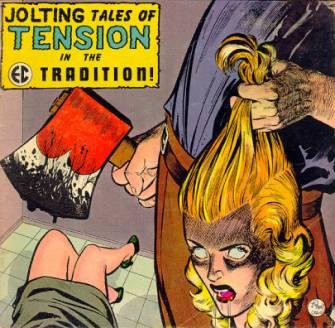

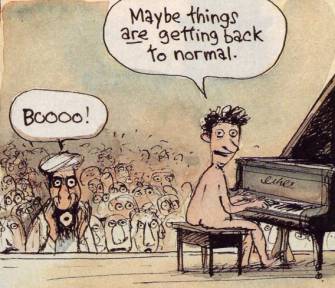
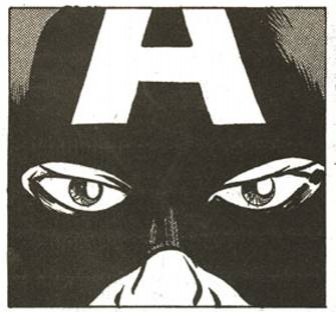


 * great news for fans of obscure, comics-related art: Eric Reynolds
  * the New York Times kicks in with
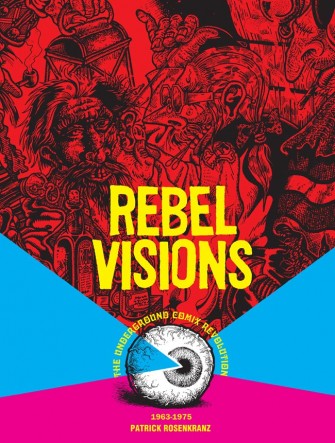
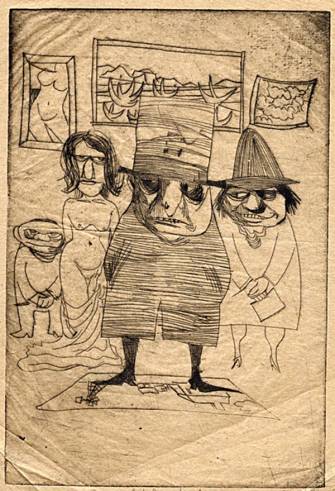
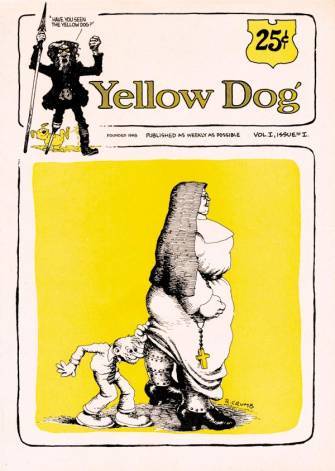
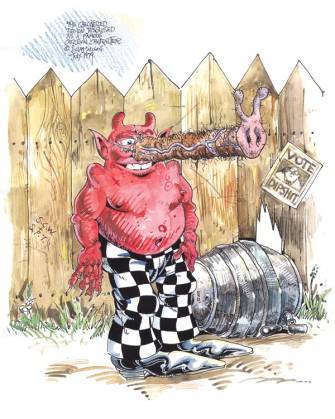
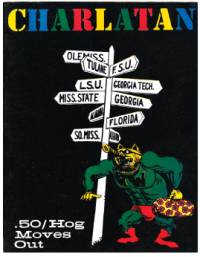 SPURGEON: One section of the book I greatly enjoyed was how you traced the roots of some of underground comix publishing to college humor magazines. Patrick, what eventually happened to those magazines, and is there a reason they didn't to contribute to comics as greatly as they did during that one time? What I mean is, I don't know of any non-underground cartoonists who got their start there, and I don't think most of them are around anymore.


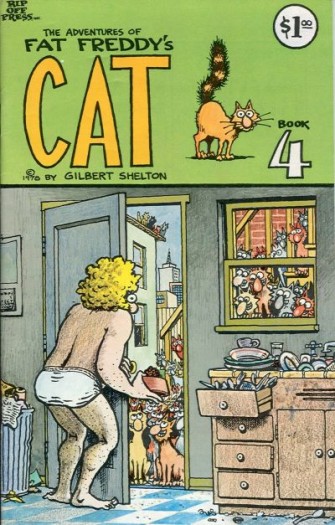
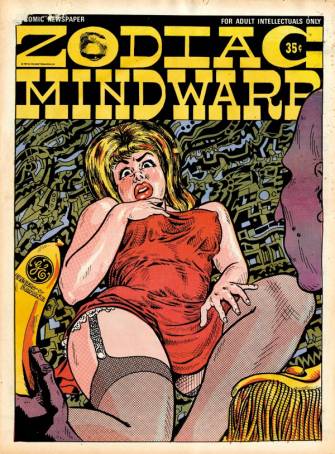
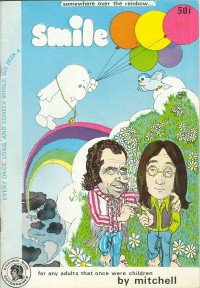 Yes, there was some Krupp bashing in San Francisco. Some sniping came back from the Midwest, too, but eventually everyone made nice and became best friends forever. What really happened was that Kitchen agreed to let Print Mint publish the second edition of Mom's Homemade Comics #1 but then he didn't like their bookkeeping, so he decided to keep his work in Wisconsin. Pretty soon he was putting out more titles, like Smile and Deep 3-D Comics and Mom's #2. Krupp Comic Works, soon to be renamed Kitchen Sink Press, became one of the few and proud underground publishers, joining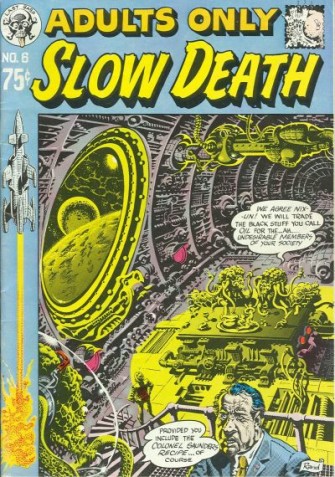
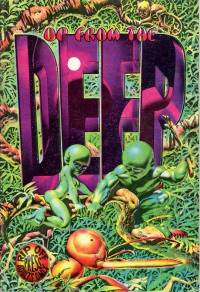 ROSENKRANZ The Slow Death/Skull Comix core cadre included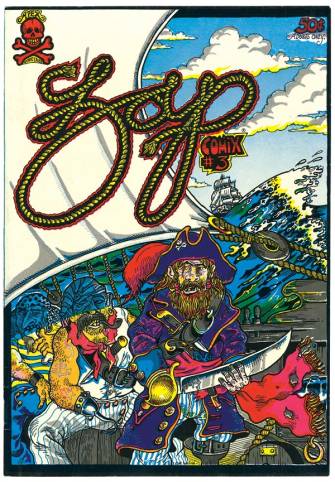


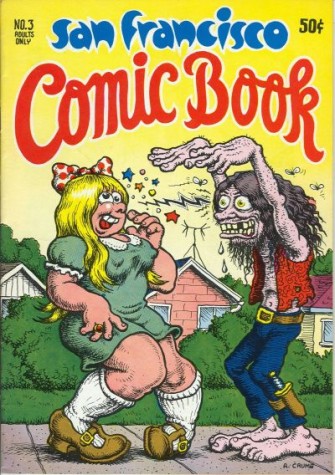
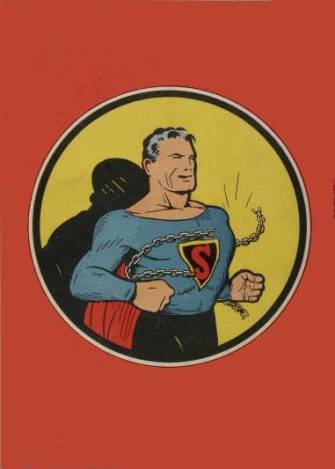


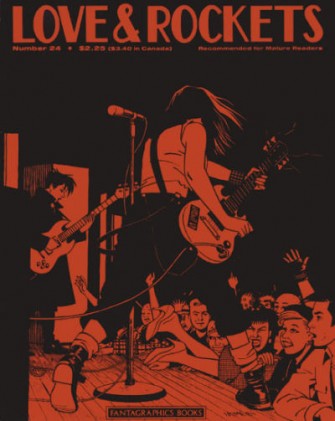


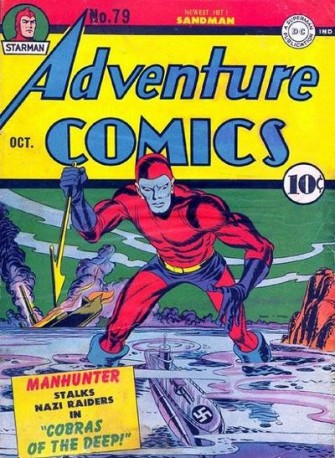


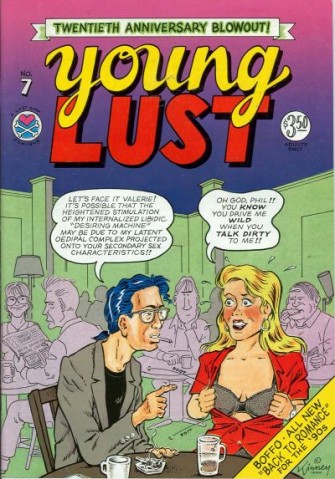
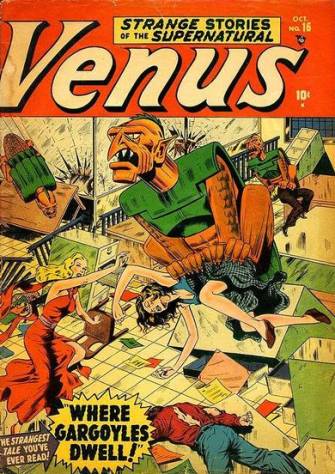
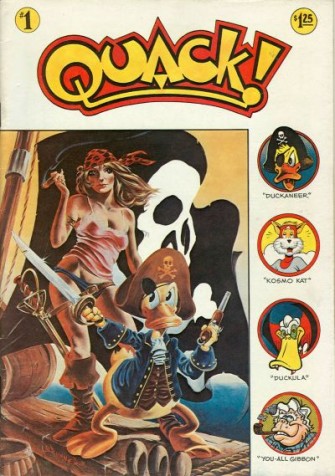
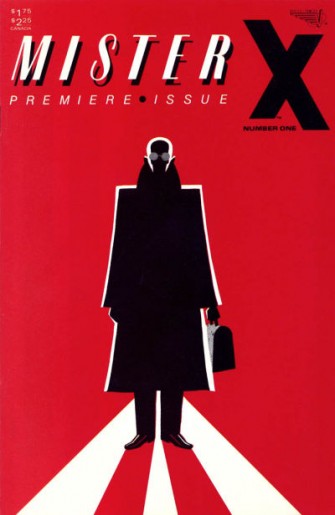
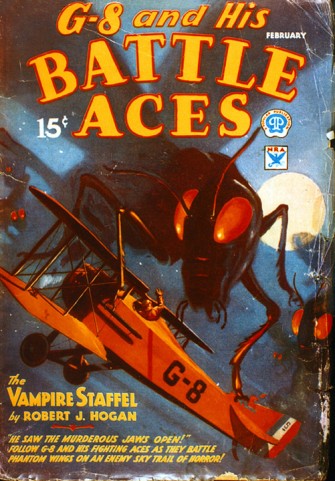


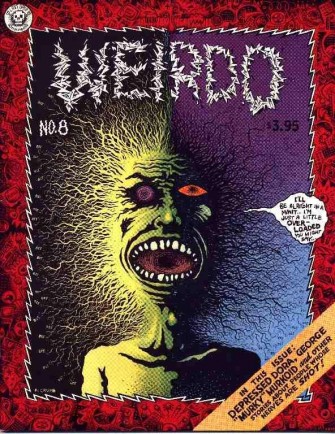


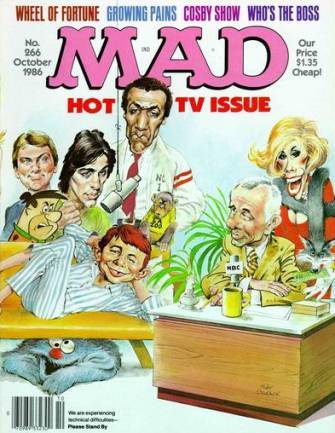


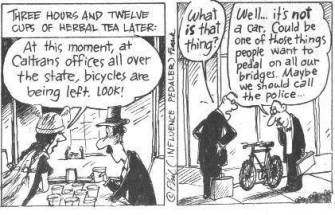


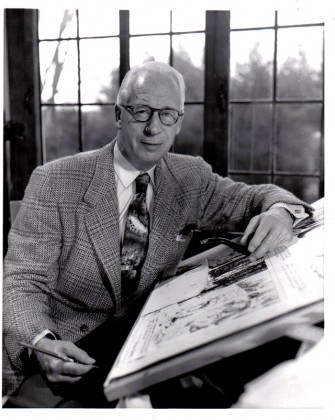


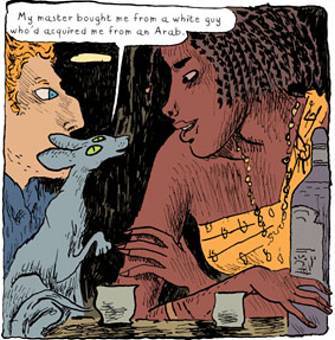


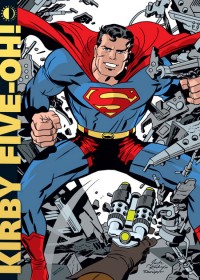 * congratulations to The Jack Kirby Collector on celebrating its 50th issue in print. No matter how much you revere Kirby, this is a highly unlikely achievement. Buy them all.
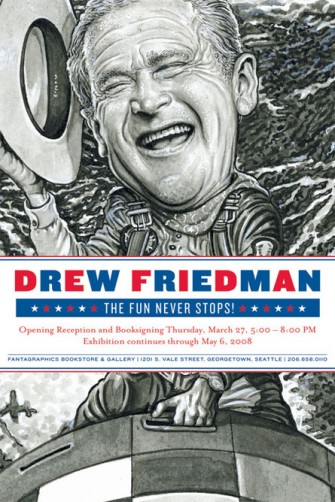






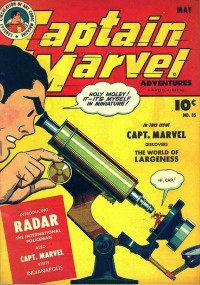 * it's been pointed out to me by several CC Beck fans that the news of
 I don't follow American superhero comics all that closely, but I found





 * an article about Arabic translation of that old, post-Montgomery Martin Luther King, Jr. educational comic book will probably be the widely-traveled link of the day.
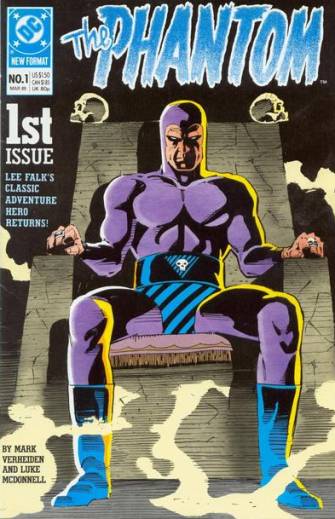


 Doonesbury's Garry Trudeau will receive the Mental Health Research Advocacy Award from the Yale School of Medicine for his "outstanding portrayal of the readjustment issues faced by soldiers returning from Iraq and Afghanistan,"
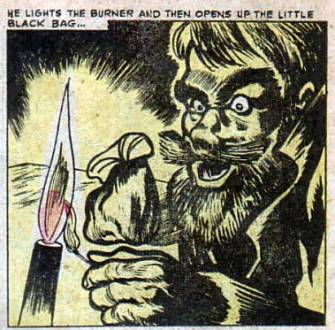


 * Chris Butcher
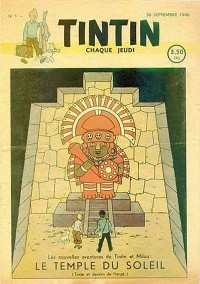 For his part, Leblanc decided to publish 60,000 copies of the magazine when it debuted in September 1946; a moment when some thought 15,000 or 20,000 would have been more reflective of the marketplace. Soon the publication was up to 80,000 in sales. In 1947 the magazine began to bear one of the most famous taglines in all of comics: "for kids ages 7 to 77." A co-publishing deal with Georges Dargaud for a French version was worked out a year after that, and the publication began its run as one of the most influential items of 20th Century kids and comics culture. The magazine Tintin, at one point the round table of the first generation of ligne claire cartooning (making Lombard in general the Camelot), would cease publication in 1988, having launched and sustained scores of prominent careers.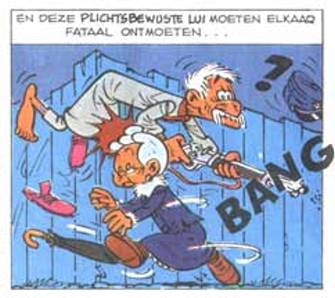
 In one of the most horrifying actions against a cartoonist anyone can imagine, armed intruders on March 19
  Elite comics blogger Gianfranco Goria
 Garry Trudeau begins a three-month break away from his Doonesbury today, and Alan Gardner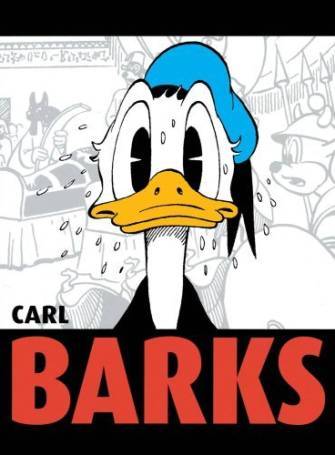


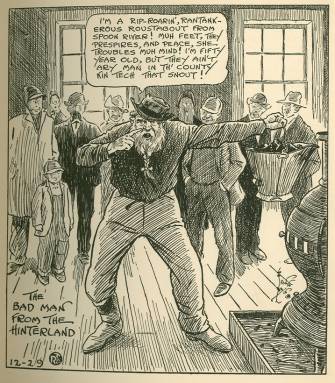


 *
* 
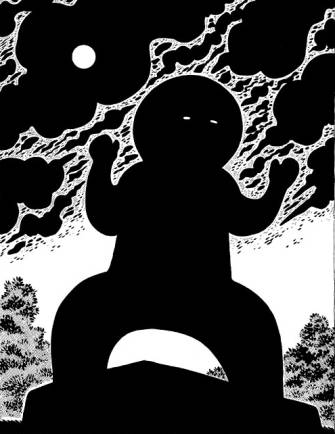

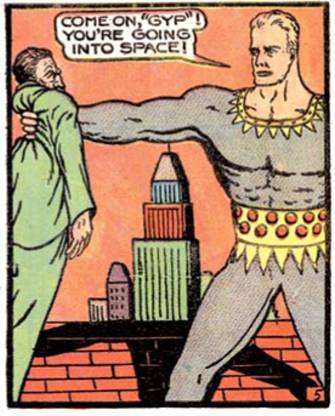

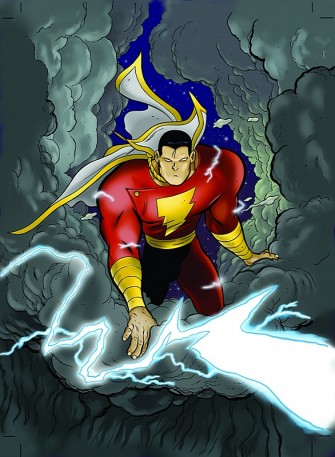


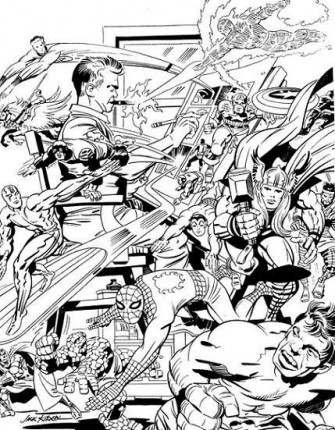
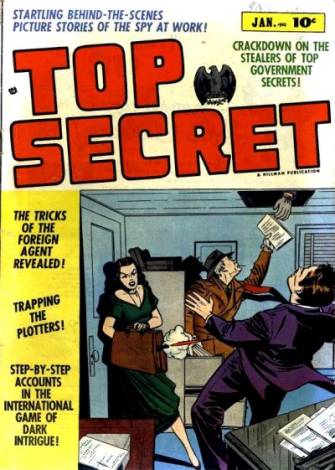
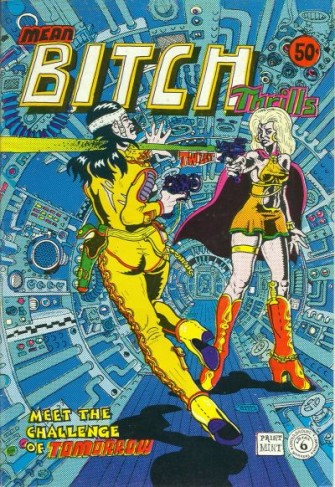
 According to a rush of




 * Steven Stwalley


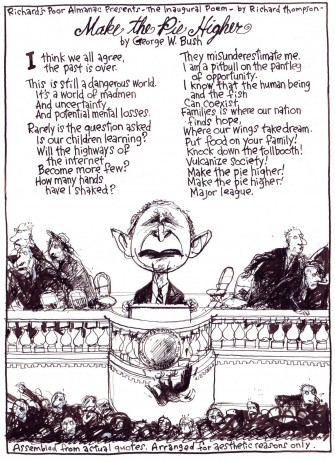




 * the critic Jeet Heer writes on
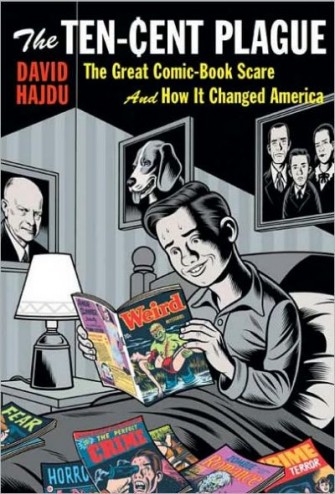


 I remember there was a point about five years ago when a lot of folks figured that interest in the growing graphic novels category by the book industry had just about peaked, and that after a couple of years of prominent programming at the Book Expo America the publishers in that end of the market would be mainstreamed into the general bustle of the show and not heard from again, at least not with as much fanfare. Well, those people were wrong, at least in that BEA




 * Marc Sobel continues his series focusing on each issue of Love and Rockets Volume One



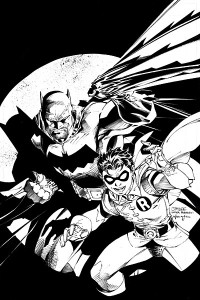 The comics business news and analysis site ICv2.com offers their usual array of lists, estimates and analysis regarding the performance of comic books and graphic novels in the Direct Market of comic and hobby shops, this time for February, 2008.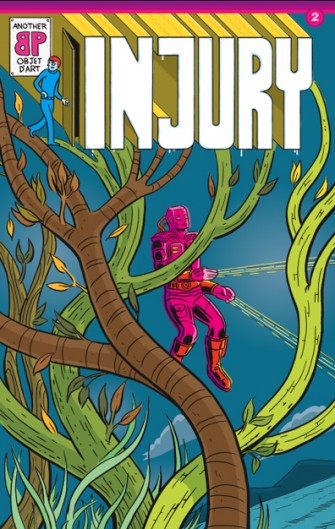
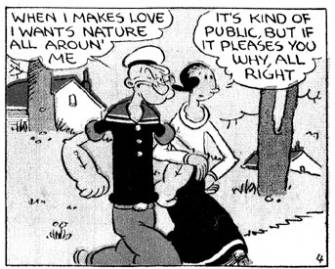

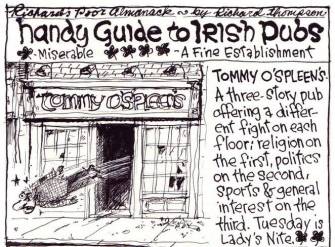




 * check out
  * you know, as much shit as has been flung in Jason Lutes' direction for the... well... haphazard publishing schedule he's employed with the serialized Berlin, I hope people are taking notice

 It'd be worth a news mention all by itself if the prominent Turkish newspaper Cumhuriyet had simply fired its top-line cartoonist of the last 32 years, Tan Oral. However, if
  SPLAT!


 * Franz Fuchs wrote in to note that the


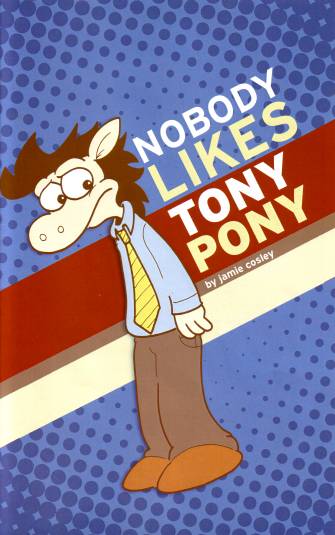


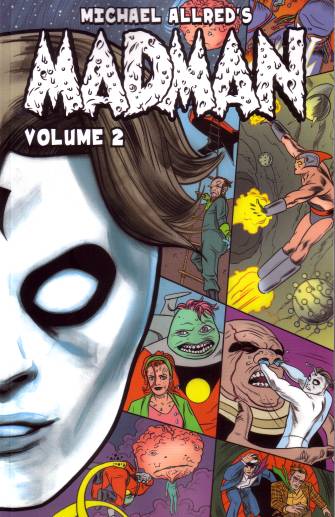

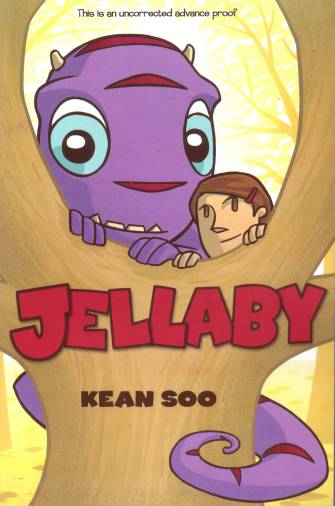

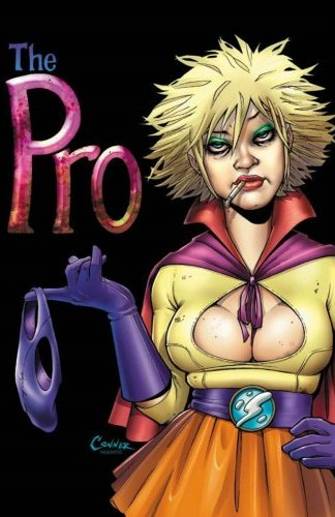
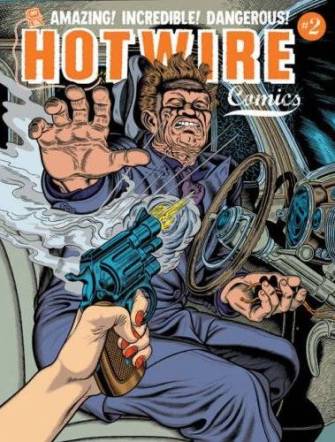


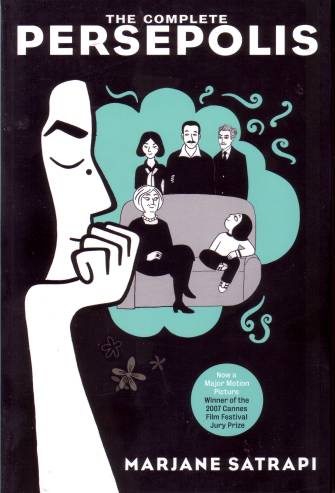

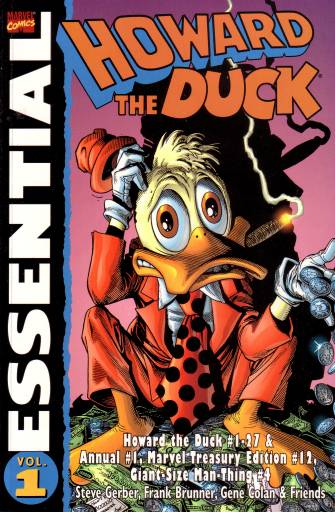








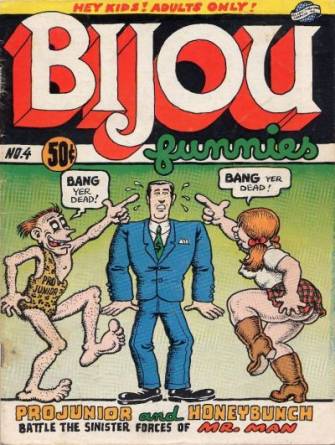

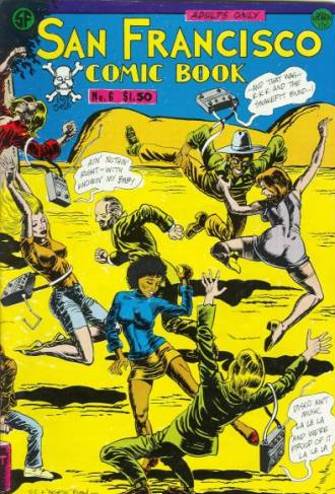

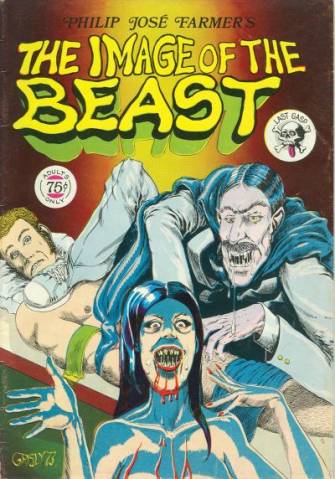

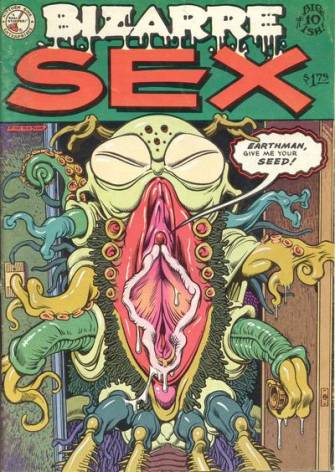
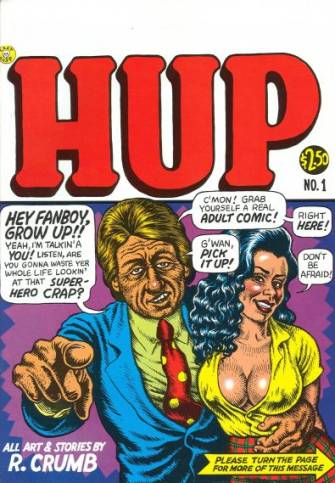



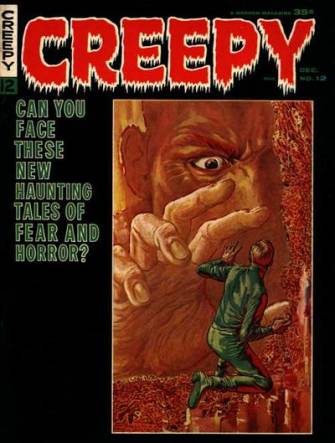


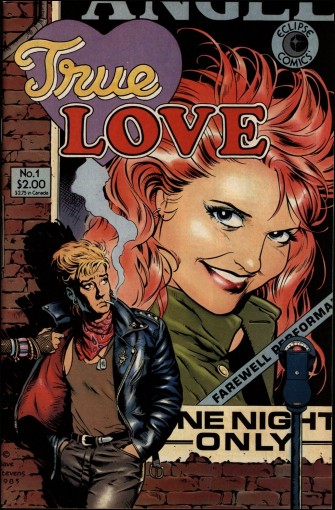




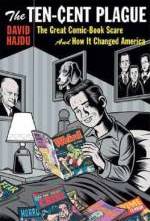 * the Wall Street Journal







 * Naruto Vol. 28
 One soon-to-be famous visual strategy Stevens employed in the Rocketeer comics was basing the hero's on-again, off-again girlfriend on the pin-up model Bettie Page. Stevens' ability to capture Page's then almost-completely forgotten brand of casual sexuality and the sense she brought to many pictures of being slightly flushed and overwhelmed sparked an underground cultural revival in the model's life and career. He would in the 1990s meet Page and form a kind of friendly, protective set feelings for her, even as the revival he had done more than anyone to instigate swirled about the now senior citizen-aged ex-model.
  Stevens also jumped publishers. He would find a home for a time at
 The International Comic Arts Forum (ICAF) is apparently moving to Chicago for its 2008 show, which will take place at the School of the Art Institute of Chicago October 9-11.
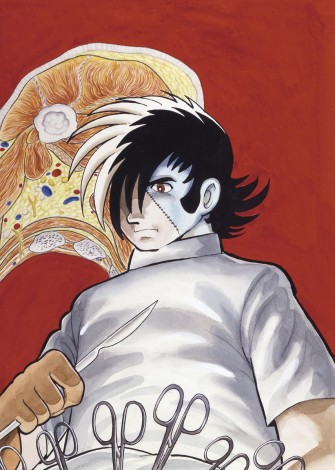


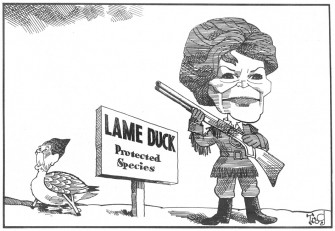


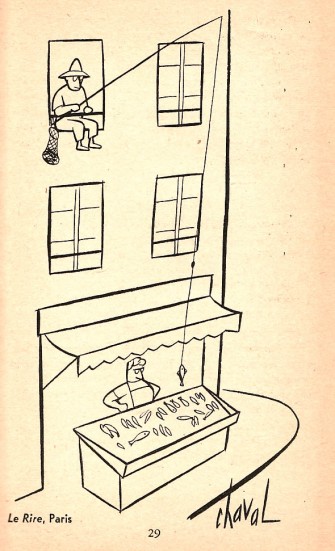

 *
* 
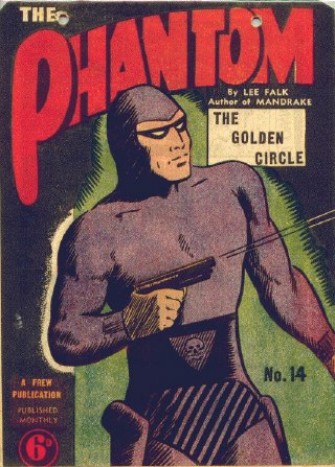
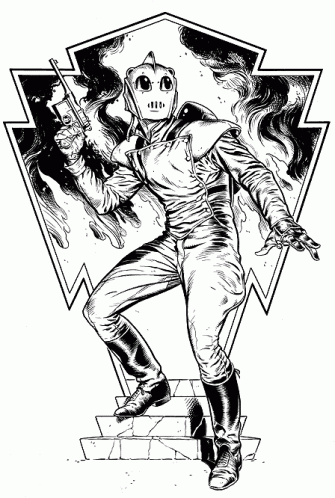



 School Library Journal features graphic novels on the cover of


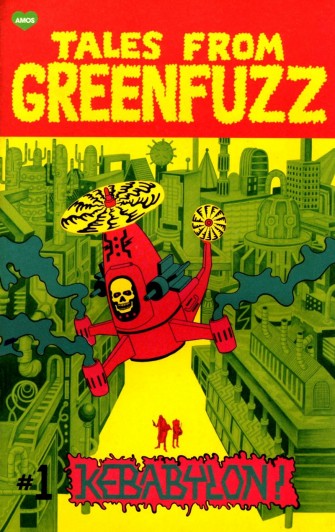

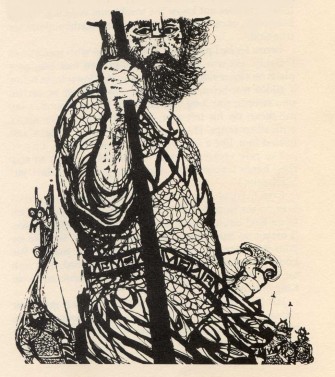
 * today's must-reading in terms of comics history

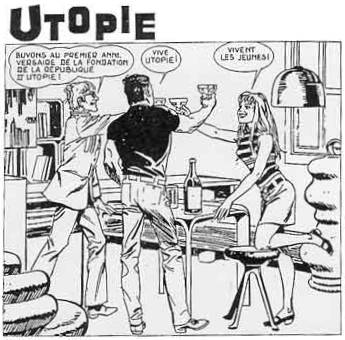
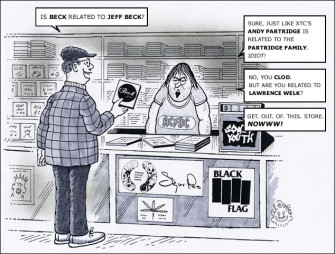



 *
* 
 * Seth Kushner announces plans for a book of portraits, samples of work, and filmed interviews (??) called NYC Graphic Novelists
 For anyone who read mainstream comics in the 1980s,

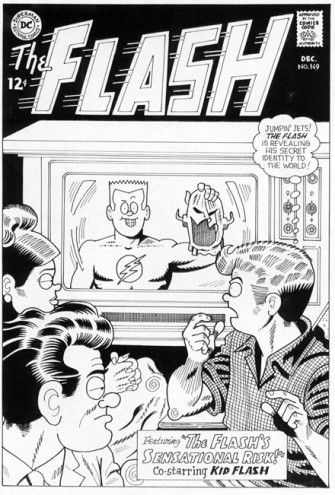

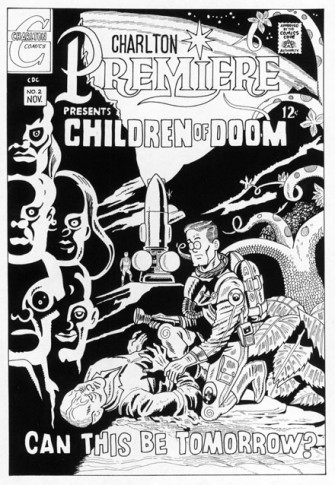




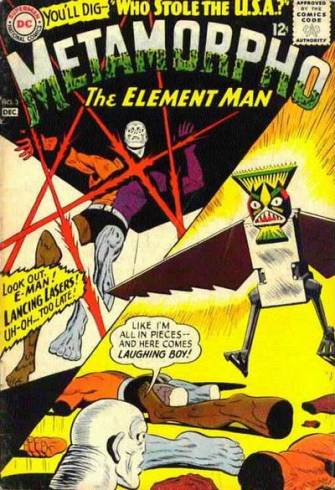
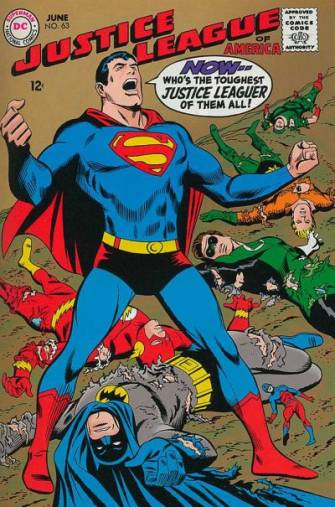

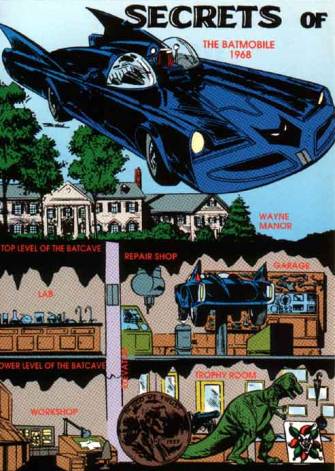
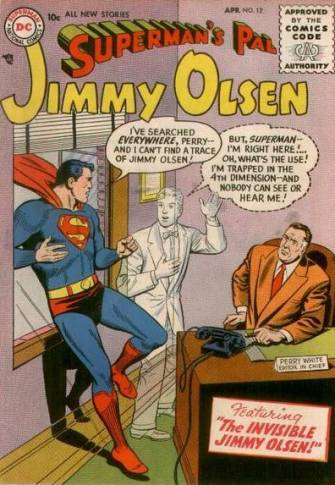

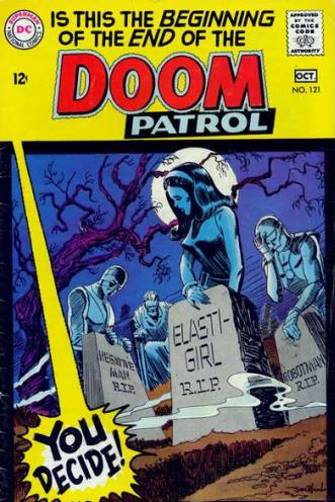











 \
\


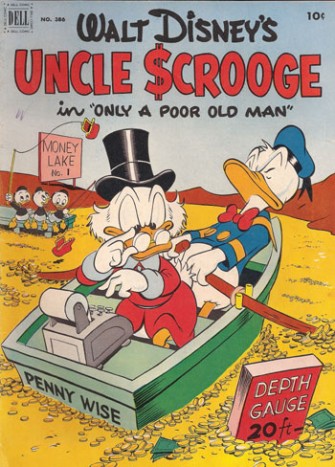

 * manga columnist David P. Welsh writes in to inform me that no, nobody really thought the Naruto Nation strategy of offering a lot of book for each month of Fall 2007 would have a dramatic effect on subsequent volumes in the series. He also thought that the new Naruto volume might have been past the measuring date for the latest figures, but it seems to me like the new volume debuted at #73.

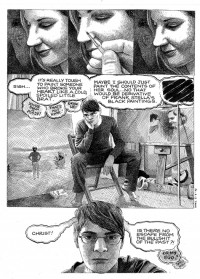
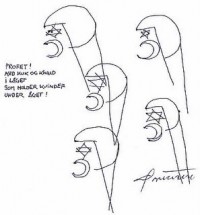 Eric Abild Sorensen, a longtime staff cartoonist at Jyllands-Posten and one of the cartoonists behind twelve caricatures of the Prophet Muhammed that were later cited as the cause of riots and political turmoil in early 2006 and again in 2008,





 * there are probably a couple of important distinctions to be made about Richard and Wendy Pini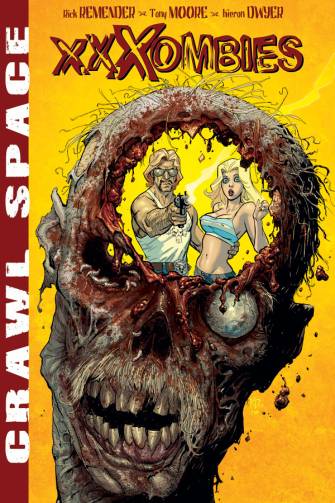

 Gygax and Don Kaye started Tactical Studies Rules in 1973 and together they published the first version of D&D in 1974, a 1000-copy print run that immediately sold out. Gygax would have a wild relationship with that company over the next few decades: buying Kaye's shares from the widow, re-naming the company, selling two-thirds of the company to the Blume Brothers, struggling with various officers over the company's direction, leaving the company in the middle 1980s and eventually settling with the company in an arrangement



 *
* 

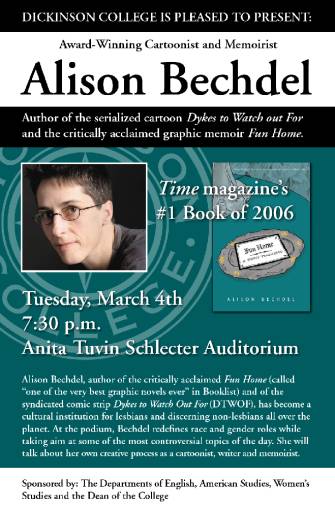
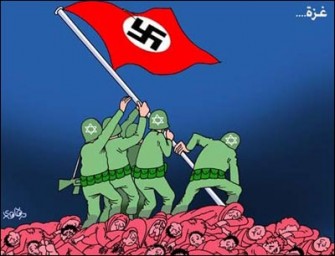
 The comics business news and analysis site ICv2.com offers their usual array of lists, estimates and analysis regarding the performance of comic books and graphic novels in the Direct Market of comic and hobby shops, this time for January, 2008. Because of a glitch in the figures provided by Diamond, these numbers have been re-run, so I'm presenting them here today as if they were brand new and tweaking my commentary where applicable.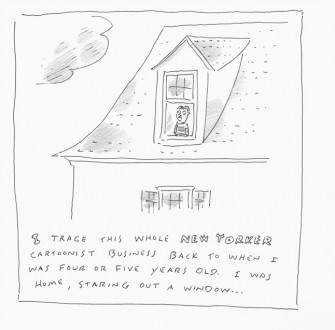

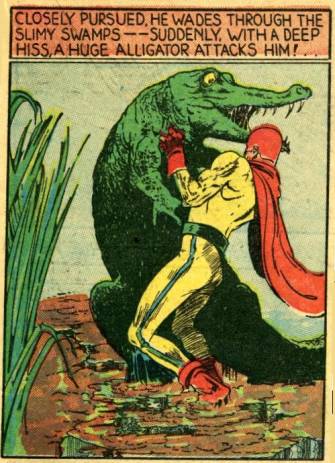


 * in what will surely be one of today's most widely-traveled links, you can


 A collection of war stories from Commando targeted at the Australian and New Zealand markets has alarmed some cultural commentators and educators in that region of the world for its depiction of indigenous people and the names used in reference to them. Ant Sang and Dylan Horrocks provide the cartoonist's perspective. What's interesting to me is that even though the thought gets floated that the book could be used either with allowances for unacceptable imagery from the World War II era or as an example of how certain imagery and designations aren't used any longer,




 *
*